Craft Whiskey Tasting with Blind Barrels: A Review

Several months ago, Davis Armstrong and Bobby DeMars of Blind Barrels reached out to me with an offer to send me a complimentary box of their craft whiskey samples for review. Last summer was  busy, so it took me a while to respond. I had never heard of the company, but the concept sounded interesting.

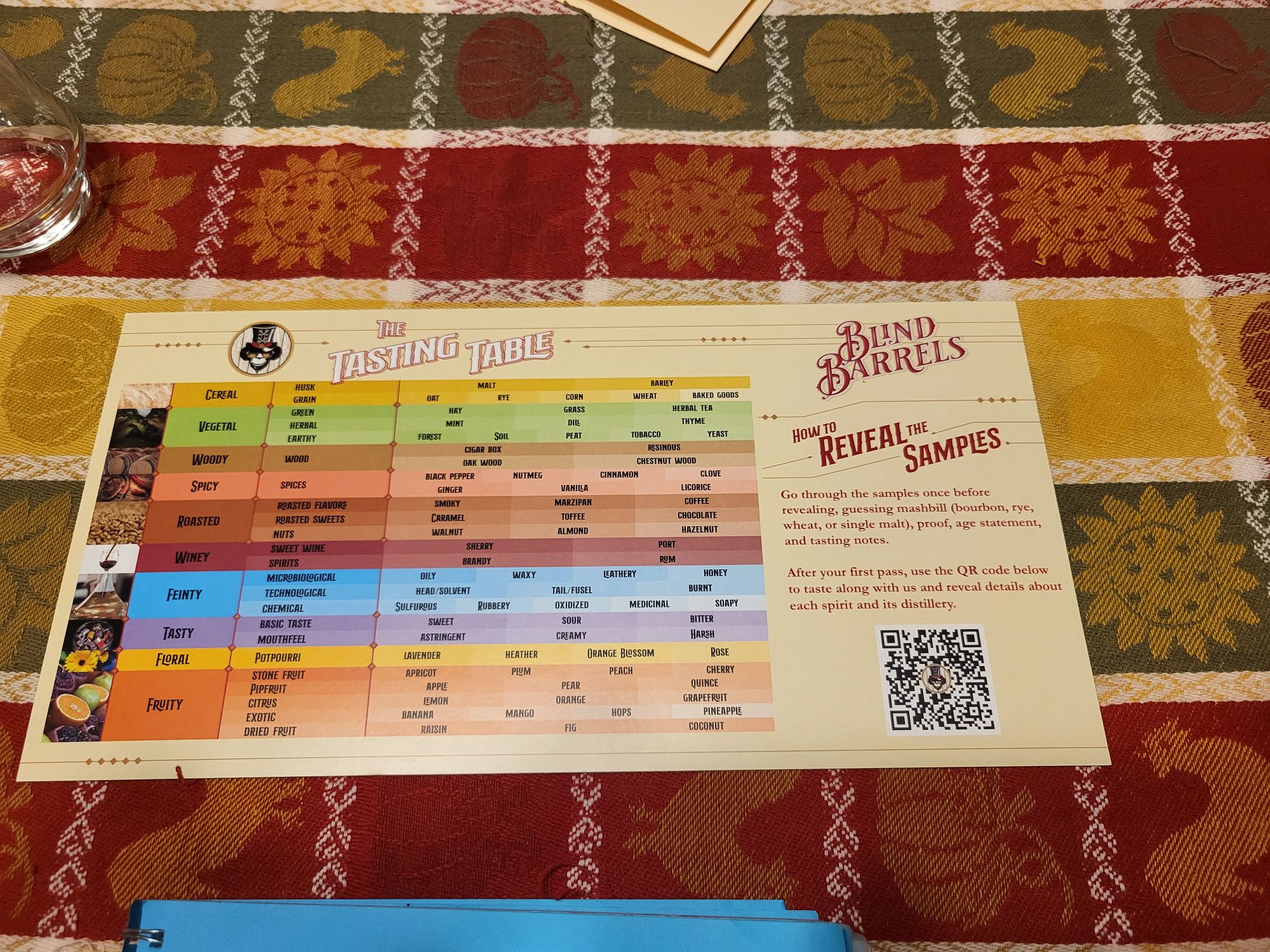
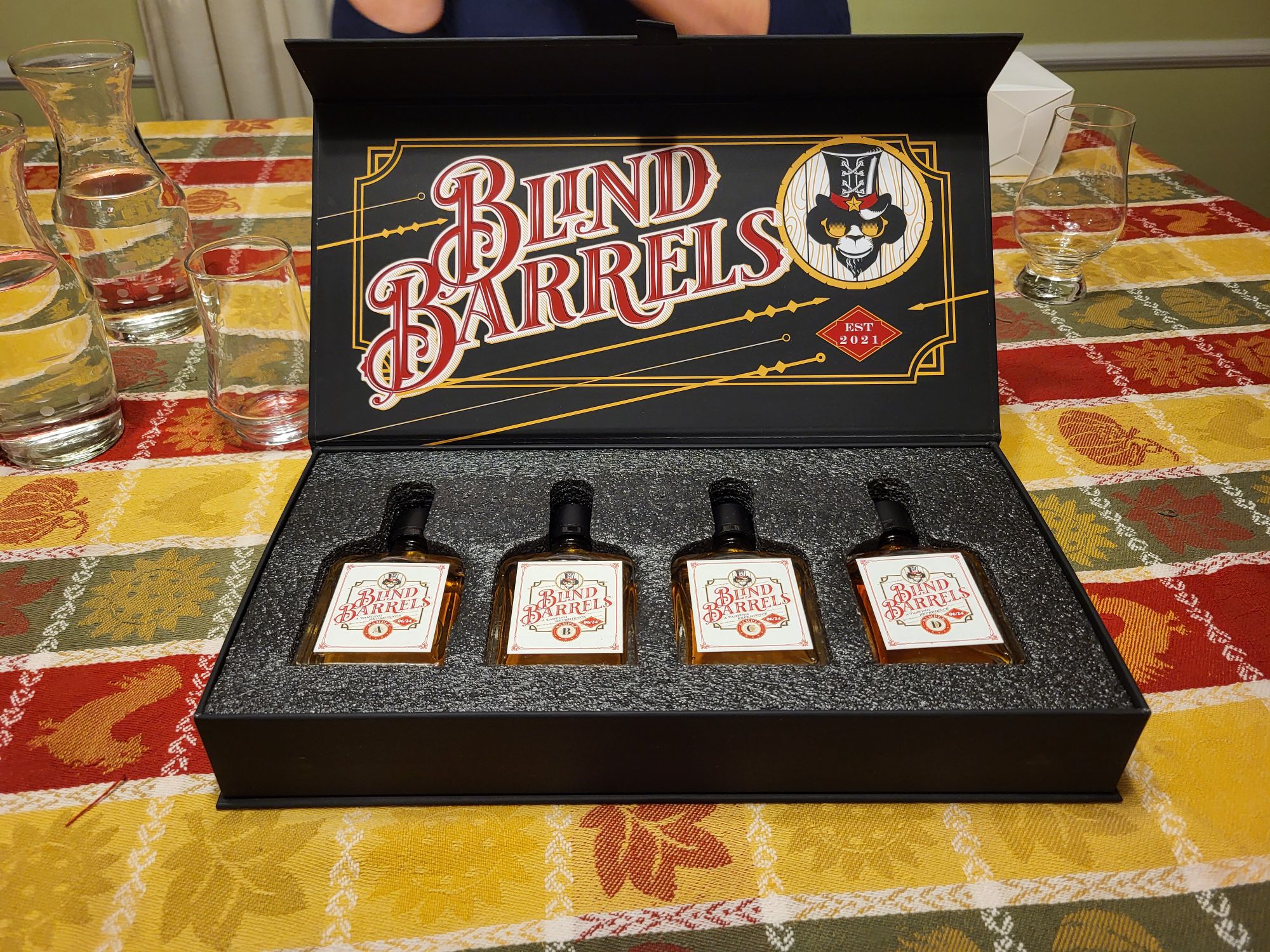
The concept is this: Blind Barrels ships you four 50 ml bottles of whiskey in a plush, classy-looking black box with a golden chimp wearing sunglasses and a steampunk-style top hat for some reason. Included are two letters (at least in my case) from Davis & Bobby, and a “tasting table” of flavors and aromas. Each bottle has the chimp logo, the ABV % of what’s inside, and a QR code. How one distributes the whiskey is up to the tasters, but the materials recommends to pour a little of A in everyone’s glass, take notes, discuss and repeat for B, C, and D. That’s what we did.

Individual boxes cost $70 each, plus $15 shipping. Subscriptions are a much better deal. Quarterly billing is $60, plus $15 shipping per box ($300/year plus tax). Annual rebilling is the best value for money at $50 per shipment, plus $12.50 shipping ($250/year plus tax). The subscriptions have the added benefit of giving the subscriber a discount on the full bottles of whiskey being sold. All the whiskeys in the various shipments are from small distilleries with limited distribution, so long time whiskey nerds should be prepared for some off-beat selections.

 Different boxes have different themes. Ours was Box X (the tenth one). It was released around Father’s Day last year and had a theme of father and (adult) child distillery partnerships. There is also a special Fred Minnick (friend of the blog) box one can order for $70. According to the website, it comes with special guidance from Fred himself. This might be a good option for people who are looking to use a Blind Barrels shipment to jump start their entry into craft whiskey enthusiasm.

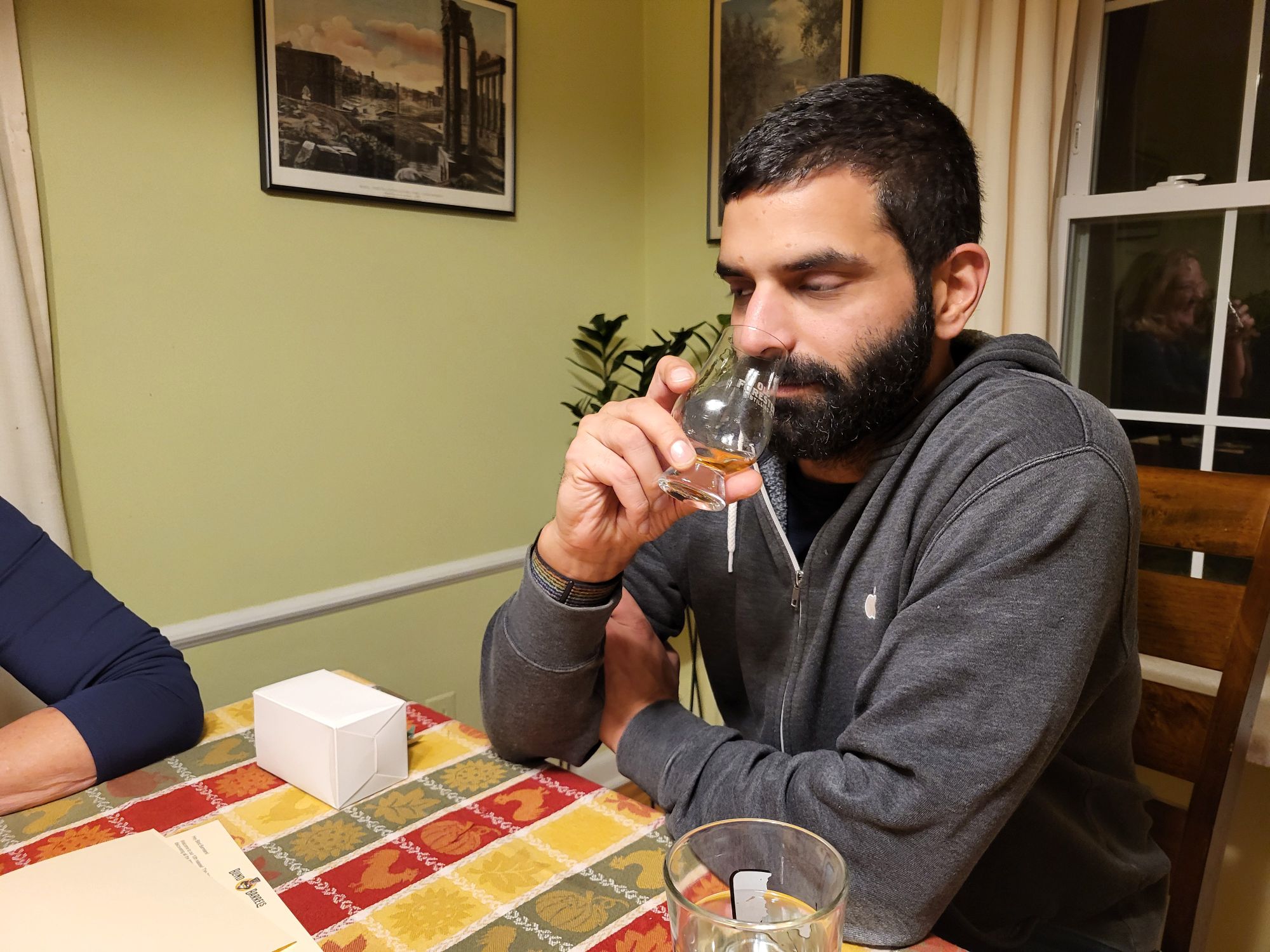
My box arrived in September. In October I rounded up a few friends (Amy, her neighbor Nick, and my wife Liz), and we tasted through the four samples together.

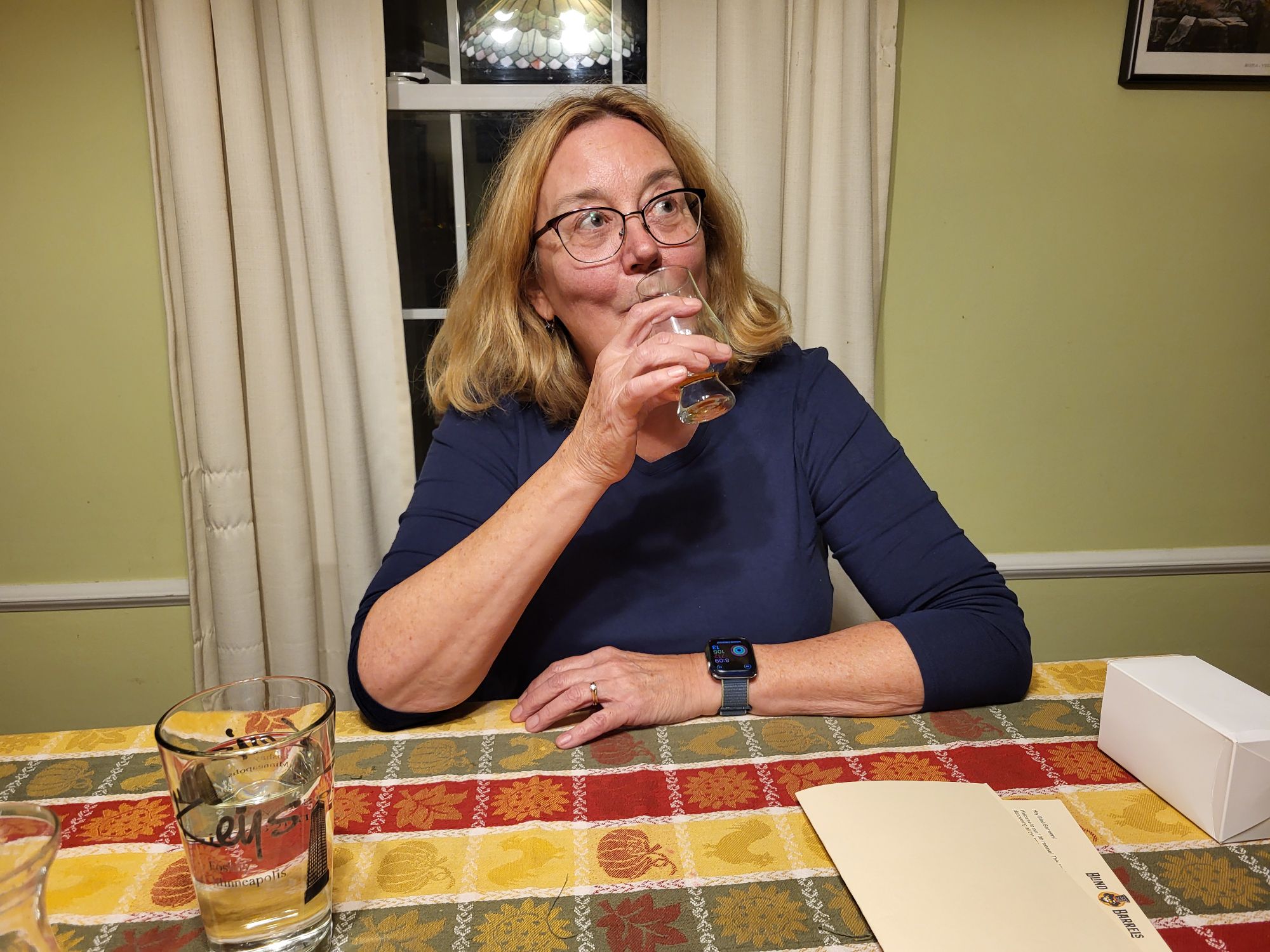
Here’s what we thought of them at first taste:

A: Pretty good, probably a rye.

B: A little weird, A wheater, maybe.

C: Even weirder. Oat whiskey or oat bourbon?

D: Wow, stunning. A well-aged bourbon.

 At least that’s what I think we thought of them. In an all-to-common bout of unprofessionalism, I lost all the notes I took that night. Drinking may have been involved.

Anyway, we were almost entirely wrong. Here’s what they really were (the first price listed is the MSRP, the second is the subscriber price):

A. Axe Hole Single Malt, Calwise Spirits, Paso Robles, California. 84 proof, $90/$75.

B. UNBendt Straight Rye BiB, Bendt Distilling, Lewisville, TX. 100 proof, $70/$55.

C. Old Monongahela Full Proof Rye, Liberty Pole Spirits, Washington, PA. 108 proof, $85/$65.

D. Doc Holliday 10 y/o Straight Bourbon, World Whiskey Society, Pendergrass, GA. Distilled at Ivy Mountain Distillery, Mount Airy, GA. 122 proof, $200/$130.

As you can see, D was the clear standout. Nick, a whiskey novice, pointed out that a part of concept with this is a marketing/sales play. While all the whiskeys were interesting, D was the standout, and it also has the biggest discount. He concluded that the primary aim of this box was to sell Doc Holliday 10 y/o.

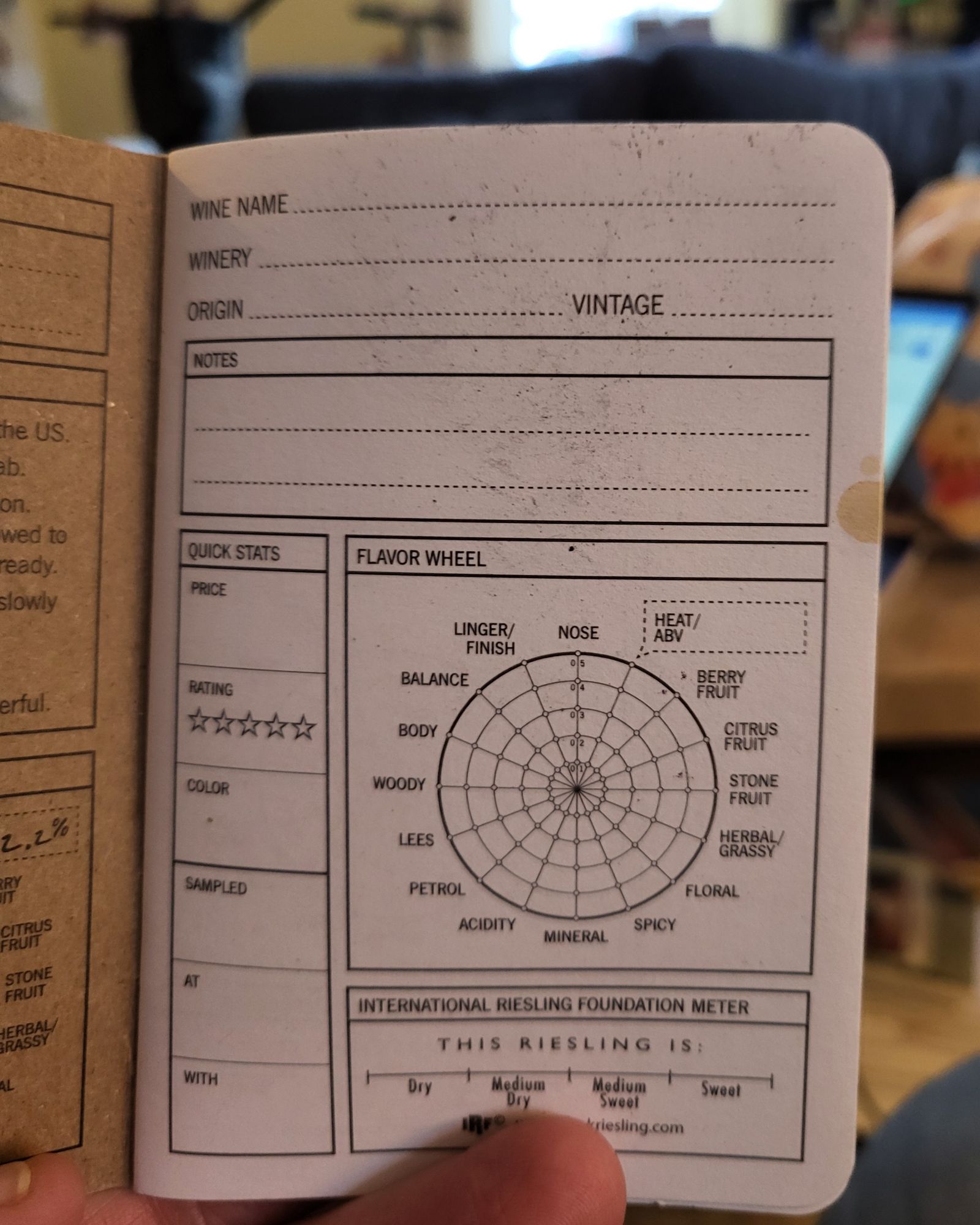
Nick also had a suggestion. Rather than the tasting table with its collection of terms, tasting sheets that can be filled out by each taster might make the experience even easier. Perhaps something like the Riesling tasting booklet pictured to the right. It also might make the tasting notes less likely to be lost.
Anyway, we had a lot of fun! I’ve hosted blind tastings before, and keeping them blind is always a problem. The innovation of the QR code on the back of the bottle takes all the annoyance out of that. Being able to taste whiskeys one might not be able to taste otherwise also makes things more fun. Whether you’re a grizzled whiskey vet or a newb, I think you’ll find a box from Blind Barrels to be an enjoyable way to spend an evening or weekend afternoon. They make great gifts as well. Blind Barrels is recommended.
Balcones Single Malt

Maker: Balcones, Waco, Texas, USA

Age:NAS

Batch: 12-1

Bottled: 1/9/2012

Proof: 105 (52.5% ABV)

Thanks: To Dustin for getting me this sample!

Appearance: Shiny copper with a thick, husky legs.

Nose: Butterscotch candy, sweet cream butter, sharp wood notes appear but then fade (small barrel syndrome strikes again!), alcohol.

On the palate: Full-bodied & sweet. Caramel corn, butterscotch pudding, almond extract, malt. If I didn’t know better I’d say I even tasted a bit of sherry.

Finish: Hot and sweet with a strong Highland accent.

Parting Words: This is the most Scottish American malt I’ve ever had. It is strongly reminiscent of inland Highland Malts with their pure creamy malt characteristics. This is particularly true in the finish. What’s perhaps the most remarkable about this whiskey is how much it changes after being poured. I tasted it in a Riedel Single Malt glass and I felt like every time I took a sip I had to go back and re-write my notes. The Caramel Corn/Butterscotch notes eventually take the lead and it’s for the best. Balcones is one of the good guys in the micro-distilling movement and this whisky (ey?) is exhibit A. Balcones Single Malt is highly recommended.

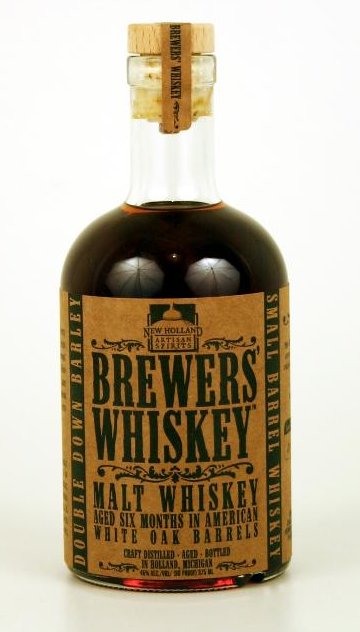
Double Down Brewer’s Whiskey

Maker: New Holland, Michigan, USA

Type: Straight Malt Whiskey

Age: 6 mos. (in “small” barrels)

Proof: 90 (45% ABV)

Appearance: Dark copper with thick legs.

Nose: A faint hint of leather up front, like walking into a furniture showroom. Sweet black licorice, caramel, a bit of alcohol.

On the palate: Full, voluptuous body. Like a porter on the palate. Lots of licorice, some more caramel and hard candy, maybe a little horehound.

Finish: same notes as on the palate, but with some slightly bitter clove and Chinese five-spice.

Parting words: This was the first entry into New Holland’s Brewer’s Whiskey series of small barrel, small bottle releases. Some of the acrid nastiness that very small barrels can throw into the nose is absent here. Instead, it’s like drinking a very spicy porter or sucking on black anise candy. A lovely whiskey, and one that is good sippin’ for the holidays. Highly Recommended.

Triple Smoke American Malt Whiskey

Maker: Corsair, Bowling Green, Kentucky/Nashville, Tennesee, USA

Style: Smoked American Malt

Age: NAS

Proof: 80 (40% ABV)

Appearance: Copper with slow legs.

Nose: Young, sharp, small barrel, woodsy notes with a little bit of hardwood smoke and sweetness.

On the palate: Medium-bodied and sweet. With a bit of water, the sweet smokey wood flavors come through. A little cassia and nutmeg lurking somewhere in the background too.

Finish: This finish is where the smoking process pays off. The beech and cherry wood smoke give Triple Smoke a sensual, dare I say hedonistic finish. The peat, which only shows up in the finish, provides a pleasant, floral counterpoint to the other woods. The smoke lingers in the mouth for a very long time, taking on some tobacco notes before gently fading.

Parting Words: This is a very well-executed whiskey. The chocolate nougat notes of a typical American Malt are there, but they’re the O-line to the QB/TE/WR combo of the beech, cherry and peat smoke. Yes, I’ve been watching a lot of football recently.

My only disappointment with Triple Smoke is the nose, which has a definite case of Small Barrel Syndrome. It’s sharp and unappealing, but the taste and finish more than make up for it. Triple Smoke is not widely available, so next time you’re in Chicago, Kentucky or Tennesee, pick one up. I thought about trying it in some cocktails but it’s so tasty neat I couldn’t bear to. This is exceptional American malt in every sense of the word. Highly recommended.

Zeppelin Bend Straight Malt Whiskey

Maker: New Holland, Holland, Michigan, USA

Age: NAS

Proof: 90 (45% ABV)

Appearance: Burnt orange with long sticky legs.

Nose: Prunes, cardamom, ginger, mace, cocoa

On the Palate: Full-bodied and sweet upon first entrance. Heavily spiced mincemeat pie, and then red wine chocolate truffles dusted with Dutch process cocoa powder. Yes those exist.

Finish: Hot, but then a dry chocolaty sweetness that too quickly fades.

Mixed: A highball of Zeppelin Bend and club soda on the rocks is pretty good, even if it does taste a bit like a watered down Choc-Cola. Other classic Scotch cocktails work well, too. A rusty nail has a nice bitter, spicey note that balances out the honey liqueur nicely, and a Rob Roy is quite good, even if it’s not quite sure if it’s a Rob Roy or a Manhattan.

Parting Words: American straight malt whiskey is has not been very popular historically, and as a result has not been made much by American distillers. Like a rye or bourbon, American malt must be aged in new charred oak barrels and must have a mash bill of at least 51% of the grain in question, malted barley. But where Big Whiskey saw no reason to tread, a few micro distillers saw an opportunity. Stranahan’s in Colorado led the way, followed by (among others) Pritchard’s in Tennesee, and New Holland in Holland Michigan. Bourbon and rye still excite me more than any other American whiskeys, but of the American straight malts I’ve tried, Zeppelin Bend is the best. This is another case in which a micro is doing what a micro should be doing: offering interesting spirits that the big boys don’t.