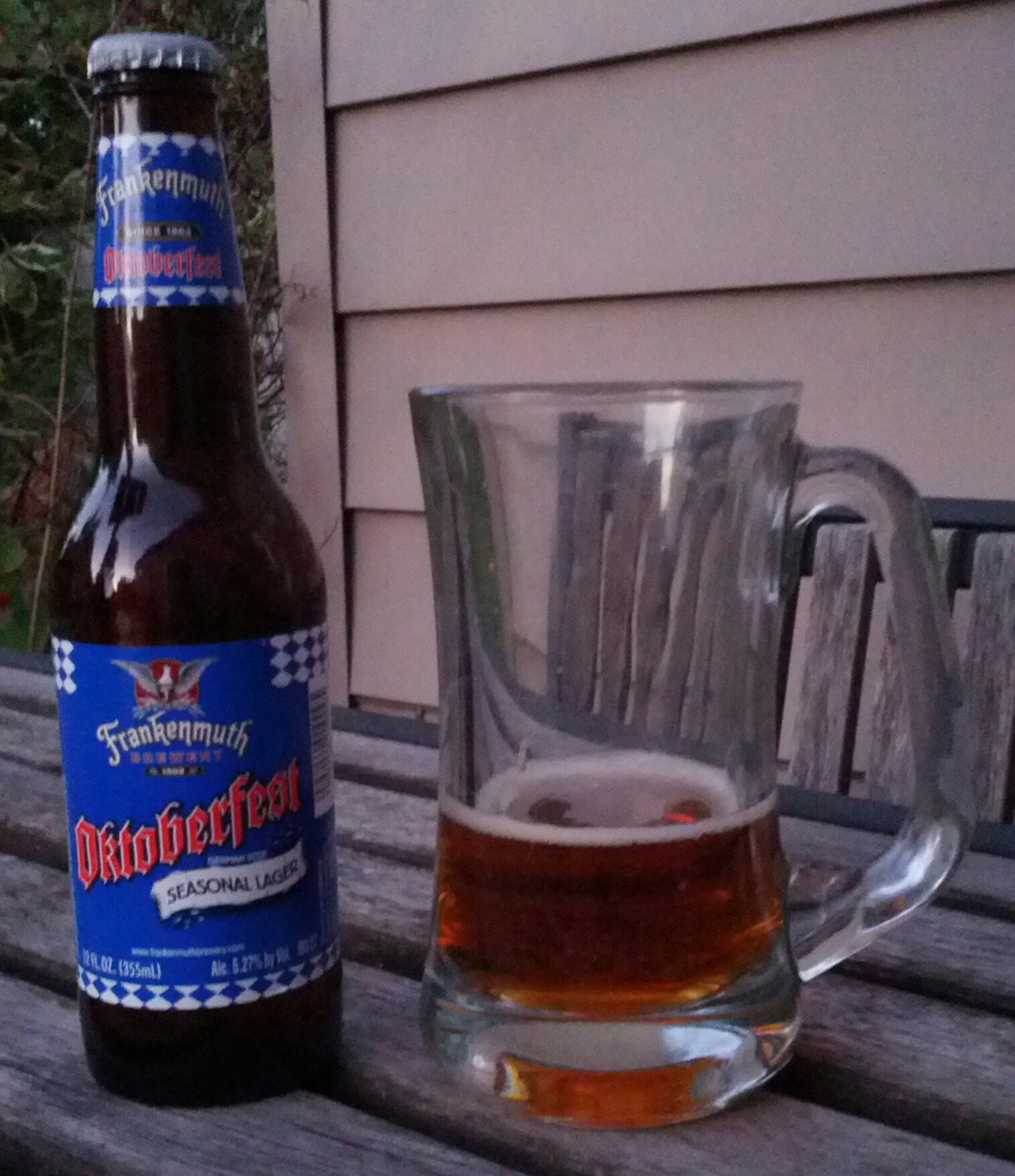
Maker: Frankenmuth Brewing, Frankemuth, Michigan, USA (Some brewing contracted to Stevens Point, Stevens Point, Wisconsin)
ABV: 5.27%
Purchased for: $8.99/6 pack (before tax)
Appearance: Dark copper with a big foamy head.
Nose: Malt, a bit of plum, dash of hops.
On the palate: Medium bodied, malty and a little sweet. Toasty malt, a bit of stone fruit and plenty of bitterness and effervescence to keep things interesting.
Finish: lingering and bitter, but pleasantly so. A little bit of stickiness lingers on the lips for a while.
Parting words: Frankenmuth Michigan is a quaint (OK, touristy) town in Mid-Michigan with a Bavarian theme. It is known for touristy shops, fried chicken dinners and indoor water park resort hotels. Frankenmuth brewery operates a fairly large brewpub that has taken from the independent brewery that operated in Frankenmuth from the mid nineteenth century through the end of the twentieth century. The current Frankenmuth specializes in American versions of German-style beers. They don’t have sufficient capacity to supply all their needs so they do contract out some of their brewing, as noted above.
Oktoberfest is not particularly nuanced or complex but it’s balanced and as good as any other American “Oktoberfest” beers I have had. It’s easy drinking and very food friendly. I had one with a meal of smoked corned beef and garlic mashed potatoes, and it went very well with the meal. Brats, polish sausage or a meaty pizza would go well with it too. The price is pretty much standard for a microbrew. Frankenmuth Oktoberfest is recommended.
Michigan State Minimum (rounded to the nearest dollar): $50
Appearance: Dark copper, necklacing and thin quick legs.
Nose: Alcohol, hay, wood, pralines. Water turns down the alcohol but turns the grassiness up to 11. Some caramel still comes out but the grass dominates.
On the palate: Wood, amaretto, caramel, alcohol. With water, the nutty flavors come out and make themselves known, but the grass does to. It’s kept in check by the nuts and caramel and a creamy background. The oak is not really discernible with water added.
Finish: Quick and hot with lingering amaretto flavors. The finish has a bit more oak and candy when water is added but the two clash and leave an unpleasantness in the finish.
Parting words: Stagg Jr. is a brand, spankin’ new product from Buffalo Trace. It is a younger (about half the age) version of George T. Stagg, the barrel proof centerpiece of the annual Buffalo Trace Antique Collection (BTAC). The plan is for it to be easier to find and cheaper than its father (the latter is certainly true already). It is about 10 proof points lower in alcohol than its papa too, but still very much in the “bruiser” range at over 134°.
When I was tasting Sagg Jr., I poured myself an ounce of a recent edition of Stagg Sr. (I guess we’ll have to call it that now) for the same of comparison. The contrasts were striking. Jr. lacked the complexity and powerful elegance of Sr. Frankly, Jr. drinks more like a barrel proof edition of Buffalo Trace than the bourbon with which it shares a name. I don’t mind Buffalo Trace. I’ve had some very tasty retailer selections of it and I think it does very well in cocktails, but sometimes the grassiness is just too much for me. Stagg Jr. is all the things I dislike about Buffalo Trace amplified: the grass, and way the other flavors clash with it. Stagg Jr.’s saving graces are the lack of a strong barrel char influence (one of the clashing elements in Buffalo Trace) and the mitigating role played by the nutty, liqueur-like flavors in the nose and on the palate.
If we’re comparing Stagg Jr. to Buffalo Trace ($25), it’s not much of a bargain even when one factors in the proof. When one compares it to other products of the same distillery in that price range (none of which are bottled at anywhere close to this proof or are unfiltered), it starts to look a lot better, at least on paper. This is another one I’m on the fence about, but I’m going to err on the side of generosity this time and give Stagg Jr. a recommendation.
On the palate: Medium bodied and easy drinking. Crisp, fairly dry apple cider nicely balanced with the blueberries. They don’t overwhelm the cider or make it overly sweet, they just provide a mild but flavorful counterpoint.
Finish: Slightly sweet and a little fruity. Low key but lingers for a long time.
Parting words: Like most of Vander Mill’s products, Blue Gold is very tasty and well done all around. This is not a life-changing cider, but it was very refreshing on the 94° F day I tasted it. It comes in pint cans which is a big plus in my book and adds to its drinkability. I purchased my 4-pack for $10.99. That’s pricey but if one compares it to a table wine or a craft beer, that’s not too bad. At any rate, it’s definitely worth the price. Blue Gold is recommended.
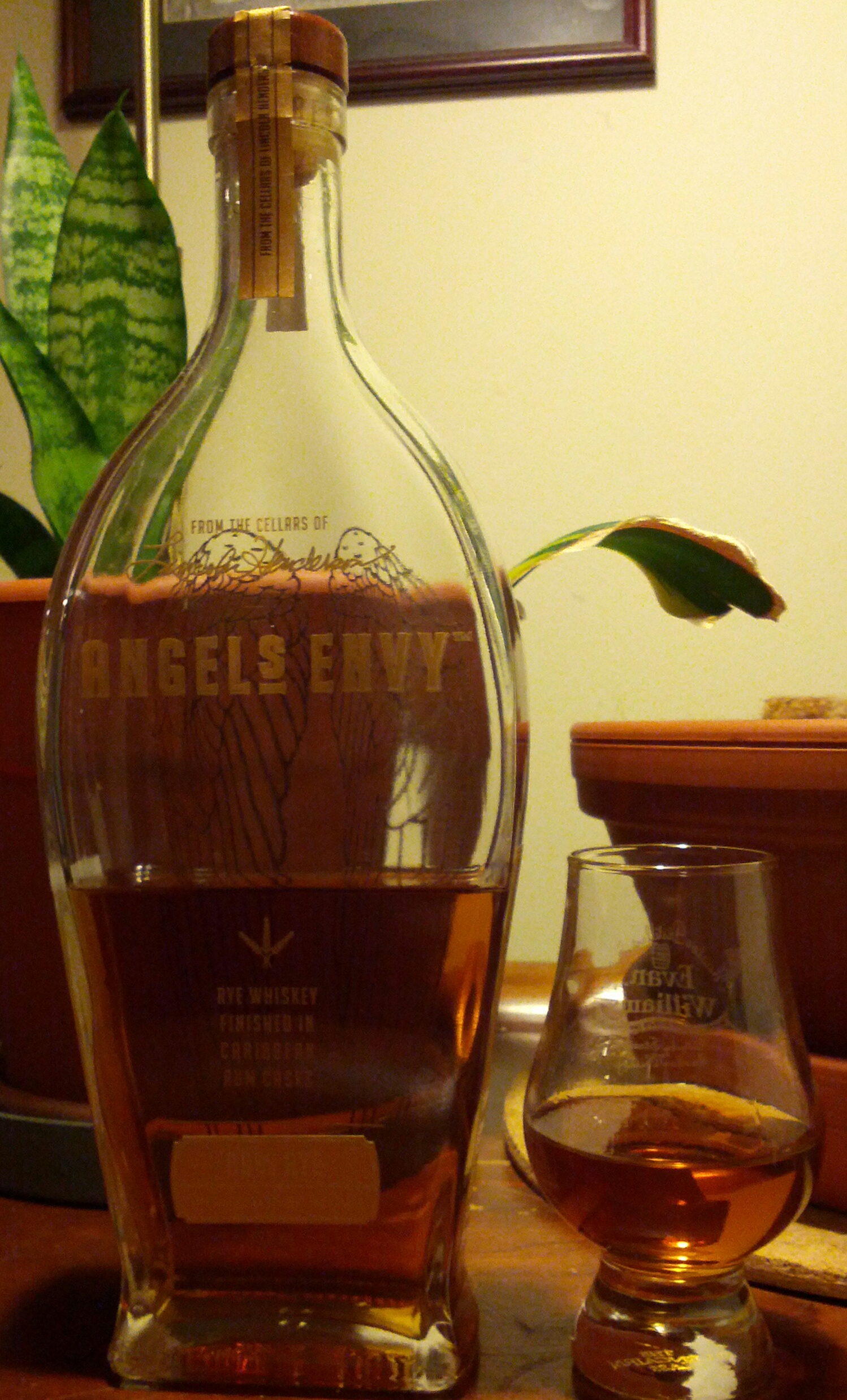
Distiller: Likely MGPI, Lawrenceburg, Indiana, USA
Style: High rye rye, finished in Caribbean rum casks.
Age: NAS
Batch: 1C
Proof: 100 (50% ABV)
Thanks to Oscar for help in obtaining this bottle and Amy for splitting it with me.
Appearance: Pale copper
Nose: Butter rum, carrot cake, almond brittle.
On the palate: Medium bodied, sweet and spicy. Fruitcake (the good, homemade kind), crystallized ginger, allspice, nutmeg, clove, mace, molasses.
Finish: More spice cake with a good bit of alcoholic burn. Clears out the sinuses and the sweetness lingers on the tongue and lips.
Parting words: This is another special release from this year that I have delayed reviewing in typical Sipology style. When it was announced that Angel’s Envy was releasing a rye, I was skeptical. When I heard the price, I was even more skeptical. When I tasted it, I was no longer skeptical.
This is a whiskey unlike any I have ever had and in a very good way. The rum flavors are very up front and they meld in an effortless way with the spice of the high-rye recipe rye to create a whiskey that is like drinking a 100 proof spice cake. It’s just an amazing product, albeit a very expensive one. It sold for $70 or more when it was to be found but it’s worth every penny and then some. There may be a few on shelves still, so if you see one, buy it. This is an amazing whiskey. Highly recommended.
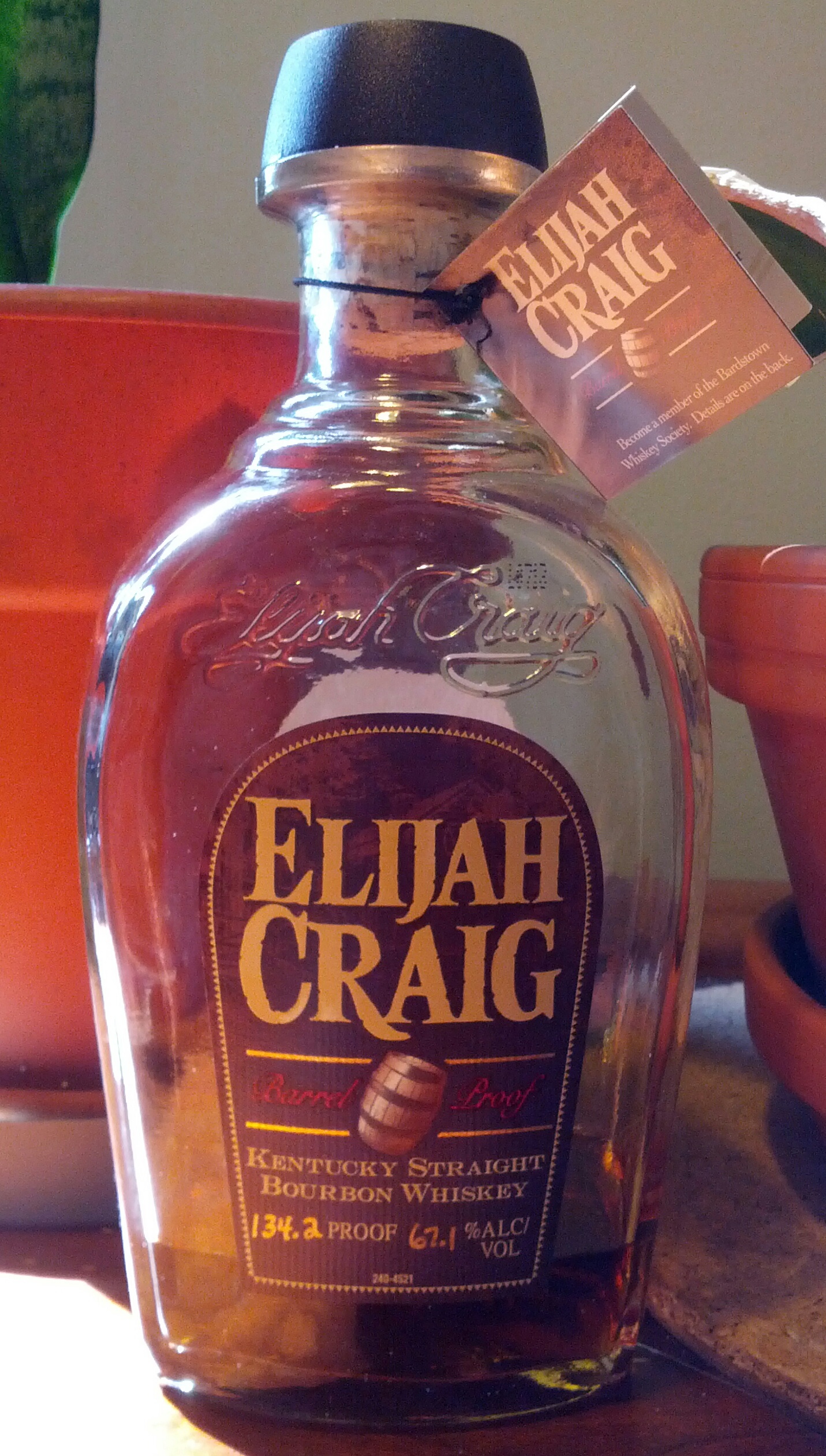
Age: 12 y/o (not on the front label but on the back)
Proof: 134.2 (67.1% ABV)
Notes: Not chill-filtered. First edition reviewed.
Appearance: Dark brown, like root beer.
Nose: Alcohol, leather, caramels. With a little bit of water, it opens up considerablly. Heaven Hill’s signature herbaceousness comes through, this time as tarragon and lavender, with a big hit of oak joining the party.
On the palate: Hard caramel candy, and lots and lots of burn. Much more drinkable with a bit of water. The herbal notes come through firmly alongside the candy but it’s still quite hot. With a little more water, it opens up into crème brulee, licorice, oak, and more candy.
Finish: Neat, it’s very short and hot, evaporating off the tongue almost immediately. With water, a little or a little more, it leaves a pleasant combination of peppermint, caramel, oak and of course alcohol.
Parting words: This is one of my favorite whiskeys ever. It is very much in the Heaven Hill mold, but the complexity and depth of flavor is unsurpassed for a product of that distillery. It’s much better balanced than the old Elijah Craig Single Barrel 18 y/o and of course much higher proof. It is much closer to the standard 12 y/o Elijah Craig, but even more so to the better vintages of Evan Williams Single Barrel, again at much higher proof. Perhaps an even more apt comparison is to George T. Stagg. This is drinks like Heaven Hill’s answer to Stagg. It is an older, more powerful, richer unchillfiltered edition but one very much in the house style. In the case of Buffalo Trace (the maker of Stagg), that’s sweet vanilla and a little bit of grassiness. In the case of Heaven Hill, that’s caramel, mint and affordability.
The only downside is that for me it was undrinkable at bottle/barrel proof. There will always be the macho men and macho women who will drone on about how they never add water and how that ruins the flavor and so on. Good for them and their gullets, but this whiskey just begs for water. All this and it’s under $50 before tax. You’d be stupid NOT to buy it. Elijah Craig Barrel Proof is highly recommended.
Maker: Chateau Grand Traverse, Traverse City, Michigan, USA
Origin: Michigan, USA
ABV: 10%
Appearance: Medium gold.
Nose: Lychee, pineapple, tangerine, pear.
On the palate: Full-bodied and mouth-puckeringly tart when fresh from the bottle. Lemon, sour candy. As it has time to open up at room temperature it calms down quite a bit. The citrus is still there and still strong, but a pleasant herbal note asserts itself. Underneath all this is a beautiful firmness that presages good things to come.
Finish: Fairly sweet but still very tart. Fades fairly quickly and leaves a slightly sticky residue on the lips.
Parting words: I think this is another lesson wine for me. It was close to undrinkable on first pour, but I don’t think that’s due to any inherent flaw in the wine. I may be all wet here, but I think it needs much more time in the bottle to settle down. As it is, it’s unbalanced.
There is plenty of good stuff going on. The fruit in the nose is wonderful and the mouth feel is great, but this wine is not ready for primetime. This is the first time I have encountered a Michigan wine like this from a major quality producer (one of my favorites actually). Far from being disappointed I was encouraged that Michigan producers are making wines for which multi-year bottle aging isn’t just possible but recommended. That’s an encouraging sign.
Anyhow, rather than give a mild recommendation to this, I will give it an I for incomplete. Good thing I have another bottle cellared.
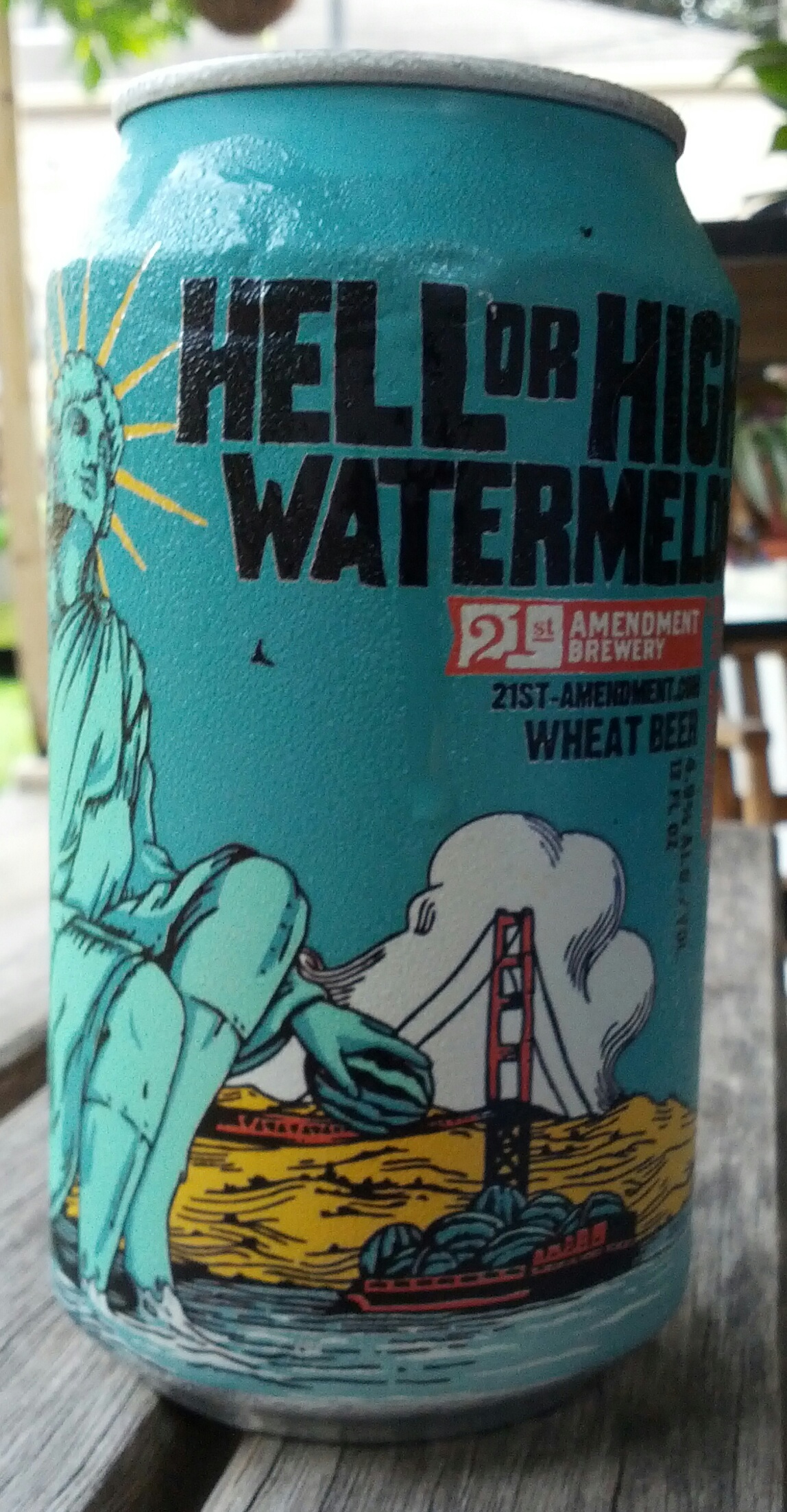
Maker: 21st Amendment, San Francisco, California, USA
Style: Watermelon wheat beer.
ABV: 4.9%
Thanks to Rhiannon for the cans.
Appearance: Not sure, drank it out of the can.
Nose: Sweet watermelon, a touch of cereal and tropical fruit.
On the palate: Fizzy and mild. Watermelon, banana pudding, cream of wheat.
Finish: Crisp. Watermelon with some lingering bitterness.
Parting words: Fruit beers are getting more respect these days, at least from me. This is a fantastic summer beer. Crisp and refreshing but with the weight and fruit of a wheat beer. The tropical fruit already present is complemented perfectly by the watermelon. It’s not particularly complex or a “meditation beer” but it’s perfectly refreshing and delicious. It’s runs at typical micro prices, judging by what I saw online. It’s not available locally. Hell or High Watermelon is recommended.
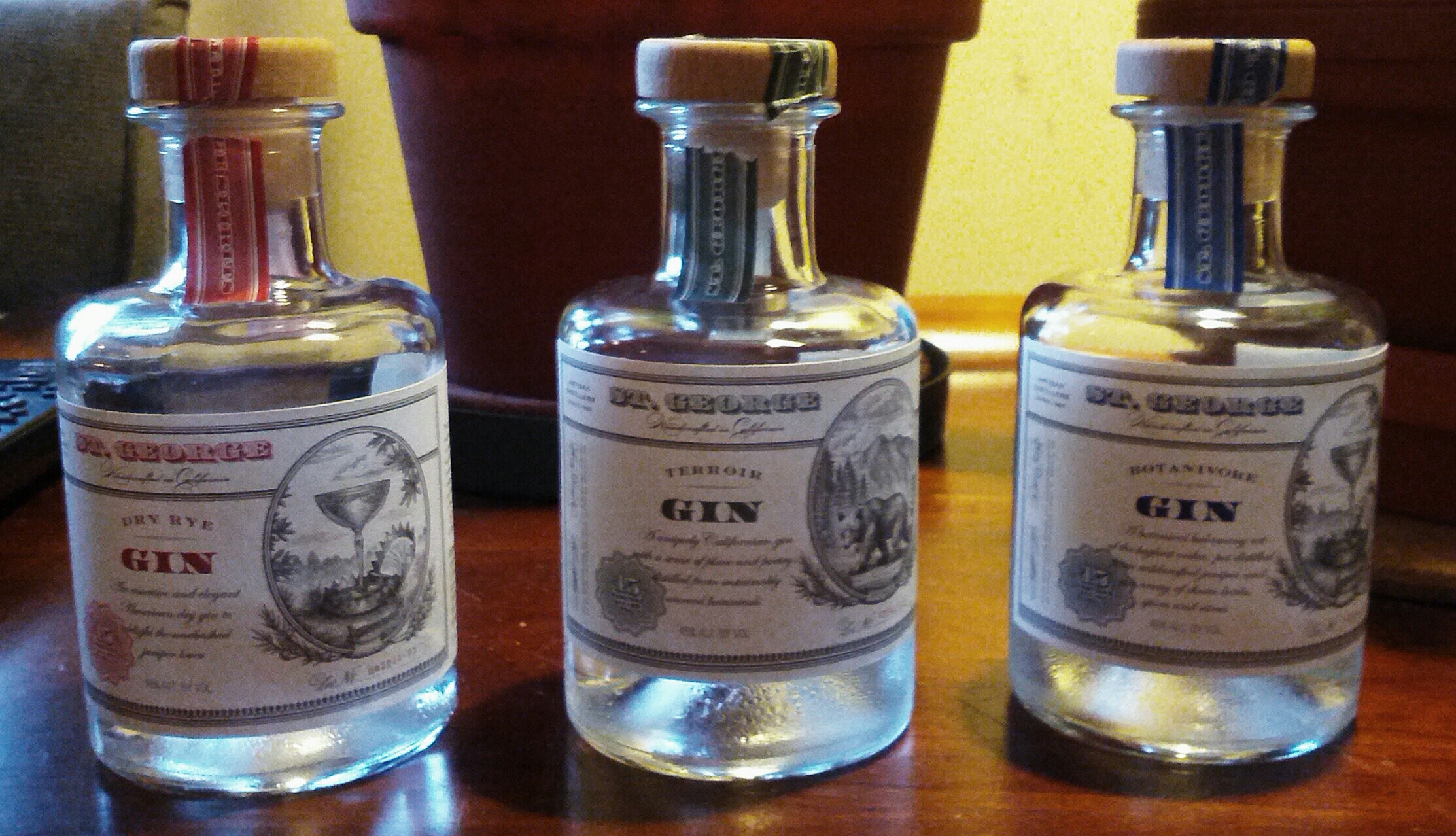
1) Unpleasant. The aroma of pot-distilled rye spirit melds with the aroma of juniper to create something that smells like wood varnish, only worse.
2) Spicy and exotic. Fennel seed, mango, lemon grass, bay leaf, sage.
3) More conventional and balanced but still very good. Citrus peel, anise, grains of paradise, coriander, juniper.
On the palate
1) Tastes worse than it smells. Thick and varnishy. Brings back memories of varnishing a birdhouse on a hot, humid day. The rye white dog and juniper tastes are like mustard and ice cream. Mustard is good and ice cream is good, but together they are disgusting.
2) Medium-bodied and spicy. A brightness comes through on the palate that is not as prominent in the nose, but a very welcome addition. Aniseed candy, sugarcane, papaya, fig, lemon thyme
3) Medium-bodied and sophisticated. Sweet cassia dominates in a very pleasant way with the other botanicals harmonizing nicely.
Finish
1) Finish is no better, but at least it doesn’t get any worse. More varnish. Mercifully short.
2) Bright, juniper/herbal finish that lingers for a long, long time.
3) Fairly dry and spicy. More coriander and a hint of cumin as it very slowly fades.
Mixed
The dry rye did very poorly with tonic and in a martini, essentially ruining both drinks. The bottom of the package containing the three bottles recommended using the dry rye in a Negroni which I did. It fared much better in that drink, but I’m not interested in buying a gin that only tastes good in one particular drink. I don’t think many other people are either. Others gin drinking friends who tried it, even in the Negroni, also disliked it. One said it tasted like white dog. The other two did great in everything they I tried them in. They were excellent team players but also brought their own distinctives to the table.
Parting Words
Out of the three, the Terroir Gin was my favorite. It was unlike any other gin I have tasted but still recognizable as gin. It’s a delight from beginning to end, and it’s the sort of experience I look for from a micro-gin. The Botanivore was very good too. It lost a little in comparison to the Terroir, but on its own it’s a wonderful product. Where Terroir is a bit garish, Botanivore is elegant. My friends were split between these two. Both were enjoyed but one favored the Botanivore while the other agreed with me.
It probably goes without saying but Dry Rye is not recommended. Botanivore is recommended and Terroir is highly recommended. All have a minimum price of $37 per 750 ml bottle in Michigan. For this tasting, I purchased a set of three 200 ml bottles for $30 or thereabouts.
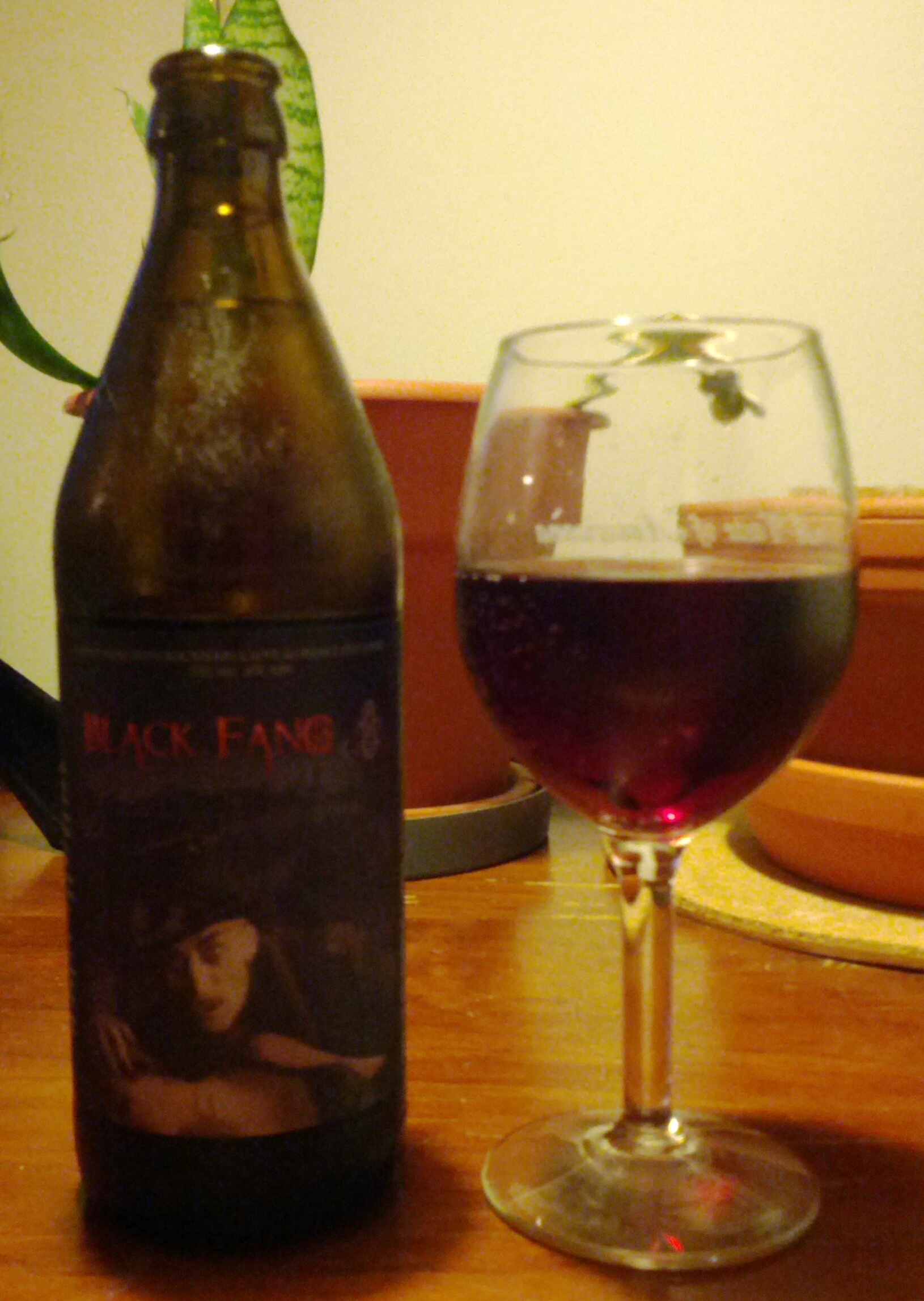
Style: Mead with blackberry, clove and orange peel
ABV: 6%
Appearance: Dark burgundy. Not much effervescence after the pour.
Nose: Wild blackberry, sandalwood, hint of honey and citrus.
On the palate: More lively than expected. Medium sweet and spicy. The blackberry is front and center, but the clove slowly builds in strength until it takes over my whole mouth. The orange peel is a background balancing note.
Finish: Tart berries with an orange peel body guard with the clove doing the same slow sneak attack thing it does on the palate. Like a vampire. Or something.
Parting words: This is the second of B. Nektar’s horror-themed fruited & spiced meads I’ve tasted. The first one was mango and black pepper(with an Evil Dead tie-in. I love that flavor combo but the mead I did not love. It was good, sure, but the pepper didn’t come through and the mango only came trough enough to offset the bitterness of the honey. Not much different than their Orange Blossom mead. I was disappointed.
This is a much more successful product. Nosferatu (one of my favorite horror films) is the cover star this time. The label blurb is chock-full of cheesy vampire jokes (“CAUTION: Keep away from sunlight. Product will not sparkle in sunlight”) but the bottle is full of tasty. One of the things I admire about B. Nektar is their willingness to try just about anything. Not every experiment works but you never know if something will work unless you try, right? Black Fang (at about $8 for 500 ml) is recommended.
In lieu of a whiskey review this Friday, I’d like to share some of the results of a fun outing with a friend to hear a veteran of the American whiskey industry.
Wednesday afternoon I received a text message from Amy of Bonne Amie Knits reminding me that Dave Pickerell (Maker’s Mark Master Distiller for 14 years) was making an appearance at The Sugar House, a cocktail bar in Detroit, that evening. If I ever knew about it I had completely forgotten, so I stuffed my mouth full of my dinner and we made our way down as soon as we could. The drink special that night was $3 shots of Maker’s and $4 shots of Maker’s 46 which was a damn good deal so I had a few.
Dave spoke and took questions for about two hours. He told stories and talked about his time at Maker’s and his time since 2008 acting as a consultant and Master Distiller at Whistle Pig, George Washington’s Distillery at Mt. Vernon and Hillrock Estate. Amy scored points when she asked what it was like working with George Washington. I tried to get Dave to reveal the source of WhistlePig but he didn’t fall for it (I’m still going with Alberta). I also asked him if he had thoughts on the Maker’s Mark proof reduction fiasco, and he did. He was in town doing some work with the Two James distillery in the Corktown area of Detroit (near where Tiger Stadium used to be, and a few blocks from the bar).
Instead of trying to recount everything he said as he said it, here are some highlights by topic:
Miscellaneous Information
-Dave won the Kentucky Bourbon Festival cocktail contest three years in a row, but the first cocktail he invented turned out to be an old cocktail that already had its own name, The Ward Eight. The third one he invented was supposed to be a cross between an Old Fashioned and a Manhattan. When Gary Regan tasted it, he said it wasn’t an old fashioned or a Manhattan but it was good anyway. He named it the Pickerell, but Dave had nothing to do with that since he doesn’t like to put his name on things.
-The bulk whiskey market (excess aged whiskey distillers will sell when they need to have it) is the tightest he’s even seen. The oldest whiskey available on the bulk/spot market is 15 months old. Basically, there is none to be had.
-Dave used to be a big stickler on drinking his bourbon neat but while working at Maker’s he came to the conclusion nobody has the right to tell anybody how they should drink their bourbon.
-He slowly sipped on a Maker’s sour while he was talking.
Microdistilling
-Dave on microdistillers making whiskey: “Eventually, it’s going to have to taste good.”
-Dave thinks the microdistillers are driving innovation right now. This is because they aren’t as constrained by the need to sell thousands of cases of a product to make it successful like the big producers are. For many micros, 100 cases sold of any product counts as a success. This means the costs of experimentation are much lower.
-He had never worked with rye before working at Mt. Vernon. The first time he made a batch there he noticed a little foam was forming on top while the rye was fermenting. So he put a sheet of plastic over the top of the fermenter and put a couple pieces of wood and a brick on top before he left the distillery for the day. The next morning when he walked into the room where the fermenter was the brick and wood were on the floor as was a two foot layer of foam. They lost that batch.
-The mix of whiskey from all the Kentucky distilleries Mt. Vernon released tasted terrible.
-The Mt. Vernon Rye currently being released is distilled at Hillrock in New York because it’s easier to do it in a more modern facility. The working conditions are pretty primitive at Mt. Vernon.
-Hillrock is currently making the world’s first ever Solera aged bourbon.
Other Master Distillers
-He didn’t know Elmer T. Lee well but said he was a gentleman and active at BT practically until the day he died. He had a greater impact on the bourbon industry than anybody else in his lifetime.
-He thinks BT should change the proof of ETL to 93 in honor of Elmer’s age when he passed away.
-Jimmy Russell is a good friend of Dave’s and has been a mentor to him throughout his career.
-Jimmy taught him the importance of pausing for a photo op (see below).
-Once Dave and Jimmy were at tasting. A guy got up and made a big show of swirling his bourbon in his glass, sipping it slowly and announcing that he tasted blackberries, winter fruit, leather and many other obscure flavors. Jimmy leaned over to Dave and said, “I don’t know about you, but I don’t put any of that shit in my bourbon!” Both then starting laughing hysterically, disrupting the tasting. [This story has made the rounds for a long time]
Maker’s Mark
-Bill Samuels Jr. is one of the most brilliant men he’s ever met.
-Bill knows next to nothing about making bourbon but is a masterful marketer.
-Before Dave worked at Maker’s he worked at an engineering firm that did some work for Maker’s. Dave didn’t like the way the way the company handled the business with Maker’s and told Maker’s about what happened. Later when Dave was in Loretto, Bill came up to him and said, “Did you know we are currently looking for a new Master Distiller?” Dave said, “No.” Bill said, “We are plum out of candidates and we didn’t like any of them. We like you, though. The job is yours if you want it.” He accepted and the next day told his former boss he was quitting and also that Maker’s was no longer going to be using that company’s services.
-He said the MM shortage is very real. He thinks the proof change was the right move to make and he is disappointed that they caved to public pressure. In his opinion the problem is not capacity but the surprising growth of the brand in the midst of a deep recession. Nobody expected that and so nobody planned on increasing production to meet that growth.
-He predicts that since the proof change was rolled back there will be “rolling shortages” of MM around the world.
After the formal talk was over he milled around for a while, chatting with the bar patrons and a couple old friends who showed up from Allied Domecq, former owner of Maker’s Mark (the company was acquired by Pernod-Ricard in 2005 with Maker’s being sold off to Beam).
Amy and I stayed at the bar and had a nice chat with Pete from Two James. They have a lot of exciting things planned including a vodka, gin and a Madeira finished bourbon. After we were done at the bar we took a stroll down Michigan Avenue and took a look at Two James.
Some photos from the evening:
Dave and his tattoo of George Washington’s stillDave and me. (Photo by Amy)Two James at dusk.







 Sipology