Jackson-Triggs Vidal Ice Wine Reserve

Maker: Jackson-Triggs, Niagara-on-the-Lake, Ontario, Canadawpid-2014-10-08-19.50.35.jpg.jpeg
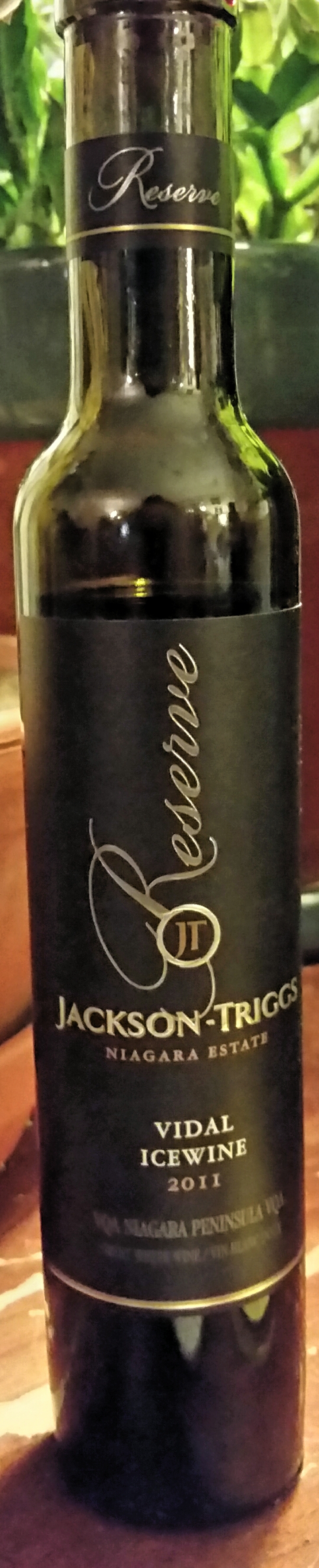
Place of origin: J-T Niagara Estate, Niagara Peninsula VQA, Ontario, Canada

Vintage: 2011

ABV: 9.5%

Price: $24/187 ml (Binny’s)

Appearance: Dark gold with long, broad legs.

Nose: Canned Bartlett pears, mandarin oranges, Meyer lemon.

Palate: Full bodied, the syrup in that can of Bartlett pears, orange juice from concentrate, pinch of thyme.

Finish: A long lingering sweetness all over the mouth accompanied by a hint of golden apple.

Parting words: The Niagara Peninsula VQA is a blanket appellation for any wine produced in the Niagara municipal region in Southern Ontario. This area is bordered by Lake Erie to the south, Lake Ontario to the north, the Niagara River to the east and the city of Hamilton to the west. The region includes several sub-regions, including Niagara Escarpment, Niagara-on-the-Lake and their subdivisions.

Having water on three sides creates a micro-climate favorable for the growing of grapes, as one might expect. The climate remains Canadian, so early and late frosts and freezes are a constant concern. This is a problem for most types of wine production, but not for the production of ice wine, a style that Canada does very well across the board.

Picking the grapes while they are frozen concentrates the sugars like “noble rot” or the straw wine process does, resulting in a thick, sweet, aromatic (and expensive) dessert wine. In Canada and the northern U.S., the hybrid grape Vidal is often used alongside the more traditional Riesling. Vidal is used for its hardiness and ability to produce wines with high acidity and sugar levels in cold climates.

This one is a good example of a Canadian Vidal ice wine. It’s thick and rich but not flabby. The approachable pear and citrus flavors make it a good introduction to the style, as does the relatively low price. Jackson-Triggs 2011 Vidal Ice Wine Reserve is recommended.

Parker’s Heritage Straight Wheat Whiskey (2014 edition)

Maker: Heaven Hill, Bardstown/Louisville, Kentucky, USAwpid-2014-10-03-14.49.22.jpg.jpeg

Age: 13 y/o

Proof: 127.4 (63.7% ABV)

Michigan State Minimum: $100

Purchased for $85

Appearance: Dark auburn with long thin legs.

Nose: Alcohol, old oak, caramel, wheat bread in the oven.

Palate: Full bodied and sweet on entry. Butterscotch, toffee hard candy, chewy taffy, cocoa powder. Water brings out more of that trademark Bernheim “biscuity” flavor, but still plenty of candy.

Finish: Pretty hot with lots of oak and a touch of sweetness. Lingers for a very long time.

Parting words: Heaven Hill’s Bernheim Original is the world’s best selling straight wheat whiskey. I can say that with confidence because it’s also the only straight wheat whiskey produced by a major American distiller. To almost everyone’s surprise, they added an age statement recently and those bottles are now hitting the shelves.

An even bigger surprise was when it was announced that the 2014 edition of the PHC was going to be a wheat whiskey. Many mistakenly assumed that it was going to be another wheat bourbon, but that’s not what this is. It’s a wheat whiskey, meaning that it is made from a mashbill containing at least 51% wheat, the rest being corn and malted barley. It is required to meet all the legal requirements for straight ryes or bourbons, only with wheat in the place of rye or corn.

I came in expecting a very dry, subtle whiskey along the lines of Bernheim Original but oakier. I didn’t expect such a lush, sexy whiskey. It has a round voluptuousness that I associate more with Four Roses or older Van Winkle bottles than I do with Heaven Hill (as much as I love HH). Bottling at barrel proof and not chill filtering were the right choices to make for this one, but when aren’t they the right choices? It’s hard to compare this to anything else, but I think it’s the best in the Parker’s Heritage Series since 2010’s Wheat Bourbon edition. It also fits easily into my personal top twenty list.

I got a good deal on mine, but even at $100-$120 Parker’s Heritage Original Cask Strength Kentucky Straight Wheat Whiskey (full name) is highly recommended.

If you want a second opinion, consider this: I brought a full bottle of this to the table at a recent gathering of some of the most obsessive and discerning American whiskey enthusiasts in the country. It shared the table with dusties from Wild Turkey’s golden age, Four Roses limited editions, Stitzel-Weller products and dozens of bottles of that caliber. After an hour or so I had to hide it under a chair because it was already half empty. That says it all.

Head to head: Jura 10 vs. Superstition vs. 16

10= Isle of Jura Origin, 10 y/owpid-2014-09-16-13.30.12.jpg.jpeg

S= Jura Superstition (NAS)

16= Isle of Jura, Diurach’s Own, 16 y/o

Maker: Isle of Jura, Argyll, Scotland, UK (?) (Whyte & Mackay/United Breweries)

Region: Islands

ABV: 43%

Michigan State Minimum

10: $48

S: $57

16: $71

Appearance (caramel color likely added)

10: New penny with long, well-spaced legs.

S: Slightly darker like a middle aged penny. Extensive necklacing.

16: Even darker. Old amber with long thick legs.

Nose

10: Light clover honey, heather, alcohol, hint of leather.

S: Light peat, alcohol, honey, alcohol.

16: Baklava, oak, alcohol.

Palate

10: Medium bodied. Golden apple, wildflower honey, chamomile tea.

S: Butterscotch, thyme, alcohol.

16: Toffee, butterscotch, vanilla custard.

Finish

10: Orange blossom honey but without any bitterness.

S: Smoke finally comes through followed by burn but it then settles down into a peat-infused sweetness.

16: Dark chocolate covered caramels with a little bitter oak on the tail end.

Parting words: I love mini sets like this, because they enable me to affordably give you the head to head tasting you so love, dear readers.

Isle of Jura (distilled and aged on the Isle of Jura, Islay’s neighbor to the northeast) was one of the first single malts I ever tried. Back then all I could find was the ten year old version. I always found it enjoyable but dull. Tasting it again now hasn’t changed my assessment too much. It’s still mild, but it’s enjoyable enough and works well as an entry level or weeknight malt.

Superstition was one of the first Jura line extensions available in the US. It is mildly peated, which adds a nice extra dimension to the malty, honeyed character of the standard Jura.

The 16 y/o is a big toffee-filled dessert dram. It’s not cheap compared to the others, but it’s more affordable than most single malt whiskies its age. Again, it’s not particularly complex but it does one thing and does it very well. In the state of Michigan it also comes in a gift pack with a pair of glasses (for your whisky, not your eyes), so factor that into the price.

All three are good values and recommended.

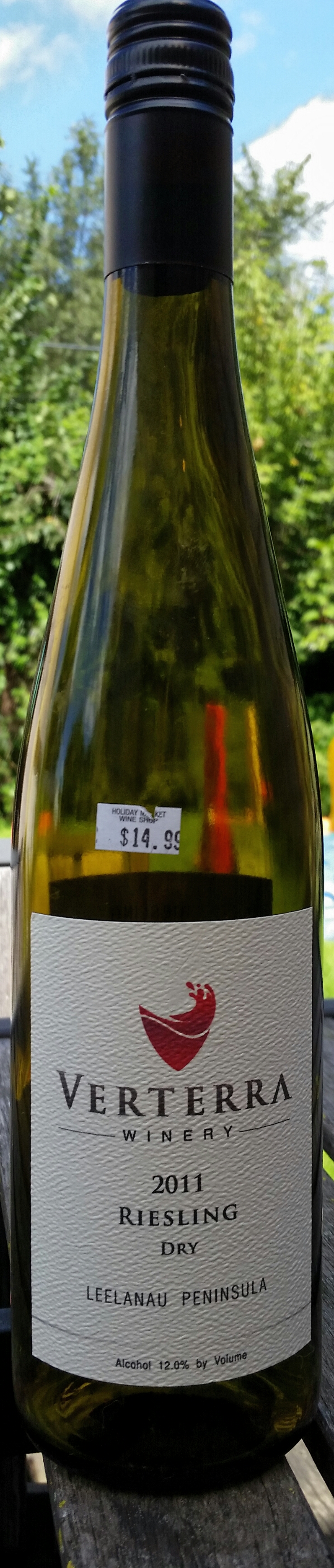
Verterra Dry Riesling

Maker: Verterra/Chaos, Lake Leelenau, Michigan, USAwpid-2014-09-16-13.28.54.jpg.jpeg

Place of origin: Leelanau Peninsula AVA, Michigan, USA

Vintage: 2011

ABV: 12%

Purchased for $15

Appearance: Light gold with

Nose: ripe peach, granny smith apple, bitter orange.

Palate: Medium bodied. Red pear, navel orange, mineral water, white grapefruit.

Finish: Clean and dry. More peaches and pears with a hint of vanilla.

Parting words: The 2011 vintage in Northern Michigan continues to impress me. Leelanau is a much larger area than Old Mission with many more wineries, so the region as a whole is less consistent than the OMP. Verterra itself is of consistently high quality, though. I recommend trying anything of theirs you see.

This wine is everything a dry Michigan Riesling should be. It’s dry and food-friendly without sacrificing any character. Orchard fruit in abundance with a touch of acid for balance. Even eighteen hours after opening, it was still delicious, maybe even better. It’s worth every penny and then some. Verterra’s 2011 Dry Riesling is highly recommended.

Maestro Dobel: Kakos Market blend (9/11/2013)

Maker: Proximo, Jalisco, Mexico.wpid-20140912_182014.jpg

Notes from label: Single barrel. Aged in French Oak, La Mesa Ranch, barrel No. 3719, bottle No. 174.

ABV: 40%

Michigan State Minimum: $50

Appearance: Clear with abundant, evenly spaced legs.

Nose: Agave syrup, peppermint, lavender, jicama, touch of oak, cracked white pepper.

Palate: Full bodied and sweet. Alcohol, white grape juice, orange rind.

Finish: Black pepper, red dradish, oak, lime peel.

Mixed: I tried it in several traditional tequila cocktails, despite the high price. My preferred method for drinking tequila is with a squeeze of lime, but that didn’t really complement the flavors in this one. It did very well in a traditional margarita and in a tequila sunrise. Did OK in cola with a squeeze of lime but got a little lost.

Parting words: Maestro Dobel Tequila is a single estate tequila from the Cuervo people. It’s technically a reposado, but is actually a blend of reposado, añejo, and extra-añejo tequilas. For some reason it’s been filtered so as to strip away all color from the spirit. Maybe it had an unappealing color or clear was deemed to be more marketable.

At any rate Maestro Dobel is a sweet, easy drinking sipper that works ok in top shelf cocktails too. At this price I would like a little more character and proof, but as it stands I think it’s worth a purchase. Maestro Dobel is recommended.

American Prairie Reserve

Maker: High West, Park City, Utah, USAwpid-2014-09-12-19.18.58.jpg.jpeg

Distillers: MGPI, Lawrenceburg, Indiana/Four Roses, Lawrenceburg, Kentucky, USA

Style: Blend of straight bourbons (cannot be called straight because bourbons are from different states)

Age: 6 y/o (blend of 6 y/o MGPI with 10 y/o Four Roses)

Proof: 92 (46% ABV)

Michigan State Minimum: $42

Appearance: Medium copper with evenly spaced legs.

Nose: Alcohol, bubble gum, leather, salted caramel, whiff of steamed asparagus.

Palate: Spicy and a little hot. Cotton candy, jalapeno, oak, country ham.

Finish: Semi-dry. Oak, raw pecans, alcohol.

Parting words: High West has gone from a start up to one of America’s premier blenders and rectifiers in just a few short years. This bourbon (their first & only to my knowledge) is actually a reunion of sorts. The distilleries now called MGPI and Four Roses were both once owned by Seagram’s, which I imagine led to a lot of farcical missed meetings. “OK, I’m in Lawrenceburg, where are you?” “I’m in Lawrenceburg, where are YOU?” “Lawrenceburg, Kentucky!” “UHOH!”

Anyway, American Prairie Reserve is not cheap, but it’s well done and worth the price, especially considering that 10% of after tax profits go toward efforts to establish a federal American Prairie Reserve in northeastern Montana. That’s also why there’s a grouse on the label.

American Prairie Reserve is recommended.

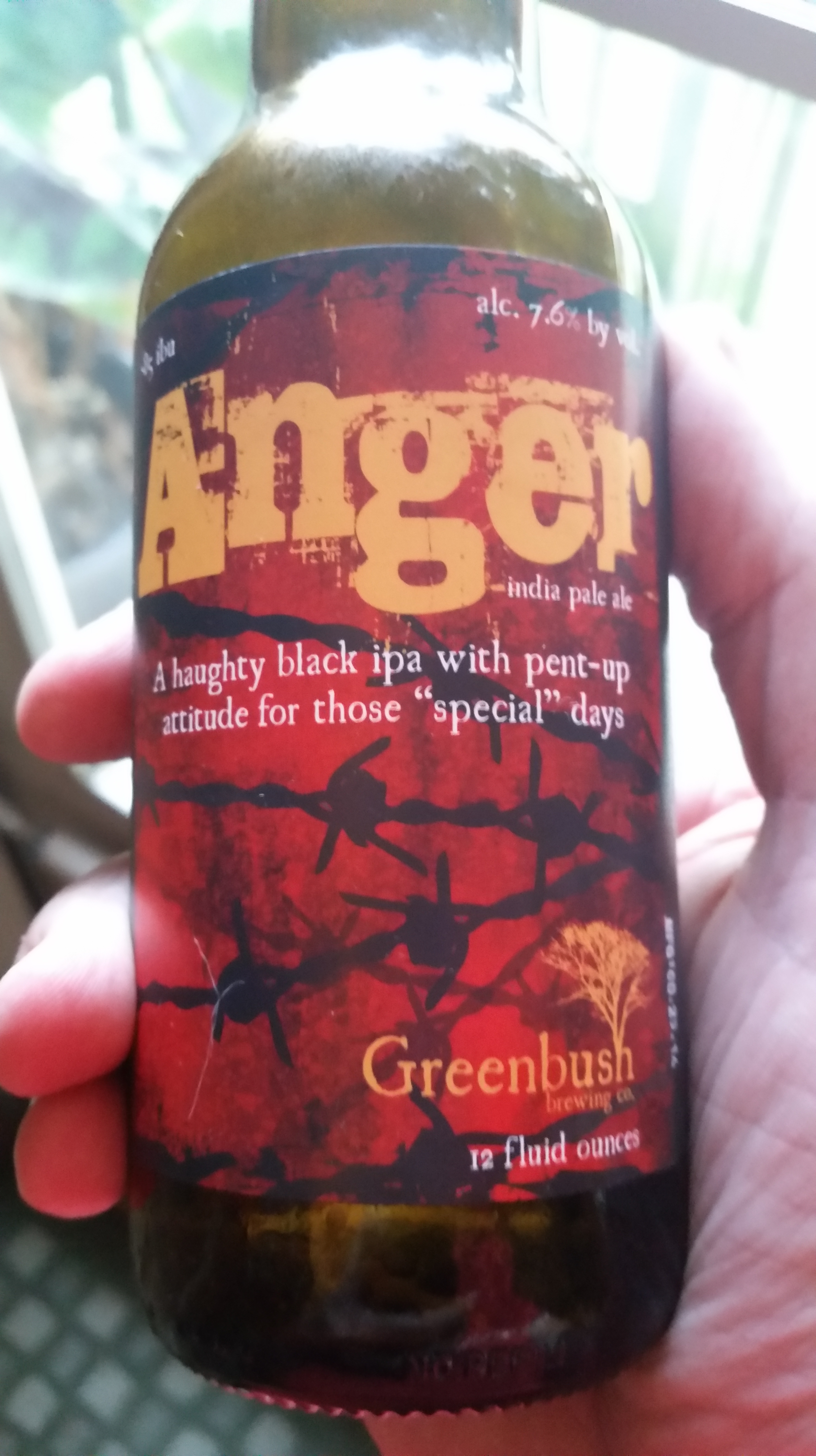
Anger

Maker: Greenbush, Sawyer, Michigan, USAwpid-20140908_191327.jpg

Style: Black IPA

ABV: 7.6%

Purchased for $11 for a 6 pack.

Appearance: Dark coffee, lacy, light colored head.

Nose: Grapefruit, lavender, coriander, toasted brown bread.

Palate: Sweet and spicy. Black pepper, coffee, hint of chipotle.

Finish: Mildly sweet and more dry hoppy spice. Black cherry, then a bit roasty bitterness.

Parting words: I’ll admit to being a man who got sick of IPAs. The IPA madness seems to have died down about so I came out of my hiding place to buy myself a pack of Anger.

Anger makes me happy. It has lots of hoppy IPA aggression but it is perfectly balanced by toasty and subtly sweet flavors. It goes ok with food, but some of the subtlety is lost. This is an IPA I can drink (a lot) and enjoy. Anger is recommended.

Wild Scotsman

Maker: Wild Scotsman, Cincinnati, Ohio, USA.wpid-20140904_135744-1.jpg

Distillers: Various (One cask each from five whisky regions)

Style: Blended malt whiskey (formerly known as vatted malt).

Age: 15 y/o

ABV: 46%

Price: $74 (The Party Source)

Appearance: Pale gold (no coloring)

Nose: Butterscotch, fig, vanilla, alcohol, oak.

Palate: Soft and semi-sweet. Apricot, vanilla bean crème brûlée, alcohol, gingerbread.

Finish: Fairly hot, sweet malt, toffee, white chocolate.

Parting words: I bought a mini bottle of The Wild Scotsman on a lark as I was checking out at a liquor store in Indianapolis. I had never heard of it before, but I have found it enjoyable.

Although the makers of Wild Scotsman blended malt claim that there are whiskies from five regions in each batch, it is quite Highland in character. Perhaps the Island and Islay components were unpeated because I detected no peat or smoke at all. At any rate, “wild” is a bit of a misnomer for this whisky but it still has plenty of character. It’s very fruity with lots of creamy dessert notes, but the relatively high proof and lack of chill filtering keeps it from being dull.

$74 is pricy for what it is, but vanishing age statements and tightening malt supplies being what they are, that’s probably a fair price. I wouldn’t pay much more than that, though. Wild Scotsman is recommended.

Ugly Dog Gin

Maker: Ugly Dog, Chelsea, Michigan, USAwpid-2014-08-29-19.05.35.jpg.jpeg

ABV: 45%

Michigan State Minimum: $20

Appearance: Clear with

Nose: Harsh. Alcohol, lime peel, juniper, hint of licorice.

Palate: Surprisingly Sweet. GNS, sugar, pine sap, orange juice from concentrate.

Finish: Cedar, alcohol, sugar.

Mixed: Unremarkable but adequate in a G & T, Princeton and Tom Collins. Flat in a dry martini and AWOL in a Negroni.

Parting words: With this gin, Ugly Dog (known primarily for their bacon flavored vodka) is doing the opposite of what most micro-distillers are trying to do. Instead of producing something different than what the big distillers are doing, their strategy seems to be to make an unpretentious, indistinct, workhorse gin. There’s nothing wrong with that, except that the big boys can do it much cheaper. Beefeater & Bombay are $18, New Amsterdam & Pearl are $12, Seagram’s Dry is $11 and Gilbey’s & Gordon’s are $10.

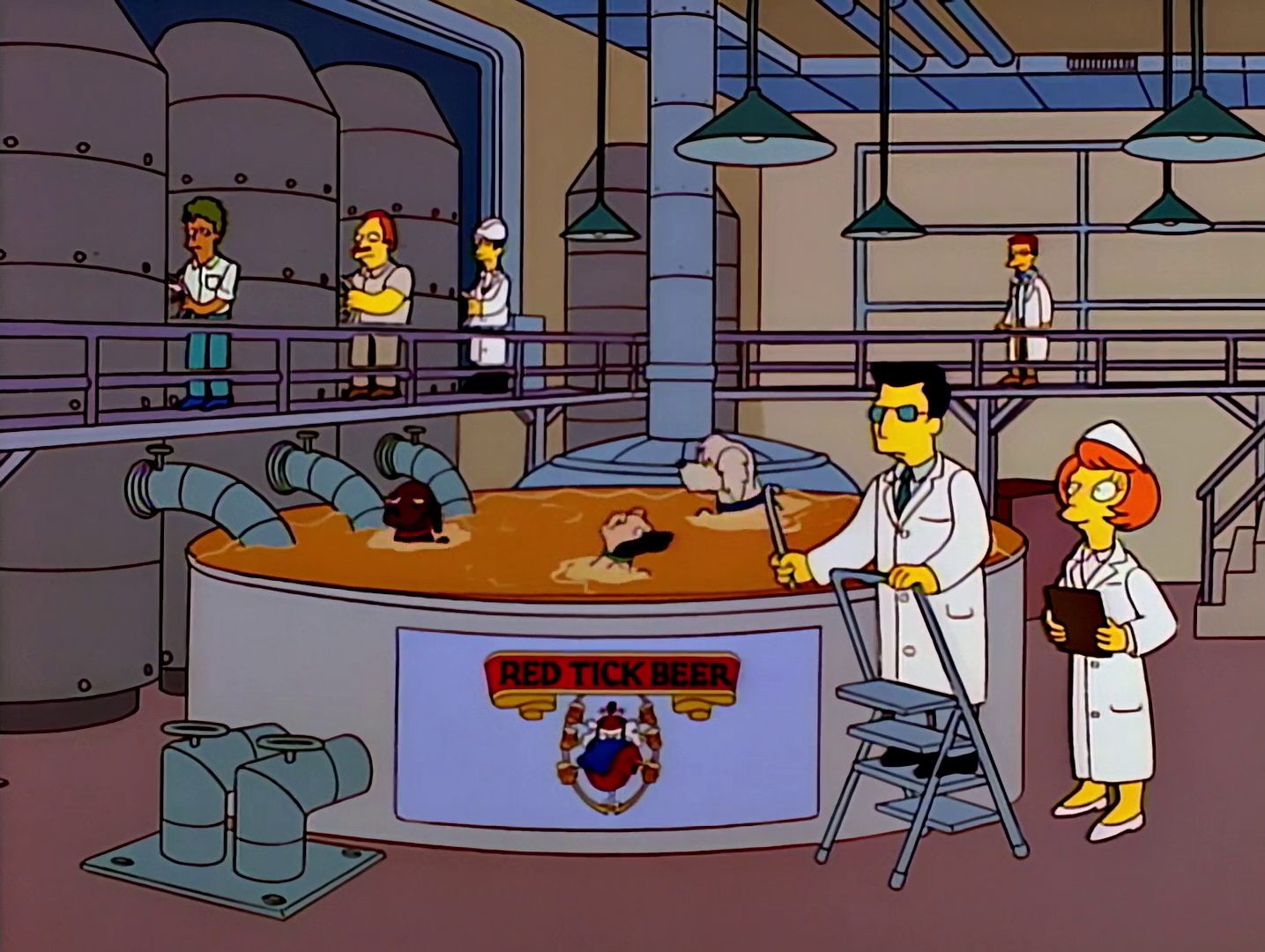
To add insult to injury, the label and bottle are ugly as hell. Gin is all about aromas and the smell of dog is not what most gin drinkers are looking for. Plus, it made me think of this scene from The Simpsons. “Needs more dog”.

Anyway, as you may have guessed, Ugly Dog Gin is not recommended.

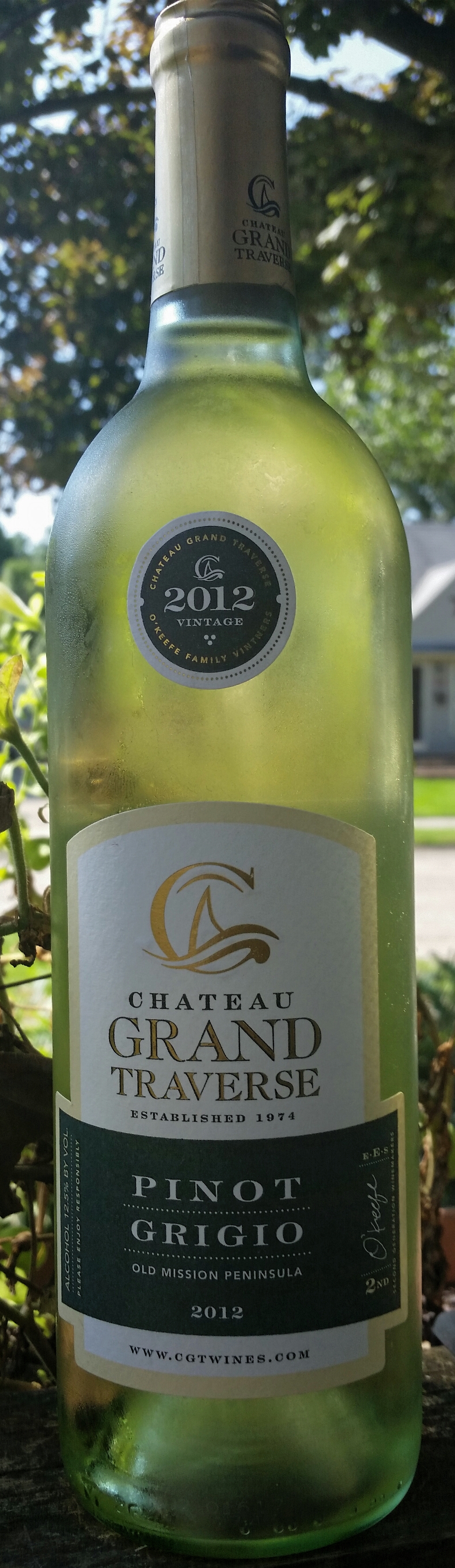
Chateau Grand Traverse Pinot Grigio

Maker: Chateau Grand Traverse, Traverse City, Michigan, USAwpid-2014-09-03-17.34.23.jpg.jpeg

Place of origin: Old Mission Peninsula AVA, Traverse City, Michigan, USA

Vintage: 2012

ABV:12.5%

Price: $11 (website)

Appearance: Light gold with some necklacing.

Nose: Semi-dry. Underripe pears, Golden Delicious apples, lemon thyme.

Palate: Medium bodied and semi-dry. White peach, pink grapefruit.

Finish: Dry and herbal. Mineral water, sage, a bit of smoke.

Parting words: When I think Pinot Grigio, I think of boring, sorry, “crisp” wines from the Veneto that are pounded back on movie nights and in cheesy restaurants. When I think Pinot Gris (The French name for the same grape, “gray pinot”) I think of the wonderfully smoky and herbaceous made from this grape in Alsace. This wine is somewhere between those camps. When chilled according to bottle directions, it is in the crisp camp but as it warms up, some Alsatian character comes to the fore.

It’s cheap for a wine of this quality and does very well with food. This is a Grigio you can drink and not feel embarrassed or bored by. Chateau Grand Traverse 2012 Pinot Grigio.