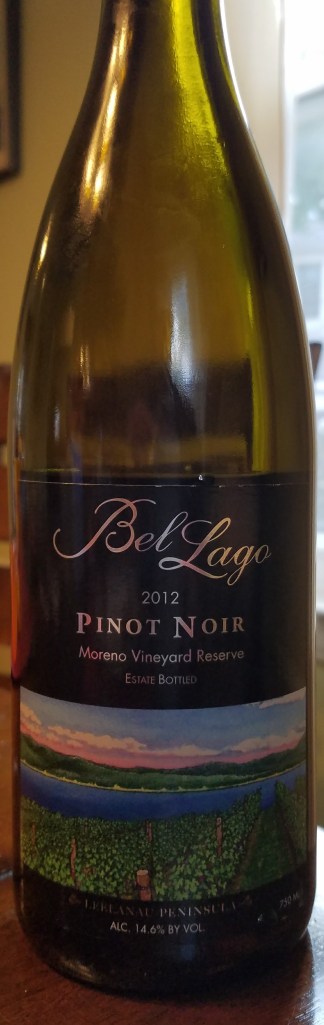
Palate: Juicy on entry. Medium bodied. Cherry, red currant, blueberry, pink peppercorn, strawberry.
Finish: Juicy with growing oak.
Parting words: Bel Lago winery lives up to its name, Italian for “beautiful lake”, with one of the most beautiful views on the Leelanau Peninsula. It overlooks Lake Leelanau, which is named after the peninsula & county which was itself named by Indian agent and ethnographer Henry Schoolcraft in honor of his wife Jane Johnston Schoolcraft who wrote under the name Leelinau, a neologism created by her or Henry. Henry used the name for Native American women in some of the stories he wrote. Henry created several other pseudo-indigenous place names in Michigan, including Lenawee, Alpena, Kalkaska and Oscoda, combining native words with Latin or Arabic elements.
Pinot Noir was one of the varieties hardest hit during the disasterous 2014 and 2015 Polar Vortex vintages. I recently spoke to a Northern Michigan winemaker who told me that he was burnt out on the grape. This winemaker said that Pinot Noir is not worth growing in Michigan because it’s a pain in the ass to grow and it’s rarely any good (my paraphrase).
Bel Lago’s Moreno Vineyard Pinot Noir is a brilliant counterpoint to that view. Oak and spice provide the right amount of contrast to highlight the fruit that drives this wine. This wine is an excellent example of how good Pinot can be in Northern Michigan, at least in a long, hot year like 2012. $45 puts it at the top end of Michigan reds, but I think it’s worth the money. It’s as good as Pinto gets in Michigan. Bel Lago Moreno Reserve Pinot Noir 2012 is highly recommended.
A panoramic photo from the WaterFire parking lot. Tasting room/winery on left, vineyards and apple trees center and right.
I first met Chantal Lefebvre at the 2015 Michigan Wine Showcase. Since it’s the only Michigan wine industry event I get invited to, I try to make the most of it when I’m there. I seek out new wineries or at least ones I haven’t heard of to try. WaterFire was located near the center of the room with the food, so I strolled on over. The table wasn’t crowded so I was able to strike up a conversation with Chantal who was there pouring herself. Chantal is an introvert but not shy, if that makes any sense. As soon as I started asking her questions about the vineyards her passion for sustainable viticulture and winemaking poured out.
Like Mari Vineyards, WaterFire is a relatively new winery but, aside from both having great winemakers making great wine, the two operations couldn’t be more different. There’s no big money behind WaterFire, just Chantal’s (and husband Mike Newman’s) dream and skill. The property was purchased in 2008, planted in 2009 and the first vintage was 2012. The tasting room opened memorial day weekend of 2017, just a few weeks before we visited! They looked for property on Old Mission and Leelanau peninsulas but land was too expensive. They eventually found a cherry orachard in Antrim county that was promising and purchased it. It’s located between Torch Lake (WaterFire? get it?) and the East Arm of Grand Traverse Bay, opposite Old Mission Peninsula, north of Elk Rapids. Chantal has heard rumors of other properties being purchased for in the county but has no idea who or where they are.
Before starting her own winery, Chantal worked at many wineries across Michigan, including Left Foot Charley and Bower’s Harbor. WaterFire only has one other employee, also a woman. This makes it the only winery in Michigan with a 100% female workforce! She informed me that the dogs are male, however.
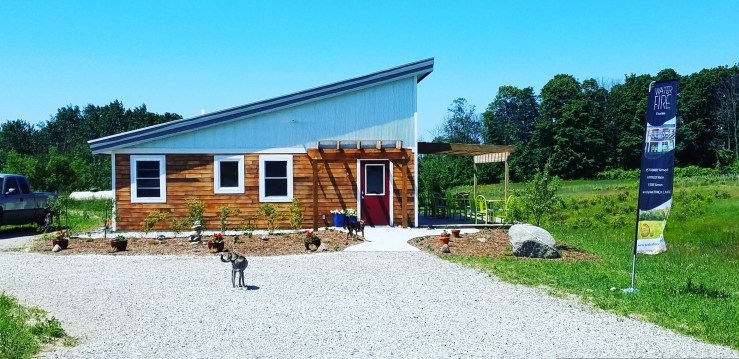
The winery/tasting room building with dogs greeting us.
In the tasting room they currently offer five selections for tasting, including one wine they don’t make themselves, a Williamette Valley Pinot Noir (for any “I don’t like white wine” types that may straggle in). The estate wines are Rieslings from 2013 and 2014 respectively, a 2012 Grüner Veltliner and a Sauvignon Blanc from 2013. As you may have noticed, WaterFire only produces white wines. Why? White wine grapes do best at this site and in Northern Michigan in general. Why waste time with a fussy grape when you’re just starting out?
Waterfire also produces a hard cider, made from feral apple trees of on the estate and accross the road. The cider is very well balanced with some chewy tannins. It’s only available out of the tap at the tasting room, so bring a growler if you want to take some home.
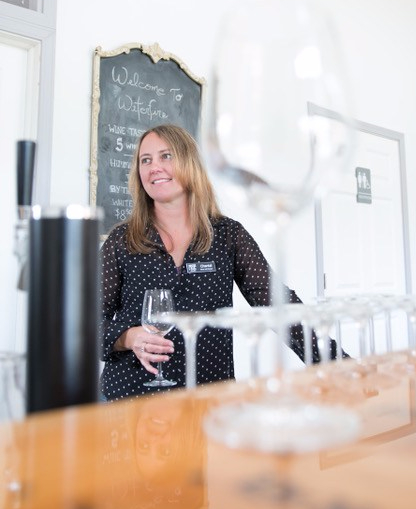
Chantal in the tasting room. Photo courtesy of WaterFire Vineyards.
As I alluded to earlier, Chantal’s passion is growing grapes and doing so in a sustainable way. WaterFire has two Michigan Agriculture Environmental Assurance Program (MAEAP) certifications, for cropping and farmstead practices. Chantal uses no herbicides and only one pesticide, a natural, fermented product to control beetles. She has considered getting an organic certification for WaterFire, but the pesticide does not qualify as an organic. Chantal thinks the organic certification process is a pain and could stand to be simplified.
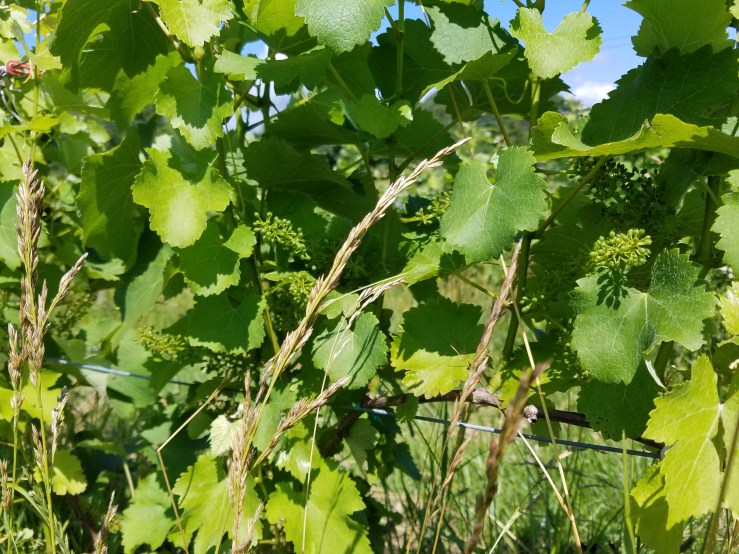
Two rows of Sauvignon Blanc in the front with Riesling behind. Yes, they’re weedy, but Chantal doesn’t care. “Plants have many kinds of relationships, why focus only on competition?”Baby Sauv Blanc.Chantal and her grapes (Sauv Blanc?). Photo courtesy of WaterFire Vineyards.The back block planted with Sauvignon Blanc. Feral apple trees in the midground.
Chantal’s immediate plans are to put in another vineyard block in front of the tasting room, probably with a (not fussy) red variety, possibly “something Austrian”. Lemberger is grown in Michigan and would be the obvious choice, but Zweigelt is grown widely in Ontario and might also be a possibility. If she asked me, I would suggest Gamay. It’s not Austrian, of course, but it is a grape that does very well in Northern Michigan but is not grown nearly enough.
Something I would also like to see is an East Grand Traverse Bay AVA (or something like that) in that area, if more vineyards do go in. If WaterFire’s vineyards are typical of the terroir there, it’s deserving of AVA status.
Future home of the next block of vines, possibly red wine grapes.
We didn’t take a look around the winery itself because we were short on time, but we had a lovely visit and conversation with Chantal. I love her wine and I love her committment to growing grapes in a sustainable way. We’re grateful that she was able to spend time talking to us for my little dog and pony show. The next time you’re in the area, stop into WaterFire and try some of the best white wines in Michigan. Then take home a few. Look for reviews of the wines we brought home over the next few weeks.
For more on the beginnings of WaterFire, check out this interview with Chantal and Mike from 2013 by Michigan By The Bottle.
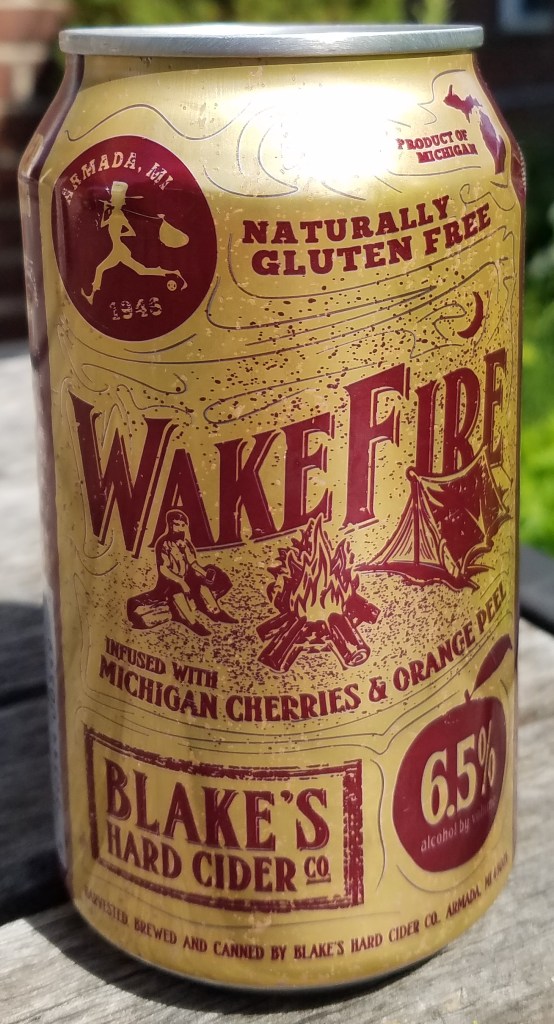
Maker: Blake’s, Armada (ar-MAY-duh), Michigan, USA
Style: Dry apple cider with cherries & orange peel
ABV: 6.5%
Price: $10/six pack of cans (Binny’s)
Appearance: Orange light bubbles.
Nose: Apple juice with a squirt of black cherry.
Palate: Medium bodied. Crisp apple, hint of cherry juice and citrus.
Finish: Biggest cherry flavor is here. A little citrus identifiable as orange peel when I look at the can.
Parting words: I bought Wakefire to have a flavored cider option at my annual Michigan-themed party in June. It was the more popular cider, even over a high quality dry cider also in a can. I didn’t get a chance to taste it that day, but I did later and I understood why. It’s easy drinking, but with enough flavor to avoid being dull. The cherry and orange peel are barely there, but I’m not sure if that’s good or bad. If the can says it has certain flavors, I expect those flavors to be present, but I also don’t enjoy ciders with too much flavor. If I ever resolve that conundrum, I’ll let you know. In the meantime, Wakefire is recommened.
Palate: Medium bodied and spicy. Peanut brittle, black pepper, clove, serrano chilies, butterscotch hard candy, caramels.
Finish: Creamy and a little fruity. Vanilla cream, dried dates, brown sugar.
Mixed: Did well mixed but hampered a bit by the proof. Tried it in a Manhattan, 8e Arrondissement, Frontenac and Mammamattawa.
Parting words: Highwood Distillers is a relatively new distillery, founded in 1974 in High River, Alberta, in the Canadian Rockies. They’re Canada’s largest privately owned distillery. Centennial also comes in a variety of flavored iterations including spiced, maple, coffee bean and dark chocolate. In addition to the Centennial line, Highwood also makes the White Owl white rye whisky, Ninety, Century, Highwood, and Potters whiskies among others. They also produce vodka, gin, liquers and import rum.
I picked this one up during my last trip to the Windsor, Ontario LCBO (Liquor Control Board of Ontario) stores. The old ten-year-old expression of Centennial was a popular favorite with Canadian whisky lovers. The new NAS version is still popular from what I understand. I had heard good things, but never tried it. I was reluctant because of the low proof, but Centennial packs a lot of flavor into 40% ABV. It’s full of classic Canadian rye aromas with the wheat contributing just enough sweetness to pull it all together. It’s a well balanced but full flavored Canadian rye. Pick one up at your next opportunity. Centennial Limited edition is recommended.
Panoramic photo from the Mari parking lot. Winery on the right, east arm of Grand Traverse Bay on the left.
I always seem to run into Sean O’Keefe when he’s busy. One time I ran into him was at the 2015 Michigan Wine Showcase in Detroit. He invited me out to see his new place of employment, Villa Mari (now Mari Vineyards) on Old Mission Peninsula. The winery was still being built then but he was eager to show me around anyway. I took him up on his offer over two years later, on July 7, 2017. In my defense, my wife and I did have a new baby in that time period. That baby tagged along with us.
Anyhow, when we walked up to the tasting room and asked for Sean, we learned he was in his office filling spreadsheets and he would be up in a few minutes. Mari’s tasting room and winery is in a beautiful stone building perched on top of a hill, The building (and the whole enterprise) is a tribute to the owner’s family origins in northeast Italy. It’s intended to resemble a Romanesque Italian monastery.
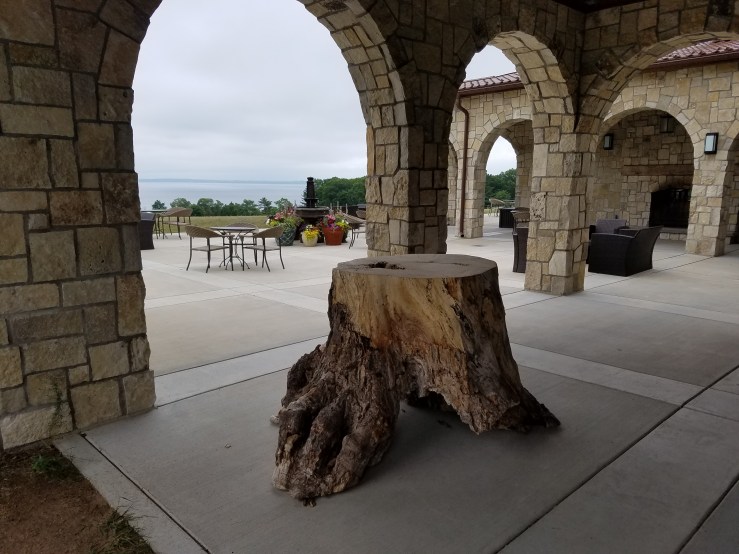
Winery building with patio on the left.Tree stump in arcade, looking out over the patio.Cork art over the tasting room bar.Ash bar in the tasting room. Note the marks from the emerald ash borer.Table in tasting room made from tree in arcade above.Fireplace area in tasting room with metal crosses and chainmail belonging to the owner.
The tasting room has an airy Mediterranean feel with a decorating theme that could be described as “DaVinci Code”. Energy mogul and Upper Peninsula native Marty Lagina is the owner and founder of Mari Vineyards. He’s best known as co-star of the Canadian-produced reality show The Curse of Oak Island, in which Marty and his brother Rick search for treasure on an island in Nova Scotia. In the course of the show they consult with a number of self-described experts on “mysteries in history” type topics who link the yet-to-be-found treasure to Aztecs, Africans, pre-Colombian European mariners and the like. As playwright Anton Chekov once said, “Money, like vodka, turns a person into an eccentric.”
After Sean arrived and said a few words, he took us down the next level to the winery. There we tasted some of the white wines being fermented in the stainless steel tanks at the time.
Tanks in the center and left.
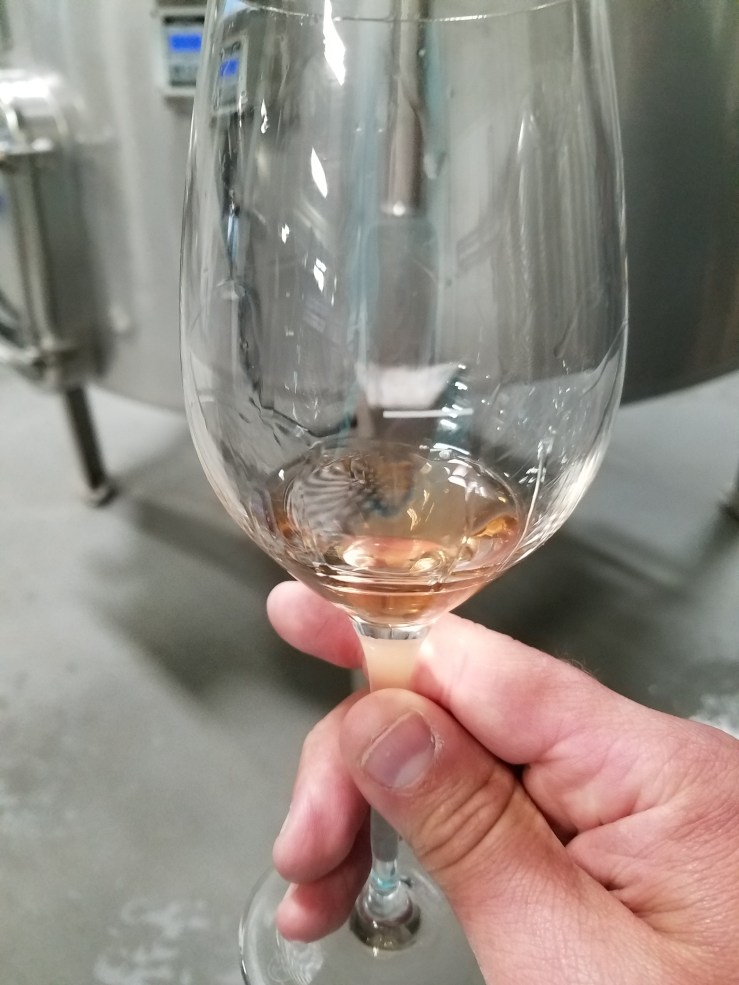
We tasted samples of Pinto Grigio , Grüner Veltliner and Riesling. The Grüner was bound for Troglodyte Bianco, a white Pinot Blanc-heavy white blend Sean compared to his own Ship of Fools. There was one white Grigio (closer to an Alsatian Gris than an Italian Grigio) but also an “orange” version. If a rosé is a red wine treated like a white, then an orange wine is a white wine treated like a red. As is usually done with red wines the skins are left in contact with the juice for an extended period of time to add tannins, color and other things.
The orange Pinot Grigio, soon to be bottled as Ramato, Italian for copper.
This style has become trendy recently, so much so that Sean prefaced pouring us some of this wine said he has resisted making hipster wines but this one is actually good. And I agree.
We also had three Rieslings each from a different vineyard. Sean likes to segregate wines by vineyard in the winery and the cellar so that they can develop their own character. It’s easier to then blend the wines together to produce the profile he wants for the expression. Or bottle as a single vineyard offering of course. The first one we tasted was dry (Sean made a point of pointing out that it was truly dry, not semi-dry like many Michigan Rieslings labeled as dry), the second was described as more of a semi-sweet feinherb style and the third was fruity like the second but even sweeter. About releasing the third one as a varietal Sean said, “People like this one [the most] but..”
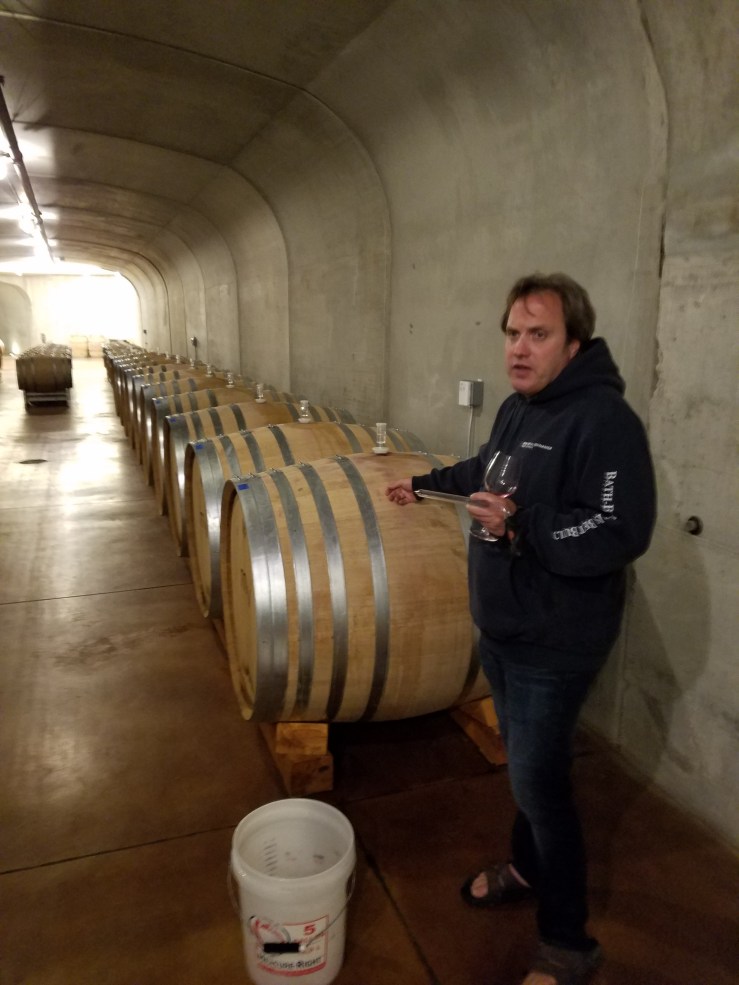
After tasting the whites, it was down to the cave for the reds. The extensive cave/cellar was dug specifically for the winery though there were some utility trenches under where the winery is now.
Sean by the big German barrels. Bubblers on top (airlocks) are to prevent contamination of the wine from air moving in while still allowing the gasses from fermentation to move out.Sean drawing out some extremely oaky Merlot for us to try. It is intended as a blending element. Mari’s house style is not oak heavy. The cellars also have a space for group tastings.
The variety of reds in the cellar was staggering. The usual suspects were there, Cabernets Franc & Sauvignon, Merlot, Syrah but also estate grown Sangiovese, Nebbiolo, Malbec and a number of obscure Northern Italian like Refosco, Teroldego, and Scuppatino. How can they grow these, you may ask? It’s due to their nellaserra system, aka hoop houses. They’re similar to cold frames, only they don’t go all the way to the ground, they just warm the soil under them more quickly. One the biggest surprises for Sean was how well some varieties did in this system, Nebbiolo in particular. On the other hand, others like Merlot don’t seem to do any better under the hoops than not.
Most of these wines will be blended, but some may be released as off-beat varietals on sub-labels.
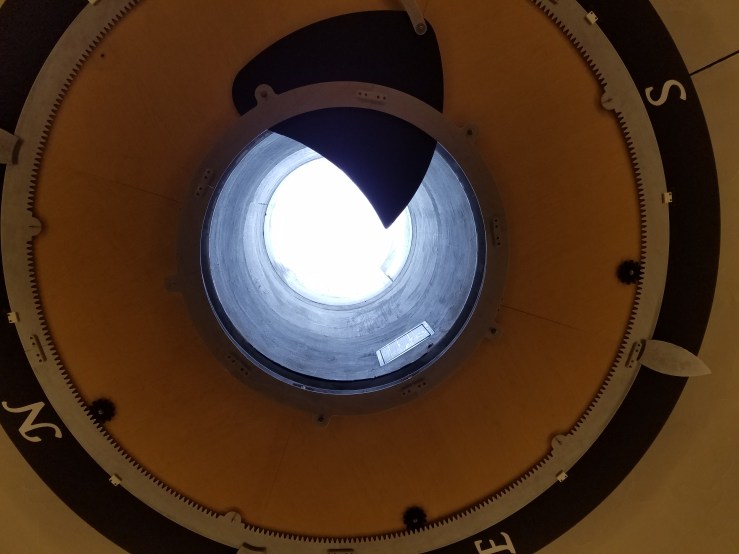
Templar cross under the oculus in the cellar. On the summer solstice, the exit doors at the end of the passageway are opened and a shaft of light shines through, “Raiders of the Lost Ark style”.The oculus.
We then went back up to the tasting room. They were officially sold out of white wines but we were able to sample some of Mari’s Malvasia Bianca. The grape is grown in Croatia, Friuli and California and a few other places. Mari’s Malvasia Bianca vines are the only ones in Michigan. The clone they planted is virtually extinct in Italy, according to Sean, but is widely grown in California. Unfortunately, it was not available for purchase at that time because Sean was still waiting on label approval from the TTB.
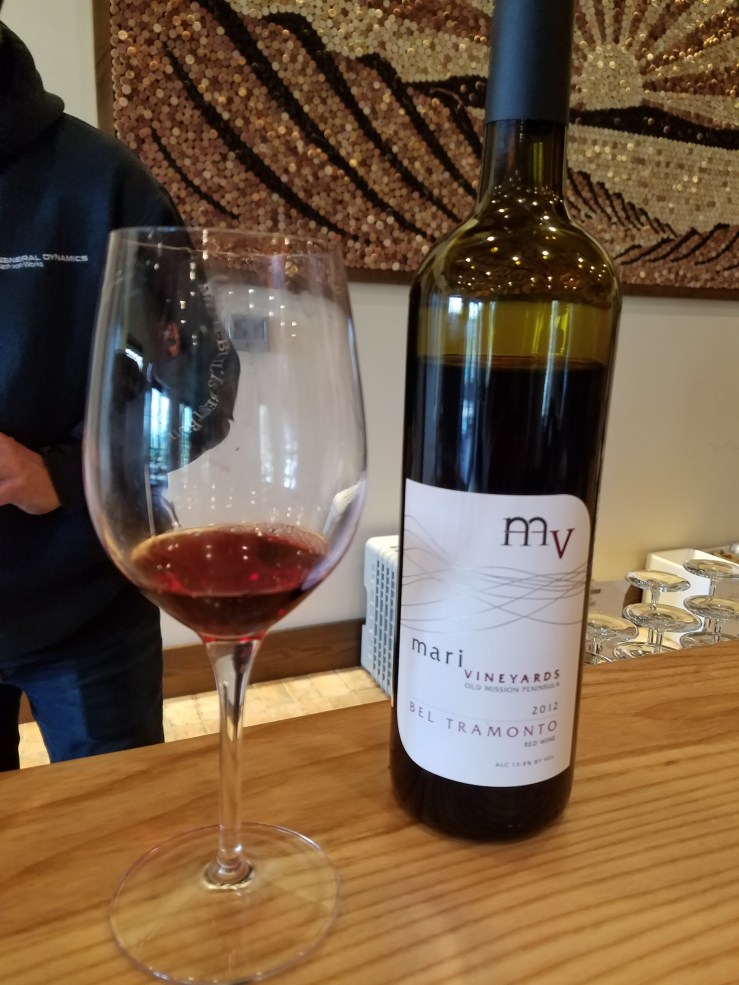
There were three reds available. Bel Tramonto (below), Row 7 (Cab Franc & Merlot field blend) and Ultima Thule (Cab Sauv, Nebbiolo, Merlot, Syrah). All were very good. We came home with a bottle of Ultima Thule and a bottle of Row 7 at an 18% media discount. Both retail for $60 at the tasting room.
We tried this wine, which is a blend of Melot and Sangiovese. It’s Mari’s take on a Super Tuscan.
Sean started at Mari Vineyards as a consultant charged with hiring a winemaker for the new winery. As is often the case in these situations he ended up recommending and hiring himself. As the winery was being built, he made the wines at his family winery, Chateau Grand Traverse, of which he is still co-owner along with his father and brother. He was responsible for many of the “special” labels put out by CGT over the years like Ship of Fools, Whole Cluster Riesling and the acclaimed Lot 49 Riesling. Sean described his approach to winemaking as one that seeks to use as few interventions and additions as possible. He does add yeast to Mari’s wines, but he has experimented with wild fermentation. While he seeks to intervene as little as possible, he said he didn’t want to be like some natural winemakers who make mistakes and then take an “I meant to do that” attitude when their wine turns out funky.
As I was writing this review I sipped on wine from a 2010 bottle from Mari I found at A & L Wine Castle in Ann Arbor a year or so ago. It’s more of a Bordeaux Blend with a little Syrah thrown in than a straight up Cab Franc. Juicy but well structured. I recommend it, although there are very few bottles of anything from Mari Vineyards kicking around outside the tasting room anymore.
Look for an icewine in the near future, as well as more bottlings of Mari’s standard blends and a few oddball varietals.
Mari is still relatively new, but Sean has a brain that is constantly thinking about his wines and what he’s going to do with them. He didn’t ask me, but I’d like to see more dessert wines and maybe a passito from Mari Vineyards in the future. Even more fun might be planting some Trebbiano and hooking up with Black Star Farms or Red Cedar and producing an aged brandy. I’d love to see what spirits do in that cellar. Whatever is actually coming down the pike, I’m looking forward to it. Next time you’re in Traverse City, stop into Mari Vineyards tasting room!
Last week, I posted part 1 of my photos of the Castle & Key distillery, FKA The Old Taylor Distillery. The photos were of the World’s Longest Rickhouse and some other buildings on the site that were not yet restored. This week, the photos will be of the distillery itself (and associated buildings), the springhouse and the the dam.
For further reading on this building and Castle & Key check out what friend-of-the-blog Chuck Cowdery has had to say about Old Taylor/Castle & Key here, and posts on Old Taylor’s sister distillery, Old Crow here and here.
Other friend-of-the-blog Fred Minnick takes better pictures than I do. He’s been to OT/C&K several times. Here’s his visits from 2015, and 2013, just before the current owners purchased the property.
Also check out the Lipmans’ piece about Old Taylor and Old Crow from 1999 (with a 2015 update).
Without further ado…
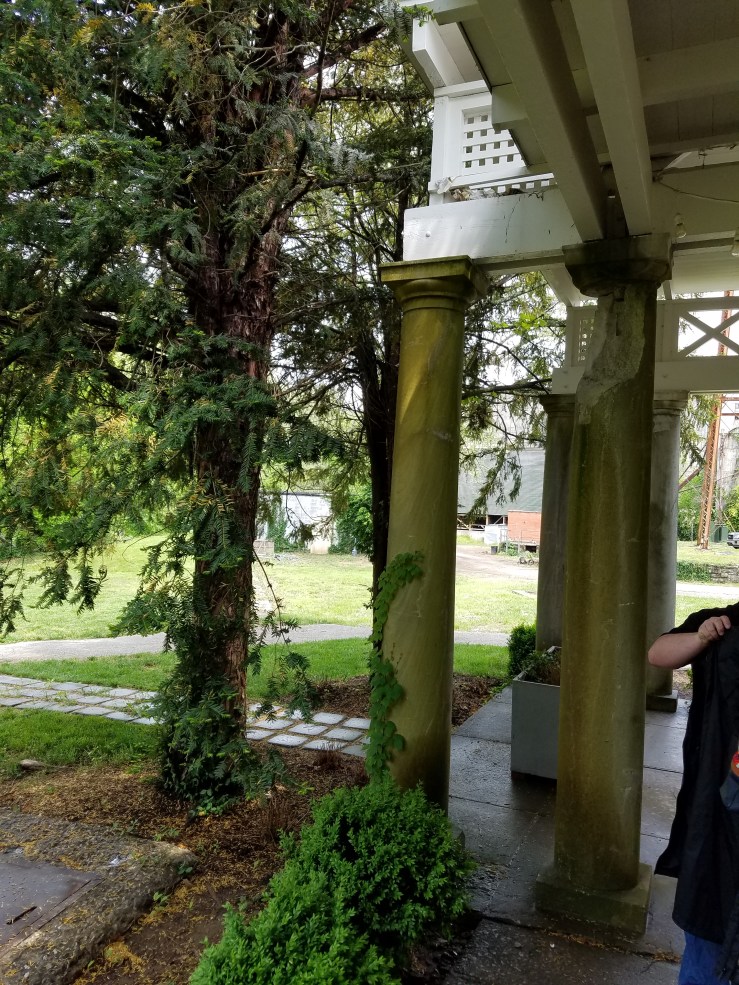
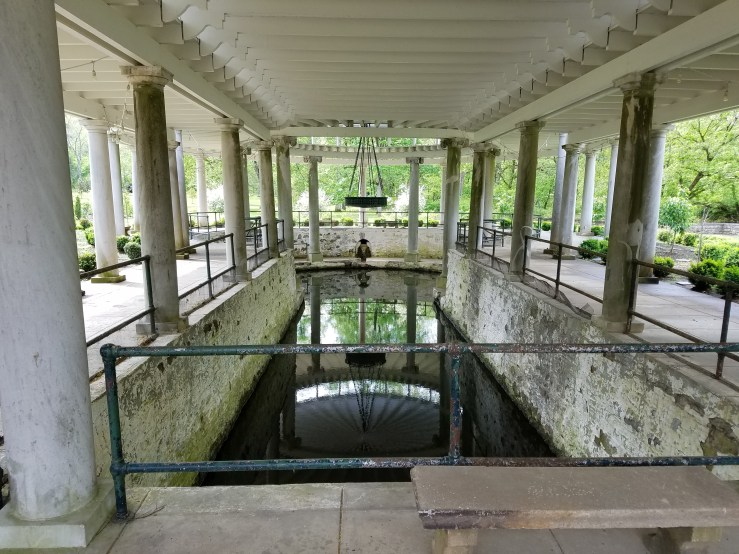
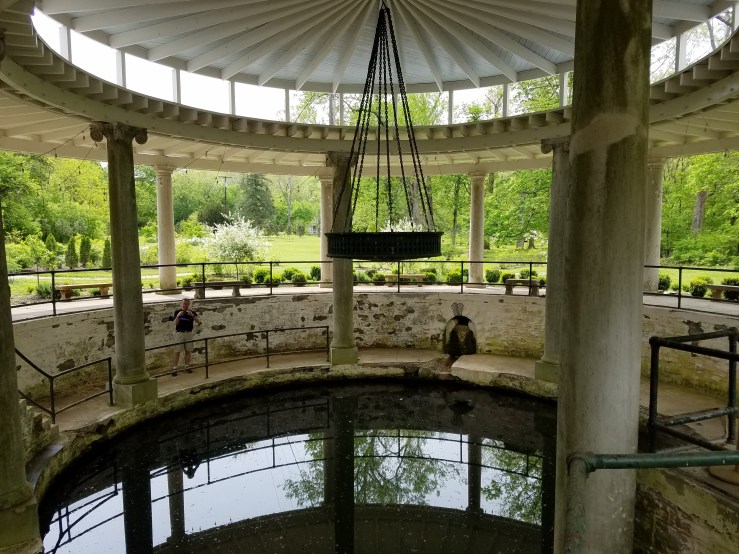
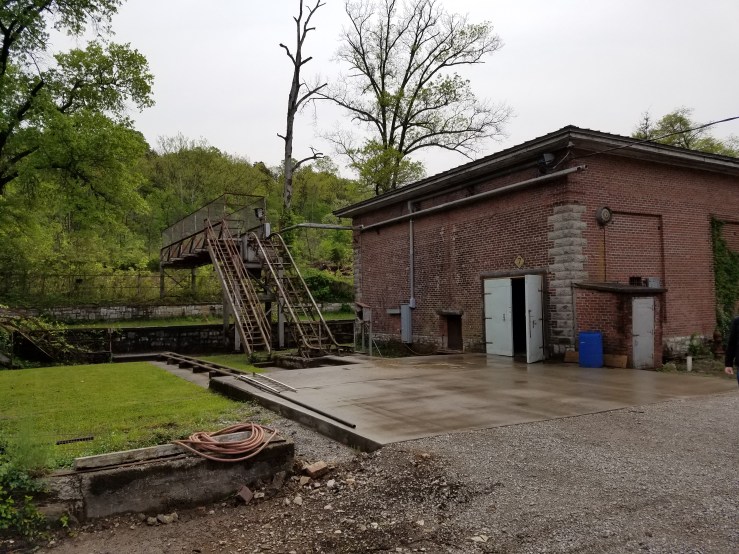
The iconic springhouse. Columns holding up the springhouse roof. All of the springhouse is original, except for that roof, which has been replaced.The iconic view of the iconic key hole shaped springhouse. The pool is ten feet deep. The water looks murky but is perfectly clear when drawn out. Minimal filtration is needed for use. The water is high in calcium and magnesium. The benches now placed around the pool were found inside it!The top of the key with the new roof visable. The springhouse is popular for wedding, prom and other photos.The well house between the springhouse and the dam on Glenn’s Creek.
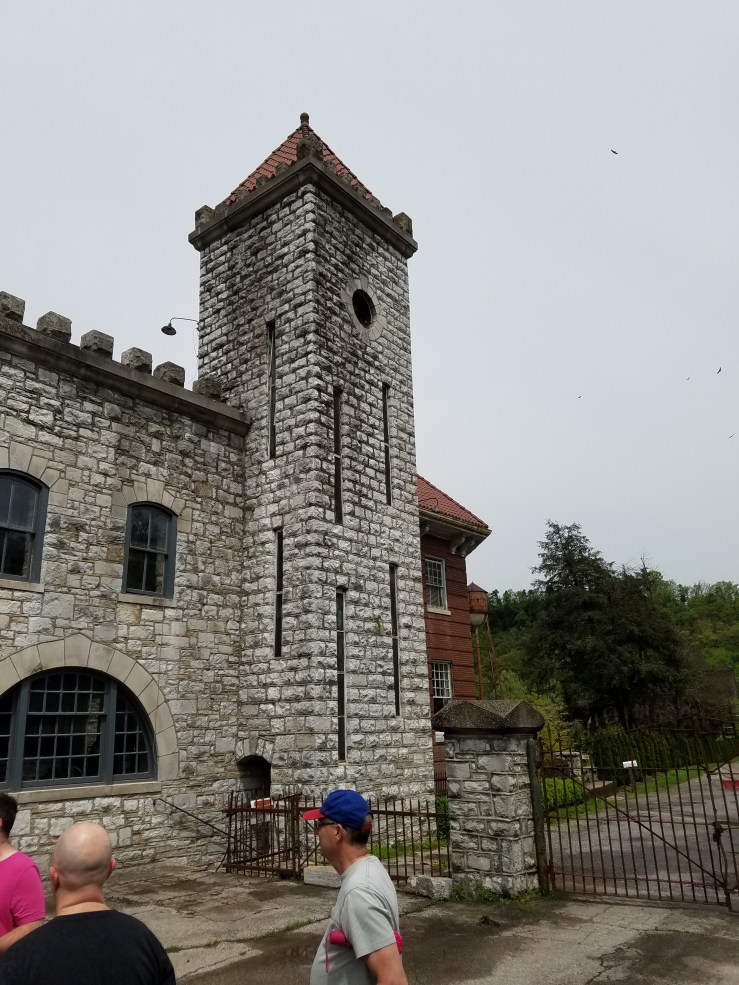
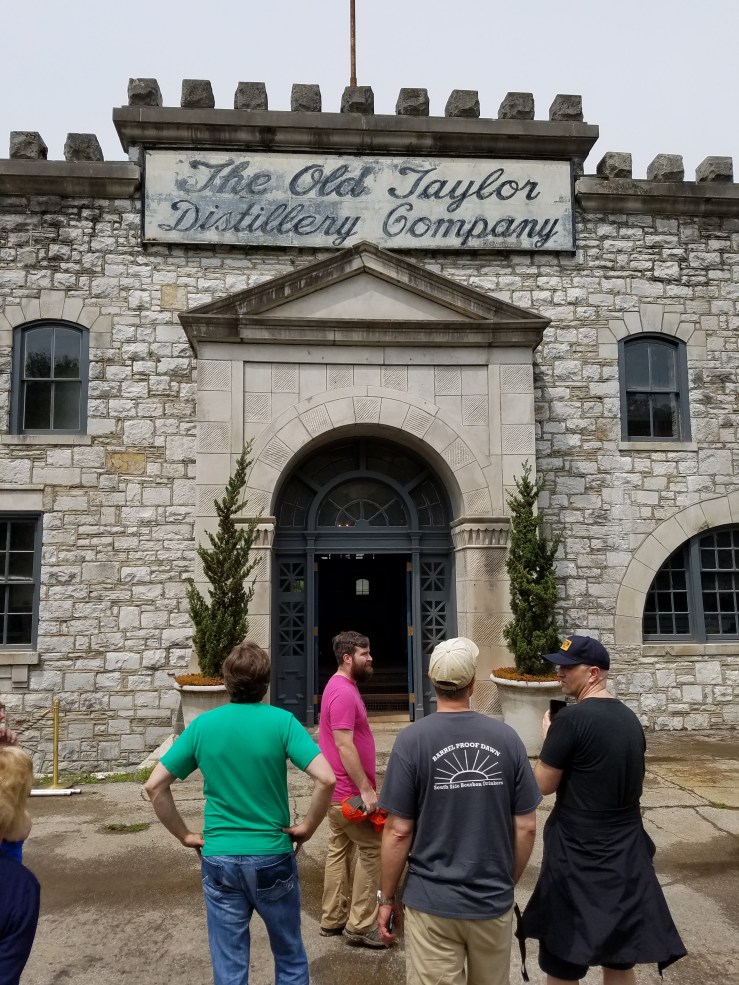
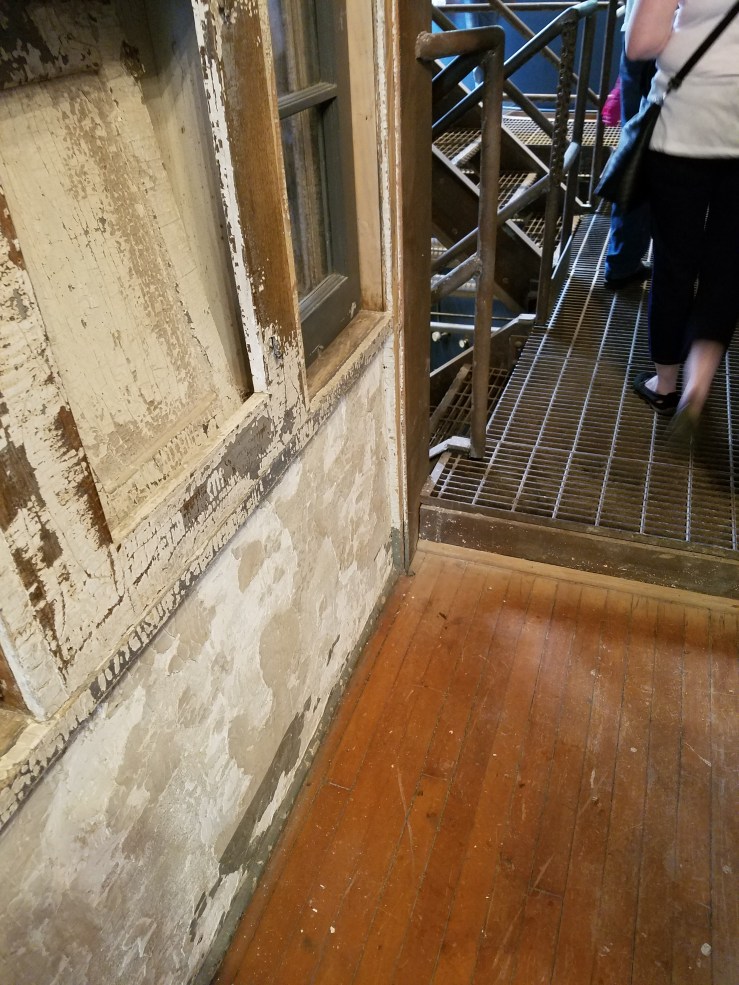
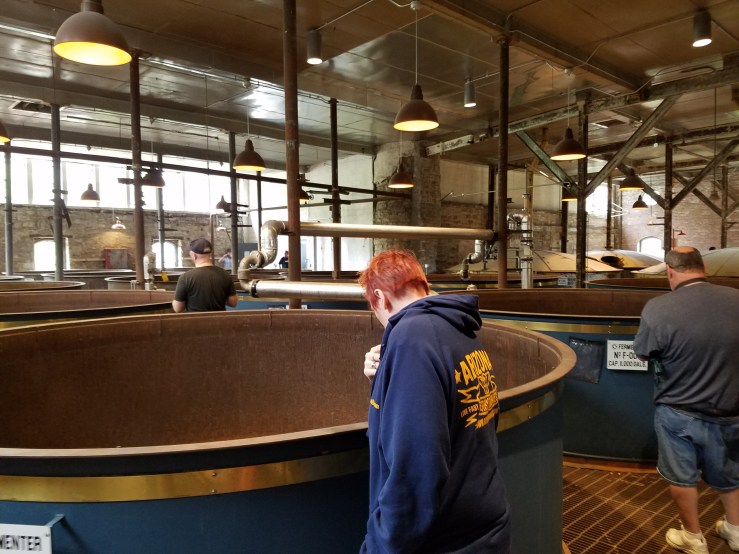
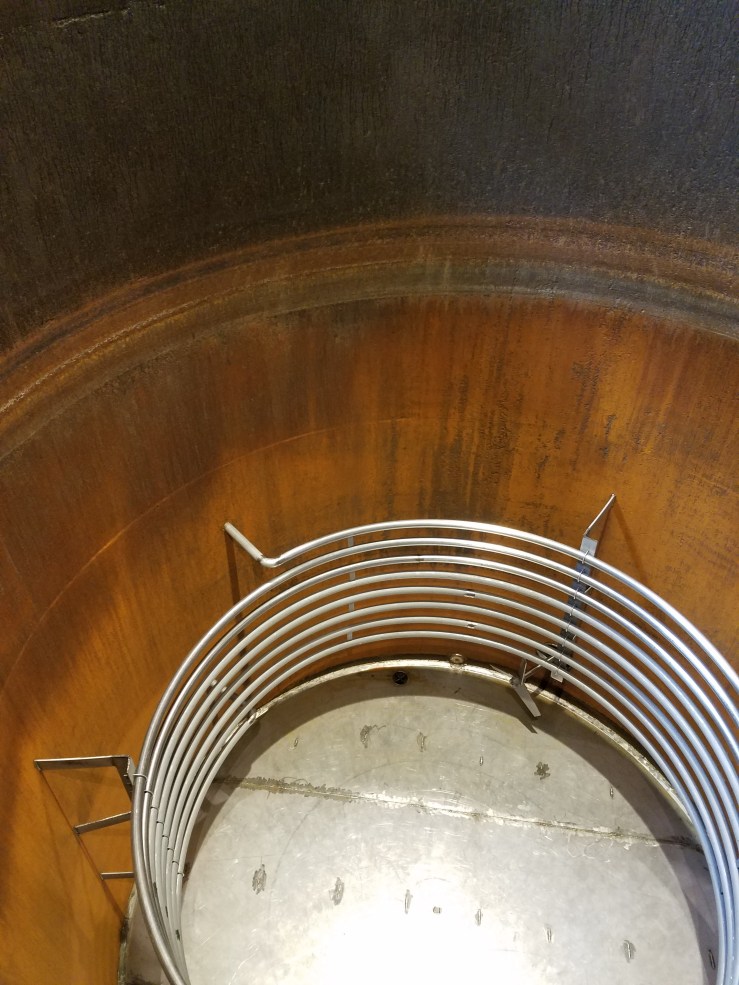
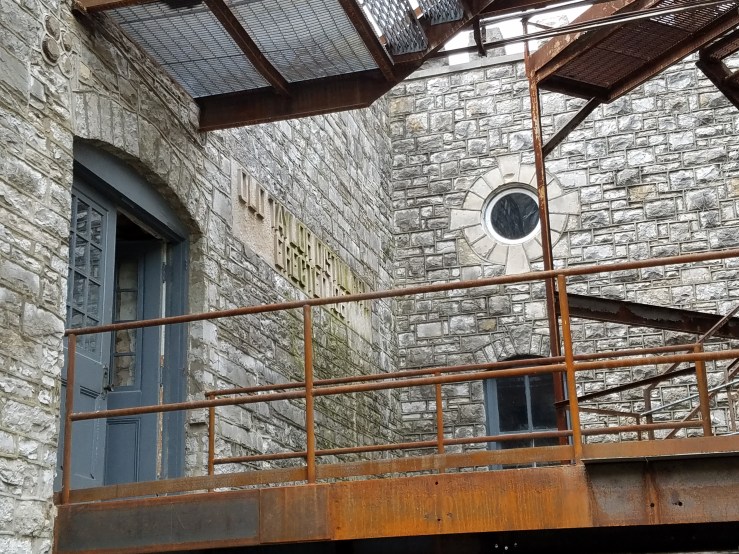
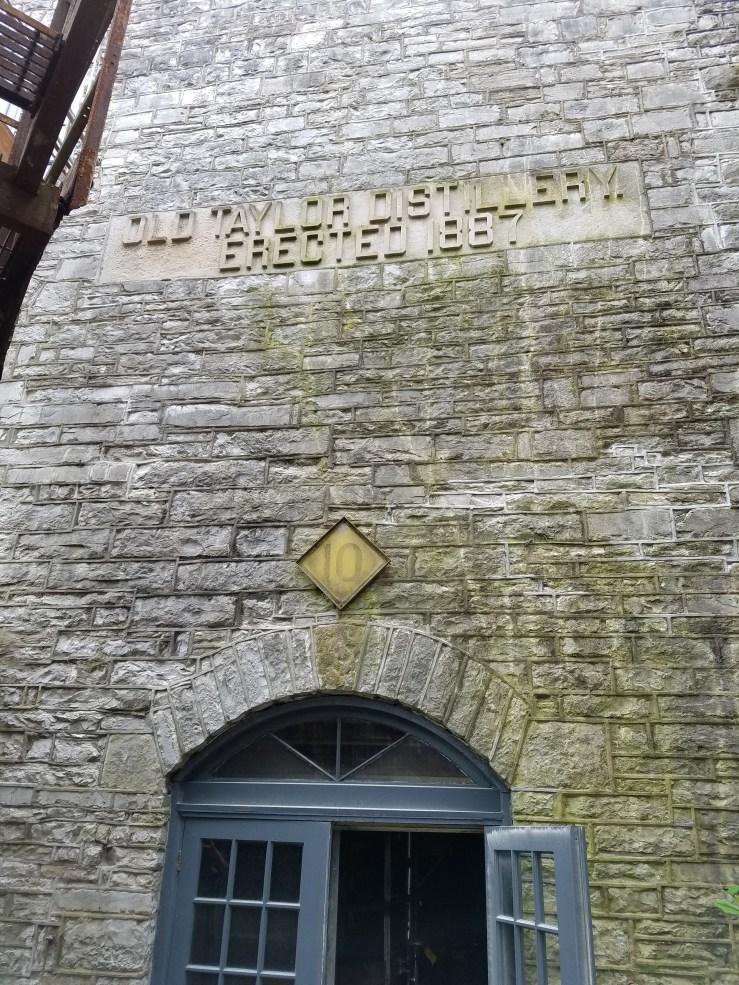
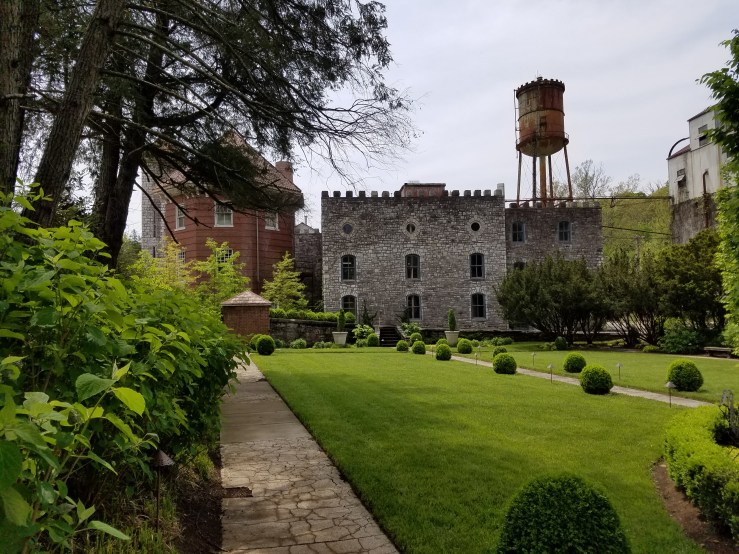
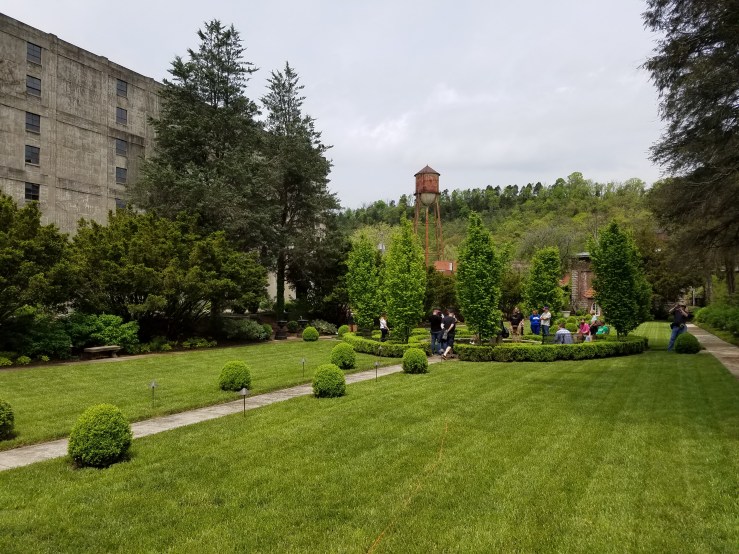
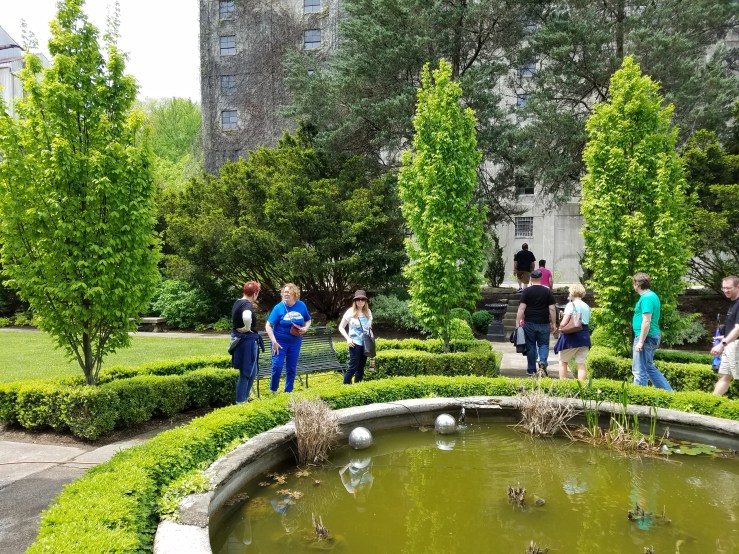
Entering the boiler building.New skylight in boiler building, to eventually become a visitor’s center. The roof was repaired with materials recovered from other buildings on the campus.Where the boilers was.The front entrance to the distillery building, aka the castle.The tower by the main gate, for defensive purposes, obviously.The front door.Original hardwood floor inside the entrance.Fermentation room. White corn is used for the bourbon.Heating coils inside the fermenter.The still column behind our guide. They’re distilling a lot already about 20 barrels worth a day. They have capacity to go up to 60 a day. They’re doing a lot of contract distilling too. According to our guide, 70% of their output is contract, 30% for themselves. He said it was “no secrets” contract distilling, at least on their end.The pot still, thumper, doubler, whatever it’s called. The second part of the still. Their bourbon enters the barrel at 107 proof, rye at 118 proof. I should have mentioned it earlier but they will be using barrels from the Speyside Cooperage in Jackson, Ohio. They swear by them. Laser cut, never leak, apparently. They use numbers 3 and 4 char.Distillery building on the right, on the left is the building that was the lab, now serves as an office (upstairs) for Master Distiller Marianne Barnes and a bride’s room (downstairs).Walkways from the distillery building to the old lab.Second floor walkway to old lab, with Old Taylor stone.Same stone as above, from a different angle. Construction began on the distillery building in 1887 and it took twelve years or so to complete, according to our guide. That stone is visible from the road, but before the restoration, it was overgown with vines. I have a picture of this somewhere, but I haven’t been able to track it down.Panoramic photo of the beautifully sunken garden behiView from the garden looking back at the castle and the old lab.Opposite view with Warehouse E on the left.The fish pond at the center of the garden.Closer view of the pond. When the sunkern garden was being restored, the pond was called “the snakepit”. It was meant literally.View of the old office building across McCracken Pike. The roof has collapsed entirely. Eventually, Castle & Key hopes to restore this building too. Hope you enjoyed the photos! Peace.
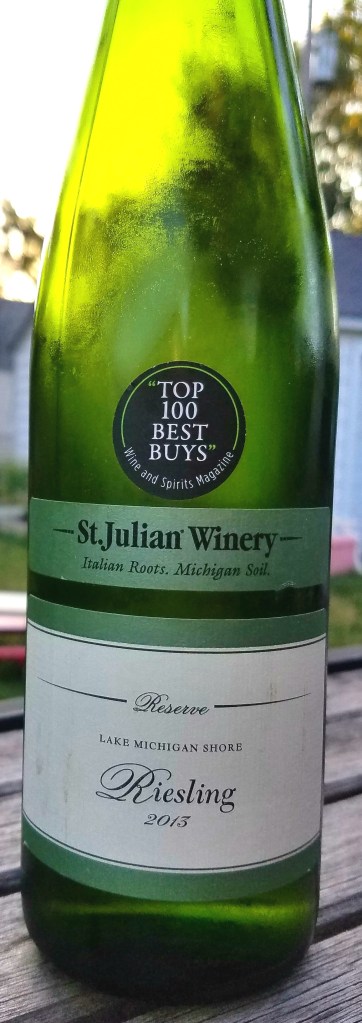
Palate: Fresh squeezed orange juice, fresh red pear, meyer lemon.
Finish: Mineral with a squirt of citrus.
Parting words: The old saying is that familiarity breeds contempt. I don’t think that’s true in most cases, but I think it does happen to St. Julian sometimes. St. Julian’s Heron series of sweet, plonky wines are best sellers in Michigan and elsewhere. Their tasting rooms are located in touristy areas and interstate exits. This could lead a person to dismiss St. Julian as an unserious winemaker only interested in trapping tourists or resting on its laurels as Michigian’s oldest and biggest winery.
Who thinks like this? Well, sometimes I do and that’s led to me unfairly ignore St. Julian’s wines. I’m hoping to rectify that with this review and some that will be coming later this year.
2013 St. Julian Riesling is a very enjoyable semi dry wine at a wonderful price. It does a nice job of representing both the grape and LMS terroir. It’s crisp, as a Riesling of this style should be, but as it warms a tropical fruit and a hint of petroleum appear. Nothing unpleasant, though. It pairs well with just about anything. $12 is a steal for a tasty, single vineyard Riesling from a good producer. St. Julian Riesling 2013 is recommended.
Back when I first started going on annual/semi-annual pilgrimages to Kentucky, I heard tale of two abandoned distilleries on McCracken Pike, near Frankfort Kentucky and even nearer to the Woodford Reserve (aka Labrot & Graham, aka Oscar Pepper) distillery. To get there, you turned left out of the Woodford reserve parking lot and kept going until you thought you were lost in the woods and needed to turn around. Then you went around a bend and a giant castle-like building virtually lept out of the woods at you. That was the Old Taylor Distillery (shuttered in 1972). Just a little down the road was the Old Crow distillery which was also interesting in its own right, but not nearly as impressive as the Castle, as it was called. You could park across the road at the collapsed office building if you wanted to take a look at the castle, but you had to look out for The Guy in the Red Truck, who was guarding the place. The Guy in the Red Truck was not a monster, though, and you could reason with him and he might let you get close and take pictures. He would also show you the grave of a Revolutionary soldier that he preserved nearby.
The Castle was wild looking and a little sad and occasionally spooky like in this picture I took on a rainy day in 2010. “Legit” whiskey bloggers (i.e. actual journalists) would occasionally get a chance to wander around and take pictures. At the time, we bourbon lovers all wondered what it would take to restore the building. The conventional wisdom was that the building would be too expensive to ever restore, let alone reuse.
We were wrong. The Old Taylor Castle is now being restored, thanks to the partners who own what is now called the Castle and Key (after the key shaped spring house) Distillery. In 2014 it was purchased for less than a million dollars from an Atlanta investor group that was selling the distillery buildings for scrap. The destruction was stopped and restoration was begun. The invester group managed to snag Marianne Barnes, rising star at Brown-Forman (makers of Old Forester, Early Times, Woodford Reserve and Jack Daniels), to be their master distiller. The intention is to produce gin, vodka, rye and bourbon. The Bourbon, at least, is going to be released as a mature, bottled-in-bond product.
In late April of this year (2017) a group of folks from StraightBourbon.com including yours truly, Mrs. Sipology Blog and friends of the blog Amy and Pete were graciously allowed a tour of the campus, even though it’s not open to the public yet. Here are some pictures I took. I hope you like them.
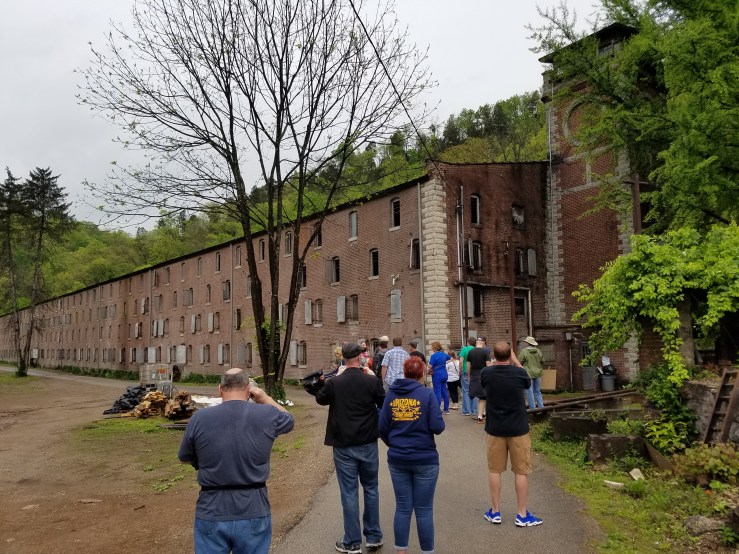
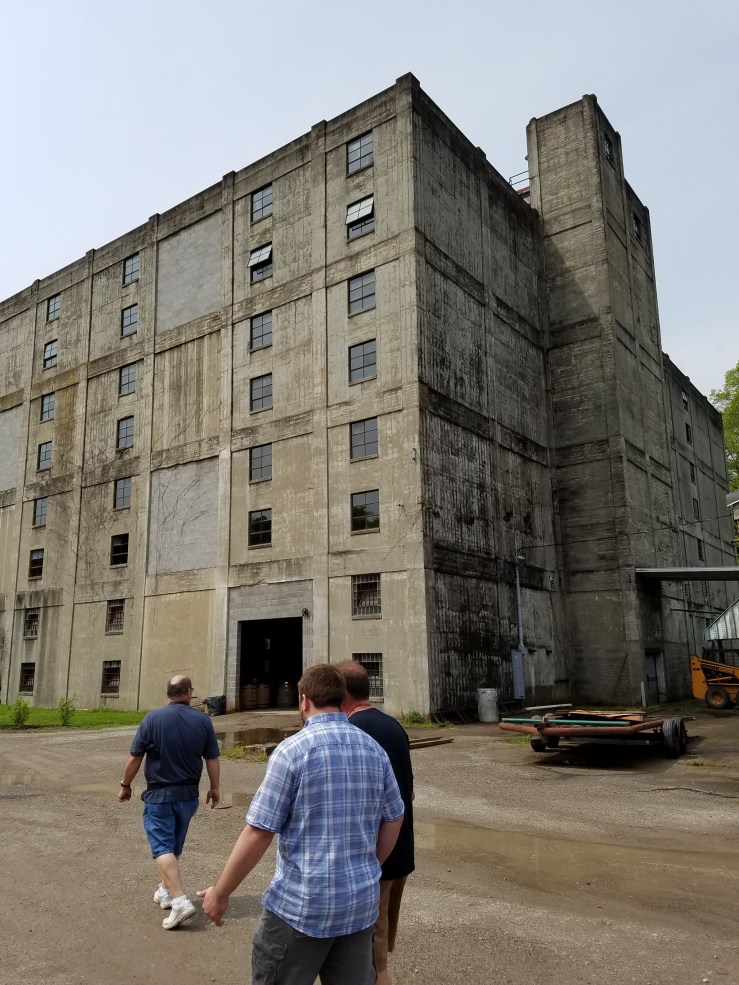
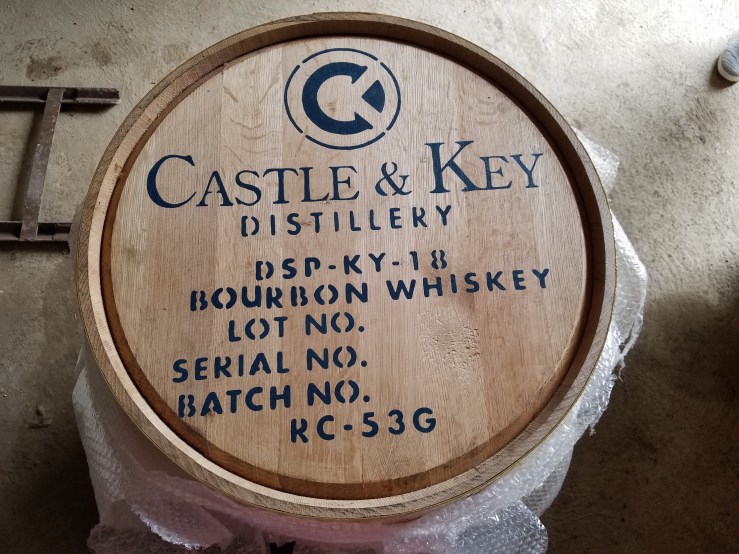
Botanical garden for gin on the site of a collapsed rickhouse near the parking lot at the back gate.Other side of the botanical garden. “World’s Longest Rickhouse” in background.Walking over to to World’s Longest Rickhouse (WLR), completed in 1917 with a capacity of 32,000 barrels (quite large for a rickhouse). It’s their main warehouse at present. Currently mostly occupied by other people’s whiskey (the rickhouse is highly regarded and a source of income for them), but C & K is now aging their whiskey in there too.The front tower of the WLR with tracks for rolling barrels around.My wife Liz peaking into the WLR at one of the 13,000 barrels currently stored there.Looking up at the WLR.Walking down the broad pathway flanked by old buildings over to Warehouse E (center right) and the distillery building (center).My friend Brian and I snuck off into one of the buildings on the side and discovered this picture of the castle.Same building as above. Strange but cool green glass panels.Building with barrel tracks going over the road. According to our guide, locals tell of when barrels would pop off the track onto the road for enterprising folks to recover.Toward Warehouse EThe concrete monster that is Warehouse E.Inside the entrence to Warehouse E, which I dubbed “World’s Creepiest Warehouse”. Cave-like enviroment. Looks like a set out of one of the Blade movies.Taylor used brass bands for his barrels so Castle & Key sometimes use them for special ones.Walking over to the distillery building under the crenellated water tower.Had no idea my ex worked here! But seriously folks, more pics, including the castle itself, the springhouse, sunken garden and more next week!
Maker: Peninsula Cellars, Traverse City, Michigan, USA
Place of origin: Manigold Vineyard, Old Mission Peninsula AVA, Michigan, USA
Syle: Dry (Semi-dry)
ABV: 12%
Price: $20 (winery)
Appearance: Medium gold with tiny still bubbles.
Nose: Lychee, limestone, pineapple sage, apple juice.
Palate: Meduim bodied and juicey. Peach, mango, pink peppercorn, raw ginger, thyme, mineral water.
Finish: Fruity but with a lot of spice on the back end.
Parting words: Manigold is one of my favorite vineyards on Old Mission. It’s known best for Gewürztraminer and also has Chardonnay vines. The vineyard is only two acres in size but its wines are big. Gewürz’s spicy character is in full effect here but there is also loads of tropical fruit making for a complex, aromatic, flavorful wine. I could gush over this for a few more paragraphs, but I’ll spare you. Hard to find a better Gewürz at this price from Michigan or anywhere. Peninsula Cellars 2013 Manigold Vineyard Gewürztraminer is highly recommended.
Maker: Uncle John’s Fruit House Winery, St. John’s, Michigan, USA
Distiller: Red Cedar, East Lansing, Michigan, USA (From Uncle John’s own cider)
Age: NAS (2-6 y/o)
ABV: 45%
Price: Don’t remember/375 ml. Only available at the winery. Complimentary bottle.
Appearance: Bright copper.
Nose: Apple cider, cola, caramel, leather.
Palate: Sweet and medium bodied. Salted caramel, candy apple, alcohol.
Finish: Lavender, raisins, toasted oak. Long.
Mixed: I tried this brandy in two cocktails, both of which put the brandy front and center. The first was the classic Jack Rose (with lime juice and grenadine). It was good. The second was the Marconi Wireless (basically an apple brandy Manhattan). It was just OK. The pungent sweet vermouth I used overwhelmed the brandy.
Parting words: From my “A Visit to Uncle John’s“: “We then moved on to the really good stuff, apple brandy. They have twelve barrels aging at the Cider Mill. They have two different types of barrels to age their brandy. Some is aged in toasted French oak (in barrels intended for Calvados) and some in Michigan oak barrels, also toasted. The Michigan oak barrels were sourced by St. Julien’s to be distributed to wineries across the state. Mike prefers the French oak barrels but again credits St. Julien’s with doing a good thing for wineries in the state by facilitating the use of home grown wood in wine and spirits production. It’s a cool thing for a Michigan producer to be able to say that [its] product has been aged in Michigan oak.”
Uncle John’s Apple Brandy was fine mixed, but it’s really a back porch neat sipping brandy. I don’t remember the price but I don’t remember it being unreasonable for a half sized bottle. It’s made in very limited quantities (currently sold out) so get some if you’re ever in the Lansing area. Uncle John’s Apple Brandy is recommended.











 L Wine Castle in Ann Arbor a year or so ago. It’s more of a Bordeaux Blend with a little Syrah thrown in than a straight up Cab Franc. Juicy but well structured. I recommend it, although there are very few bottles of anything from Mari Vineyards kicking around outside the tasting room anymore.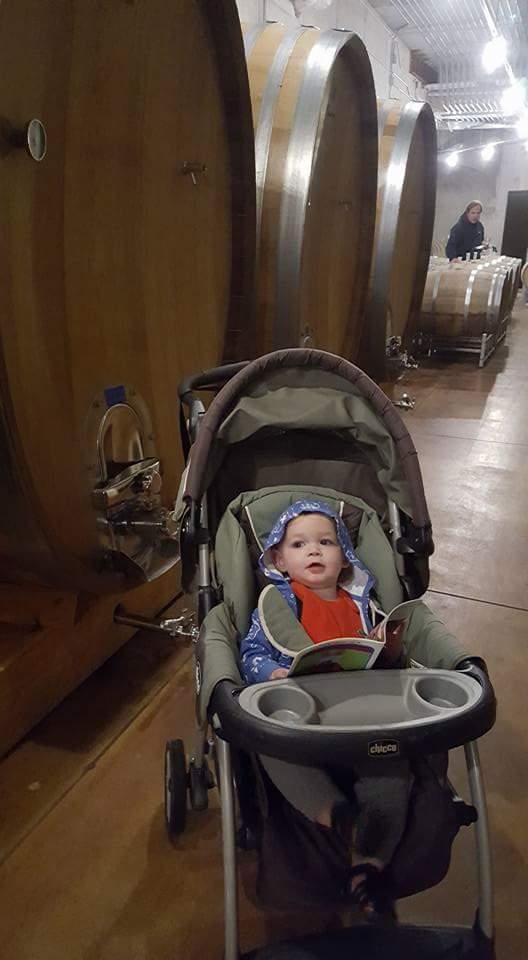








 took on a rainy day in 2010. “Legit” whiskey bloggers (i.e. actual journalists) would occasionally get a chance to wander around and take pictures. At the time, we bourbon lovers all wondered what it would take to restore the building. The conventional wisdom was that the building would be too expensive to ever restore, let alone reuse.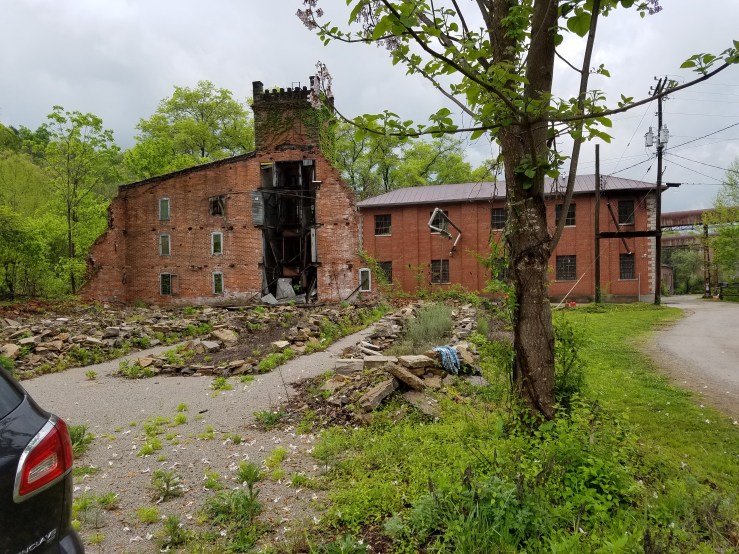







 Sipology