Dan-Armor Cuvée Spéciale

Maker: Cidres Dujardin, Jurques, Calvados, Lower Normandy, France

Place of origin: Brittany, France

Style: Dry Breton cider

Notes: No sweetener added.

ABV: 5%

Price: $5 (Trader Joe’s)

Appearance: Iridescent orange with a quick, foamy head. Head doesn’t last but the bubbles do.

Nose: Mineral water, apples, caramel.

Palate: Medium bodied and semi-dry. Crisp, dry apples up front with a hint of brown sugar, then fades into bone-dry minerality.

Finish: Clean and slightly chalky.

Parting words: In part three (at least) of my ongoing effort to at least understand French cider, if not enjoy it, I head southwest from Normandy to Brittany. Brittany has a long and fascinating history with deep historical ties to Normandy and the British Isles. I would love to go into all of that here but only one aspect of those connections is applicable here: cider. Cider is beloved in all three areas for cultural, historical and geological reasons. Apples grow much better in all three places than grapes do, so the cider making tradition is strong in all those places.

Anyway, this is my first Breton cider and I’m enjoying it much more than the Norman ones I’ve had. It lacks the sour yeasty funk of those and instead has a delicately sweet and refreshing character that is much more enjoyable. At $5 this is an easy buy.  Dan-Armor Cuvée Spéciale is highly recommended.
Chateau Grand Traverse Botrytis Riesling

Maker: Chateau Grand Traverse, Traverse City, Michigan, USA

Place of origin: Old Mission Peninsula AVA, Michigan, USA

Vintage: 2007

ABV: 12.5%? (label partially rubbed off)

Purchased for: $18/500 ml (Original price around $25)

Appearance: Dark gold with thick legs that disappear quickly.

Nose: Wildflower honey, tart apples, oregano.

Palate: Full bodied and sweet. Orange blossom honey, orange push pops, very ripe peaches, caramel covered pear.

Finish: Clingy. Canned peaches, lingers for a very long time.

Parting words: Botrytis is a class of fungi that attack fruit and can be very harmful to berries of all kinds. Under certain circumstances, though, it becomes a “noble rot” that shrivels grapes into raisins and produces a thick, intensely sweet wine like this one.

I bought this wine many years ago and let it sit in my cellar for just about longer than I have let anything else sit there. My patience was rewarded.

Online reviewers have called this wine “beerenausleselike” but I haven’t had enough of that particular class of wines to evaluate those statements. I’ll just say it is very much in the style of Botrytised Rieslings from Germany and it’s very very good. It’s best as a dessert wine but may pair with salty pork dishes or other snacks.

If you can find it, it will probably set you back a pretty penny, but then again it might not. I got this bottle out of a bargain bin at a local grocery store. It was very much worth the wait and the high price. Chateau Grand Traverse Botrytis Riesling is highly recommended.

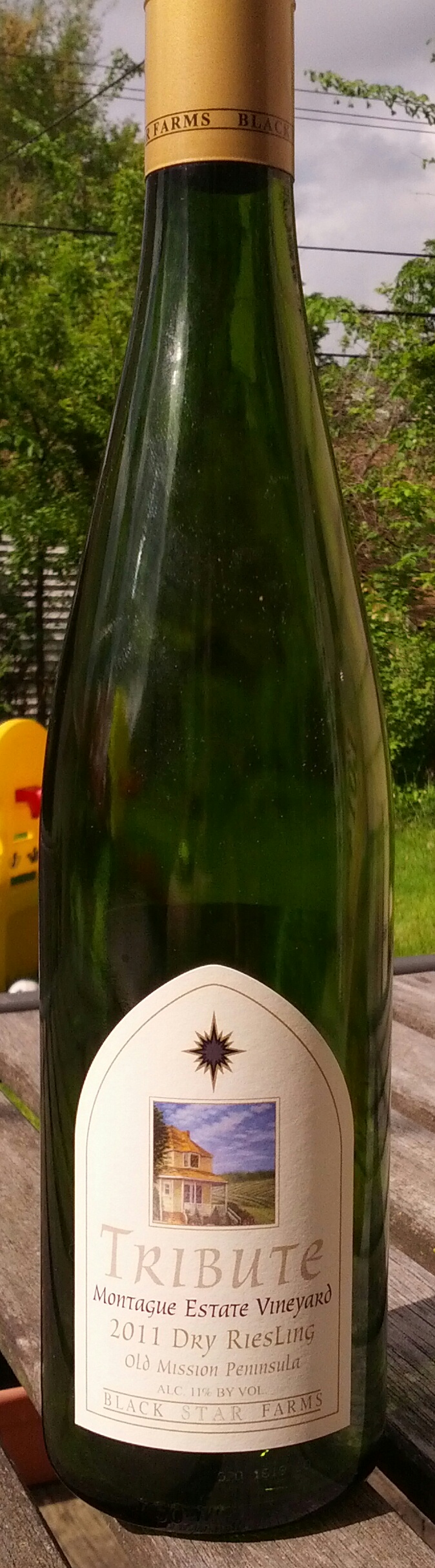
Tribute: Montague Estate Vineyard

Maker: Black Star Farms, Traverse City/Sutton’s Bay, Michigan, USABSF Tribute Reis 2011

Grape: Reisling

Place of Origin: Montague Estate vineyard, Old Mission Peninsula AVA, Traverse City, Michigan, USA

Vintage: 2011

ABV: 11%

Price: $18 (website)

Appearance: Pale straw with some necklacing and a lot of crystals.

Nose: Peach, pear, dry cider, flint, lemon thyme.

Palate: Medium bodied and balanced. Underripe peach, golden apple, winter savory, limestone.

Finish: Dry and flinty. Fairly brief and slightly bitter but not unpleasant.

Parting words: Tribute is a tribute to the Montague Estate Vineyard on Old Mission Peninsula. The vineyard faces the west arm of Grand Traverse Bay, facing Leelanau Peninsula. Owners Jay and Marie Hooper grow Pinot Gris, Cabernet Franc, Pinot Blanc, Regent and Dornfelder at the site in addition to Riesling. For more information on the vineyard and the wine, click here.

It’s a fitting tribute. I have had many fine dry Rieslings from OMP (and a few that were not so fine) but this is one of the best. It’s everything a dry Riesling should be. It’s aromatic, elegant, food friendly and refreshing. It has a touch of acid

I hesitate to point out its food-friendliness because I don’t want this wine to get tagged as a table wine in the minds of my gentle readers. We had it with chicken liver tacos and it was amazing but it’s just as good or even better on a sunny, temperate afternoon while listening to a recording of the music of Hildegard of Bingen on the CD player (seemed appropriate for sipping a Reisling).

In sum, this is a brilliant wine produced by a brilliant winery, produced from a brilliant grape from a brilliant vineyard in a brilliant vintage. Brilliant. Tribute: Montague Estate Vineyard 2011 Dry Riesling is highly recommended.

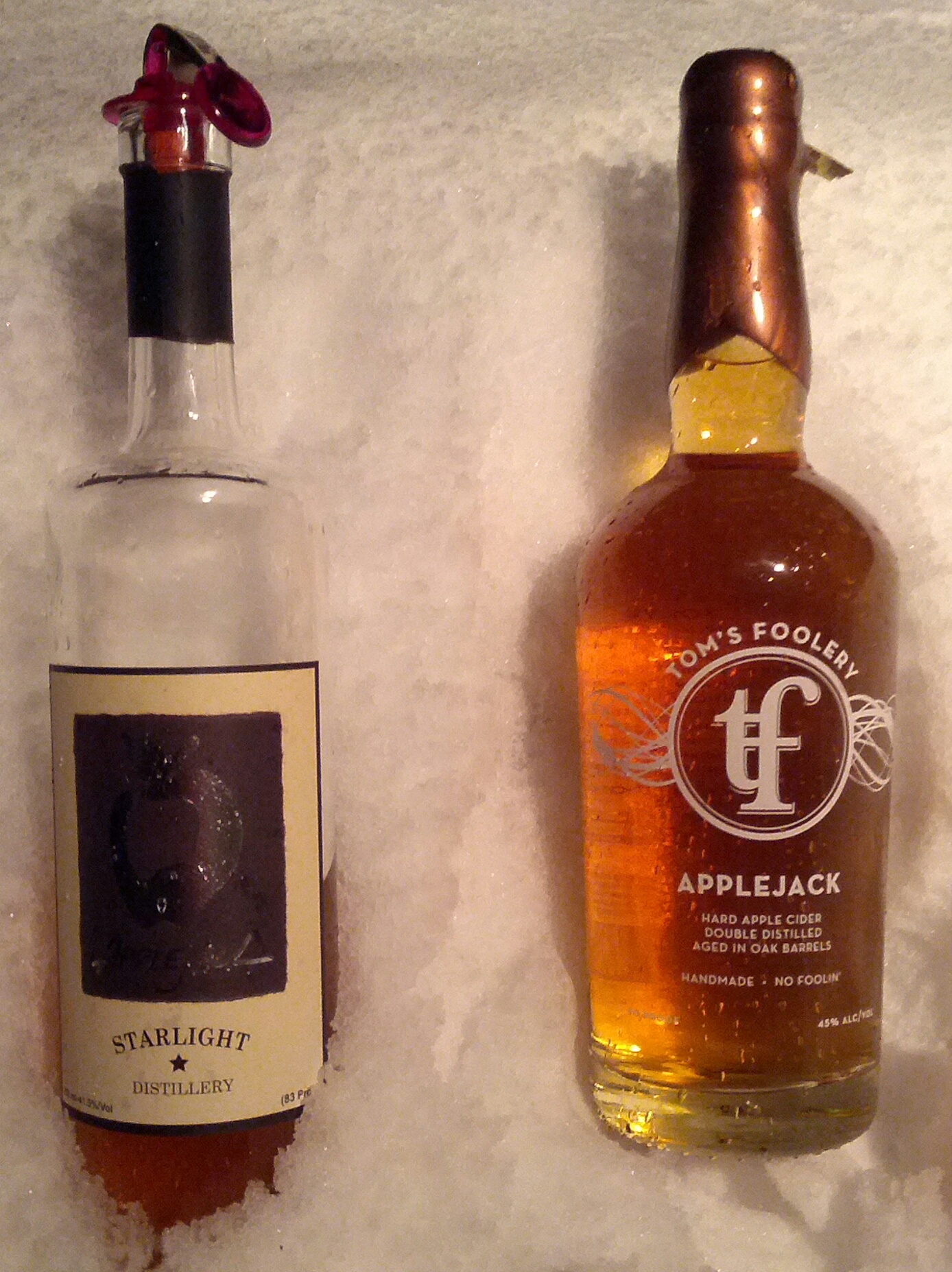
Head to Head: Starlight Applejack vs. Tom’s Foolery Applejack, Batch 4

Starlight vs Toms FS= Huber’s

TF= Tom’s Foolery

Maker

S: Starlight Distillery, Starlight, Indiana, USA (Huber Orchard & Winery)

TF: Tom’s Foolery, Chagrin Falls, Ohio, USA

Age: Both NAS

ABV

S: 41.5%

TF: 45%

Price

S: $30 (from distillery website)

TF: $41 (MSRP)

Appearance

S: Bright copper with thin legs.

TF: Lighter but similar.

Nose

S: Alcohol, dry apple cider, lavender, cardamom

TF: Brown sugar, apple crisp with Granny Smiths, toasted oak.

On the palate

S: Full bodied and dry. A kiss of apple and wood, but not much else other than sweetness and alcohol.

TF: Medium bodied and rich. Apple pie a la mode, brown sugar, bourbon.

Finish

S: Curry, alcohol, heirloom apples.

TF: A touch of burn, but then maple sugar then it slowly dries out.

Parting words

These are both good micro-distilled apple brandies. One of the great things about the micro-distilling movement is that more products like these are available. In eighteenth and nineteenth century America fruit brandies, especially apple and peach, were very popular, but faded from popularity with the rise of rye and bourbon whiskeys. Microdistillers, especially those associated with wineries or orchards, saw an opportunity to re-introduce fruit brandy to the drinking public and they seized it. These are two fine examples of the bourgeoning apple brandy renaissance.

They are from neighboring states but they don’t have much in common. Starlight Distillery is attached to the Huber Winery in Southern Indiana and makes a line of apple and grape brandies along with a grappa. This product, the Applejack, is aged in used “small” used whiskey barrels. Their other (more expensive at $60) apple brandy is aged in “small French oak barrels”, presumably toasted. It is bottled at 40% ABV. I haven’t had that one, but this Applejack shows no signs of small barrel syndrome. It’s pleasant tasting, easy drinking and is recommended.

I reviewed the first edition of Tom’s Foolery Applejack here and I said it showed a lot of potential. That potential is now being realized. It is delicious and ranks as one of the best apple brandies I’ve had. Through adroit management of cooperage (at least three types of barrels are used for aging: ex-bourbon, ex-Cognac and new charred oak) Tom and his family have created a symphony of flavors that come together as  liquid apple crisp à la mode, only better. It’s an amazing spirit and an example of micro-distilling at its very best. And it’s just going to be getting better as it spends more time in oak and their bourbon comes of age in a few years. Don’t be scared off by the price or its scarcity, it’s worth every penny. Tom Foolery’s Applejack  Batch 4 is highly recommended.

Rochester Red Ale

Rochester Red AleMaker: Rochester Mills, Rochester Hills, Michigan, USA

ABV: 5.9%

Appearance: Auburn with a lacy head.

Nose: Sweet. Cherry juice, malt, hint of yeast.

On the palate: Medium bodied and fruity and malty. More cherry juice, almost balanced by hops and dark roasted malt.

Finish: More balanced. A hit of cherry and then a long, lingering bitterness.

Parting words: The consensus in online reviews is that this beer is a little dull. I agree with that asessment. It’s not bad, not at all. There are some nice things going on, but the fruitiness of this beer is out of balance and makes it difficult to drink with food, something one expects to be able to do with a red ale or lager. To be clear, no cherry juice has been added to this, but the flavor is all over the place for me.

I don’t remember how much I paid for this, but I don’t remember it being too expensive, $9-$10 for four pint cans. It’s not bad but there’s not enough going on for me here to justify another purchase. Rochester Red Ale is mildly recommended.

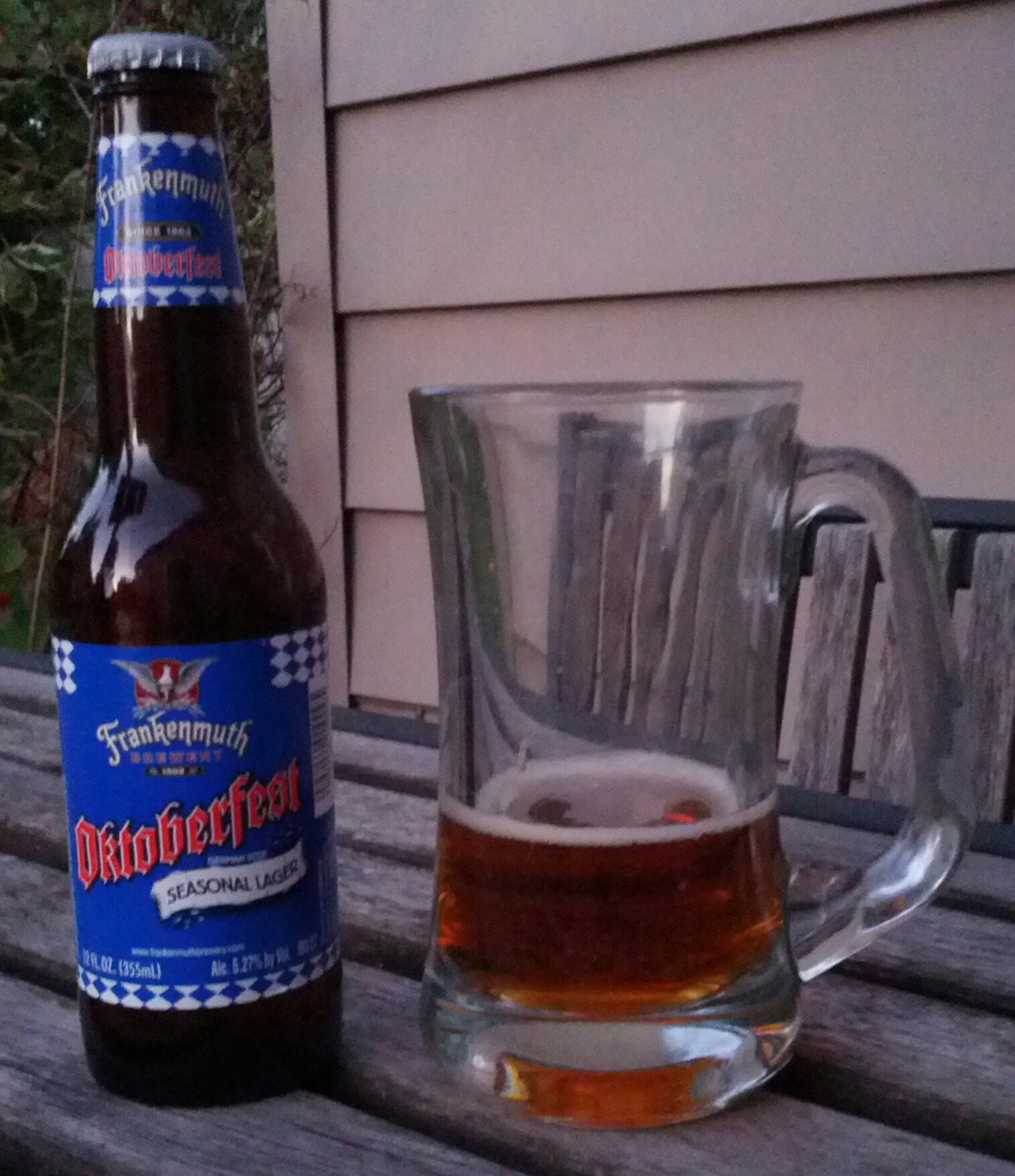
Frankenmuth Oktoberfest

Maker: Frankenmuth Brewing, Frankemuth, Michigan, USA (Some brewing contracted to Stevens Point, Stevens Point, Wisconsin)IMG_20130916_195706

ABV: 5.27%

Purchased for: $8.99/6 pack (before tax)

Appearance: Dark copper with a big foamy head.

Nose: Malt, a bit of plum, dash of hops.

On the palate: Medium bodied, malty and a little sweet. Toasty malt, a bit of stone fruit and plenty of bitterness and effervescence to keep things interesting.

Finish: lingering and bitter, but pleasantly so. A little bit of stickiness lingers on the lips for a while.

Parting words: Frankenmuth Michigan is a quaint (OK, touristy) town in Mid-Michigan with a Bavarian theme. It is known for touristy shops, fried chicken dinners and indoor water park resort hotels. Frankenmuth brewery operates a fairly large brewpub that has taken from the independent brewery that operated in Frankenmuth from the mid nineteenth century through the end of the twentieth century. The current Frankenmuth specializes in American versions of German-style beers. They don’t have sufficient capacity to supply all their needs so they do contract out some of their brewing, as noted above.

Oktoberfest is not particularly nuanced or complex but it’s balanced and as good as any other American “Oktoberfest” beers I have had. It’s easy drinking and very food friendly. I had one with a meal of smoked corned beef and garlic mashed potatoes, and it went very well with the meal. Brats, polish sausage or a meaty pizza would go well with it too. The price is pretty much standard for a microbrew. Frankenmuth Oktoberfest is recommended.

Saint-Denis calling!

Réunion island is a fairly small island in the Indian Ocean 586 miles east of Madagascar and 141 miles west of Mauritius. It’s an overseas department of France and as such it is a part of the Eurozone. According to Wikipedia, it is home to around 840,000 people and is about 970 square miles in area. It is also home to quite a few readers of this blog, or perhaps just one very dedicated reader.

One of the great features of Word Press blogs is the views by country feature. Over the past seven days, the top countries by number of views were:

1. U.S.A. 620

2. Canada 32

3. Réunion 14

4. U.K. 13

5. Australia & France (mainland) 9

Over the past 30 days, Réunion has the second most views after the U.S. and the third most in the current quarter.

I don’t know anyone from Réunion. I have never been there or anywhere even close. So what’s going on? I don’t know, but I want to know.

So please, mes amis Réunionnais, show yourselves and tell me how you found Sipology and what you like or dislike about it!

Knappogue Castle, 12 Year Old

Maker: Castle Brands, New York, New York, USAKnapp Castle

Distiller: Unknown (Bushmills?)

Style: Single Malt Irish

Age: 12 y/o

ABV: 40%

Appearance: Medium gold

Nose: Green apple, oak, malt, tangerine, oriental lily, alcohol

On the palate: Lush and floral. Sweetness, butterscotch candy, French lavender, oak, caramel.

Finish: Malty and honeyed. Alcohol, oak, butterscotch, a bit of vanilla.

Parting words: I was pleasantly surprised by this whiskey. Knappogue Castle is not something that I hear a lot of praise for or even chatter about. For most of the history of this brand, it was released in vintages sourced from various distilleries, but in 2010 a switch was made to simply bottling at twelve years old. The current one is likely from Bushmills, but its floral character makes me think of Jameson a little. It also has a sweetness and depth of flavor I don’t get from Bushmills.

The fruit, flowers and citrus are exquisitely balanced by the bourbon cask oak and the result is an elegant Single Malt Irish whiskey that is never boring. My only quibble is the low proof. I would love to be able to taste this at cask strength, or at least 46% ABV. Knappogue Castle 12 y/o is highly recommended.

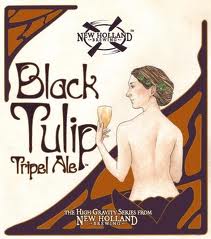
Black Tulip Tripel Ale

Maker: New Holland, Holland, Michigan, USA.Black Tulip

ABV: 9%

Appearance: Cloudy gold with lots of floaties in the bottom of the glass.

Nose: Malt, sweet mango, plantain.

On the palate: Medium-bodied and a bit lively. Mildly fruity and soft with some bitterness on the tail end.

Finish: Banana, a bit of bitterness.

Parting words: Black Tulip is a pleasant enough beer. It’s tasty and well-balanced, with plenty of wheat character. It’s just not as interesting as I would expect for something at this price point. Black Tulip is mildly recommended.


Vignette Wine Country Soda: Pinot Noir

Maker: Vignette Soda, Berkley, California, USA

Ingredients: Filtered carbonated water, Pinot Noir juice concentrate, citric acid, natural flavor. 50% Juice

ABV: 0%

Appearance: Light burgundy, fizzy.

Nose: Grapey, sweet and a little syrupy. Some Pinot character. More subdued than a typical grape soda.

On the palate: Fizzy and sweet. Dryer and less acidic than a typical grape soda, with even a bit of complexity. Black Current jam, allspice, black pepper, blueberry ice cream.

Finish: Clean with a bit of sweetness.

Parting Words: Soda isn’t normally the sort of thing I drink or review, but I thought I’d give this one a shot since it is a wine grape soda. Besides Pinot Noir, they also make a Chardonnay and a faux brut champagne  and rosé of undisclosed grape varieties. It’s a grape soda, but it’s one with a little style and would be very refreshing on a hot summer afternoon. It also might be a wine good substitute for tee totaling loved ones or older kids. Vignette Pinot Noir Soda gets a mild recommendation.