English Whiskey Company Cask Strength Binny’s Handpicked Dual Cask Peated Single Malt

Maker: English Whisky Co., Roundham, Norfolk, England, UKwpid-2015-01-16-16.11.11.jpg.jpeg

Age: NAS

ABV: 60.9%

Price: $70

Notes: Natural color, unfiltered. Limited edition: Casks 108 & 166.

Appearance: Pale gold with thick legs.

Nose: Lemon pepper, peat, vanilla.

Palate: Full bodied. Lemon Meringue, peat, then burn and a touch of gravel.

Finish: Lots of heat and smoke. Hot but enjoyable.

Parting words: OK, so the name of this one doesn’t exactly roll off the tongue, but it is delicious. I’ve had English Whisky Co.’s Classic Malt in years past and it struck me as whisky with lots of potential, but nothing impressive. This is impressive. It easily goes toe to toe with entry level peated Scotches without being an imitation of peated Scotch. The sweet citrus notes in the nose and on the palate set it apart from Islay and other attempts at peated spirits from outside of Scotland.

$70 for a cask-strength peated whisky this delicious is a steal. There are only a few bottles left (mine is #405 out of 426) so run to Binny’s immediately and grab yourself a couple. English Whiskey Company Cask Strength Binny’s Handpicked Dual Cask Peated Single Malt is highly recommended.
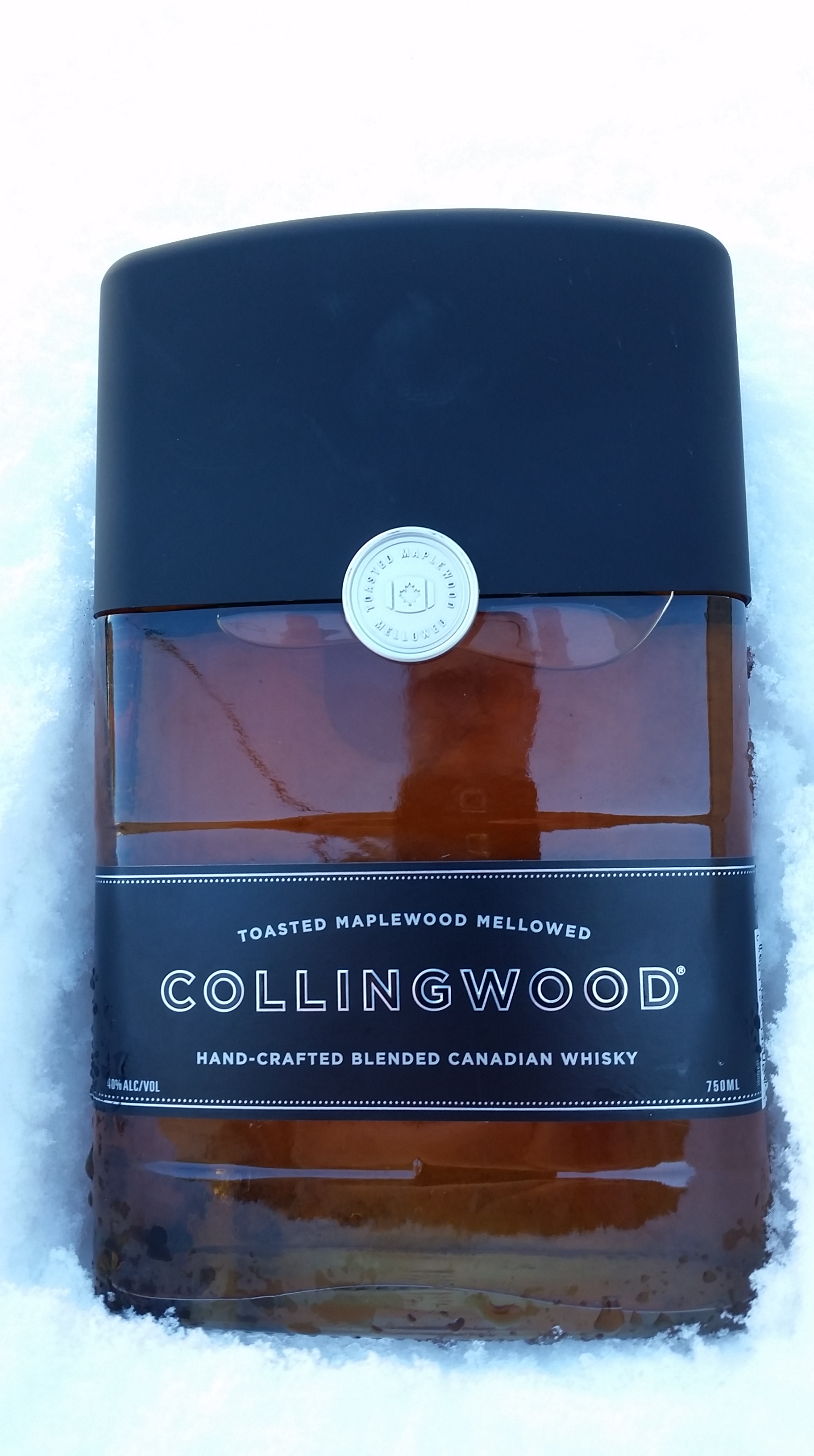
Collingwood

Maker: Canadian Mist, Collingwood, Ontario, Canada (Brown-Forman).wpid-20141121_112418.jpg

Age: NAS (at least three years old)

Style: Blended Canadian finished with toasted maple staves.

ABV: 40%

Michigan State Minimum: $30

Appearance: Pale copper.

Nose: Popcorn, butterscotch, cut maple.

Palate: Semi-dry with a velvety mouthfeel. Hotter than expected. Maple candy, a bit of grassiness.

Finish: Maple syrup, sweet cinnamon. Fades fairly quickly.

Mixed: Good in an Old Fashioned and in a cocktail I found called a Ste. Agathe made with triple sec, lemon juice and grenadine but it didn’t hold up in one I tried called an Original (shot of whisky with a teaspoon each of sweet vermouth and grenadine). A cocktail from the Collingwood website called a Collingwood Classic (muddled orange peel, bitters and syrup) was tasty and refreshing. Orange seemed to work well with the rye and maple notes in the whisky.

Parting words: “Mellowed” with maple staves in a stainless steel vat after aging, Collingwood is a relatively new addition to the Michigan state list. I’m not sure why that term is used and not  finishing or infusing. Mellowing has the potential to confuse consumers who may be more familiar with the mellowing process used by B-F’s cash cow Jack Daniels. Jack Daniels is filtered through a vat filled with maple charcoal after distilling, so there’s beyond the use of maple wood, there’s no similarity.

I’m not familiar with Collingwood’s sibling, Canadian Mist, so I can’t make that comparison but Collingwood compares favorably with other Canadians in the $20-$35 range. It’s not as good as Gibson’s Finest, but better than Crown Royal and Forty Creek Barrel Select. Plus the maple finishing adds an extra element that justifies a couple extra bucks.

The bottle looks like it should contain aftershave but it does fit easily on a shelf and comes with a built-in pourer like a 175 ml bottle.

Collingwood works best as a quality mixer or a casual post-supper sipper. Recommended.

Wiser’s Legacy

Maker: Corby, Corbyville, Ontario, Canadawpid-2014-10-16-18.21.08.jpg.jpeg

Distilled: Hiram Walker, Windsor, Ontario, Canada (Pernod-Ricard)

Age: NAS

ABV: 45%

Michigan State Minimum: $45

Appearance: Light copper with long thick legs.

Nose: Leather, spearmint, potpourri, coriander, green cardamom, woodruff, Habanero peppers.

Palate: Full bodied and medium dry. Butterscotch, white pepper, basil, cilantro, alcohol.

Finish: Eucalyptus cough drops, aged Alsatian Pinot Gris, hint of oak.

Parting words: Wiser’s Legacy is the legacy of now retired master blender David Doyle. Wiser’s Legacy is back in the U.S. after two year long absence. Named 2013 Canadian Whisky of the Year by Whisky Advocate, it’s a remarkable product.

It’s made from a blend of rye, malted rye and maltly barely and has loads of minty Canadian rye aromas (think early batches of Whistle Pig) that are elegantly balanced with candy sweetness and toasted barrel notes. It manages to be both unabashedly Canadian and a transcendent, world class-whisky on par with bourbons twice its price and single malt Scotches four times the price. I taste something new every time I pour myself a couple ounces.

Nobody knows how long it will be back on American shelves, so buy a bottle or two while you can. Wiser’s Legacy is highly recommended.


Head to Head: Black Velvet vs. Black Velvet Reserve

BV= Black Velvetwpid-2014-08-22-17.47.05.jpg.jpeg

BVR= Black Velvet Reserve

Maker: Black Velvet, Lethbridge, Alberta, Canada (Constellation)

Age

BV: 3 y/o

BVR: 8 y/o

ABV: 40%

Michigan State Minimum

BV: $10

BVR: $13

Appearance

BV: Pale copper with some beading.

BVR: Very similar. Maybe a little darker.

Nose

BV: Alcohol, creamed corn, burnt caramel.

BVR: More balanced. Corn syrup, oak, caramel, vanilla, cumin, tarragon.

Palate

BV: Sweet and fruity. Plum, maple sugar candy.

BVR: Sophisticated and complex. Pralines, plums, oak, toffee.

Finish

BV: Very light. A hint of cookie butter and corn syrup.

BVR: Caramel, charred oak, black cherry, alcohol. Lingers for a long time.

Mixed

BV: Does very well in an old fashioned and with ginger ale. OK on the rocks.

BVR: Did not mix.

Parting words: I had been avoiding Black Velvet for a long time, just because I assumed it was terrible given its price point and its Canadian-ness. I gave it a half drunken try at a local whiskey tasting and I was pleasantly surprised. I was downright impressed with the reserve, which I tried after that.

Both have a sweet fruity quality that is very enjoyable. The original BV is a little rough around the edges, but the low proof smoothes it out nicely. It also mixes very well.

The reserve is a tasty, sophisticated, complex and well-balanced sipper. It’s a steal at only three dollars more for almost three times the age and flavor of its younger sibling. In its case the low proof works against it, though. Black Velvet Reserve would be highly recommended and possibly one of the world’s best whiskies if it were unfiltered and at barrel proof. It’s a shame that it’s not, but as it is, both Black Velvet and Black Velvet reserve are recommended.

Bastille 1789

Maker: Daucourt , Angoulême, France

Style: Blended (Malt/Wheat) Whisky.

Age: NAS

ABV: 40%

Michigan State Minimum: $27

Thanks to Keith for the sample.

Appearance: Bright gold with thin legs.

Nose: Similar to an Irish whiskey but fruitier. Alcohol, malt, raisins, cherry pie.

Palate: Medium bodied and light. Some burn, malt, sugar plums, dried figs.

Finish: Alcohol burn, cherry juice, then a big weird blast of dried chili chipotle.

Mixed: The Bastille website recommends three cocktails: a manhattan, whisky sour and an old fashioned. The old fashioned was very good. The fruity notes came out without too much of the chipotle. The manhattan was really exceptional. The fruity aromas dovetailed perfectly with the red vermouth. I didn’t try the sour because I was too lazy.

Parting words: My expectations were low coming into this review. I expected it to be boring and flawed. While it wasn’t exactly a barnburner of a whisky, it wasn’t bad and was just different enough to be interesting, at least until the end of the sample bottle. The price is not too bad either. It’s in the same price range as Jameson and it compares favorably to it. It mixes very nicely which is a nice bonus. It won’t knock your socks off but as a curiosity (ever tried a French whisky?), change of pace and mixer it’s worth buying. Bastille 1789 is recommended.

2 Gingers

Distiller: Cooley, Co. Louth, Ireland (Beam Suntory)2 Gingers

Style: Blended Irish

Age: NAS (about 4 y/o)

ABV: 40%

Michigan state minimum: $20

Appearance: Dark gold (possibly colored), with short-lived legs.

Nose: Rich and malty. Sherry, dried flowers, brown butter, vanilla and spice.

Palate: Full bodied and semi-sweet. Cashew brittle, five spice powder, more vanilla.

Finish: Slightly rubbery, with a little spice, caramel and alcohol.

Mixed: There’s a lot of emphasis on mixing in the marketing of 2 Gingers so I gave a few of their signature drinks a try. The Big Ginger (whiskey, ginger ale and a squeeze of lime) was good. The lime juice does a good job of cutting what might otherwise be too sweet. The B53 (whiskey, coffee liqueur, Irish cream, Gran Marnier) is a variation on the B52 shot and even better. The spice and malt notes from 2 Gingers play very well with the orange liqueur and set off the coffee flavors nicely. I also tried it in a traditional Irish coffee in which it performed admirably.

Parting words: This brand was founded in Minnesota, strangely enough, by Irish-born bar and restaurant owner Kieran Folliard. It was named for his ginger mother and aunt whose portraits grace the logo. He sold the brand to Beam in 2012 and it is now distributed over most of the U.S. Although the name Kilbeggan is splashed all over this bottle, I can’t find any evidence that any of it was made at that distillery. Maybe that’s Beam’s plan for the future.

Anyway, it excels as a cheap, easy drinking mixing Irish whiskey. It resembles Powers more than Jameson in that respect, but it’s a little lighter in flavor. If you’ve been curious about having a go at 2 Gingers, I recommend it.

Lot No. 40, 2012 Release

Maker: Corby, Windsor, Ontario, Canada (Pernod-Ricard)Lot No. 40

Style: Canadian Rye

Age: NAS

ABV: 43%

Price: $60 (Binny’s)

Appearance: Auburn, with long thick legs.

Nose: Wintergreen, cotton candy, pine, leather.

Palate: Light mouthfeel, but spicy and hot. Butterscotch, oak, clove, curry powder, cayenne.

Finish: Hard candy, more evergreen and potpourri then heat. A little oak and tobacco rounds it off.

Parting words: This whisky is a reboot of a reboot, sort of. The original lot no. 40 was the farm plot of early Canadian and distiller Joshua Booth on the northeastern shore of Lake Ontario. His descendant Michael D. Booth created Lot No. 40 the whisky as a tribute to his ancestor as a part of Corby’s ill-fated Canadian Whisky Guild line in the 1990s. It was revived in 2012 and that’s the edition currently on store shelves.

If there’s a knock on Canadian whisky as a category, it’s that it’s dull. The overwhelming majority of them are blends built to provide lots of  “smoothness” for little money. As more flavorful styles of whisky like bourbon, rye and single malt Scotch have become more popular, Canadian distillers have begun to release bolder and even unblended whiskies to chase consumers who are tired of bland spirits.

Lot No. 40 is one of the greatest examples of these bolder offerings. It packs a wallop of flavor to rival ea bourbon or single malt Scotch. A lot of that is down to the 100% rye (10% malted and 90% unmalted)

recipe. Many Canadian distilleries make a whisky like this but it almost always gets blended away to add flavor to bland grain whisky in cheap blends. I’m very glad this made it into a bottle as is, and I can’t wait for the next edition.

The price is high for a Canadian whisky but it’s worth every penny. It may actually be cheaper in Canada, so make a run for the border if you can sometime soon. Lot No. 40 is highly recommended.

Head to head: Canadian Club Reserve vs. Canadian Club Classic 12

CCR= Canadian Club ReserveCC Res vs Classic

C12= Canadian Club Classic 12

Distiller: Hiram Walker (and possibly elsewhere), Windsor, Ontario, Canada (Beam)

Age

CCR: 9 y/o

C12: 12 y/o

ABV: 40% (both)

Michigan State Minimum

CCR: $18

C12: $23

Appearance: Burnt orange (both).

Nose

CCR: Burnt almonds, cedar, roasted corn, habanero

C12: Leather, caramel corn.

Palate

CCR: Full bodied, caramel, cayenne, a touch of oak.

C12: Thinner and milder. Light brown sugar, vanilla and some oak.

Finish

CCR: Maple syrup, alcohol,

C12: Fades quickly. A little more oak and a light, warm sweetness.

Parting words: Before I say anything else, I want to say that I don’t like the newly revamped Canadian Club label designs. The different expressions look too much alike on the shelf.

That out of the way, CC Reserve recently got knocked back a year from 10 y/o to 9 y/o. The 10 was one of my favorite Canadian whiskies and I was pretty annoyed when the change was made. It doesn’t seem to have changed the flavor of what’s inside. It’s still spicy and bold and a pleasure to drink. The price is impossible to beat for a Canadian with this much character. It’s recommended, and a few proof points more would probably push it into highly recommended territory.

The Classic 12 is good too, especially for the money, but it’s held back by its low proof. It works as a first pour of the night sipper whisky, but that’s about it.  Classic 12 is mildly recommended.

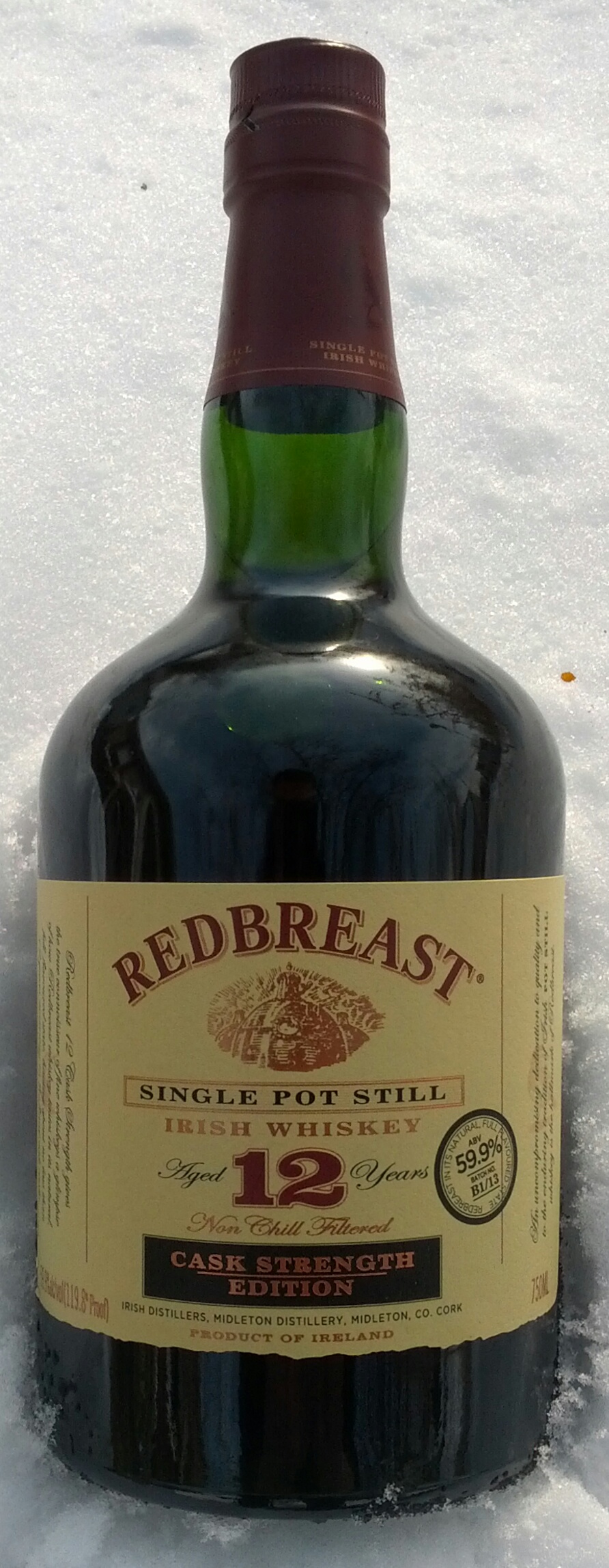
Redbreast 12 y/o, Cask Strength

Maker: Irish Distillers, Midleton, County Cork, Ireland (Pernod-Ricard)Redbreast 12 CS

Style: Single Pot Still (distilled in a pot still using malted and unmalted barley)

ABV: 59.9%

Notes: Unchillfiltered.

Michigan State Minimum: $65

Appearance: Dark copper (color probably added) with long, thick legs.

Nose: Rich and powerful. Caramel, butterscotch, old fashioned bourbon, leather, alcohol. Water opens it up a little and dials down the alcohol burn.

On the palate: Full bodied and sweet. Vanilla nougat, homemade caramels, chocolate covered toffee bars and bourbon with a big hit of alcohol on the tail end. Again, a splash of water tones down the burn but here it also obliterates the chocolate notes.

Finish: Classic Irish finish. Sweet cereal with a little bit of rubber and a lot of tingle all around the mouth as it fades slowly. Water opens it up and brings the cereal notes to the fore.

Parting words: Irish Distillers is the largest producer of whiskey in Ireland, producing two of the biggest brands of Irish whiskey worldwide, Jameson’s and Power’s. Redbreast is their high-end line of Single Pot Still (as opposed to blended) whiskey. The other expressions are the the standard Redbreast 12 y/o which I reviewed back in 2011, the 15 y/o and the new 21 y/o.

I loved the standard 12 y/o. This is even better, and at just $5 more it’s a fantastic bargain. The one off note I detected was the rubbery note, but it only shows up in the finish and dissipates quickly. Rubber or not, Cask Strength Redbreast is a truly great whiskey. It is exquisitely balanced but powerful and full of Irish character. It’s the best Irish whiskey I’ve ever had and one of my favorite spirits of any type. Redbreast Cask Strength is highly recommended.

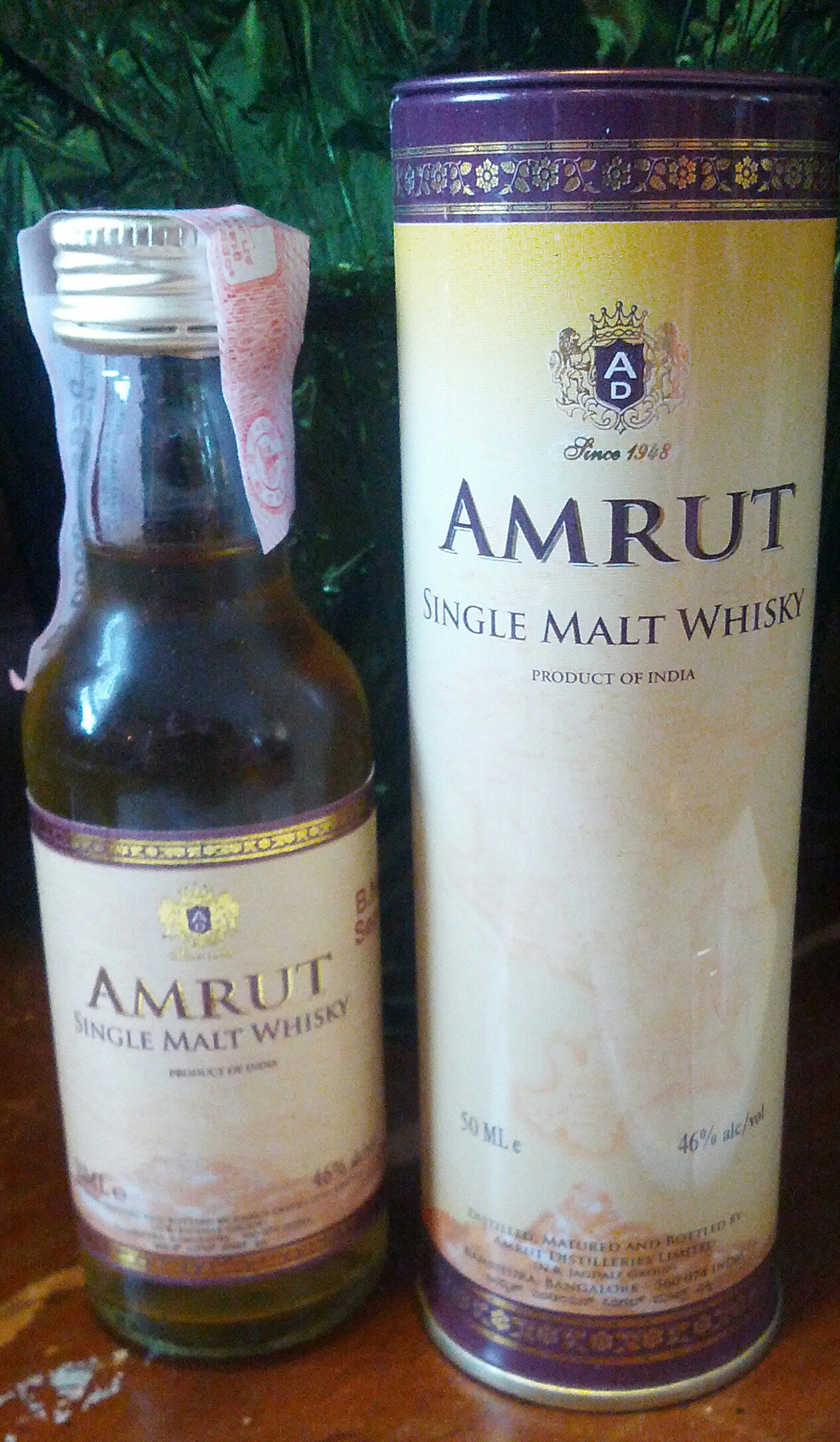
Amrut Single Malt

Maker: Amrut, Kambipura, Bangalore, IndiaAmrut SM

Age: NAS

Batch: No. 47, Sept 2012

ABV: 46%

Price: $50 (Binny’s)

Note: Unchillfiltered.

Appearance: Pale gold, long, lazy legs (no coloring used).

Nose: Malt, fresh cut lumber, alcohol.

On the palate: Full bodied and sweet. Butterscotch, vanilla buttercream icing, coconut cream.

Finish: Warm, but not hot with oak and sweet malt. Fades slowly into tingliness.

Parting words: Amrut is a fairly new brand of whisky. It was introduced to the world outside India in 2004 at an Indian restaurant in Glasgow. After a change in distribution strategy, it was eventually launched the North America in 2010. Before that, the distillery produced malt whisky for blending.

As one might expect, whisky and other spirits in India mature much more quickly than in Scotland or even Kentucky due to the hot climate. According to Wikipedia, the evaporation rate for Amrut whisky in the barrel is about 11% per year compared to 2% on average in Scotland.

This whisky does taste like a 10-12 y/o Speyside malt, and a pretty good one at that. The only off note I detected was the cut lumber in the nose. It is close to the sharp woody aroma that comes through in many micro-distilled American malt whiskeys. Fortunately it dissapates as the whisky opens up in the glass and bottle. Overall, Amrut makes for a pleasant after dinner sipper or a starter whisky for a Scotch session.

At $50 it’s not cheap but it is fair for comparable Single Malt Scotches, many of which are at a lower ABV. Amrut Single Malt is recommended.