Hayman’s Old Tom Gin

Maker: Hayman, London, England, UKHaymans_OldTom_Path

Distiller: Thames Distillers, London, England, UK

ABV: 40%

Appearance: Clear.

Nose: Lime peel, juniper, a bit of horehound, anise, sweet cinnamon.

On the palate: Full-bodied. Sweet, slightly fruity, some heat and licorice.

Finish: Sweet, old fashioned candy. Lingers a very long time.

Mixed: Does very well in all applications. May get a little lost in a Tom Collins, but more than holds its own with tonic. The bitterness of the tonic is a very pleasant counterpoint to the fruity candy flavors of this gin. The same is true for a dry martini. The bitter herbal notes of the vermouth are a perfect foil for Hayman’s Old Tom.

Parting words: This is the second Old Tom gin I have reviewed on the blog and this is the better of the two. It’s more balanced and complex than Ransom and a little closer to a classic dry gin profile. But dry it is not. It’s got loads of sweet, fruity flavors in addition to the sharp botanical flavors. This balance makes it a perfect gin for classic cocktails and even for the occasional sip neat. An excellent gin from start to finish. Hayman’s Old Tom is highly recommended.

Prohibition Gin

Maker: Heartland, Indianapolis, Indiana, USA

ABV: 40%

Appearance: Clear with long thin legs.

Nose: Neutral spirit sweetness, faint notes of juniper, cinnamon, pumelo, orange peel and lime peel.

On the palate: Medium bodied and soft. Sweet, with some bitter citrus peel and juniper notes.

Finish: Pleasantly citrusy without being sour. Some sweetness, but fades quickly.

Mixed: Works in G & Ts and Tom Collins but doesn’t distinguish itself. Makes for an interesting dry martini. The mild spice complements a mild vermouth very nicely.

Parting words: After having it in G & Ts for a month, I was pleasantly surprised when I finally got around to trying Prohibition Gin in a dry martini and neat. Those applications are where it really excels. The bottle claims that it is from a nineteenth century recipe. I don’t know how accurate that is, but this gin is a departure from the sharp, spicy  mainstream gins popular currently. I don’t know if it officially qualifies as an Old Tom Gin, either but it is close to that style. Sweet and subtle. For a micro-distilled product, it’s not too expensive either. Prohibition Gin is recommended.

Bombay Sapphire East

Maker: G&J Greenall, Warrington, England, UK (Bacardi)

Style: London Dry (with added lemongrass and black pepper)

ABV: 42%

Appearance: Clear.

Nose: Dry. Juniper, pepper, citrus, alcohol.

On the palate: Full-bodied and sweet. Some spice does come through but not a lot. Tangerine, maybe.

Finish: Sweet at first, then shifting into a warm, dry spice. Still some tangerine in the background though.

Mixed: Very nice in a Tom Collins. The lemon juice really complements and enhances the Black Pepper and lemongrass. Performs well with tonic, too. Adds a slightly bitter, spicy bite. Does very well in a dry martini, as long as one goes easy on the vermouth (I tend to overdo it sometimes). The black pepper really comes out and adds an interesting element. Would probably work very well in a dirty martini.

Parting words: Not much else to say about Bombay Sapphire East. It delivers on its promises. It adds Southeast Asian tang to mixed drinks. I’ve only seen it in travel retail shops around here, but it may be available elsewhere. Pick one up the next time you make a run for the border. Recommended.

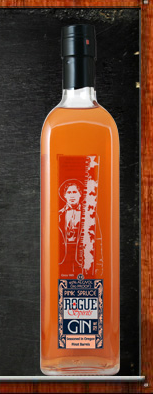
Rogue Spirits Pink Spruce Gin

Maker: Rogue, Newport, Oregon, USA

ABV: 45%

Notes: “Seasoned In Oregon Pinot Barrels” [sic]

Thanks to: Amy for the sample.

Appearance: Pale, pinkish gold.

Nose: Coniferous. Spruce, juniper, cedar, ginger, orange peel.

On the palate: Full-bodied. rainier cherries, plum, cedar, oak, ginger, juniper, spruce.

Finish: Lightly sweet then some spruce and then burn slowly fading to sweetness again

Parting words: Weird but good. I was only able to taste it in a dry martini and not in a G & T. According to my friend, it didn’t do too well in that application. At any rate, I enjoyed it. Its odd coniferousness sets it apart from the competition, and the Pinot (Noir, I’m assuming) finish takes the edge off the woodsy notes. Not a go-to, but good for a change of pace. The only criticism I would have is the rather high price, $35 at one of my local haunts. Nevertheless, Rogue Spirits Pink Spruce Gin is recommended.

The Botanist

Maker: Bruichladdich, Isle of Islay, Argyll, Scotland, UK

Style: Dry Gin

ABV: 46%

Appearance: Crystal clear

Nose: Vaguely rustic. Juniper, heather, sweet angelica.

On the palate: Full-bodied and well balanced. Dry on first entry, but then skewing sweet. Classic gin botanical notes, but few stand out. Also, as in the nose, a vaguely earthy, rustic taste on the back end, maybe a hint of seaweed and rainy beach.

Finish: Sweet, then dry, then herbal and fruity. Raisins, figs, thyme.

Mixed: Works well in most drinks. Gets the job done in a Tom Collins and a Gin & Tonic. Works fine in a Negroni too, but seems wasted in the above three drinks. In a dry martini it really shines, but go easy on the vermouth. My usual ration is 2:1 gin to vermouth. When using the Botanist, consider something like 4-5:1. It will taste fine the other way, but this gin has so many beautiful nuances, you’ll want to make sure the Botanist is leading all the way.

Parting words: The Botanist is made by Bruichladdich (Brew-kladdy), a (formerly) independent whisky distillery on the isle of Islay in the Hebrides islands in Scotland. It thinks of itself as “progressive”, though the way they make this gin seems more retro than prog. Bu that’s a good thing. In addition to what they call the traditional nine botanicals used in dry British gins, 22 herbs and spices are gathered from around Islay, including some native juniper.

At any rate this is an excellent gin, one of the few I’ve had that I can actually enjoy neat. It is subtle, complex and all around delicious. The Botanist is highly recommended.

Ransom Old Tom Gin

Maker: Ransom, Sheridan, Oregon, USA

Style: Barrel-aged Old Tom

Batch: 25 (different batch pictured)

Age: 3-6 mos.

ABV: 44%

Appearance: Dark straw. Thick legs and robe.

Nose: Light juniper, cardamom, coriander, a touch of citrus and a little malt.

On the palate (neat): Medium bodied and spicy. Cardamom really comes to the fore, only slightly restrained by the citrus notes. Gets sweeter with a splash of water, but still very spicy.

Finish: Even spicier with what tastes like a big hit of ginger (Angelica maybe?). Tingly for a long time.

Mixed: Makes an interesting Martini. A dirty or a Gibson helps to cut the spice with more aggressive saltiness than a dry. A perfect also balances out the spice from the sweet side. My go-to gin for a Negroni. Makes for a screwy Tom Collins or Gin & Tonic.

Parting words: The folks at Ransom were generous enough to put the ingredients  right on the front of the label of this product. They are: Malted two row* barley, corn (maize), juniper berries, orange & lemon peel, coriander seed, cardamon (sic) pods and angelica root. To my tongue, the cardamom takes center stage here.

My friend Gary, a self-made expert vatter of all things spirituous, handed me one of his projects when I was in Kentucky last spring. It was a recreation of what, based on his research, 19th century Old Tom gin would have been like. Old Tom was sort of a bridge between Dutch genever and London dry gin in terms of sweetness. Gary’s take is quite sweet. The citrus, particularly orange, is in the driver’s seat. The focus is much more on that than on the spice. Gary’s is more drinkable neat, but Ransom’s is probably more interesting over all.

At any rate, Ransom’s Old Tom gin is a not something I drink a lot of, but it has it’s place and is definately worth trying as an example of a nearly extinct species of gin. Ransom’s Old Tom Gin is recommended.


*Two-row barleys are low-protein, older strains of barley used in the making of English ale (among other things). See http://en.wikipedia.org/wiki/Barley#Two-row_and_six-row_barley

New Amsterdam Gin

Maker: E & J Gallo, Modesto, California, USA

ABV: 40%

Appearance: Crystal Clear

Nose: Alcohol, cucumber, cardamom, cassia, orange peel

On the palate: full-bodied and sweet. Candied orange, juicy fruit gum, lime peel.

Finish: Very sweet and a little tingly.

Mixed: Does well in almost everything. Best suited to Tom Collins and Gin & Tonics. Does OK in negronis. Makes for a sweet martini, which is ok but not my preference.

Parting words: New Amsterdam is a servicable gin that does well in applications that call for sour or bitter ingredients that can balance out its sweetness. It comes in a stylish bottle that makes the gin look higher on the shelf than it is. For a gin that sells for under $15 retail, it does well. My expectations were met. Can’t complain. New Amsterdam gets a mild recommendation.

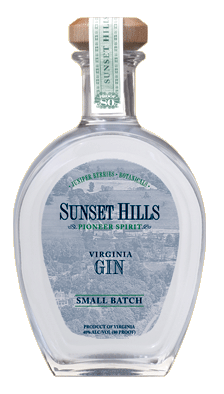
Sunset Hills Virginia Gin

Maker: A. Smith Bowman, Fredericksburg, Virginia, USA (Sazerac)

ABV: 40%

Appearance: Clear.

Nose: Lime peel, lemon peel, angelica, anise, very light juniper.

On the palate: Fairly heavy mouth feel. Very light, little taste except alcohol.

Finish: Some sweetness, some light herbal notes, and then fades away.

Mixed: Makes perfectly serviceable martinis and does ok with tonic and bitter lemon. All are enjoyable, but dull.

Parting words: I really wanted to like this gin. I am Facebook friends with the master distiller at Bowman, and I enjoy the Bowman bourbons and ryes. But this gin is just boring. It’s neither here nor there. It lacks the rough edges of bottom shelf gins, but it also lacks the interest of upper shelf gins. It’s not too expensive, but why bother? There is nothing going on here. Unfortunately, I cannot recommend Sunset Hills Virginia Gin.

Tanqueray London Dry Gin

Maker: Cameronbridge Distillery, Levenmouth, Scotland (Diageo)

Style: London Dry

ABV: 47.3%

Appearance: Crystal clear.

Nose: Lime peel, alcohol. Bitterness, coriander, sweet angelica, bit of juniper.

On the palate: Sweet, full-bodied, but not much else going on.

Finish: Burn, sweetness and Angelica.

Mixed: Gin & Tonic: Makes a cool, crisp, refreshing G & T. Dry Martini: Thick and herbal with a citrus finish. Tom Collins: Like the G & T, crisp and refreshing. Works well in all applications.

Parting words: This is one of the old standards of the gin world. It’s hard to get more “macro-distilled” than a Diageo-made gin, but they know what they are doing and they execute it perfectly. A good amount of gin character but nothing too outlandish that might scare the bourgeoisie. Recommended.

Knickerbocker Gin

Maker: New Holland, Holland, Michigan, USA

ABV: 42.5%

Neat

Appearance: Crystal clear with pearl necklace-ing.

Nose: Sweet, a little rough. Citron, anise, a touch of horehound and eucalyptus, a hint of juniper.

On the palate: Full-bodied, but light in flavor. Water brings out the juniper in a big way. The sweet old-fashioned stick-candy flavors are there too: licorice, horehound and bitter lemon.

Finish: Herbal and floral neat, sweetness and candy with a splash of water.

Mixed

Tom Collins: Does very well. Adds depth to the drink without overwhelming it.

G & T: Does fine, but doesn’t particularly distinguish itself when mixed with good tonic. Ironically (or not) it seems to stand out more against supermarket brand tonic.

Bitter Lemon: Overwhelmed by the citrus flavors.

Dry Martini (w/Noilly Pratt): Adds a nice sweet note to balance the assertive herbaceousness of the vermouth. Brings a good amount of body too. As I reach The Olive Zone at the bottom of the glass, it stands up to the brine well. Knickerbocker would probably work even better in a perfect (½ dry vermouth, ½ sweet) martini, but unfortunately I didn’t think of that until the bottle was almost gone. I don’t remember this gin doing nearly this well in a martini the last time I bought it. If they tinkered with it in the recent past, they did a good job. Like Corair’s gin, this is a fine, if less ambitious, example of what micro-distillers can do well. Recommended.