Glenfarclas 12 y/o

Maker: Glenfarclas, Ballindalloch, Scotland, UK (J & G Grant)Glenfarcas 12
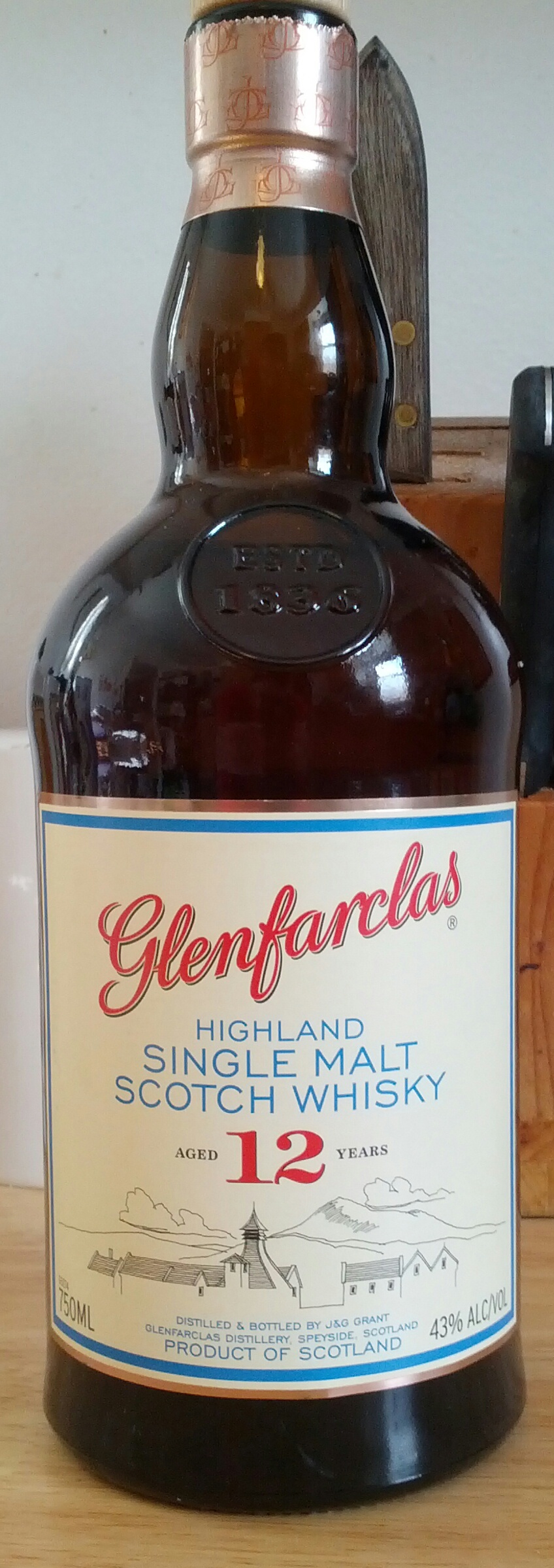
Region: Speyside, although the label describes it as “Highland”

Michigan State Minimum: $52

Appearance: Light gold (natural color) with long thin legs.

Nose: Sherry, barley bread, dried flowers, crème brûlée.

Palate: Medium bodied and desserty. Butterscotch, French lavender, oak, mace (the spice not the chemical weapon).

Finish: Fairly hot but sweet. Lingers on the lips for a short time.

Parting Words: Glenfarclas is one of the few truely independent malt distilleries left in Scotland. The Grant family (not to be confused with many other Grants making Scotch whisky) has owned Glenfarclas since the nineteenth century and they have continued to do things their own old fashioned way. They refer to their whisky as Highland on the label although most would refer to them as Speyside these days given their proximity to the Spey river. Their labels are simple, their bottles are butch and their range of malts is based primarily on age. In the U.S. a 10, 12, 17, 21, 25, 40 and a 105 proof cask strength NAS version. Also available (but very expensive) are the Family Cask series of vintage bottlings.

The 12 y/o Glenfarclas is a very good whisky.The packaging and marketing may be spartan, but the whisky is not. The distinctive earthy aromas of the older expressions are muted in the 12 , but are still there faintly in the sherry and oak. The result is a classic sherried Speyside profile of the heavier sort, like Balvenie or Mortlach. It’s an excellent after dinner sipper well suited to books and back porches. I don’t smoke cigars, but I have been told that it goes well with them as well.

$52 is a steal for a mature, quality single malt from anywhere these days. Nothing not to like about Glenfarclas 12. It is recommended.
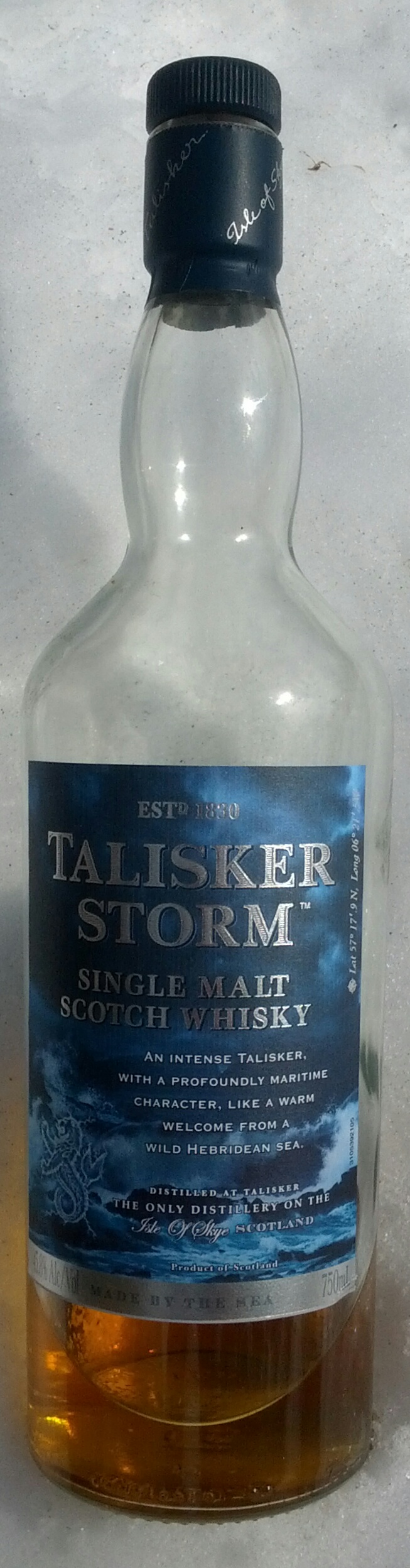
Talisker Storm

Maker: Talisker, Carbost, Isle of Skye, Scotland, UK (Diageo)
Talisker Storm

Region: Island

Age: NAS

ABV: 45.8%

Michigan State Minimum: $77

Appearance: Light caramel (likely colored)

Nose: Peat, dried flowers, smoke, alcohol, pine needles. Water brings out more smoke but doesn’t alter the flavor much otherwise.

On the palate: Full bodied and sweet. Smoke, cocoa powder, alcohol. Water brings out vanilla, white cake and then a burst of smoke.

Finish: Soot, alcohol, butterscotch candy, Mexican chocolate. Water doesn’t change much here.

Talisker Storm is a relatively new expression from Diageo. Price-wise it is situated between Talisker 10 y/o ($70 state minimum) and the Distiller’s Edition ($80). All three are bottled at the same proof. I have not had the Distiller’s Edition, so I can’t comment on how Storm compares to that, but Storm is definitely superior to the 10 y/o. Storm tastes more mature and shows better flavor integration than the 10, which seems to vacillate between sappy new make and murky maritime peat. Storm works better than the 10 as a gateway to Talisker and smoky Hebridean single malts in general. There is also a Dark Storm available in travel retail outlets that is aged in heavily charred casks.

If I have one criticism, it’s that it’s by-the-numbers with nothing in the way of surprises lurking in the nose or finish. That’s OK though, since it seems to be intended as a gateway or go-to type malt. It’s not cheap, but the price is firmly in line with comparable malts. If I have two criticisms, it’s that the label and packaging are cheesy.

In sum, I liked it, and could see myself buying it again. Talisker Storm is recommended. It’s worthwhile noting that this whiskyalso won Whisky Advocate’s Highland/Island Single Malt Scotch of the Year for 2013.

Glen Grant 16 y/o

Maker: Grent Grant, Rothes, Moray, Scotland, UK (Campari)

Region: Speyside- Rothes

ABV: 43%

Michigan State Minimum: $80

Appearance: Dark straw. Coats the inside of the glass with thick, gentle legs.Glen Grant 16

Nose: Green apple, sherry, caramel pear, lemon thyme. Water brings it together and brings out some light spice like sweet cinnamon and ginger and a firm but unobtrusive oak structure.

On the palate: Medium bodied and a little hot. Custard, butterscotch candy, caramel.

Finish: Hot but rich and sweet. Lingers for a long time.

Parting words: I don’t like sherry. I have tried to like it but I have never been able to develop a taste for it despite my heavily British genetic makeup.

My dislike of sherry has kept me away from Speyside single malts because of their traditionally heavy use of sherry casks and the resulting sherry flavors. I’m starting to rethink my aversion to Speysiders, though. This is a powerful, flavorful and well-balanced single malt. It is now my favorite Speyside single malt. It’s everything anybody could want in a Speyside malt. At $80 it’s not cheap but one could to worse for more. As frugal as I can be with whisky, I have never regretted buying Glen Grant 16. Highly recommended.

The Glenrothes 1998

Maker: Glenrothes, Rothes, Moray, Scotland, UK. (Berry Bros. & Rudd)Glenrothes 1998

Region: Speyside- Rothes

Age: 14 y/o

ABV: 43%

Michigan State Minimum: $80

Appearance: Dark copper (possibly colored), with long persistent legs.

Nose: Sherry, oak, honey, alcohol, butterscotch, golden raisins. Water brings vanilla to the party.

On the palate: Full bodied and creamy. Crème brulee, more sherry and wood, toffee. Water brings out some curry spices and vanilla.

Finish: Warm and a little spicy. Butter cream, old oak, cinnamon.

Parting words: Glenrothes 1998 vintage is typically Speyside. The sherry wood notes are Gladys Knight and the bourbon cask ones are the Pips. It has heft that some of Glenrothes’ neighbors lack but still has sophistication and brightness they are known for. Wood is very present on the nose, palate and finish but it never drags the whisky down, it beefs it up. As you can tell from the notes, I think this works best as an after dinner dram.

I purchased this bottle of Glenrothes 1998 for a Burns Night celebration (for a much lower price than the current state minimum) and all of the guests who tried it, loved it. It’s probably worth noting that most of them were bourbon drinkers. At $80, it’s more expensive than I am usually eager to shell out but all in all a fair price for a malt of this quality. Glenrothes 1998 is recommended.

Ardbeg Uigeadail

Maker: Ardbeg, Islay, Scotland, UK (LVMH)Ardbeg_Uigeadail

Region: Islay

Age: NAS

ABV: 54.2% ABV

Appearance: Medium copper with thin, clingy legs.

Nose: Smoldering campfire, cinnamon, peat, citron, old oak.

On the palate: Full bodied and rich. Hardwood ash, caramel, fruit gum, honey.

Finish: Heat, then ash, then more heat with a background of fruit.

Parting words: Uigeadail, named after the loch from  which the distillery draws its water, is the next step up from the 10 year Ardbeg. Most of Ardbeg’s expressions lack age statement, partially because the distillery was shut down for a few years in the 1980s and produced very little in the 1990s, but Uigeadail is clearly older than 10 years, at least on average.

If one loves smoky single malts, there is nothing not to love about Uigeadail. It’s hardy and smoky but with more finesse and balance than its younger stable mate. My only complaint is the price. The Michigan state minimum of $75 is high, especially when compared to its direct competition like Laphaoaig Quarter Cask ($57) and the limited edition Lagavulin 12 y/o cask strength which was also in the $75 range. That said, Uigeadail has more finesse and more power than those two respectively, is non-chillfiltered, natural color and cask strength, all of which are big plusses. While I’d like to see it at a lower price, it’s probably worth what I paid for it. Ardbeg Uigeadail is recommended.

Glenmorangie- The Original

Maker: Glenmorangie, Tain, Scotland, UK (LVMH)Glenmorangie%2010y%20original%20l

Region:  Highlands- Northern.

Age: 10 y/o

ABV: 43%

Appearance: Pale gold

Nose: Malt, alcohol, wildflower honey, dried flowers, hint of oak.

On the palate: full bodied, sweet and a little hot. Sugar cookies, orange blossom honey (yes, I can taste the difference), alomond extract, vanilla.

Finish: Strong malt notes followed by an assertive sweetness. Even with water, the finish is still pretty hot.

Parting words: At ten years of age, most bourbons are hitting their peak or at least are close to it. At ten most single malt Scotches, especially those made on the mainland, are barely out of diapers. The Original is a good example of that. Not to say it’s not tasty, it definitely is, it just  lacks depth. It’s all sweetness and malt and not much else. The Original is priced reasonably for a single malt at $40 Michigan State Minimum and I would take it over some of its 12 y/o competition like Glennfiddich, Glenlivet, Macallan and Dalmore. Glenmorangie The Original is recommended.

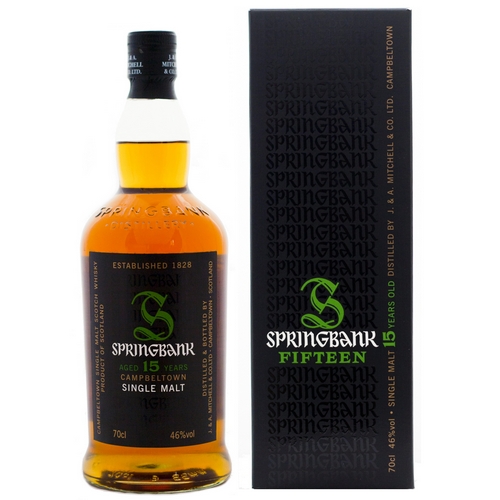
Springbank 15 year old

Maker: Springbank, Campbeltown, Scotland, UKspringbank-15-yearold

Region: Campbeltown

Age: 15 y/o

ABV: 46%

Appearance: Old gold.

Nose: Malt, mandarin orange, old leather, old oak, amaretto, , sea spray, smoldering candle.

On the palate: Full-bodied and sweet. Caramel, white chocolate, peat, pralines, burn. Water brings out butterscotch candy and a good amount of smoke.

Finish: Smokey and sweet with subtle maritime notes.

Parting words: This is the second bottle of Springbank I’ve purchased. The 10 y/o was sweet and nutty. The 15 is more complex. There is a lot of candy and fruit but it is thoroughly balanced out by the oak and smoke. If anything it is a little too far over the edge, coming across a bit murky at times.

When I purchased this bottle, it was also the most expensive bottle of whiskey I had ever purchased, at a little over $100 including tax. Was it worth it? I don’t know. I try to shake my bourbon QPR expectations and apply Scotch values to Scotch whiskies, but I think this one is overpriced. Maybe at 18 y/o, there is more balance, but the 15 is just a little out of whack. Still, Springbank 15 year old is good and is recommended.

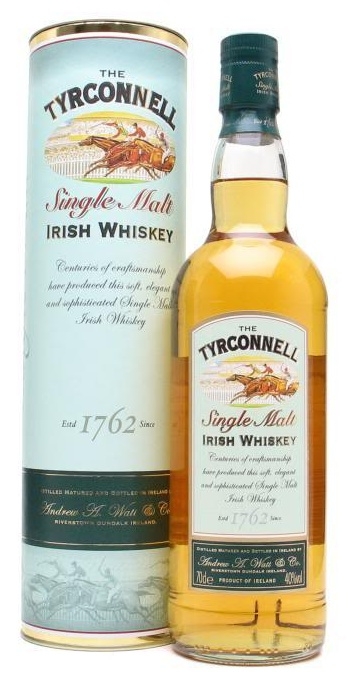
The Tyrconnell Single Malt Irish Whiskey

Maker: Cooley, County Louth, Ireland

Age: NAS

ABV: 40%

Appearance: Dark straw with long voluptuous legs.

Nose: Papaya, creme brulee, mandarin orange, alcohol

On the palate: Full-bodied and sweet. Hot, but sexy. Lots of fruit. Apricot sherbet, custard, tropical fruit salad, vanilla. Water brings out a new rubber tire. Don’t add water.

Finish: Fairly hot, with a lot of sherry. Faint fruit in the distant background and some oak.

Parting words: This is a whiskey I have gone back and forth on in the several months in which I’ve had it. As I am nearing the end of the bottle, I’m enjoying it more. The fruity dessert notes have won out. Sometimes it just tastes too hot (puzzling for something at 40% ABV), so one is tempted to add water to the whiskey. But bad things happen when water is added. Foul, over-sherried rubber tire scents and flavors dominate and turn a sexy whiskey into a day at the tire store.

If I were to sum it up, it’s like a grown up version of Jameson. Not as floral but just as light and sweet with the added complexity one would expect from a single malt Irish. Recommended.

The Arran Malt, 14 y/o

Maker: Isle of Arran, Lochranza, Arran, Ayrshire, Scotland, UK

Region: Highlands- Island

Age: 14 y/o

ABV: 46%

Notes: Non chill-filtered

Appearance: Bright new gold.

Nose: Wildflower honey, vanilla pudding, butterscotch pudding, heather.

On the palate: Full-bodied and buttery. Hard toffees, sweet cream butter, blondies, wild thyme.

Finish: Hot and buttery. Like freshly made caramel corn, not entirely cooled yet.

Parting words: Founded in 1995, Isle of Arran Distillers is one of the youngest distilleries in Scotland producing whisky. This 14 year old expression, released in 2010, is their oldest expression to date. It’s a good, solid single malt. It is firmly in the tradition of the Highlands with plenty of sherry and bourbon notes, but with the maritime tang of the costal malts. Isle of Arran is on the right track, and this is a good whisky for a distillery of any age. Isle of Arran 14 y/o is recommended.

Clynelish Single Malt

Maker: Clynelish, Brora, Scotland (Diageo)

Region: Highlands- Northern (coastal)

Age: 14 y/o

ABV: 46%

Appearance: light amber with long clingy legs.

Nose: Malt, toffee, brown butter, honey, brine, papaya, a slight peaty tang, but no noticeable smoke.

On the palate: Soft and full-bodied. Even with a splash of water it has a big bite. Wildflower honey, butterscotch, kiwi, some maritime notes but not fishy or murky.

Finish: Malty but powerful. Caramel, nougat, honey, caramel corn, still a hint of brine.

Parting words: I’m still a Scotch novice so bear with me. My first thought when tasting it was that it tastes like Highland Park’s rambunctious younger (or older) sibling. The Scottish Wildcat on the label seems apt. Even with a goodly amount of water, it is still a powerful malt far beyond its ABV %.  It’s a great combination of soft voluptuous candy and powerful seaside characteristics. Recommended.