Big Bottom Port Cask Finished

Maker: Big Bottom, Hillsboro, Oregon, USAwpid-20150220_122442.jpg
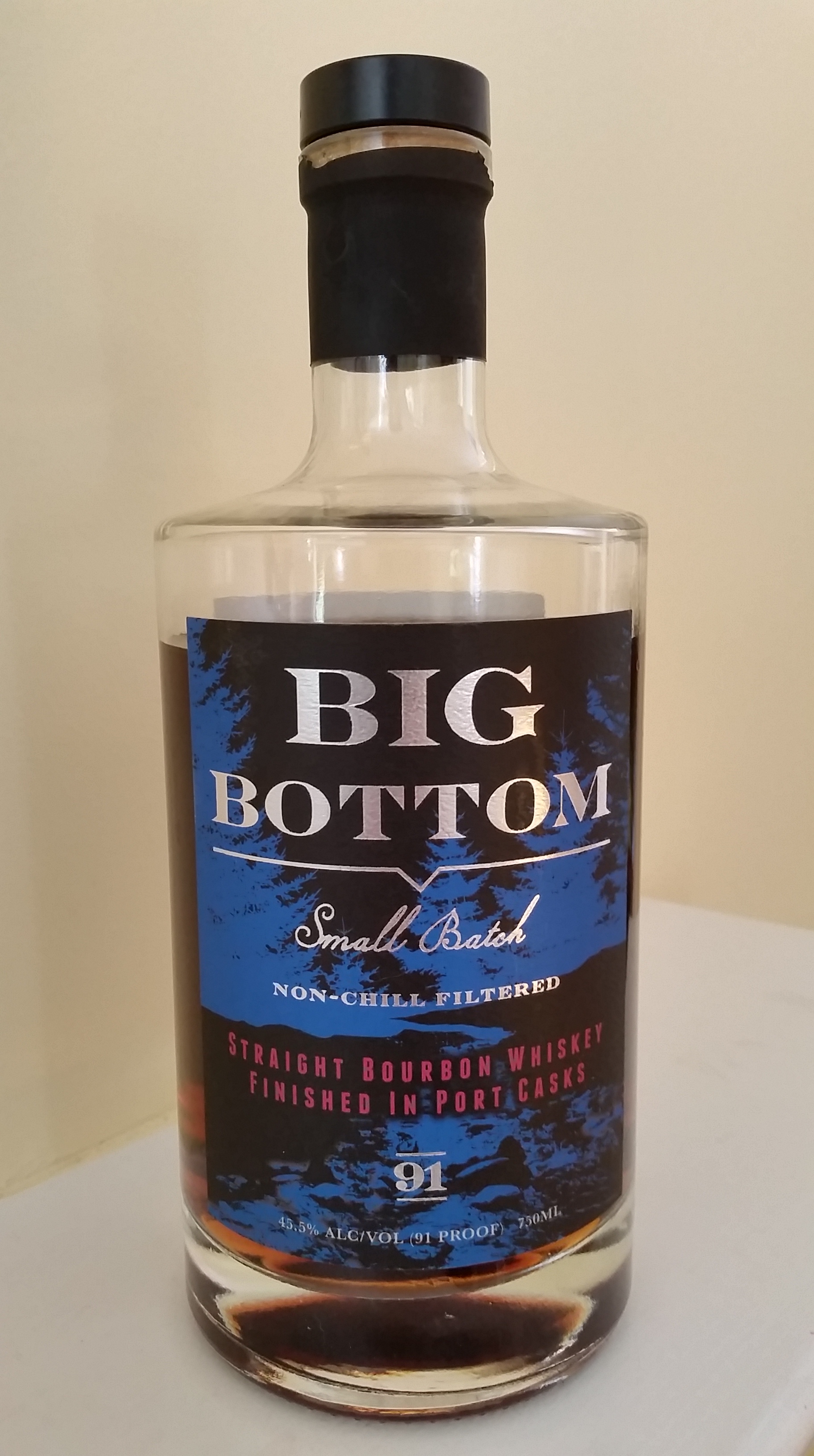
Distiller: Unknown, likely MGPI, Lawrenceburg, Indiana, USA

Style: Straight bourbon finished in Port casks.

Age: NAS

Proof: 91 (45.5% AVB)

Batch: 7

Note: Not chill filtered

Price: $40 (Binny’s)

Appearance: Dark auburn.

Nose: Alcohol, oak, wood varnish, hint of port.

Palate: Sweet and oaky on the palate. Alcohol, aged tawny, chocolate covered dried cherries.

Finish: Alcohol, wine grape jam, dates. Lingers for a long time.

Mixed: While I don’t usually mix bourbons in this price range, fortified wine finished bourbons usually mix very well in the classier sort of cocktails so I thought I’d give it a go. I tried it in a Manhattan, perfect Manhattan, boulevardier, Dave Wondrich’s Holdfast cocktail (bourbon, bitters, splash of Gran Marnier) and a whiskey sour. It did well in all but it showed up best in the cocktails with as few mixers as possible to let the finishing show through. These were the Manhattans, Holdfast and the sour.

Parting words: Big Bottom (named after a section of the Lewis & Clark Mt. Hood Wilderness Area, and not to be confused with Big Ass Bourbon) offer a range of bourbons but made their name with their wine-finished ones. They bottle wines finished in Rhone, Cabernet Sauvignon, Zinfandel and Port barrels. I decided to start with their Port-finished expression because I have more experience with Port-finished whiskeys than with any of the others. This one is finished in a ten year old tawny cask.

This is probably the best Port-finished bourbon I’ve had. It is a little hot upon first pour but after blows off it gets much better. BB doesn’t have the strawberry flavors of Angel’s Envy (or the Balvenie Portwood for that matter) but has richer fruit flavors like the cherry and date mentioned above.  It works  very well with red vermouth and is damn near perfect as an after-dinner sipper. The price is fair for a product of this high quality. The care they took in selecting the barrels for finishing shows in the end result. Big Bottom Port finished is recommended.

 

American Prairie Reserve

Maker: High West, Park City, Utah, USAwpid-2014-09-12-19.18.58.jpg.jpeg

Distillers: MGPI, Lawrenceburg, Indiana/Four Roses, Lawrenceburg, Kentucky, USA

Style: Blend of straight bourbons (cannot be called straight because bourbons are from different states)

Age: 6 y/o (blend of 6 y/o MGPI with 10 y/o Four Roses)

Proof: 92 (46% ABV)

Michigan State Minimum: $42

Appearance: Medium copper with evenly spaced legs.

Nose: Alcohol, bubble gum, leather, salted caramel, whiff of steamed asparagus.

Palate: Spicy and a little hot. Cotton candy, jalapeno, oak, country ham.

Finish: Semi-dry. Oak, raw pecans, alcohol.

Parting words: High West has gone from a start up to one of America’s premier blenders and rectifiers in just a few short years. This bourbon (their first & only to my knowledge) is actually a reunion of sorts. The distilleries now called MGPI and Four Roses were both once owned by Seagram’s, which I imagine led to a lot of farcical missed meetings. “OK, I’m in Lawrenceburg, where are you?” “I’m in Lawrenceburg, where are YOU?” “Lawrenceburg, Kentucky!” “UHOH!”

Anyway, American Prairie Reserve is not cheap, but it’s well done and worth the price, especially considering that 10% of after tax profits go toward efforts to establish a federal American Prairie Reserve in northeastern Montana. That’s also why there’s a grouse on the label.

American Prairie Reserve is recommended.

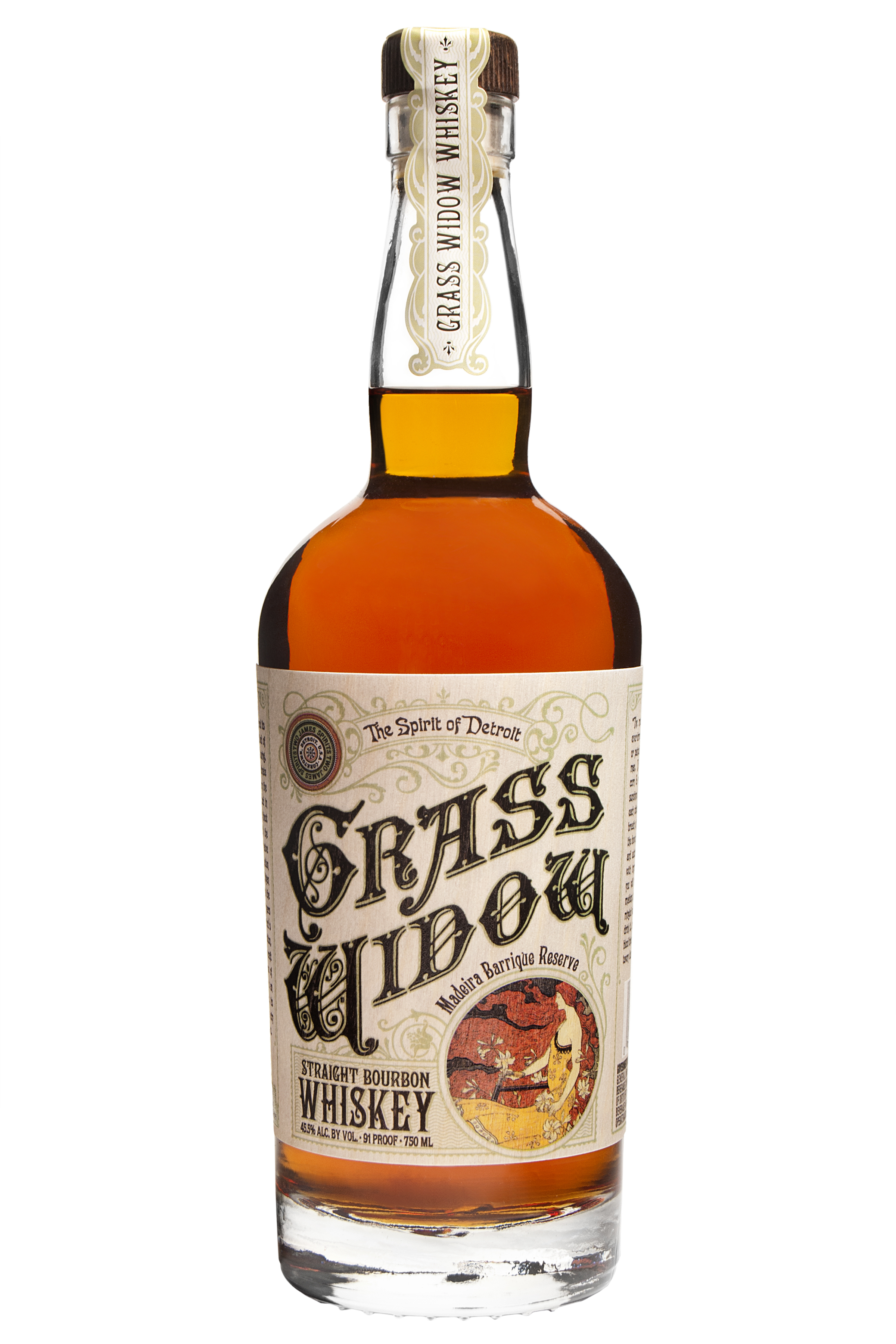
Grass Widow

Grass Widow Bottle Image
Used with permission of Two James Spirits LLC

Maker: Two James, Detroit, Michigan, USA

Distiller: MGPI, Lawrenceburg, Indiana, USA

Style: Bourbon whiskey finished in Madeira casks.

Age: NAS (at least 4 y/o)

Proof: 91 (45.5% ABV)

Michigan State Minimum: $60

Thanks to Amy for the sample.

Appearance: Light auburn with long thick legs.

Nose: Alcohol, balsamic vinegar, black cherry, grape bubble gum, cayenne pepper.

Palate: Wine grape jelly, oak, jalapeno, honey.

Finish: Madeira, spicy rye, oak, ghost pepper.

Mixed: It did very well in all cocktails I tried it in. Made a good, spicy Manhattan and boulevardier but it did best in an old fashioned. The bitters and sugar brought out the spice and jam very nicely. Similar cocktails should also do well.

Parting words: Many microdistillers have released sourced whiskey products as a way to pay the bills while their own products age. Some, like Two James, actually do have distilled their their own whiskey and are actually waiting for it to age.

The only other product available to that bears much resemblance to Grass Widow that is Angel’s Envy. The latter is Kentucky bourbon finished in port wine barrels. There are big differences between Madeira and Port but both are fortified Portuguese wines. Grass Widow is much richer and spicier than AE. The Madeira wine cask influence adds a dark, grapey taste and aroma to the spirit as opposed to the bright strawberry notes of AE. Both are delicious, but Grass Widow’s finish works alongside the sweetness and spice of the bourbon to while AE’s finish takes the lead and leaves the bourbon to play a secondary role. That puts it slightly ahead of AE for me.

As with most micro-producer products price is an issue. At $60 it’s not going to be anyone’s go-to, but it’s definitely worth a place in any whiskey enthusiast’s cabinet as a weekend after-dinner sip or for a top-shelf cocktail. Grass Widow is recommended.

Old Scout Ten

Maker: Smooth Ambler, Maxwelton, West Virginia, USAOld Scout 10

Distiller: MGPI, Lawrenceburg, Indiana, USA

Batch: 3

Bottled: 5/2/2013 by Nikki.

Age: 10 y/o

Proof: 100 (50% ABV)

Price: $55 Michigan State Minimum (this bottle purchased in Kentucky for $50)

Appearance: Dark copper with thin, evenly spaced legs.

Nose: Almond extract, leather, alcohol, dried flowers. More leathery and herbal with water.

On the palate: Full bodied, sweet and rich. Caramel, burn, amaretto candy, cocoa powder. With water more sweetness and some lavender and tarragon.

Finish: Hot. Red pepper flakes, with a touch of oak and caramel as it fades. Less hot with water and sweeter with a touch of basil or tarragon.

Parting words: Smooth Ambler is a breath of fresh air when it comes to micro-distillers/bottlers. Unlike the smoke and mirrors that usually goes with sourced whiskey in this country, Smooth Ambler has always been very up front about the origins of their whiskeys. Their bourbons and ryes are even called “Old Scout” as a nod to the fact that they are indeed sourced, or scouted, from elsewhere. This may not seem like a lot, but even the best known NDPs (Non-Distiller Producers) are usually less than candid about their products.

At any rate, lest that sound like faint praise, their whiskey is damn good too. I’ve reviewed MGPI bourbon before with mixed results. This one is an unqualified success. It shows excellent balance and works well as a rich, creamy after-dinner, cold-weather sipper. The family resemblance to Four Roses is in evidence. Old Scout has a certain aromatic quality (yeast-driven if I were to guess) that I get in Four Roses but no other Kentucky bourbon.

This bottle proves to me once and for all that MGPI can indeed produce high quality bourbon. At $50-$55 it’s not cheap but it’s 100 proof and very tasty. That earns Old Scout Ten a recommendation.

Head to Head: Bourbon Supreme Rare vs. Cleveland Bourbon Black Reserve

BS= Bourbon SupremeBourbon Sup vs Cleve

CB= Cleveland Bourbon Black Reserve, Batch 004

Maker

BS: American Distilling, Pekin, Illinois, USA (facility now owned by MGPI and used in ethanol production)

CB: Cleveland Whiskey Co., Cleveland, Ohio, USA

Age

BS: NAS

CB: <6 mos.

Notes

BS: Tax-stamped, volume listed as 4/5 of a quart. In a bottle resembling Blanton’s with a gold tassel.

CB: Sourced whiskey treated with a patent-pending process intended to speed up aging. The process involves the use of high-pressure, “oxygen infusion” and “heat processed, charred white oak segments”.

Proof

BS: 86 (43% ABV)

CB: 100 (50% ABV)

Price

BS: Acquired for free (thanks Oscar)

CB: $30

Appearance

BS: Light orange. Slightly cloudy with “dusty” floaters. Some light necklacing.

CB: Mahogany with thin, clingy legs.

Nose

BS: Wood varnish, the lumber section at a hardware store.

CB: Dry erase marker, grape jelly.

On the palate

BS: Thin and light. Like sawdust-infused vodka.

CB: Medium bodied. Like sucking on a grape-scented marker.

Finish

BS: Resembles accidentally inhaling sawdust and then washing your mouth out with cheap vodka. Fades into a locker-room.

CB: Lots of burn, which covers up the taste nicely. Fades into a headache.

Parting words: This is a head to head I’ve been wanting to try for a long time. On the surface, these two whiskeys don’t have a lot in common. Bourbon Supreme is a “dusty” that was made in Illinois at an industrial alcohol plant and Cleveland Whiskey is a new product made in Cleveland by a startup company.

What they do have in common is that they are two of the most frequently mentioned names in discussions of the worst American whiskeys ever made. They live down to the hype.

Bourbon Supreme quickly belies its origins as industrial alcohol more suited to use as racing fuel than a beverage. The wood notes are very clear, but there is no integration and no balance with anything resembling traditional bourbon flavors like caramel, vanilla or spice.

Cleveland Bourbon resembles something kids might huff to get high. The headache mentioned in the finish came on just seconds after I swallowed the first sip. It was remarkable. I have never had that experience before, except for a Croatian Cabernet that gave me a headache at the moment I first smelled it. At least Croatian wine let me know how awful it was right off the bat.

Can anything good be said about either of these? Bourbon Supreme is still fairly easy to find on shelves (for obvious reasons) and the bottle would look attractive as a display piece on the back of a bar. Cleveland Bourbon also has an attractive bottle, is 100 proof and is only $30 which makes it cheaper than most “micro” products of similar age.

Still, these are both terrible products, worthy of their place in the “worst ever” discussion. I will say that I have tasted something worse than these two bourbons: these two bourbons vatted together. Neither Bourbon Supreme Rare or Cleveland Bourbon Black Reserve are recommended.

Angel’s Envy Rye

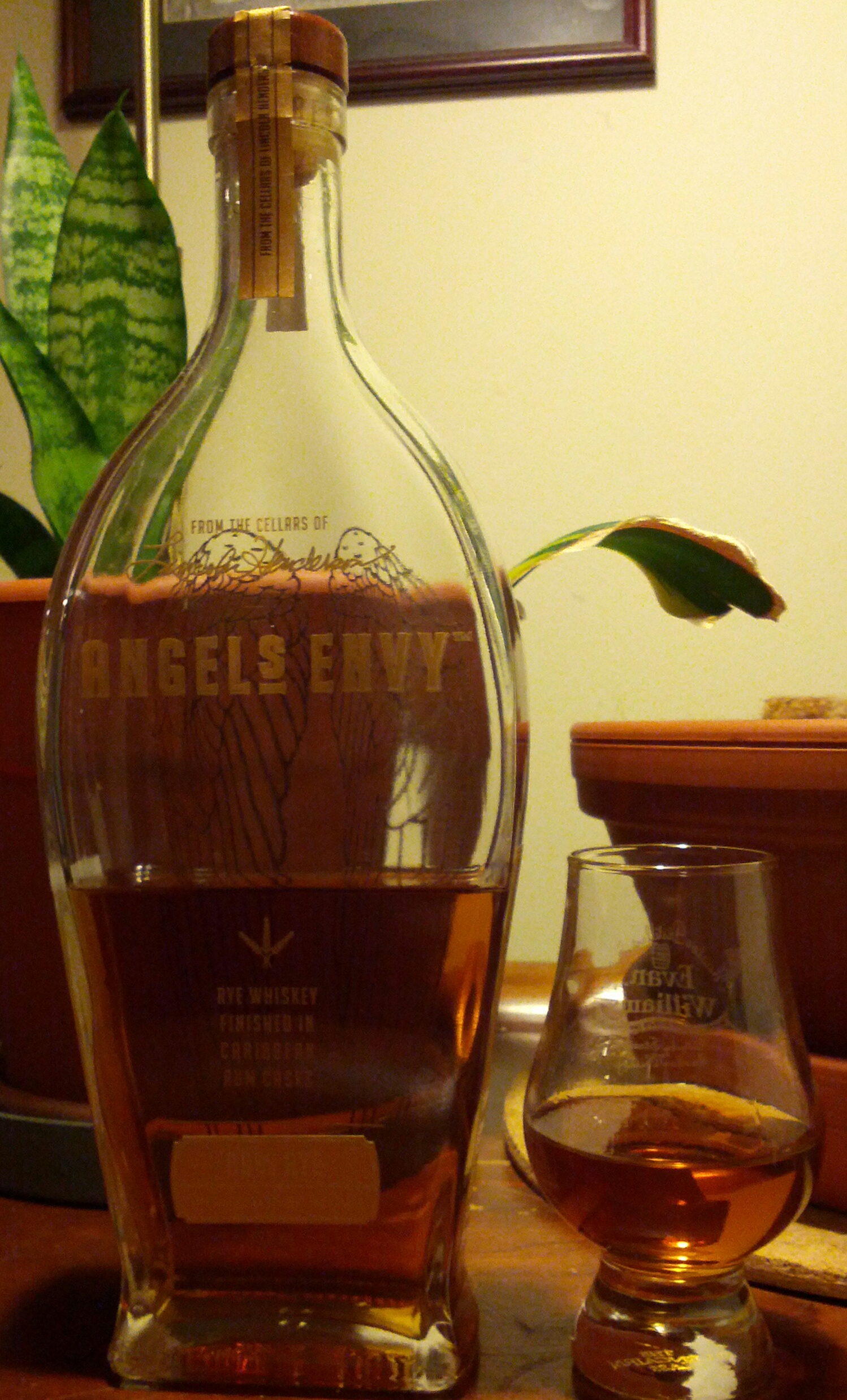
Maker: Angel’s Envy, Louisville, Kentucky, USAAE Rye

Distiller: Likely MGPI, Lawrenceburg, Indiana, USA

Style: High rye rye, finished in Caribbean rum casks.

Age: NAS

Batch: 1C

Proof: 100 (50% ABV)

Thanks to Oscar for help in obtaining this bottle and Amy for splitting it with me.

Appearance: Pale copper

Nose: Butter rum, carrot cake, almond brittle.

On the palate: Medium bodied, sweet and spicy. Fruitcake (the good, homemade kind), crystallized ginger, allspice, nutmeg, clove, mace, molasses.

Finish: More spice cake with a good bit of alcoholic burn. Clears out the sinuses and the sweetness lingers on the tongue and lips.

Parting words: This is another special release from this year that I have delayed reviewing in typical Sipology style. When it was announced that Angel’s Envy was releasing a rye, I was skeptical. When I heard the price, I was even more skeptical. When I tasted it, I was no longer skeptical.

This is a whiskey unlike any I have ever had and in a very good way. The rum flavors are very up front and they meld in an effortless way with the spice of the high-rye recipe rye to create a whiskey that is like drinking a 100 proof spice cake. It’s just an amazing product, albeit a very expensive one. It sold for $70 or more when it was to be found but it’s worth every penny and then some. There may be a few on shelves still, so if you see one, buy it. This is an amazing whiskey. Highly recommended.

Rendezvous Rye

Maker: High West, Park City, Utah, USArendezvous-bottle

Distillers: MGPI, Lawrenceburg, Indiana (6 y/o, 95% rye component) & Barton-1792, Bardstown, Kentucky (16 y/o, 80% Rye component)

Style: Indiana style rye whiskey (high rye)

Batch: 12A31

Age: 6 y/o (but blended with a 16 y/o)

Proof: 92 (46% ABV)

Appearance: Copper with a pinkish hue. Slightly cloudy.

Nose: Cedar, barbecue sauce, fresh cut grass.

On the palate: Medium bodied and soft. Dry with some spearmint. Water brings out a gentle sweetness to balance out the grassiness. Thyme, caramel, allspice, ginger.

Finish: Light, with a little sweetness but mostly tarragon and burn. Some char comes through and then softly fades. Much the same with water, but the burn has been transformed into a pleasant tingle.

Mixed: Very tasty in a Sazerac. Didn’t try it in anything else.

Parting Words: Rendezvous Rye was the first (or at least one of the first) products to be released by High West. The source material has shifted since that first bottling, but Rendezvous has been HW’s most consistant, and to me, most successful product. The tangy ketchup notes that plague Son of Bourye are here too, but they are kept firmly in the background by caramel and herbal flavors and aromas. Through prudent barrel selection and judicious mingling of ryes of two different styles, High West as created a rye that is very much worth seeking out. With rye supplies tightening, I hope they can continue to keep Rendezvous at an affordable price and at its current level of quality. Rendezvous Rye is recommended.

Willett Family Estate Rye

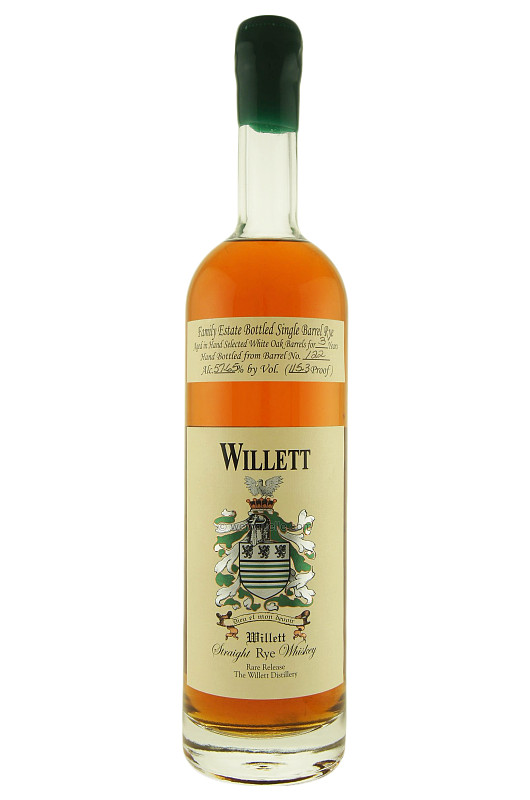
Maker: Willett/KBD, Bardstown, Kentucky, USAWillett Rye

Distiller: MGPI, Lawrenceburg, Indiana, USA

Style: High rye rye whiskey (I am now dubbing this Indiana style rye)

Barrel: 132

Age: 4 y/o

Proof: 110 (55% ABV)

Appearance: Fairly dark copper with thick legs.

Nose: Pine sap, oak, caramel, tarragon, alcohol, woodruff.

On the palate: Full bodied. Sweet and herbaceous, then hot. With a splash of water, the resemblance to Bulleit rye is very apparent. Sweet caramel, hay and spearmint.

Finish: Burn and a little caramel, then it’s all starlight mints. Lasts for almost as long as one of those would in the mouth! With some water,  tarragon and basil come out and settle into licorice before gently fading away.

Parting words: The Willett ryes being released at increasing ages every year are from the same Indiana distillery supplying Bulleit Rye, Templeton Rye, Redemption Rye and many others. The differences being that the Willetts are all at barrel proof and are single barrel selections. They are not available in Michigan, but are fairly easy to find in Kentucky and Indiana. At over $30, they’re not cheap but these are at barrel strength so one is getting more for one’s money. If 110 proof is too high for you, that’s why God made water.

Anyhow, Willett Family Estate Rye is the finest example of Indiana Rye I have tasted to date.  For something that is almost entirely rye and is only 4 years old, it has a good deal going on. I wouldn’t call it complex, but it’s more balanced than many of its siblings and it is a much better value than Templeton or High West’s Double Rye. I enjoy Kentucky “barely legal” style rye better, but if rye character is what you crave, Willett Rye is recommended.

Head to Head: Spring Mill Bourbon vs. Beer Barrel Bourbon

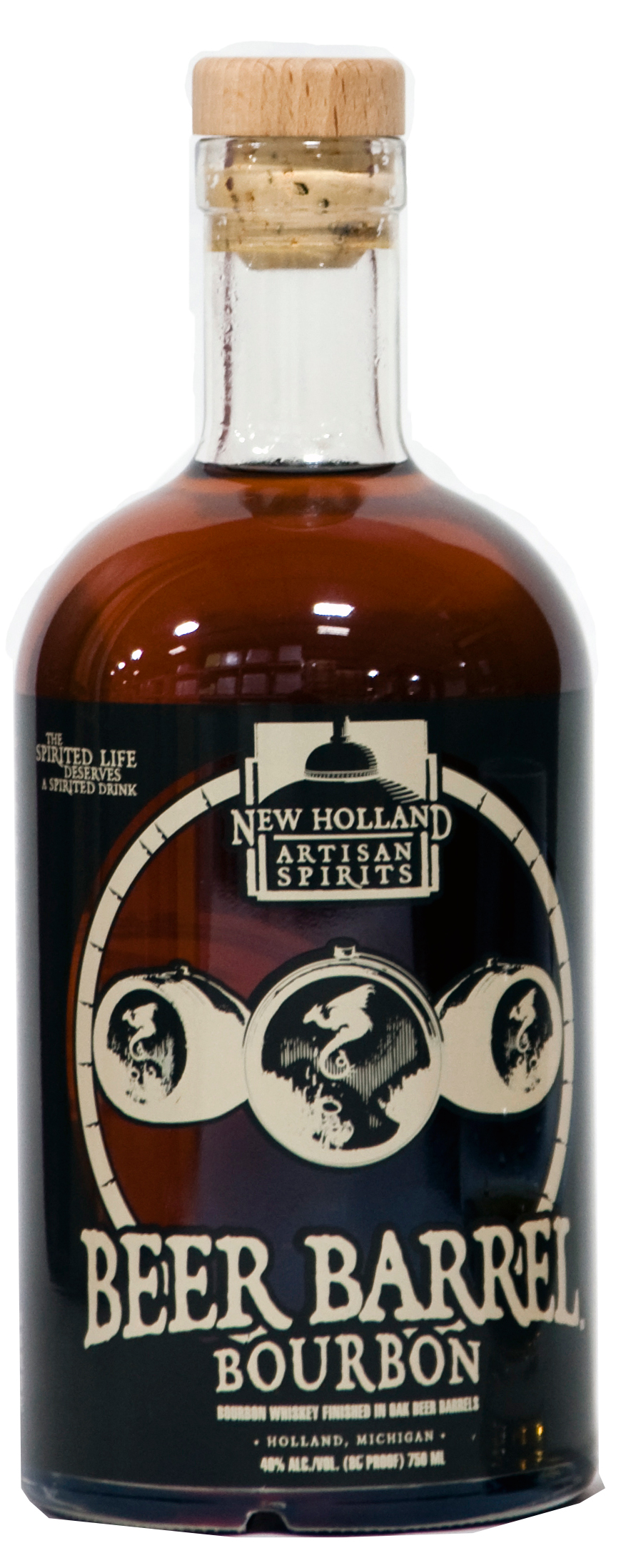
A. Spring MillSpringMillbeer-barrel-bourbon

B. Beer Barrel

Maker

A. Heartland, Indianapolis, Indiana, USA

B. New Holland, Holland, Michigan, USA

Distiller: MGPI, Lawrenceburg, Indiana, USA

Age: NAS

Proof

A. 90 (45% ABV)

B. 80 (40% ABV)

Notes

A. Rebarreled in new charred oak barrels

B. Finished in barrels used to finish beer in

Appearance

A. Light copper

B. Burnt orange

Nose

A. Wood shavings, alcohol, chocolate-covered caramels, fennel, leather

B. Dried cherries, roasted malt, corn chips, alcohol

On the palate

A. Sweet and hot. Medium bodied. Brown sugar, sweet tea, vanilla

B. Full bodied. Licorice, stone fruit.

Finish

A. Hot and long lasting with a bit of candy behind the burn.

B. Mellow and fruity. Grape soda, alcohol. Fades quickly.

Mixed

A. Excels in a Manhattan and does well in an old fashioned. Gets a little lost in cola.

B. Adds an interesting fruitiness to the Manhattan, does the same in an old fashioned. Downright tasty in ginger ale.

Parting words

Both of these bourbons are examples of small producers selling bourbon sourced from MGPI, Indiana but putting their own stamp on it. Both are successful in creating something different and probably superior to what they started with. As for Beer Barrel Bourbon (B), the fruity aspects of the stout that previously occupied the barrel come through the most, although a little of the roasted malt character also comes through.  It is a successful experiment but I don’t know if I’d buy another bottle. Mildly recommended.

Spring Mill (A) has more of a classic bourbon flavor. Rebarreling the often lackluster MGPI bourbon has added needed depth and sophistication. One of the proprietors of Heartland was not forthcoming about the nature of the second barrel (char level, size) when I communicated with him on social media, but I suspect it is a slightly smaller barrel with a lighter char, maybe 2 or 3. Whatever the case, it worked very well. The ceramic bottle adds interest (although I’m not quite sure how to recycle it) and the fact that the bottle shares the name of a street on the North Side of Indianapolis near where I grew up is a sentimental bonus for me. Spring Mill is recommended. Looking forward to some of the new barrel strength version of this stuff soon!