Crown Royal

Maker: Crown Royal, Gimli, Manitoba, Canada. (Diageo)Crown-Royal

Style: Blended Canadian Whisky

Age: NAS (at least 3 y/o by Canadian law)

ABV: 40%

Michigan State Minimum: $25/750 ml.

Appearance: Pale copper with some spotty necklacing.

Nose: Harsh and grainy. Burnt creamed corn, a sharp shot of rye, wood varnish.

On the palate: Full-bodied and sweet. Clotted cream, a touch of caramel, slight bite of alcohol and wood tannins.

Finish: Grape Nuts Cereal, a bit of caramel and then it quickly fades.

Mixed: Good with ginger ale and in an Old Fashioned. OK in a Manhattan and in an old cocktail recipe I dug up called a Frontenac (Canadian Whisky, Grand Marnier and bitters). It doesn’t add much to either of the latter, except perhaps some body, but it doesn’t hurt them either.

Parting words: Crown Royal has all the hallmarks of very young whiskey: cereal, full body and sharpness. This is most pronounced in the nose, which is by far the least appealing aspect of this whisky. It borders on nauseating. The rest of it isn’t so bad, just dull.

As a mixing whisky it does well as noted above, but it is hampered by the low proof. There is also a Crown Royal Black at 90 proof that may be a better option for Manhattans and similar cocktails but given the nose, it might not be a bad thing to cover that mess up with mixers.

My biggest beef is the price. $25 is too much for something this young and brash. Canadian Club 100 is $17 and comes in at 50% ABV, and the 12 y/o CC Classic comes in at $23 and sips as well as it mixes. A minor beef is the gaudy, ridiculous bottle and packaging. The bottle resembles something that might contain perfume belonging to an elderly French prostitute and the purple gold trimmed felt sack that it comes in goes right into the garbage as soon as it’s purchased. Overall, Crown Royal is mildly recommended for cocktails, but not recommended as a sipping whisky.

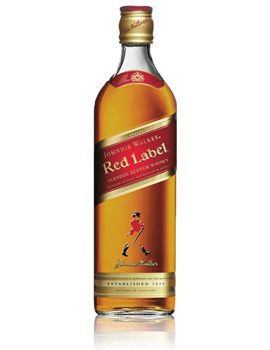
Head to head: Johnny Walker Red Label vs. Johnny Walker Black Label

Maker: Diageo, London, England, UKJohnnie Walker Black LabelJohnnie_Walker_Red_Label_Whisky_1

Distilled/Blended: Various locations in Scotland.

ABV: 80%

1) Red

2) Black

Age

1) NAS

2) 12 y/o

Appearance (coloring likely added)

1) Straw with a light copper tinge.

2) Light copper (i.e. darker)

Nose

1) Toasted malt, brown butter, dried wildflowers, passing whiff of peat.

2) Caramel, woodruff, malt, toasted wood, bit of smoke.

On the palate

1) Medium bodied and very sweet. Some alcoholic burn, but mostly sweetness with a bit of a fennel note in the background.

2) Fuller bodied. More sophisticated, but also a bit dull. Drier, some wood and cola sweetness with a bit of cocoa and allspice.

Finish

1) Big grainy finish. Rancid butter, alcoholic burn.

2) Some wood, but not overwhelming. Cinnamon, a bit of smoke, and more cola.

Parting words

Why review whiskies like these? Everybody knows what they taste like, right? Whether they do or don’t, it’s important to me to get a grip on products like this as a taster. It’s the same reason I reviewed Jack Daniels and Jim Beam White label. I need a baseline or a benchmark or something like that. It’s hard to judge a blend without knowing what the world tastes when it orders a blended Scotch.

Neither have a whole lot going on, frankly. The Red Label is not particularly good neat, but mixes nicely. It does well in a Rob Roy, Rusty Nail and in a highball. I didn’t mix the Black Label, since at 12 y/o it should be able to be sipped. It was fine, but dull as I said before. The Red Label is mildly recommended for mixing and the Black Label is recommended.

Bushmills Irish Whiskey

Maker: Old Bushmills Distillery, Co. Antrim, Northern Ireland (Diageo)

Age: NAS

ABV: 40%

Appearance: Burnt Orange, with a thick, clingy pearl necklace around the glass.

Nose: Tropical fruit salad. Papaya, pear, vanilla.

On the palate: Full-bodied, but light in flavor. Well-balanced between malty, floral flavors and heavy caramel ones.

Finish: Light and slightly sweet with a hint of vanilla. A little burn gives the finish some backbone.

Parting words: There’s an urban legend that only Irish Catholics drink Jameson and only Irish Protestants drink Bushmills. Any true Irish whiskey lover of any religion drinks whatever whiskey they like. So yes, it’s ok to drink Bushmills on St. Patrick’s day.

Compared to its peers, Bushmills strikes a balance between the floral tastes and aromas of Jameson and the relatively heavy caramel, grain whiskey flavors of Powers. Bushmills has a nice balance to it and avoids being dull like Tullamore. Bushmills won’t get mistaken for an upper shelf whiskey, but on the whole, it’s better than its peers. Bushmills is recommended.

White Horse Blended Whisky

Maker: Diageo, London, England, UK

Age: NAS

ABV: 80%

Appearance: Coppery caramel. Thin legs.

Nose: toffee, corn syrup, wildflowers.

On the palate: Thin, a bit of burn, caramel, some floral, maybe even peaty notes.

Finish: Sweet. Lots of vanilla with a bit of burn and some toffee.

Parting Words: I dunno what to think about this one really. On the one hand, it’s a cheap blend that is certainly worth what I paid for it, on the other hand, hearing that it contained Lagavulin Single Malt, my expectations were higher. The Islay influence is certainly there but in a very subtle way. In the end, I think White Horse is a serviceable bottom-shelf blend, and worth a mild recommendation.

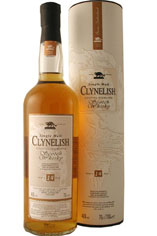
Clynelish Single Malt

Maker: Clynelish, Brora, Scotland (Diageo)

Region: Highlands- Northern (coastal)

Age: 14 y/o

ABV: 46%

Appearance: light amber with long clingy legs.

Nose: Malt, toffee, brown butter, honey, brine, papaya, a slight peaty tang, but no noticeable smoke.

On the palate: Soft and full-bodied. Even with a splash of water it has a big bite. Wildflower honey, butterscotch, kiwi, some maritime notes but not fishy or murky.

Finish: Malty but powerful. Caramel, nougat, honey, caramel corn, still a hint of brine.

Parting words: I’m still a Scotch novice so bear with me. My first thought when tasting it was that it tastes like Highland Park’s rambunctious younger (or older) sibling. The Scottish Wildcat on the label seems apt. Even with a goodly amount of water, it is still a powerful malt far beyond its ABV %.  It’s a great combination of soft voluptuous candy and powerful seaside characteristics. Recommended.

Tanqueray London Dry Gin

Maker: Cameronbridge Distillery, Levenmouth, Scotland (Diageo)

Style: London Dry

ABV: 47.3%

Appearance: Crystal clear.

Nose: Lime peel, alcohol. Bitterness, coriander, sweet angelica, bit of juniper.

On the palate: Sweet, full-bodied, but not much else going on.

Finish: Burn, sweetness and Angelica.

Mixed: Gin & Tonic: Makes a cool, crisp, refreshing G & T. Dry Martini: Thick and herbal with a citrus finish. Tom Collins: Like the G & T, crisp and refreshing. Works well in all applications.

Parting words: This is one of the old standards of the gin world. It’s hard to get more “macro-distilled” than a Diageo-made gin, but they know what they are doing and they execute it perfectly. A good amount of gin character but nothing too outlandish that might scare the bourgeoisie. Recommended.

Trimbach Reserve Pinot Gris

Maker: Trimbach¸Ribeauville, Alsace, France (Diageo)

Grape: Pinot Gris/Grigio

Region: Alsace

Vintage: 2005

ABV: 13%

Appearance:  Medium Gold with thick, persistent legs.

Nose: Pear, apple, tangerine, maybe a little wood.

On the palate: Full bodied. Like an annoying country music group: Big and rich. Pear, apple, and lavender. As it warms, citron, orange and the tangerine again.

Finish: Light, sweet, and citric. Lingers on the tongue and in the nose for what seems like an hour.

Parting Words: What can I say, this is an excellent wine. Pinot Gris is one of the specialties of Alsace and Trimbach knows how to put it together. Even at six years of age, this wine is vibrant, rich, and deep.  I wish I had more to say about this fantastic wine, but it has rendered me speechless. Highly recommended.

Signatory Vintage: Mortlach 1992

Maker: Mortlach, Dufftown, Banffshire, Scotland (Owned by Diageo, Bottled by Signatory)

Region: Highland- Speyside (Dufftown)

Age: 17 y/o (distilled 3/6/92, bottled 8/5/09)

ABV: 43%

Appearance: Light gold (natural color). Thick, heavy legs.

Nose: Oak, alcohol, a bit of citrus.

On the palate: a surprising hit of heat, otherwise mild and creamy, with a lot of body. This is a heavyweight Speysider. A touch of honey is also present and it dovetails nicely with the bitter notes from the wood.

Finish: Heat at first, then after the burn, the oak comes in very pleasant but still assertive way. Very nice finish. It’s a delicate balance of burn, wood, honeyed sweetness, and maybe the faintest hint of smoke.

Parting words: Another excellent bottling from Signatory. While it’s certainly good in the nose and on the palate, it’s unremarkable except for its weight. The finish alone is worth the price of admission. Simply beautiful.

Head to Head- Lonely Islands: Talisker 10 vs. Jura Prophecy

  1. Talisker 10
  2. Jura Prophecy

Maker

  1. Talisker, Carbost, Isle of Skye, Scotland
    (Diageo)
  2. Jura, Craighouse, Isle of Jura (joo-rah), Argyll, Scotland (United Spirits)

Region: Highlands- Island

ABV

  1. 45.8%
  2. 46%

Appearance

  1. Pale gold with thin, quick, sticky legs.
  2. Middle-aged copper (caramel coloring?) with thin, but also sticky legs.

Nose

  1. Peat, smoke, your grandma’s medicine cabinet meets your grandma’s candy dish.
  2. Intense bonfire smoke, but a bonfire with some unusual woods in the mix, maybe a little cedar. Behind all that, though, lurks a touch of chewy vanilla taffy.

On the palate

  1. Full-bodied and creamy. Burn, then big sweetness. Very little sign of peat or smoke.
  2. Medium-bodied. Burn and then that vanilla taffy comes in a big way.

Finish

  1. A lovely light tingle on the lips, followed bydying cigarette or maybe disintegrating lump charcoal after grilling up a couple of pork chops. A hint of honeyed sweetness, but pretty far in the background.
  2. Campfire the morning after the night it rained. The caramel/vanilla flavor is turned up pretty loud after the embers have finally died. Somewhere in the middle appears a chipotle chili.

Parting Words: The “Island” sub-region is such a mish-mash that I didn’t expect these two to have much in common other than their use of peat. They do have a lot in common, though. Jura Phophecy drinks like a louder version of Talisker, if that makes sense. Talisker is assertive, to be sure. Smoke and peat drive  and sweetness takes a back seat. In Prophecy all the amps are turned up to 11, even the sweet candy flavors. The result is jarring, but not unpleasant. Both of these are recommended, although Talisker 10 is more refined than Prophecy. But sometimes I like them loud and unrefined.

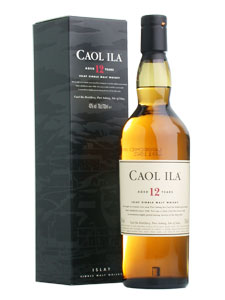
Caol Ila 12

This was originally going to be a video review but I did one and it was terrible. So it’s a text review now.

Maker: Caol Ila (cool eye-luh), Port Askaig, Isle of Islay, Argyll, Scotland (Diageo)

Region: Islay

Age: 12 y/o

ABV: 43%

Appearance: pale gold with long persistent legs that break up into clingy little bubbles on the Riedel Single Malt glass.

Nose: Big peat aroma with a faint whiff of smoke. Burnt butter, a bit of lavender, a bit of sea spray, and maybe heather, though I’m never quite sure what heather is supposed to smell like.

On the palate: Full-bodied and buttery. Sweet, creamy butter and wildflower honey, a bit of burn, then the smoke and peat come roaring in on motorcycles like the world’s fattest twins.

Finish: The twins barrel right through the finish. The burn follows close at hand and eventually fades into a sweetness in the cheeks and a tingle on the lips. A bit of tobacco smoke lingers in the throat for a long time afterwards.

Parting words: The name of this distillery, Caol Ila, means “the straights of Islay”, referring to the straight that seperates Islay from Jura to the east. On the Islay continuum, Caol Ila occupies the place between Lagavulin, which it is slightly milder than and Bowmore, which it is peatier and smokier than. It is also often the single malt which is used in “generic” bottlings of Islay malt. It is thoroughly enjoyable at any time of day (although afternoons work best for me) and I highly recommend it.