Evil Genius IPA-style Mead

Maker: B.Nektar, Ferndale, Michigan, USA
Style: Hopped mead

Vintage: 2012

ABV: 6%

Appearance: Chablis-colored, effervescent.

Nose: Whipped wildflower honey spread, paper white narcissus, dried flowers.

On the palate: Floral and slightly sweet. The bitterness of the honey and the bitterness dovetail into a very weird, but delicious and even refreshing taste.

Finish: Sweet honey at first, then a long, hoppy, floral bitterness.

Parting words: I’ll gladly admit that I am one of the contras when it comes to the hops-madness that the beer world still seems to be in the grips of. Part of it is just my

nature, but another part of it is a love for rich, malty, toasty porters and stouts and fruity, sweet wheat beers. I came into Evil Genius as a skeptic.

But this is a very good mead and as far as I know a unique product. Hops and honey seem like they were born for each other after a few sips. Granted, there isn’t much complexity here, but it’s so weirdly refreshing it doesn’t even matter. B.Nektar’s Evil Genius IPA-style mead is recommended.

Umbrella Gewurztraminer-Riesling

Umbrella Gewurztraminer-Riesling

Maker: Pelee Island, Kingsville, Ontario, Canada

Gapes: Gewurztraminer (50%), Riesling (50%)

Region: Ontario VQA, Canada

Vintage: 2010

ABV: 12.5%

Appearance: Light gold. Thick, sticky robe.

Nose: Ripe peaches, tangerine, coriander, pineapple

On the palate: Medium-bodied & fairly dry. Lemon thyme, Meyer lemon, white pepper.

Finish: slightly citric & vegetal. fades fairly quickly.

Parting words: Umbrella Gewurztraminer-Riesling is a relative newcomer to the Pelee Island stable, but it’s a very good one. Both these grapes do very well in NE wine belt stretching from Michigan’s west coast through southern Ontario into upstate New York. The mix of grapes may bring Alsace to mind, but this wine is all North American on the palate and in the nose. Crisp peach and citrus notes make this a very refreshing drink when chilled, but one with enough interest to appeal to serious wine lovers, at least ones that aren’t put off by the very concept of Canadian wine. If they are, that’s more for you! Umbrella Gewurztraminer-Riesling is recommended.

Wiser’s De Luxe

Maker: Corby, Corbyville, Ontario, Canada

Distilled: Hiram Walker, Windsor, Ontario, Canada (Pernod-Ricard) (?)

Age: NAS

ABV: 40%

Appearance: Pale gold

Nose: Curry, sherry, horseradish.

On the palate: Medium-bodied. Ginger, coriander seed, mace.

Finish: Big sherry hit, followed by lingering sweetness and burn.

Parting words: Wiser’s De Luxe is what they call a grower. I found the agressive sherry and spice in the nose to be off-putting at first. But after a few months of drinking this, I’m at the point where I like it. It’s still rough around the edges, as any whisky this age is likely to be. But it has much more sherry and rye character than the competition. This is a nice, entry level Canadian whisky that also does well in soft drinks, particularly ginger ale. Wiser’s De Luxe is recommended.

Balcones Single Malt

Maker: Balcones, Waco, Texas, USA

Age:NAS

Batch: 12-1

Bottled: 1/9/2012

Proof: 105 (52.5% ABV)

Thanks: To Dustin for getting me this sample!

Appearance: Shiny copper with a thick, husky legs.

Nose: Butterscotch candy, sweet cream butter, sharp wood notes appear but then fade (small barrel syndrome strikes again!), alcohol.

On the palate: Full-bodied & sweet. Caramel corn, butterscotch pudding, almond extract, malt. If I didn’t know better I’d say I even tasted a bit of sherry.

Finish: Hot and sweet with a strong Highland accent.

Parting Words: This is the most Scottish American malt I’ve ever had. It is strongly reminiscent of inland Highland Malts with their pure creamy malt characteristics. This is particularly true in the finish. What’s perhaps the most remarkable about this whiskey is how much it changes after being poured. I tasted it in a Riedel Single Malt glass and I felt like every time I took a sip I had to go back and re-write my notes. The Caramel Corn/Butterscotch notes eventually take the lead and it’s for the best. Balcones is one of the good guys in the micro-distilling movement and this whisky (ey?) is exhibit A. Balcones Single Malt is highly recommended.

Sirius Red

Maker: Black Star Farms, Traverse City, Michigan, USA

Grapes: Regent (hybrid)

Region: Old Mission AVA (?), Michigan, USA

Vintage: NV

Style: Dessert Wine (in the style of ruby Port)

ABV: 20% (edition with different ABV shown)

Appearance: Opaque, deep, dark purple.

Nose: Sweet prunes, allspice, star anise, ginger, alcohol.

On the palate: Full-bodied and velvety. Sweetness, alcohol, black cherry juice, black currant jelly, concord grape jelly.

Finish: Slightly tart, then thick, rich, raisiny and sweet.

Parting words: Sirius is a tasty, well-done version of what used to be called “domestic Port”. The term Port is now protected, and can only be applied to true, Portuguese Ports. It is very sweet, but that’s kind of the point. That sweetness is balanced out by the hints of spice, high ABV, and an underlying earthiness. All that keeps it from being  one-dimensional wino fare like many commercial wines in this class. Also pairs very well with dark chocolate. Sirius Red is recommended.

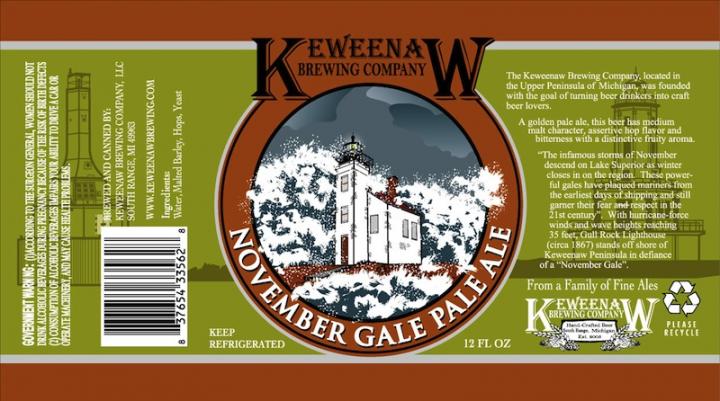
November Gale Pale Ale

Maker: Keweenaw Brewing Company, South Range, Michigan, USA

Style: American Pale Ale

ABV: ??% (not particularly high)

Appearance: Old gold with a foamy head.

Nose: Hops, sweet hay, lemongrass.

On the palate: Medium bodied. Sweet Woodruff, malt, Meyer lemon.

Finish: Slightly citric and mild, then a big hit of hoppy bitterness on the back end.

Parting words: Keweenaw rarely disappoints, and November Gale is no disappointment. It doesn’t do a lot to distinguish itself from its heavy competition other than coming in a can. The citrus notes and slight grassiness make it a great summertime pale ale; more of a summer zephyr than a November Gale. Like most standard Pale Ales, it is also food friendly. November Gale Pale Ale is recommended.

Evan Williams

Maker: Heaven Hill, Bardstown/Louisville, Kentucky, USA

Age: NAS

Proof: 86 (43% ABV)

Appearance: Bright copper.

Nose: Corn syrup, mint, eucalyptus, butterscotch.

On the palate: Medium-bodied and sweet. Corn, butterscotch, vanilla, caramel, something slightly floral.

Finish: Minty, sweet. Vanilla toffee, mint julep.

Parting words: Evan Williams is the second best-selling brand of bourbon whiskey in the world. I have trouble figuring out why. Why it doesn’t outsell Jim & and Jack, that is.

Evan Williams is Heaven Hill’s flagship bourbon. It’s a distillery known for value bourbons, and Evan Williams is no exception. For a bourbon of this youth and price, one should expect a lot less. It’s not particularly subtle, but it is much more complex than Jack Daniels and more pleasant than Jim Beam. It straddles the line between the minty (yeast-related, IMO) and caramel characteristics of Heaven Hill bourbons, exhibiting a balance rare on its shelf. Evan Williams (black label) is recommended.

Artisan Red

Maker: Black Star Farms, Sutton’s Bay, Michigan, USA

Grapes: ???

Region: Michigan, USA

Style: Semi-Sweet Table Wine

ABV: 11%

Appearance: Dark Burgundy.

Nose: Fruity. Prune juice, grape juice, sweet cherries, strawberries.

On the palate: Sweet and fruity. Red raspberries, raisins, black cherries, tiny kiss of oak.

Finish: Mild, slightly tannic, a bit sweet but fading quickly.

Parting words: Artisan Red is a pleasant, fruity, food-friendly table wine. It’s a tastier alternative to some of the toothache-inducing super-sweet, mediocre supermarket table wines many small wineries put out. It is sweet, but it is more complex than the competition and is a decent price. Short and sweet, just like my wife and this review. Artisan Red is recommended.

Jim Beam (White Label)

Maker: Jim Beam, Clermont/Boston, Kentucky, USA (Beam)

Age: 4 y/o

Proof: 80

Appearance: Medium gold.

Nose: Corn syrup, alcohol, caramel, semi-rancid walnuts.

On the palate: Light-bodied and mild. Burn caramel, pecans.

Finish: Some caramel candy flavors, some bitterness, no discernible oak.

Parting words: Jim Beam is the best-selling brand of bourbon whiskey in the world. I have trouble figuring out why.

White label Jim Beam is the first bourbon I ever tried back when I was 21. If memory serves, it tasted better than this, but memory is a tricky thing. I do remember thinking that I liked it better than Jack Daniels back then. Jack lacked the character of Jim. I still think that’s the case. While Beam isn’t very good, it has more going on than Jack Daniels. That’s something. It’s cheaper, which is also something. I cannot recommend Jim Beam white label, but Beam does have better products just a little farther up the shelf. Beam Black label, Distiller’s Series, Baker’s, Knob Creek and Booker’s are all good, though not always good bargains.

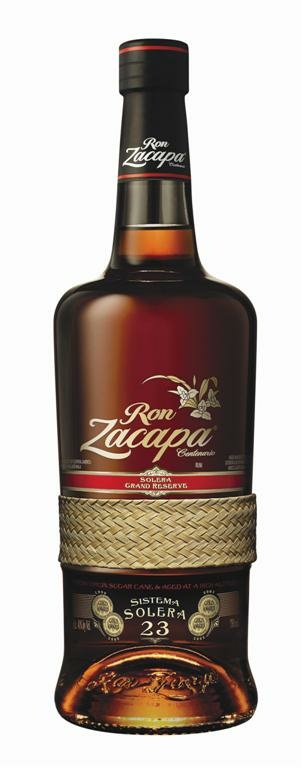
Ron Zacapa 23

Maker: Industrias Licoreras de Guatemala, Guatemala

Age: 23 y/o (sort of)

ABV: 40%

Note: Solera style aging, non chill-filtered (?)

Appearance: Chestnut brown with thick, slow, sticky legs (coloring is allowed)

Nose: Alcohol, old oak, XO brandy, punes, sherry, mace, allspice, ginger.

On the palate: Muted upon entry, but slowly opens up. Heavy, chewy mouth feel. Brown sugar, sweet cherries, raisins, dried figs, prunes, Chinese five spice.

Finish: Sweet. Caramels, toffees, very little heat, just pure sweetness.

Parting Words: Ron Zacapa is the first sipping rum I’ve reviewed. It’s the one most people tell me to try when I ask for a recommendation of a fine sipping rum. It certainly fits that category. It’s hard to imagine a sipping rum finer than this. I enjoy Zacapa 23 neat, or with a tiny squirt of lime juice just to cut the sugary sweetness.

It claims to be aged in ex-bourbon and sherry casks using a solera method. This method is used frequently for brandy and sherry. It involves refilling casks as the spirit evaporates out of them. So while there is 23 year old rum in the barrels that go into Ron Zacapa 23, it would not qualify as 23 years old under the rules for whiskeys. At any rate, this is a very well-done, fine whiskey suited for after dinner (or lunch I guess) sipping. Ron Zacapa 23 is highly recommended.