Head to head: Johnny Walker Red Label vs. Johnny Walker Black Label

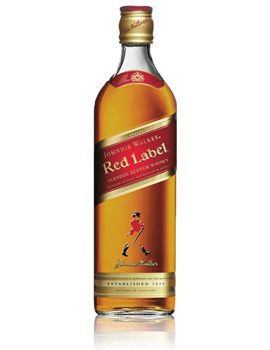
Maker: Diageo, London, England, UKJohnnie Walker Black LabelJohnnie_Walker_Red_Label_Whisky_1

Distilled/Blended: Various locations in Scotland.

ABV: 80%

1) Red

2) Black

Age

1) NAS

2) 12 y/o

Appearance (coloring likely added)

1) Straw with a light copper tinge.

2) Light copper (i.e. darker)

Nose

1) Toasted malt, brown butter, dried wildflowers, passing whiff of peat.

2) Caramel, woodruff, malt, toasted wood, bit of smoke.

On the palate

1) Medium bodied and very sweet. Some alcoholic burn, but mostly sweetness with a bit of a fennel note in the background.

2) Fuller bodied. More sophisticated, but also a bit dull. Drier, some wood and cola sweetness with a bit of cocoa and allspice.

Finish

1) Big grainy finish. Rancid butter, alcoholic burn.

2) Some wood, but not overwhelming. Cinnamon, a bit of smoke, and more cola.

Parting words

Why review whiskies like these? Everybody knows what they taste like, right? Whether they do or don’t, it’s important to me to get a grip on products like this as a taster. It’s the same reason I reviewed Jack Daniels and Jim Beam White label. I need a baseline or a benchmark or something like that. It’s hard to judge a blend without knowing what the world tastes when it orders a blended Scotch.

Neither have a whole lot going on, frankly. The Red Label is not particularly good neat, but mixes nicely. It does well in a Rob Roy, Rusty Nail and in a highball. I didn’t mix the Black Label, since at 12 y/o it should be able to be sipped. It was fine, but dull as I said before. The Red Label is mildly recommended for mixing and the Black Label is recommended.

RIP Truman Cox

Recently I, as a (part-time) whiskey blogger, have been urged to take up the banner and “give Maker’s Mark shit” for lowering the proof of their bourbon. I’m not going to do that. The decision to lower the proof of Maker’s is unfortunate and disappointing, but the level of internet outrage regarding the proof change is completely out of proportion, surpassing even the Ebay/Pappy hysteria of 2012. I have no desire to contribute to this silliness any more than I already have.

Instead, I’m going to call attention to something much  more worthy of getting upset about: The death of A. Smith Bowman Master Distiller Truman Cox.

I didn’t know Truman very well. We were Facebook friends and I only recall meeting him once in person. He was the kind of guy who would greet you with a hearty handshake and a smile. As a friend of mine said, he was above all a genuine guy. He loved his family and he seemed to enjoy life immensely.

He was also a whiskey man through and through.  His prior position was at Buffalo Trace as chief chemist. He became Master Distiller at Bowman at a crucial time, as Bowman had recently moved to a new location, had a relatively new owner, Sazerac (also owner of Buffalo Trace), and was in the midst of a profound transformation. 10 years ago, Bowman was little more than a curiosity. It was the only large-ish bourbon distillery still operating in the state of Virginia and had only one (fairly) widely distributed brand, Virginia Gentleman. It came in 80 and 90 proof expressions.

When Truman moved to Virginia, the transformation of Bowman was well underway. The 90 proof VG had been replaced by Bowman Brothers Small Batch Bourbon at 90 proof  and a 100 proof single barrel bourbon, John J. Bowman, was also introduced (review coming soon). Also made are Abraham Bowman Rye (I review the TPS barrel-stength version here) and Sunset Hills Gin. Under the brief period of Truman’s leadership the transformation of Bowman was completed, and Bowman began putting out some of the most highly regarded and sought after private bottlings of bourbons and ryes among enthusiasts. They were able to have the best of both worlds. They operated like a micro-distillery in many ways, but they were also able to draw upon the resources of a large spirits company like Sazerac and a large distillery like Buffalo Trace.

Truman was one of the brightest rising stars in the world of American whiskey and his sudden death is a great loss for the industry and bourbon drinkers alike. Here are some links:

The Spirits Business Article on Truman’s death.

Lew Bryson on Truman’s passing.

Chuck Cowdery on Truman’s death

Truman’s famous barrel dance.

Truman tasting Pappy Van Winkle 20 y/o

Truman’s autobiographical bit on the Bowman website

Members of StraightBourbon.com congratulate Truman on becoming Master Distiller

Here’s hoping he gets that bottle named after him at last.

Murmur

Maker: Left Foot Charley, Traverse City, Michigan, USAlfc murmur

Grapes: Vignoles, Riesling, Chardonnay, Traminette

Region: Michigan, USA

Vintage: 2010

Style: White table wine

ABV: 11%

Appearance: Light gold with not much in the way of legs.

Nose: Apricot, Meyer lemon.

On the palate: full bodied and crisp. pear, tangerine, peach.

Finish: Light and sweet. Lemonheads, red grapefruit. Fairly short.

Parting words: According to the LFC website, the grapes that go into Murmur change from vintage to vintage. The 2010 vintage was intended as an homage to the easier-drinking vintages of Vouvray. It does very well in that regard. LFC has done a very good job of blending hybrids with the Riesling and Chard to create that effect.

Murmur is fruity and a bit tart, but with enough body and aroma to keep things interesting. They recommend this wine be consumed young and in the summer time. I didn’t exactly follow that recommendation, but I can tell you that it tastes pretty good at 2+ y/o in the middle of winter. It works fine with a meal but might work better as a before dinner wine or with a cheese course. Murmur 2010 is recommended.

Head to Head: A Tale of Three Old Fitz’s

As a part of our winter series on bonded spirits, in this episode we will be comparing three bottles of the same bourbon, Old Fitzgerald, Bottled-in-Bond. Two are from the same distillery (presumably). Special thanks to White Dog & Tommyboy for giving me these bottles (yes they were gifts, those guys are both outstanding individuals).

All three are 100 proof wheated straight bourbons with no age statement (NAS).

The bottles

1) 200 ml bottle with faux tax stamp, distilled & bottled at DSP KY 16 (Stitzel-Weller), Louisville, Kentucky, USAIMG_20130201_155428

2) 1 liter bottle, no tax stamp, distilled at DSP KY 16, bottled at DSP KY 24 (Glenmore) Owensboro, Kentucky, USA

3) 750 ml bottle, distilled at DSP KY 1 (Bernheim), Louisville, Kentucky, bottled at DSP KY 31, Bardstown, Kentucky (current edition)

Appearance

1) Medium copper with fairly thin legs and necklace.

2) Darker, with similar legs and necklace.

3) Same as #1 but with thicker legs

Nose

1) Alcohol, tea, tarragon, caramel corn.

2) Oak, toffee, corn chips, old wood, ancho chilies.

3) Grape bubble gum, alcohol, spearmint

On the palate

1) Full bodied and sweet. Alcohol, creamy caramel. The vegetal notes are gone.

2) Full bodied and slightly drier. Oak, toffee, Mexican chocolate.

3) Medium bodied and even drier. Dry oak, a bit of caramel corn and mint.

Finish

1) Sweet and hot. Seems to get drier as the finish goes on. A bit of oak, then fading back into caramel corn.

2) Woody. The wood lingers for a long, long time with pralines in the background.

3) Pretty hot and minty with touches of oak, eventually settling down into a caramel sweetness.

Parting words

I’ve been wanting to try this line up for a long time. A few things interesting things arose in this tasting. First was how much oakier the later Stitzel-Weller bottle was than the earlier one. The logical explanation for that would be that the bourbon going into the later one was older than that going into the earlier one. Why the maker would do that is a puzzle. Perhaps the infamous whiskey glut was reaching a climax when bottle 2 was filled? Bottles labeled with “Bottled-in-Bond” have to be filled with spirit from the same distillery and the same distilling season. So another explanation for the greater wood influence could be a series of hot summers during the aging period for that batch of whiskey.

Another interesting phenomenon was how minty bottle #3 got as the tasting went on. #1 had an herbal note at first, but that went away within a few minutes. That mint is considered one of the signature notes for the Heaven Hill stable of bourbons. Bottle#3 has convinced me that Heaven Hill, the current distiller of Old Fitzgerald, is now using its own house yeast strain in its manufacture. They are clearly not using Stitzel-Weller yeast or the “Schenley yeast” master distiller Parker Beam reported finding at DSP KY 1 when Heaven Hill took it over.

Finally, while differences certainly showed up between the three, I was surprised at how similar they all were too each other. There was none of the sweet vanilla in #1 & #2 that many of us who are accustomed  to drinking our Stitzel-Weller from bottles labeled “Van Winkle” might expect. Aside from the minty finish on bottle #3, I doubt I could distinguish any of these from each other in a blind tasting. Not to say #3 is the equal of #1 or #2; it’s not. But they are all middle to lower shelf wheated bourbons and they all perform that role well.

Old Fitzgerald, Bottled-in-Bond, whatever the distiller, is recommended.

Arcturos 2010 Sur Lie Chardonnay

Maker: Black Star Farms, Traverse City, Michigan, USA

Place of origin: Capella Vineyards, Old Mission AVA, Traverse City, Michigan

Style: Unoaked Chardonnay

ABV: 12%

Appearance: Pale gold

Nose:  apricot, pear, tangerine.

On the palate: Medium bodied and medium sweet. Slightly tart but easy going with lots of varietal character. More apricot, blood orange, pink grapefruit.

Finish: Slightly bitter and citric, moves from pink to white grapefruit.

Parting words: This is an unoaked Chardonnay, but it still is very much a Chardonnay. Lots of that fruity but medium dry Chard character. I’ll admit, I’m not as fond of the product of this grape as I once was. This is a nice enough wine, and it’s a nice change of pace from oaky California Chards, even if it doesn’t really impress. The wife thinks it tastes like a Vihno Verde, and I can see what she means. I doubt Chardonnay will ever reach the heights that Riesling does in Michigan, but if winemakers continue to be creative, Chard may have a place. At any rate, Arcturos Sur Lie Chardonnay is mildly recommended

Springbank 15 year old

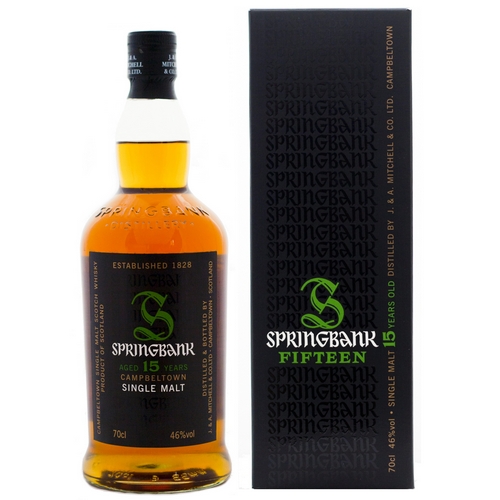
Maker: Springbank, Campbeltown, Scotland, UKspringbank-15-yearold

Region: Campbeltown

Age: 15 y/o

ABV: 46%

Appearance: Old gold.

Nose: Malt, mandarin orange, old leather, old oak, amaretto, , sea spray, smoldering candle.

On the palate: Full-bodied and sweet. Caramel, white chocolate, peat, pralines, burn. Water brings out butterscotch candy and a good amount of smoke.

Finish: Smokey and sweet with subtle maritime notes.

Parting words: This is the second bottle of Springbank I’ve purchased. The 10 y/o was sweet and nutty. The 15 is more complex. There is a lot of candy and fruit but it is thoroughly balanced out by the oak and smoke. If anything it is a little too far over the edge, coming across a bit murky at times.

When I purchased this bottle, it was also the most expensive bottle of whiskey I had ever purchased, at a little over $100 including tax. Was it worth it? I don’t know. I try to shake my bourbon QPR expectations and apply Scotch values to Scotch whiskies, but I think this one is overpriced. Maybe at 18 y/o, there is more balance, but the 15 is just a little out of whack. Still, Springbank 15 year old is good and is recommended.

Hayman’s Old Tom Gin

Maker: Hayman, London, England, UKHaymans_OldTom_Path

Distiller: Thames Distillers, London, England, UK

ABV: 40%

Appearance: Clear.

Nose: Lime peel, juniper, a bit of horehound, anise, sweet cinnamon.

On the palate: Full-bodied. Sweet, slightly fruity, some heat and licorice.

Finish: Sweet, old fashioned candy. Lingers a very long time.

Mixed: Does very well in all applications. May get a little lost in a Tom Collins, but more than holds its own with tonic. The bitterness of the tonic is a very pleasant counterpoint to the fruity candy flavors of this gin. The same is true for a dry martini. The bitter herbal notes of the vermouth are a perfect foil for Hayman’s Old Tom.

Parting words: This is the second Old Tom gin I have reviewed on the blog and this is the better of the two. It’s more balanced and complex than Ransom and a little closer to a classic dry gin profile. But dry it is not. It’s got loads of sweet, fruity flavors in addition to the sharp botanical flavors. This balance makes it a perfect gin for classic cocktails and even for the occasional sip neat. An excellent gin from start to finish. Hayman’s Old Tom is highly recommended.

Head to Head, White on White: Evan Williams Bottled-in-Bond vs Heaven Hill Bottled-in-Bond (White label)

1) Evan Williams, Bottled-in-Bond (white label)

2) Heaven Hill,  Bottled-in-Bond, 6 years old (white label)

Maker: Heaven Hill, Bardstown/Louisville, Kentucky, USA

Age

1) NAS (4 y/o minimum)

2) 6 y/o

Proof: 100 (50% ABV)

Nose:

1) Alcohol, roasted corn, caramels

2) Alcohol, basil, toffee, leather, corn tortilla.

On the palate:

1) Medium-bodied. Hot and sweet. Caramel and not much else, but that’s not a terrible thing.

2) Medium-bodied. Butterscotch candy, a bit of oak, peppermint.

Finish

1) Alcohol, corn syrup, lingers for a little while and then fades.

2) Heat, a little corn, wood, tarragon.

Mixed:

1) OK. Not good in a whiskey sour. Clashes with the lemon in a very unpleasant way. Does very well in a Manhattan if good bitters and a good vermouth are used.  Serviceable in an old fashioned and in Coke.

2) Does well in all applications. The sour has a nice whiskey muddiness but doesn’t clash with the lemon juice. The Manhattan is good, but the herbal notes in the HH throw it slightly off balance. Does very well in an old fashioned and in Coke.

Parting words: These are both excellent value bourbons from, yes you guessed it, Heaven Hill. It’s something of a specialty of theirs. Evan Williams BiB is new  to Michigan. I had never tried it before and while it didn’t blow me away it certainly met expectations. As much as I appreciate the higher proof and enjoy the BiB style, I almost think I enjoy the standard Evan Williams a bit more. Seems like it has older whiskey in the mix that the BiB doesn’t because of the requirements for BiBs. At any rate, this is still a good value. Evan Williams BiB is recommended.

The Heaven Hill line is sold primary in the American South, but we do get one wretched expression here in Michigan, the 80 proof Old Heaven Hill (gold label). I wouldn’t use that to clean my drain. Heaven Hill BiB is infinately better. It is in the classic Heaven Hill style. The yeast and corn are the stars here. The yeast provides the trademark mint/eucalyptus (and tarragon and basil to my palate) flavors with the rye riding shortgun. The corn brings the sweet caramel out from the wood. This is not one of the top 5 whiskeys I have ever had, but it stands alongside Very Old Barton BiB one of the best bourbon values, period. To sum up, I will quote my friend and bourbon connoisseur Cliff. Upon tasting Heaven Hill white label at the Kentucky Bourbon Festival last fall he remarked, “This is good bourbon. This is good bourbon. This is solid bourbon!” Heaven Hill BiB, 6 y/o (white label) is highly recommended.

Mellow Corn, Bottled-in-Bond

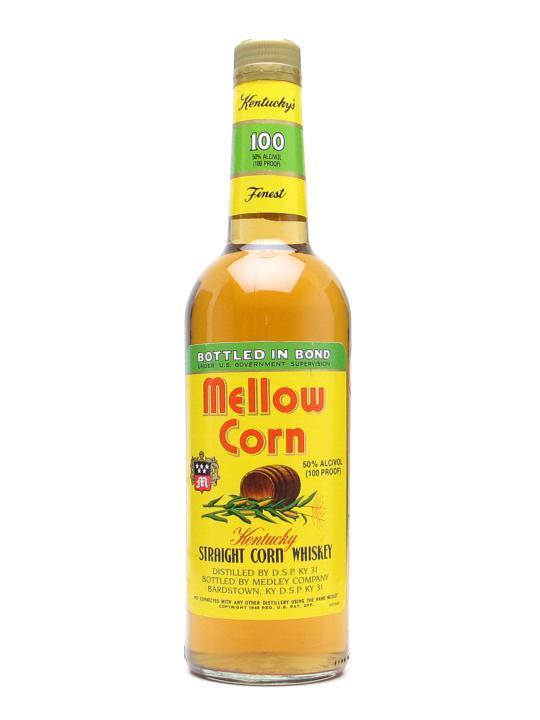
Maker: Heaven Hill, Bardstown/Louisville, Kentucky, USA. (Distilled at DSP KY 31)988_437_Mellow-Corn
Style: Aged corn whiskey
Age: NAS (at least 4 y/o)
Proof: 100 (50% ABV)
Appearance: Dark straw, long thin legs.
Nose: Thyme, sage, corn masa, toffee.
On the palate: Full-bodied and soft. Sweet caramel, oak, alcohol, sugar cookies.
Finish: Hot and sweet. Caramel corn, alcohol, tarragon. Lingers and tingles.
Mixed: Use as you would a bourbon or American blend. Makes a very nice Old Fashioned. In a Manhattan and with Benedictine (4:1 ratio on the rocks) makes a mixer-forward but still well-balanced and, most importantly, tasty drink.
Parting words: Corn whiskey occupies its own odd little corner in the world of American whiskey. Before the rise of micro-distillers, corn whiskey was a niche product popular in Appalachia and with nerds like me. It is, by law, composed of at least 80% corn but unlike bourbon it cannot touch new, charred, oak barrels. It doesn’t have to be aged at all, but if it is used cooperage is, well, used.
Mellow Corn is the most widely distributed and probably best selling aged corn whiskey. In my mind it thus provides a benchmark for judging all other aged corn whiskeys. The only thing from a major producer that comes close to it is Early Times Kentucky Whiskey, which has a similar mashbill and is composed of whiskey aged in new and used barrels. Mellow Corn far outclasses Early Times. Comparing it to a bourbon is not helpful, in my opinion, because that’s not what it is. Mellow Corn is a corn whiskey and should be judged for what it is, not what it isn’t.
Before I finish, I should mention that I love the campy, mid-century label on this whiskey. Loads of praise to Heaven Hill for not updating the label on this one. OK, I’m starting to ramble. Mellow Corn BiB is recommended.

2012 in Review, Part I: Michigan beer & mead.

Compared to the ongoing tumult in the whiskey world, the world of Michigan beer and wine was an ocean of calm in 2012. Calm, but not dull. Optimistic, joyful, or hopeful might be the best words to use. The world of craft beer, Michigan continues to be a leader despite increased competition. Bells is taking its place as one of the largest and most successful microbrewers in the country. Founders and New Holland confirmed their positions and justified their positions as leaders in the movement as well.

Many brewers experienced various sorts of growth in 2012. One of this blog’s favorites, Arcadia Ales, announced that they are expanding their operation and moving to the belly of the beast, as it were, Kalamazoo, Michigan, home to Bells. They will keep their pub and restaurant in Battle Creek, but the majority of the brewing operations will be moving into the new facility. They also expanded their canning operation to include their delicious Sky High Rye. Also expanding was Jolly Pumpkin. They are set to open a new pub and restaurant in Royal Oak, Michigan, Sipology’s home town, sometime soon. The place was rumored to be opening last fall but the Jolly Pumpkin never appeared. The bankruptcy of the former owner of the building the brewery has its eye on may be to blame for the delays. Real estate problems aside, the growth in popularity of sour beers has brought a lot of interest to Jolly Pumpkin. Milking It Productions is already in Royal Oak, and has also been slowly expanding their range and their reach. Their Jet black lager and Sno White Ale (recently reviewed) are both excellent and quick sellers judging by the short amount of time they spend on shelves. The “up north” brewers, like Short’s, North Peak and Keweenaw have continued to expand their offerings and distribution as well.

B. Nektar meadery in Ferndale, currently just a mile or so from Sipology HQ, is also moving and expanding. The new facility is a five minute walk from the old one and will include a tap room. It will no doubt be an improvement on their current set up for tastings: three card tables with bottles and a cash register. B. Nektar continued to release interesting meads with mass appeal this year, like Zombie Killer, Evil Genius and Naughty Ginger. Their most intriguing release this year was Sleeping Giant, a wildflower mead aged in former rye whiskey barrels. They were expensive ($24 for a 375 ml bottle) but promise to be one of the coolest things they’ve done. Maybe I’ll review it soon. Maybe I’ll just let it languish in the cellar for a few years.

2012 in wine and cider next.