City of Riesling Weekend, Part 2- Old Mission Peninsula and Traverse City

wpid-20150726_092551.jpg
My wife Liz enjoying her sensible scramble.

The next morning we promptly checked out (as promptly as we could anyway) and headed for TC. We found a wonderful French themed place called Patisserie Amie and ate breakfast there. I’m not sure how authentic it was, but it was delicious. Amy and I got a house made sausage patty on a bed of sautéed spinach, topped with a poached egg and covered in pork gravy. Pete got a riff on eggs benedict that swapped out the Canadian bacon for a bone in pork chop. Liz got a much more sensible wild mushroom scramble. Ridiculous amount of food but we thought of it as an early brunch.

In planning our Old Mission Peninsula visit, we took two factors into account. The first was what time the tasting room opened and the second was how recently we had visited it. Favorites like 2 Lads, Chateau Grand Traverse and Black Star Farms were skipped in favor of ones we hadn’t been to in years: Peninsula, Brys, Bower’s Harbor and relative newcomer Hawthorne.

Peninsula Cellars was our first stop. As we drove from TC up the peninsula, we passed a large construction site on the left, building a very large, European looking building. We later learned that it is to be the winery and tasting room for Mari Vineyards, the newest comer to Old Mission. Their winemaker is City of Riesling co-organizer Sean O’Keefe, formerly of Chateau Grand Traverse, and they’re doing a lot of things that other Northern Michigan wineries are not. They’re having a cave dug on the property for barrel aging and using hoop house technology to extend the growing season and make it possible to grow exotic (for Michigan) grapes like Nebbiolo, Sangiovese, Syrah and Malbec. Sean has stated that he will be growing Riesling there too. He is an O’Keefe after all. It will be interesting to see how that all pans out.

wpid-20150726_105843.jpgAnyhow, to Peninsula! Peninsula’s tasting room is one of the coolest on Old Mission. It’s a converted one room schoolhouse built in the 1890s and used through the 1950s. Don’t let the  cheesy-label table wines (which are themselves good) give you the wrong impression. Peninsula makes seriously good Riesling and Gewürztraminer, some of the best on OMP. They’re also producing apple cider now. I tasted the apple wine (the difference between apple cider and wine is the higher ABV for the latter) at the tasting room and it was quite good. I also enjoyed the Mélange fortified cherry wine. The biggest surprise was the impressive 2012 Hog’s Back Vineyard Merlot/Cab Franc. We got a bottle and plan on letting it sleep in our cellar for another three or more years. We also picked up a bottle of Manigold Vineyard Gewürztraminer, a perennial favorite.

Hawthorne was another early opener, so we headed over there after Peninsula. I had chatted with wpid-20150726_113308.jpgHawthorne’s founder Brian and tasting room manager Jan at the Michigan Wine Showcase back in April and I was interested in getting another chance to taste their wines. Neither of them were there when we tasted but we did get good service from Nan. The beautiful modern tasting room is up on a hill and has a great view of their vineyards and both sides of Grand Traverse Bay. It also has a beautiful outdoor seating area with a fireplace and a patio that makes a great picture taking point. I liked their 2012 Pinot Grigio (on sale to make room for the 2013) and barrel aged Chardonnay which was oaked but balanced. They did charge for tastings, like almost of them did, but the tastings pay for themselves if bottles are purchased.

Hawthorne Vineyards overlooking the bay.

Brys (rhymes with eyes) Estate was next. I thought I hadn’t been there before, but as soon as we entered the tasting room I realized that I had. The tasting room had a very upscale feel and was run very effeciently. Shortly after we arrived two party busses pulled up and emptied their cargo of party people into the tasting room. Things got pretty loud but we still got good service. When we mentioned that we were headed to Bower’s Harbor next, our server mentioned that she knew a “gentleman” who worked there, although she hadn’t talked to him in a week. We should ask for him and say hi, she said.
wpid-20150726_123252.jpg
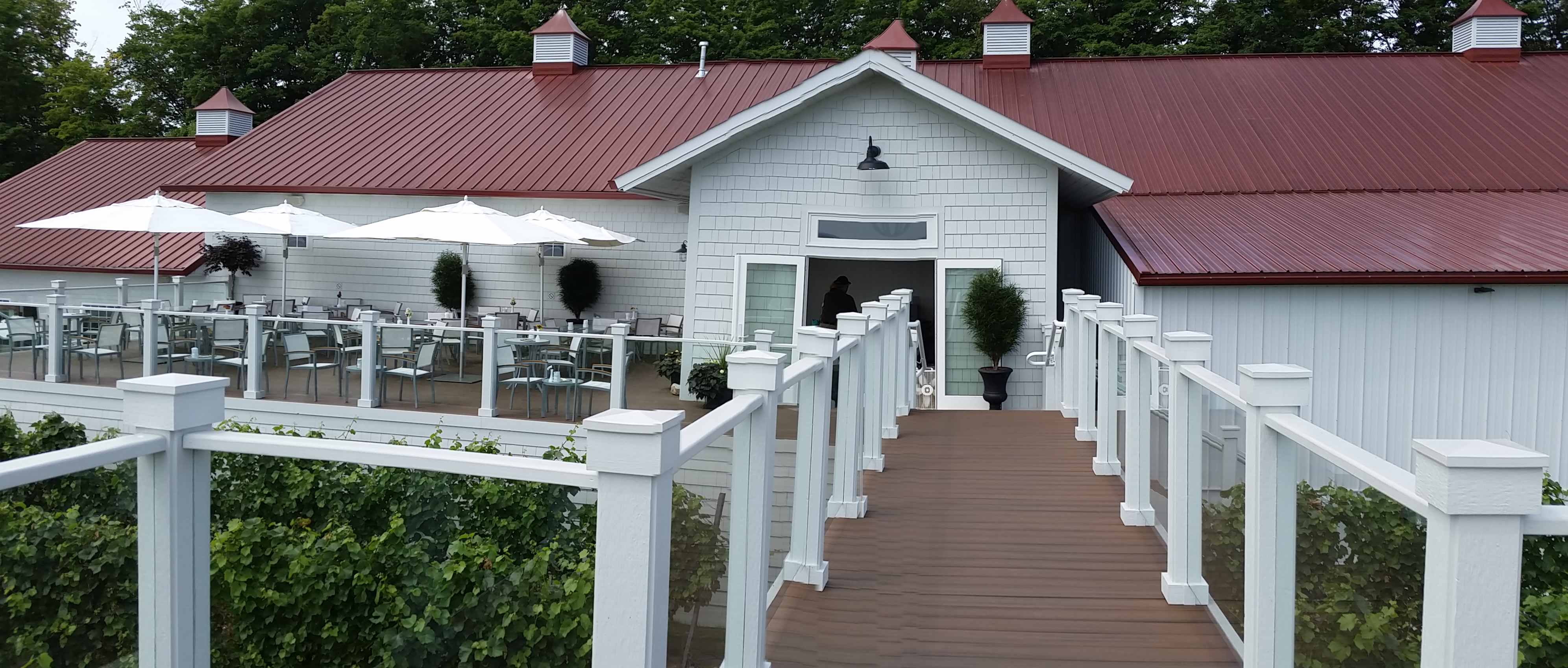
The Walk Above the Vines

The tasting scheme at Brys is unusual. One can purchase 4 tastings for $5 or 6 for $7. Wines in the reserve section count as 2 tastings though. Liz and I shared a 6 wine tasting, using two of those to try the 2012 Cabernet Franc. It was wonderful so we bought a bottle. It was also $50 so that was the only bottle we bought at that stop. Most of the wines there were good, the rosé being the other standout. They also had two wines available for tasting from their newly revived line of table wines under the Wally’s label. I didn’t taste either of those but they did have cocktails made using them at the upper deck tasting bar available for free tastings. I tried them both and they were refreshing. The highlight of the upper deck is the “Walk Above the Vines” that juts out above the plot of Chardonnay vines that runs along the tasting room. Yes, it sounds a little corny but it’s a cool feeling, like being a vineyard ghost hovering just above the vines. Makes for a nice photo op too.

wpid-20150726_123459.jpg

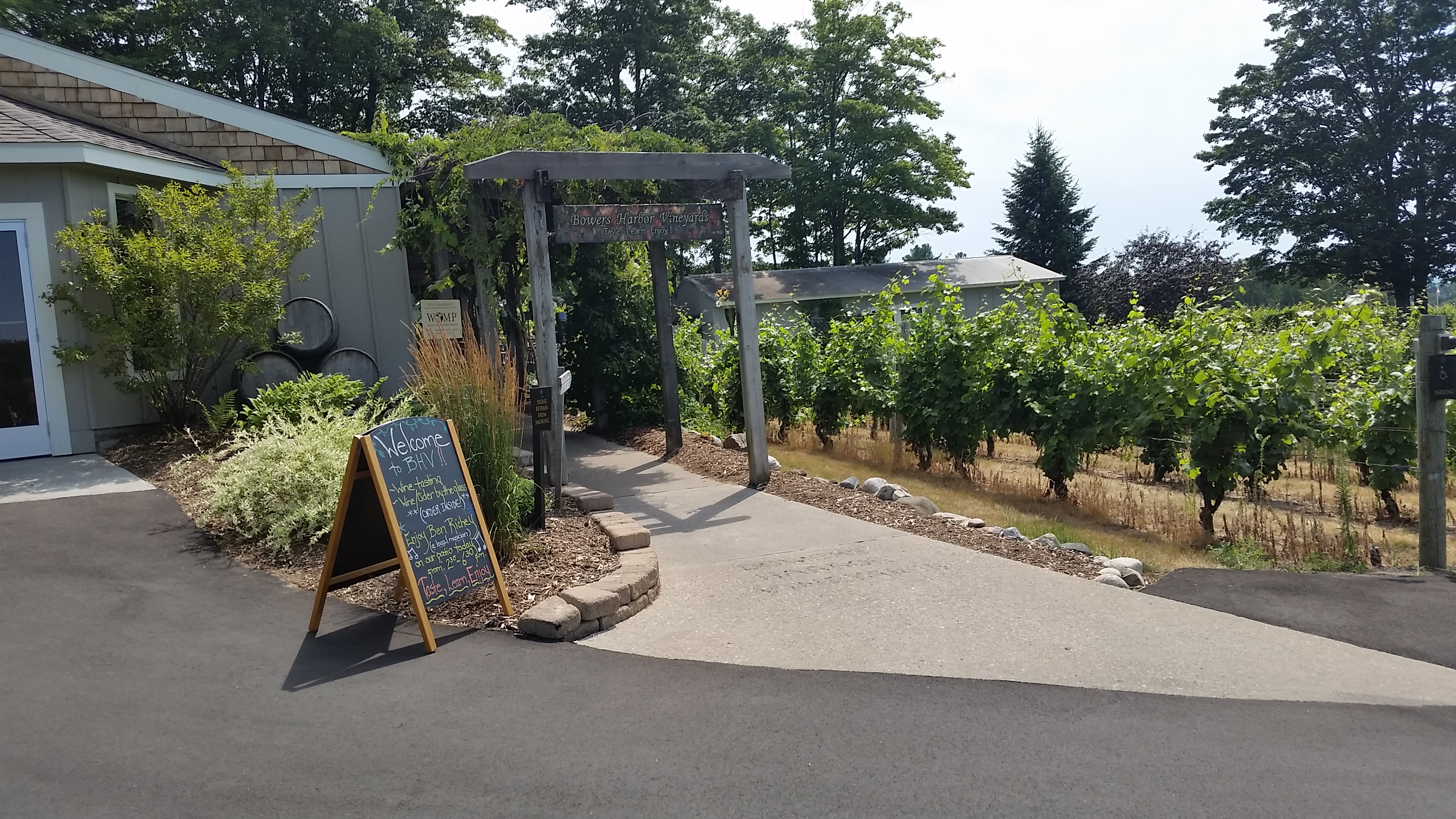
Bower’s Harbor was our last stop that day. We had scheduled a special tasting and tour that was being offered in honor of City of Riesling weekend. Our guide was Tom Petzold, longtime employee of Bower’s
Entrance to Bower's Harbor tasting room
Entrance to Bower’s Harbor tasting room

Harbor and candidate for Most Interesting Man in the World (see his bio in the box on this page: http://www.bowersharbor.com/estate). He started us off with two sparkling wines, both made in the traditional method, a blanc de blancs and a pinot noir rosé. Our party was split as to which was their favorite (I liked the white one the best), but everyone thought both were good.

We then got a tour of some of BH’s vineyards, including the famous Block II, while sipping chilled Riesling that Tom would occasionally whip out of a cooler he had slung over his shoulder. All three of the wines we sampled in the vineyard were wonderful, but I don’t remember what they were, unfortunately. We started out in a section of Chardonnay, but quickly moved on to Riesling and wrapped up with a largely untended section of Pinot Noir. I’ve read about many viticultural topics like the stages of bud and grape development, vine pruning and training, rootstocks and so on, but my eyes always started to glaze over after a couple minutes. Hearing Tom talk about these topics and techniques in the vineyard itself, and in some cases watching him actually do it, really made the subject come alive and I was about to understand how it all worked in a much clearer way. Tom knows what he’s talking about and has a knack for answering questions in a clear, direct way.

One of the questions I asked was about the 2014 vintage, which led into a discussion about recent vintages. Tom said that, in Northern Michigan, 2011 & 2013 were Riesling years, 2012 was a red year and 2014 was a “nothing year.” That pretty much sums it up. He backed that up with some shocking stats from BHV and his personal vineyard. Harvest was down to 40-25% of average yields and vine loss was high. Overall, Tom (and other OMP producers) seemed slightly more optimistic about the 2015 vintage than those on Leelanau. Like every winery on the two peninsulas, Bower’s Harbor will be using Washington grapes to fill in the gaps in its supply left by the Arctic Vortex. Normally they would look to New York for grapes after a harsh winter, but New York got hit as hard as Michigan did, he said. Tom said that the tasting room employees have been instructed to not mention the out of state grapes unless they were asked. If they are asked, they should answer honestly, of course, but not dwell on it. Tom said that he talks about it anyway.
wpid-20150726_143012.jpg
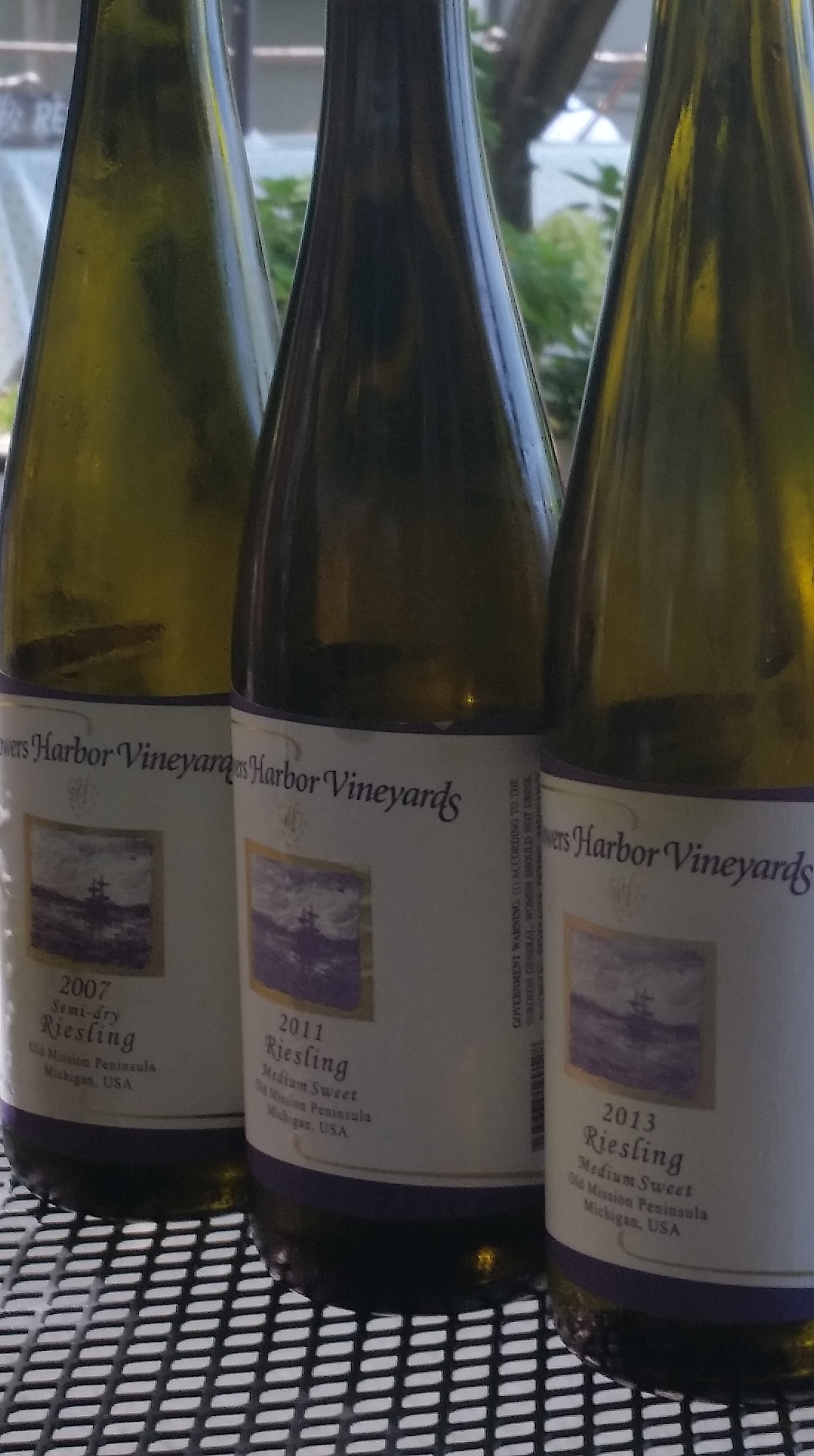
The bottles from the vertical.
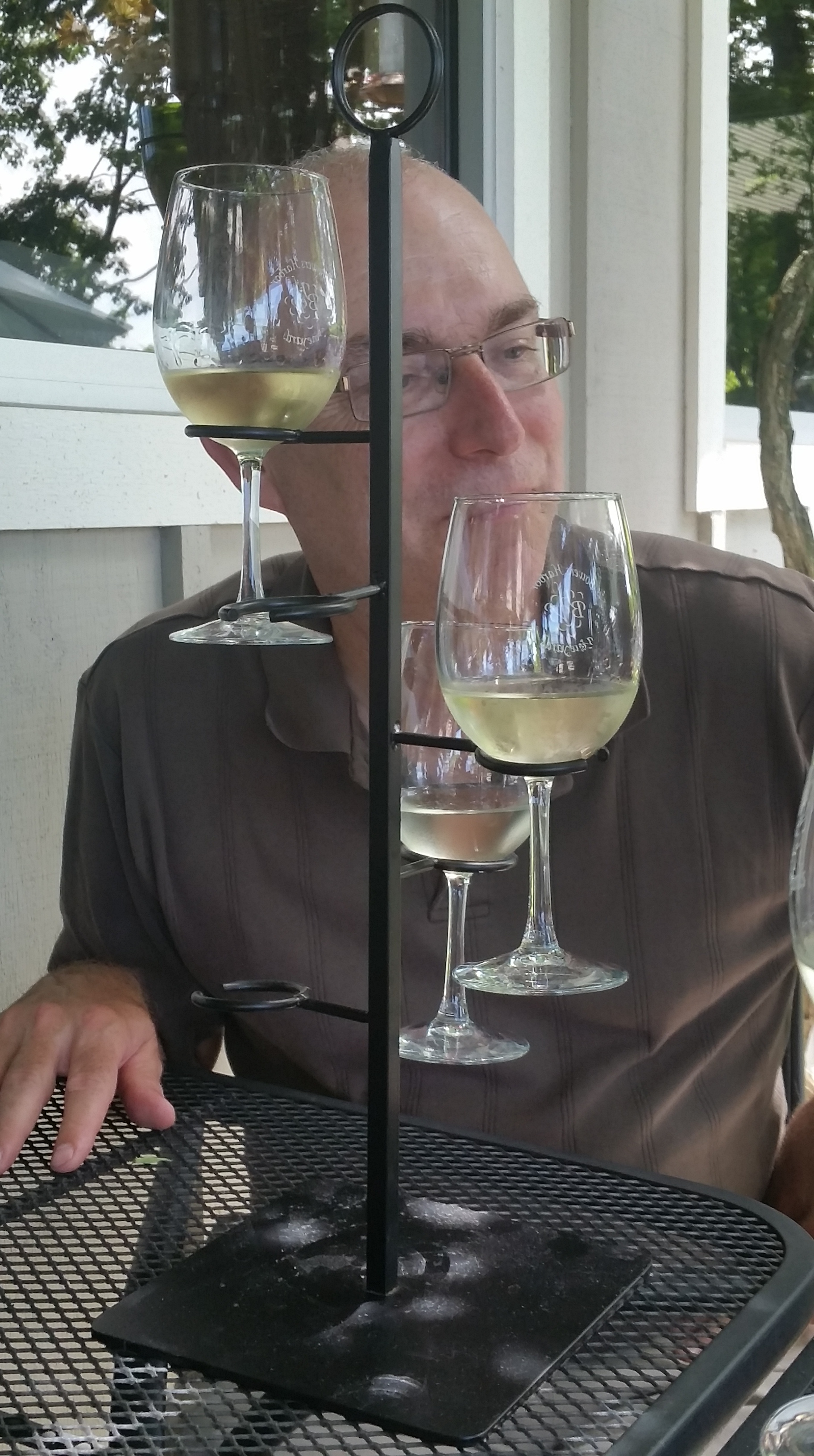
wpid-20150726_143101.jpg
Pete at the literal vertical tasting. 2007 at the top, 2013 at the bottom.

The tour finished up with a vertical tasting (literally) of BHV semi-sweet (purple label) Riesling from three different years, 2007, 2011 and 2013. The purple label was originally called semi-dry (the 2007 bottle still had that on the label) but Tom said he convinced them to change the name to semi-sweet since that was a more accurate descriptor. The 2007 was an outlier in another respect. It was made using grapes from two different vineyards while the other two were made using grapes from those same two vineyards plus another (the same other). As one might expect, the 2007 was over the hill and rolling down it. It still drank ok, though. The 2011 was very good with a good balance of sweetness, fruit and acid. The 2013 was young and acidic, but just as good as the 2011 and will probably be even better in a year or so. The experience was great and worth every penny of the $25 we paid per person (I was given a complementary ticket as a media attendee of City of Riesling). The tour also included a 10% discount on Rieslings. We bought a 2013 Block II and a 2013 Semi-sweet.

As a final note, dogs have been a part of BHV for a long time. Golden lab Otis was the original winery dog, followed by Cooper, a laid back Bernese mountain dog who warmly greeted tasting room visitors for many years. Cooper’s successor was Brix, also a Bernese. All three have their own BHV wines. When we asked about the absence of a dog at the tasting room Tom told us that Brix had gone to a better place, the lake (permanently?). According to Tom, Brix didn’t share Cooper’s easy going personality and that the health department was not big on the idea of a dog wandering around the tasting room. One final note, Liz was able find the “gentleman” our Brys server mentioned. Liz told him that she had told us to ask for him and that she hadn’t talked to him in a week. He rolled his eyes and said, “That sounds like her.” So there’s the canine and Old Mission singles’ scene updates.

After all that walking and drinking, we were in need of a snack, so after we cashed out, we found ourselves another boat launch on Bower’s Harbor (the harbor) that had a tiny sandy beach. We sat down and had some mild raclette and crackers, paired with tiny bags of nacho cheese Doritos and water. Amy and I had a nice wade in the cool, clear water while watching people put their boats in and out of the water. The disadvantages of owning a boat but not having lakefront property were discussed. Then we drove back to Traverse City, enjoying the beautiful views of the bay along the way.

We checked into the Park Place Hotel in downtown Traverse City around four. It was pricy but the proximity to the events of Sunday and Monday made it worth the money and it helped the budget that the MCM Grand was so cheap. It is a tall, clean, modern hotel that has a wonderful view and a nice bar and restaurant on the first floor. My wife and I didn’t make it to the pool but Pete and Amy gave it high marks. It’s also within walking distance of the beach at Clinch Park.

I hadn’t spent much time in downtown Traverse City before then. It was a pleasant surprise. Other Northern Michigan “cities” I’ve been to like Charlevoix, Petoskey, and Boyne City were fine, but had a very small town feel to them. Cutesy shops (the same ones usually) and small buildings are the rule. Downtown Traverse City felt like an actual city. Its permanent population is small (15,000 or so) but the downtown has an urban feel. Not Detroit, Chicago or New York urban, but Louisville Urban. Relatively small downtown with big buildings, good bars and restaurants and real retail shops and cultural attractions, as opposed to the trinket shops and tourist traps of cities like Charlevoix.

Next episode- Part 3-The Night of 100 Rieslings and Salon Riesling!

City of Riesling Weekend: Part 1- Leelanau and Mesick

I was lucky enough to be able to attend this year’s City of Riesling event (festival? gathering?) in Traversewpid-2015-08-03-08.15.24.jpg.jpeg City, Michigan this year. The official dates were July 26 and 27, but since those were a Sunday and a Monday, we decided to make a weekend of it. We in this case being my wife Liz, our friends Amy and Pete, and myself of course. I’m probably the biggest Riesling fan in the group but we’re all wine lovers, so it didn’t take much convincing to get them to accompany me up north that weekend. Traverse City in July is an easy sell on its own.

This was the second City of Riesling event. I was unable to attend last year’s due to a glitch in the date of my twentieth high school reunion. It’s a long, dull story that doesn’t need to be told here. Anyhow, City of Riesling is intended to be a celebration of all styles of the wine from all around the world. I tasted Rieslings from eight different countries and six U.S. different states at official events over the weekend. I tasted ones as old as the 1994 vintage (the year I graduated high school), as young as 2014 and in every possible style of Riesling, of which there are many. That’s what makes this such a special grape. Not only is it a “noble” grape that thrives in cool, relatively high latitude climates but it can be made in a style anywhere from bone dry to dessert.

There were two official parts to the City of Riesling. First was Sunday night’s Night of 100 Rieslings, a party with music, food and literally one hundred Rieslings on pour from certified professional sommeliers. The second part was Salon Riesling, four seminars/symposia on Riesling related topics featuring panels made up of sommeliers, industry insiders, winemakers and writers (well, at least one writer).  Between the second and third session was a rare Riesling luncheon featuring a vertical tasting of nine Egon Müller Scharzhofberger Auslese vintages (1983, 1990, 1999, 2001-2007) from wine writer Stuart Pigott’s private collection. I was only able to attend the first two sessions due to the work schedules of my fellow travelers. I was unable to attend the rare Riesling luncheon due to the tickets being $250 per person.

Since we were making a weekend of it, we decided to get some tasting room visits in while we were in the neighborhood. We drove directly up to Leelanau Peninsula on Saturday and then that evening we drove back to the closest reasonably prices hotel room we could find for that night, which was forty minutes or so from Traverse City. We stayed there that night, then we drove to Old Mission Peninsula and tooled around there until check in time at our hotel in downtown Traverse City. The Night of a Hundred Rieslings began at 6 that night near the beach in Clinch Park, and the first Salon Riesling session began the next morning at 10 am (or at least was scheduled to) at the Franklin restaurant. Our intention was to eat lunch at the Franklin after I got out of the second session, and hit the road directly.

We left Royal Oak about 8:30 am. Instead of taking I-75 N for most of the way as we usually do, we decided to exit near Midland and take an angled route, a combination of U.S. 10 and M 115, to Leelanau. We overshot it, though and ended up in Thompsonville for lunch. I’m glad we did because we ended up stopping at Rosie’s Country Café. It was just what a person wants in a place like that. It was clean, service was efficient, menu was full of rib-sticking selections (breakfast served all day of course), and nobody got sick afterwards. My fellow travelers got sandwiches, which they said were ok, and I got ham hash and eggs. Few restaurants will serve a ham hash, so I usually get it when I can. America needs more ham hash.

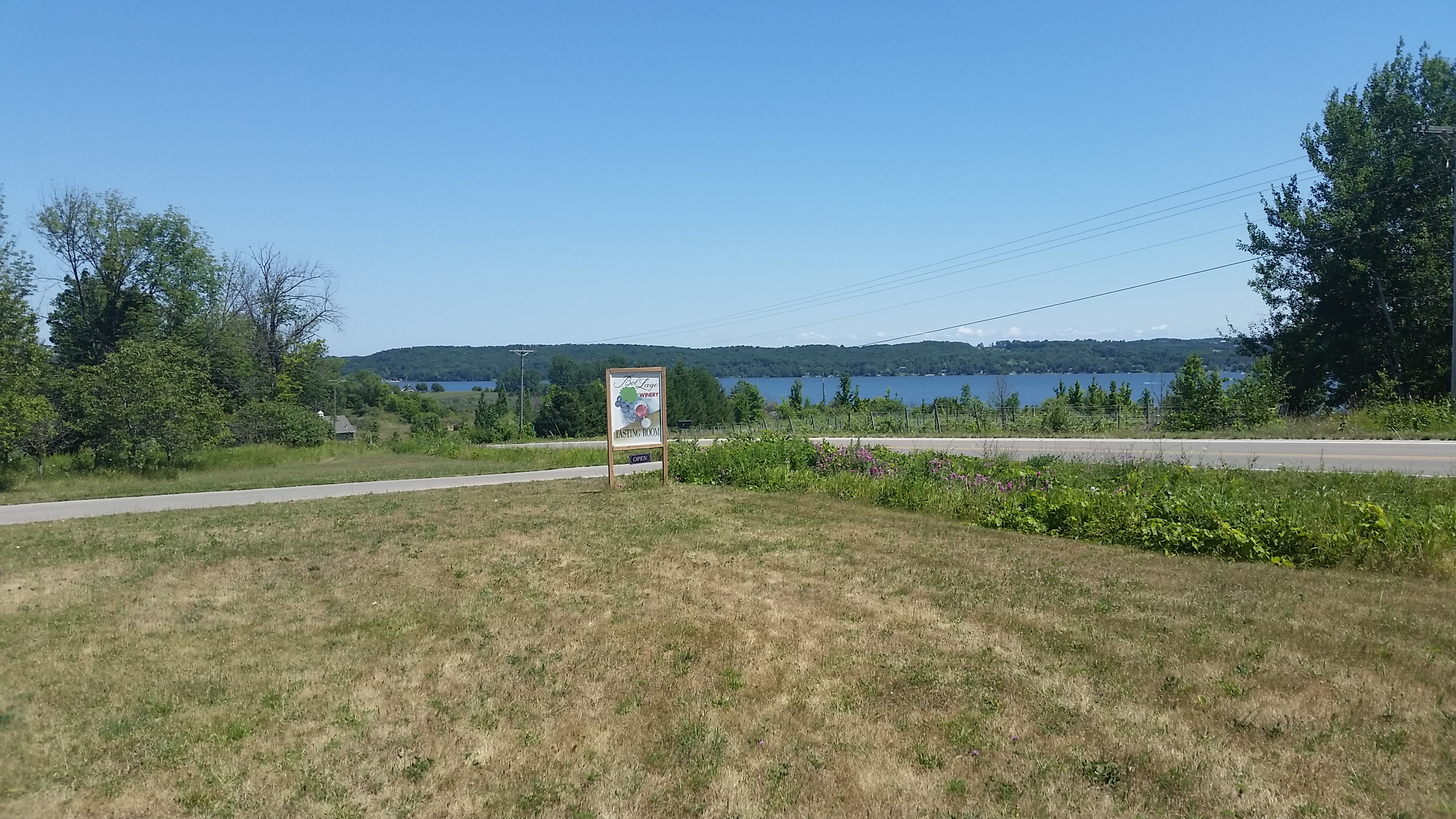
wpid-20150725_135829.jpgAfter filling our bellies, we backtracked to the road we needed and made our way along the winding backroads to Bel Lago Vineyards & Winery. I had wanted to go to Bel Lago first because it’s not near any other wineries and it’s a little tricky to get to from TC, the gateway to Leelanau for most travelers. It takes its name (Italian for beautiful lake) from the beautiful view of Lake Leelanau from outside the tasting room.

We tasted some excellent wines there. The tasting was complimentary, a rare luxury in Leelanau these days. They are well known for their Auxerrois (a grape rarely grown outside of France), their superb cherry wine (the gold standard for Michigan), and of course Riesling. They were also pouring a new 2014 rosé that was delicious. We bought a bottle of that, one of the Auxerrois, and the cherry wine (my new favorite cherry wine).

There’s good reason why Bel Lago’s cherry wine is so good. They practically invented it. Prof. Amy Iezzoni (of Michigan State University), did, that is. In days of yore, cherry wine in Northern Michigan and everywhere else was made exclusively from a sour variety called Montmorency. Amy made it her mission to break the sour cherry monoculture in the U.S. to improve the quality of the crop overall. While in Hungary, where cherries are a really big deal apparently, she discovered a semi-sweet variety perfect for making cherry wine. The only problem with this cherry was the name: Ujfehértói Fürtös. Amy realized this so she got approval to allow it to be grown under the name Balaton, after Hungary’s largest lake. Then she fell in love with a winemaker. Literally. She married Charlie Edson of Bel Lago in what has to be the ultimate act of synergy (see Chris Kassel, Heart and Soil: Northern Michigan Wine Country (2014) 52-58).

Charlie was in the tasting room that day. I introduced myself to him, and we had a nice talk. He told me a story about City of Riesling. Last year, Bel Lago was a sponsor of the event and they were excited about being involved. This year it slipped his mind and he only learned when the deadline for wine submissions was after it had already passed. By that time, he said, it was too far gone to get anything together so he didn’t try. That’s why there was no Bel Lago among the 100 Rieslings on Sunday night.

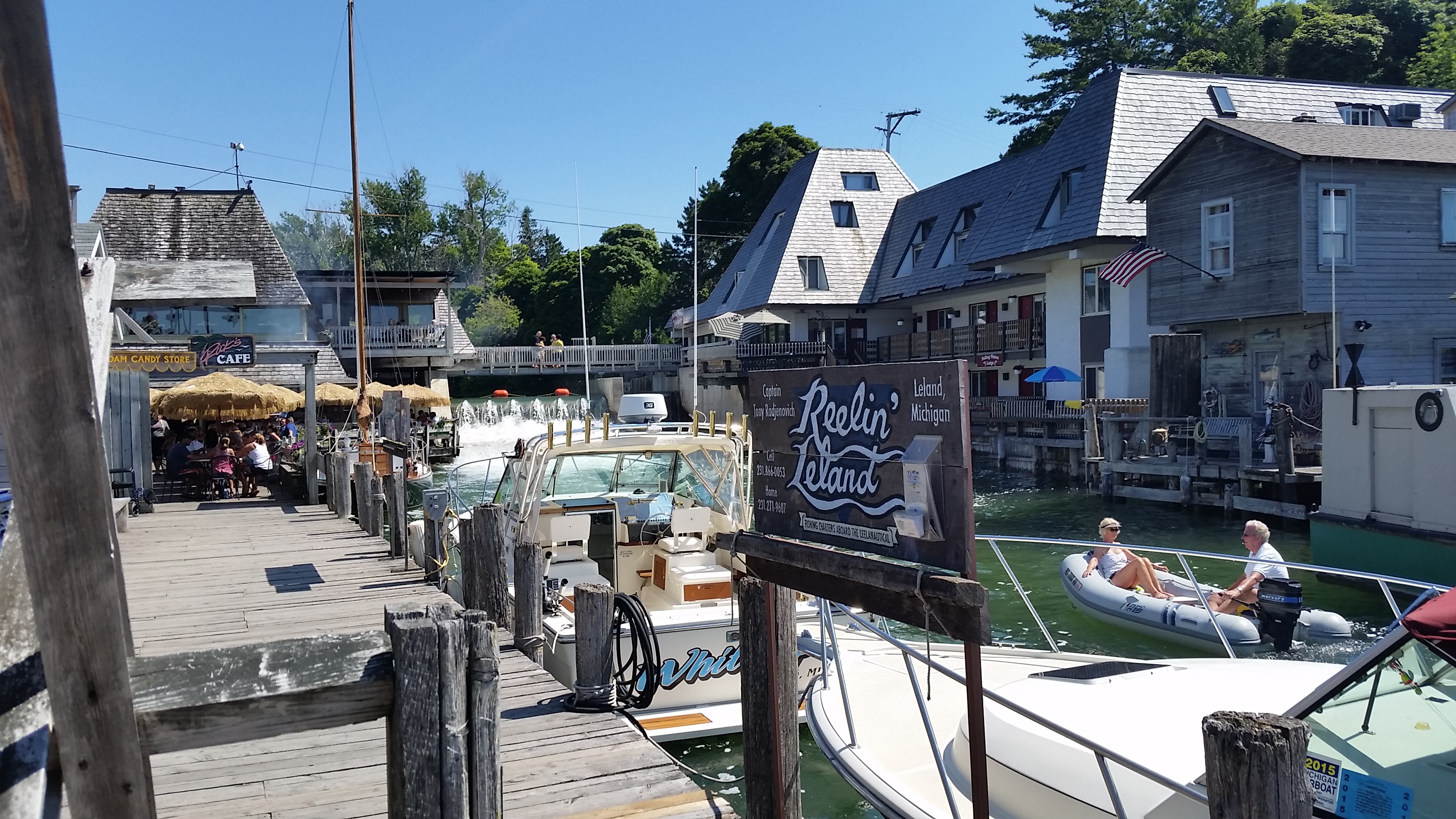
Our next stop was at Verterra. Unlike most tasting rooms in Leelanau, Verterra’s is not at the site of their vineyards. It’s in central Leland, a hamlet on the west coast of the peninsula. Leland is noteworthy for being the place to catch ferries to the Manitou Islands (a part of Sleeping Bear Dunes National Lakeshore) and being home to the charming Fishtown historic area. Fishtown is a combination of cheesywpid-20150725_153745.jpg tourist shops and working docks. Commercial fishing boats, charters and the aforementioned ferries still use the area and its collection of weather-beaten early twentieth century buildings. It’s worth a stroll through on a sunny summer afternoon. We strolled through after our visit to Verterra.

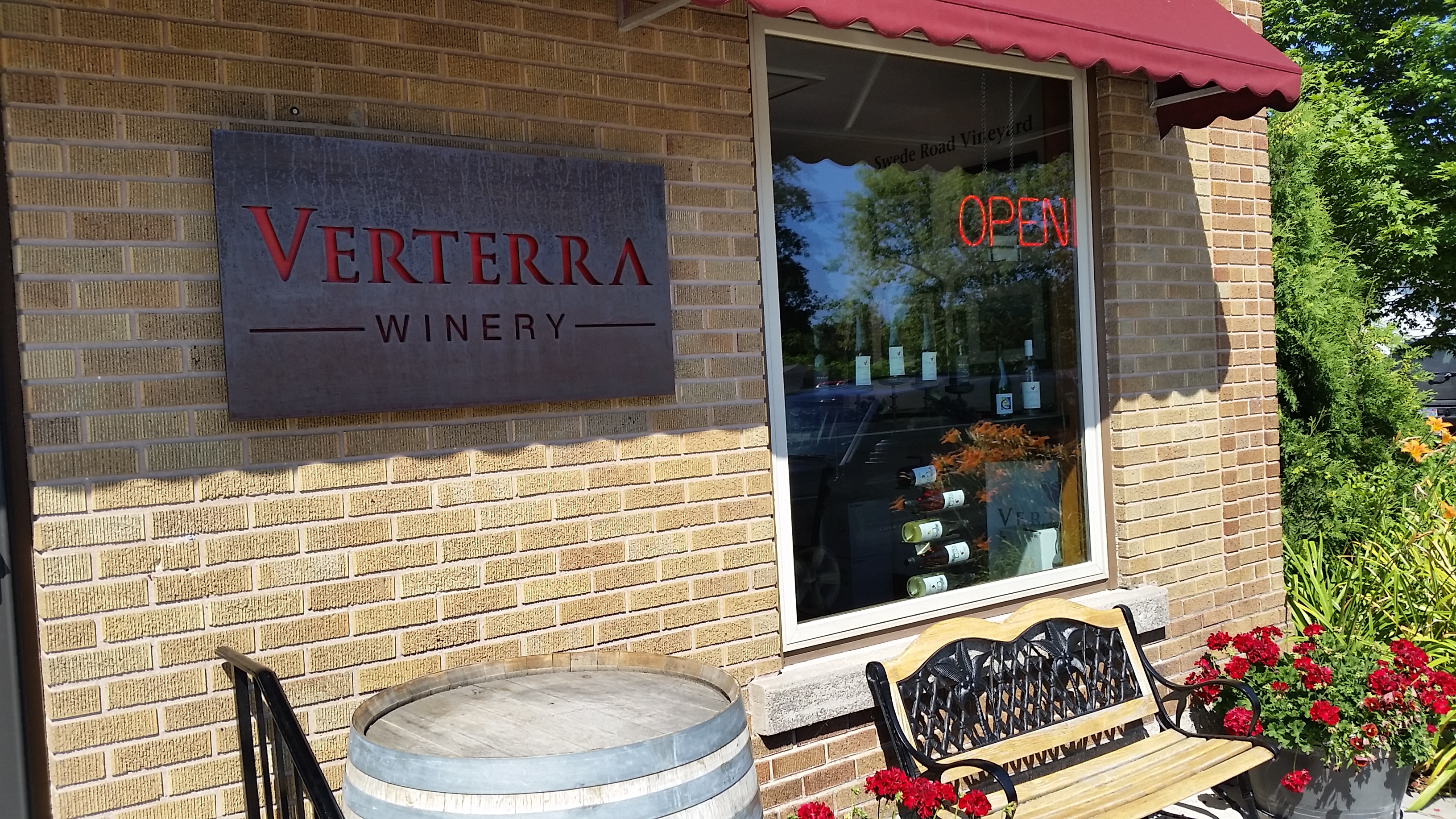
Verterra is a short walk from Fishtown for a good reason. To catch tourists, as proprietor Paul Hamelin openly admits. Winemaking is an art and a science, but it’s also a business. What better way to introduce new customers to his wine than to go where the customers are and make his wine a part of the Leelanau tourist experience? Customers reluctant to drink because of concerns about drinking and driving may also feel better about using their feet to get a tasting room.

Verterra charged for their tastings as most did, but the tasting was comped if two or more bottles were wpid-20150725_160928.jpgpurchased. That seems like a sensible way to do it, if one is going to charge, but not everybody seems to agree with me. The wines I enjoyed there the most were the two different styles of Gewurztraminer (medium sweet and dry), Chaos Sparkler and the 2012 Dry Riesling. I also tasted a 2014 unoaked Chardonnay and a 2014 Sweet Riesling and found them enjoyable. They both had “American” on the label instead of Michigan or Leelanau.

I had a conversation with Paul about his plans for the future including the release of a traditional method blanc de noirs sparkling wine next year followed by another release of the same batch in 2017 and his plans for an event facility at the vineyard. I asked about the American Chard and Riesling and that opened up a conversation about the 2014 vintage. Those wines were made with half Washington State grapes and half grapes from Verterra’s own vineyards. The Polar Vortex winter did such damage to his vineyards that there weren’t enough grapes at the end of the season to maintain those labels on Verterra or Michigan grapes alone. Paul thinks 2015 is going to be just as bad.

Forty-Five North, one of my favorite Michigan wineries, was our next stop. As we exited the car, we noticed a huge bus was rolling up into the parking lot that very moment. Fearing a busload of bridesmaids or who knows what was about to overrun the tasting room, we ran to the tasting room and grabbed seats at the bar immediately. No drunken hoards descended on the room, but a group did seat themselves in the outside sitting area. As they did that a fairly tall middle-aged woman with poofy reddish hair walked into the tasting room and into the ladies room. She looked familiar but I couldn’t quite place her. When she walked out again, I realized it was the senior senator from Michigan, the Honorable Debbie Stabenow. She was holding some sort of meeting or town hall with a group of women on the patio. We couldn’t quite tell what was going on, but whatever it was, it was a relaxed affair.

The tasting room at Forty-Five North is decorated in an intentionally quirky rustic style. The high ceiling gives it a nice sense of space and the bar is very nice. There are purse hooks under the bar too, a big plus for 50% of our party. Forty-Five has long been a favorite of mine but I was not impressed with much of anything on the menu. Most of it was 2014 American (likely Washington) whites. I had the American Chenin Blanc which was fine but nothing special. The one that stood out to me was the peach crémant. It was a sweet fruit flavored wine, of course, but wasn’t a bad for what it was. We bought one.

They also had two apple ciders on tap (literally). One was a natural cider made with only wild yeast. It was interesting in concept but ultimately flat. The other was a citra hop infused cider that smelled like apple armpits, or well-aged sweat socks. I can’t stand the smell of citra hops though so your mileage may vary, but good on them for trying something different with their ciders, which are apparently obligatory for Northern Michigan wineries now. Most of the others I’ve had have been dull, and Forty-Five North’s were not that.

After the disappointing time at Forty-Five North, I was feeling kind of sad. We hadn’t planned on visiting another winery that day but we had some time so we went ahead and backtracked a little to Aurora. Wow, am I glad we did! Aurora Cellars was fantastic.

Aurora’s beautiful tasting room opened up just this year. The dark wood bar looked to be made from reclaimed wood and there was a big mirror at the back making it feel like an actual bar. Wines were sold by the glass too, so if one wants to have a glass of wine, it’s not necessary to chug a spit bucket á la Paul Giamatti’s character in Sideways. They didn’t have a spit bucket, anyway.

I was impressed with just about everything on the menu. There was one wine I didn’t care for, but it wasn’t bad, just dull. We started off with the two sparklers and Blanc de noirs and a brut, respectively. I preferred the creaminess of the Blanc but my friends preferred the noir. Both were excellent though. I loved the Gewurztraminer. It was exquisitely balanced. The semi-sweet Riesling was excellent too, so much so that we bought two bottles of it.

The service was great, even with the drunken bachelorette party arriving shortly after we did. They weren’t awful, they were just a drunken bachelorette party. In fact, as I walked out I noticed that I got charged $7 for a bottle of wine I bought when it should have been much more. I attracted my server’s attention. “Is this the right price of for this one?” “It is today!” she responded and then ran back over to the bachelorettes.

We didn’t have time to stop at any more wineries, but we wanted to be sure to stop in at one place in

The Leelanau Cheese cave behind the factory.

particular before we left the peninsula: Leelanau Cheese. What kind of cheese does Leelanau Cheese make? They make both kinds, mild raclette and aged raclette. For those who don’t know raclette is a cow’s milk cheese traditionally made in the French speaking areas of Switzerland. It’s similar to Swiss or gruyere but more pungent and is best known as the basis of a traditional melted cheese dish by the same name originating in Valais. It is traditionally paired with Fendant (Chasselas) wine but does just as well with Pinot Gris or Riesling, making its appearance in Northern Michigan slightly less surprising. Samples of the mild raclette are available at the shop/factory. Versions with rosemary, green peppercorns and other herbs and spices, as well as the aged version are all available at the store along with estate grown lavender and t-shirts reading “In queso emergency, pray to Cheesus” among other delights. We were a little concerned about refrigeration, but the charming family member working in the shop at the time said it was not necessary.

For dinner, we went to a local gastropub. It had great atmosphere and a large outdoor seating area, but not much else to recommend it. Except the coleslaw. It was fantastic. I should have just ordered a bucket of that and forgotten about everything else. After the meal, Amy wanted to go dip her toes in a lake. We found a boat launch and waded in West Grand Traverse Bay for a few minutes, then headed back to our home for the night, Mesick, Michigan’s Mushroom Cap Motel or as Pete dubbed it, the MCM Grand.

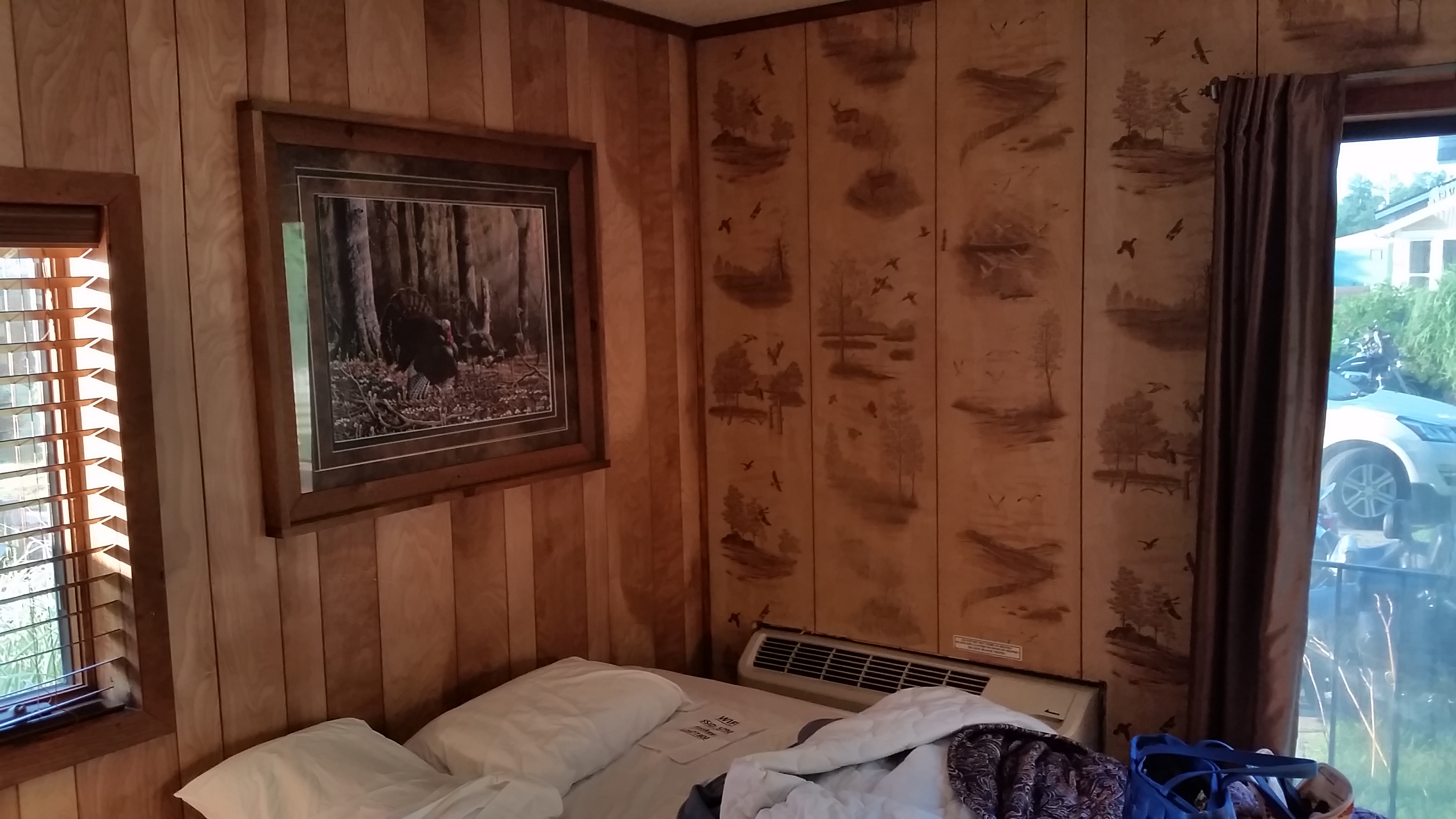
The MCM Grand gets its name from the annual mushroom festival held annually in early May (morel wpid-20150726_080431.jpgseason). Our check in took a while, due to the loquacious proprietors, but otherwise service was solid. The outside was well landscaped with a few large, phallic looking carved wooden morels placed around the grounds. The motel was clean and neat, but as I walked in the door, a cabbage aroma that reminded me of my late grandmother’s apartment building greeted me. The decorating style was rustic with plywood paneling in the room (some of it printed with dune scenes) and pictures of game animals above the beds. Pete and Amy slept under deer and Liz and I under turkeys. The look was wpid-20150726_080504.jpgrounded out with an antler chandelier in the lounge on the second floor. The place was quiet, except for the loud A/C unit, and we all slept well that night. Next episode, Old Mission and Traverse City!
wpid-20150726_071536.jpg

Chateau Grand Traverse Semi-Dry Riesling

Maker: Chateau Grand Traverse, Traverse City, Michigan, USAwpid-2015-07-22-19.53.17.jpg.jpeg

Place of origin: Old Mission AVA, Traverse City, Michigan, USA

Vintage: 2012

ABV: 12%

Price: $12 (website price for 2013 vintage)

Appearance: Pale gold.

Nose: Mineral water, pear, tangerine, lemon thyme.

Palate: Full bodied and subtly sweet. Fresh squeezed orange juice, gravel dust, winter savory.

Finish: Orange juice then minerals and a lingering sweetness.

Parting words: As much as I love Chateau Grand Traverse and Riesling, I shocked myself when I saw this on a shelf a few months ago and realized I had never tried it. Not sure why I never picked up a bottle but I’m very glad I did.

I’m not sure my tasting notes do it justice. It’s more complex than they might lead one to believe. It’s well integrated but not over-integrated, if that makes sense. The herbal, mineral, and fruit aromas all dance back and forth, each taking their turns leading the wine, but never blurring into one. I like that quality very much. That’s true complexity. The best Four Roses bourbons have that and this wine has it too. The price for this wine is so stupid cheap that I would call this a must buy for anyone who loves Michigan Riesling, or Riesling in general. Chateau Grand Traverse’s 2012 Semi-dry Riesling is highly recommended.

Grant’s: The Family Reserve

Maker: Wm. Grant & Sons, Dufftown, Moray, Scotlandwpid-2015-07-17-19.39.08.jpg.jpeg

Style: Blended Scotch whisky

Age: NAS

ABV: 40%

Michigan State Minimum: $20

Appearance: Pale gold.

Nose: Sweet malt, plum, apricot, custard, touch oak oak and alcohol.

Palate: Full bodied and creamy. Custard, cinnamon, allspice, butterscotch candy.

Finish: Malt, oak and good vanilla ice cream with a little heat. Hangs around for a long time.

Parting words: Reviews of NAS Scotch blends have not gone well on this blog, generally so I was reluctant to review this. I bought it because I was looking for a blend to carry me through the summer and have around for the occasional high-ball or Scotch cocktail. I was very pleasantly surprised when I took my first sip.

This is a great whisky. It’s fruity and flavorful but not clunky and even at 40% ABV, it doesn’t taste weak. The malt elements add elegance and interest but it all rests on the firm, luscious bed of top notch grain whisky. Grant’s works well in cocktails, but I think I prefer to sip. It’s impossible to beat for the price. Grant’s The Family Reserve is highly recommended.

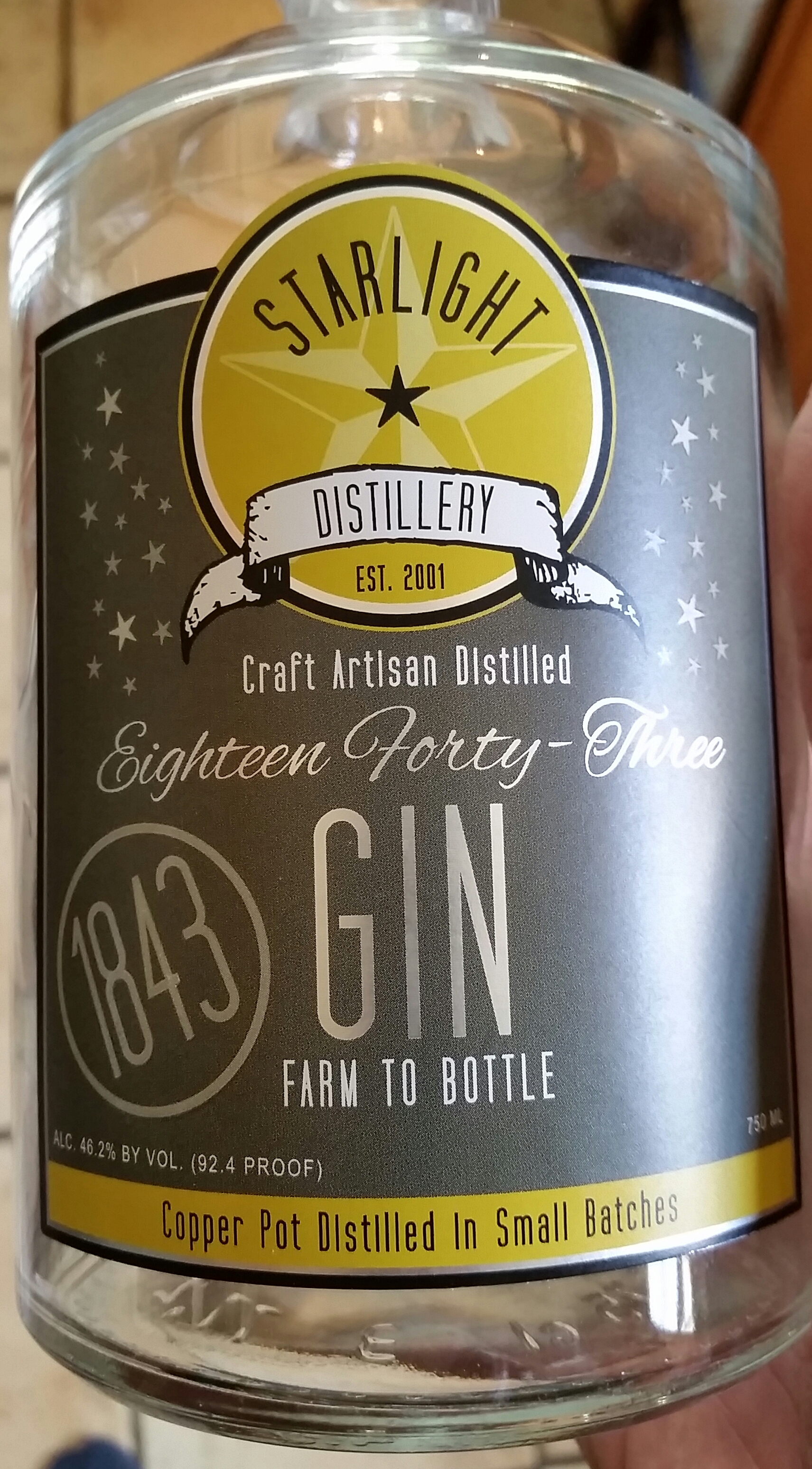
Eighteen Forty-Three Gin

Maker: Starlight Distillery, Starlight, Indiana, USA (Huber Winery)wpid-2015-07-16-11.35.41.jpg.jpeg

Style: American dry gin.

ABV: 46.2%

Price: $30 (distillery)

Note: My wife and I received a complimentary tour, tasting and a discount at the time I purchased this product from the distillery

Appearance: Clear.

Nose: Alcohol, coriander, brie cheese rind, citron peel, juniper.

Palate: Sweet and full bodied. Alcohol, juniper, cane sugar, candy orange slices.

Finish: Sweet and fruity. Citrus, coriander seed, cinnamon.

Mixed: Does well in a Dry Martini. Very good in drinks involving red vermouth like Negronis and perfect martinis. Not great with tonic or in a Tom Collins. The earthy elements clash with the mixers in those last two.

Parting words: The first Huber to farm at the site of Huber Farms in Southern Indiana was Simon. Born in Baden Baden, Germany, he started farming in 1843 and the family has continued farming on the same site, only forty miles from the hot springs in French Lick, Indiana. Then as now, wine making and fruit production were the mainstays. Now the (much expanded) farm is a destination for pumpkins and other U-Pick favorites and is home to one of Indiana’s biggest and best wineries. They started distilling in 2001. Brandies are their best known spirits, but they also have vodka and gin (obviously) and a variety of fruit liqueurs and infusions, including an excellent blueberry liqueur. They have two stills currently, operated by owner Ted Huber and master distiller Lisa Wicker (formerly of Limestone Creek).

This gin is similar other craft gins (Few and Corsair spring to mind) but it has a pronounced aroma that I can’t quite put my finger on. Cubeb, maybe? At any rate, like those gins, 1843 is best in quality cocktails but pretty good neat too. Keep a bottle of Seagram’s next to it in the cabinet if you plan on guzzling a lot of Tom Collinses or G & Ts.

For a craft gin of this quality and ABV, $30 is a very good price. Eighteen Forty-Three Gin is recommended.

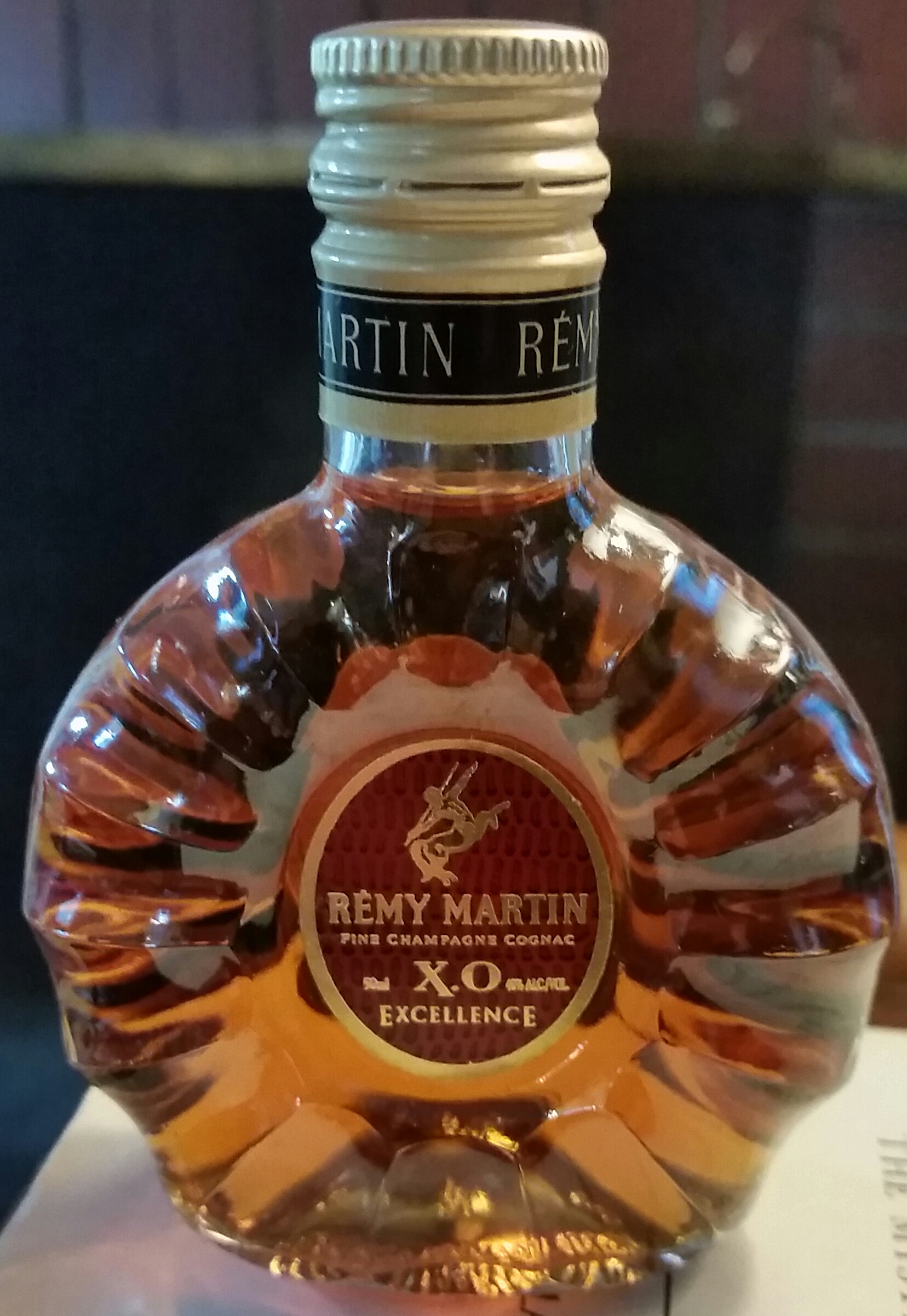
Rémy Martin XO Excellence

Maker: Rémy Martin, Cognac, Charente, Poitou-Charentes, France (Remy Cointreau)wpid-2015-07-14-17.52.08.jpg.jpeg

Place of origin: Champagne, Cognac (not to be confused with the wine region of the same name)

Age category: XO (6 y/o or older)

ABV: 40%

Michigan State Minimum: $150

Apparently: Reddish orange.

Nose: Alcohol, rancio, orange peel, almond extract, cherry, vanilla.

Palate: Full mouthfeel. Semi-dry. Roasted almonds, Queen Anne Cherries, white mulberries, white wine grapes.

Finish: Golden raisins, old oak, leather. Lingers for a very long time.

Parting words: I’m not in the habit of buying $150 bottles of anything, let alone Cognac. Luckily I was able to find a 50 ml bottle of this. I had to share it with you, of course, dear readers.

My biggest question is always, is it worth the money? My Cognac experience is limited but this is by far the best one I’ve ever had. It’s complex and well integrated. Fruity but not sweet. For 40% ABV, it has a lot of power too. If I were tasting blind, I would never guess that it was that low. As a bourbon guy, I would still appreciate a bigger proof at this price, but cask strength Cognac isn’t really a thing so it would probably be unfair to criticize this on that basis.

As elegant as it gets, Rémy Martin XO Excellence is recommended.

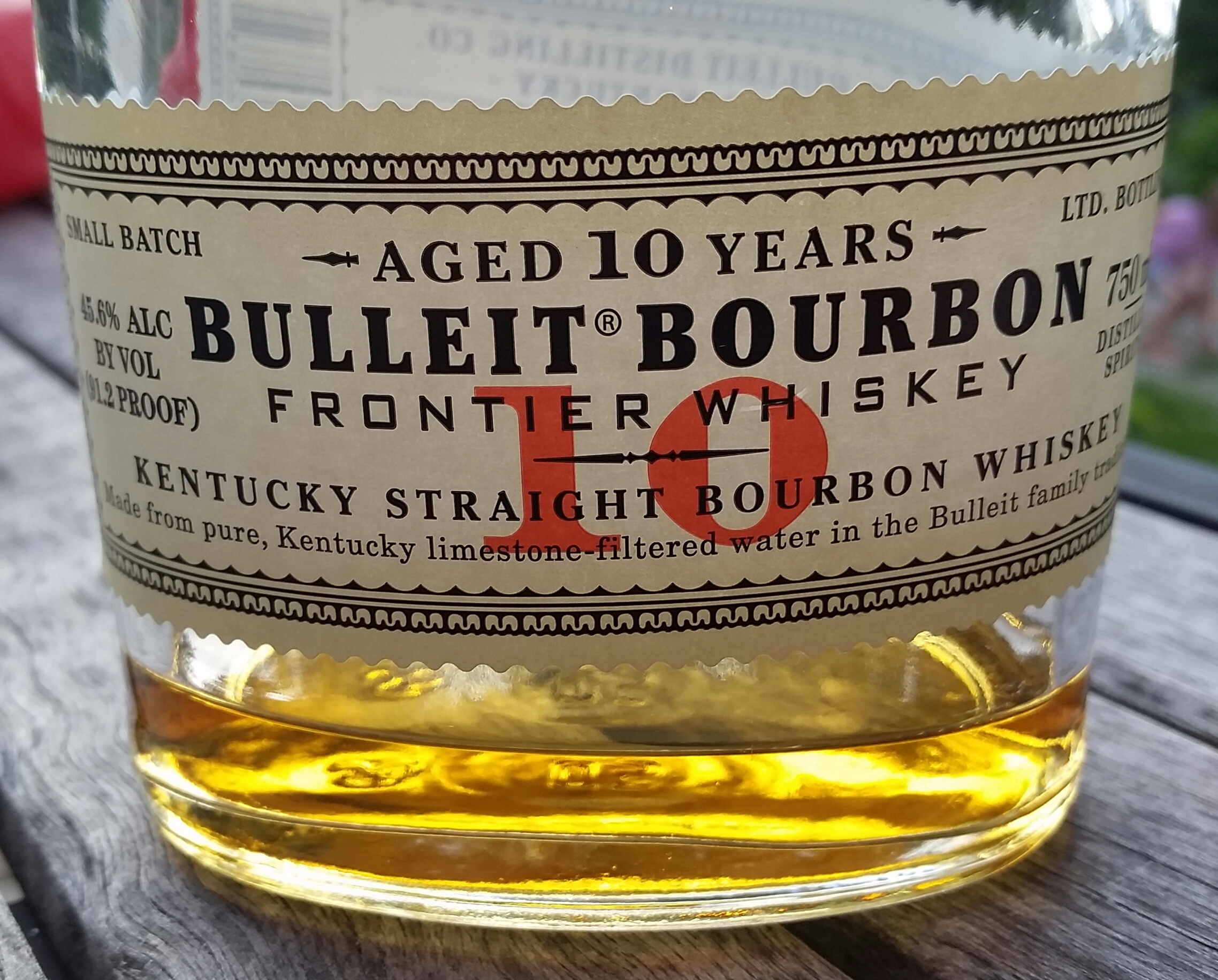
Bulleit 10 y/o

Distiller: Four Roses, Lawrenceburg, Kentucky, USA (For now. Brand owned by Diageo)wpid-2015-07-10-19.53.00.jpg.jpeg

Style: High rye bourbon.

Age: 10 y/o

Proof: 91.2 (45.6% ABV)

Michigan State Minimum: $47

Appearance: Burnt orange

Nose: Alcohol, red pepper flakes, charred oak.

Palate: Caramel, toffee, oak, serrano chiles, lavender, grape bubblegum.

Finish: Oak, alcohol, circus peanut.

Parting words: This is the latest installment in the “cleaning out my liquor cabinet” series. I bought this bottle at the distillery. Well, not at the distillery it was distilled at, but at the one that serves as home to the “Bulleit Experience”, Stizel-Weller.

This this bourbon is fine. No flaws, drinks well, etc. But Four Roses Single Barrel is $42, 100 proof and almost always more interesting than this. There’s no good reason to buy this bourbon instead of that one. Bulleit 10 y/o is mildly recommended.

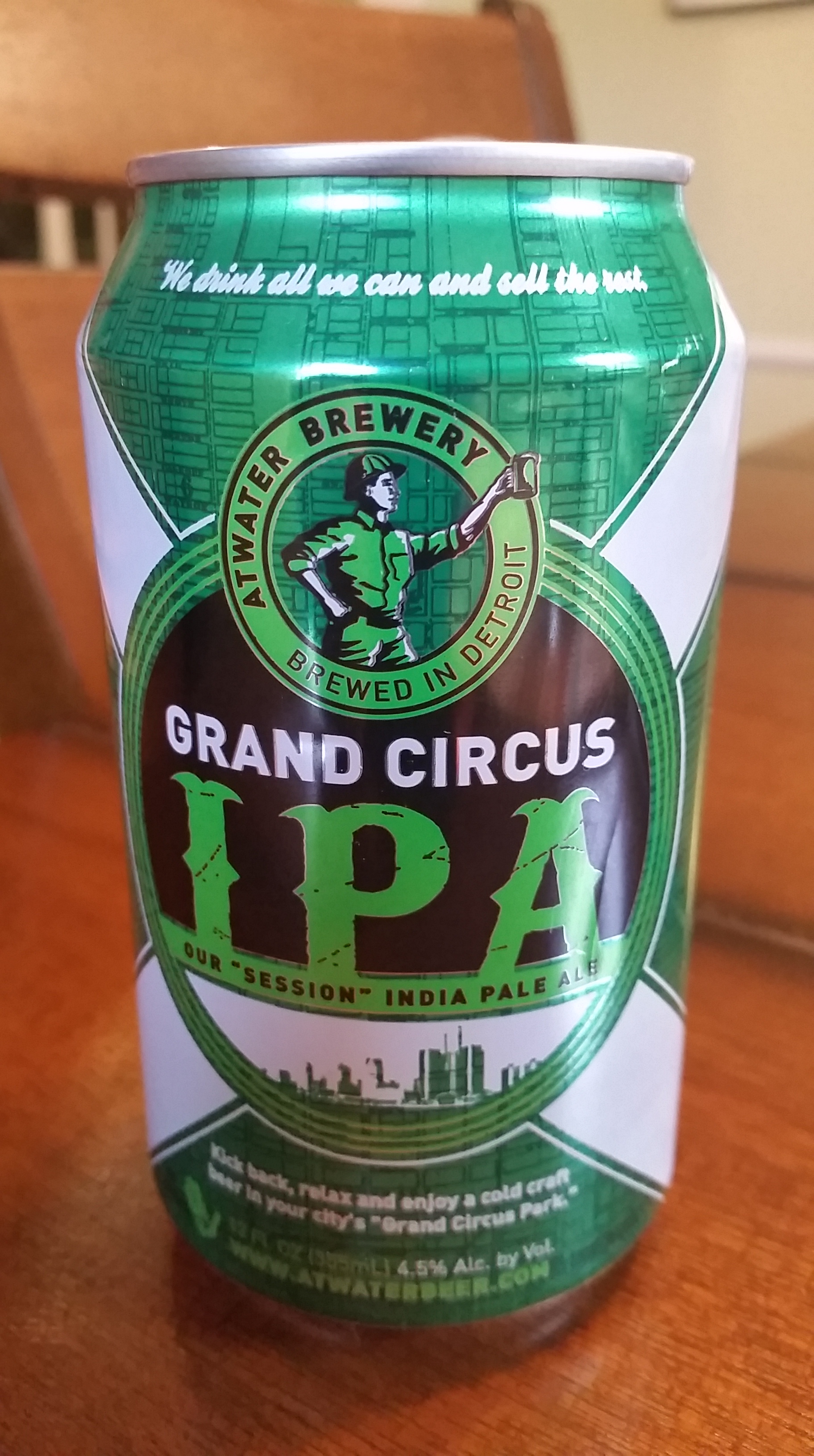
Grand Circus IPA

Make: Atwater, Detroit, Michigan, USAwpid-20150622_193214.jpg

Style: Session IPA

ABV: 4.5%

Appearance: Dark copper with a big sudsy head.

Nose: Very sweet malt, citric hops

Palate: Medium bodied. Hops, balanced by malty sweetness. Hops are present but not overwhelming. Bitterness on the back end.

Finish: Bitterness intensifies and lingers.

This is a part of Atwater’s series of beers named for places around Detroit. The name may sound strange but any clowns one may encounter in Grand Circus Park are purely coincidental. Grand Circus is a semi-circular park in Downtown Detroit that was created as a part of a planned (then abandoned) city-wide network of hub and spoke style roads. In 1865 George Armstrong Custer delivered a eulogy for Abraham Lincoln there and now the park is home to the Russell Alger Fountain, which was designed by Henry Bacon with the statue sculpted by Daniel French, who both did the same for the Lincoln Memorial in Washington D.C. The park is adjacent to many of downtown’s most important buildings including the David Whitney Building, David Broderick Tower, Central United Methodist Church, The Detroit Opera House and Comerica Park.

Grand Circus the beer is billed as a session beer and it fits that bill. It’s a porch sippin’, food accompanyin’ beer. I got a pack of twelve cans of this for a party so that there would be something hoppy there that everybody could enjoy. It was moderately popular. If you’re a hop head, this probably won’t satisfy your lust, but I liked it, even more since it’s available in cans. Grand Circus IPA is recommended.

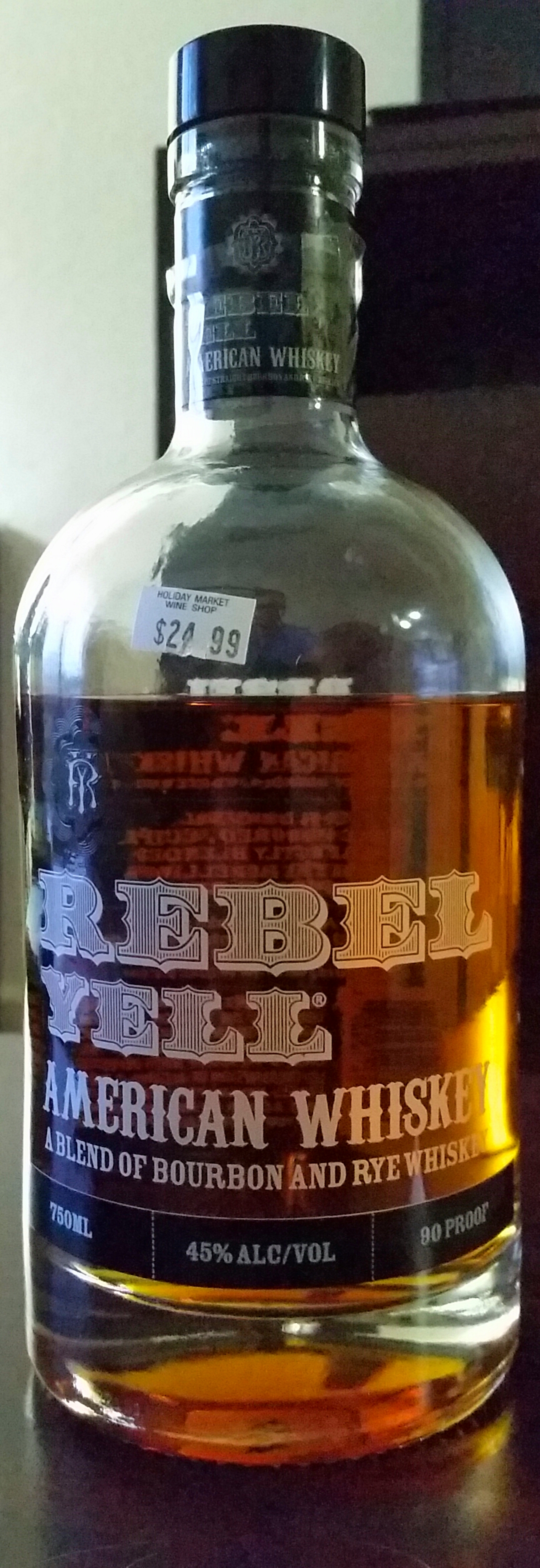
Rebel Yell American Whiskey

Maker: Luxco, St. Louis, Missouri, USAwpid-2015-07-03-21.02.47.jpg.jpeg

Distillers (probable): Heaven Hill, Bardstown/Louisville, Kentucky & MGPI, Lawrenceburg, Indiana, USA

Style: Blend of straight bourbon and straight rye

Age: 2 y/o

Proof: 90 (45% ABV)

Michigan State Minimum: $25

Appearance: Light orange.

Nose: Alcohol, caramel, asparagus, orange zest.

Palate: Light bodied and hot. Caramel, cotton candy, alcohol,

Finish: Menthol, alcohol, cotton candy again. Lingers for a while.

Mixed: Rebel Yell American Whiskey mixes very well across the board. Makes for an excellent boulevardier and Manhattan. Old Fashioned is not quite as good but still decent. Does ok with club soda or on the rocks too.

Parting words: While I would say that my least favorite bottom shelf bourbon is Benchmark, many people would give that dubious honor to Rebel Yell. Once upon a time it was a mid-lower shelf offering from the Stizel-Weller distillery, more famous for the Old Fitzgerald and Weller brands of wheated bourbon (that is, bourbon made with corn, malted barley and wheat rather than corn, malted barley and rye). When Diageo was formed, they sold off all of the old S-W brands except for Rebel Yell, which they intended to make their worldwide flagship bourbon. That didn’t work out so they sold the brand to Luxco, one of the biggest non-distiller producers of bourbon.

Luxco already owned the Ezra Brooks line of rye recipe bourbons but no wheaters so it was a good fit for their portfolio. They released the slightly older Rebel Reserve (no longer made but still languishing on shelves) a few years ago and in 2015 expanded the line again and redesigned the bottle (now Confederate soldier free!). The new products are Small Batch Reserve, Honey and Cherry flavored bourbons, this product and a rye for some reason.

I was pleasantly surprised by this. The high-rye rye balances the caramel and vegetable notes in the bourbon and brings a light citrus flavor to the party. It lacks complexity and depth, but one could do a lot worse for $25. For mixing and casual sipping, Rebel Yell American Whiskey is recommended.

Pelee Island Pinot Noir

Maker: Pelee Island Winery, Kingsville, Ontario, Canadawpid-2015-06-30-15.51.05.jpg.jpeg

Place of origin: Pelee Island VQA

Vintage: 2012

ABV: 12.5%

Purchased for $13 (Northwood Market)

Appearance: Dark plum.

Nose: Blackberry, blueberry, dried tobacco, strawberry.

Palate: Blueberry, black raspberry, strawberry, leather.

Finish: Very mild then fades into a strong bitter flavor.

Parting words: I reviewed the 2007 vintage way back in 2011 and I liked it. It was a fine, table-grade Pinot. This is certainly table-grade but not fine. The soapy, bitter finish ruins a decent (though clunky) wine. It fares a little better chilled but not much. Pelee Island has been in the game for a long time. Surely they can pull of something better than this mess. I wish I had a better review for Canada Day, but this vintage of Pelee Island Pinot Noir is not recommended.