Palate: Effervescent and medium bodied. Semi-dry. Mineral water, apple cider, underripe pear.
Finish: Crisp and clean with a lingering murmur of minerality and crisp apple.
Parting words: The next big thing in Michigan wine is cider. After two brutal winters in a row that have left many wineries scrambling for grapes, many have turned to apples to supplement their wine portfolios. Verterra in Leland, on the Leelanau peninsula, is one of those.
Verterra’s ciders were given the name of the winery’s successful Chaos series. Just Apple is Chaos’ flagship and the only unblended (or unflavored) cider in the fleet. As such, it seemed like a good place to start. I was not disappointed.
Calling it great might be an overstatement, but it is quite good. Just Apple does an excellent job of balancing the dryness one expects in a fine cider with the sweetness and apple character beloved by the masses. Goes with just about anything one can put on a plate. The price isn’t too bad either, especially the growler price at the winery, but the MBTBTR price is a perfectly fair. It tastes like a $13 bottle of cider should taste. Chaos Ciders Just Apple is recommended.
Palate: Raspberry juice, oak, portabella mushrooms, red currants.
Finish: Wild blackberries, black currants, leather, cranberry juice cocktail.
Parting words: I gave a big positive review to the 2011 vintage of this last year and I think this one is even better. The 2011 was a bright spot in an uneven year for Michigan reds. It’s better integrated than in 2011. The tannic, earthy and fruity flavors are in perfect balance. It was more fruity and earthy when I first opened it, but it has become oakier as it sat. Either way, it’s a delicious wine that does well with food or without and is worth the price. 2012 Arcturos Pinot Noir is recommended.
Appearance: Medium copper with medium, evenly spaced legs.
Nose: Alcohol, caramel, old leather, squirt of wild blackberry juice.
Palate: Soft and medium bodied on the palate with nougat, caramel candies, and vanilla but then moving into cassia and burn. Water brings out some nice chocolatey flavors.
Finish: Oak, chocolate chews, amaretto, burn.
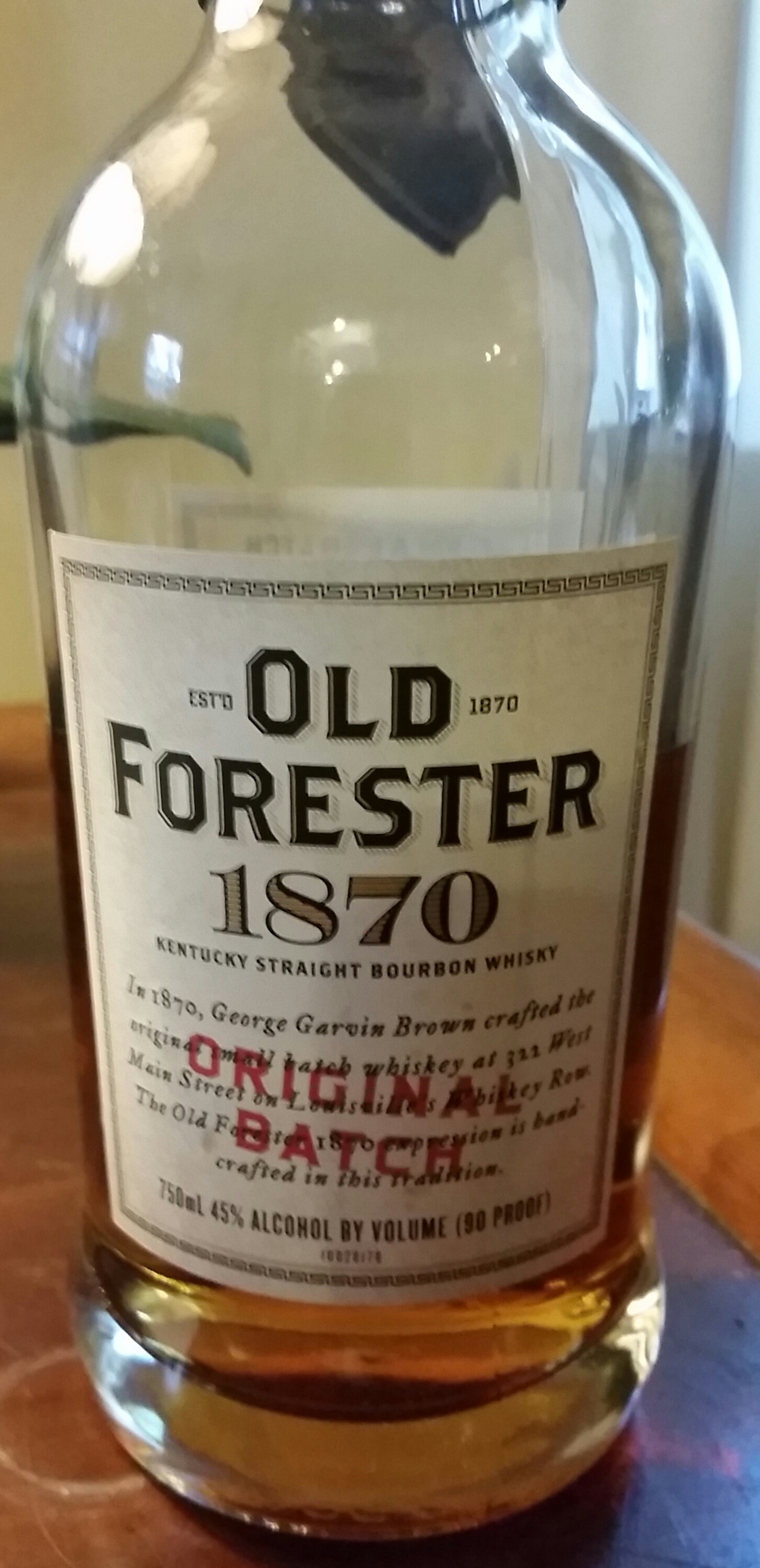
Parting words: Old Forester occupies a unique place among American bourbons. It is the only nineteenth century brand that is still owned by the company that founded it. It was Brown-Forman’s (Forman was a one-time partner) first brand. Who Forester actually was has never been satisfactorily answered. Early batches had an extra r in the name, so it has been asserted that it was named after a physician named William Forrester or even confederate general, early KKK leader and war criminal Nathan Bedford Forrest. At any rate, over the years, Brown-Forman gobbled up Early Times (founded by a Beam) and then, of course, Jack Daniels. The company is publically owned, but the majority of shares are still owned by the Brown family.
Brown, like many of his peers, began as a broker or rectifier. He bought whiskey from various distilleries and sold it under the Old Forester name by the barrel to retailers and taverns. The concept of branding was taking off at the time and Brown wished to protect his brand’s reputation against unscrupulous retailers and bar owners, so he began selling his bourbon by the bottle instead, to insure that he had total control over what was being sold as Old Forester. The idea spread like wildfire, of course.
This iteration, Old Forester 1870 is inspired by those early batches. It is composed of barrels drawn from three different warehouses, from different barrel entry proofs and production dates, corresponding to the three different distilleries from which Brown sourced his first batches. I would not be surprised if some of those barrels were from the old Old Forester plant (DSP 414).
As for the bourbon itself, I was underwhelmed at first but it has grown on me. It has a subtle richness that is very satisfying after dinner or as sipper to accompany a book or good TV. 1870 also stands up very well against its little sibling, the 86 proof Old Forester. Where the 86 is thin, simple and slightly astringent, 1870 is creamy and multi-faceted. It lacks the fruitiness in the Old Forester Single Barrel selections I’ve had, but it more than makes up for it in rich candy flavors. Frankly, I wish the 86 proof would taste more like this.
It’s pricy at $45 but I do think it’s worth the money (although not much more). Old Forester 1870 is recommended.
Maker: Chateau Aeronautique, Jackson, Michigan, USA
Place of origin: Michigan, USA
Style: Semi-sweet Riesling
ABV: 12.5%
Price: $18 (Michigan by the Bottle Tasting Room)
Nose: Mild. Touch of alcohol, smidgen of Riesling wine.
Palate: Apple juice that wasn’t refrigerated after opening.
Finish: Apple juice and maybe a little pineapple.
Parting words: A fellow Michigan wine blogger who I have a lot of respect for once told me I was brave to post reviews. My first thought was “Yeah, that or I’m just an ass.” There are times when I think I’m too easy on Michigan wines. I wonder if I’ve become a “homer” as it were and let my locovore sympathies get the best of me. I usually start questioning myself after hanging out with wine bloggers who aren’t interested in Michigan wines. Then there are some times when I taste something sub-par and I regain confidence in my palate. This is one of those times.
Chateau Aeronautique, like its founder, is eccentric. Lorenzo Lizarralde is a Texas-born MK (missionary kid) who currently works as a commercial pilot based in Detroit. Many wineries have turned themselves into agricultural attractions with U-pick produce, farm to table restaurants and the like. Chateau Aeronautique is an aeronautical attraction. He houses his vintage Cessna on site, and the winery itself is in a hanger.
CA’s wine portfolio is unusual too, including a Cabernet Sauvignon passito and a stab at Sauternes dubbed Chateau Blanc. Their strongest wines are two in the Aviatrix series: Crimson (a Merlot heavy red blend) and Rouge (a Cabernet Sauvignon heavy red blend). Each is a big, bold 787 of a wine, but quite enjoyable. There is also a cranberry infused red wine called Aviatrix Passion, which I haven’t had.
The website describes this wine as “Inviting Tropical Nose, Liquid Sunshine with a Smoldering Kiss of Sweetness”. I would describe it as dull. There’s really very little going on here other than sweetness and a relatively high ABV. No minerals, herbs or flowers and very little in the way of fruit on the nose or anywhere else.
I expect this sort of profile out of a cheap grocery store selection, but not out of a boutique winery known for its bold wines. $18 is not too expensive in the grand scheme of things, but more flavorful options are available for half the price. 2012 Chateau Aeronautique Riesling is not recommended.
When my wife and I first became interested in Michigan wine, several years ago, we decided to take a weekend trip to southwest Michigan to visit the wineries there. We were looking forward to seeing the wineries we had grown to know and love via supermarket purchases. After a stop at Peterson & Sons in Kalamazoo (worth a stop for the tasting experience and Peterson’s idiosyncratic wines and mind), our first official stop in the Lake Michigan Shore AVA was Domaine Berrien in Berrien Springs, Michigan. We went in knowing nothing about the winery at all. As we sampled and chatted, we were very impressed with how seriously DB winemakers and owners Wally and Katie Mauer took red wines, and how good theirs were. We bought a bottle of Wolf’s Prairie Red and something else. We’ve been fans ever since, but since their wines were (almost?) exclusively available at the winery, we haven’t had an opportunity to drink DB as much as we would like.
We were both excited when we heard that the second Michigan by the Bottle Tasting Room was opening in the very neighborhood we were about to move to and that they would be selling Domaine Berrien. I was even more excited when I got an email inviting me to a vertical tasting of DB’s red Bordeaux-style blend, Crown of Cab, at MBTBTR, Royal Oak (my tasting was complementary, but regular tickets were $35). The tasting was officially titled Crown of Cab: An Evolution and hosted by Wally Mauer. The tasting was originally supposed to be five vintages, 2007, 2008, 2009, 2010 and 2012 but the Mauers came through with two additional vintages at the last minute: 2005 and 2006. One rarely gets the chance to taste Michigan wines at those advanced ages, so I was even more exited on top of two levels of excitement I was already feeling. The wines were all from the personal cellar of Michigan by the Bottle propriators Cortney and Shannon Casey. Cort says that she had no idea they had so much Crown of Cab from so many vintages when she stumbled across them in a section of the cellar. She said that she initially thought they should have a party to use up the wine, but I for one am very glad that they chose this vertical tasting instead!
We were seated around a number of small tables in the front part of the tasting room Seating was assigned, which I like because it’s a good way to meet new Michigan wine lovers. I was seated next to George Heritier of Gang of Pour. George was an excellent tasting companion. We didn’t agree on all of them but he’s an interesting cat. He’s a musician too. His music website is here. There was one other set of samples at our table, but they had no card in front of them. George thought they might be for Chris Kassel of Intoxicology Report, but he never showed. So after going through our own samples, we went divided the extras between ourselves.
The tasting began with some remarks from Cort and Sahnnon and then Wally took over. He gave an outline of the philosophy behind Domaine Berrien and this label in particular. All Domaine Berrien wines are from estate grown grapes. They grow a fair number of hybrids, but most of them end up in their blends aside from varietal Traminette, Vignoles and St. Vincent offerings. DB is notable for producing vinifera varietal bottlings of grapes that are not often seen in the northeastern U.S. like Cabernet Sauvignon, Syrah, Roussanne, Marsanne and Sauvignon Blanc. Wally also repeated that DB runs a very clean shop and faces no “microbial pressure”. Somebody raised the issue of “brett”(see this brief tutorial from Wine Folly here) and how many of the French wines Wally and Katie are modeling their wines after show the influence of brettanomyces yeast. Wally said that’s fine for those wineries in which the fungus has become established, but as for his, he’d rather not have to worry about it.
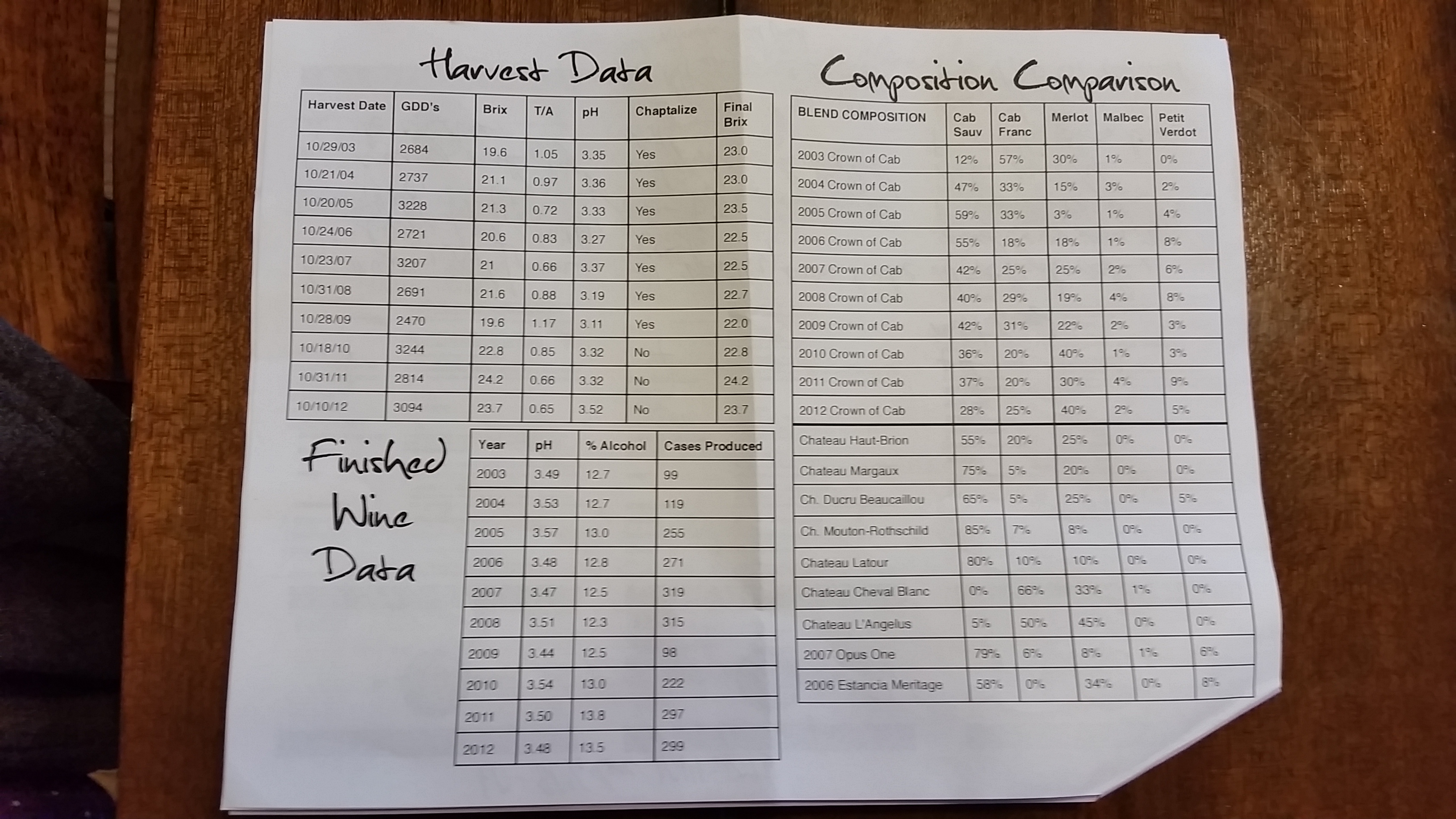
Crown of Cab, as I mentioned above, is Domaine Berrien’s red Bordeaux-style blend. The 2012 vintage contained 28% Cabernet Sauvignon, 25% Cabernet Franc, 40% Merlot, 2% Malbec and 5% Petit Verdot. Wally said that over the past few vintages he tried to alternate which bank of the Gironde Crown of Cab leaned toward. Even numbered years are supposedly right bank (Pomerol & St-Emilion, heavier on Merlot and Cab Franc) and odd are left bank (Médoc & Graves, heavier on Cab Sauv). That said, none of the vintages we tasted were more than 59% Cab Sauv (2005; cf. 80% for Latour, 75% for Margaux, 65% for Ducru Beaucaillou), and most of them were 42% or less, roughly declining over time. The percentages of the other grapes have varied considerably, but Malbec and Petit Verdot have remained in the single digits. He stressed that he doesn’t aim for consistency with Crown of Cab, he just tries to make the best blend he can with what the vineyards give him. The wine from each grape is put into barrels separately, then into neutral cooperage after bench blending. All Crown of Cab vintages spent a total of 24 months in oak.
The line up.
Anyway, on to the vintages themselves. They started out with a bang. 2005 was a good vintage all over Michigan and Crown of Cab was no exception. George loved it, and it remained his favorite throughout the rest of the tasting. At first sniff and taste, it seemed fragile and past its prime. Big, heavy cocoa and oak aromas but little else. As it opened up (or as the alcohol began to take effect), it began to taste more balanced. It grew on me, but it was still in the “drink immediately” category. The 2006 was an odd duck. George didn’t get this but the nose had big bell pepper and butter aromas on the nose. Curiously, the proportion of Cabernet Franc (infamous for bell pepper aromas) wasn’t especially high in 2006. On the palate it was very tannic and oaky, even more than its older sibling. Overall, I thought the 2006 was ok, but out of balance.
The 2007 was my favorite vintage and I wasn’t alone in that opinion. I still tasted some green pepper, but the wine as a whole was much more balanced. It was more like a very good tomato sauce but with a whiff of smoke. It just had more of what I’m looking for from a wine like this. More acid, fresh fruit and perfect integration of all the elements. I though the 2008 was very similar but with less tomato sauce, more supreme pizza. Bread, green pepper, sweet tomato sauce and button mushrooms. To continue the Italian food theme, 2009 was eggplant parmesan. Fresh marinara and pleasantly bitter eggplant, but with some new elements of vanilla and fresh berries coming in. I would have to give 2008 the edge over 2009, but in another year or two 2009 could overtake it.
The final two vintages were 2010 and 2012. 2011 was a banner year for white wines in Michigan but not as much for reds, so maybe it’s for the best that 2011 was excluded. George and I differed on this, but I got big dessert flavors out of the 2010. It was crème brulèe: vanilla, custard and smoke with strawberries on top. The finish was mild, like all of these wines, but 2010 was heavy on the fruit. We got a big pour of 2012 so I was able to spend a lot of time with it. I think it was the best one since 2008, and will only get better over the next two to five years. I highly recommend stocking up on 2012 Crown of Cab. Your patience will be rewarded but if you can’t wait, it is really good now too.
Vertical tasting are a great way to learn more about wine, especially about the differences in vintage and the effect age has on wine. They usually don’t include as many as seven vintages but it’s a nice thing when they do. When hosting vertical tastings of whiskey in the past, I’ve tried to limit the pours to a maximum of five so palate fatigue and intoxication don’t ruin the fun. Seven worked fine for wine, though. I would guess this is because of the lower alcohol content. That said, palate fatigue did start to set in about halfway through my big pour of 2012. The informational sheet was a big help too. It contained information pertaining to grape proportions, harvest dates, Brix at harvest, growing degree days, total acidity, pH, chaptalization, final Brix, finished pH, ABV and cases produced. The grape proportions for nine other wines were listed for the sake of comparison. They were Chateaux Haut-Brion, Margaux, Decru Beaucaillou, Mouton-Rothschild, Latour, Cheval Blanc, L’Angelus (all Bordeaux), 2007 Opus One (Napa) and 2006 Entrancia Meritage (Monterrey).
The sheet.
At any rate, it was a wonderful experience as always at MBTBTRRO. Vertical tastings, wherever they are held, are a fun and educational experience. See if you can find one near you, or better yet, host one yourself sometime soon! $35 was a good price for a tasting this large of a wine of this quality.
Thanks again to everyone else involved in putting the whole thing together, especially Cort and Shannon for opening their cellars and Katie and Wally for making the wine and also making the trip to talk to us about it!
Have you ever selected your own barrel of bourbon? I have a few times. Well, me along with a dozen or two of my drinking buddies. I’m a member of the Georgia Bourbon Society, a group that selects a barrel or two of bourbon for ourselves once or twice a year. No, you don’t have to be from Georgia to be a member, obviously. It’s just a group of friends from all over the country, organized by two men who live in Atlanta.
There are dozens of groups like the GBS around the country. Some are ad hoc groups, some are loose affiliations like us and some are organized clubs with rules and membership rolls and whatnot. This sort of thing has been going on for a long time, but it has become much more common as bourbon’s popularity has taken off.
GBS has made the rounds over the years. Our first selections were of Elijah Craig and Elijah Craig barrel strength. Our next one was Elmer T. Lee, then two barrels from Four Roses, then a Russell’s Reserve Single Barrel from Wild Turkey. Last weekend we selected a barrel of Knob Creek Single Barrel at Jim Beam. It was a great experience.
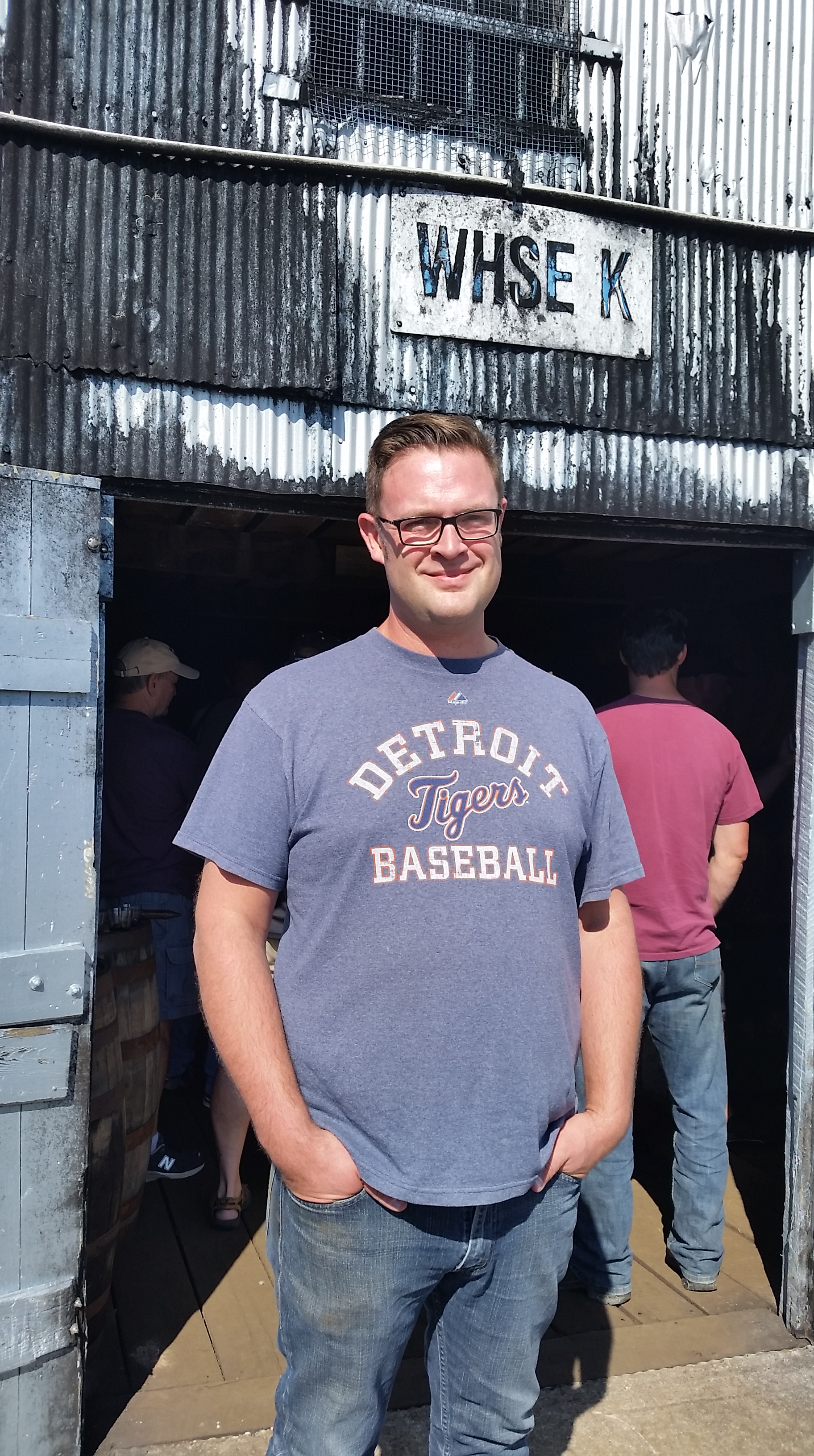
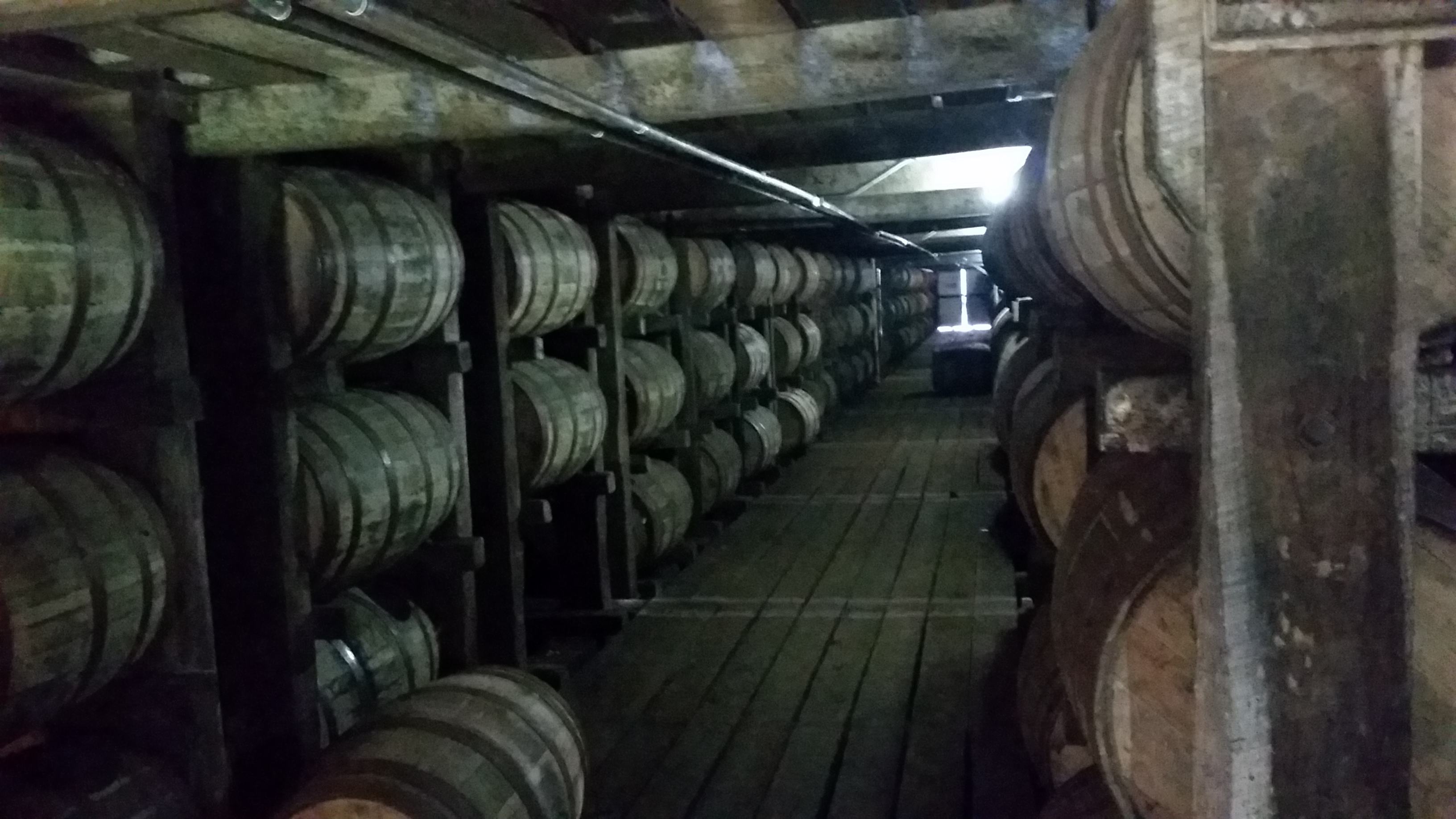
We gathered at the Jim Beam American Stillhouse (aka the gift shop) in Clermont, Kentucky at 10 AM that morning. First on the agenda was, of course, the tasting and selection. We gathered in Warehouse K amongst the barrels.
Photo by R. Turner
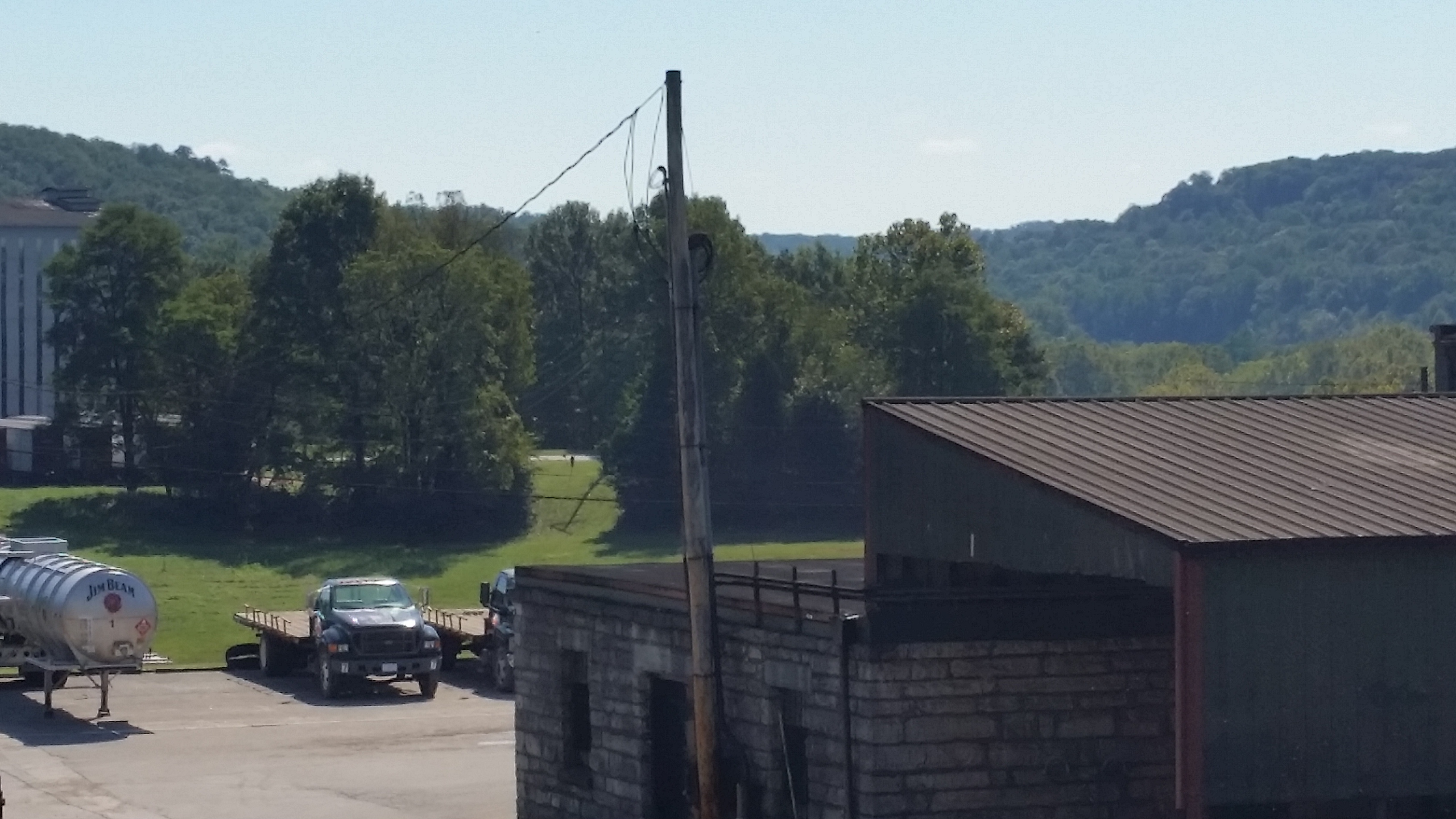
The view
There were tables set up with four glasses each, one with a red band, one with a green band, one with a blue band and one with no band at all. A glass water bottle was on each table too. Three barrels had been rolled out for us to choose from, each one corresponding to a colored band. Red was first, green second and blue third. We sniffed and tasted all three in turn and then over again and then took a secret ballot. Just one vote separated the first and second places so we considered a taste off, but in the end we just went with the first place finisher. I thought it tasted and smelled like snickerdoodle cookies. It was a very good barrel of bourbon.
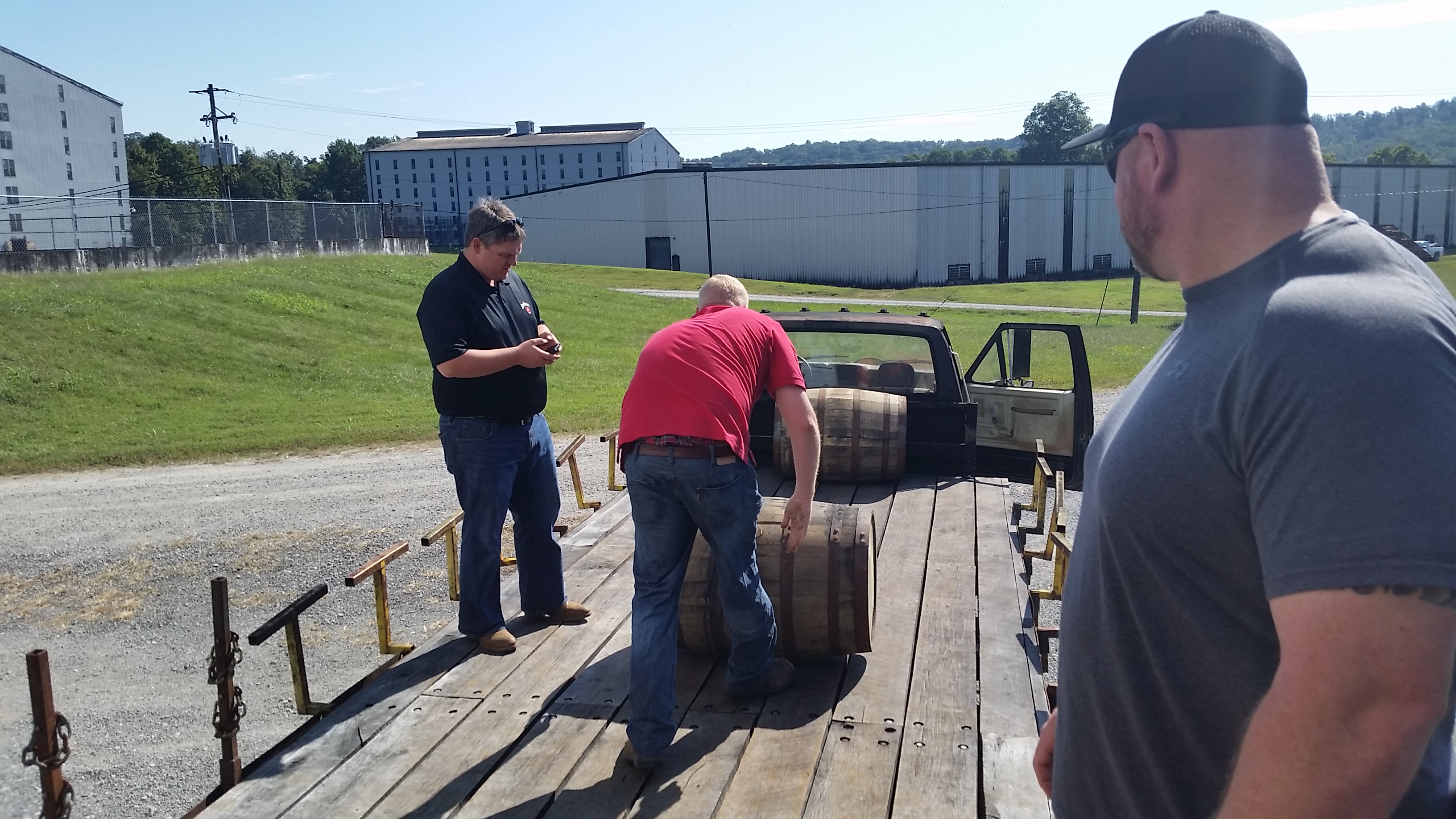
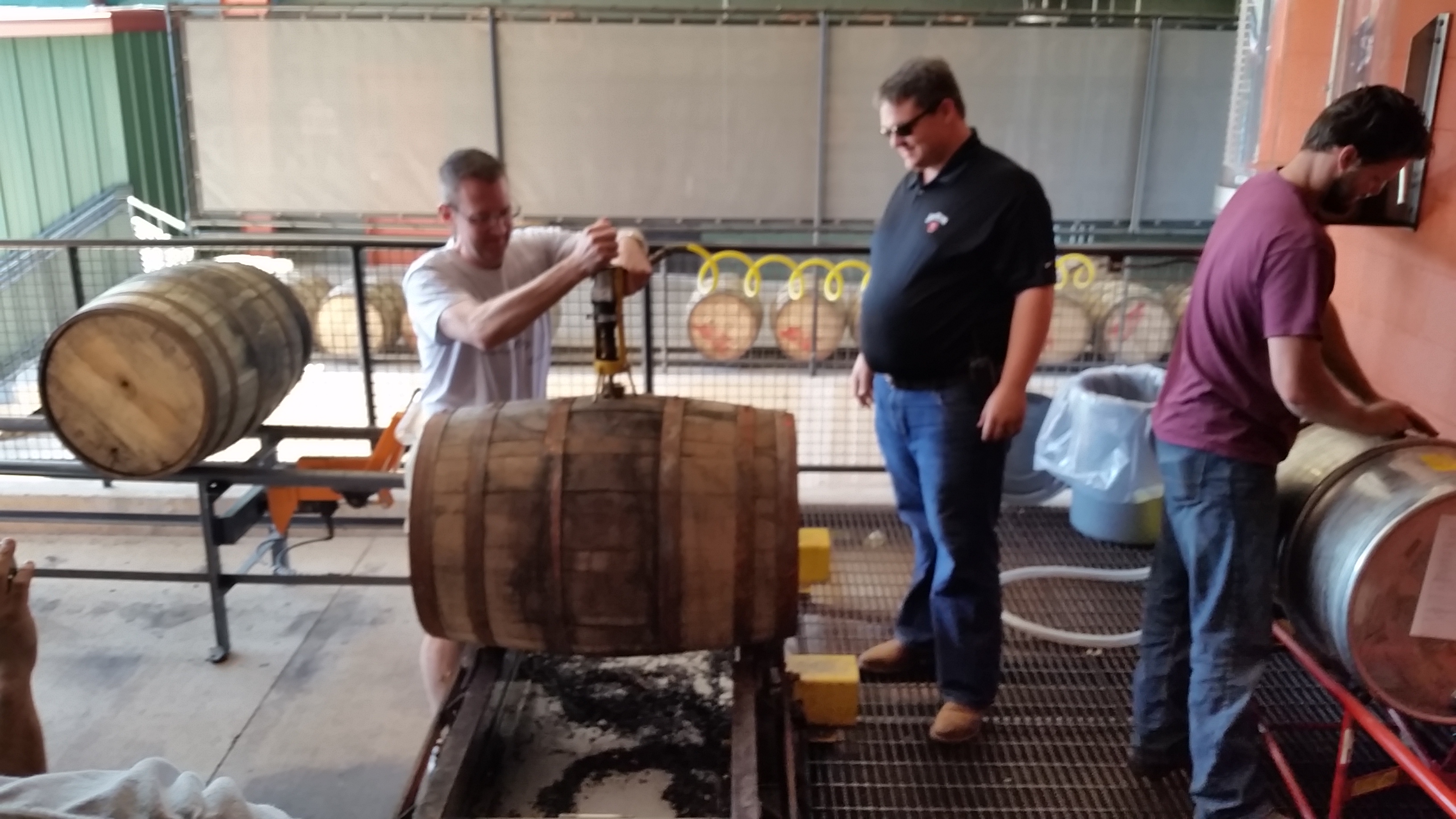
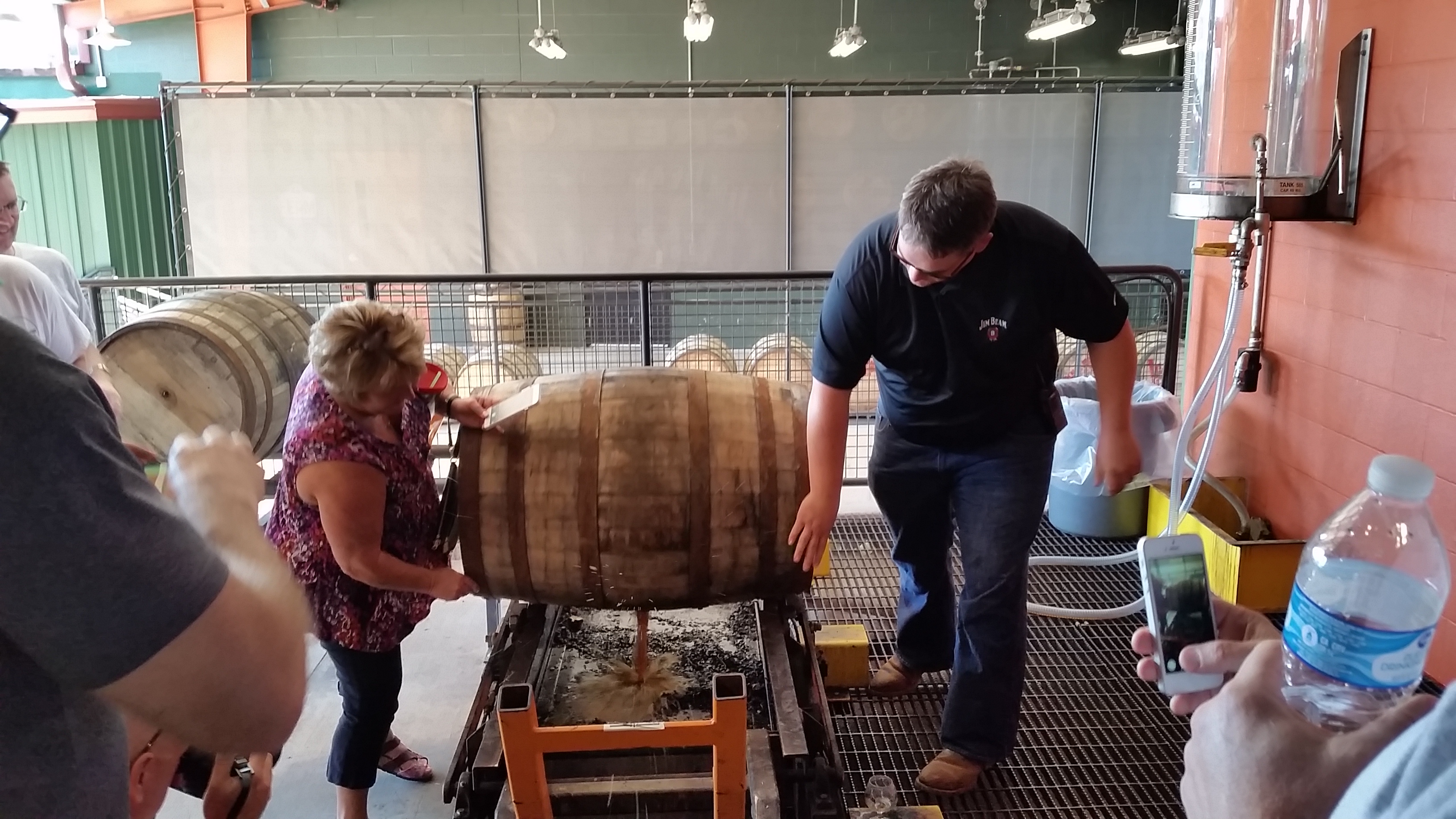
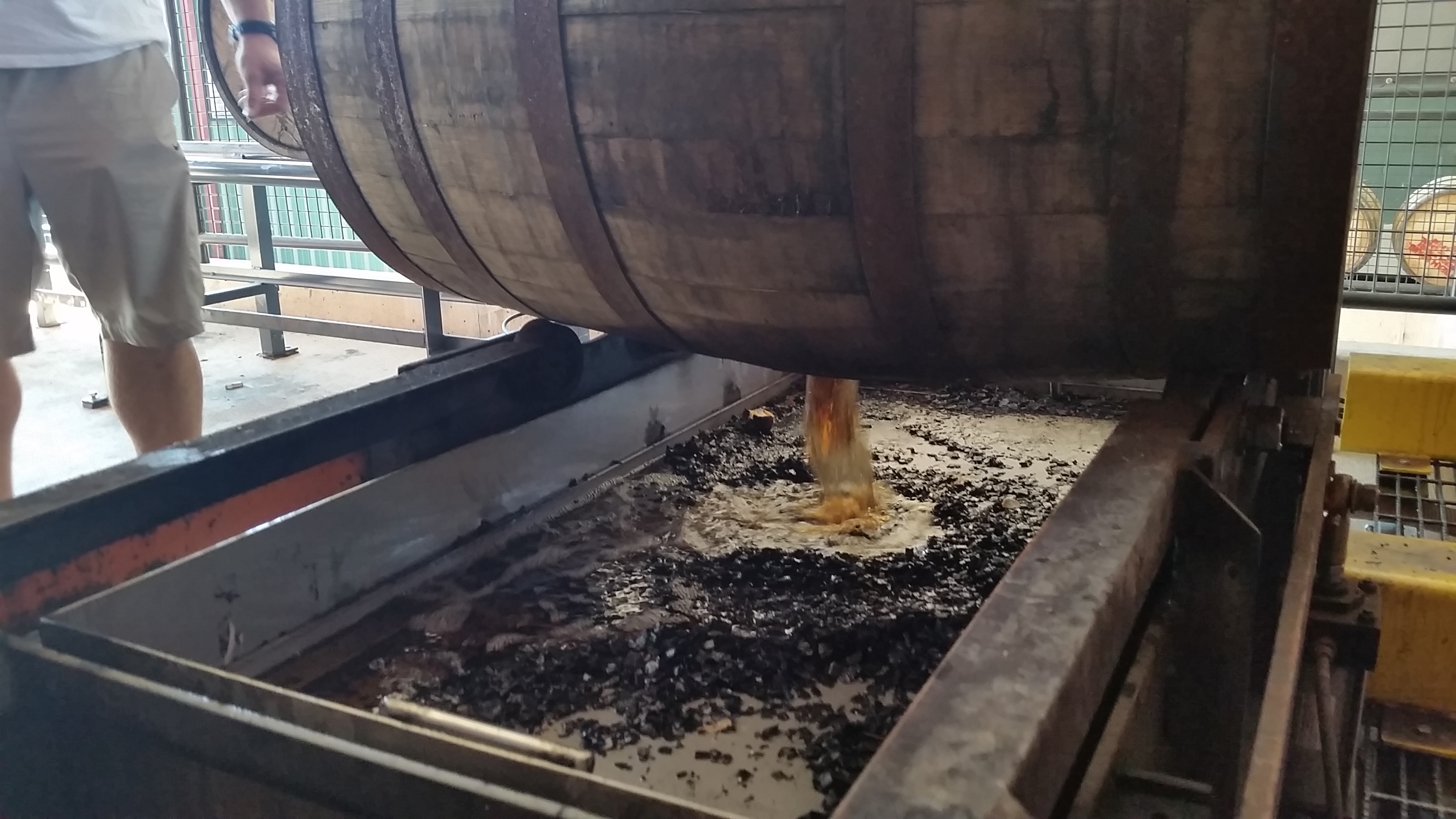
The winning barrel was then rolled on to a truck and driven over to the distillery for dumping. Some of our members had the privilege of aiding in the dumping process. We then all watched and waited to see how much bourbon was going to come out of that barrel. About 33 gallons is the answer (that’s about 20 gallons lost to evaporation over the ten years of the bourbon’s life).
Drilling out the bungDumping
The bucket of bung parts
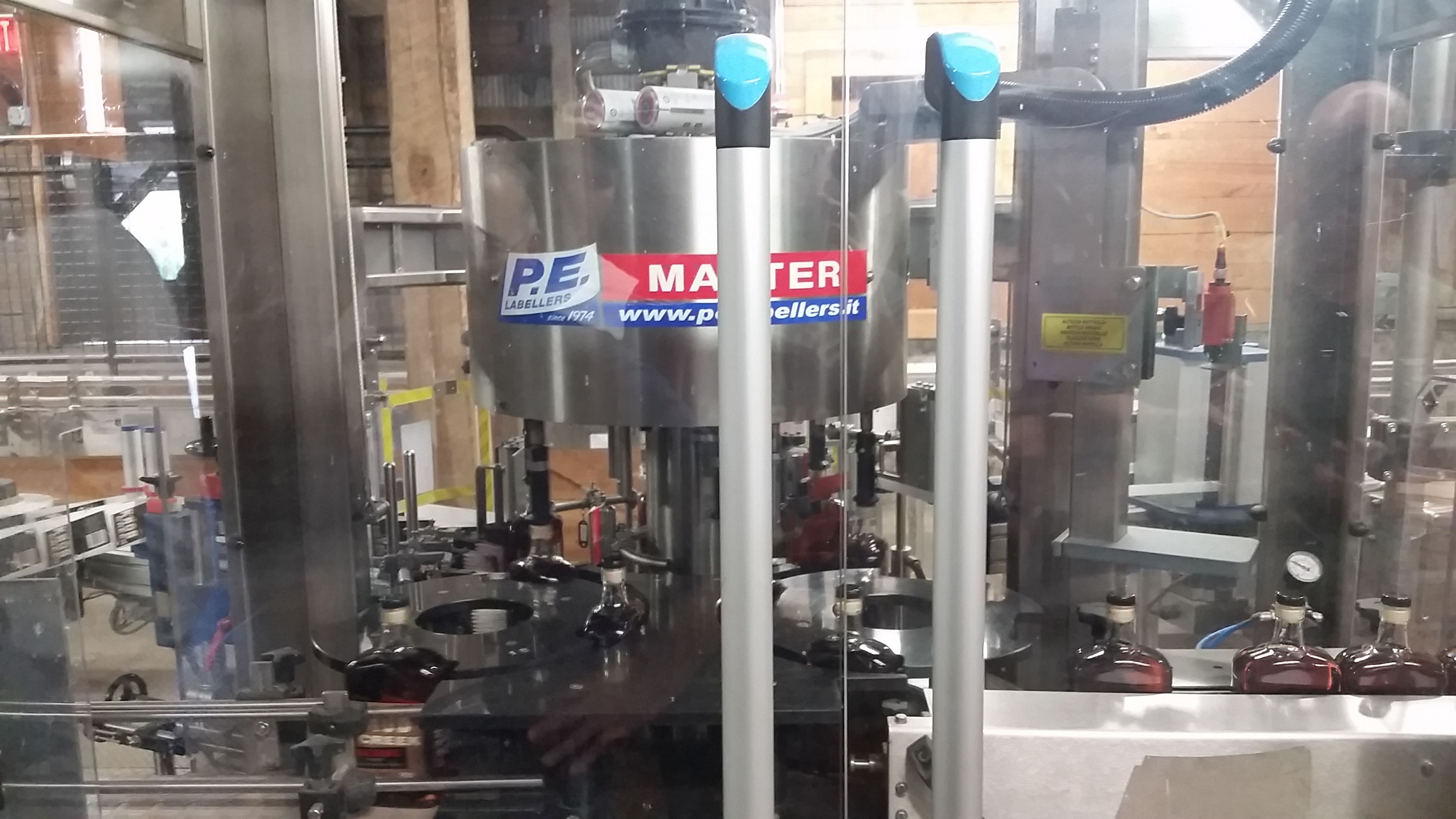
After a delicious complimentary bbq lunch, we got a full tour and then the unheard of (at least unheard of by me) experience of actually watching our barrel get bottled and packed. We were able to follow the bottles all the way down the line to the end, where we got to pack them into cases ourselves.
Filling the bottles.CappingLabelingPacking
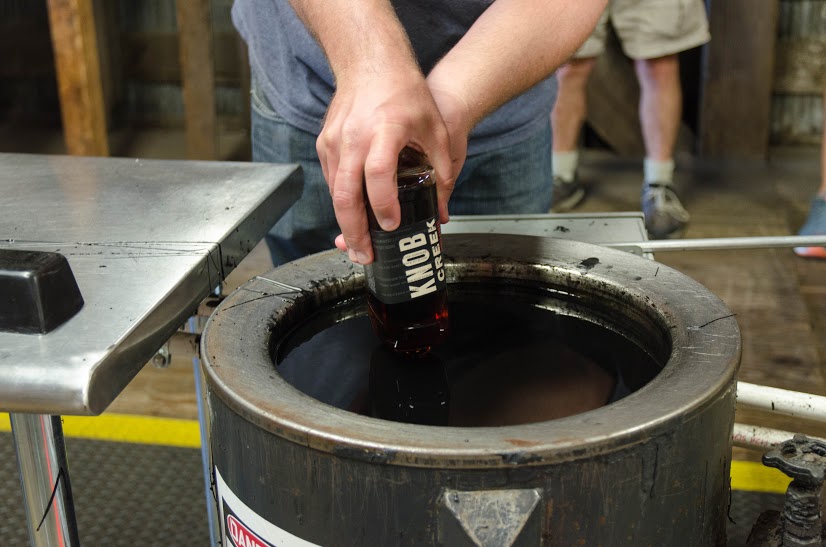
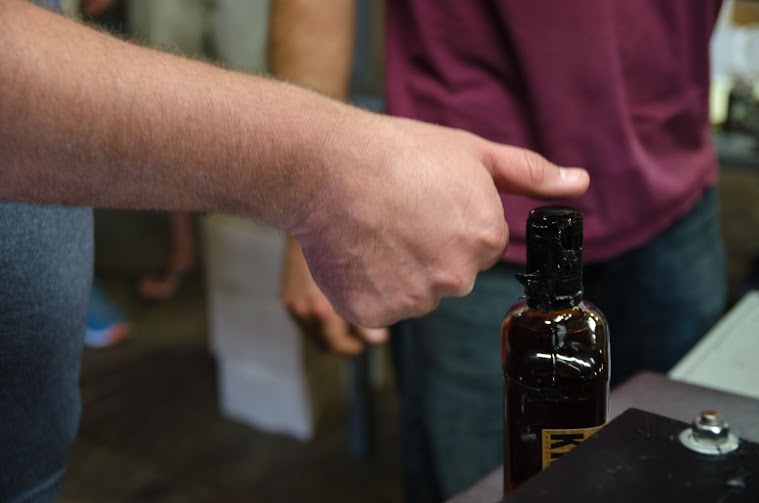
We then had the opportunity to buy a bottle then and there through the gift shop, at a higher price, of course. There were five bottles left over after all the cases were filled, so five of us stepped up to buy one. My friend Amy, also a GBS member, had requested a bottle so the one I purchased was on her behalf. Those of us buying bottles then had the opportunity to apply the wax seal to the bottles ourselves! Waxing is a multi-step process. The following four pictures were taken by S. Ivancic.
DipTwistStick the neck into the mold and push the button to seal.Finally, stick your thumb into the soft wax at the top just for fun.
The whole experience was wonderful and far exceeded my expectations. Some of the participants thought it was all a little too long but I loved every minute of it. We picked a damned good barrel too. I can’t wait until I get my bottles!
If you have an opportunity to select a barrel from Beam, I highly recommend it.
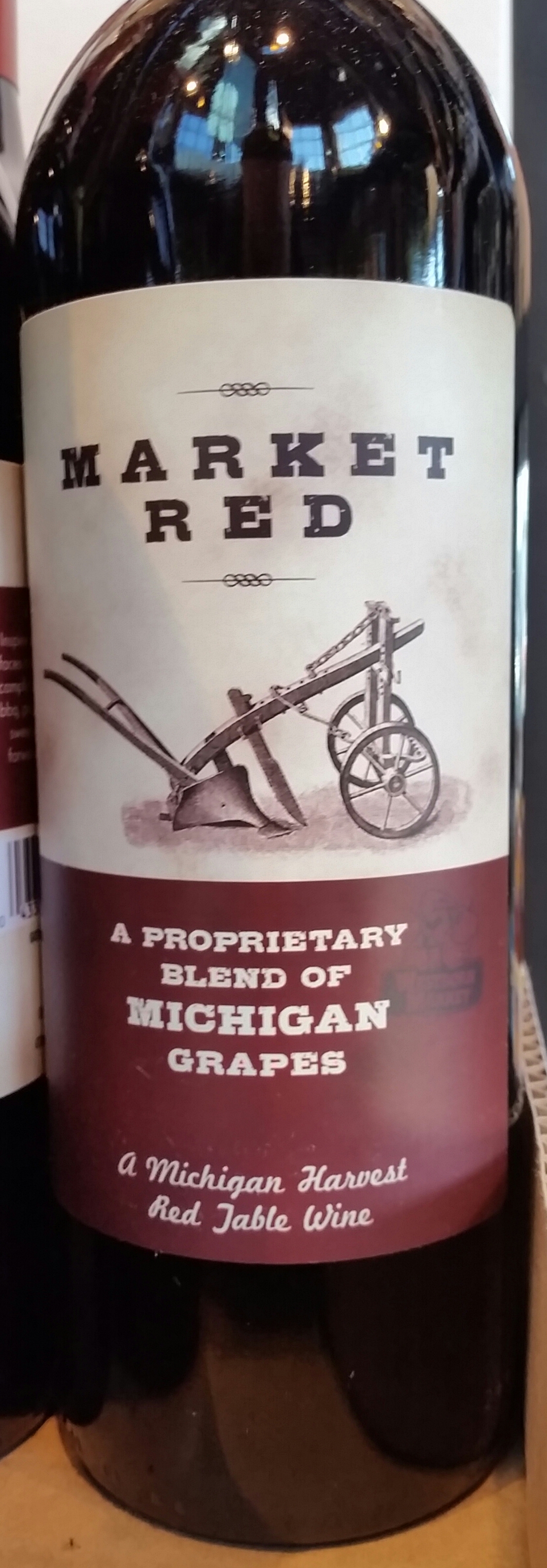
Maker: St. Julian, Paw Paw, Michigan, USA. Made for Westborn Market, Dearborn, Michigan, USA
Grapes: Unknown “proprietary blend”.
Place of origin: Michigan
Vintage: NV
ABV: 12%
Price: $8 (only available at Westborn Market supermarkets)
Appearance: Dark burgundy.
Nose: Dried fig, plum, toasted oak, smoked ham.
Palate: Fruity and tart with a big dose of oak. Blunt with no integration.
Finish: A little chewy, then inky.
Parting words: Market Red is a ham fisted, hybrid-heavy blend made by St. Julian for the Metro Detroit supermarket chain noted for its fine produce, emphasis on locally made products and its chaotic store layouts. They also have their own labeled products that seem to be little more than other Michigan brands with a Westborn label slapped on (e.g. their potato chips). Market Red and its white sibling seem to be relabeled versions of St. Julian’s Founders Red and White respectively, although those are labeled as Lake Michigan Shore, not simply Michigan so I could be wrong about that.
I reviewed Market White a couple weeks ago and I thought it was OK. This is not even as good as that. There’s not much going on here, and what there is isn’t interesting. $8 is cheap, but one can still do better for the money. If one wants to stick with St. Julian, I would recommend the Simply Red* as an alternative. Better yet, chip in a few extra bucks for Chateau Chantal’s Naughty Red or Nice Red. Or if one wants to stay under $10, go across the street from the Berkley Westborn Market and get something much better at Trader Joe’s for the same price or less.
*I am fully prepared to have egg on my face if Market Red is identical to Simply Red
Palate: Spicy hops with a sweet malt background. Bitter, but not obnoxious.
Finish: Mild but with plenty of hoppy bitterness.
Parting words: As always, Founders delivers. All Day IPA delivers plenty of hoppy IPA punch at a low ABV for “all day” enjoyment. This beer has become my go-to beer for parties, lunches at home or having beer drinking friends over. It’s available on tap, in bottles and even in a 15 pack of cans (my preference). It’s also available at just about every party store, grocery store and gas station in these parts. For simple hoppy drinking, All Day IPA can’t be beat. Highly recommended.
Age: NAS (supposedly older than the standard Crown Royal)
ABV: 40%
Michigan state minimum: $44
Appearance: Dark copper (likely colored)
Nose: Alcohol, spoiled onion, discount deli ham, ghost pepper.
Palate: Full bodied and mildly sweet. Not much going on other than sweetness and a touch of caramel. No oak anywhere in sight.
Finish: Light anise flavor followed by mild heat.
Mixed: Due to the limited amount I had available of this whisky, I didn’t try Crown Royal Reserve mixed, except for with some soda. It was nearly impossible to taste in that application, but that’s probably for the best.
Parting words: I reviewed the standard Crown Royal a couple years ago and I didn’t like it. I was hoping the reserve would be better. I imagined something more rounded and refined. That is not what I got. Crown Royal Reserve is even worse than Crown Royal. The nose has gone from disgusting to putrid and CR’s grainy character has been replaced with a total lack of any sort of character beyond the garbage (literally) nose. The only pleasant part of drinking this was the delicate, but flavorful finish, but it doesn’t even come close to being worth the silly price.
In the interest of being helpful, here’s a list of “reserve” or equivalent Canadian blends that are cheaper and better than CRR: Black Velvet Reserve ($13), Canadian Club Reserve ($18), Forty Creek Copper Pot Reserve ($27), and Gibson’s 12 ($28). Not to mention Alberta Dark Batch ($27), CC Sherry Cask ($22), Collingwood ($30) and Tangle Ridge ($18).
Don’t buy this. Crown Royal Reserve is not recommended.
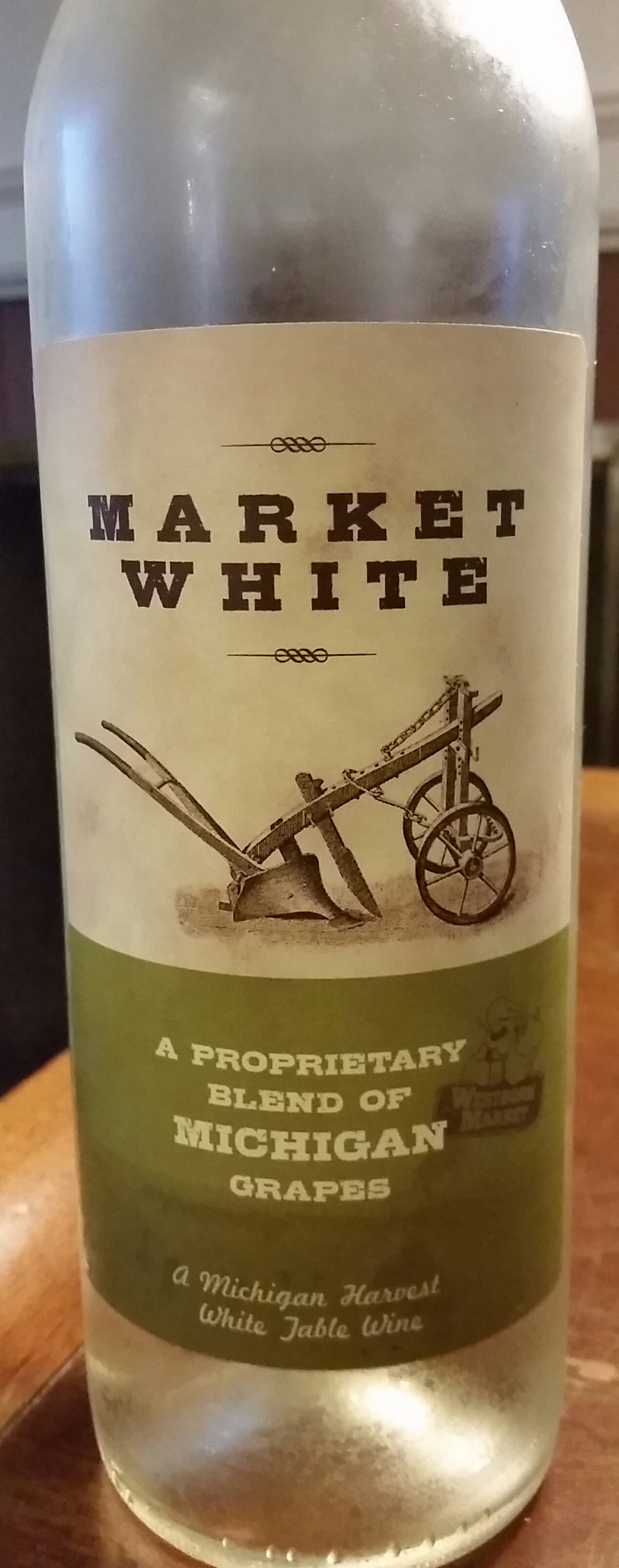
Palate: Medium sweet and medium bodied. Orange juice from concentrate, melon, white grape juice, pinch of sage.
Finish: Sweet and long lasting with herbs on the back end.
Parting words: The bottle describes this wine as a “white table wine” and it delivers on that promise. It tastes like there’s some Riesling and Vidal Blanc in the mix along with a few others. Market White is good with food and fairly refreshing on its own. It’s more complex than I expected, but too sweet to be a go-to white table wine for me. The price is very good, though. If you like your white table wine a little on the sweet side, then check this one out. Market White is recommended.










 Sipology