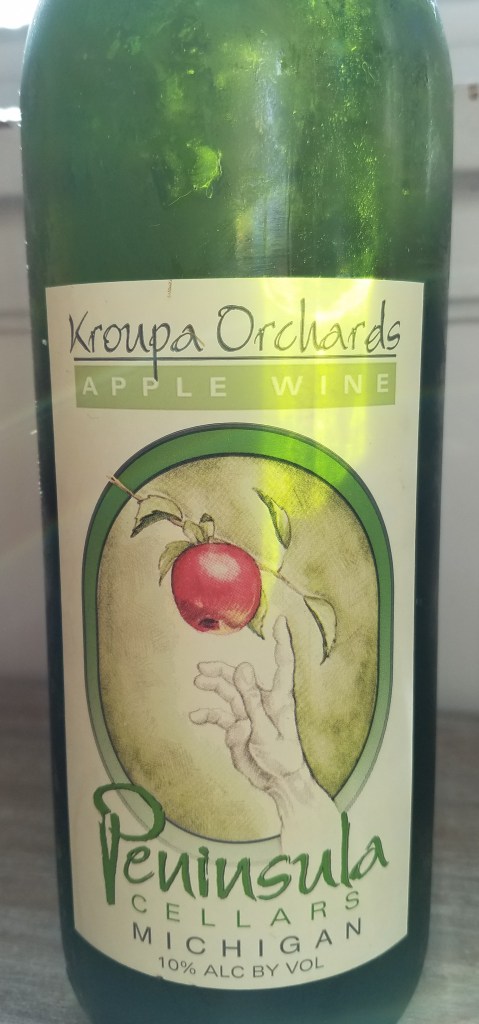
Maker: Peninsula Cellars, Traverse City, Michigan, USA.
Varieites: Macintosh, Spy, Empire, Rhode Island Greening.
Harvest: 2016(?)
Style: Sweet apple wine.
ABV: 10%
Price: $16/750 ml (Michigan by the Bottle Tasting Room, Royal Oak)
Appearance: Light gold.
Nose: Cut table apple, swimming pool.
Palate: Full-bodied and sweet. Apple juice, Gala apple.
Finish: A faint glimmer of tannin but still sweet. Long.
Parting words: Kroupa Orchards Apple Wine falls into the weird category of products that are good but disappointing. Peninsula cellars is one of the best wineries in Michigan’s best wine region. I love almost every wine they produce, so maybe my expectations were too high for this product. It’s not bad by any stretch. It has a lucious sweetness that is pleasant, but I expected something more thoughtful from this winery.
I think much of my disappointment stems from the choice of fruit all of which are baking apples. It’s the equivalent of making wine from Concord or Niagara grapes. Concord wine can be enjoyable, but it will never be as good as a well-made Pinot Noir or Riesling. It’s the same with apple wine or cider made from baking or table apples. Kroupa Orchard Apple wine is easy drinking with lots of apple flavor, but it lacks the complexity of a finely crafted hard cider that tannic or acidic apples would bring to the mix. Even accounting for the larger bottle and higher ABV, $16 is pricy for a product like this. Kroupa Orchard Apple Wine is mildly recommended.
Palate: Medium bodied and well-balanced. Blackberry jam, raspberry juice, light oak, seared steak.
Finish: Fruity and tart, then chewy and oaky.
Il bel lago
Parting words: Bel Lago is located on the shores of Lake Leelanau, in the Leelanau peninsula. The view certainly lives up to the name! Owners Charlie Edson and Amy Iezzoni are known for their cherry wine (Amy practically invented the stuff), field blends and their committment to ripeness. That committment is clearest in the Bel Lago’s rich, rounded Pinot Noir and Auxerrois (Blanc) wines.
Tempesta is not estate grown and not a field blend, obviously, but it does have that trademark ripeness. Oak is present, but not used to cover up anything, just to enhance the savory quailities of Cabernet Franc. Fruit and earthy flavors are in the lead, yoked together by Tempesta’s mid-palate tartness.
$44 is a lot for a non-AVA Michigan red. One could find similar wines from California at a lower price. I still think Tempesta is worth the price in a good vintage like 2012 when cellared for at least four years. 2012s may be nearly impossible to find now, but 2016 was a stellar vintage and 2017 is looking like it may be as well. Bel Lago’s 2012 Tempesta is recommended.
St. Julian Lake Michigan Shore Reserve Late Harvest Riesling= SJ
Arcturos Old Mission Peninsula Late Harvest Riesling= Arc
Makers
SJ: St. Julian Winery, Paw Paw, Michigan, USA
Arc: Black Star Farms Old Mission, Traverse City, Michigan, USA
Places of origin
SJ: Burgoyne Ridge vineyard, Berrien County, Lake Michigan Shore AVA, Michigan, USA
Arc: Old Mission Peninsula, Traverse City, Michigan, USA.
VinSugar at Harvest (in brix)
More information on the back of the SJ label
SJ: 21.1°
Arc: 22°
ABV
SJ: 12%
Arc: 9.5%
Price (current vintages)
SJ: $13 (website, though I have seen it for under $10)
Arc: $17.50 (website)
Appearance
SJ: Medium gold
Arc: Light gold, almost green.
Nose
SJ: Pear, orange juice
Arc: Kerosene (I was the only one who got this note), lemon thyme, peach.
Palate
SJ: Medium bodied but rich. Big pear. Like getting one stuffed up my nose, in a good way.
Arc: Fuller bodied but drier. Crisp apple, lime, candied lemon.
Finish
SJ: Sweet, almost sherry-like.
Arc: Cleaner. Bitter sage.
Tasting panel
Liz: Preferred SJ. Found it more complex and fruitier.
Amy: Preferred SJ. Arc is for summer sipping by the lake. SJ is also for sipping by the lake, but fall is coming soon!
Pete: Preferred Arc. Found SJ too harsh.
The Panel: Liz and me.
Amy and Pete
Parting words: Michigan is known for Riesling. It’s the most planted wine grape in the state. It’s grown both in the “Up North” wine regions and in West Michigan. Riesling wine is made in a broad array of styles from bone-dry Austrian Smaragd to syrupy Mosel Trockenbeerenauslese. Michigan Rieslings don’t (yet) span that entire spectrum, but they have the middle of it well-covered. On the sweet end are Late Harvest Rieslings like these. The ripeness of the grapes used to make these wines is in the neighborhood of the grapes that would go into a German Spätlese.
I have been wanting to do something like this for a while. LMS vs OMP, West Coast vs Up North. It seemed like the best way to do that was to do it with two wines from two big producers in each area. Black Star Farms is the Up North titan with a winery in both Leelanau and Old Mission and there’s nobody in LMS (or the state) bigger and older than St. Julian. Also both of these wines are commonly found at bigger grocery stores in my area, often at discounted prices.
We all thought both wines were very good, but I was a little surprised at how much almost everyone (including myself) preferred St. Julian. While I didn’t find it as complex as Arcturos, it was richer and more enjoyable. Although St. Julian had less sugar (at harvest and residual) than Arcturos it tasted much sweeter and fruitier. Although the folks at the winery described it as “a bright, clean wine designed to be consumed shortly after release” here, it has held up very well, and probably even become richer. Arcturos held up well too. Both are good values, but St. Julian has the edge there too especially considering it’s a single vineyard wine (albeit a very large vineyard). 2012 St. Julian Lake Michigan Shore Reserve Late Harvest Riesling and 2012 Arcturos Old Mission Peninsula Late Harvest Riesling are recommended.
Maker: Gitche Gumee Ciderworks, Hancock, Houghton County, Michigan, USA
Style: Wild fermented feral apple cider. Finished in French oak barrels
Harvest: 2015
ABV: 6.9%
Price: $15 (only available in the western portion of the Upper Peninsula)
Note: Bottle provided for review by maker.
Appearance: Amber with persistant bubbles. Slightly cloudy.
Nose: Cut lumber, Raclette cheese, cut apple.
Palate: Dry, medium bodied. Tart apple, apple peel, French oak.
Finish: Chewy oak and apple tannins, touch of tartness.
Parting words: I had never heard of Gitche Gumee before founder Phillip Kelm contacted me in August. There’s a reason for that outside my own obliviousness, though. Entropy is their first release. Phillip is currently planning two more releases, Dancing Fatman which he describes as “a more approachable table cider” and Carmelita which will be a thimbleberry-infused cider. Thimbleberry is a wild raspberry native to Western North America and the upper Great Lakes region. It’s beloved in Upper Michigan, especially in the Keweenaw Peninsula where Hancock Michigan is located.
Phillip’s day job is as a brewery builder. In an email to me he wrote, “History of the venture is somewhat involved. I have worked in breweries for many years. But my first love was always apples and cider. Happy to be working with apples and cider now. I’ve also opened South Korea’s first cidery, made Palau’s first cider, and am working now to finish India’s only cidery. There’s lots to those stories, but I’ve only so much time to write!” For more on Phillips’s career, look here.
Phillip was aiming for a French-style cider with Entropy and I think he hit the bullseye. It’s actually better than many Norman or Breton ciders I’ve had. The funk and tannin (augmented by French oak in this case) take the lead, but the are assisted by a supporting cast of acid, fruit and sweetness (in that order). The result is a great cider. Sorry to do this to you, dear readers, but this hard to find American cider is highly recommended.
Style: Standard recipe bourbon filtered through beech and birch charcoal and aged in pre-toasted, charred barrels .
Age: NAS (4-6 y/o?)
Proof: 86 (43% ABV)
Price: $24 (The Party Source)
Appearance: Medium copper.
Nose: Lumber yard, caramel corn, fennel, nutmeg.
Palate: Full bodied and mellow. Grape soda, tootsie roll, bubble gum.
Finish: Creme brulee, dark chocolate. Similar to a Speyside Single Malt.
Mixed: I tried it in all my usual whiskey cocktails: Manhattan, perfect Manhattan, Old Fashioned, Holdfast boulevardier, with Coke, with ginger ale, and with Benedictine. It excelled in every one of them, hampered only by low proof in the boulevardier.
Parting words: This bourbon from Brown-Forman, with its recipe somewhere between high(ish) rye Old Forester and high corn Early Times, is intended as a tribute to the Brown-Forman cooperage in Louisville, Kentucky. B-F is the only Kentucky bourbon distiller with its own cooperage, a rightful point of pride for them. Cooper’s Craft puts that wood to work (I’m pretty sure that’s a Lil Kim lyric).
The pretoasted barrels and unique filtration process bring out sweet, chocolate flavors rarely found in bourbons, macrodistilled ones anyway. At 86 proof, it’s not a world beater, but honestly “some different flavors” is more than one expects for $24 these days. Cooper’s Craft is recommended.
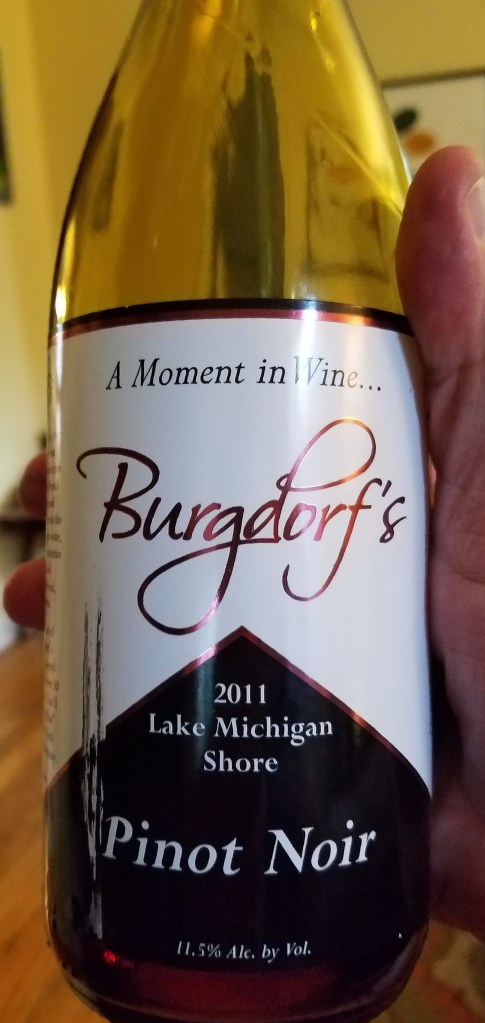
Place of origin: Lake Michigan Shore AVA, Michigan, USA
Vintage: 2011
ABV 11.5%
Price: $26 (Michigan by the Bottle Auburn Hills Sipper Club)
Appearance: Dark red, like cherry juice.
Nose: Cherry jam, touch of French oak, cedar.
Palate: Medium bodied, acidic with a little fruit and spice. Cherry juice, blueberry, black pepper.
Finish: Overdone blueberry pie.
Parting words: Burgdorf’s Winery is located in Haslett, Michigan, near Lansing. They’re known for their quality fruit wines and blends but they produce good varietals as well, most of which are not estate grown. This is one of their best. 2011 was an excellent vintage in Michigan overall, though some winemakers struggled with reds. No struggle here. I usually prefer softer Pinot Noir but the spice and oak here make it very food friendly. We had it with pizza margarita and BBQ chicken and it held its own with both. It tastes like its coming to the end of its life, though, so if you find this vintage, open and drink promptly!
Palate: Mineral water, non-fermented apple cider, lemon juice. No tannin to speak of.
Finish: Tart apples, drying to mineals.
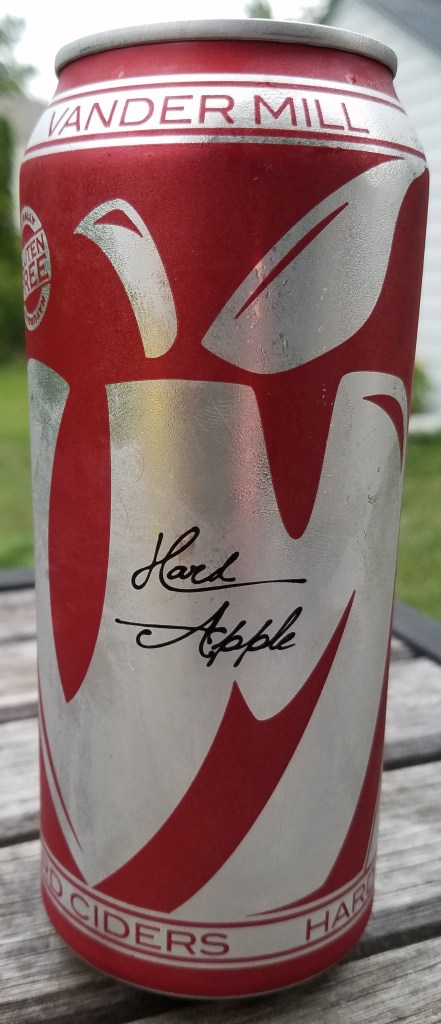
Parting words: Vander Mill is one of Michigan’s best known cider-producers. They’ve benefited greatly from the uptake in the popularity of cider in the past few years. Their production has been increasing and they have recently opened a tap room in Grand Rapids in addition to their original one in Spring Lake near Grand Haven in West Michigan.
Vander Mill’s strength is in their flavored ciders, many of which I’ve already reviewed. Hard apple is the base for all of those. It’s a refreshing, easy-drinking cider but there’s nothing remarkable about it. It’s also useful from a tasting perspective as a way to better understand Vander Mill’s fruited and spiced ciders. This cider should have more going for it than that at $11 for 64 ounces. Vander Mill’s Hard Apple is mildly recommended.
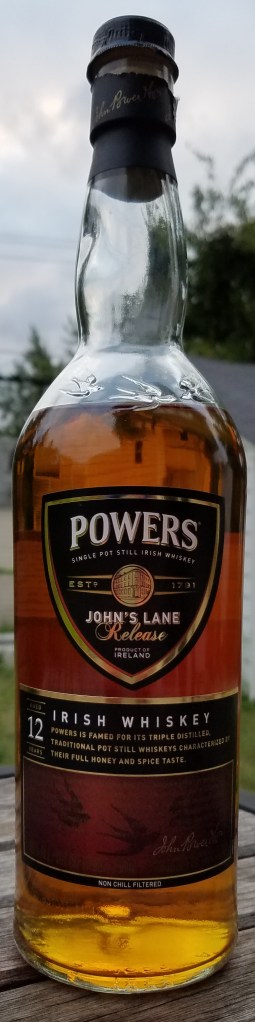
Distillery: New Midleton, Midleton, County Cork, Ireland (Pernod Ricard)
Style: Single Pot Still Irish Whiskey
Cooperage: Bourbon with a little Oloroso sherry
Age: 12 y/o
ABV 46%
Michigan State Minimum: $70
Appearance: Burnt orange.
Nose: Oak, leather.
Palate: Full bodied and sweet. Toffee, overaged bourbon, maybe a tiny bit of plum.
Finish: New oak, burn.
Parting words: Powers John’s Lane release was created as a tribute to the old John’s Lane Distillery in Dublin where Powers was originally distilled. It has received many accolades over the years, including a whiskey of the year designation from pennenial internet punching bag Jim Murray’s Whisky Bible.
After writing up my notes, I consulted a couple other blogs (My Annoying Opinions and Diving for Pearls) to make sure I wasn’t completely off base. I wasn’t. I love Powers (though maybe not as much as Mr. Kravitz) but I don’t love this whiskey. It’s unbalanced with an overbearing raw oak note similar to the small barrel flavors in Tuthilltown’s dreck. Aside from a hit of toffee in the front of the palate that’s all I can really taste and it’s bad. I don’t know what the hell happened here but $70 is $65 too much. Powers John’s Lane is not reccomended.
Parting words: Moletto is a producer of wine and grappa (among other things) in Veneto, in Northeast Italy. I’m not sure when or why they decided to produce this gin, but it is one of the weirdest ones I’ve ever tasted.
I bought it on a whim, looking for something different from the American micro-gins I had been drinking. It’s different all right. Once I realized it was made with tomato I was eager to try it in just about every cocktail I could think of. How would it possibly work in traditional gin cocktails? The tomato would surely clash. Arguably the weirdest thing about this gin is how little it clashed at all. It didn’t do well with tonic or orange juice but it did well with everything else I could think of. Tomato is a natural fit with lemon and the sort of things that go into vermouth, so those cocktails were a good fit. The tomato added a counterpoint of sweetness and acidity to bitter cocktails too. I didn’t try it in a bloody mary. Too obvious.
While it’s never going to be a go-to, I really enjoyed this gin with one caveat: my wife didn’t like it. She’s mostly a G & T drinker, though, so that may have been the reason. The price is high, but it’s unique as far as I know, so that makes it worth a little more to me. Moletto Gin is recommended.
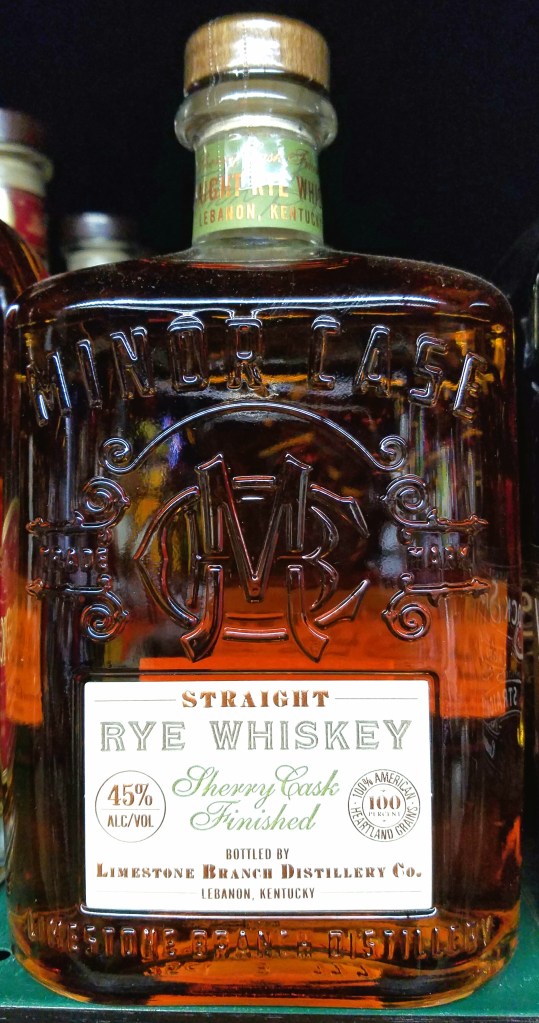
Style: Low rye rye whiskey finished in sherry casks.
Age: 2 y/o
Proof: 90 (45% ABV)
Michigan state minimum: $50
Thanks to Eric for the sample!
Appearance: Medium copper.
Nose: Alcohol, black tea, cayenne, cut grass.
Palate: Ghost pepper, caramel, sugared dates.
Finish: Peppermint, serrano chili.
Parting words: There are a lot of micro-distilled products around with weird names. Minor Case Rye get its weird name honestly, though. Minor Case Beam was a Kentucky distiller active in the early twentieth century and first cousin to Jim Beam of Jim Beam fame. M.C. Beam as he was better known was partner and later sole owner of the T. J. Pottinger distillery in Gethsemane Station, Kentucky, near the famous Trappist monastery that was once home to writer and theologian Thomas Merton. M.C.’s son Guy was grandfather to Stephen and Paul Beam, the owners of Limestone Branch.
I try not to read a lot of reviews of products I’m planning on reviewing in the near future so I did my best to stay away from the gobs of reviews of Minor Case Rye that have come out recently. I tasted it semi-blind, not knowing the age, proof, or that it was finished although I suspect I knew that at one point. When I (re)learned that it was sherry-finished, I was surprised. I thought it had an interesting array of aromas, some of which are outside the usual stable of rye whiskey descriptors. The sherry influence didn’t come through at first. Nothing in the way of raisins or rancio flavors , only a rounded fruitiness providing structure for chilies and herbs. Once I knew to look for it, I found it, but I would not have guessed it.
I was also surprised by its age, two years old. This explains the capsacin flavors, but again, I would not have guessed that it was that young. The sherry finish is used deftly to mask the harsh flavors of young whiskey while still more or less incognito. That’s an impressive feat. I can say without reservation that Minor Case Rye is the best two year old rye whiskey I’ve had, finished or not.
The $50 price tag is what really gives me pause. My inner cheapskate strongly resists paying that much for a whiskey so young, but I gotta say it tastes like a $50 whiskey. That said, I do hope it gets older. Minor Case Rye is recommended.






 Sipology