All disciplines and hobbies have their own set of lingo. The world of whiskey is no exception. What makes this even more confusing is 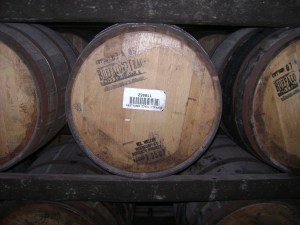 that all whiskey-producing countries have their own terms and laws. Here are some of the most common terms found on whiskey bottles of all types and the most basic definitions I could give them. I have only included terms used for Scotch, American, Irish, Canadian and Japanese whiskies. These are all I can think of for now. I hope it is enlightening. And please give me crap about it if I screw up. That’s what the internet’s all about.
ABV: Alcohol By Volume, in other words, how much of the volume of the liquid in the bottle is taken up by ethanol (the alcohol in alcoholic beverages). This is expressed as a percentage. If I knew more about chemistry, I’m sure I could explain it better. See proof below.
Age Statements: The age statement refers to the time between when the unaged spirit was put into the barrel and when it was removed from the barrel, usually rounded down to the nearest year. When there is an age statement on a bottle of whiskey of any country, the number refers to the age of the youngest whiskey in the bottle. Whiskeys without age statements are described as NAS (No Age Statement). They are usually, but not always, close to the minimum age allowed by law. That is four years old for American straight whiskeys and bonded whiskeys (see below), and three years old for all Scotch, Irish and Canadian whiskies.
Barrel Strength/Cask Strength/Barrel Proof/undiluted: The whiskey has been bottled at the same proof it was when it left the barrel. No water has been added.
Blended Whiskey/Whiskey, a blend: All whiskey-producing countries have their own rules and practices regarding blending.
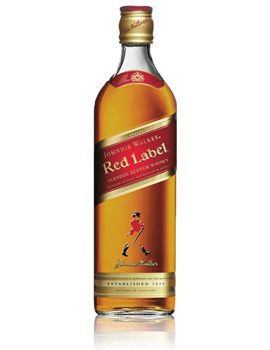
Blended Scotch: A blended Scotch is composed of two components, single malt (usually several of them, see below) and grain whisky (also see below). Generally, the more expensive the blend, the higher the proportion of single malt. If the blend has an age statement, it applies to the grain whisky component as well.
Irish Blends: Irish blended whiskey is usually a blend of whiskey made from malted barley in a pot still and unmalted barley. Generally, the more expensive the blend, the higher the proportion of malt. If the blend has an age statement, it applies to the grain whiskey component as well. Most Irish whiskeys are blends.
Canadian Blends: Canadian Blends are somewhere between Scotch/Irish blends and American blends taste-wise. The grain whisky element is distilled until it is almost, but not entirely, flavorless. The malt component in Scotch/Irish blends is replaced by flavorful whiskies similar to American rye, bourbon and corn whiskeys. Generally, the more expensive the blend, the higher the proportion of flavoring whisky. If the blend has an age statement, it applies to the grain whisky component as well. All but one or two Canadian whiskies are blends. See Canadian Whisky.
American Blends: Most American blends are basically vodka favored with whiskey. Bottles labeled blended bourbon or rye contain a blend of vodka (flavorless neutral spirit) with bourbon or rye. Some newer whiskeys that blend two or more types of whiskey (bourbon with rye, for example) also qualify as blends, but their makers tend to downplay that term since American blends have a bad reputation among enthusiasts. If the blend has an age statement, it applies to the neutral spirit component as well.
Japanese blends: Similar to Scotch blends above.
Blended Malt: Formerly known as vatted malts, blended malt Scotches are blends of multiple single malts. Unlike true blends they contain no grain whiskey element.
Bottled-in-Bond or Bonded: The Bottled-in-Bond law stipulates that any American spirit labeled as such must be at least four years old, bottled at 100 proof (50% ABV), and the product of one distillery in one distilling season. It is mostly used for bourbons, but also for rye and apple brandy and can even be used for vodka or gin. It was intended as a sort of quality control but now some bourbons that qualify as Bottled-in-Bond choose not to use the term because it sounds old fashioned.
Bourbon: An American Whiskey made from at least 51% corn and aged in a new oak barrel that has been charred on the inside. It must be made in the U.S. It does not have to be made in Kentucky, although the vast majority of it is.
Bourbon cask, sherry cask, port cask, etc: Scotch, Irish and similar whiskies are almost always aged in used barrels (casks). The former contents of the cask impart different flavors to the whisky. Most whisky producers use a variety of casks to age their product. Bourbon and sherry are the two most commonly used in Scotland and Ireland.
Canadian Whiskey: Whiskey made in Canada. Almost all of it qualifies as blended by American standards. Like Scotch and Irish, it must be at least three years old. Unlike in the British Isles and the U.S., under Canadian law non-whisky flavoring elements may be added to whisky. These include sherry, port, madeira and other wines, brandy, and even fruit juice. See Canadian Blends above.
Cask Strength: See barrel strength above.
Charcoal Filtered: The whiskey has been filtered through activated charcoal, similar to a home water filter, after aging. Some labels display the words more prominently than others, but most whiskeys are filtered in this way. This is different from charcoal mellowing and in addition to chill-filtering; compare chill-filtering and Tennesee Whiskey below.
Corn Whiskey: An American whiskey made from at least 80% corn (compare bourbon above) and either unaged or aged in a used oak barrel. There is a subtle difference between unaged Corn whiskey, which is meant to be consumed as is, and White Dog (see below) which has been distilled with the intent to be aged at a later date, at least in theory.
Diluted: Any whiskey (or other spirit) that is sold at under 80 proof/40% ABV in the U.S.
Finished: The whiskey has been transferred to a different barrel (or had oak chunks added to the barrel or the like) for a brief time at the end of the aging process. Bourbon and other American whiskeys are allowed to be finished in a used barrel as long as the bottle is labeled as “finished in X barrels” or something to that effect.
Grain Whisky: In the Scotch and Irish whiskey worlds, grain whisky is whisky usually made in a continuous still (as opposed to a pot still) and made from something other than malted barley. Usually it is just whatever grain is cheapest at the time with corn (maize) and wheat being the most common grains used. Grain whisky is typically blended with single malt whisky to produce blended whisky. It is occasionally bottled on its own as a curiosity. The term is not used in American whiskey circles.
Irish: Any whiskey made in Ireland. Traditionally, Irish whiskey is made from malted and/or unmalted barley and distilled three times before aging. By law it must be at least three years old.
Japanese Whisky: Whisky made in Japan. It is made in a similar style to Scotch single malt and blended whisky.
Natural Colo(u)r: No caramel coloring has been added. Adding caramel color is legal for Scotch, Irish, Japanese and Canadian whiskies.
Proof: Now only used for American whiskey. American proof is the ABV doubled. So 50% ABV= 100 proof and so on. American whiskey must be at least 80 proof to be sold in the U.S. Otherwise it must be labeled as diluted.
Pot Still: Implies that the whiskey was at least partially distilled in a pot still as opposed to a continuous still.
Regions: Single malt Scotches are classified according to where they were distilled. There are four traditional regions. These are often mentioned on bottles of Single Malt Scotch. They are Highland, Lowland, Islay and Campbeltown. The Highland region is the largest by far and is subdivided into other regions, like the Islands and Speyside. Speyside is the largest of those in terms of number of distilleries and is itself subdivided into smaller regions like Dufftown and the Livet valley. Region plays a much smaller role in the classification of Irish, Canadian, Japanese and American whiskies.
Reserve: Meaningless marketing term meant to convey the image of extra age or rarity.
Rye: A traditional American whiskey made from at least 51% rye and aged in a new oak barrel that has been charred on the inside. Same goes for other named whiskey types but with their respective grains. Wheat whiskey is at least 51% wheat, American malt whiskey is at least 51% malted barley, and so on.
Scotch: Any whisky made in Scotland. By law, all Scotch whisky must be aged for at least three years in a barrel or cask as it is more commonly called in Scotland. See Single Malt, Blend, Grain Whisky.
Single Barrel/Cask: All the whiskey in the bottle is from one barrel. Most whiskeys are a combination of the contents of different barrels.
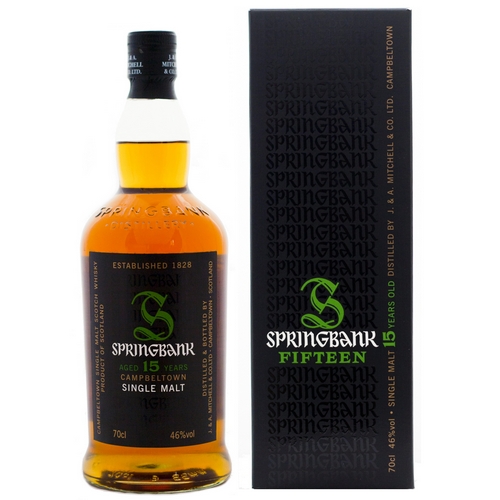
Single Malt: Used for Scotch and Irish whiskies, a single malt is a whisky made from only malted barley in a pot still and is the product of a single distillery. It is usually blended with grain whisky to produce a blended whisky. Single Malts are also bottled on their own, either by the company that owns them or by a private bottler. Single Malt used on a bottle of American whiskey is only an indication that it qualifies as a malt whiskey by American law. Other whiskeys that call themselves Single Malts generally follow the Scotch usage.
Small Batch: From a smaller batch of barrels than bigger selling brands. It’s essentially a meaningless term meant to make the whiskey inside the bottle seem rare and desirable.
Sour Mash: The mash (distiller’s beer) is brought to a low Ph before distilling. Although some whiskey labels display the words more prominently than others, all major American whiskey brands are made using a sour mash.
Straight: American whiskey legal term. Any whiskey that is at least two years old and the product of a single U.S. state may be called straight whiskey. If it is under four years old, the label must bear an age statement.
Tennesee Whiskey/Whisky: Whiskey made in Tennesee. In practice, Tennesee whiskey is very similar to bourbon. It uses a recipe that is identical to a bourbon, but unlike bourbons it undergoes a process of charcoal mellowing, also known as the Lincoln County process. Before barreling, the white dog (see below) is run through a large vat of maple chunk charcoal. This removes some flavor compounds and adds a few others. It is then barreled and aged like bourbon and other straight whiskeys. Tennesee whiskeys could probably be sold as bourbons, but Tennesee whiskey makers prefer to sell it as Tennesee whiskey.
Unfiltered/Unchillfiltered/Non-chill filtered: The whiskey has not undergone a process called chill-filtering in which the whiskey is chilled to around zero degrees Celsius and then filtered. The process is performed after aging and is intended to reduce any haziness that the whiskey may exhibit. Chill-filtering produces a clean-looking spirit that looks good on the store shelf, but the process can also remove some flavor compounds. Whisky producers marketing themselves toward enthusiasts will often not chill filter their products and brag about that fact on the label. Unfiltered also implies that the whiskey has not been filtered through activated charcoal, a common practice (see above).
Vatted Malt: See Blended Malt above.
Wheated Bourbon: This style of bourbon is made with corn, malt and wheat instead of the more usual corn, malt and rye.
Whiskey: A spirit distilled from grain and then (usually) aged in an oak barrel. In layperson’s terms, a whiskey is a beer that has been run through a still. Most whiskeys are then aged in a barrel for a period of time. Whiskey with an e is the preferred spelling in the U.S. and Ireland, although some American brands like Maker’s Mark, Old Forester and George Dickel omit the e. Curiously, U.S. Federal regulations governing whiskey also use the e-less spelling.
Whisky: See whiskey above. Whisky without an e is the preferred spelling in Scotland, Japan and Canada. In spite of what some believe, there is no more difference between whiskey and whisky than there is between labor and labour or color and colour.
White Dog: A term from the American whiskey world meaning a clear spirit that is destined to be aged in barrels and become whiskey. The Scotch equivalent is new make. Many start-up and even established distilleries have been releasing their own white dog recently as a curiosity or to raise some quick cash in the case of the start-ups.
Confused about wine labels? So is everybody else. Check out the simple interactive guide to reading world wine labels from Delish.com here.





 Sipology