My Two Ounces: Suntory, Beam and Marketing

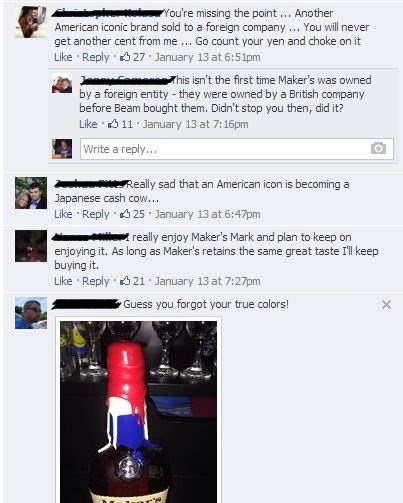
Cap from Maker's Mark Facebook Page
Cap from Maker’s Mark Facebook Page

It was announced earlier this week that Suntory, a privately held Japanese whisky company, will purchase Beam Inc. (owner of Jim Beam, Knob Creek, Old Grand Dad, Maker’s Mark, Laphroaig, Canadian Club, Teacher’s and many other brands) this summer for somewhere between $13 and $16 billion dollars. Online reaction was swift and passionate, to put it kindly. While the response from enthusiasts has been nearly all positive, most of the non-enthusiast response was negative. Much of the negative was xenophobic and some of it was flatly racist. Most of those critical voices can and should be written off as cranks. People claiming that they will no longer drink Maker’s Mark or Jim Beam because their grandfathers fought against the Japanese in the 1940s shouldn’t taken seriously and neither should people who don’t know the difference between China and Japan.

My first reaction was was that this news signals a big restructuring in the spirits industry. It is technically an acquisition, but the result will look more like a merger. Suntory already owned two Japanese distilleries, three single malt distilleries in Scotland and the McClelland’s single malt Scotch brand. With Beam’s holdings, Suntory is poised to become the third largest spirits company in the world behind Diageo and Pernod-Ricard. Consolidation has been the theme of the booze world from the 1930s to the present and that won’t be changing any time soon. Beam Inc. itself is the result of a series of mergers and acquisitions over the past few decades.  As an enthusiast I was excited about the possibility of new ownership of Beam’s brands, especially since the management of some of those brands has been poor in recent years.

Why was the reaction so negative among non-enthusiasts? It’s because they believed what Beam told them.

Bourbon marketing is something that most enthusiasts become immune to quickly. A little knowledge goes a long way to dispel the yarns the bourbon industry spins. Yarns like the one that Jim Beam has been made by the same family with the same recipe since the eighteenth century. Or that Maker’s Mark was first whipped up in Bill Samuel’s kitchen and has been a quaint, family-oriented, backwoods operation ever since. There may be tiny threads of truth in both yarns, but they are not true in any real sense. A few minutes reading a book or searching on the internet is enough to dispel most myths like those. The harder ones might take a few hours. Enthusiasts have the inclination to do that . Most drinkers don’t.

Those drinkers who don’t are the ones who are angry. They’ve grown emotionally attached from years of hearing those myths. Hearing that their favorite little family business is actually a multinational corporation that is about to be swallowed up by another multinational makes them feel like they’ve been played for suckers. Which makes them angry, which makes them look for someone to direct that anger toward, which is where Suntory and Japan come in.

Something that is not a myth is the American-ness of bourbon. By federal and international treaty it can only be made in the U.S. It is mostly made from what we call corn and the rest of the world calls maize, a New World grain, and aged in American white oak. Congressional proclamations have been made about how American bourbon is. Bourbon producers use an appeal to patriotism in their marketing in the U.S. and even overseas advertising and labels themselves stress how American a drink it is. Bourbon producers aren’t the only ones who use this kind of marketing. American automakers have used this angle to sell cars and especially trucks over the years. Like the yarns about the producers themselves, these messages get repeated and work their way into the consciousness of the uncritical whiskey drinkers. For them, drinking becomes a patriotic exercise. What they drink shows how much they love their country. So when they discover that the maker of their patriotic beverage is owned by a Japanese or Italian or British company, they feel, again, played for suckers. Which makes them angry.

Where does this leave us? This whole ugly mess should lead drinkers, producers and their marketers to do more thinking about what they’re doing. The producers need to think about if they are setting themselves up for backlash further down the road with short-sighted marketing focused on myth-making or patriotism. For their part, drinkers (and consumers in general) need to take a little more time to know what they’re drinking, how it’s made and who makes it. This means moving beyond skimming the label, it means picking up a book or at least a few web searches.  I recognize that most people don’t have the time to do a lot of digging into what they drink, but knowledge is viral. If one person take the time to dig up some good information, that person tells another and that person tells another who might be inspired to do a little more digging herself. Let’s hope that’s what’s happening now.

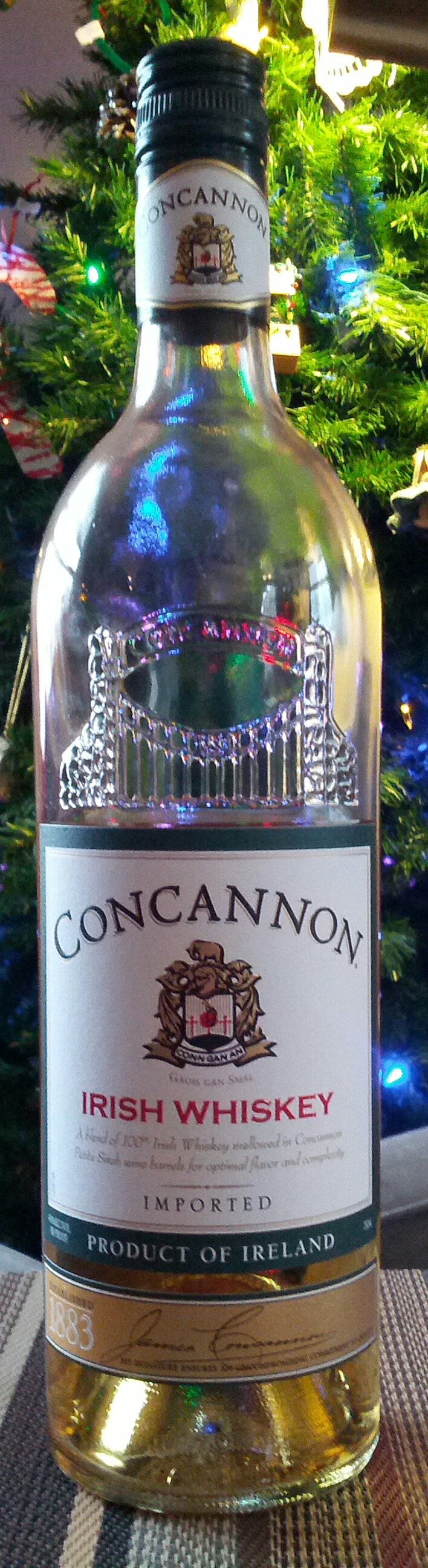
Concannon Irish Whiskey

Maker: Concannon Vineyard, Livermore, California, USA
Concannon Irish Whiskey

Distiller: Cooley, County Louth, Ireland (Beam)

Style: Irish blend finished in Petite Sirah barrels (from Concannon Vineyard of course)

Age: NAS (around 4 y/o)

ABV: 40%

Michigan State Minimum: $23

Appearance: Pale gold.

Nose: Malt, rubber, alcohol, butterscotch, blackberry jam.

On the palate: Full bodied and mildy fruity on entry, mincemeat pie, toffee, burn.

Finish: Malty but still subtly fruity and rich. Drying into a bit more rubber and some burn, but the candied fruit background continues as it fades.

Parting words: Concannon Vineyard is located in Livermore Valley, northeast of Fremont, California. The Livermore Valley AVA is best known as the home of Wente Vineyards, but it also home to a number of other winemakers, obviously. Livermore Valley is a subset of the San Francisco Bay AVA which is itself a subset of the Central Valley AVA. Concannon is notable for bottling the first varietal Petite Sirah in the US (according to their website anyway). Before that, and indeed even after, Petite Sirah was used primarily to beef up red blends.

This whiskey is a tribute to the family’s Irish heritage and its present winemaking ability. It’s a success. It’s clearly young but the wine barrel finishing does a great job of smoothing out the rough edges and giving it added depth. The direct influence of the wine barrel is subtle. There are some vague “dark fruit” tastes on the palate that come through, but little else. If I have complaint about the finishing, it’s that, unlike most finished whiskeys, it’s too subtle. That is refreshing in itself! The rubbery smell isn’t too appealing but it dissipates quickly.

The price is right and the whiskey is too. Concannon Irish Whiskey is recommended.

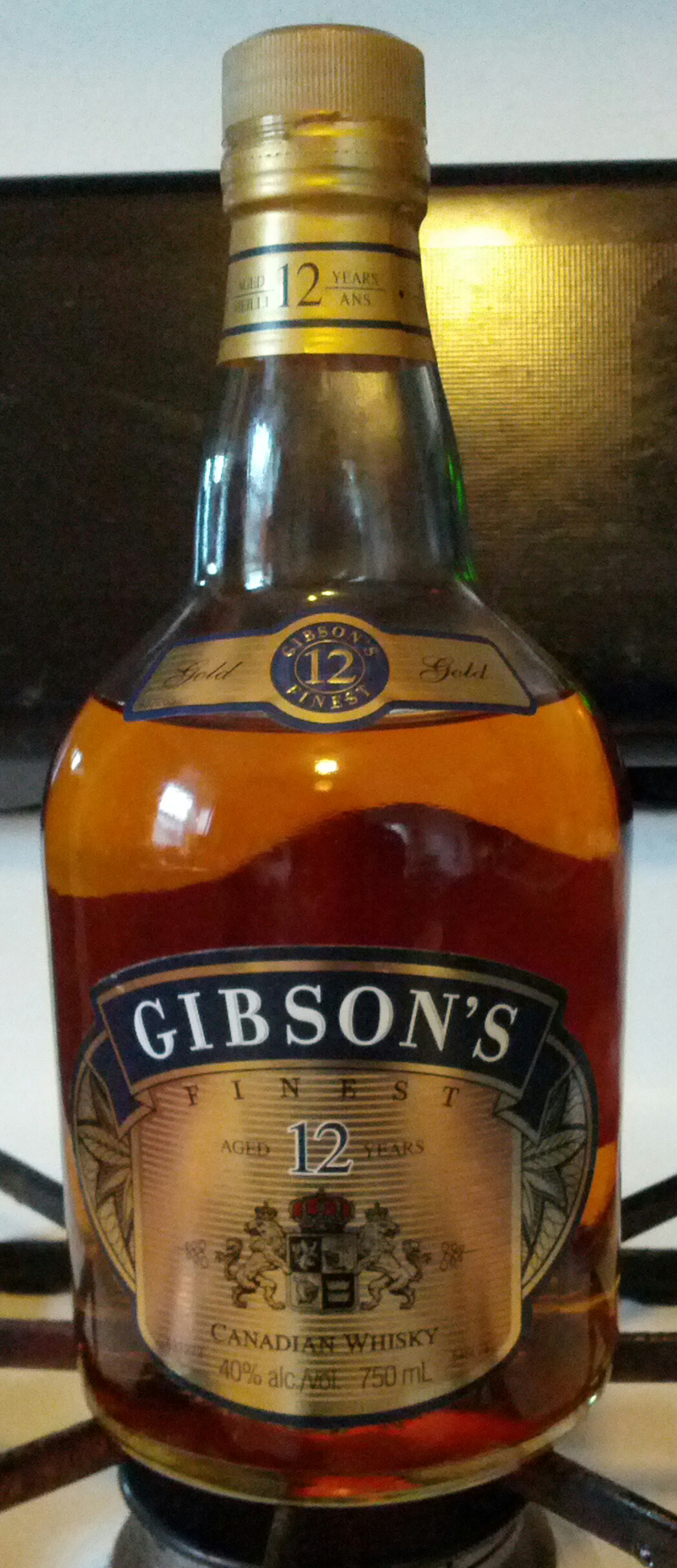
Gibson’s Finest

Maker: Hiram Walker, Windsor, Ontario, Canada (Wm. Grant & Sons.)Gibsons Finest

Age: 12 y/o

Style: Canadian blended whisky

ABV: 40%

Michigan State Minimum: $28

Appearance: Medium gold.

Nose: Spicy and dry. Fresh lumber, chipotle, hay, cardamom.

On the palate: Medium-full bodied and spicy. Butterscotch, red pepper, curry powder.

Finish: Big and buttery with a touch of oak and butterscotch candy. Fades quickly, unfortunately.

Parting words: Gibson’s is an old Schenley brand that has traveled a lot in its long history. For now, it is made at the Walkerville plant in Windsor and belongs to Grant & Sons, Scottish distillers best known for their blended whisky Grant’s and as the owner of the Glenfiddich and Balvenie distilleries. In Canada, an NAS and an 18 y/o version are also available.

At any rate, in its current incarnation, Gibson’s 12 y/o has long been a popular duty-free brand and it’s easy to taste why. Unlike many of its Canadian siblings, it packs a lot of flavor into 40% ABV. It’s bold but not brash, and offers a healthy dose of oak, always a pleasant surprise in a Canadian blend. It’s now available in Michigan at a very reasonable price. Gibson’s Finest is recommended.

Crown Royal

Maker: Crown Royal, Gimli, Manitoba, Canada. (Diageo)Crown-Royal

Style: Blended Canadian Whisky

Age: NAS (at least 3 y/o by Canadian law)

ABV: 40%

Michigan State Minimum: $25/750 ml.

Appearance: Pale copper with some spotty necklacing.

Nose: Harsh and grainy. Burnt creamed corn, a sharp shot of rye, wood varnish.

On the palate: Full-bodied and sweet. Clotted cream, a touch of caramel, slight bite of alcohol and wood tannins.

Finish: Grape Nuts Cereal, a bit of caramel and then it quickly fades.

Mixed: Good with ginger ale and in an Old Fashioned. OK in a Manhattan and in an old cocktail recipe I dug up called a Frontenac (Canadian Whisky, Grand Marnier and bitters). It doesn’t add much to either of the latter, except perhaps some body, but it doesn’t hurt them either.

Parting words: Crown Royal has all the hallmarks of very young whiskey: cereal, full body and sharpness. This is most pronounced in the nose, which is by far the least appealing aspect of this whisky. It borders on nauseating. The rest of it isn’t so bad, just dull.

As a mixing whisky it does well as noted above, but it is hampered by the low proof. There is also a Crown Royal Black at 90 proof that may be a better option for Manhattans and similar cocktails but given the nose, it might not be a bad thing to cover that mess up with mixers.

My biggest beef is the price. $25 is too much for something this young and brash. Canadian Club 100 is $17 and comes in at 50% ABV, and the 12 y/o CC Classic comes in at $23 and sips as well as it mixes. A minor beef is the gaudy, ridiculous bottle and packaging. The bottle resembles something that might contain perfume belonging to an elderly French prostitute and the purple gold trimmed felt sack that it comes in goes right into the garbage as soon as it’s purchased. Overall, Crown Royal is mildly recommended for cocktails, but not recommended as a sipping whisky.

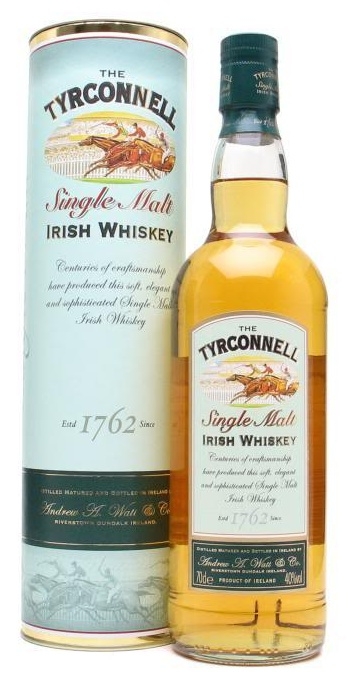
The Tyrconnell Single Malt Irish Whiskey

Maker: Cooley, County Louth, Ireland

Age: NAS

ABV: 40%

Appearance: Dark straw with long voluptuous legs.

Nose: Papaya, creme brulee, mandarin orange, alcohol

On the palate: Full-bodied and sweet. Hot, but sexy. Lots of fruit. Apricot sherbet, custard, tropical fruit salad, vanilla. Water brings out a new rubber tire. Don’t add water.

Finish: Fairly hot, with a lot of sherry. Faint fruit in the distant background and some oak.

Parting words: This is a whiskey I have gone back and forth on in the several months in which I’ve had it. As I am nearing the end of the bottle, I’m enjoying it more. The fruity dessert notes have won out. Sometimes it just tastes too hot (puzzling for something at 40% ABV), so one is tempted to add water to the whiskey. But bad things happen when water is added. Foul, over-sherried rubber tire scents and flavors dominate and turn a sexy whiskey into a day at the tire store.

If I were to sum it up, it’s like a grown up version of Jameson. Not as floral but just as light and sweet with the added complexity one would expect from a single malt Irish. Recommended.

Wiser’s De Luxe

Maker: Corby, Corbyville, Ontario, Canada

Distilled: Hiram Walker, Windsor, Ontario, Canada (Pernod-Ricard) (?)

Age: NAS

ABV: 40%

Appearance: Pale gold

Nose: Curry, sherry, horseradish.

On the palate: Medium-bodied. Ginger, coriander seed, mace.

Finish: Big sherry hit, followed by lingering sweetness and burn.

Parting words: Wiser’s De Luxe is what they call a grower. I found the agressive sherry and spice in the nose to be off-putting at first. But after a few months of drinking this, I’m at the point where I like it. It’s still rough around the edges, as any whisky this age is likely to be. But it has much more sherry and rye character than the competition. This is a nice, entry level Canadian whisky that also does well in soft drinks, particularly ginger ale. Wiser’s De Luxe is recommended.

Bushmills Irish Whiskey

Maker: Old Bushmills Distillery, Co. Antrim, Northern Ireland (Diageo)

Age: NAS

ABV: 40%

Appearance: Burnt Orange, with a thick, clingy pearl necklace around the glass.

Nose: Tropical fruit salad. Papaya, pear, vanilla.

On the palate: Full-bodied, but light in flavor. Well-balanced between malty, floral flavors and heavy caramel ones.

Finish: Light and slightly sweet with a hint of vanilla. A little burn gives the finish some backbone.

Parting words: There’s an urban legend that only Irish Catholics drink Jameson and only Irish Protestants drink Bushmills. Any true Irish whiskey lover of any religion drinks whatever whiskey they like. So yes, it’s ok to drink Bushmills on St. Patrick’s day.

Compared to its peers, Bushmills strikes a balance between the floral tastes and aromas of Jameson and the relatively heavy caramel, grain whiskey flavors of Powers. Bushmills has a nice balance to it and avoids being dull like Tullamore. Bushmills won’t get mistaken for an upper shelf whiskey, but on the whole, it’s better than its peers. Bushmills is recommended.

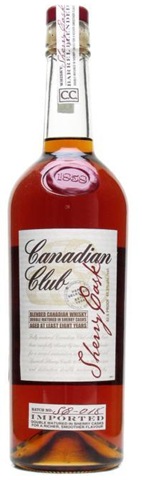
Canadian Club Sherry Cask

Maker: Some distillery or distilleries in Canada (Beam Inc.)

Age: 8 y/o

Style: Canadian Whisky finished in a sherry cask.

ABV: 41.3%

Appearance: Dark copper with thick legs. Like a tanned figure-skater.

Nose: Big, bold sherry flavors. Wood, butterscotch, caramel.

On the palate: Hot, but thick. Some sweet butterscotch candy, light fino sherry flavors, and caramel again.

Finish: Hot, but mitigated by the fruity sherry sweetness. Disappears fairly quickly in unfortunate Canadian Whisky tradition.

Parting words: This is an unusual whisky. The closest thing I can compare it to would be a super sherried single malt Scotch like Abelour A’bunadh. The sherry influence is very strong. Sometimes I think it’s too strong, sometimes I like the fact that the typical Canadian Club notes don’t come through. It works best as an after-supper sip. I didn’t have much left when I reviewed it, but I did have enough to try it in a Manhattan. It didn’t perform as well as a high-rye bourbon or rye but the sherry added an interesting twist to the drink. Canadian Club Sherry Cask gets a recommendation.

Canadian Club

Maker: Some distillery or distilleries in Canada (Beam Inc.)

Age: 6 y/o

ABV: 40%

Appearance: Copper with thick sticky legs.

Nose: Very faint maple sugar, alcohol, sherry, table grapes, a bit of oak.

On the palate: Full-bodied but very light in flavor. Sweet, with some wood, nutmeg and clove as a counterpoint.

Finish: Very long finish. Mostly hot, but with a bit of sweetness punctuated with solera sherry and sugar plum flavors.

Mixed: Does pretty well in an Old Fashioned. Lacks the punch and flavor to pull off a whisky sour.

Parting Words: I didn’t expect this to be too good, based on my past experience and honestly it wasn’t. My aim in reviewing Canadian Club was to establish a baseline for tasting Canadian whiskies. It works for that purpose. When it comes to taste, it’s not too bad but the nose is almost non-existent and the finish isn’t much better. All that said, it’s cheap, available in all sizes and does what it sets out to do. Canadian Club gets a mild recommendation.

My Two Ounces: What’s that mean? Whiskey Edition

All disciplines and hobbies have their own set of lingo. The world of whiskey is no exception. What makes this even more confusing is that all whiskey-producing countries have their own terms and laws. Here are some of the most common terms found on whiskey bottles of all types and the most basic definitions I could give them. I have only included terms used for Scotch, American, Irish, Canadian and Japanese whiskies. These are all I can think of for now. I hope it is enlightening. And please give me crap about it if I screw up. That’s what the internet’s all about.
ABV: Alcohol By Volume, in other words, how much of the volume of the liquid in the bottle is taken up by ethanol (the alcohol in alcoholic beverages). This is expressed as a percentage. If I knew more about chemistry, I’m sure I could explain it better. See proof below.

Age Statements: The age statement refers to the time between when the unaged spirit was put into the barrel and when it was removed from the barrel, usually rounded down to the nearest year. When there is an age statement on a bottle of whiskey of any country, the number refers to the age of the youngest whiskey in the bottle. Whiskeys without age statements are described as NAS (No Age Statement). They are usually, but not always, close to the minimum age allowed by law. That is four years old for American straight whiskeys and bonded whiskeys (see below), and three years old for all Scotch, Irish and Canadian whiskies.

Barrel Strength/Cask Strength/Barrel Proof/undiluted: The whiskey has been bottled at the same proof  it was when it left the barrel. No water has been added.

Blended Whiskey/Whiskey, a blend: All whiskey-producing countries have their own rules and practices regarding blending.

Blended Scotch: A blended Scotch is composed of two components, single malt (usually several of them, see below) and grain whisky (also see below). Generally, the more expensive the blend, the higher the proportion of single malt. If the blend has an age statement, it applies to the grain whisky component as well.

Irish Blends: Irish blended whiskey is usually a blend of whiskey made from malted barley in a pot still and unmalted barley. Generally, the more expensive the blend, the higher the proportion of malt. If the blend has an age statement, it applies to the grain whiskey component as well. Most Irish whiskeys are blends.

Canadian Blends: Canadian Blends are somewhere between Scotch/Irish blends and American blends taste-wise. The grain whisky element is distilled until it is almost, but not entirely, flavorless. The malt component in Scotch/Irish blends is replaced by flavorful whiskies similar to American rye, bourbon and corn whiskeys. Generally, the more expensive the blend, the higher the proportion of flavoring whisky. If the blend has an age statement, it applies to the grain whisky component as well. All but one or two Canadian whiskies are blends. See Canadian Whisky.

American Blends: Most American blends are basically vodka favored with whiskey. Bottles labeled blended bourbon or rye contain a blend of vodka (flavorless neutral spirit) with bourbon or rye. Some newer whiskeys that blend two or more types of whiskey (bourbon with rye, for example) also qualify as blends, but their makers tend to downplay that term since American blends have a bad reputation among enthusiasts. If the blend has an age statement, it applies to the neutral spirit component as well.

Japanese blends: Similar to Scotch blends above.

Blended Malt: Formerly known as vatted malts, blended malt Scotches are blends of multiple single malts. Unlike true blends they contain no grain whiskey element.

Bottled-in-Bond or Bonded: The Bottled-in-Bond law stipulates that any American spirit labeled as such must be at least four years old, bottled at 100 proof (50% ABV), and the product of one distillery in one distilling season. It is mostly used for bourbons, but also for rye and apple brandy and can even be used for vodka or gin. It was intended as a sort of quality control but now some bourbons that qualify as Bottled-in-Bond choose not to use the term because it sounds old fashioned.

Bourbon: An American Whiskey made from at least 51% corn and aged in a new oak barrel that has been charred on the inside. It must be made in the U.S. It does not have to be made in Kentucky, although the vast majority of it is.

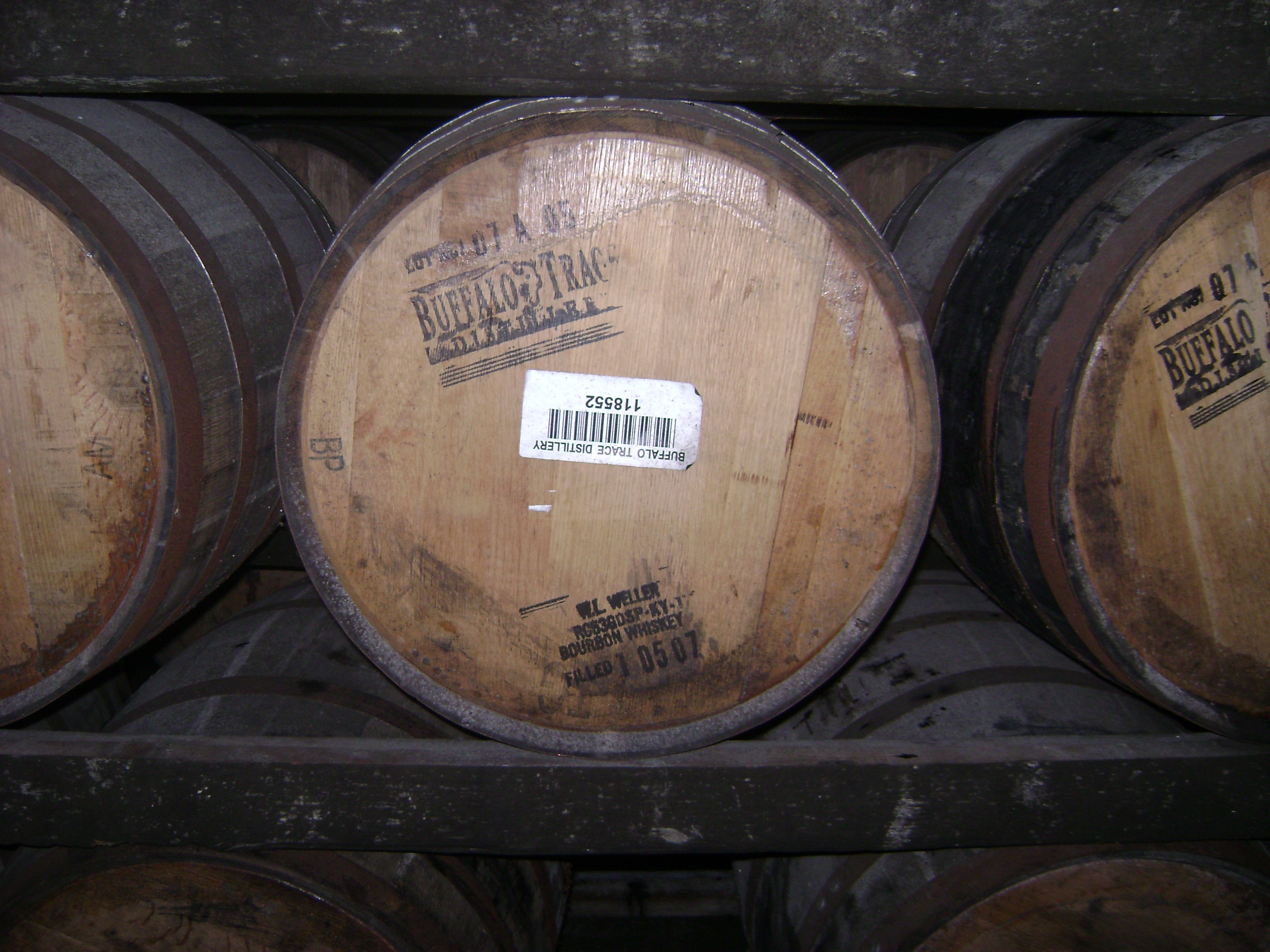
Bourbon cask, sherry cask, port cask, etc: Scotch, Irish and similar whiskies are almost always aged in used barrels (casks). The former contents of the cask impart different flavors to the whisky. Most whisky producers use a variety of casks to age their product. Bourbon and sherry are the two most commonly used in Scotland and Ireland.

Canadian Whiskey: Whiskey made in Canada. Almost all of it qualifies as blended by American standards. Like Scotch and Irish, it must be at least three years old. Unlike in the British Isles and the U.S., under Canadian law non-whisky flavoring elements may be added to whisky. These include sherry, port, madeira and other wines, brandy, and even fruit juice. See Canadian Blends above.

Cask Strength: See barrel strength above.

Charcoal Filtered: The whiskey has been filtered through activated charcoal, similar to a home water filter, after aging. Some labels display the words more prominently than others, but most whiskeys are filtered in this way. This is different from charcoal mellowing and in addition to chill-filtering; compare chill-filtering and Tennesee Whiskey below.

Corn Whiskey: An American whiskey made from at least 80% corn (compare bourbon above) and either unaged or aged in a used oak barrel. There is a subtle difference between unaged Corn whiskey, which is meant to be consumed as is, and White Dog (see below) which has been distilled with the intent to be aged at a later date, at least in theory.

Diluted: Any whiskey (or other spirit) that is sold at under 80 proof/40% ABV in the U.S.

Finished: The whiskey has been transferred to a different barrel (or had oak chunks added to the barrel or the like) for a brief time at the end of the aging process. Bourbon and other American whiskeys are allowed to be finished in a used barrel as long as the bottle is labeled as “finished in X barrels” or something to that effect.

Grain Whisky: In the Scotch and Irish whiskey worlds, grain whisky is whisky usually made in a continuous still (as opposed to a pot still) and made from something other than malted barley. Usually it is just whatever grain is cheapest at the time with corn (maize) and wheat being the most common grains used. Grain whisky is typically blended with single malt whisky to produce blended whisky. It is occasionally bottled on its own as a curiosity. The term is not used in American whiskey circles.

Irish: Any whiskey made in Ireland. Traditionally, Irish whiskey is made from malted and/or unmalted barley and distilled three times before aging. By law it must be at least three years old.

Japanese Whisky: Whisky made in Japan. It is made in a similar style to Scotch single malt and blended whisky.

Natural Colo(u)r: No caramel coloring has been added. Adding caramel color is legal for Scotch, Irish, Japanese and Canadian whiskies.

Proof: Now only used for American whiskey. American proof is the ABV doubled. So 50% ABV= 100 proof and so on. American whiskey must be at least 80 proof to be sold in the U.S. Otherwise it must be labeled as diluted.

Pot Still: Implies that the whiskey was at least partially distilled in a pot still as opposed to a continuous still.

Regions: Single malt Scotches are classified according to where they were distilled. There are four traditional regions. These are often mentioned on bottles of Single Malt Scotch. They are Highland, Lowland, Islay and Campbeltown. The Highland region is the largest by far and is subdivided into other regions, like the Islands and Speyside. Speyside is the largest of those in terms of number of distilleries and is itself subdivided into smaller regions like Dufftown and the Livet valley. Region plays a much smaller role in the classification of Irish, Canadian, Japanese and American whiskies.

Reserve: Meaningless marketing term meant to convey the image of extra age or rarity.

Rye: A traditional American whiskey made from at least 51% rye and aged in a new oak barrel that has been charred on the inside. Same goes for other named whiskey types but with their respective grains. Wheat whiskey is at least 51% wheat, American malt whiskey is at least 51% malted barley, and so on.

Scotch: Any whisky made in Scotland. By law, all Scotch whisky must be aged for at least three years in a barrel or cask as it is more commonly called in Scotland. See Single Malt, Blend, Grain Whisky.

Single Barrel/Cask: All the whiskey in the bottle is from one barrel. Most whiskeys are a combination of the contents of different barrels.

Single Malt: Used for Scotch and Irish whiskies, a single malt is a whisky made from only malted barley in a pot still and is the product of a single distillery. It is usually blended with grain whisky to produce a blended whisky. Single Malts are also bottled on their own, either by the company that owns them or by a private bottler. Single Malt used on a bottle of American whiskey is only an indication that it qualifies as a malt whiskey by American law. Other whiskeys that call themselves Single Malts generally follow the Scotch usage.

Small Batch: From a smaller batch of barrels than bigger selling brands. It’s essentially a meaningless term meant to make the whiskey inside the bottle seem rare and desirable.

Sour Mash: The mash (distiller’s beer) is brought to a low Ph before distilling. Although some whiskey labels display the words more prominently than others, all major American whiskey brands are made using a sour mash.

Straight: American whiskey legal term. Any whiskey that is at least two years old and the product of a single U.S. state may be called straight whiskey. If it is under four years old, the label must bear an age statement.

Tennesee Whiskey/Whisky: Whiskey made in Tennesee. In practice, Tennesee whiskey is very similar to bourbon. It uses a recipe that is identical to a bourbon, but unlike bourbons it undergoes a process of charcoal mellowing, also known as the Lincoln County process. Before barreling, the white dog (see below) is run through a large vat of maple chunk charcoal. This removes some flavor compounds and adds a few others. It is then barreled and aged like bourbon and other straight whiskeys. Tennesee whiskeys could probably be sold as bourbons, but Tennesee whiskey makers prefer to sell it as Tennesee whiskey.

Unfiltered/Unchillfiltered/Non-chill filtered: The whiskey has not undergone a process called chill-filtering in which the whiskey is chilled to around zero degrees Celsius and then filtered. The process is performed after aging and is intended to reduce any haziness that the whiskey may exhibit. Chill-filtering produces a clean-looking spirit that looks good on the store shelf, but the process can also remove some flavor compounds. Whisky producers marketing themselves toward enthusiasts will often not chill filter their products and brag about that fact on the label. Unfiltered also implies that the whiskey has not been filtered through activated charcoal, a common practice (see above).

Vatted Malt: See Blended Malt above.

Wheated Bourbon: This style of bourbon is made with corn, malt and wheat instead of the more usual corn, malt and rye.

Whiskey: A spirit distilled from grain and then (usually) aged in an oak barrel. In layperson’s terms, a whiskey is a beer that has been run through a still. Most whiskeys are then aged in a barrel for a period of time. Whiskey with an e is the preferred spelling in the U.S. and Ireland, although some American brands like Maker’s Mark, Old Forester and George Dickel omit the e. Curiously, U.S. Federal regulations governing whiskey also use the e-less spelling.

Whisky: See whiskey above. Whisky without an e is the preferred spelling in Scotland, Japan and Canada. In spite of what some believe, there is no more difference between whiskey and whisky than there is between labor and labour or color and colour.

White Dog: A term from the American whiskey world meaning a clear spirit that is destined to be aged in barrels and become whiskey. The Scotch equivalent is new make. Many start-up and even established distilleries have been releasing their own white dog recently as a curiosity or to raise some quick cash in the case of the start-ups.

Confused about wine labels? So is everybody else. Check out the simple interactive guide to reading world wine labels from Delish.com here.