Sunday Sour Sunday

Maker: Odd Brothers, Homer, Michigan, USA
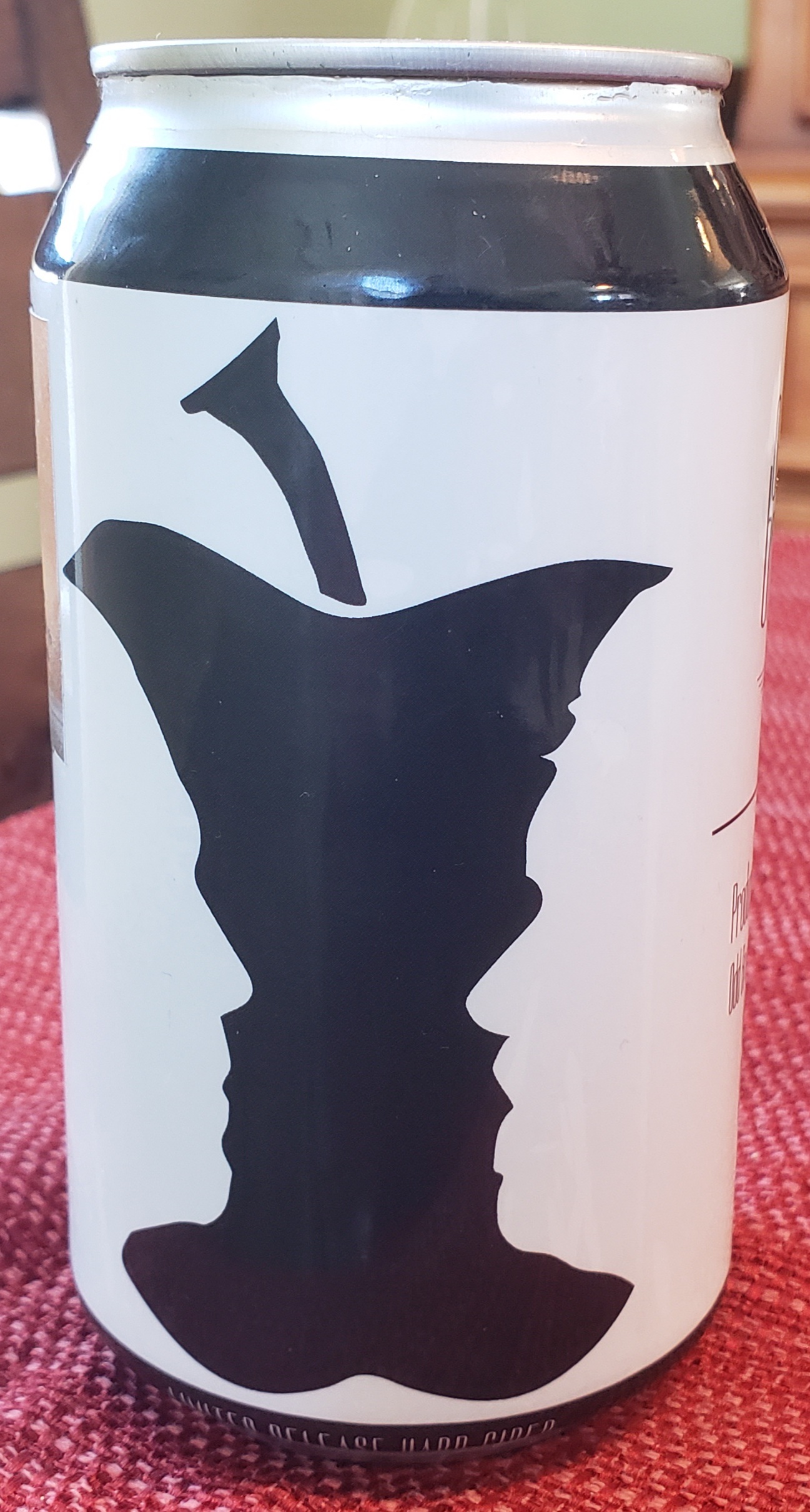
Style: Apple cider with Concord grape juice.

ABV: 6.5%

Purchased for: I don’t remember at the Royal Oak Farmer’s Market.

Appearance: Dark burgundy with light carbonation.

Nose: Concord grape juice.

Palate: Medium-bodied. Tangy and grapey.

Finish: Foxy, sour.

Parting words: One Saturday morning a few months ago there was a booth at the Royal Oak Farmer’s market sellin Odd Brothers cider. I had never heard of the place before, so I walked up to the young man there and asked him to tell me about the ciders he was selling. He told me to look at the sign and that would tell me what they all were. I then asked him where the cidery was located. He gave me a vague description of where it was. So I found one on the wall, bought a four pack and left.

What Odd Brothers lacks in sales patter, they make up for in creativity. They don’t really have a classic dry or semi-dry cider, what they do have is a wide variety of (naturally) flavored ciders. They use everything from the more traditional fruit juices and cinnamon to marshmallow fluff, green tea, and spruce.

Sunday, Sour, Sunday is one of their least odd combos, but it’s tasty and proof that they can play it more or less straight when they want to. This cider lives up to its name delivering a lot of mouth-puckering tartness on par with a sour ale. While it isn’t exactly sessionable, it’s a nice change of pace from the dry or funky ciders I usually seek out. I don’t remember what I paid for it but I don’t recall thinking “it better be life-changing at this price,” so it couldn’t be too bad. Sunday, Sour Sunday is recommended.

Gelas Selection

Maker: Gelas, Vic-Fezenac, Gers, Ocittania, France (negociant)

Region: Bas-Armagnac

Age: 3-5 y/o (according to website)

ABV: 40%

Purchased for $45 (Vine & Table)

Appearance: Dark copper.

Nose: French oak, anise, leather, horehound, red pepper.

Palate: Full-bodied and sweet. Caramel, white chocolate, crushed pink peppercorns.

Finish: Red licorice, caramel, black licorice.

Parting words: Maison Gelas is a 150 year old Armagnac negociant. It’s located in Vic-Fezenac, a small town most notable for being one of the few places in France where bullfighting still takes place and for being the birthplace of current French Prime Minister Jean Castex, whose politics this blog does not endorse.

As far as I can tell, this brandy is Gelas’s entry level Armagnac. It’s not quite a VO, not quite a VSOP, but makes for a decent weeknight sipper. The nose is good, and it’s inoffensive and easy to drink, but it lacks the rustic, floral character that Armagnac is known for. I suspect that it has relatively high amounts of caramel, sugar and possibly boisé (although it’s rare in Armagnac). If they would ease off the sugar a bit, I might enjoy this blend more, even if it might taste less refined. As it is, it’s ok, but there are better values at just a few dollars more. Gelas Selection is mildly recommended.

Kirkland Signature Islay Single Maly Scotch Whisky

Source: Alexander Murray & Co, Calabasas, California, USA.

Distillery: Undisclosed (Bruichladdich?)

Region: Islay.

Age: NAS

ABV: 50%

Michigan state minimum: $57

Appearance: Light gold.

Nose: Smoldering peat. Smells like a smoky custard with water.

Palate: Full and silky. Smoke, dark chocolate covered cherries, caramel. Water brings out buttery toffee.

Finish: Cigarette smoke up the nose, ash, peat, lip tingles. Very buttery with water.

Parting words: Alexander Murray & Co is an US based independent bottler that provides store branded spirits for Costco, Trader Joe’s, Total Wine, and other US retailers. I’ve really enjoyed many of their Kirkland Signature (Costco) bottlings, especially the blended Scotch and Irish Whiskey.

The Islay Single Malt is relatively new, at least at my local store. The online scuttlebutt is that it’s from Bruichladdie, but there’s been no confirmation of that. Having tasted this bottle next to a Port Charlotte bottling, there is definitely a family resemblance, but the PC is a little more rounded and sweet.

The biggest difference between Kirkland Signature Islay and whiskies put out under the Bruichladdich and Port Charlotte labels is the price. $57 is a very nice price for a Single Malt of this quality. If you’re looking for a smoky malt to put into your Burns’ Night lineup, this is an excellent choice. Kirkland Signature Islay Single Malt Scotch Whisky is recommended.

Cody Kresta Marsanne-Roussanne, 2018

Maker: Cody Kresta, Mattawan, Michigan, USA

Grapes: Marsanne (60%), Roussanne (40%).

Place of origin: Lake Michigan Shore AVA.

Vintage: 2018

ABV: 12% (I think)

Purchased for $23 (Michigan by the Bottle wine club)

Appearance: Gold.

Nose: Dried apricot, canned peach, lychee.

Palate: Full-bodied and dry. Fresh apricot, dried mango.

Finish: Dry and a little chewy.

Parting words: Cody Kresta is a winery I need to drink more from. I think one reason I haven’t is that I get it confused with another winery in the same area with a similar name that I visited once and was unimpressed with.

Syrah is one of the best kept secrets of Southwestern Michigan. If quality Syrah can be produced there, then why not Marsanne and Roussanne, the signature white grape varieties of the Northern Rhone valley? Friends of the Blog Domaine Berrien produce a fine Marsanne and have for years, so it shouldn’t come as too much of a surprise for Cody Kresta to produce this blend.

They produce it very well. I haven’t had enough white Rhone wine, so I can’t make an informed comparison, but I can say that this is a good wine on its own terms. It a nice change of pace from the unoaked Chards and semi-dry Rieslings that make up the majority of my white wine consumption. $23 is more than fair, factoring in the rarity of this sort of blend in Michigan. Cody Kresta Marsanne-Roussanne is recommended.

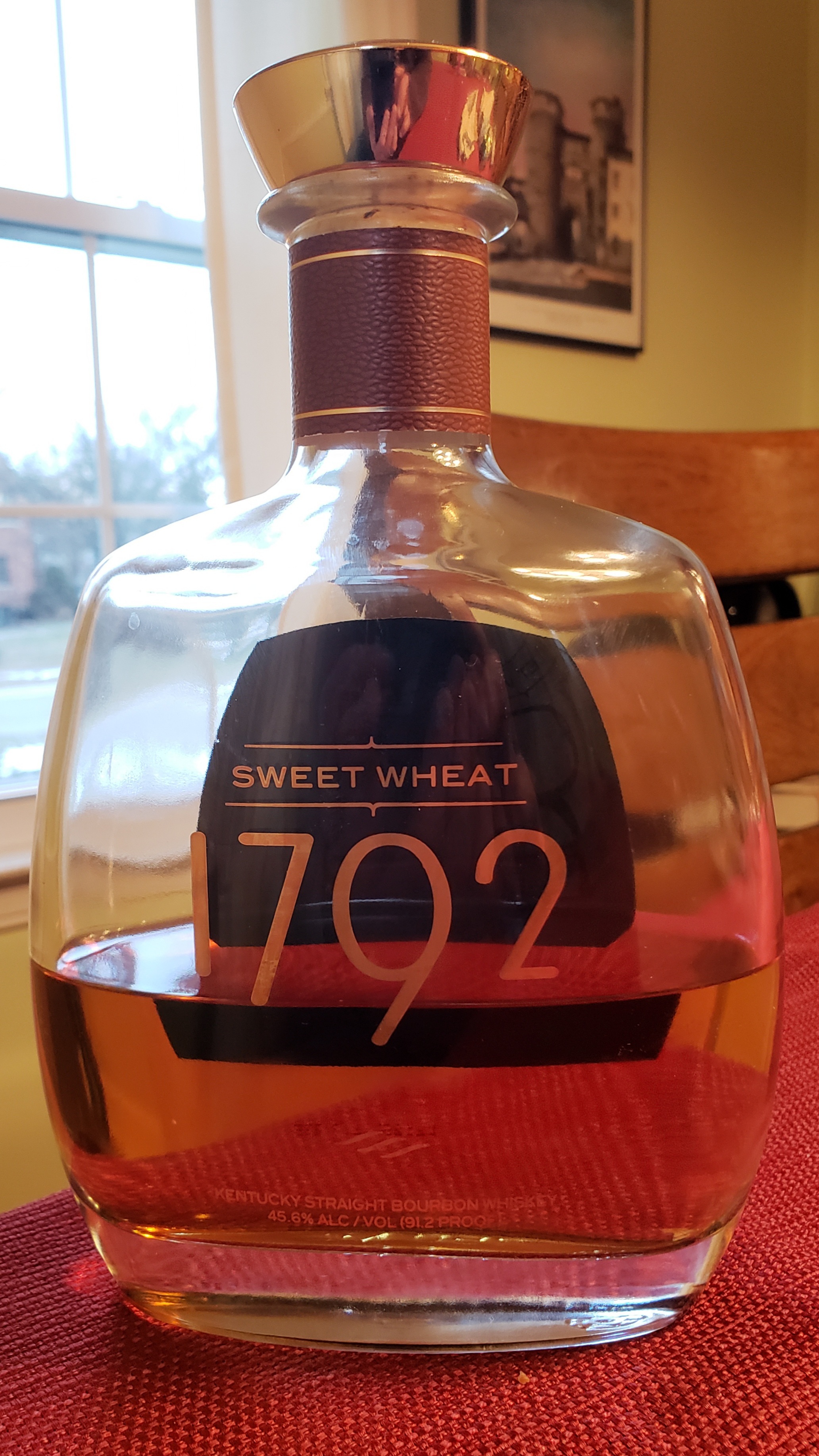
1792 Sweet Wheat

Maker: Barton 1792, Bardstown, Kentucky, USA (Sazerac)

Style: Wheated Straight Bourbon

Age: NAS (at least 4 y/o)

Proof: 91.2 (45.6% ABV)

Michigan state minimum: $36 (listed as “SWEAT WHEAT”)

Appearance: Medium copper.

Nose: Alcohol, vanilla, apricot, char.

Palate: Full bodied and sweet. Crème brûlée with apricot and vanilla bean.

Finish: Short and drying.

Parting words: 1792 Sweet Wheat is an extension of the 1792 Bourbon line of (originally) high malt bourbons. It is presumed by people who have looked into these sorts of things (like me) that it is the same recipe as the old Kentucky Tavern bourbons. Constellation took this recipe and used it to create 1972 back when it owned the Barton Distillery. When Sazerac bought the distillery, they gave the bottle a makeover and created a number of line extensions, the most successful of which have been the barrel proof and single barrel expressions.

Sweet Wheat is a different beast from those, though, because the recipe has been changed. The rye has been swapped out for wheat, putting it into the same category as Maker’s Mark, Larceny, Weller, and the notorious Van Winkle bourbons. It fits somewhere between Maker’s and Larceny/Old Fitzgerald in terms of flavor. It’s not as delicate as Maker’s and Weller, but not quite as sharp and yeast-driven as the Heaven Hill wheaters. I like it a lot at $36, but I like it less at what I paid for it.

If you can find it for <$45, buy it. Any more than that, and you’re overpaying. 1792 Sweat, err Sweet, Wheat is recommended.

Verterra Malbec, 2016

Maker: Verterra Winery, Leland, Michigan, USA

Grape: Malbec (at least 85%)

Place of origin: Leelanau AVA, Michigan, USA (at least 85%)

Vintage: 2016

ABV: Undisclosed (Table wine loophole)

Purchased for $40 (Michigan by the Bottle, Royal Oak).

Appearance: Brick red.

Nose: Plum, clove, leather, blueberry.

Palate: Medium-bodied and well-balanced. Plum, blackberry, black raspberry, allspice, white pepper.

Finish: Drying and a little chewy, but still with lots of fruit. Acid faded as the bottle was open.

Parting words: Verterra has made a name for itself as a major (by Northwest Michigan standards) producer of red and rosé wine. It’s one of the few wineries in the state that produces a varietal Malbec, an old Bordeaux variety that is most famously grown in Argentina.

Malbec is not a variety I regularly seek out. It’s too often indistinguishable from its close cousins Merlot and Cabernet Franc. Those two are easier to find, so why bother? This one is worth seeking out, though. It has the fruit of a Merlot, but perfectly balanced with spice and tannin. This balance makes it more than just a home-cooked steak or burger wine, but one that quickly becomes the star of any meal or event it’s a part of.

At $40, it’s not cheap, but it turns into a bargain after a few years in the cellar. The 2017s and 2020s should be even more cellar worthy than this vintage, too! 2016 Verterra Malbec is highly recommended.

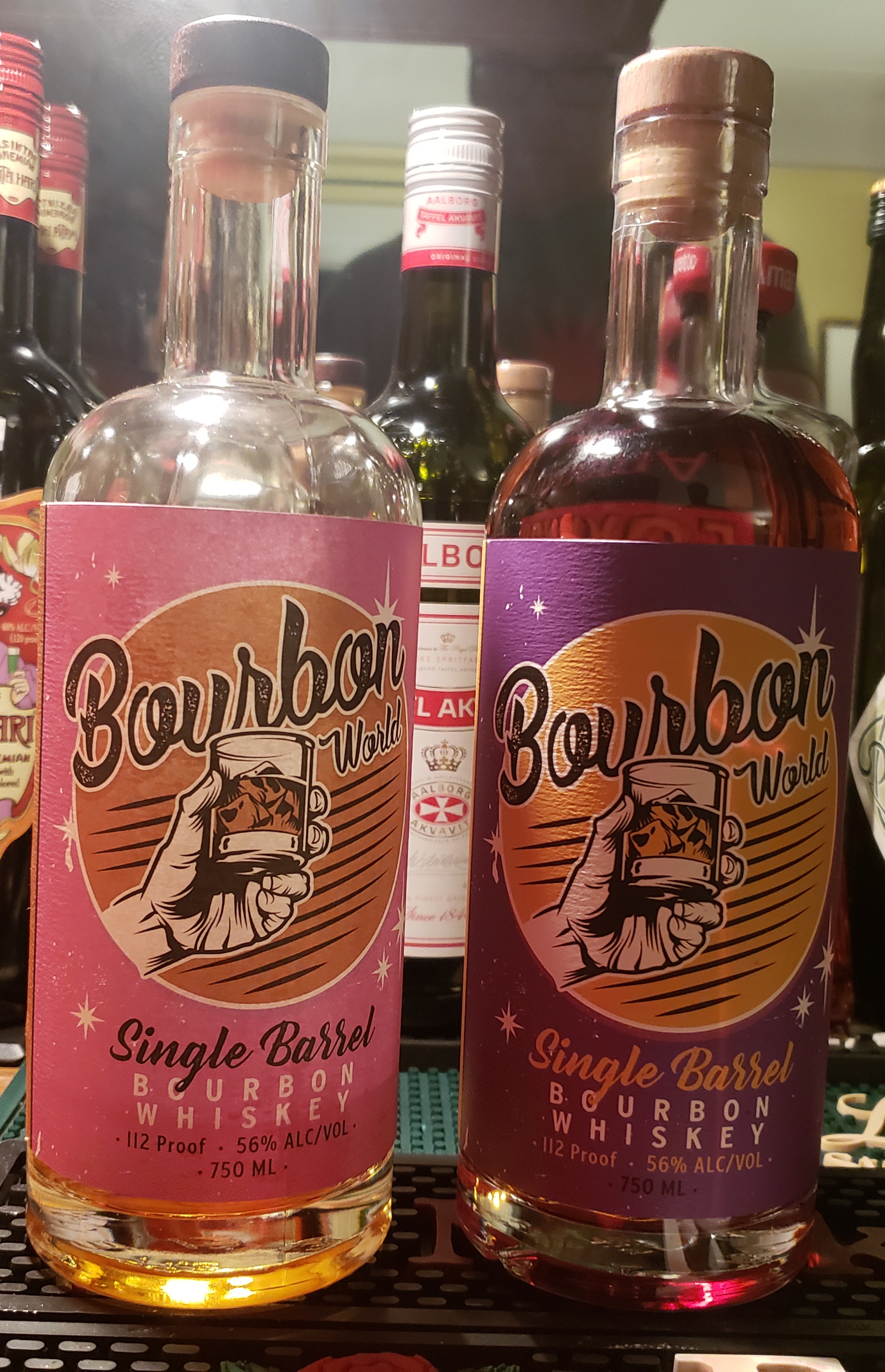
Head to head tasting: Bourbon World vs Bourbon World.

Sourced by: Krogman’s, Bloomington, Indiana, USA. For Vine & Table, Carmel, Indiana.

Distilled by Ross & Squibb (MGPI), Lawrenceburg, Indiana, USA

Pi= Pink label, Pu= Purple label

Style

Pi: High rye bourbon (60% corn, 36% rye, 4% malt)

Pu: Single barrel, standard recipe bourbon (75% corn, 21% rye, 4% malt)

Age: 5 y/o

Proof: 112 (56% ABV)

Purchased for $40 (Vine & Table)

Appearance

Pi: Light copper.

Pu: Slightly darker.

Nose

Pi: Bubble gum, alcohol.

Pu: Grape juice, spiced plum.

Palate

Pi: Full-bodied and fruity, with nutmeg and burn. Spicier and dryer with water.

Pu: Lighter with caramel and char. Water brings out cherry pie.

Finish

Pi: Allspice, clove

Pu: plums and burn.

Parting words: Bourbon World is the relatively new line of V & T selections of Ross & Squib (formerly MGPI), single barrel, barrel proof (or close to it) bourbons. The person I talked to at the store said they were “very similar” mash bills, but as you can see, they are not. The Pink Label is high rye, and the purple is lower in rye and higher in corn, though it doesn’t quite qualify as high corn, like the Buffalo Trace rye bourbon recipes. Interestingly (but not surprisingly given R & S’s and Four Roses’ shared Seagram’s heritage), Pink Label is very close to the mash bill of Four Roses’ B recipe bourbons and Purple is very close to the E recipe.

Vine & Table is one of the retailers that I will always buy a selection from. They very rarely, if ever, miss. One of the reasons for that is their spirits buyer, Dave Helt. I don’t know Dave especially well, but I was friends with his father, Tom (and I’m still friends with his mother Barb). Tom Helt was the embodiment of the spirit of the pre-boom bourbon enthusiast community. He was relatively tall, had a bushy beard before it was cool, and was legendarily generous. His palate was amazing, and his basement was a magical land of bourbons and Scotches that most people can only dream about now. In these days of the still-overheated bourbon secondary market, the value of his collection would be easily in the millions of dollars, maybe even higher. He, of course didn’t PAY millions of dollars for it, given when he started collecting. Tom was also well known for dry sense of humor and for making George T. Stagg Bananas Foster for the bourbon pilgrims who used to gather at the General Nelson motel in Bardstown, Kentucky twice a year. Sadly, Tom died of cancer in 2018.

Like I said, Tom’s palate and generosity were legendary and those qualities were passed down to his son Dave. These bourbons are both excellent examples of the R & S style , one that is very similar to that of my beloved Four Roses. If you don’t believe me, you can always try a little at V & T’s in-store tasting bar. You could even do your own head to head. I know Tom would be very proud of the bourbons Dave is bringing to V & T. At $40, these are easy buys. Bourbon World Purple label is recommended and the Pink label is highly recommended.

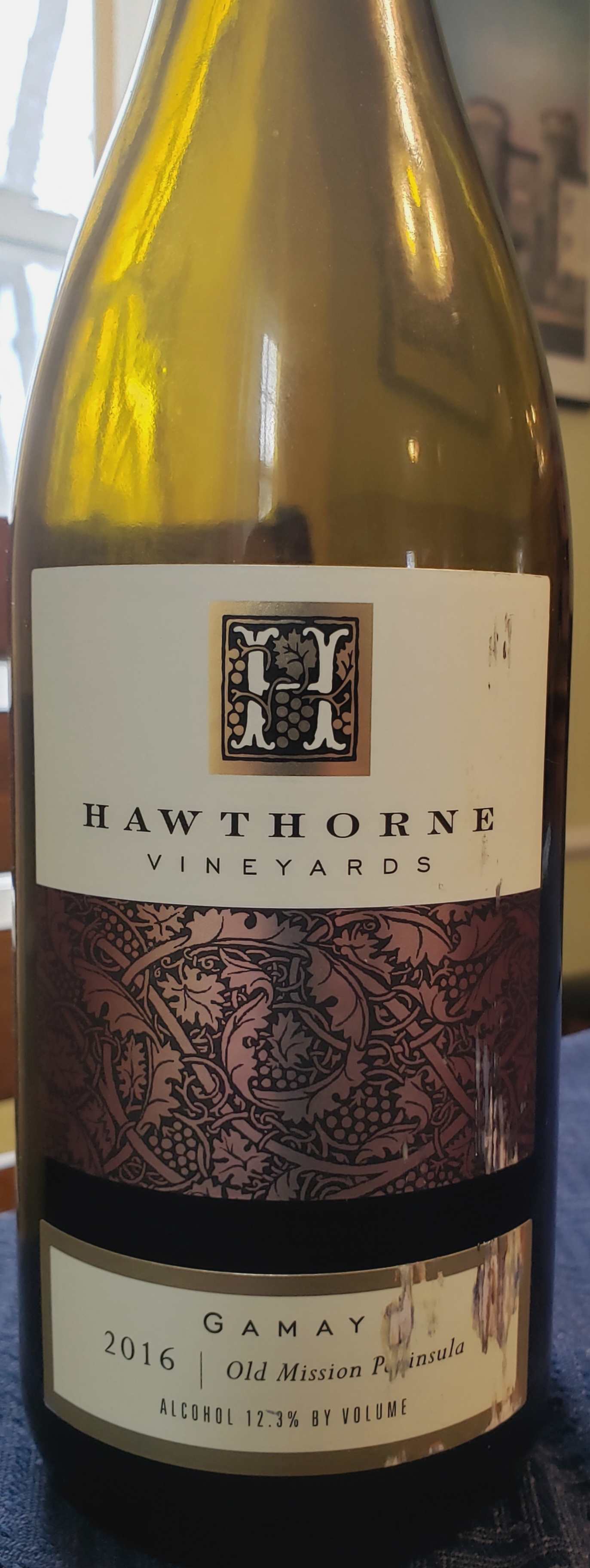
Hawthorne Gamay Noir, 2017

Maker: Hawthorne Vineyards, Traverse City, Michigan, USA.

Borrowed from 2016

Grape: Gamay (at least 85%)

Place of origin: Old Mission Peninsula AVA, Traverse City, Michigan, USA.

Vintage: 2017

ABV: 12.5%

Price: $12.50 (Meijer)

Appearance: Dark red.

Nose: Fruit punch, sweet cherry.

Palate: Sweet cherry pie, a little allspice.

Finish: Fruit and tannin.

Parting words: Almost a year ago, I reviewed the 2016 vintage of this wine for the second time. It had moved from being something of a fruit bomb, to something more complex and spicy. This wine is about halfway there. There’s still quite a lot of fruit, but a little spice is starting to develop. There are good things ahead for this wine, and given how good the 2017 vintage was, generally, it will probably end up being even better than its younger sibling. $12.50 is a steal for this wine. You’d be stupid NOT to buy a couple bottles of it at that price! Hawthorne’s 2017 Gamay Noir is recommended.

A & G Michigan Brandy Reserve

Maker: St. Julian, Paw Paw , Michigan, USA

Grapes: Chardeonnay, Pinot Gris, Vidal Clanc.

Place of origin: Michigan, USA.

Age: NAS

ABV: 40%

Note: Aged in Michigan, and French oak.

Michigan state minimum: $46

Appearance: Light copper.

Nose: Light. Raisins, leather, toasted almonds.

Palate: Semi-sweet, medium bodied. Vanilla, grape soda, toasted French oak.

Finish: Juicy and hot.

Parting words: When I first opened this brandy, I didn’t like it at all. I was reluctant to even review it, because I didn’t know if I wanted to post something that might serve as discouragement to Michigan brandy-makers. You see, I’ve been begging, pleading, and whining about Michigan brady for years now, and I didn’t want to complain about one of the few Michigan brandies currently being made!

I’m glad I didn’t review this brandy right when I opened it because it’s grown on me since then. It’s still not making any of my favorites lists, but it was pretty good mixed, and once I got past the sweetness, it was actually pretty good in a snifter.

A & G Reserve is not going to blow anyone away, but it’s a nice step up for someone used to Christian Borhters or Martell VS. It’s a little expensive for a mixing brandy but it does well mixed. It might make an interesting alternative to bourbon or rum in eggnog, too.

The standard craft distilling mark-up applies here, so I can’t really sneeze at $46. A & G Michigan Brandy Reserve is recommended.

Laurentide Reserve Meritage, 2016

Maker: Laurentide, Lake Leelanau, Michigan, USA.

Place of origin: Leelanau AVA, Leelanau County, Michigan, USA (at least 85%)

Grapes: Cabernet Franc & Merlot.

Vintage: 2016

ABV: Undisclosed.(labed as table wine).

Purchased for $45 (MBTBTR wine club).

Appearance: Dark ruby.

Nose: Cherry jam, clove, white pepper, toasted oak.

Palate: Semi-sweet and medium bodied. Mixed berry jam, allspice, oak.

Finish: Well balanced. Sweet, tangy, and tannic.

Parting words: Laurentide is one of my favorite Leelanau wineries. They’re good people making good wine. The name is a celebration of the Laurentide glacier that shaped so much of the present landscape of Northwestern Michigan.

I’d been celaring this wine for a couple years, since I got it in my Little Sipper package from Michigan by the Bottle Tasting Room, Auburn Hills. When I saw the Laurentide Instagram account post a picture of an open bottle of this vintage, I figured the time had come to open it!

This wine is sweeter than I expected in a “Meritage” blend. That’s not a knock by any means, you, dear readers, know that I am no sweetness snob. It’s just more of a heads up. There is nothing unharmonious about, though. It fits in that fun little pocket of wines that are beautiful and well made but also very quaffable.

At $45 a bottle, one needs to pace one’s self, though. I would like it better at a lower price but that applies to any wine, really. There’s nothing not to like, so 2016 Laurentide Reserve Meritage is reccomended.