Signatory Vintage: Mortlach 1992

Maker: Mortlach, Dufftown, Banffshire, Scotland (Owned by Diageo, Bottled by Signatory)

Region: Highland- Speyside (Dufftown)

Age: 17 y/o (distilled 3/6/92, bottled 8/5/09)

ABV: 43%

Appearance: Light gold (natural color). Thick, heavy legs.

Nose: Oak, alcohol, a bit of citrus.

On the palate: a surprising hit of heat, otherwise mild and creamy, with a lot of body. This is a heavyweight Speysider. A touch of honey is also present and it dovetails nicely with the bitter notes from the wood.

Finish: Heat at first, then after the burn, the oak comes in very pleasant but still assertive way. Very nice finish. It’s a delicate balance of burn, wood, honeyed sweetness, and maybe the faintest hint of smoke.

Parting words: Another excellent bottling from Signatory. While it’s certainly good in the nose and on the palate, it’s unremarkable except for its weight. The finish alone is worth the price of admission. Simply beautiful.
Head to Head- Lonely Islands: Talisker 10 vs. Jura Prophecy

  1. Talisker 10
  2. Jura Prophecy

Maker

  1. Talisker, Carbost, Isle of Skye, Scotland
    (Diageo)
  2. Jura, Craighouse, Isle of Jura (joo-rah), Argyll, Scotland (United Spirits)

Region: Highlands- Island

ABV

  1. 45.8%
  2. 46%

Appearance

  1. Pale gold with thin, quick, sticky legs.
  2. Middle-aged copper (caramel coloring?) with thin, but also sticky legs.

Nose

  1. Peat, smoke, your grandma’s medicine cabinet meets your grandma’s candy dish.
  2. Intense bonfire smoke, but a bonfire with some unusual woods in the mix, maybe a little cedar. Behind all that, though, lurks a touch of chewy vanilla taffy.

On the palate

  1. Full-bodied and creamy. Burn, then big sweetness. Very little sign of peat or smoke.
  2. Medium-bodied. Burn and then that vanilla taffy comes in a big way.

Finish

  1. A lovely light tingle on the lips, followed bydying cigarette or maybe disintegrating lump charcoal after grilling up a couple of pork chops. A hint of honeyed sweetness, but pretty far in the background.
  2. Campfire the morning after the night it rained. The caramel/vanilla flavor is turned up pretty loud after the embers have finally died. Somewhere in the middle appears a chipotle chili.

Parting Words: The “Island” sub-region is such a mish-mash that I didn’t expect these two to have much in common other than their use of peat. They do have a lot in common, though. Jura Phophecy drinks like a louder version of Talisker, if that makes sense. Talisker is assertive, to be sure. Smoke and peat drive  and sweetness takes a back seat. In Prophecy all the amps are turned up to 11, even the sweet candy flavors. The result is jarring, but not unpleasant. Both of these are recommended, although Talisker 10 is more refined than Prophecy. But sometimes I like them loud and unrefined.

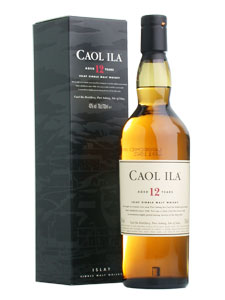
Caol Ila 12

This was originally going to be a video review but I did one and it was terrible. So it’s a text review now.

Maker: Caol Ila (cool eye-luh), Port Askaig, Isle of Islay, Argyll, Scotland (Diageo)

Region: Islay

Age: 12 y/o

ABV: 43%

Appearance: pale gold with long persistent legs that break up into clingy little bubbles on the Riedel Single Malt glass.

Nose: Big peat aroma with a faint whiff of smoke. Burnt butter, a bit of lavender, a bit of sea spray, and maybe heather, though I’m never quite sure what heather is supposed to smell like.

On the palate: Full-bodied and buttery. Sweet, creamy butter and wildflower honey, a bit of burn, then the smoke and peat come roaring in on motorcycles like the world’s fattest twins.

Finish: The twins barrel right through the finish. The burn follows close at hand and eventually fades into a sweetness in the cheeks and a tingle on the lips. A bit of tobacco smoke lingers in the throat for a long time afterwards.

Parting words: The name of this distillery, Caol Ila, means “the straights of Islay”, referring to the straight that seperates Islay from Jura to the east. On the Islay continuum, Caol Ila occupies the place between Lagavulin, which it is slightly milder than and Bowmore, which it is peatier and smokier than. It is also often the single malt which is used in “generic” bottlings of Islay malt. It is thoroughly enjoyable at any time of day (although afternoons work best for me) and I highly recommend it.

Lagavulin 16

Maker: Lagavulin, Port Ellen, Isle of Islay, Argyll, Scotland (Diageo)

Age: 16 y/o

Region: Islay (“eye-luh” or something like that)

ABV: 43%

Appearance: Old gold with an oddly pinkish hue from some angles. Pearl necklace with itsy-bitsy pearls.

Nose: Alcohol, peat, cigarette smoke, citron, almond extract.

On the palate: Good, fairly heavy body. Complex, but not busy. Sweet and citrusy (lemon and orange) at first, then an intense, smoky burn. Like eating a slice of lemon meringue pie at the counter of a diner next to someone smoking top shelf, unfiltered cigarettes. And maybe a guy who had just finished smoking pot is on the other side.

Finish: big and smoky. Burn with lots of smoke. Still some tobacco notes, but mostly like a campfire an hour or less away from burning out.

Parting Words: When I first opened this bottle, I was taken aback. On first sniff, I thought the was the best single malt Scotch I had ever encountered, at least the best Islay malt. That opinion hasn’t changed, but I’ve been able to overcome my awe and focus on what’s actually going on. Compared to Laphroaig and Ardbeg, Lagavulin is more balanced. Its balance should not be mistaken for mildness, however. Lagavulin will never be mistaken for a Speyside malt.

Review: Signatory Vintage, Ledaig 1993

Signatory Vintage: Ledaig 1993

Age: 15

Cask: 401

ABV: 43%

Distillery: Tobermory (Isle of Mull, Inner Hebrides)

This is an independent bottling of the peated version of the Tobermory single malt.

Appearance: Very light straw

Nose: Rich, malty, brown butter, hint of lemon

Palate: sweet lemon tea, malty sweetness.

Finish: long burn plus a little hit of peat at the end.

Parting words: I was hoping to make hot toddys using this Scotch, but the I realized that would be redundant, since it already is a toddy in a bottle.  Tobermory has a bit of a bad reputation as a single malt distillery, but the peat here really pulls everything together.  Still, nothing earth-shattering but a nice afternoon, after work, single malt at a reasonable price.