Domaine Berrien Pinot Noir

Maker: Domaine Berrien, Berrien Springs, Michigan, USADB 2010 Pinot
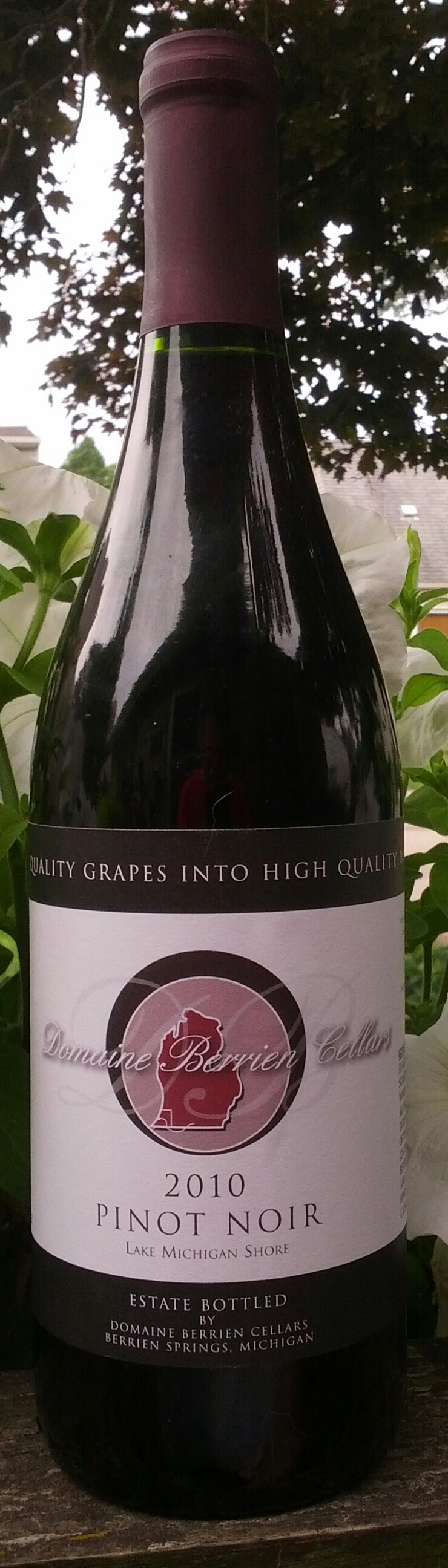
Place of origin: Lake Michigan Shore AVA, Michigan, USA (Estate bottled)

Vintage: 2010

ABV: 12.8%

Price: $15.50 (Michigan by the Bottle tasting room)

Appearance: Quite dark for a pinot. Brick red with long thick legs.

Nose: Earth, red raspberry, cedar.

Palate: Mixed berry jam, toasted oak, wild blackberry, stewed rhubarb, pinch of clove, alcohol.

Finish: Chewy. Oak, alcohol, fruit of the forest, sautéed button mushrooms.

Parting words: Domaine Berrien was one of the first Michigan wineries to take the possibilities of Michigan reds seriously. Their care shows in impressive wines like this.

DB’s 2010 Pinot Noir is complex without being busy and gutsy without being belligerent. Its balance, intergration and complexity are head and shoulders above other Michigan Pinots, even the good ones. I’ve had Michigan Pinots from this vintage from Northern Michigan that had already fallen apart in early 2014, but this one is still going strong.

It did well a meal of pulled pork but it did clash a little with the tangy, mustardy BBQ sauce I used. Otherwise, it seems like it would go very well with turkey, pork, duck or flavorful chicken dishes.

At only $15.50, it punches well above its class. I’ll be seeking out the 2011 and 2012 vintages for sure. Domaine Berrien’s 2010 Pinot Noir is highly recommended.
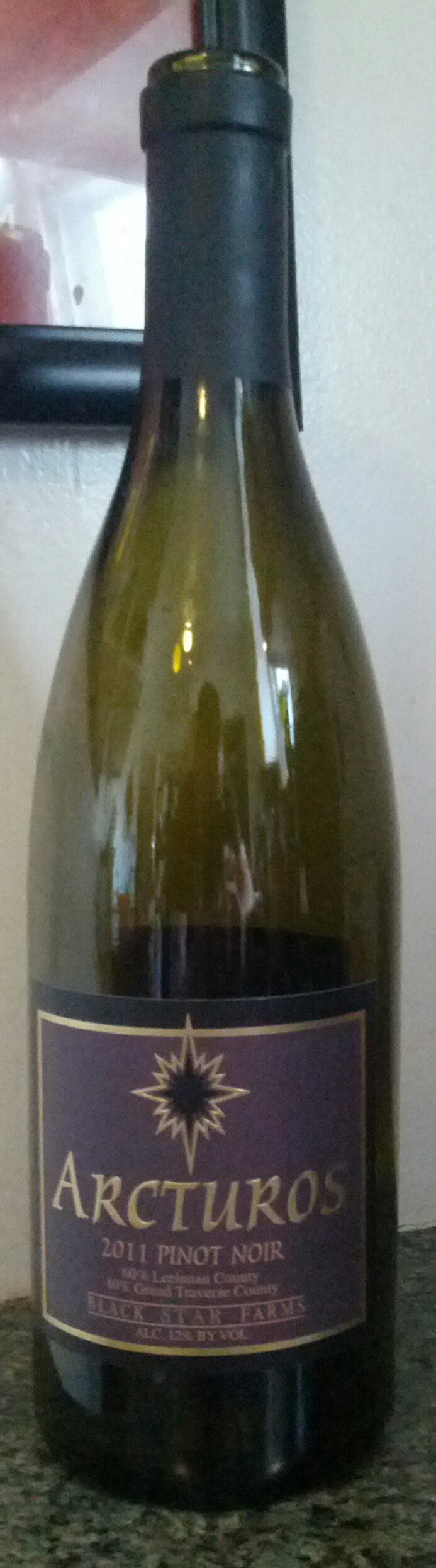
Arcturos Pinot Noir, 2011

Maker: Black Star Farms, Traverse City/Sutton’s Bay, Michigan, USAArc Pinot 2011

Place of origin: Michigan (60% Leelanau Co., 40% Grand Traverse Co.), USA

ABV: 12% ABV

Price: $22.50 (website)

Appearance: Ruby red,

Nose: Lightly toasted oak, white pepper, strawberry jam.

Palate: Medium bodied and medium dry. Black raspberries, very ripe blueberries, pinch of pink peppercorns.

Finish: Light oak with a bit of fruit. Fades slowly.

Parting words: I was originally planning to let this one sit for longer but after tasting a 2010 Pinot Noir from a neighboring winery that had fallen apart last week I panicked and decided that now was the time to open my 2011 Michigan Pinots. I’m glad I did. This one was very tasty. It was fruity but the oak rounds it off nicely. There could have been more depth and integration of flavor but there’s nothing to complain about. Does fine with food or on its own. 2011 Arcturos Pinot Noir is recommended.

Epicuro Beneventano Aglianico

Maker: Unknown (Trader Joe’s exclusive)Epicuro Aglianico

Grape: Aglianico

Region: Beneventano IGT, Campania, Italy

Vintage: 2011

ABV: 13%

Appearance: Very deep purple, nearly black.

Nose: Blueberry, pomegranate juice.

Palate: Medium bodied and fruity but with a little chewiness to hold everything together. Light cherry juice, blueberries, white mulberry, plum, touch of leather.

Finish: Medium dry. Toasted oak, vanilla, clove.

Parting words: Epicuro is another Trader Joe’s line of <$10 wines but one of the few I have not explored as of yet. Epicuro’s wines are all marketed by the varietal and all from relatively lesser known (i.e. not Piedmont or Tuscan) regions.

Beneventano IGT (IGT is roughly equivalent to the French vin de pays; for a synopsis of the Italian regional wine system look here) is in Campania in southern Italy. Campania and neighboring Basilicata constitute the home turf of Aglianico. The latter is home to the best known DOC featuring the grape, Aglianico del Vulture and the former is home to the Taurasi DOCG.

When doing research for this review I discovered that f.o.t.b. Oliver has reviews on three vintages of Epicuro’s Salice Solentino here. It’s a personal favorite of his. He and other reviewers don’t typically hold the Aglianico in as a high regard, but as you can tell from my review above, I enjoyed it. I wouldn’t say it was a game-changer for me, but it was easy drinking and cheap without any real flaws. It paired moderately well with beef stew with peas (from an Italian cookbook) but it might work better with pork or chicken as a summer BBQ wine.

Castaña Monstrell

Maker: Castaña, Yecla, SpainCatana Monstrell

Grape: 100% Monstrell (Mourvèdre)

Place of origin: Yecla DO, Spain

Vintage: 2010

ABV: 13.5%

Purchased for: $9

Appearance: Dark crimson, thick legs.

Nose: Strawberry preserves, blackberries, black cherries, oak. A little boozy.

On the palate: Raspberry jam, black pepper.

Finish: Light and fades quickly. Cherry juice and a touch of leather.

Parting words: For a $9 wine, this a very good stuff. Mourvèdre/Monstrell is a staple of Mediterranean vineyards, especially those in the southern parts of Spain and France. It often is blended with Grenache and similar wines to counteract its rustic character. This is Mourvèdre of a gentler sort.  It’s jammy but has enough structure and oak to make it appropriate for drinking with a hearty meal. Wines from Rioja and the Duero valley have gotten very hot in recent years, but lesser known regions in Spain like Yecla are still producing value wines and this is a great example. Castaña Monstrell is recommended.

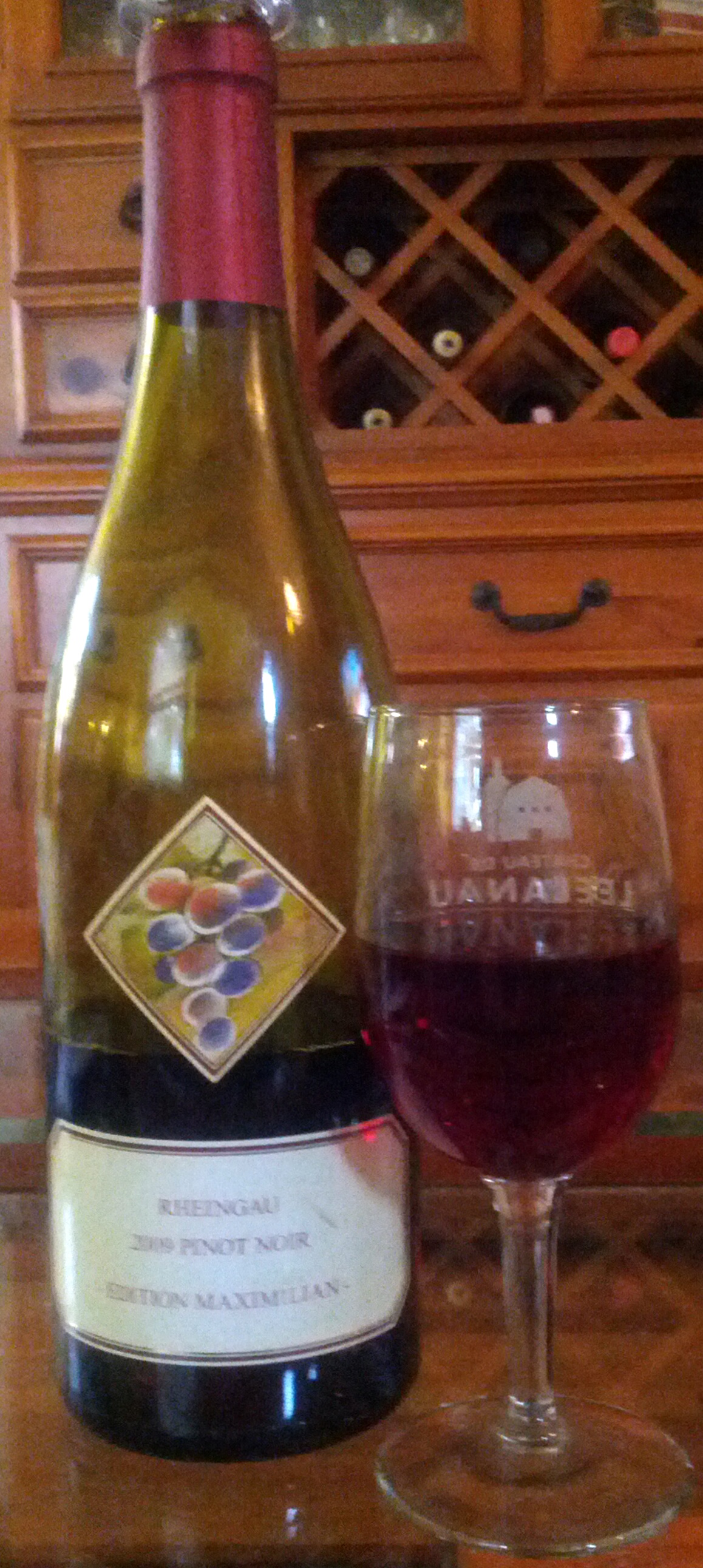
Edition Maximilian Rheingau Pinot Noir

Maker: Hans Lang, Eltville, Hesse, Germany.Ed Max Pinot 2009

Vintage: 2009

ABV: 11.5%

Purchased for: Around $7

Appearance: Light burgindy, like red raspberry juice.

Nose: Light and fruity. Strawberry, raspberry jam.

On the palate: Also light and fruity but with some complexity and not a lot of sweetness. Strawberry juice, underripe plum, cherry preserves, a dash of white pepper.

Finish: Pleasant but quick-fading. Some fruity sweetness followed by gentle oak.

Parting words: This is another favorite of mine from Trader Joe’s. The U.S. gets a very limited selection of fine German white wines. Good German reds are even harder to find. The German name for the grape is Spätburgunder but many German producers have been astutely using the more familiar French name on labels intended for sale in the U.S.

Rheingau is one of Germany’s historically great wine-producing regions. It lies on the north bank of the Rhine in the vicinity of Wiesbaden where the river takes a westward turn between where it is joined by the Main and where it turns back north. As one might expect Riesling is the mostly widely planted vine, but a significant proportion of Pinot Noir is also grown.

At any rate, I like this wine a lot for what it is. It lacks noticeable flaws, though it also lacks depth and complexity. It does very well with all types of cuisine and is very easy drinking. At $7 there’s nothing not to like. Edition Maximilian Rheingau 2009 Pinot Noir is recommended.

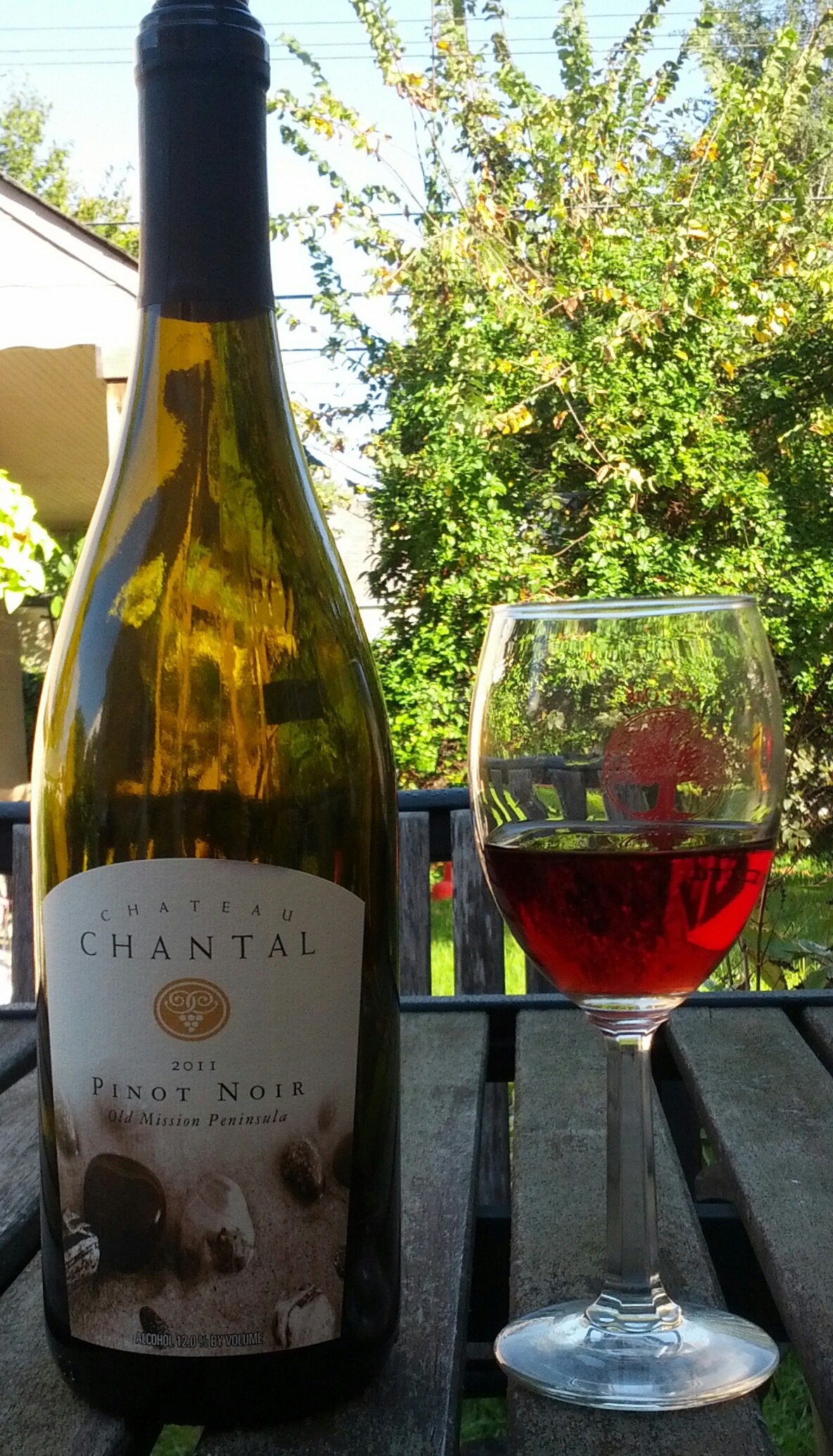
Chateau Chantal Pinot Noir

Maker: Chateau Chantal, Traverse City, Michigan, USAChCh Pinot 2011

Place of origin: Old Mission AVA, Traverse City, Michigan, USA

Vintage: 2011

ABV: 12%

Purchased for $15

Note: Notes taken after having been open 24 hrs.

Appearance: Light burgundy.

Nose: Light and vaguely fruity. Blackberry jam, cedar, grape juice.

On the palate: Light and easy drinking. Fresh strawberries, a taste of wood, not much else.

Finish: More cedar and a bit of black pepper, but still lightly fruity.

Parting words: Pinot Noir is an up and coming grape for Northern Michigan. It has been grown there for some time, but there have been raised expectations as of late. There’s no reason why good Pinot couldn’t be produced in Michigan. Pinot Noir is widely grown in the same regions in Europe where Riesling, Pinot Gris and Gewurztraminer are grown and all those do well in the Great Lakes State.

This is a wine without any obvious flaws (aside being a little lively upon first pour) but I was disappointed with how timid it was. It reminds me of inexpensive négociant-produced red Burgundy I’ve had. In the wine’s defense, the back label makes it pretty clear what to expect: an easy-going, food friendly wine. I would stay away from beef, lamb or ham, but pork, turkey or salmon would pair very nicely with this wine as would a cheese course or dark chocolate.

There is no shortage of decent red Michigan blends available for purchase just about anywhere in this state. Some of the best of those are from Chateau Chantal. When I buy a vintage varietal for a vintage varietal price, I expect more character than I got in this bottle. For that reason, Chateau Chantal Pinot Noir 2011 is only mildly recommended.

Sandhill Crane Noiret

Maker: Sandhill Crane Vineyards, Jackson, Michigan, USA

Grape: Noiret

Place of Origin: Michigan, USA

Vintage: 2010

ABV: 12.5%

Thanks to Oscar for helping me acquire this wine.

Appearance: Brick red with broad legs.

Nose: Black pepper, rose petals, cedar, smoke.

On the palate: Medium bodied and sweeter than the nose would indicate, but still not sweet. More black pepper, wood, black cherries, blueberries, with a faint herbal note. Gets fruitier as it opens up.

Finish: Slightly bitter and peppery. A bit of cherry juice as it fades.

Parting words: Noiret is a Cornell University hybrid, the result of a cross between Steuben and an unnamed hybrid. Most of the grape’s ancestry is North American, but there are no foxy flavors to be found here.

Going by the name, I was expecting something close to Pinot Noir, but there is no resemblance whatsoever. This is closer to a brash young Shiraz or Pinotage, which is not a bad thing, just something to be aware of. The grape’s peppery, rustic characteristics may be enhanced by the climate of South Central Michigan which is much drier and hotter in the summertime than Northwestern and West Michigan.

At first pour this wine is all black pepper and not particularly pleasant. Once it airs out it becomes enjoyable, especially with food. I can see grape this doing very good things for a red blend, perhaps providing some welcome spice to a less flavorful red, but it does fine on its own here. This price is a bit high (close to $20), but I think it’s worth it  for a chance to try a wine from fairly rare grape. It’s worth giving a try if you are ever in the neighborhood. Sandhill Crane 2010 Noiret is recommended.

BWW House Red

Maker: Blue Water Winery, Carsonville, Michigan, USA

Grapes: Chambourcin, Catawba, Concord.

Place of origin: Michigan, USA

Vintage: 2009

ABV: 13%

Appearance: Very dark purple. Nearly black.

Nose: Concord grape jelly, lighter fluid, moldy blackberries.

On the palate: Light -bodied and tangy. Grape juice, brown sugar, lemon peel with the pith attached.

Finsih: Charcoal, iodine, grape pips.

Parting words: When I first saw the name of this wine, I thought it was BBW House Red, not BWW House Red. That made me a little excited, but this wine has none of the voluptuous delights of a BBW. While most wine labels exaggerate, this one goes over the top in declaring this to be a “very drinkable wine”. “Barely drinkable” would be more apt. The label also recommends serving the wine chilled, which is excellent advice. I would recommend drinking it at around 33° F or 1° C or better yet, not at all.

The winery is located less than ten miles away from Lexington, Michigan, a popular vacation destination on Lake Huron, so I suppose the bulk of their business comes from well-meaning tourists looking for something local. I received a half bottle of this wine as a gift from a very sweet lady who also happens to be the mother-in-law of a good friend of mine. I didn’t take it personally. I’m just glad I didn’t spend any money on this.

I have no beef with native grape varieties or hybrids. Long time readers will know that I have given positive reviews to wines made with hybrids and native grape species. I am not a speciesist. I have had 100% Chambourcin , Catawba, and even Concord wines that were much, much better than this. This is just a bad wine.

What makes it worse is the price, $14 a bottle on the website. That is absurd. One can get a very tasty wine from practically anywhere in the world for that much, including all four Michigan AVAs. Why bother with something like this? In case you haven’t already guessed, BWW House Red is not recommended.

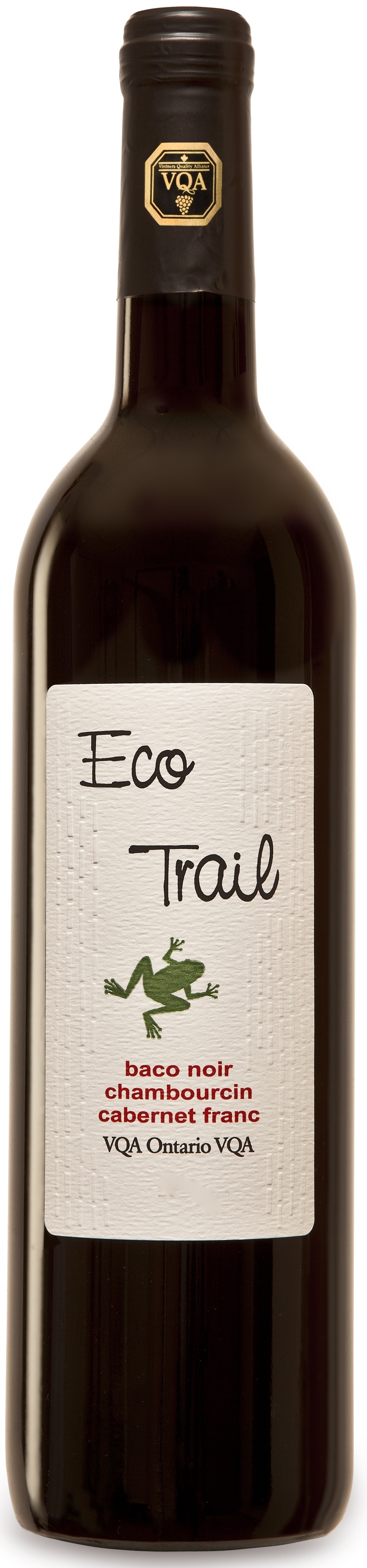
Eco Trail Red

Maker: Pelee Island, Kingsville, Ontario, Canada.EcoTrailRed

Grapes: Cabernet Franc, Baco Noir, Chambourcin.

Place of origin: Ontario VQA, Canada

Vintage: 2010

ABV: 13%

Appearance: Dark crimson.

Nose: Blueberry jam, oak, hint of cedar, black pepper and allspice.

On the palate: Medium bodied. Wild blackberries, prunes, cherry juice, mace, toasted oak.

Finish: A little chewy and drying. Nicely balanced between fruit and wood.

Parting words: When I was at Pelee Island Winery last summer Eco Trail Red was by far the best red wine I tasted that day. They sell a bewildering number of different wines and as one would expect the whites are better on the whole than the reds. That said, some of their reds are very enjoyable and they’re not always the most expensive ones. This wine is a prime example of that.

Eco Trail is an excellent table wine in the best sense of the term, i.e. a wine to drink with a meal. The Cab Franc takes the lead and the two hybrids round it out nicely. It’s affordable and doesn’t need more than a year or two in the bottle to blossom. I have never seen it for sale in the US, or even anywhere else in Canada other than the winery shop. If you are in Ontario and happen to be driving by Kingsville on the north coast of Lake Erie, stop in and pick up a bottle. Eco Trail Red is recommended.

Butler Limited Edition Indiana Chambourcin

Maker: Butler Winery, Bloomington, Indiana, USA

Vintage: 2009

ABV: 12%

Appearance: Dark burgundy.

Nose: Oak, wild blackberry, dried tobacco. Bears a passing resemblance to Chianti.

On the palate: Full bodied, but delicately sweet. More forest fruit, toasted oak, blueberry.

Finish: slightly tangy, but with some cedar in the background.

Parting words: Chambourcin is a hybrid grape that is pretty widely planted around Eastern North America. It was developed by hybrid guru Joannes Seyve and became available to planters first in the 1960s. Its advantages are its disease resistance and a lack of foxiness. It is an ancestor of the increasingly popular Regent grape. It ages well too, or at least this one did.

This stuff was all over the place in a very unpleasant way during the first hour after I opened it . After it sat in the fridge with a stopper on for 2-3 hours it settled down into a good, very food friendly wine. It’s not incredibly complex but it has a slightly rustic character that keeps things fun. My only criticism is that it is slightly over-oaked. Less oak and more fruit might have put it into the highly recommended category. Overall it’s a good effort, though. Butler Limited Edition Indiana Chambourcin, 2009 vintage, is recommended.