McMann & Tate Cocktail Bitters

Maker: McMann & Tate Cocktail Co., Union City, New Jersey, USA.

Style: Alcohol-based bitters.

Aromas: Wildly Aromatic, Bing Cherry, Moroccan Orange.

Price: $15 each on the website for 2 oz. These were complimentary samples for review purposes.

Back on June 30, I received a cold email from Gene Cooper asking if I would be interested in some samples of some McMann & Tate Cocktail bitters for review purposes. I was a surprised, since I don’t get a lot of cold emails reaching out for sample purposes these days. The last one I received was from Tommyrotter back in 2019, and Union Horse before that way back in 2016. I think this is the first one I think I’ve received for mixers, which I don’t normally review. That may change in the near future though, since I’ve picked up a few interesting ones from craft producers recently.

Anyway, McMann & Tate’s name was inspired by the name of Darren’s firm in the 1960s sitcom of the Household Secret genre*, Bewitched. The marketing materials lean into that 1960s feel. For more on that, take a look at the email “interview” with founder Gene Cooper after the reviews.

They make a wide variety of cocktail supplies, including an interesting line of dried garnishes and, of course, bitters. Besides the three I received as samples, they also sell Citrus Grove, Cocoa Mole, English Lavender, Morning Coffee, No Foam Root Beer, and South Sea bitters (a limited release). McMann & Tate’s online shop is here.

My strategy with these was the use them in my go-to cocktails, then with a spirit on the rocks, and then try a cocktail suggested on the M & T website. Anyway, let’s get into it.

Bing Cherry Bitters

Ingredients: Alcohol, cherries, cacao, gentian, cherry bark, cassia, cardamom.

32% ABV

Nose: Cherry, cherry wood, and baker’s chocolate are the strongest aromas here, with the other, more delicate herbs and spices adding interest and complexity, but very much in the background.

Mixed: I used Bing Cherry Bitters in bourbon on the rocks, bourbon and brandy old fashioneds, a Manhattan, and in a bourbon and coke. I also tried the Rose’s Revenge cocktail from the McMann & Tate website. It held up well in all applications, even with the cola! Tasted like a Cherry Coke, but better.

This was my least favorite sniffed on its own, but it really came alive in the cocktails. I was pleasantly surprised. Recommended.

Moroccan Orange Bitters

Ingredients: Alcohol, orange peel, cacao, burdock, allspice, cardamom, clove, anise.

35% ABV

Nose: Bitter orange and baker’s chocolate lead the way, but the spices play a stronger role than in the cherry, each identifiable but working together.

Mixed with rye on the rocks, in an Irish whiskey cocktail called a Hearn (Irish, green Chartreuse, Absinthe) and a a cocktail from the website called a Fancy Free (also includes Wildly Aromatic bitters). It got lost in all of them. This was disappointing because I loved smelling it on its own. Bitters are for mixing, though, and while it didn’t hurt any of the cocktails, it didn’t elevate them either.

I decided to try it in some gin cocktails after that, thinking it would show up a little bit better. As occasionally happens, I was correct! I tried them in a cocktail called a Bijou (gin [I used barrel aged], red vermouth, Chartreuse), and then in a modified version of a kinda weird one I found online called Eeyore’s Requiem (gin [barrel aged again], white vermouth, fernet, and a lot of orange bitters). Moroccan Orange shone in these two. I can imagine they were do just as well with tequila or rum based cocktails.

McMann & Tate pride themselves on making lower proof bitters, but these might benefit from a bit more oomph when it comes to whiskey cocktails. For everything else, Moroccan Orange Bitters is recommended.

Wildly Aromatic Bitters

Ingredients: Alcohol, cranberries, orange peel, vanilla, gentian, cherry bark, clove, cassia, cardamom, anise.

32% ABV

Nose: This one is the most complex. Uncooked cranberries are immediately identifiable, but the rest work together to give the impression of a spiced cranberry sauce.

I tried this in an Old Fashioned, a Manhattan, and in a cocktail called The Holdfast that I got from Dave Wondrich on Twitter years ago, and in the aforementioned Fancy Free. I loved it as a substitute for Angostura bitters. It’s more complex and more subtle on the nose, but in cocktails it elevates everything it finds its way into. I was very impressed. This is going to be a go-to for me. Sorry Angostura. Highly recommended!

Now for the “interview”. After I wrote up the reviews, I sent Gene a quick email with a few questions, to help fill in the blanks on the company and its history. He very generously gave full, thoughtful responses to all my questions. Instead of doing the hard work of trying to digest them, I thought I’d let him speak for himself (with a tiny bit of editing).

Josh: How did you get interested in cocktails? 

Gene: When I was in high school my friend and I were pool boys at the Thunder Bird Hotel in Mantoloking NJ for a few summers (this was in the early eighties).  My friend’s dad also owned the place so we were expected to work long hours but there were plenty of perks (the pay was pretty good and we stayed in his efficiency apartment to avoid the weekend commute back and forth to the beach).  It was a pretty big hotel for the Jersey Shore, about 200 rooms, a restaurant, banquet room and an outdoor tiki style bar.  The bar is where we spent most of our time, not drinking (of course) but hanging out with the bartenders, learning what they do and how they work with customers.

This eventually led to my friend and I becoming bar backs along with setting up and closing down the bar every day.  The entire process of getting ready to work, creating something that people enjoy and receiving immediate feedback was really appealing to me (and getting cash tips seemed pretty cool too).

But my true fascination with making cocktails occurred after our last summer working at the hotel.  It was the summer before my freshman year in college.  My friend’s dad sold the hotel that summer to a developer and he told us, “take whatever you want because everything’s got to go”.  So, we drove my mom’s station wagon to the hotel for that final weekend, woke up at dawn, entered the liquor room and filled case upon case with spirits, modifiers, barware, blenders, brand signs and even the tiki barstools.  Fast forward to September, my dorm room pretty much resembled the Thunder Bird tiki bar, it was a pretty professional set up and I was “the” bartender for our weekend parties, parties that continued for several semesters.  This is where my love for making cocktails got its start and thankfully I’ve continued the journey, trying to learn something new every day.

J: How did the company start?  

G: I’ve always been a fairly creative person, I paint, have done improv and infused more spirits and made more syrups than I can count.  So, here’s another Covid story.  Having some additional time on my hands in 2020 I decided to make some bitters and shared them with my friends. Everyone said “these are pretty good you should sell them”.  That got the entrepreneurial bug back in my ear.

  I previously ran my own ad agency for a dozen years;  it had its ups and downs but the downs outweighed the ups and I said I’ll never do that again.  And as the saying goes, “never say never”.  But this time I had twelve years of business insight in my pocket.  So, I laid out my business plan and slowly pulled the trigger.  I started by getting the recipes dialed in and then submitted them to the TTB (to be considered a non-beverage that contains alcohol you need to submit your formulas, starting weight, ending weight, ABV, density and samples) for approval (approval lets you sell the bitters in food stores and you don’t need to worry about the varying state liquor laws). Not being a chemist, it took me close to two years to get 9 formulas approved – this was the biggest challenge I’ve encountered to date.  Once I had the formulas approved, I went into production and began tackling all of the related logistics.  I’m simplifying it a bit but every day’s been a new challenge but fun ones to conquer.

J: Who runs it currently? 

G: We’re small, I’m running the operations, sales and marketing.  All of our creative, design and production work are handled by GoldSpark Design and our food production (since our bitters are a food extract) is overseen by the Food Corridor, a commercial kitchen.

J: Any plans for retail in the future? 

G: Yes, in fact we just signed our first retail account with the Shady Lady Mercantile, an online cocktail shop and we have a few other retailers in our pipeline.  Our original plan was to go directly to the consumer (our phase one), but we quickly realized it’s a challenge to quickly and organically grow an audience with limited funding so we pivoted pretty fast, set up a wholesale store on faire.com and began reaching out to retailers.  Paying close attention to our costs prior to launch allowed us to maintain a high enough margin to go the retail route while still remaining profitable.

J: Anything else you think my readers should know? 

G: People, those close to my age, often asked if the name of the brand came from the 1960s Bewitched TV series.   It did.  I grew up watching the show as a kid.  If you’re not familiar with the show it was about a married couple, Samantha Stevens and her husband Darren.  Samantha was a witch (the good kind) and her husband worked for an advertising agency named, you guessed it, McMann & Tate.  For some reason I was more interested in Darren’s line of work than spells and potions.  Hence, my 35-year career in advertising.  So, the brand is really a nod to what inspired me to get into advertising.  And it’s fun to leverage that 1960s vibe a bit – so many of the competitors are product focused.  We’re more about the experience of making and sharing cocktails with your friends and family.  And we think our products are pretty good too.

Thanks again to Gene for reaching out and for his thoughtful responses to my questions!

*My wife’s a witch, but no one must know! I’m cohabitating with a magical genie, but no one must know! My uncle is from Mars, but no one must know! My horse talks to me but no one must know!

A Visit to Copper & Kings

Note: The tour of Copper & Kings was complimentary for my party and me.

On my last few trips to Kentucky, my crew and I have not done much in the way of activities. When you’ve been going for ten years or so, you’ve done all the tours and seen pretty much all the sites so my inclination is to just kick around town or the hotel and not do a bunch of driving here and there. In other words, we fell into a rut.

This April I decided to do more. I scheduled two day trips for us. The first was to Frankfort (more on that later), and the second was to Louisville. In the latter, I scheduled a tour of the Old Forester Distilling Company (Brown-Forman’s excellent answer to the Evan Williams Experience), a lunch with award-winning bourbon journalist Maggie Kimberl, and then a tour of Copper & Kings distillery.

For the second year in a row I had forgotten that the Louisville Marathon is that Saturday morning and as a result many of the streets downtown are closed off to vehicular traffic. Despite this we managed to sucessfully navigate through the streets of downtown Louisville by car and then by foot to make our way to Old Forester Distilling Co ahead of schedule.

Lunch was a different story. I had neglected to call ahead to our chosen lunch meeting

IMG_20190427_151927_561.jpg
Maggie and I

place and when we met Maggie there, the wait was forty-five minutes. That wouldn’t work, so Maggie told us to all jump into her minivan and she took us to a popular restaurant near Copper & Kings called Butchertown Grocery. Their wait was even longer but they told us to go down the street to a newer, smaller place called Naive. They had seats and good food, drinks, and service.

After that, we bid farewell to Maggie and walked to Copper & Kings. A winding path through repurposed shipping containers (containing a gift shop and restrooms) runs from the front of the property into a courtyard that occupies the space in front of the main building. The space is set up for outdoor events and includes a bar, a firepit and a large tent (in case of rain, I assume). Just about everything is orange.

Our tour group assembled in the large tent (it was raining) and we got a brief opening talk from our tour guide Margaret. She gave us the basics about what brandy is and told us a little about the According to Margaret, before prohibition there were 400 or so brandy distilleries in the US. Very few survived and many of those that did, make sweet, dessert brandies. That is not what Copper & Kings makes. They aim to make brandy for bourbon-drinkers. The distillery began operations in 2009 and opened to the public in 2014.

20190427_141501.jpg
Sara & Isis (no terrorism)

Margaret then led us through the courtyard into the first floor of the main building by the stills. They had three steam-heated alembic stills at the time, with one on the way, all manufactured by Vendome. The smallest is Sara (50 gallons), followed by Magdalena (750 gal), and Isis (1,000 gal). Their newest still, Rosemary (2,000 gal), had not yet been delivered when we were there. In case you were wondering, all the stills are named after women whose names appear in Bob Dylan songs, mostly in songs from his 1976 album Desire. Rosemary appears on the prior album Blood on the Tracks. I would have gone with Patty Valentine, but what do I know? According to Margaret, the stills are currently run around the clock but vary according to the phase of the moon. Distillation takes shortest during a full moon, longest during a new moon. I know that sounds like baloney, but it’s based on data compiled over the years by former C & K employee Alan Bishop. The difference is not great but it does exist, especially during a “super moon”. Alan is currently master distiller at Spirits of French Lick in French Lick, Indiana.*

No fermentation takes place at the distillery. All the wine, cider or whatever that is destined for the stills is feremnted elsewhere and taken to the distillery. The grapes (Columbard, Muscat Alexander, and Chenin Blanc) are sourced from California and the apples from Michigan. Yeast strains are chosen on a year to year basis.

After looking the stills over, Margaret took us down to the cellar in which brandies were

20190427_141741.jpg
Margaret telling us about the cellar.

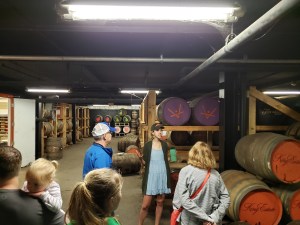
aging in a bewildering variety of cooperage. The brandy destined for C & K’s core line are aged in ex-bourbon casks originally from Heaven Hill, makers of Evan Williams, Elijah Craig and many more. The rest were aging in ex-sherry, ex-Cognac, mead, beer, wine, cider and many many more. There were even a few barrels of oddball spirits that C & K has acquired over the years, presumably for future releases. The barrels are obtained through Kelvin Cooperage in Louisville.

20190427_141745.jpg
Barrels, lots and lots of barrels

Copper & Kings practices something they call sonic aging. This has nothing to do with an elderly hedgehog. It’s the practice of placing speakers (20 total including five sub-woofers) in the cellar and cranking the volume up to get the spirit moving and increase the amount of contact between the spirit and the barrel. Appropriately enough, they were playing My Morning Jacket while we were there.

We then moved upstairs to a large, lounge-like

20190427_142319.jpg
An odd barrel

space to sit down and do some sampling. I tried their 5th anniversary brandy, called A Song for You, a high-powered gin and a delicious barrel-finished absinthe. We all tasted each other’s samples as well, and the biggest standout of those was an unusual distillery-only pear brandy. I didn’t end up going home with that but I kind of wish I had.

After the sampling, we all headed to the rooftop bar for a cocktail and a good view of Louisville and the solar panels on the roof. Sustainability is a big concern for Copper & Kings. In addition to the solar panels, they have planted a monarch butterfly garden that doubles as run-off mitigation and offer anyone who rides a bicycle to the distillery 50% off the price of a tour.

20190427_142721.jpg
The very orange lounge

20190427_143923.jpg
The bottles we could sample from.

That was the end. Our guide Margaret was wonderful, and if I have any complaint, it was that everything was a little too orange. Don’t get me wrong, as a graduate of Broad Ripple High School and Anderson University I have great affection for the color, but it got to be too much. Anyhow, a tour of Copper & Kings is recommended.

20190427_152243.jpg
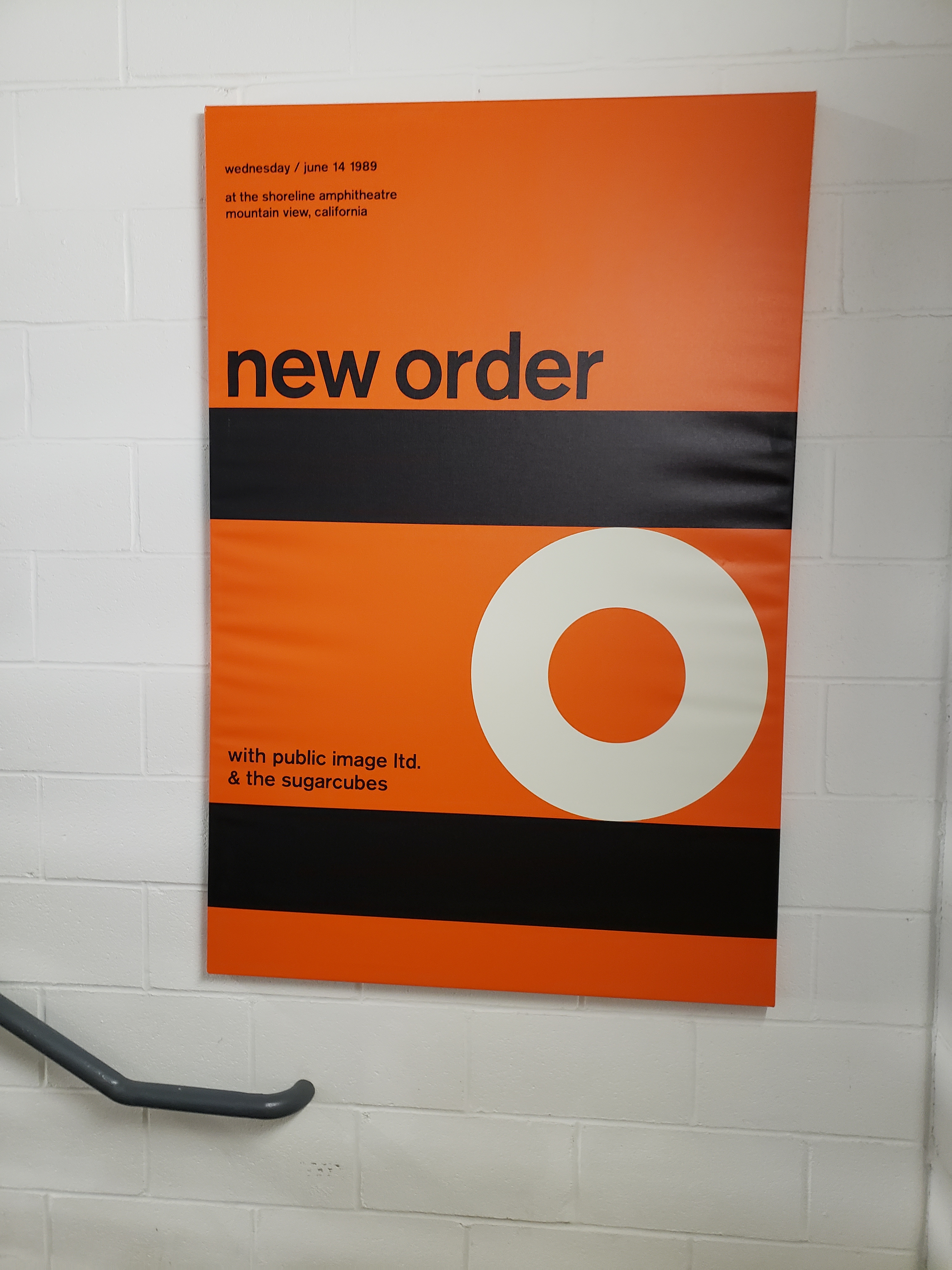
There was a lot of orange, but there was also this amazing poster.

I also recommend stopping at Butchertown Market after your tour for some light souvenir and candy shopping. We did and got some good stuff. Check it out!

*Big thanks to Alan for answering my question via FB messenger and to Maggie Kimberl and Steve Beam for connecting me with him!


Head to Head, Mint Julep ed: Old Forester vs Maker’s vs Mint Julep Elixir

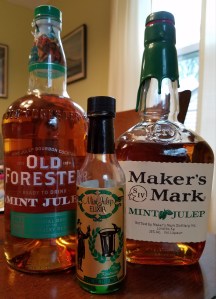
OF= Old Forester Mint Julep, MM= Maker’s Mark Mint Julep, Mint Julep made with Old 20170505_114519Fitzgerald Bottled-in-Bond and True Kentucky Mint Julep Elixir=MJE

Maker

MM: Maker’s Mark, Loretto, Kentucky, USA (Beam Suntory)

OF: Early Times/Old Forester, Louisville, Kentucky, USA (Brown-Forman)

MJE: Town & Country Specialty Foods, Bardstown, Kentucky, USA

ABV

MM: 33%

OF: 30%

MJE: N/A (made with 50% ABV bourbon)

Price

MM: $36/1 liter (The Party Source)

OF: $28/1 liter (Michigan State Minimum)

MJE: $5/5 oz bottle (makes 30 drinks with 2 oz of bourbon accord to label). Works out to around $28 a liter.

Head to head tasting

Tasted in julep cups with crushed ice

MM: Mint strong up front, then fades to bourbon sweetness and iced tea. Pleasant if a little chewy in the finish.

OF: Fruity up front. Not as bitter, but sweeter. Old Forester bite in mid palate fades to a sweet, slightly minty finish.

MJE: Practically all bourbon, even after adding more ice and syrup to make up for high proof. Syrup lingered at the bottom of the cup even with extensive stirring before pouring over ice.

The Liz Factor

My wife is a lover of the Maker’s Mark Mint Julep and always makes sure we come home from Kentucky with a bottle every spring. She tasted MM & OF blind (when I offered her one made with the syrup she politely declined having tried it before) and to her surprise found that she preferred Old Forester even though she liked both. She found MM to have an unpleasant aftertaste.

Parting words: I don’t drink a lot of pre-made cocktails but when we found both the Maker’s Mark and Old Forester Mint Juleps at Liquor World in Bardstown, Kentucky last weekend I thought a head to head would be a fun idea, since Liz enjoys the MM so much. I prefered MM over OF myself, but I’m not sure it’s worth the extra $8 or so. MMMJ has gone off the Michigan list for some reason so I couldn’t do an apples to apple comparison on price unfortunately. The mint julep syrup just didn’t cut it at all and reminded my why we’ve had the same little bottle sitting on our shelf for years. I’ve made my own mint syrup in years past and that worked a little better. None of these are a substitute for a well made home or bar Mint Julep.

Both Maker’s Mark and Old Forester Mint Juleps are recommended, though OF is a better bargain. MMMJ and OFMJ are only available in stores around Kentucky Derby time in late April and early May. True Kentucky’s Mint Julep Elixir is not recommended. Brown-Forman also makes an Early Times Mint Julep which is awful and highly not recommended. It is what is served in the stands at the Kentucky Derby if one orders a julep without specifying a bourbon.


Head to Head Drambuie vs Drambuie 15

Drm= Drambuie

D15= Drambuie 15

ABV

Drm: 40%

D15: 43%

Michigan State Minimum

Drm: $39

D15: $60

Appearance: Old gold, with some necklacing. (both)

Nose

Drm: Orange blossom honey, alcohol, malt whisky, woodruff, tarragon, a touch of ginger.

D15: Much drier. Sherried single malt, woodruff, thyme, wildflower honey.

Palate

Drm: Sweet and syrupy. A bit of burn, then orange and lemon thyme.

D15: Still sweet but not nearly as thick. More like a top shelf toddy than a liqueur. Dry sherry, malt whisky, honey with a faint herbal background note.

Finish

Drm: Clingy and sweet like that person you dated in High School. Hangs on for a long time, but with little depth.

D15: Dry and short by comparison. Wildflower honey again, alcohol and malt whisky.

Mixed: I tried them both in three mixed applications: A rusty nail (using a 12 y/o sherried single malt), a recipe from the Drambuie website called a “rusty cola” (self-explanatory), and with club soda on ice. The rusty nail with the standard version was fine and the malt did a good job of cutting the sticky sweetness of the liqueur. The 15 didn’t really add much. It just tasted like a sweet malt. The rusty cola was tasty but very sweet with the standard. The 15 tasted weird with cola at first but it grew on me. Standard Drambuie was refreshing with soda but still very sweet. The 15 was really delicious with soda, like a high-end blend.

Parting words: I don’t review liqueurs much but I have a small bottle of Drambuie languishing in my liquor cabinet and I was able to find a mini of Drambuie 15 so I figured I should do a head to head. They are whisky liqueurs after all.

Anyhow, I was surprised at how much I enjoyed tasting these two. The ordinary Drambuie is so sweet that it’s not something I drink very often but is a nice change of pace. The spice and herbal flavors come through nicely and give it some character beyond the cloying honey. The 15 y/o is truly delicious and does best with soda or neat.

That raises the question of price. Drambuie is not too expensive for a high-end liqueur but for the price of the 15, one could by a decent Highland or Speyside single malt that is just as sweet and complex and have some money left over. That is what keeps it from getting a full recommendation.

If you enjoy honey whisky liqueurs, Drambuie is recommended for mixing and Drambuie 15 is mildly recommended for both mixing and sipping.

Fentiman’s Tonic Water

Maker: Fentiman’s North America, Burnaby, British Columbia, Canadafentimans

Brewer: ???, USA

Neat:  Has a nice spicy, gingery nose with lime and lemon peel. Tart with a little quinine bitterness, but it’s an understated presence.

Mixed: I last tasted this tonic with some Old Tom gin and it was the perfect complement. This is an understated and complex tonic that works very well with understated, quality gins. A lemon slice is the best garnish for a G & T with Fentiman’s. I prefer a spicier tonic, frankly, but Fentiman’s really grew on me. It makes a great change of pace for me, but I can see it being a go-to for many people. This is a high quality tonic and it comes highly recommended.

Cola Head to Head: Faygo Original Cola vs. Towne Club Cola vs. Trader Joe’s Vintage Cola

I don’t do a lot of reviewing of non-alcohol beverages but I thought it might be interesting to do a review of three colas as mixers. Coke, Pepsi and RC are known quantities, so I decided to taste some off brands and one generic. I tasted them by themselves, with bourbon (Very Old Barton 90 proof), and in a Cuba Libre (Olo Silver).

First, Faygo (I bought it in the bottle, can pictured). By itself it has a nice fizz. Syrupy like an old fashioned soda machine where the syrup and water come out separately. Heavy on the cane sugar, light on the spice. Refreshing but too sweet. In bourbon and cola it’s ok, but doesn’t really bring anything distinctive to the table. The bourbon has plenty of sweetness on its own. Faygo adds nothing but more sweetness. In a Cuba Libre it performs better, but it still adds very little. Meh.

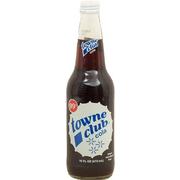
Towne Club Cola: By itself it is fairly bland. The only thing interesting going on is a weird fruity note. Very little in the way of spice, just sweetness and stale fruit cocktail. With boubon, the fruity taste is covered up slightly, but still comes through. In a Cuba Libre, it clashes with the lime in a weird way and becomes very unpleasant. Not good.

Trader Joe’s Vintage Cola: Trader Joe’s is known for having good generics of almost every type of food or drink. Vintage Cola is firmly in that tradition. It’s certainly not as good as Coke or Pepsi, but it is on a level with RC. Like Faygo, TJ uses cane sugar, not Corn Syrup. Unlike Faygo, TJ’s is caffeine free. By itself, much more spice than the two others tasted. Works very well with bourbon, the spice and cane sugar complements the  corny sweetness of the bourbon. It’s very good in a Cuba Libre too. Fills out the drink very nicely.

Overall, The Trader Joe’s Vintage Cola was is my favorite of the three. Faygo would be second, but might appeal to drinkers with more of a sweet tooth. Coke is still my favorite, but anyone looking to save a few bucks or cut back on the caffeine should give TJ’s Vintage Cola a try.

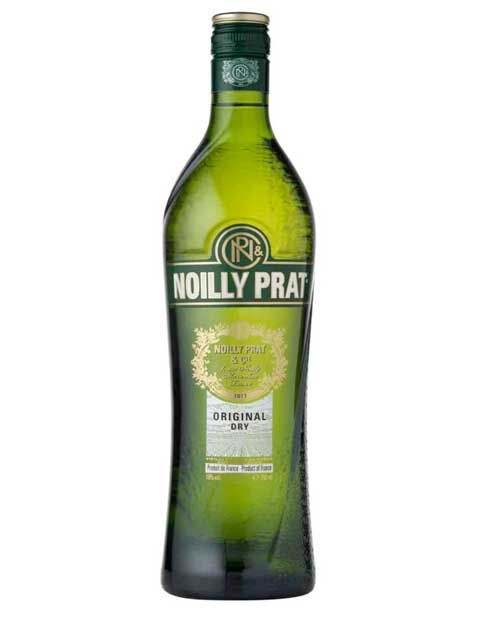
Noilly Pratt Original French Dry Vermouth

Maker: Noilly Pratt, Marseillan, Hérault, France (Bacardi)

Style: Dry Vermouth

ABV: 18%

Note: Current U.S. forumlation.

Appearance: Pale gold.

Nose: Sweet, sherry-like. Apple juice, Barlett pear.

On the palate: Sweet on initial entry, fading to bitter, herbal but nothing specific.

Finish: Sweet, juicy, long and bitter.

Mixed: Makes a fine, very herbal, martini or Rob Roy.

Parting Words: This is the first vermouth I’ve reviewed. I’ve reviewed mixers in the past but not very much. I drink more cocktails in the summer so I figured this week was as good a time as ever review another.

This vermouth was not as bad as some folks on the internet (besides me) seem to think. Not being familiar with the pre-2009 formula, maybe I’m not in a good place to judge, but it wasn’t bad. I like the herbal edge it adds to martinis. And it’s very cheap. Noilly Pratt Original French Dry gets a recommendation.

Review: Fever-Tree Premium Indian Tonic Water

Maker: Fever-Tree

Tasted: neat and w/a combo of two world-wide middle-shelf gins with a wedge of lemon

Neat: Delicate, sweet aroma, in the mouth a lot of sweetness, a touch of citrus, some quinine, fading to a bitter, but still very sweet finish.

In G & T: The sweetness comes through but is mitigated by the gin and melting ice.  A nice bit of bitterness comes out in the finish, but this tonic is still one-dimensional.

Parting words

Frankly, I don’t know if I could tell the difference between this and, say, Schweppes’s or Canada Dry.  I have no beef with those two brands but I don’t think it’s worth paying a premium  price for a boutique tonic water like Fever Tree if I can get something that tastes the same for a fraction of the price at my local grocery store.  As you might have guessed by now, this tonic water is not recommended.