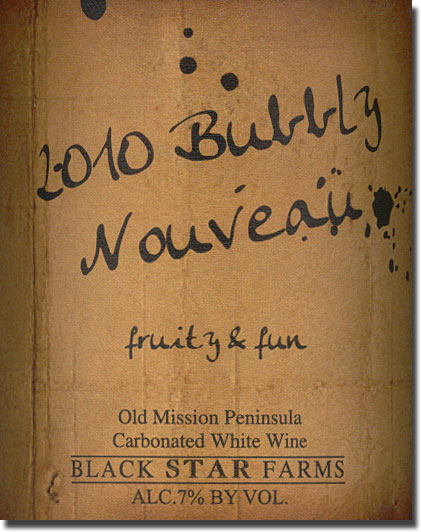
Bubbly Nouveau

Maker: Black Star Farms, Sutton’s Bay/Traverse City, Michigan, USA
Grapes: Muscat, Cayuga

Region: Old Mission AVA, Traverse City, Michigan, USA

Style: Carbonated White Wine

Vintage: 2011 (different vintage pictured)

ABV: 7%

Appearance: Very pale, practically clear, with nice, spritely persistent bubbles.

On the palate: Sweet and foxy. The Muscat and Cayuga make their presence plainly known but are restrained (barely). Table grapes, Granny Smith apples with a hint of perfume and persimmon.

Finish: Tart and tingly but mellows within 20 seconds or so.

Parting Words: Bubbly Nouveau is a fleeting annual release from BSF. As one might expect from the name, it is recommended that this one be consumed promptly. I can’t imagine it getting much tarter than this and being enjoyable. Not everybody enjoys foxy native grape wines or Muscat but I do. This is a fun, rustic American wine that doesn’t require a lot of attention and is best drunk fast and early. Recommended.

NOTE: The original version of this review stated that Riesling was also used to make the 2011 vintage of Bubbly Nouveau. That is not correct. Thanks for the correction, @bstar2009!
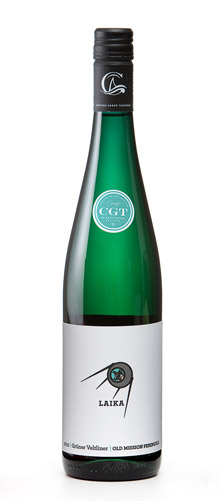
Chateau Grand Traverse Laika

Maker: Chateau Grand Traverse, Old Mission Peninsula , Traverse City, Michigan, USA

Grape: Grüner Veltliner (GruV for short)

Region: Old Mission AVA, Traverse City, Michigan, USA

Vintage: 2010

ABV: 12.8%

Color: fairly dark gold.

Nose: Big, rich and peary. Surprising amount of fruit.

On the palate: Surprisingly dry and flinty, with a hint of tangerine. Full-bodied for a white of this type.

Finish: Lingering minerality with little sweetness.

Parting words: According to CGT, when their vineyard site on Old Mission Peninsula was first surveyed for grape variety possibilities, GruV came up as one of the suggestions. The 2009 vintage was their first shot at the variety, hence the name Laika, after the Russian Space Dog who was the first mammal in space. But this is no dog of a wine. If I had a complaint it would be that the fruity nose followed by the flinty dry taste are too jarring in the same wine. It does not have the elegant dryness of fine Austrian GruV, but on the whole Laika should be judged a success. It raises interesting possibilities for New World cultivation of this signature grape of Austria. Recommended.

Not many bottles of this were produced, so if you see some, get it! Better yet, buy one to drink now and one to cellar like I did.

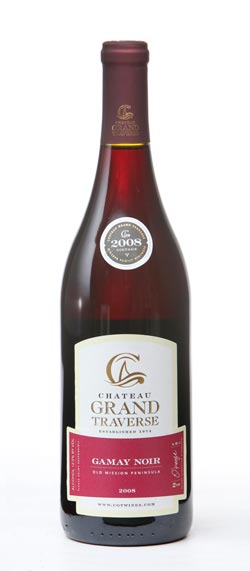
Chateau Grand Traverse Gamay Noir

Maker: Chateau Grand Traverse, Traverse City, Michigan, USA

Region: Old Mission AVA, Michigan, USA

Grape: Gamay

Vintage: 2009 (2008 vintage pictured)

ABV: 12.5%

Appearance: Light burgundy with long, fairly thick legs

Nose: Plums, leather, black pepper, cherry. For once a back label is dead on.

On the palate: Light mouth feel, fruity tart cherry up front. As it sits in the glass, the leather and black pepper notes come to the fore. There’s still plenty of fruit, though. A delightful dichotomy of deliciousness. Yes, I just wrote that.

Finish: Clean finish with some lingering tastes of cherry juice and the ubiquitous black pepper.

Parting words: The name Gamay isn’t well known, but many people do know the name of its most famous product, Beaujolais. It has always had its detractors. Two different Dukes of Burgundy outlawed the cultivation of “disloyal Gaamez in the 15th century. For the record, I am a fan of Gamay, especially in Beaujolais. I was surprised by the peppery nose but it gives it depth and interest that I wasn’t expecting. The pepper moves it closer to estate or cru Beaujolais (according to the internet anyway) than the Beaujolais-Village I drink to wash down my pork chops. This is a very good, food-friendly, but not dumbed down, wine. Recommended.

Cinnamon Girl Hard Cider

Maker: Left Foot Charley Winery, Traverse City, Michigan, USA

Style: Spiced cider (infused with cassia sticks)

ABV: 5.2%

Appearance: Old gold. Persistently effervescent.

Nose: Crisp apples and a hint of spice.

On the palate: Full-bodied and sweet on initial entry. As the cider lingers in the mouth a bit, the cassia/cinnamon comes through. It’s not fiery or overbearing, it’s just a pleasant twist on what is already a delicious American-style hard cider. It’s like a liquid version of my mother’s apple crisp.

Finish: Sweet and slightly spicy. The sweetness lingers for quite a long time. Pure, crisp bliss from beginning to end.

Parting words: Cinnamon Girl works fine as either a dessert cider or a table cider, especially with Mexican cuisine. It works best as a sunny fall afternoon cider or a party cider for sharing. No matter how you drink it, if you love sweeter ciders, you’ll love Cinnamon Girl. Highly Recommended. Unfortunately it is only available at Left Foot Charley winery in Traverse City, Michigan. Call ahead to make sure they have it on tap.

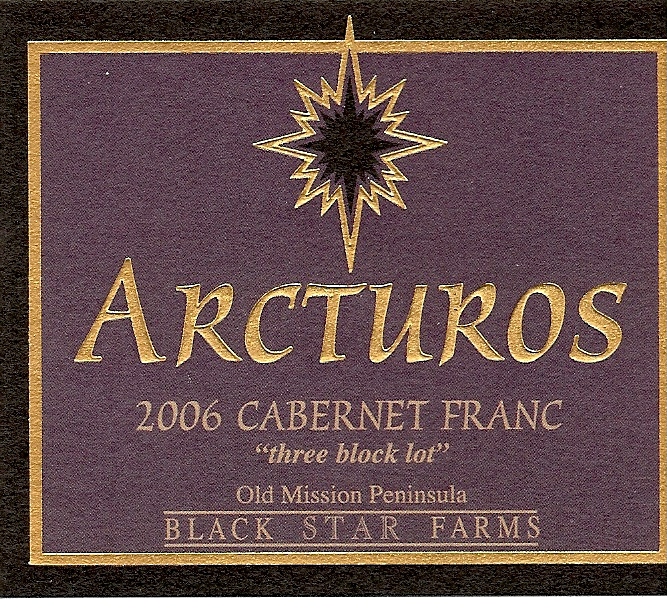
Arcturos Cabernet Franc

Maker: Black Star Farms, Sutton’s Bay, Michigan, USA

Grape: Cabernet Franc

Region: Old Mission AVA, Michigan, USA “Three Block Lot” (three vineyard blend)

Vintage: 2004 (different vintage pictured)

ABV: 12%

Appearance: Deep dark red, nearly black

Nose: Black Currant, plum, cherry, a bit of wood.

On the Palate: Light bodied for such a dark wine. A little sweetness, cherry and other stone fruit, with a touch of wild blackberries and black currants. Delicate, but not a pushover.

Finish: Not much in the finish. A little wood and cherry, and then a slow fade.

Parting Words: This a wonderful, subtle Cab Franc. It does well with food but take some time to sip and contemplate before digging into your meat and potatoes. At 7 y/o, it may be a little past its prime (this may account for its subtlety) but it’s still very good. Cab Franc does very well in Michigan and the Northeastern US. For those who turn up their noses at Eastern reds, this may be an eye-opening wine. Highly recommended.

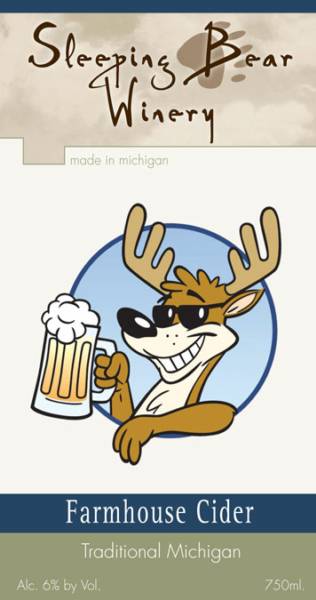
Review: Sleeping Bear Farmhouse Cider

Maker: Sleeping Bear Winery (Brooklyn, Michigan)

ABV: 6%

Color: straw

Nose: rich, hint of tartness, butter, apple pie, minus the spice

Palate: Suprisingly dry and hefty, pleasantly effervescent

Finish: More surprises: sweet and delicate

Parting Words: Very food friendly particularly with shellfish and chicken.  A pleasant, delicate cider that could benefit from higher ABV , but overall is well-balanced and not syrupy or gimmicky.  A good, solid cidere de table.  According to the Sleeping Bear website, they are currently sold out, but I’m sure there are some out there on store shelves and hopefully a new batch will be coming along later this year.

Now Drinking

St. Julian Pink Catawba

Maker: St. Julian, Paw Paw, Michigan

Grape: Catawba

Region: Lake Michigan Shore AVA

Catawba is perhaps the most American of all wine grapes.  It was one of the most commercial grapes in the 19th century.  Its domain was the eastern U.S.  Ohio’s sparkling pink Catawba was once regarded as America’s finest wine.

The wine industry in the East, and the Catawba was almost destroyed in the late 19th century when the railroads made it possible for California wine producers, growing European grapes, to ship their wines to East.  Many things were tried, but by the time of prohibition, the Eastern wine industry already had at least one foot in the grave.

Starting in the 1970s with the Farm Winery movement, the Eastern U.S. has been able to raise its wine industry from the dead.  But many places in the East, like New York, are now almost exclusively growing European grapes.  The Catawba has found its home in the midwest, though, in many places that are too hot or too humid for the finicky European grapes.

In my mind, St. Julian’s Pink Catawba is the standard.  It is less pink than it is a pale orange.  The nose is tart, with that strong scent and flavor described as “foxy”.  Foxiness is that tangy taste unique to American grapes.  It is that flavor that Americans love in Concord grape juice and grape jelly, and Europeans despise in anything.

On the palate it is much lighter than the nose would have you believe.  Full-bodied and tart, but still sweet, it is above all, refreshing.  Hardly anything tastes better on a hot, sweaty summer night in the midwest than a cool glass of Catawba.  If you don’t like this wine, you’re unamerican.  Or European.

Now Drinking

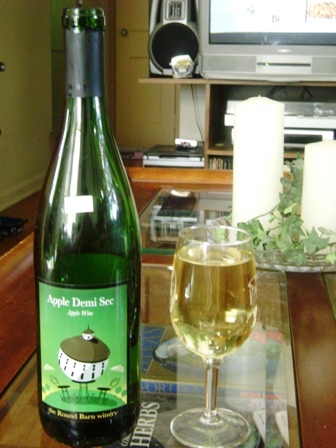
Round Barn Apple Demi Sec

Region: Lake Michigan Shore AVA

Maker: Round Barn Winery, Baroda, MI

ABV: 12%

Round Barn is a jack-of-all-trades winery.  Located in the heart of the SW Michigan Lake Michigan Shore AVA (American Viticultural Area), they cut their teeth on the white wines and fruit wines that are the lifeblood of the Michigan wine industry.  They have branched out into brewing and distilling, producing (or at least bottling) a vodka made from their own grapes.

The concept of an apple wine still seems odd to me.  Why not drop the prentense and call it a cider?  But after a few drinks, I understand why they call it an apple wine.  First of all, as you may have noticed, the alcohol content is much closer to a wine than a typical cider, which frankly is a little dangerous, I can already tell you.  It is also more acidic than typical ciders and has a delicate dryness that is as close to a New Zealand Sauvignon Blanc as it is to a glass of Woodpecker, for instance.

Still, the apples are leading the charge.  It is in the lighter, dry style of most British ciders.  The smell reminds me of working my way through grad school in the childcare industry and the hordes of apple juice guzzling children I shepherded through their single digits.  It lacks the robust body of my favorite ciders, but has a lightness that makes a good change of pace on a summer afternoon.