A Visit to WaterFire Vineyards

20170707_143820
A panoramic photo from the WaterFire parking lot. Tasting room/winery on left, vineyards and apple trees center and right.

I first met Chantal Lefebvre at the 2015 Michigan Wine Showcase. Since it’s the only Michigan wine industry event I get invited to, I try to make the most of it when I’m there. I seek out new wineries or at least ones I haven’t heard of to try. WaterFire was located near the center of the room with the food, so I strolled on over. The table wasn’t crowded so I was able to strike up a conversation with Chantal who was there pouring herself. Chantal is an introvert but not shy, if that makes any sense. As soon as I started asking her questions about the vineyards her passion for sustainable viticulture and winemaking poured out.

Like Mari Vineyards, WaterFire is a relatively new winery but, aside from both having great winemakers making great wine, the two operations couldn’t be more different. There’s no big money behind WaterFire, just Chantal’s (and husband Mike Newman’s) dream and skill. The property was purchased in 2008, planted in 2009 and the first vintage was 2012. The tasting room opened memorial day weekend of 2017, just a few weeks before we visited! They looked for property on Old Mission and Leelanau peninsulas but land was too expensive. They eventually found a cherry orachard in Antrim county that was promising and purchased it. It’s located between Torch Lake (WaterFire? get it?) and the East Arm of Grand Traverse Bay, opposite Old Mission Peninsula, north of Elk Rapids. Chantal has heard rumors of other properties being purchased for in the county but has no idea who or where they are.

Before starting her own winery, Chantal worked at many wineries across Michigan, including Left Foot Charley and Bower’s Harbor. WaterFire only has one other employee, also a woman. This makes it the only winery in Michigan with a 100% female workforce! She informed me that the dogs are male, however.
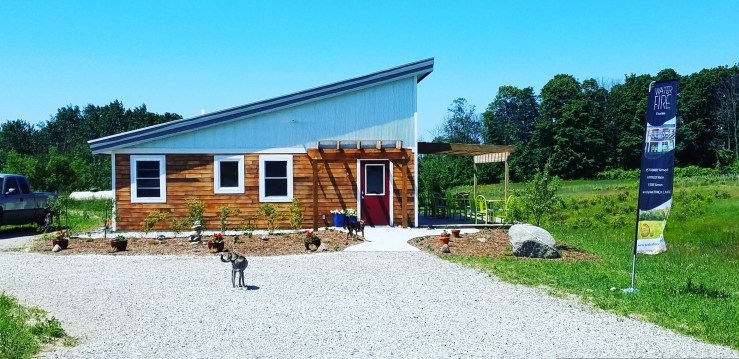
img_20170707_144030_768.jpg
The winery/tasting room building with dogs greeting us.

In the tasting room they currently offer five selections for tasting, including one wine they don’t make themselves, a Williamette Valley Pinot Noir (for any “I don’t like white wine” types that may straggle in). The estate wines are Rieslings from 2013 and 2014 respectively, a 2012 Grüner Veltliner and a Sauvignon Blanc from 2013. As you may have noticed, WaterFire only produces white wines. Why? White wine grapes do best at this site and in Northern Michigan in general. Why waste time with a fussy grape when you’re just starting out?

Waterfire also produces a hard cider, made from feral apple trees of on the estate and accross the road. The cider is very well balanced with some chewy tannins. It’s only available out of the tap at the tasting room, so bring a growler if you want to take some home.
IMG_4607
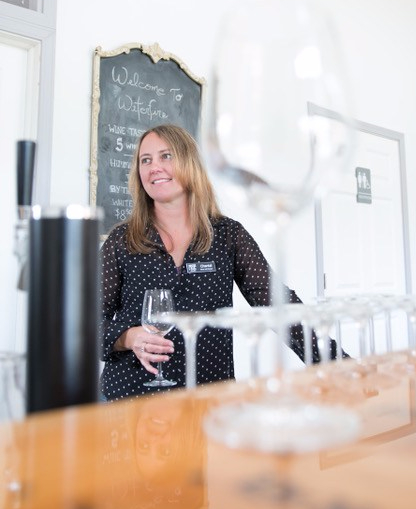
Chantal in the tasting room. Photo courtesy of WaterFire Vineyards.

As I alluded to earlier, Chantal’s passion is growing grapes and doing so in a sustainable way. WaterFire has two Michigan Agriculture Environmental Assurance Program (MAEAP) certifications, for cropping and farmstead practices. Chantal uses no herbicides and only one pesticide, a natural, fermented product to control beetles. She has considered getting an organic certification for WaterFire, but the pesticide does not qualify as an organic. Chantal thinks the organic certification process is a pain and could stand to be simplified.

20170707_143853.jpg
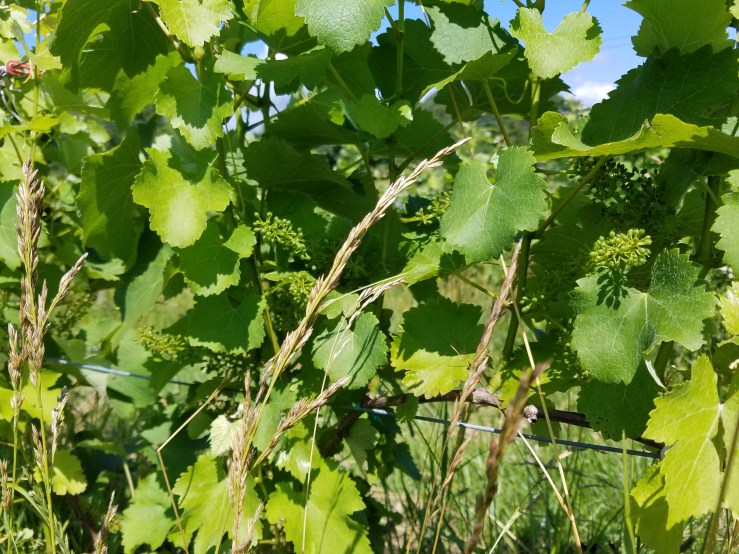
Two rows of Sauvignon Blanc in the front with Riesling behind. Yes, they’re weedy, but Chantal doesn’t care. “Plants have many kinds of relationships, why focus only on competition?”
20170707_153037
Baby Sauv Blanc.
IMG_2586
Chantal and her grapes (Sauv Blanc?). Photo courtesy of WaterFire Vineyards.
20170707_153450
The back block planted with Sauvignon Blanc. Feral apple trees in the midground. 

Chantal’s immediate plans are to put in another vineyard block in front of the tasting room, probably with a (not fussy) red variety, possibly “something Austrian”. Lemberger is grown in Michigan and would be the obvious choice, but Zweigelt is grown widely in Ontario and might also be a possibility. If she asked me, I would suggest Gamay. It’s not Austrian, of course, but it is a grape that does very well in Northern Michigan but is not grown nearly enough.

Something I would also like to see is an East Grand Traverse Bay AVA (or something like that) in that area, if more vineyards do go in. If WaterFire’s vineyards are typical of the terroir there, it’s deserving of AVA status.

20170707_153135
Future home of the next block of vines, possibly red wine grapes.

We didn’t take a look around the winery itself because we were short on time, but we had a lovely visit and conversation with Chantal. I love her wine and I love her committment to growing grapes in a sustainable way. We’re grateful that she was able to spend time talking to us for my little dog and pony show. The next time you’re in the area, stop into WaterFire and try some of the best white wines in Michigan. Then take home a few. Look for reviews of the wines we brought home over the next few weeks.

For more on the beginnings of WaterFire, check out this interview with Chantal and Mike from 2013 by Michigan By The Bottle.

A Visit to Mari Vineyards

20170707_110839
Panoramic photo from the Mari parking lot. Winery on the right, east arm of Grand Traverse Bay on the left.

I always seem to run into Sean O’Keefe when he’s busy. One time I ran into him was at the 2015 Michigan Wine Showcase in Detroit. He invited me out to see his new place of employment, Villa Mari (now Mari Vineyards) on Old Mission Peninsula. The winery was still being built then but he was eager to show me around anyway. I took him up on his offer over two years later, on July 7, 2017. In my defense, my wife and I did have a new baby in that time period. That baby tagged along with us.

Anyhow, when we walked up to the tasting room and asked for Sean, we learned he was in his office filling spreadsheets and he would be up in a few minutes. Mari’s tasting room and winery is in a beautiful stone building perched on top of a hill, The building (and the whole enterprise) is a tribute to the owner’s family origins in northeast Italy. It’s intended to resemble a Romanesque Italian monastery.

20170707_111057
Winery building with patio on the left.
20170707_111442
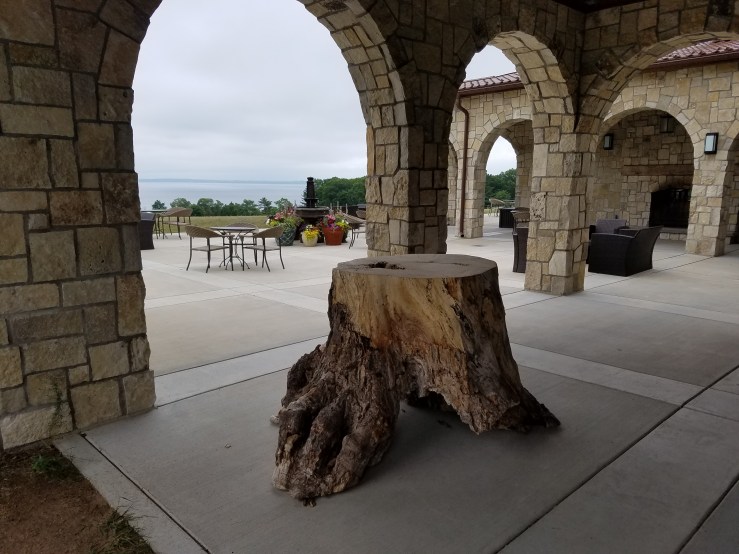
Tree stump in arcade, looking out over the patio.
20170707_111523
Cork art over the tasting room bar.
20170707_111646
Ash bar in the tasting room. Note the marks from the emerald ash borer.
20170707_113109
Table in tasting room made from tree in arcade above.
20170707_111544
Fireplace area in tasting room with metal crosses and chainmail belonging to the owner.

The tasting room has an airy Mediterranean feel with a decorating theme that could be described as “DaVinci Code”. Energy mogul and Upper Peninsula native Marty Lagina is the owner and founder of Mari Vineyards. He’s best known as co-star of the Canadian-produced reality show The Curse of Oak Island, in which Marty and his brother Rick search for treasure on an island in Nova Scotia. In the course of the show they consult with a number of self-described experts on “mysteries in history” type topics who link the yet-to-be-found treasure to Aztecs, Africans, pre-Colombian European mariners and the like. As playwright Anton Chekov once said, “Money, like vodka, turns a person into an eccentric.”

After Sean arrived and said a few words, he took us down the next level to the winery. There we tasted some of the white wines being fermented in the stainless steel tanks at the time.

20170707_113239
Tanks in the center and left.

We tasted samples of Pinto Grigio , Grüner Veltliner and Riesling. The Grüner was bound for Troglodyte Bianco, a white Pinot Blanc-heavy white blend Sean compared to his own Ship of Fools. There was one white Grigio (closer to an Alsatian Gris than an Italian Grigio) but also an “orange” version. If a rosé is a red wine treated like a white, then an orange wine is a white wine treated like a red. As is usually done with red wines the skins are left in contact with the juice for an extended period of time to add tannins, color and other things.

20170707_114343
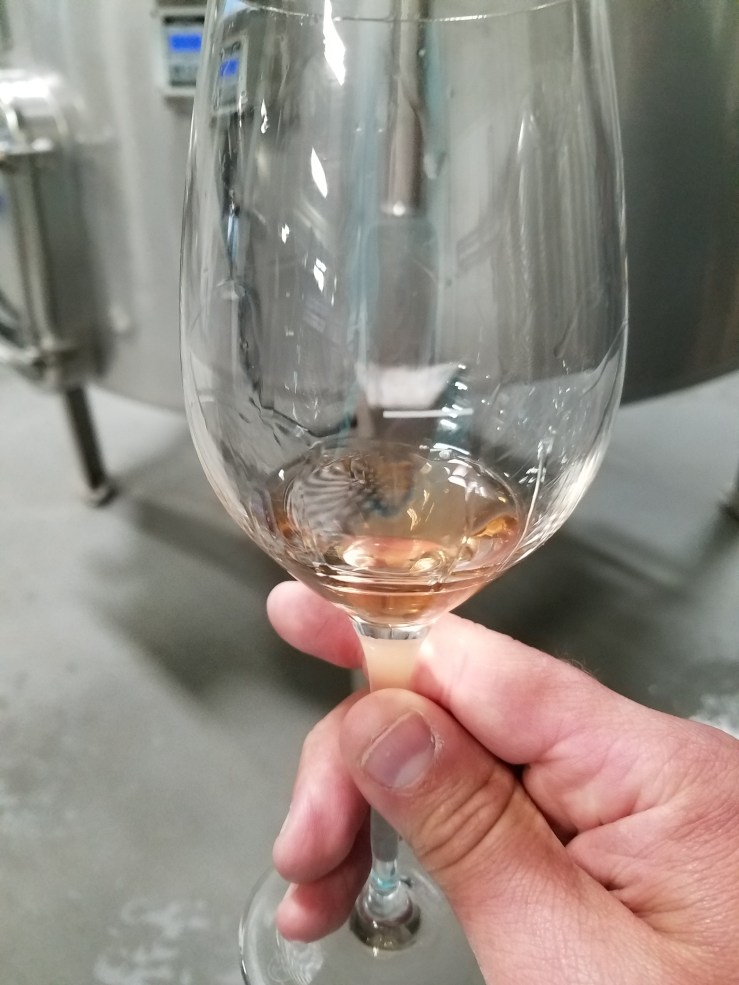
The orange Pinot Grigio, soon to be bottled as Ramato, Italian for copper.

This style has become trendy recently, so much so that Sean prefaced pouring us some of this wine said he has resisted making hipster wines but this one is actually good. And I agree.

We also had three Rieslings each from a different vineyard. Sean likes to segregate wines by vineyard in the winery and the cellar so that they can develop their own character. It’s easier to then blend the wines together to produce the profile he wants for the expression. Or bottle as a single vineyard offering of course. The first one we tasted was dry (Sean made a point of pointing out that it was truly dry, not semi-dry like many Michigan Rieslings labeled as dry), the second was described as more of a semi-sweet feinherb style and the third was fruity like the second but even sweeter. About releasing the third one as a varietal Sean said, “People like this one [the most] but..”

After tasting the whites, it was down to the cave for the reds. The extensive cave/cellar was dug specifically for the winery though there were some utility trenches under where the winery is now.

20170707_115422
Sean by the big German barrels. Bubblers on top (airlocks) are to prevent contamination of the wine from air moving in while still allowing the gasses from fermentation to move out.
20170707_120535
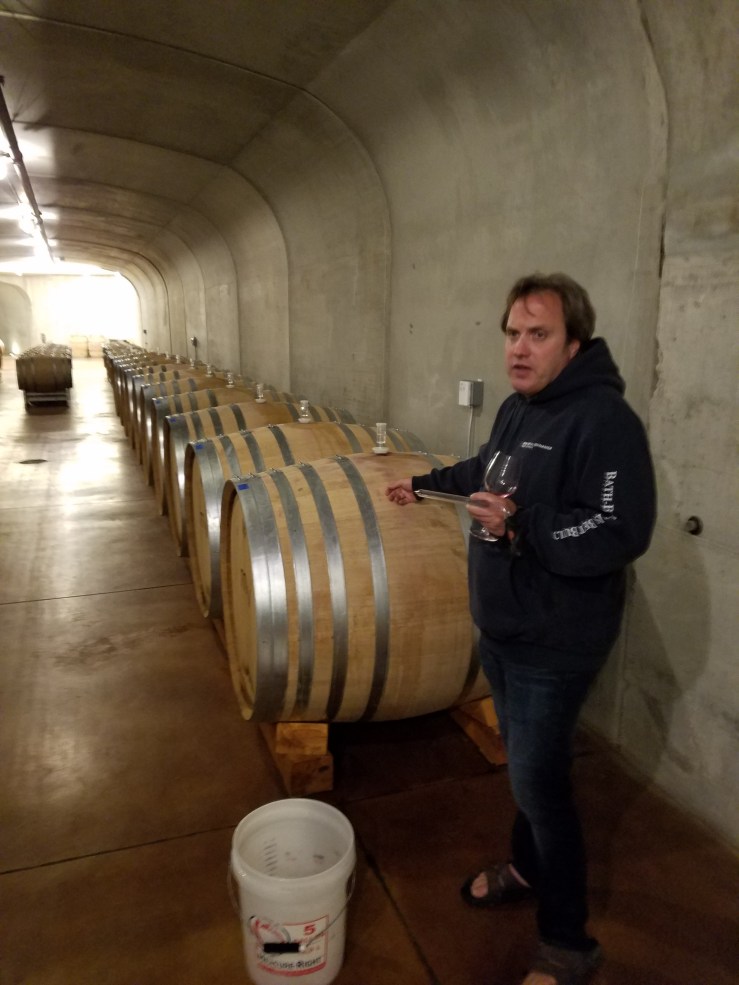
Sean drawing out some extremely oaky Merlot for us to try. It is intended as a blending element. Mari’s house style is not oak heavy. The cellars also have a space for group tastings.

The variety of reds in the cellar was staggering. The usual suspects were there, Cabernets Franc & Sauvignon, Merlot, Syrah but also estate grown Sangiovese, Nebbiolo, Malbec and a number of obscure Northern Italian like Refosco, Teroldego, and Scuppatino. How can they grow these, you may ask? It’s due to their nellaserra system, aka hoop houses. They’re similar to cold frames, only they don’t go all the way to the ground, they just warm the soil under them more quickly. One the biggest surprises for Sean was how well some varieties did in this system, Nebbiolo in particular. On the other hand, others like Merlot don’t seem to do any better under the hoops than not.

Most of these wines will be blended, but some may be released as off-beat varietals on sub-labels.

20170707_121341
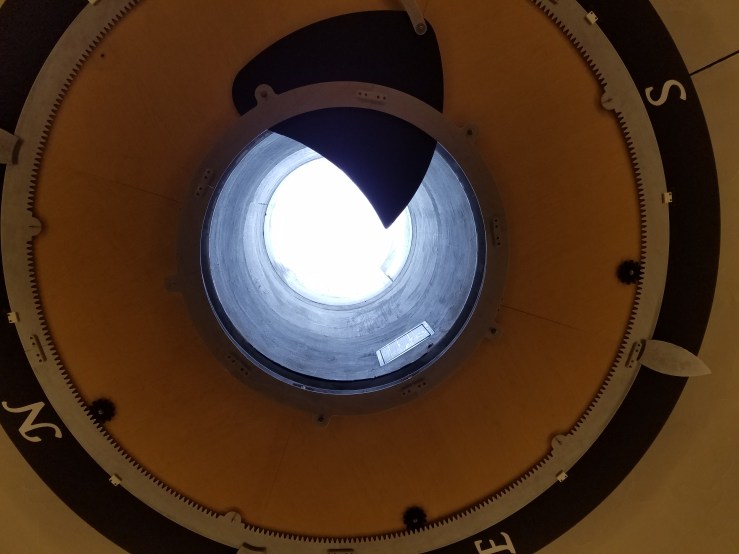
Templar cross under the oculus in the cellar. On the summer solstice, the exit doors at the end of the passageway are opened and a shaft of light shines through, “Raiders of the Lost Ark style”.
20170707_121404
The oculus.

We then went back up to the tasting room. They were officially sold out of white wines but we were able to sample some of Mari’s Malvasia Bianca. The grape is grown in Croatia, Friuli and California and a few other places. Mari’s Malvasia Bianca vines are the only ones in Michigan. The clone they planted is virtually extinct in Italy, according to Sean, but is widely grown in California. Unfortunately, it was not available for purchase at that time because Sean was still waiting on label approval from the TTB.

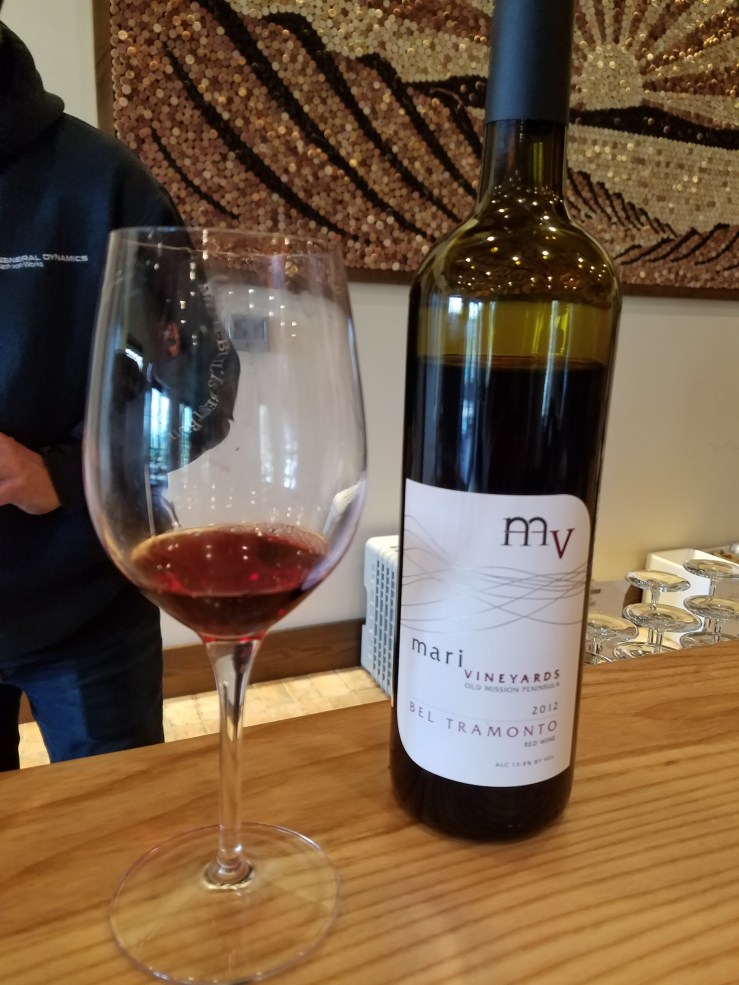
There were three reds available. Bel Tramonto (below), Row 7 (Cab Franc & Merlot field blend) and Ultima Thule (Cab Sauv, Nebbiolo, Merlot, Syrah). All were very good. We came home with a bottle of Ultima Thule and a bottle of Row 7 at an 18% media discount. Both retail for $60 at the tasting room.

20170707_123545
We tried this wine, which is a blend of Melot and Sangiovese. It’s Mari’s take on a Super Tuscan.

Sean started at Mari Vineyards as a consultant charged with hiring a winemaker for the new winery. As is often the case in these situations he ended up recommending and hiring himself. As the winery was being built, he made the wines at his family winery, Chateau Grand Traverse, of which he is still co-owner along with his father and brother. He was responsible for many of the “special” labels put out by CGT over the years like Ship of Fools, Whole Cluster Riesling and the acclaimed Lot 49 Riesling. Sean described his approach to winemaking as one that seeks to use as few interventions and additions as possible. He does add yeast to Mari’s wines, but he has experimented with wild fermentation. While he seeks to intervene as little as possible, he said he didn’t want to be like some natural winemakers who make mistakes and then take an “I meant to do that” attitude when their wine turns out funky.

As I was writing this review I sipped on wine from a 2010 bottle from Mari I found at A & 20170719_190717L Wine Castle in Ann Arbor a year or so ago. It’s more of a Bordeaux Blend with a little Syrah thrown in than a straight up Cab Franc. Juicy but well structured. I recommend it, although there are very few bottles of anything from Mari Vineyards kicking around outside the tasting room anymore.
Look for an icewine in the near future, as well as more bottlings of Mari’s standard blends and a few oddball varietals.

Mari is still relatively new, but Sean has a brain that is constantly thinking about his wines and what he’s going to do with them. He didn’t ask me, but I’d like to see more dessert wines and maybe a passito from Mari Vineyards in the future. Even more fun might be planting some Trebbiano and hooking up with Black Star Farms or Red Cedar and producing an aged brandy. I’d love to see what spirits do in that cellar. Whatever is actually coming down the pike, I’m looking forward to it. Next time you’re in Traverse City, stop into Mari Vineyards tasting room!

FB_IMG_1499650764803
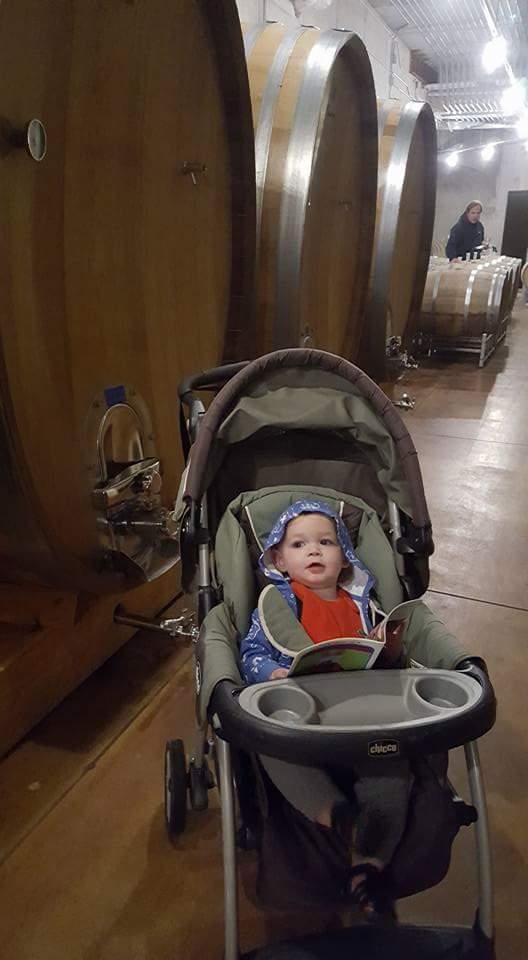
Alfie enjoying the echoes in the caves.

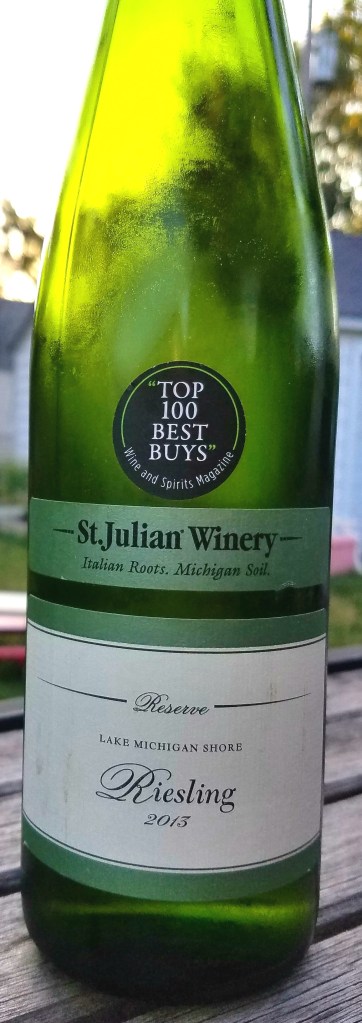
St. Julian Riesling, 2013

Maker: St. Julien, Paw Paw, Michigan, USA20170703_202437

Place of origin: Magnificent Mile Vineyard, Baroda, Lake Michigan Shore AVA, Michigan, USA

Style: Medium dry.

ABV: 12%

Purchased for $12 (Meijer)

Appearance: Pale gold.

Nose: Ripe peach, flint, orange thyme, canned pineapple.

Palate: Fresh squeezed orange juice, fresh red pear, meyer lemon.

Finish: Mineral with a squirt of citrus.

Parting words: The old saying is that familiarity breeds contempt. I don’t think that’s true in most cases, but I think it does happen to St. Julian sometimes. St. Julian’s Heron series of sweet, plonky wines are best sellers in Michigan and elsewhere. Their tasting rooms are located in touristy areas and interstate exits. This could lead a person to dismiss St. Julian as an unserious winemaker only interested in trapping tourists or resting on its laurels as Michigian’s oldest and biggest winery.

Who thinks like this? Well, sometimes I do and that’s led to me unfairly ignore St. Julian’s wines. I’m hoping to rectify that with this review and some that will be coming later this year.

2013 St. Julian Riesling is a very enjoyable semi dry wine at a wonderful price. It does a nice job of representing both the grape and LMS terroir. It’s crisp, as a Riesling of this style should be, but as it warms a tropical fruit and a hint of petroleum appear. Nothing unpleasant, though. It pairs well with just about anything. $12 is a steal for a tasty, single vineyard Riesling from a good producer. St. Julian Riesling 2013 is recommended.

Peninsula Cellars Manigold Vineyard Gewürztraminer, 2013

Maker: Peninsula Cellars, Traverse City, Michigan, USA20170627_155041

Place of origin: Manigold Vineyard, Old Mission Peninsula AVA, Michigan, USA

Syle: Dry (Semi-dry)

ABV: 12%

Price: $20 (winery)

Appearance: Medium gold with tiny still bubbles.

Nose: Lychee, limestone, pineapple sage, apple juice.

Palate: Meduim bodied and juicey. Peach, mango, pink peppercorn, raw ginger, thyme, mineral water.

Finish: Fruity but with a lot of spice on the back end.

Parting words: Manigold is one of my favorite vineyards on Old Mission. It’s known best for Gewürztraminer and also has Chardonnay vines. The vineyard is only two acres in size but its wines are big. Gewürz’s spicy character is in full effect here but there is also loads of tropical fruit making for a complex, aromatic, flavorful wine. I could gush over this for a few more paragraphs, but I’ll spare you. Hard to find a better Gewürz at this price from Michigan or anywhere. Peninsula Cellars 2013 Manigold Vineyard Gewürztraminer is highly recommended.


Uncle John’s Fruit House Apple Brandy

Maker: Uncle John’s Fruit House Winery, St. John’s, Michigan, USA20170627_154846

Distiller: Red Cedar, East Lansing, Michigan, USA (From Uncle John’s own cider)

Age: NAS (2-6 y/o)

ABV: 45%

Price: Don’t remember/375 ml. Only available at the winery. Complimentary bottle.

Appearance: Bright copper.

Nose: Apple cider, cola, caramel, leather.

Palate: Sweet and medium bodied. Salted caramel, candy apple, alcohol.

Finish: Lavender, raisins, toasted oak. Long.

Mixed: I tried this brandy in two cocktails, both of which put the brandy front and center. The first was the classic Jack Rose (with lime juice and grenadine). It was good. The second was the Marconi Wireless (basically an apple brandy Manhattan). It was just OK. The pungent sweet vermouth I used overwhelmed the brandy.

Parting words: From my “A Visit to Uncle John’s“: “We then moved on to the really good stuff, apple brandy. They have twelve barrels aging at the Cider Mill. They have two different types of barrels to age their brandy. Some is aged in toasted French oak (in barrels intended for Calvados) and some in Michigan oak barrels, also toasted. The Michigan oak barrels were sourced by St. Julien’s to be distributed to wineries across the state. Mike prefers the French oak barrels but again credits St. Julien’s with doing a good thing for wineries in the state by facilitating the use of home grown wood in wine and spirits production. It’s a cool thing for a Michigan producer to be able to say that [its] product has been aged in Michigan oak.”

Uncle John’s Apple Brandy was fine mixed, but it’s really a back porch neat sipping brandy. I don’t remember the price but I don’t remember it being unreasonable for a half sized bottle. It’s made in very limited quantities (currently sold out) so get some if you’re ever in the Lansing area. Uncle John’s Apple Brandy is recommended.

WaterFire Riesling, 2013

Maker: WaterFire Vineyards, Kewadin, Michigan, USA20170516_082046

Place of origin: WaterFire estate, Antrim County, Michigan, USA

Style: Medium dry.

ABV: 11%

Purchased for $18 (Holiday Market)

Appearance: Light gold.

Nose: Mandarin orange, meyer lemon, lychee, woodruff.

Palate: Lemonade, mineral water, navel orange.

Finish: Pineapple, lemon thyme.


Parting words: The WaterFire winery is located in Northwest Michigan, on the isthmus between Torch Lake and Grand Traverse Bay, opposite Old Mission Peninsula. It’s not within the bounds of any of the Northern Michigan AVAs but it is close to all of them. Antrim County is one of the county appellations that were grandfathered in when the new AVA system was rolled out in the 1980s.

Chantal Lefebvre, owner and winemaker of Water Fire does not have natural, organic or biodynamic certification for her wines, but she is firmly committed to growing grapes and making wine in a way that is in harmony with the natural world. I had a fairly long conversation with her about that topic at the 2016 Michigan Wine Showcase in Detroit. Water Fire wines are estate grown and limited production but are some of the best wines Michigan has to offer. They currently produce Pinot Noir, Sauvignon Blanc, Riesling and Grüner Veltliner.

2013 was a banner year for white wines in Michigan as you, the attentive Sipology reader, know. 2013 Water Fire Riesling ranks near the very top of great Michigan Rieslings in a year full of them. This wine’s minerality and herbal aromas provide the perfect foundation for the gothic cathedral of acidity that rises up through the palate. I love this wine and this winery. WaterFire deserves to be a household name, and their wines deserve a place at your table. 2013 WaterFire Riesling is highly recommended.


2896 Langley, 2010

Maker: Bowers Harbor, Traverse City, Michigan, USA20170509_183841

Grapes: 60% Cabernet Franc, 39% Merlot, 1% Cabernet Sauvignon

Place of Origin: Langley Vineyard, Bower’s Harbor estate, Old Mission Peninsula AVA, Traverse City, Michigan, USA.

Style: Meritage

ABV: 13.5%

Price: $38 (original price on shelf. Purchased on sale with a discount from the owner)

Appearance: Inky dark purple.

Nose: Blueberry, cherry juice, oak.

Palate: Medium sweet. Cherry juice, blackberry, pepper, chewy leather on the back end.

Finish: Cherry and lightly fruity. Stays in the cheeks for a good bit of time.

Parting words: 2896 is Bowers Harbor’s big, flagship red. The 2013 vintage is currently selling on the BH website for $55 and the 2012 vintage (considered the best recent vintage for Michigan reds) for $100. I haven’t had either of those, so I don’t know if they’re worth the money, but they are both at the top end of red wine prices in this state.

As for this wine, it’s very good and worth the price that was on the shelf on which it sat. It is well balanced, but still has the laid back, fruity character of a cool season Bordeaux-style red. Enough oak and alcohol to keep it from becoming a fruit bomb but not aggressive or overly tannic. It goes well with beef and smoked or grilled meats. My only complaint is that the gold wax is very hard to get off and it looks corny. The bottle would be better off without it. At any rate, at around $40 or so, 2896 Langley 2010 is recommended.


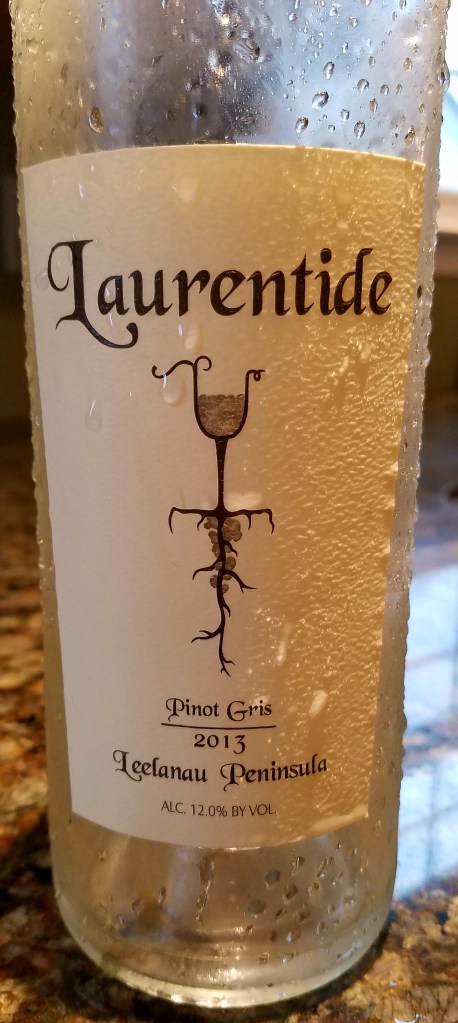
Laurentide Pinot Gris, 2013

Maker: Laurentide Winery, Lake Leelanau, Michigan, USA

20170406_104815
Accidentally put this bottle into the recycle bin before taking this photo!

Grape: Pinot Gris/Grigio

Place of origin: Leelanau Peninsula AVA, Michigan, USA

Style: Semi-dry Gris.

ABV:

Purchased for $20

Thanks to the Laurentide and the retailer who helped me get a replacement for my original tainted bottle.

Appearance: Pale gold with tiny stationary bubbles.

Nose: Mozzarella cheese, toasted pizza crust.

Palate: Medium dry, full bodied. Underripe peach, minerals, oregano, candied lemon peel.

Finish: Clean, slightly tart, then dry

Parting words: After meeting Laurentide co-owner Bill Braymer and his charming daughter Calla at the opening of Michigan by the Bottle Tasting Room, Auburn Hills, I got excited about opening the one bottle of Laurentide wine I had in my cellar, a bottle of the 2013 Pinot Gris. The moment I uncorked it, I realized there was something wrong. One sip confirmed it. Taint. Luckily I was able to get a replacement from the winery along with an assurance that future vintages will use screw caps.

This one was flawless. No, I wasn’t eating pizza when I took these notes, but I felt like I could have been. Mozzarella, pizza crust and oregano sound weird in a wine, I know, but they were all delicate and delicious in this one. There’s enough sweetness and acid to balance those slightly funky pizza notes and create a harmonious beverage.

Nothing not to love about this wine or the Braymers for that matter. Bill impressed me at that tasting room opening. I remember him taking a sip of another winemaker’s product after a few glasses and saying something like, “Something not right about this one. Picked too soon, maybe? No excuse for that in 2012!” A winemaker who can’t shut the critical winemaking part of his brain off even at an event like that is somebody whose wine I want to drink. 2013 Laurentide Pinot Gris is recommended.


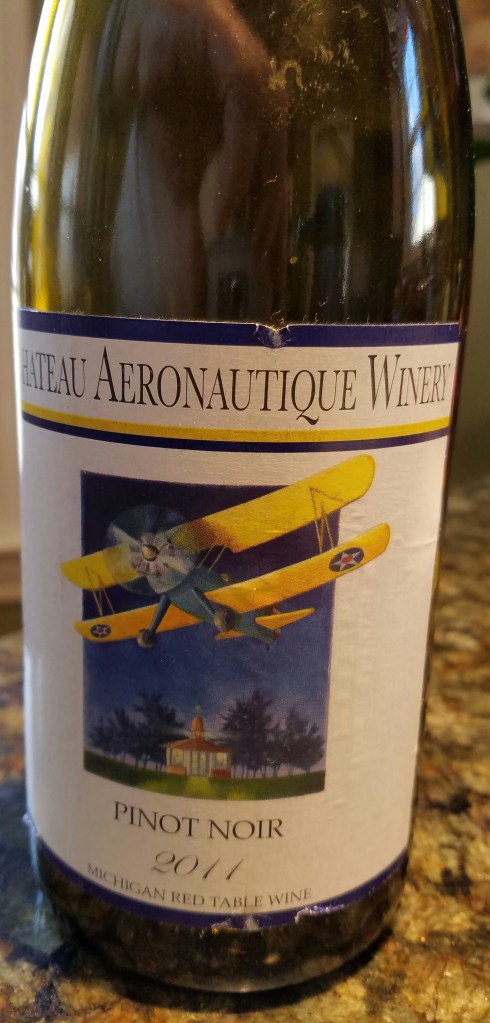
Chateau Aeronautique Pinot Noir, 2011

Maker: Chateau Aeronautique, Jackson, Michigan20170311_163550.jpg

Place of origin: Michigan, USA

Grape: Pinot Noir (100%?)

Vintage: 2011

ABV: Unknown, but seems high.

Price: $25 (Michigan by the Bottle wine club)

Appearance: Translucent ruby. Thick, juicy legs.

Nose: Alcohol, oak, sweet cherry, blueberry.

Palate: Medium bodied and blandly fruity. Roasted plantain, blueberry.

Finish: Slightly tart, slightly tannic.

Parting words: “Ham fisted” is one of my favorite idioms in the English language. Its origins are uncertain but it may be connected to the use of the word “ham” to describe an awkwardly bad, over-the-top actor. It’s a phrase that perfectly describes the winemaking style at Chateau Aeronautique. ChA’s aggressive, alcohol-heavy style can work well with bold reds like Cab Franc and the wines of their Aviatrix series but is not well suited to wines like the last ChA wine I reviewed, the 2012 Riesling or this Pinot Noir.

The “Bull in a china shop” is the idiom that describes this specific wine the best. Pinot Noirs with power can be enjoyable but that power must be balanced with fruit and earth (or other aromas) or else the grape loses its distinctiveness. That is what happened here. All that said, I don’t think ChA’s 2011 Pinot Noir is awful (although my usually easy to please wife did). It’s just that, like the Riesling, it’s out of balance. All nuance is smashed to bits on the horns of its aggression. At $25 from a boutique producer I expect better. Chateau Aeronautique’s 2011 Pinot Noir is not recommended.


Left Foot Charley Tale Feathers Pinot Gris, 2011

Maker: Left Foot Charley, Traverse City, Michigan, USAwp-1488403717038.jpg

Place of origin: Tale Feathers Vineyard, Old Mission Peninsula AVA (western slope), Traverse City, Michigan, USA. For more information on the vineyard, see here.

Vintage: 2011. For more information on the vintage, see image below.

ABV: 12%? (From memory)

Purchased for $19 (Holiday Market)

Appearance: Medium gold.

Nose: Roasted brazil nuts, mineral water, lychee, lavender.

Palate: Medium bodied and medium dry. Nutty brown butter, coconut, oregano.

Finish: White grapefruit fading into herbal tastes.

20170301_162702.jpgParting words: Tale Feathers has partnered with Left Foot Charley for many years now. It’s a small (2 1/2 acre) vineyard in west central part of Old Mission. It’s planted entirely with Pinot Gris. The Wilsons’ focus on that grape has paid off in a big way for them and LFC. Theirs is arguably northern Michigan’s best Gris.

The 2011 vintage was strong for whites in Michigan, though not as strong as 2013. It was still one of the best of the past decade. A lot of its fruit has faded over the past 5+ years, but it remains a beautifully structured wine. I wouldn’t let it go much further than this, though. 2011 Left Foot Charley Tale Feathers Pinot Gris is recommended.