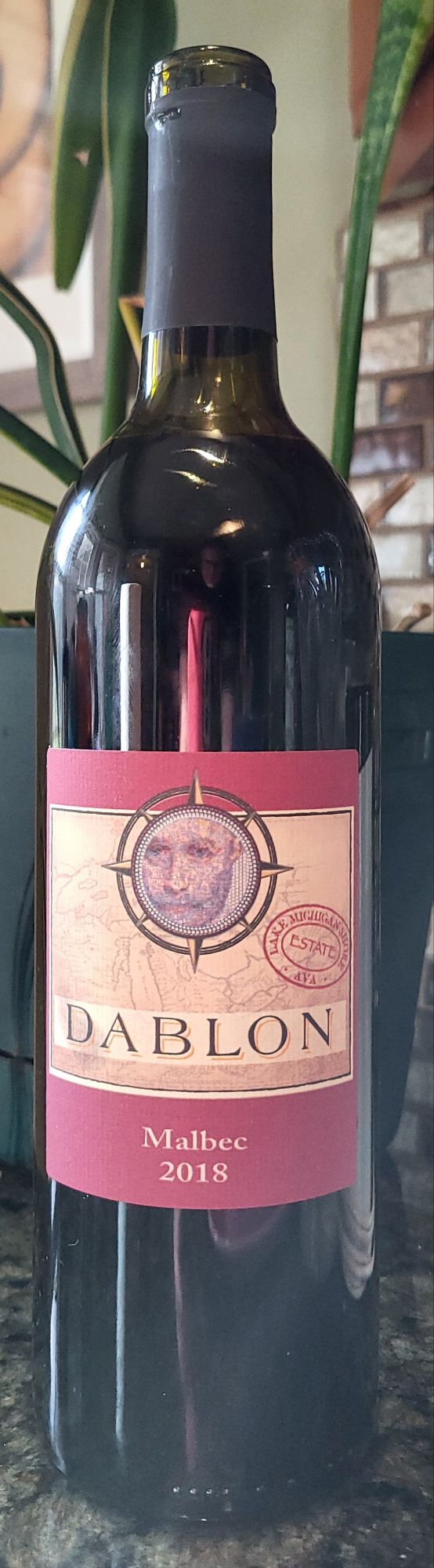
Dablon Winery’s 2018 Malbec: A Michigan Gem

Maker: Dablon Winery & Vineyards, Baroda, Michigan, USA.

Grape: Malbec (at least 85%)

Place of origin: Dablon Estate, Lake Michigan Shore AVA, Michigan, USA

Vintage: 2018

ABV: 11.7%

Purchased for $30 with wine club discount. Originally $38.

Appearance: Brick red.

Nose: Blackberry jam, black currant.

Palate: Dry, but fruity. Mixed berry pie, cherries, fruit punch, French oak.

Finish: Tannic, but then tart with a splash of fruit.

Parting words: Malbec is Merlot and Cabernet Franc’s spicy cousin who moved to South America a while back. It’s grown in Michigan more frequently than it was when I first started exploring the wine, but it’s still not as common as its cousins here. Most of it is in the Lake Michigan Shore appellation, but Verterra in Leelanau also grows some. Judging by this post on their website, they may not be growing it for much longer, though.

Vintage matters a lot in a place like Michigan, with big temperature swings throughout and across the years. It’s a tribute to the skill of winemaker Rudy Shaefer and his crew that Dablon continues to deliver consistently high quality wines, even in less than stellar vintages with grapes that are not commonly grown in the area.

This wine is a great example of that. It Malbec’s classic rusticity, but balanced with fruit and acid. The combination makes it a great table wine. Liz and I had some a couple nights ago with grilled ribeye topped with homemade chimichurri. Dablon’s 2018 Malbec is recommended!

Nathaniel Rose Syrah La Blonde, 2013

Maker: Nathaniel Rose, Suttons Bay, Michigan, USA

Style: Blend of Syrah (94%) and Viognier (4%).

Place of origin: Chris Glenn Vineyard, Lake Michigan Shore AVA, Michigan, USA

Vintage: 2013

ABV: 12.8%

Sample bottle provided by winemaker Nathaniel Rose, via Marshall Wehr.

Appearance: Dark red.

Nose: Leather, wild raspberry, purple mulberry, blackberry, tarragon.

Palate: Raspberry, mace, tangerine.

Finish: Tart, but with grip.

Parting words: This is the final bottle from Nathaniel Rose that will make an appearance in our 2012 project on aged Michigan wines from the 2012 and 2013 vintages. Thanks again to Nathaniel for the bottle.

Blending Syrah and Viognier may seem strange at first, but it’s actually been done in the Northern Rhone valley for quite some time. It stabilizes the color of the wine through the magic of chemistry, and it has an impact on the taste and smell of it too, of course. Nobody online seems to agree on that impact, though. Based on this wine, I would say it adds an aromatic fruitiness that balances out the classic robust spice of Syrah.

I would not put this on a level with Nathaniel’s other reds, like the Left and Right Bank blends, or his double barrel Syrah. It’s not as complex as those. Nevertheless, it’s a very good wine, and worth seeking out. It’s held up very well, too. Nathaniel Rose Syrah LaBlonde 2013 is recommended!

Dablon Estate Red, 2017

Dablon Estate Red Blend 2017

Maker: Dablon Winery & Vineyards, Baroda, Michigan, USA.

Grapes: 60% Cabernet Sauvignon, 25% Merlot, 10% Malbec, 5% Petit Verdot (per winemaker Rudy Shafer).

Place of origin: Dablon estate, Lake Michigan Shore AVA, Michigan, USA.

Vinatge: 2017

ABV: 13.1%

Price: $50 (2018 vintage website price)

Appearance: Dark ruby.

Nose: Cherry Jam, blueberry, sweet roasted red pepper.

Palate: Dry, reticent. White mulberry, mace, leather.

Finish: Jammy, but with grip.

Parting words: I have a good number of wines in my cellar currently, and I don’t always remember where or when I got them. Cellar tracker is helpful in this regard, but I don’t always check it before I pop a cork. I remember seeing it on a rack in one of the long term areas of my cellar and thinking, “This blend looks like it would hit the spot! I wonder why it was here?” As soon as I took a sip of it, I realized why it was there.

Although this wine is perfectly suitable for drinking any day of the week, Estate Red is not your average weeknight blend. It’s a fine, age-worthy Bordeaux style blend. It was very good at six years old, but I found myself wishing it had stayed in that place in my cellar a little longer to develop even more complexity and depth. Oh well, live and learn!

Even at a mere (!) six years old, this is a very good wine that is worth seeking out. 2017 was an excellent vintage, but so was 2020. When that one comes out, or if you manage to fine a 2017 on the shelf, I recommend that you buy it!

Nathaniel Rose Left Bank, 2012

Maker: Nathaniel Rose, Suttons Bay, Michigan, USA.

Grapes: Cabernet Sauvignon (85%), Merlot (12%), Cabernet Franc (3%).

Place of Origin: Abigail’s Vineyard, Domaine Berrien Estate, Lake Michigan Shore AVA, Berrien Springs, Michigan, USA.

Vintage: 2012

ABV: 13.6%

Purchased for $120 with trade discount from winery. Original price $150.

Notes: 20 months in French oak. 82 cases produced.

Reviewed as a part of The 2012 project.

Appearance: Brick red.

Nose: Fruit of the forest pie, clove, oak.

Palate: Dry, chewy, and a little tart. Blueberry, wild blackberry, leather.

Finish: Tart, but with a tannic backbone.

Parting words: This was the wine that this whole 2012 Project was all about. OK, that’s a slight exaggeration, but it’s not too far from the truth. It’s the bottle I’ve looked forward to opening the most, and it did not disappoint.

Abigail’s vineyard is named for Abigail Fricke, mother to Katie Mauer, co-founder (with husband Wally) of Domain Berrien. As long-time readers will know, Domaine Berrien is known one of the premier producers of red wine in the state of Michigan. A big part of their success is their vineyards. Those vineyards attracted the attention of young, ambitious winemaker Nathaniel Rose, who was able to get access to them to make his Right Bank and Left Bank blends. My review of the Right Bank (also a part of the 2012 project) is here.

Allow me to briefly quote myself , from this post from 2018:

“Rose is rightfully very proud of [Left and Right Bank], especially the Left Bank. He loves to tell the story of the tasting he attended with several sommeliers (including  Master somm Brett Davis), winemakers, writers and other experts in which his 2012 Left Bank Blend went up against a group of Second Growth Bordeaux and cult California Cabs, including Cardinale (~$270), Ridge Monte Bello (~$250), and Jos. Phelps Insignia (~$190), all of the 2012 vintage. Left Bank won. None of the experts could pick Left Bank out of the lineup blind and tasters could not tell the difference between it and the 2012 Cardinale Cab at all. In fact, they believed they had mistakenly been poured the same wine twice.”

The last time I talked to him, Nathaniel said that he considers this vintage of Left Bank to be the best wine he ever made. I’ll say that it’s the best Michigan Bordeaux-style red blend I’ve ever had (and I’ve had a lot of very good ones) and in the short list of best red wines I’ve ever tasted. It’s elegant, sophisticated, excellent with food, and never overly boozy or over oaked. It’s proof that with the right vintage, vineyard, and winemaker, Michigan wines can stand alongside any comparable wines on the planet.

It’s also proof that a well-made Michigan wine can grow with age. I’ve had wines (yes, even some from The Great Lakes State) that fell apart after five or more years in the bottle. The 2012 Left Bank still has everything in the right place, and I think it could taste as good for at least five more years in the right cellar.

$120 is close to twice my upper limit for wine under normal circumstances, but I didn’t regret what I spent for one second that this wine touched my lips. Everyone else I served it to loved it just as much as I did too. Nathaniel Rose Left Bank 2012 is highly recommended.

Nathaniel Rose Pinot Noir, 2013

Maker: Nathaniel Rose, Suttons Bay, Michigan, USA

Grape: Pinot Noir.

Places of origin: Katherine & Martha’s Vineyard (58%), Hill Road Vineyard (42%), Lake Michigan Shore AVA, Michigan, USA.

Vintage: 2013

ABV: 12.3%

Bottle provided for review by Nathaniel Rose, via Marshall Wehr. Big thanks to them!

Appearance: Dark red.

Nose: Blackberry jam, stewed mushrooms, blueberry juice, allspice.

Palate: Medium bodied. Fruit of the Forest pie, clove.

Finish: Tart, but with grip.

Parting words: When it comes to Michigan Pinot, or other cool climate Pinots, one usually gets a light to medium bodied, pale (that’s not a bad thing!), high-acid, easy drinking wine. This is especially the case with the ones from Northern Michigan. Chateau Chantal’s Pinot Noir is a good example of the style. Even in Southwest Michigan, though, 2013 was a cool vintage that turned out a lot of high-acid wines.

That high acidity ended up doing a lot of favors for wines of that vintage, though. While they were slow to develop, the best ones developed beautifully, like this one. The acid is still there, but it’s moved into a supporting role with wild fruit and spice taking the lead. The result is a wine that has the sort of boldness one might expect from a 1er Cru or a beefier red village Burgundy. It did a great job sharing the table with both pork ribs, and lamb chops.

While 2013, wasn’t regarded as favorably as the previous two vintages were at first, time has shown that the cellar can elevate a well-made cool-vintage Michigan wine to some pretty lofty heights. Nathaniel Rose 2013 Pinot Noir is recommended.

Nathaniel Rose Right Bank, 2012

Maker: Nathaniel Rose, Suttons Bay, Michigan, USA

Grapes: Merlot (50%), Cabernet Franc (50%).

Place of origin: Abagail’s Vineyard, Domaine Berrien Estate, Lake Michigan Shore AVA, Michigan, USA.

Vintage: 2012

ABV: `13.5%

Note: 20 months in oak. 140 cases produced.

Purchased for $90 (Red Wagon of Rochester Hills)

Appearance: Brick red

Nose: Black currant jelly, allspice, toasted oak, cherry juice, ancho chili.

Palate: Juicy. Mulberry, then wild blackberry, then a growing leathery grip.

Finish: Delicate. Juice, then tannin, then fades.

Parting words: The time has finally arrived! The 2012 project has begun! Our first entry is the Right Bank blend from friend-of-the-blog Nathaniel Rose. For the post on my visit to his winery back in 2018, click here. For a review of his one-off Find Wild Fruit Traminette, click here.

Right Bank is modeled on right bank red Bordeaux blends, which tend to have a larger proportion of Merlot compared to Left Bank blends, which have more Cabernet Sauvignon in the mix. Right Bank wines tend to have more Cabernet Franc as well. Nathaniel’s wines come from the best vineyards around the state, which includes those at Domaine Berrien, of course. Both the Right and Left Bank 2012 blends were made from grapes grown at Domaine Berrien.

At any rate, the hallmarks of typical Michigan Merlot/Cab Franc blends are all here: berries, oak, and spice. Time has done interesting things to it, though. It’s “darkened” the fruit, for one, moving from cherry and blueberry to black currant and blackberry. For another, it’s smoothed out the edges and created a wine that shifts more on the palate from one taste to another, rather than everything popping out at once. Right Bank takes my palate on a nice little journey from aroma to aroma and flavor to flavor. There’s nothing for my brain to disentangle. Everything reveals itself in time. A big reason for that seems to be that the acid has mellowed considerably, even compared to similar wines at seven years old.

What it lacks in tangy punch, it more than makes up in sophistication. 2012 Right Bank may not be as hard to find as one might assume, if one lives close to a Red Wagon store. Last time I went to both of them, there were 2012 Right and Left Bank blends on the shelf.

The purpose of the 2012 Project is to taste through these wines and see how they age, so price is less of a factor in my review. Nevertheless, this is a very good wine that I don’t regret paying $90 for. It’s not a weeknight pizza wine, but I didn’t buy it to be that. I think the key with many of these wines is to buy them when they’re young and less expensive, then let them hibernate for several years in a well-regulated cellar.

At any rate, Nathaniel Rose’s 2012 Right Bank is recommended.

Crown of Cab, 2017

Maker: Domaine Berrien, Berrien Springs, Michigan, USA.

Grapes: 42% Cabernet Sauvignon, 29% Cabernet Franc, 25% Merlot, 3% Petit Verdot, 1% Malbec.

Place of origin: Domaine Berrien estate, Lake Michigan Shore AVA, Michigan, USA.

Vintage: 2017

ABV: Undisclosed (table wine exception).

Purchased for $21 (Michigan by the Bottle Tasting Room, Royal Oak).

Appearance: Brick red.

Nose: Cherry juice, toasted French oak, wild blackberry.

Palate: Medium bodied. Tart and a little chewy. Tart cherry, blackberry, leather.

Finish: Chewy like a good Bordeaux.

Parting words: Crown of Cab is the crown jewel of Domaine Berrien’s cellar. It’s produced every year from a blend of red Bordeaux varieties. In odd numbered years, winemaker and co-owner Wally Maurer aims for a Left Bank Bordeaux, producing a Cab Sauv-forward blend like this one. In even numbered years, he goes for a Right Bank, Merlot & Cab Franc heavy blend.

Although Wally encourages his customers to drink his wines promptly, they are some of the most age-worthy wines produced in the Mitten State. That fact is even more astounding when one factors in how affordable they all are.

At five years old, this blend is just starting to get going. 2017 was an especially fine vintage in Michigan as well, so this wine will probably end up having a long, fulfilling life for anyone who can wait a while.

Speaking of aging, I have a fun series of reviews planned for this winter and spring that involve aging Michigan wine. Watch this space for more information soon!

At any rate, 2017 Crown of Cab is recommended for cellaring and for drinking right now!

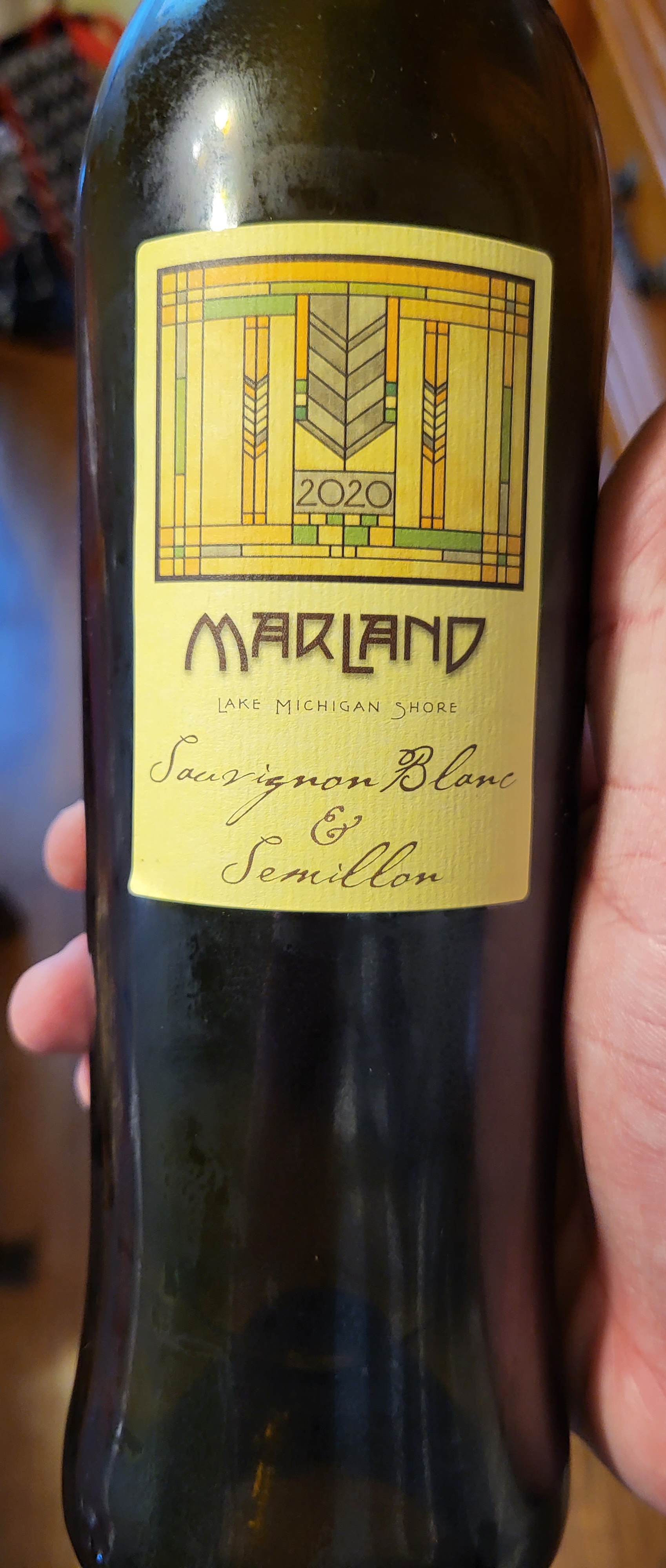
Marland Sauvignon Blanc & Semillion, 2020

Maker: Wyncroft/Marland, Fennville, Michigan, USA.

Grapes: Sauvignon Blanc (75%), Semillon (25%)

Place of origin: Lake Michigan Shore, Michigan, USA.

Vintage: 2020

Note: Aged in acacia barrels.

ABV: Not disclosed (table wine loophole)

Purchased for $19 (winery).

Appearance: Very pale straw

Nose: Golden delicious apples

Palate: Pear, touch of wood, honey.

Finish: Honey, gravel, clementines.

Parting words: Marland Sauv Blanc/Semillon is basically the less expensive, non-estate version of Wyncroft Shou (pronounced “show”) white. To my knowledge, Wyncroft’s James Lester is the only winemaker in Michigan who uses acacia barrels to ferment and age a white blend like this. He does it because that’s how many wineries in Bordeaux make their white blends. I don’t drink a lot of white Bordeaux, but the technique works very well in this wine, and its more expensive cousin. It adds a rich mouthfeel without any of the toasty tastes and aromas one gets from French oak barrels.

I’m not sure how much of this vintage is still kicking around, but 2020 was a great one for pretty much everything, so if you see this, pick it up! It’s a good all-season white that goes beyond the typical summertime porch-sipper. 2020 Marland Sauvignon Blanc/Semillon is recommended.

For more information on Wyncroft/Marland, see the write up of my visit there last year here.

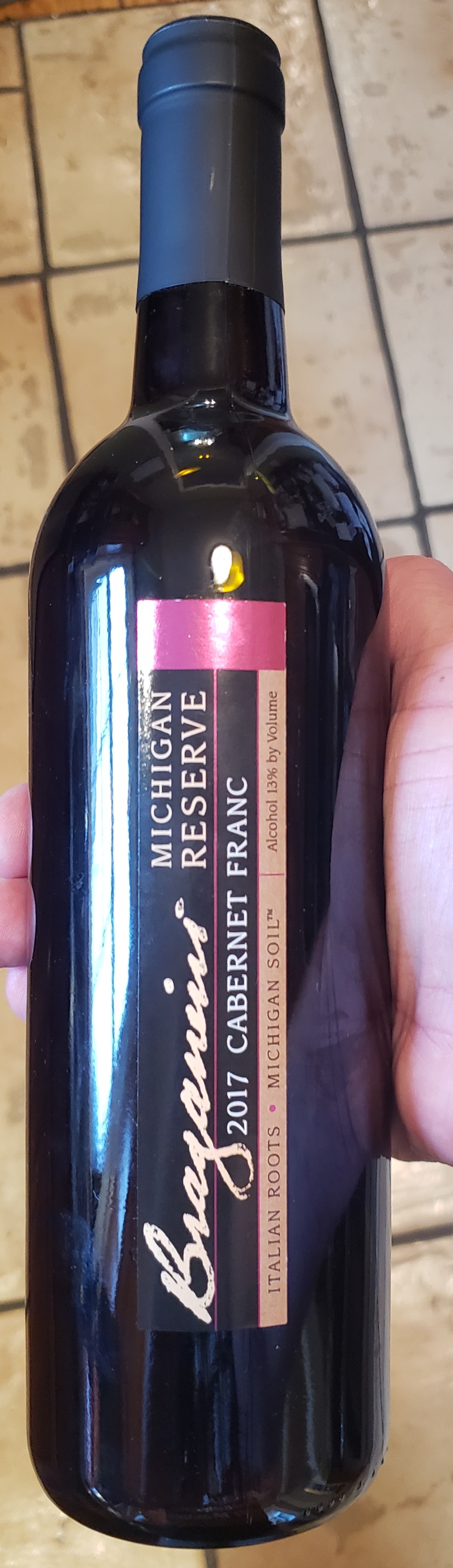
Braganini Reserve Cabernet Franc, 2017

Maker: St. Julian, Paw Paw, Michigan, USA

Grape: Cabernet Franc (at least 85%)

Place of origin: Sandland Farms (Nathan & Julie Nitz), GDN Estate (Ron Nitz), Lake Michigan Shore AVA, Michigan, USA

Vintage: 2017

ABV: 13%

Purchased for $23

Appearance: Dark ruby.

Nose: Blackberry jam, black cherry, a whiff of oak.

Palate: Crushed bramble berries, pink peppercorn, leather.

Finish: Balanced with fruit, acid, and tannin.

Parting words: Cabernet Franc is one of the great workhorse red wine grapes of the world, but as longtime readers know, it can make excellent varietal wines as well. This is a great example. There’s loads of fruit and acid with a little spice as the only trace of the infamous bell pepper aromas that can show themselves in poorly made Cab Franc.

St. Julian puts too much energy into making a bewildering assortment of forgettable wines, but the Braganini Reserve line is almost always a good glass of wine. This is no exception. This wine is probably at its peak now, but it could probably go for another year or two if you are so moved. Braganini Reserve 2017 Cabernet Franc is recommended.

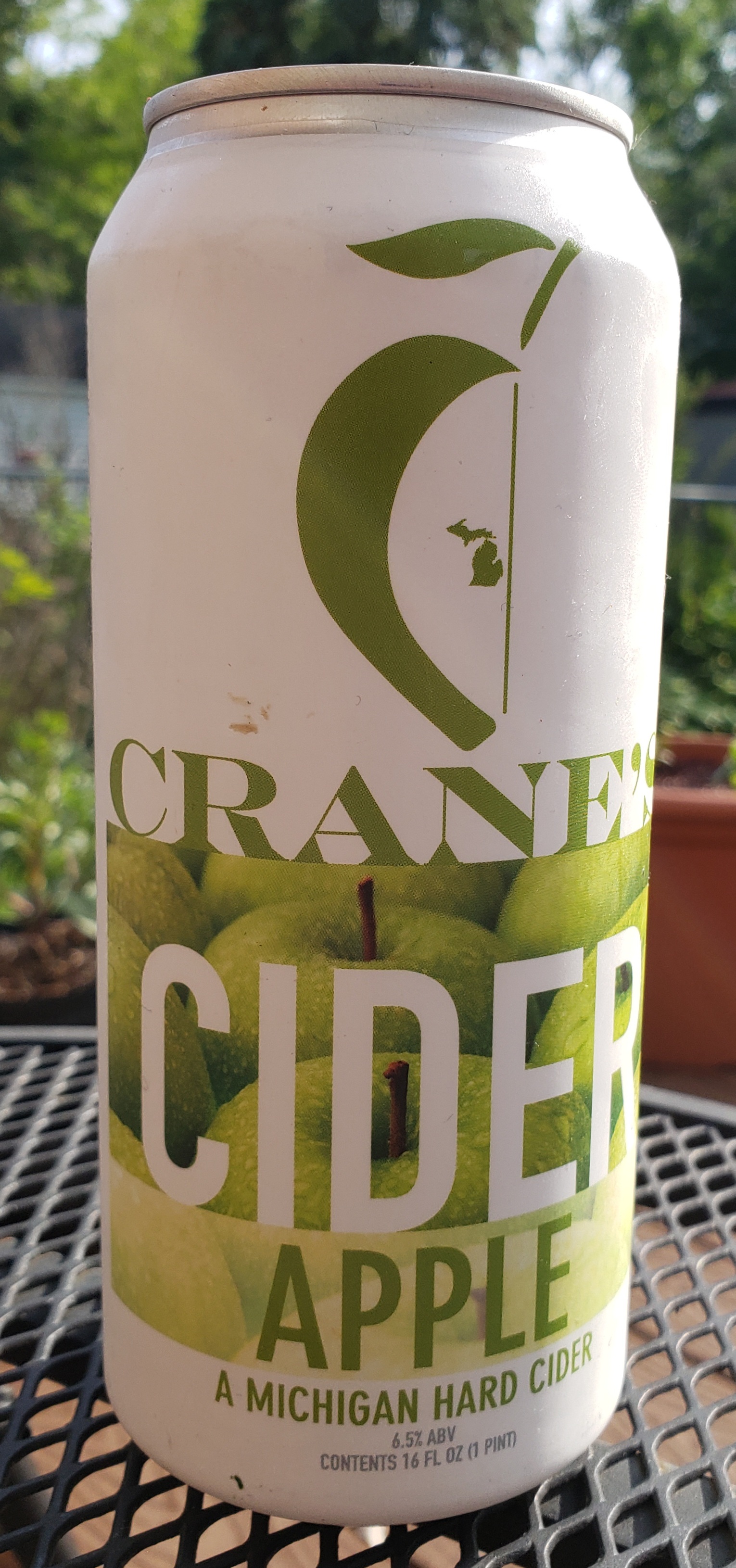
Crane’s Apple Cider

Maker: Crane’s, Fennville, Michigan, USA

Style: Semi-sweet apple cider

Apples: various dessert apple varieties, including Jonathan, Macintosh, others.

Note: from 100% juice.

ABV: 6.5%

Complimentary of the cottage we stayed at in Saugatuck, Michigan, last July.

Appearance: Light gold with light effervescence.

Nose: Sweet apple, honey, a little funk.

Palate: Medium bodied and semi-sweet, with a lot of tartness. Baking apples, pinch of brown sugar.

Finish: Short, sweet, and tart.

Parting words: Crane’s Pie Pantry and Winery is a tourist staple located in Fennville, Michigan, which is also home to Fenn Valley and Wyncroft/Marland wineries. It’s a bit of an odd place, frankly. The decor mix of tile, formica, and wood paneling with pots and pans hanging around the place. The house specialty is pies, but it also has a pretty good selection of sandwiches in the place. Wine tourism (mostly from Chicago) is big in the area, so there’s a wine and cider menu as well. The campy vacation energy of the place doesn’t inspire confidence in the wine and cider, but it’s all pretty good. It’s certainly better than many of the tourist trap wineries in the nearby costal towns (the body of water being Lake Michigan).

This cider far exceeded my (admittedly low) expectations. It is pretty sweet, but has a big acidic bite that keeps the sweetness well in check and there was a surprising pinch of yeasty funk in the background. I wouldn’t call it elegant, but it is more sophisticated than one expects a tourist-oriented product to be.

For the style, I like this a lot. Crane’s (semi-sweet) Apple Cider is recommended.