Review: Laird’s Straight Apple Brandy, bottled-in-bond

Maker: Laird’s (Scobeyville, New Jersey/North Garden, Virginia)

Age:  NAS (4 y/o)

Proof: 100 (50% ABV, all spirits labeled “Bottled in Bond” are 100 proof, among other requirements, see b3 here)

Color: Bright copper

Nose: caramel, a bit of spice, sour apple, alcohol

Palate:  Sweet, creamy caramel apple on entry, then hot.  With a splash of filtered water, sweet apple pie and sour apple Now-n-Laters come to the fore, with a surprising hit of wood at the end.

Finish: hot, dry, finishing up with a big, dry tingle.  With the water, the heat abates.  There is some wood carryover, but, as on the palate, the sweetness predominates, with sweet apple (gala or honeycrisp) lingering on the tongue for a long time.

Parting words: When it comes to American Apple Brandies, for me, Laird’s BiB (Bottled-in-Bond) is the benchmark.   In addition to being delicious, it’s a classic American spirit.  In Henry J. Crowgey’s Kentucky Bourbon: The Early Years of Whiskeymaking, almost half the pages in the book contain references to the distillation of fruit brandies, especially peach and apple.  In a world filled with syrupy, fruity nonsense (and not just on the liquor shelves) or overpriced, overwrought “collector’s bottlings”, Laird’s bottled-in-bond is a charming sip of Americana.  And really, really yummy too.
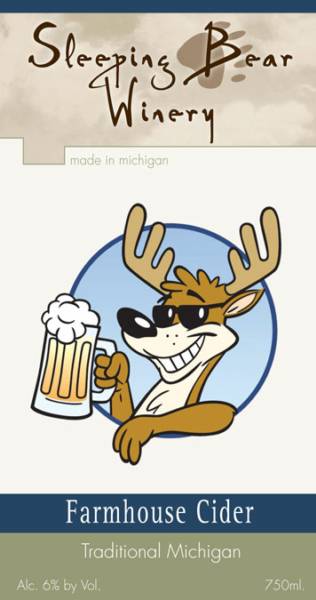
Review: Sleeping Bear Farmhouse Cider

Maker: Sleeping Bear Winery (Brooklyn, Michigan)

ABV: 6%

Color: straw

Nose: rich, hint of tartness, butter, apple pie, minus the spice

Palate: Suprisingly dry and hefty, pleasantly effervescent

Finish: More surprises: sweet and delicate

Parting Words: Very food friendly particularly with shellfish and chicken.  A pleasant, delicate cider that could benefit from higher ABV , but overall is well-balanced and not syrupy or gimmicky.  A good, solid cidere de table.  According to the Sleeping Bear website, they are currently sold out, but I’m sure there are some out there on store shelves and hopefully a new batch will be coming along later this year.

Head to Head: Vats Amore!

At my last trip to Binny’s Beverage depot, I picked up my first Blended Malt Scotch from Compass Box.  I had heard and read great things about CB and their products and one of the best reviewed was The Peat Monster.  It’s really great.  It’s a vatted malt whisky, or to use the new term, a blended malt whisky.  Blended malts, like vatted malts before them, are a blend of single malt whiskies.  In the cast of The Peat Monster, very little digging reveals that it’s a blend of single malts from the Caol Ila (cool eye-luh) and Ardmore distilleries.  The Caol Ila (from the island of Islay) brings a lot of smoke and peat to the party, while the Ardmore (from the Scottish Highlands) brings a creamy, elegant sweetness on the back end.

The blend is so well done that I decided to try and make my own peat monster using a peaty whiskey and a softer sweeter whisky.  I blended Laphroaig Quarter Cask (from Islay) and The Macallan 12 y/o (from the Speyside area of the Highlands) at a 1:1 ratio, and then did a head to head with The Peat Monster.  Here are the results!

1)      The Peat Monster

2)      50/50 Laphroaig Quarter Cask/Macallan 12

Color

1)      Pale Straw

2)      Medium Copper

Nose

1)      Peat, hint of smoke, alcohol, butter

2)      Alcohol, caramel, butterscotch, peat, smoke

Palate

1)      Silky, toffee, cinnamon, peat

2)      Creamy, some caramel and malt with a hit of peat and smoke at the end

Finish

1)      Big peaty finish, then burn, and a long one at that

2)      A long burn with lingering smoke and chocolate-covered toffee

Parting Words: I think my vatting held up well!  The Macallan is a single malt that uses sherry butts (barrels) in the aging process so I’m sure that accounted for all the candy notes in my blend.  But overall, The Peat Monster had a balance and sophistication that my own blend lacked.  That’s the hand of a master blender at work.  But it’s still fun to play at home sometimes.

Review: Atwater Winter Bock

Maker: Atwater Block Brewery (Detroit, Michigan)

Style: Bock

ABV: 7.5%

Color: dark chocolate brown

Nose: malty, sweet, barley

Palate: Malty, sweet, a hint of bitterness, lowfat milk, a bit of spice

Finish: long, slightly bitter, malty sweetness

Parting words: This one lives up to its billing.  It’s thick and rich and the sweetnes and ceareal notes were constantly taking me back to childhood breakfast tables.  For obvious reasons, it reminded me a bit of Founder’s Breakfast Stout.  A really excellent beer.  I think I’ll be getting me another six pack very soon.

Head to Head: Buffaloed

More private bottlings, this time, Buffalo Trace.  These two are from Binny’s beverage depot in Chicago, and Kahn’s Fine Wines in Indianapolis respectively.  Both do numerous private bottlings.  Binny’s are almost always excellent.  Kahn’s are frequently very good but some are pretty indistinguishable from the standard offering.  But without further ado…

1)      Kahn’s

2)      Binny’s (purchased mid October 2010)

Color

1)      Light copper

2)      Slighly Darker.  More like a dark amber

Nose

1)      Assertive alcohol, wood, char

2)      Slightly more mellow, creamy caramel, bit of clove

On the palate

1)      Sweet caramel, toasted marshmallows, bit of oak

2)      Silky, sweet, much less char, sophisticated

Finish

1)      Lingering marshmallow, a bit of barrel char, low, long burn

2)      Dark caramel, sweetness, tiny hint of that marshmallow, very long, sensual finish

Parting words

I was surprised at the outcome of this tasting.  In the end, I think I preferred the Kahn’s bottle.  It was a great balance of sweetness and spice.  The Binny’s bottle was too dry.  According to my pal at Binny’s, they created their own Buffalo Trace small batch with barrels they selected from BT themselves.  It’s yummy, don’t get me wrong, I just think some of those barrels were too old and dry.

Review: Warre’s Warrior Porto Wine Reserve

Warre’s Warrior

Style: Ruby Port

Producer: Warre’s (Symington Family, Vila Nova de Gaia, Portugal)

ABV: 20%

For those who don’t know, ports are wines from portugal that are “fortified”.  They are allowed to ferment for a short time, then when the wine still has much of its sugar, brandy is added to kill the yeast and end fermentation.  This allows for a wine that is both high in alcohol and sweet.

Color: deep burgundy

Nose: blackberry jam, alcohol, black truffle

Palate: strawberries macerated in brandy, medium-heavy body, wild mushrooms

Finish: earthy, slow, with the slight gamy tang of wild blackberries

Parting words: The last port I bought was Graham’s Six Grapes which was quite tasty, but this is another beast entirely.  Warrior is an apt name.  Its earthy complexity makes it a force to be reckoned with.

Review: Signatory Vintage, Ledaig 1993

Signatory Vintage: Ledaig 1993

Age: 15

Cask: 401

ABV: 43%

Distillery: Tobermory (Isle of Mull, Inner Hebrides)

This is an independent bottling of the peated version of the Tobermory single malt.

Appearance: Very light straw

Nose: Rich, malty, brown butter, hint of lemon

Palate: sweet lemon tea, malty sweetness.

Finish: long burn plus a little hit of peat at the end.

Parting words: I was hoping to make hot toddys using this Scotch, but the I realized that would be redundant, since it already is a toddy in a bottle.  Tobermory has a bit of a bad reputation as a single malt distillery, but the peat here really pulls everything together.  Still, nothing earth-shattering but a nice afternoon, after work, single malt at a reasonable price.

Review: Short’s Autumn Ale

Short’s Autumn Ale

Brewery: Short’s (Bellaire, Michigan)

Style: ESB

ABV: ???

Color:  hazy copper

Nose:  toasted grain with a bit of sourness, like onions past their sell-by date.

Body: Medium

Taste: Bitter, toasty, with a wee tiny bit of sourness.  Bitter, but not excessively hoppy.

Finish: long dry, bitter

Parting Words: Nothing particularly Autumnal about this to me, but it’s a decent ale.  The rotten onion note was a off-putting though.  Not a bad choice, but Short’s makes much better beers than this.

Head to Head: Oh Weller

On trips to Chicago, Binny’s Beverage Depot is always on my itinerary.  Not only do have a friend who works at the South Loop Store, and the store have a great selection, but they always have some great private barrel selections, be they bourbon, Scotch or something else.

Binny’s barrels of Weller 12 y/o (a wheat bourbon made at Buffalo Trace in Frankfort, KY) are always very, very good, so I always pick up a bottle for myself and usually one for somebody else too.  A few weeks ago I picked up a bottle of the latest edition and since I happened to have a little bit left from my previous visit, I seized the opportunity and did a head to head.

Binny’s Weller 12 head to head

1)      Binny’s Weller 12, purchased 3/2009

2)      Binny’s Weller 12, purchased 10/2010

Color

1)      Copper

2)      Same color, but maybe slightly darker

Nose

1)      Granny Smith apple, lavender, a bit of alcohol.

2)      Peanut Butter, fresh roasted peanuts, wood.

On the Palate

1)      Silky, tart, a touch floral

2)      Same silkiness, but woodier and drier.  Much drier.

Finish

1)      Tangy, fills the cheeks, then some slow burn and slight sweetness

2)      Raspberry jam, then fading and slightly sweet and woody.

Parting Words:

I was surprised at the difference between these two bourbons.  Most suprising were the floral aromas and flavors, particularly lavender in the 2009 edition.  This is a characteristic that is most closely associated with high-rye bourbons like Four Roses Single Barrel, not wheat bourbons (which contain no rye at all) which are usually dominated by vanilla and sweet caramel flavors. 

The powers that be at Binny’s have done an excellent job in selecting barrels with distictive profiles that bring out different aspects of this rich and complex (and affordable) bourbon.