Black Star Farms 10 year old Apple Brandy

Age: 10 y/o

ABV: 42.7%

Appearance: Copper with thick clingy legs

Nose: alcohol, mulled cider, apple pie, cardamom, lemon juice, apple sauce with sweet cinnamon, brown butter

On the palate: full-bodied. Sweet brown sugar, a good amount of burn, cinnamon, coriander, cardamom and tart apples.

Finish: warm, dry, that sweet cinnamon again, reminding me of my grandmother’s homemade apple sauce.

Parting Words: This a fantastic spirit. The standard Black Star Farms Apple Brandy is a pleasant sipper that performs nicely in cocktails and in mulled cider. But this 10 y/o apple brandy reaches sublime hights. Black Star Farms’ 10 y/o apple brandy was aged in a new toasted oak barrel, like those used for wine. This results in a spirit that, even at 10 y/o, still has a lot of crisp apple character. It is on par with a fine cognac or Armagnac and is best sipped neat or with a little water in a snifter or Glencairn glass.

There are few micro-distilling outfits that have been in business long enough to offer a 10 y/o product that they made themselves. Even some that are approaching that number have not been putting any back for longer aging. Black Star Farms had the foresight to let this brandy lay. It’s not cheap, I paid $75 at the tasting room for my bottle, but unlike most $75 whiskeys, this stuff is worth every penny. Highly Recommended.
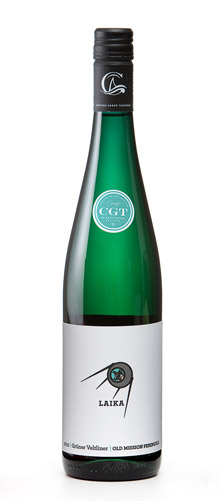
Chateau Grand Traverse Laika

Maker: Chateau Grand Traverse, Old Mission Peninsula , Traverse City, Michigan, USA

Grape: Grüner Veltliner (GruV for short)

Region: Old Mission AVA, Traverse City, Michigan, USA

Vintage: 2010

ABV: 12.8%

Color: fairly dark gold.

Nose: Big, rich and peary. Surprising amount of fruit.

On the palate: Surprisingly dry and flinty, with a hint of tangerine. Full-bodied for a white of this type.

Finish: Lingering minerality with little sweetness.

Parting words: According to CGT, when their vineyard site on Old Mission Peninsula was first surveyed for grape variety possibilities, GruV came up as one of the suggestions. The 2009 vintage was their first shot at the variety, hence the name Laika, after the Russian Space Dog who was the first mammal in space. But this is no dog of a wine. If I had a complaint it would be that the fruity nose followed by the flinty dry taste are too jarring in the same wine. It does not have the elegant dryness of fine Austrian GruV, but on the whole Laika should be judged a success. It raises interesting possibilities for New World cultivation of this signature grape of Austria. Recommended.

Not many bottles of this were produced, so if you see some, get it! Better yet, buy one to drink now and one to cellar like I did.

Chateau Chantal Malbec Reserve

Maker: Chateau Chantal, Traverse City, Michigan, USA

Grape: Malbec

Region: Lujan de Cuyo, Mendoza, Argentina

Vintage: 2007

ABV: 14.5%

Appearance: Dark inky purple with long quick gams. Throws some intense amounts of sediment around.

Nose: Woody, intense, grapey. Almost like a Port or a Gran Reserva Rioja.

On the palate: Medium-bodied,  intense and grapey. Mildly tannic, coats the mouth. A powerful wine that stands up to rich food very well, but you don’t feel like you’re being punched in the face or about to fall off your chair either.

Finish: Fruity, like Concord grape jelly, but without the foxiness. The sediment coats the mouth and lingers for a long time.

Parting words: This is not a terribly complex wine, but it’s very good. Argentina’s Mendoza region is firing on all cylinders right now and Malbec, an old Bordeaux variety, is its flagship grape. Chateau Chantal owns a vineyard in Argentina and imports its wine to sell here. High-end Malbec can age for 10-15 years but most lower-end and middle-range ones are just fine after 2-4 years in the bottle, like this one. Michigan is not known for Bordeaux-varietal reds, but Chateau Chantal has found a great way to offer an excellent one to its customers. Recommended.

Crispin Hard Apple Cider Artisanal Reserve: The Saint

Maker: Crispin Cider Co., Minneapolis, Minnesota, USA

Notes: Made with Belgian Trappist yeasts and flavored with maple syrup

ABV: 6.9%

Appearance: cloudy gold, especially when served in ice as recommended.

Nose: A little yeasty funk and then some bright apple tartness.

On the palate: Medium-bodied, but rich. The sweetness and woodiness the syrup brings to the table are a nice counterpoint to the funky, slightly floral notes of the yeast and the tartness of the apple. Balanced but complex.

Finish: Clean but the funk lives on in a very pleasant way and the sweetness lingers in the cheeks for a good long while with a nice banana flavor.

Parting words: This is a very nice drink. This is not a table cider, but one for contemplation as befitting its Trappist heritage. Not much else to say really. Crispin does good things with cider. I recommend The Saint.

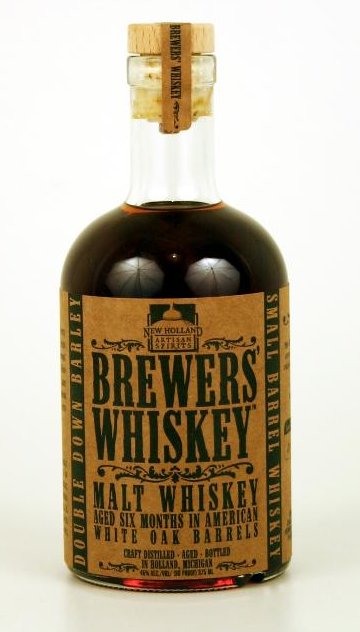
Double Down Brewer’s Whiskey

Maker: New Holland, Michigan, USA

Type: Straight Malt Whiskey

Age: 6 mos. (in “small” barrels)

Proof: 90 (45% ABV)

Appearance: Dark copper with thick legs.

Nose: A faint hint of leather up front, like walking into a furniture showroom. Sweet black licorice, caramel, a bit of alcohol.

On the palate: Full, voluptuous body. Like a porter on the palate. Lots of licorice, some more caramel and hard candy, maybe a little horehound.

Finish: same notes as on the palate, but with some slightly bitter clove and Chinese five-spice.

Parting words: This was the first entry into New Holland’s Brewer’s Whiskey series of small barrel, small bottle releases. Some of the acrid nastiness that very small barrels can throw into the nose is absent here. Instead, it’s like drinking a very spicy porter or sucking on black anise candy. A lovely whiskey, and one that is good sippin’ for the holidays. Highly Recommended.

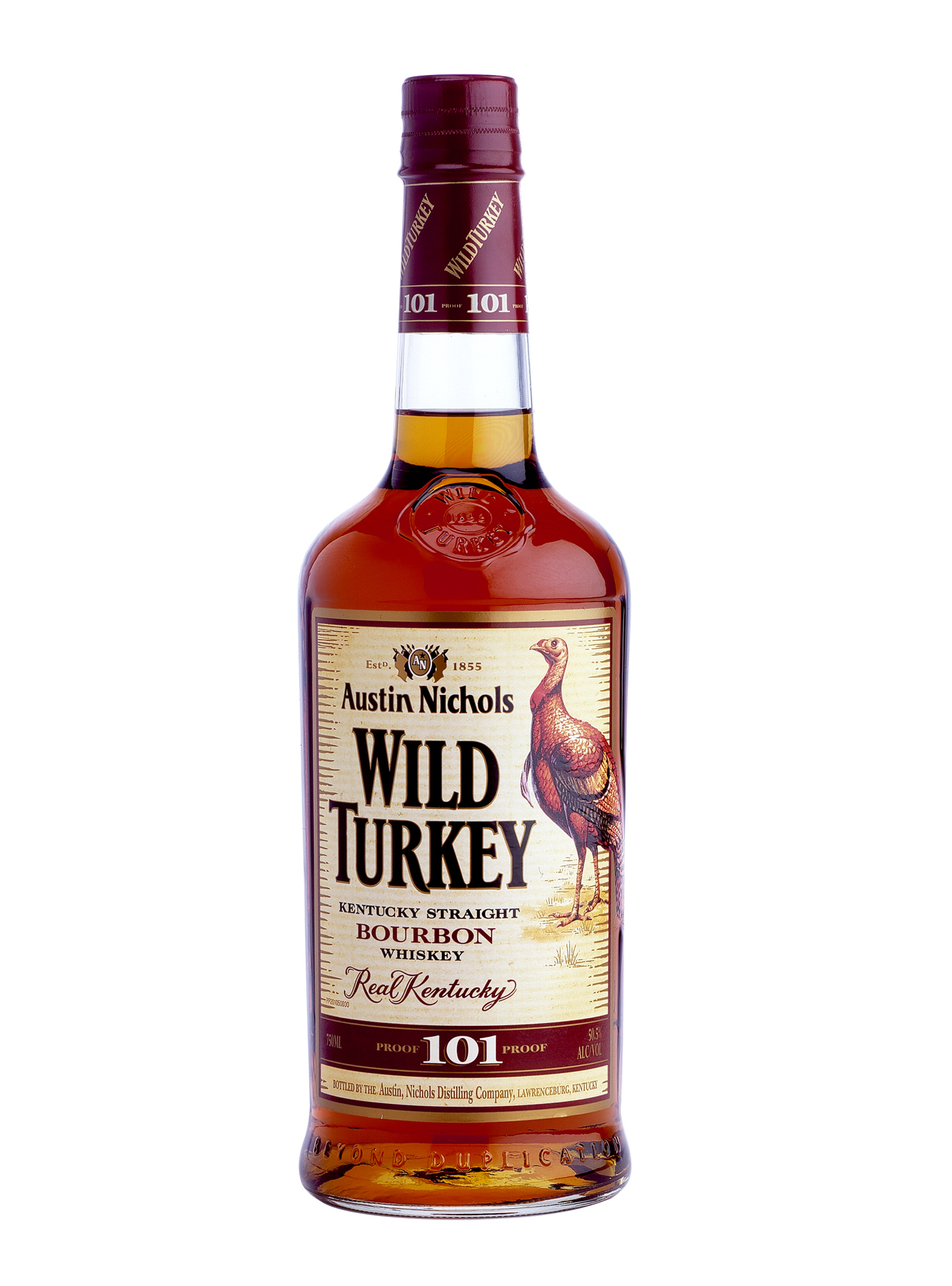
Wild Turkey 101

Maker: Wild Turkey, Lawrenceburg, Kentucky, USA (Gruppo Campari)

Age: NAS (­about 6-8 y/o)

Proof: 101 (50.5% ABV)

Note: The labeling was recently changed, but a lot of the old is still on the shelf. Both old and new are pictured.

Appearance: Copper penny with thick clingy legs.

Nose: leather, caramel, peanut brittle, oak.

On the palate: Thick and rich, very full-bodied. Caramel, spice, barrel char, then heat, a lot of it.

Finish: Sweet corn, wood, char then big burn. Fades out with a hot, sweet tingle.

Parting words: Wild Turkey is a walking, strutting contradiction. On the one hand, it has a very, um, rustic reputation. A rite of passage in some college fraternities involves enduring a succession of shots of Wild Turkey 101 as a test of masculinity. On the other, older one-offs or Travel Retail offerings from Wild Turkey, like the recent Tradition release, are among the most sought after in connoisseur circles.

What makes Wild Turkey distinct is not its mashbill. I used to think Turkey was high-rye bourbon but it’s about average in that regard. What gives this Turkey its bite and body is the very heavy level of char used on the inside of their barrels and the very low (by industry standards) barrel entry proof.

In my own experience, I’ve encountered a good deal of variation in the standard Wild Turkey 101. A bottle I bought a few years ago was so young and hot it was almost undrinkable. This one is much better. Hopefully any consistency problems have now been worked out. Wild Turkey built a completely new distillery building in Lawrenceburg this year and the new still has at least twice the capacity as the old one that was built in the 1930s. New warehouses are also currently under construction, so Wild Turkey 101 should be getting better and better as the supply of aged whiskey increases.

As it stands now, Wild Turkey 101 is a classic bourbon profile any true bourbon lover should be familiar with. It’s not one of my go-to bourbons, but sometimes it hits the spot. It also works well in cocktails especially ones in which its aggression is an asset. Recommended.

Joel Gott Sauvignon Blanc

Maker: Joel Gott, Napa, California, USA

Grape: Sauvignon Blanc

Region: California, USA

Vintage: 2010

ABV: 13%

Appearance: Pale gold with slow, thick legs.

Nose: Tangerine, Clementine, apricot, basil.

On the palate: Medium-bodied. Slightly sweet, grapefruit, peach, orange, delicately dry.

Finish: Orange, lemon, dry, fading into pleasant grapefruit bitterness.

Parting words: I bought this wine because it was the cheapest one on a list a of great California Sauvignon Blanc. I was a bit reluctant, since I generally only drink New Zealand Sauv Blanc. This one did not disappoint, and has all the citrus notes I love in New Zealanders. That said, the Joel Gott Sauv Blanc is no transplanted Marlbourgh. The herbal notes are much more subdued here and the grapefruit is more present in the finish than in the mouth. Lots of orange (and relatives) and apricot. An all around delicious wine with or without food. This would also be a good turkey (or tofurky) wine. Highly recommended.

Dragon’s Milk

Maker: New Holland, Holland, Michigan, USA

Style: Barrel-aged stout

Vintage: 2011

ABV: 10%

Appearance: Dark chocolate with a mildly frothy tan head.

Nose: Sweet, cereal milk, milk chocolate.

On the palate: Full-bodied, bitter at first, then sweeter. Café mocha, vanilla and amaretto, with a bit of bite from the alcohol and carbonation.

Finish: Sweet and pleasantly sticky fading very slowly to a smoky bitterness. The sticky sweetness continues to linger on the lips for a long time.

Parting words: This is a delicious beer. Unlike some other barrel-aged beers, Dragon’s Milk strikes a balance between barrel character and beer character. This is a quality stout first. Instead of being covered up, those stout characteristics are complemented by the wood tannins and the sweet vanilla and liquer flavors coming from the barrel. Dragon’s Milk is a flawlessly executed barrel-aged stout. Highly recommended.

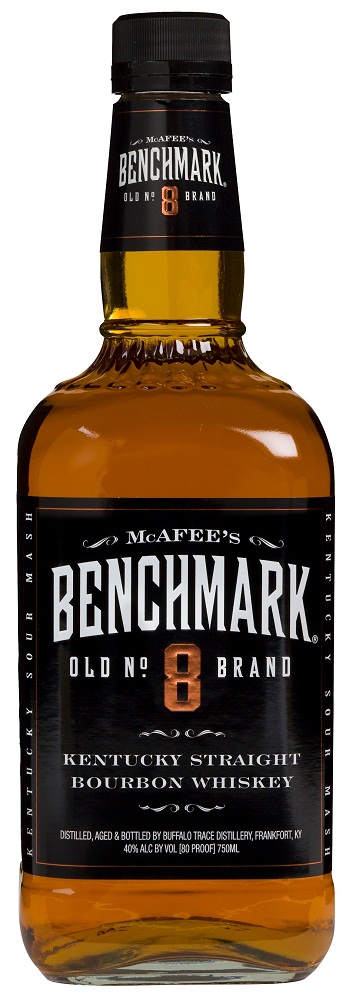
McAfee’s Benchmark, Old No. 8

Maker: Buffalo Trace, Frankfort, Kentucky, USA

Age: NAS (4 y/o?)

Style: High-corn bourbon

Proof: 80 (40% ABV)

Appearance: Light copper with thin-medium, fast legs.

Nose: Cool Ranch Doritos, caramel, alcohol

On the palate: Thin, a bit of sweetness and that weird cool ranch note again. Not much else going on.

Finish: Very light, slightly sweet with a fruitiness coming through in the end.

Mixed: When Benchmark is mixed, the results are themselves mixed. It’s invisible in manhattans, sours and cola. For whatever reason, it does pretty well in hot drinks like coffee and hot toddies. I have also found it adequate for Bourbon cream pies and soaking woodchips.

Parting words: It’s hard to believe this is the same recipe as George T. Stagg. No one is quite sure who McAfee is, but Benchmark is a relatively new brand. It was introduced in the 1960s and was produced by Seagram’s, along with its stablemate Eagle Rare, at what is now the Four Roses Distillery. When Seagram’s was dismantled in the late 1980s and early 1990s, Benchmark and Eagle Rare both came into the possession of Sazerac Co., present owner of Buffalo Trace Distillery. They are both currently made in there. Benchmark has always been lower-shelf bourbon, but Saz did experiment with a Single Barrel version which was actually quite good. It’s no longer available but still lingers on shelves (including one of mine) around the country.

Benchmark does what it sets out to do. It is cheap, well bourbon. At under $10 for a 750 ml bottle, it’s hard to expect too much, but $2-$3 more opens up many better possibilities. Even the mediocre Ancient Age shows up better. In light of all that, I cannot recommend Benchmark.

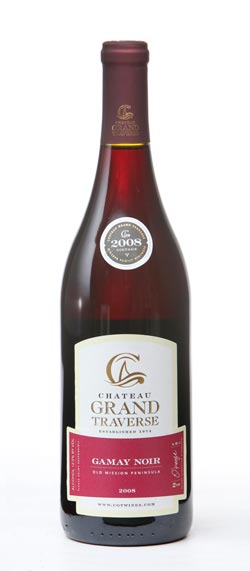
Chateau Grand Traverse Gamay Noir

Maker: Chateau Grand Traverse, Traverse City, Michigan, USA

Region: Old Mission AVA, Michigan, USA

Grape: Gamay

Vintage: 2009 (2008 vintage pictured)

ABV: 12.5%

Appearance: Light burgundy with long, fairly thick legs

Nose: Plums, leather, black pepper, cherry. For once a back label is dead on.

On the palate: Light mouth feel, fruity tart cherry up front. As it sits in the glass, the leather and black pepper notes come to the fore. There’s still plenty of fruit, though. A delightful dichotomy of deliciousness. Yes, I just wrote that.

Finish: Clean finish with some lingering tastes of cherry juice and the ubiquitous black pepper.

Parting words: The name Gamay isn’t well known, but many people do know the name of its most famous product, Beaujolais. It has always had its detractors. Two different Dukes of Burgundy outlawed the cultivation of “disloyal Gaamez in the 15th century. For the record, I am a fan of Gamay, especially in Beaujolais. I was surprised by the peppery nose but it gives it depth and interest that I wasn’t expecting. The pepper moves it closer to estate or cru Beaujolais (according to the internet anyway) than the Beaujolais-Village I drink to wash down my pork chops. This is a very good, food-friendly, but not dumbed down, wine. Recommended.