RIP Elmer T. Lee, 1919-2013

I would be remiss if I didn’t take a moment to mention the passing of Buffalo Trace Master Distiller Emeritus Elmer T. Lee on July 16, 2013. He was the MD there through some of the darkest days of the American whiskey industry when consumption was plummeting and the structure of industry was changing rapidly. What’s now called Buffalo Trace was right in the middle of all of that but the distillery emerged from that era as a leader and an innovator. Elmer T. Lee was one of the people responsible for that. Up until his death he was still picking barrels that would go into the single barrel bourbon that bares his name (and is one of the best values in the single barrel bourbon category).

While the early  death of Truman Cox was shocking and tragic, the death of Elmer T. Lee at 93 years of age is an occasion for celebrating a full life well-lived. Here are a few links pertaining to Elmer, his life and work:

A copy of the letter sent from Sazerac president Mark Brown announcing Elmer’s death (Posted on Lew Bryson’s Seen Through a Glass blog): http://lewbryson.blogspot.com/2013/07/rip-elmer-t-lee.html

An old interview with Elmer in which he talks a bit about himself and the runs through the entire bourbon making process (38 minutes).

2008 interview of Elmer for the Buffalo Trace Oral History project (52 minutes)

http://www.nunncenter.org/buffalotrace/2010/08/31/elmer-t-lee/

He will be greatly missed but as long as the bourbon continues to flow his legacy will too.

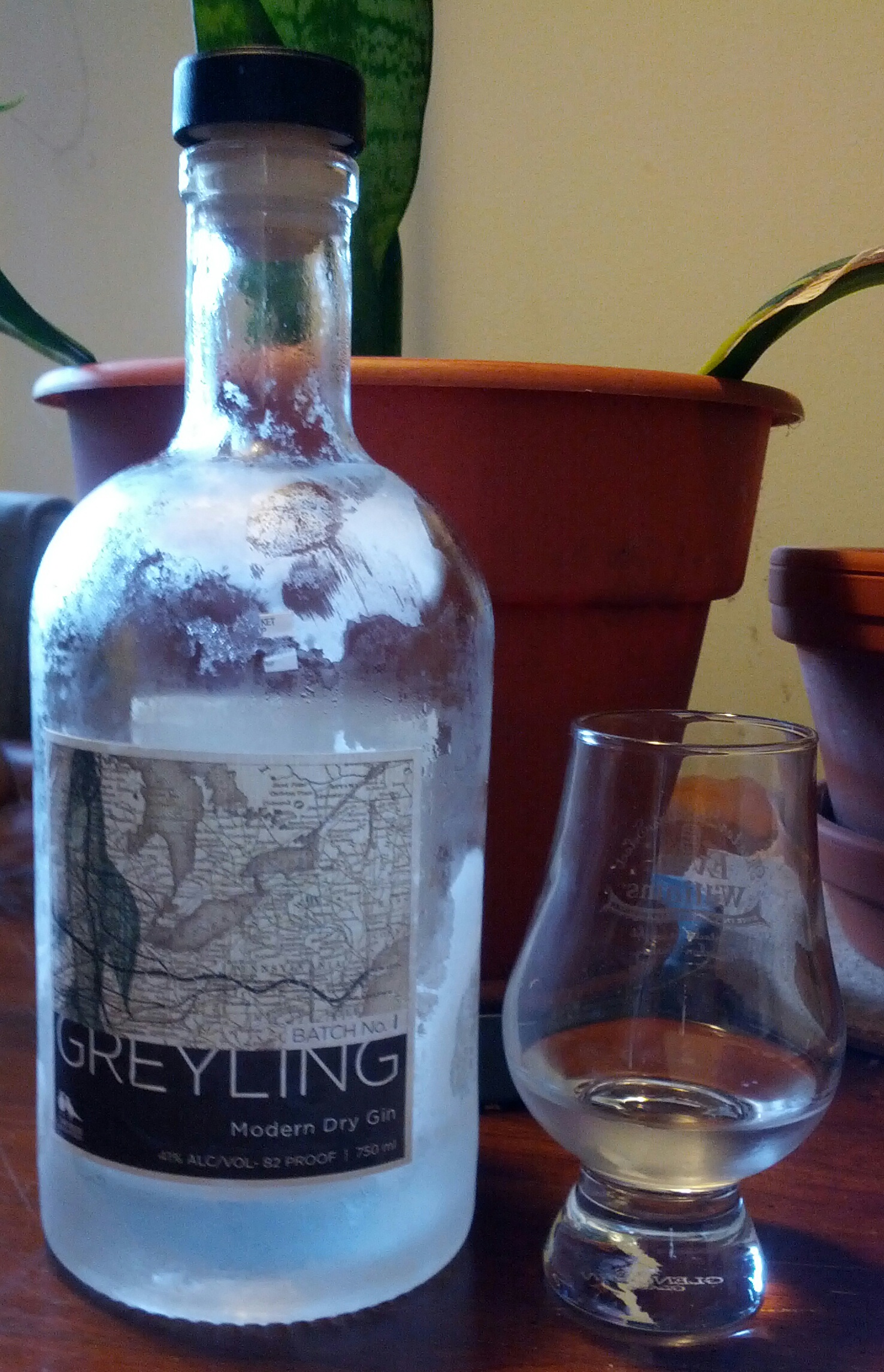
Greyling Gin

Greyling ginMaker: Two Birds, Kalamazoo, Michigan, USA

Distiller: Yahara Bay Distillers, Madison, Wisconsin, USA

ABV: 41%

Appearance: Clear but leaves big thick legs running down the side of the glass.

Nose: Dry. Big juniper, but complex underneath and never smells like wood cleaner. Meyer lemon, orange peel, grains of paradise, coriander, cumin, angelica.

On the palate: Full-bodied and floral. Juniper, boxwood, some citrus and white pepper.

Finish: Herbal and spicy with a bit of burn. Clean and dry.

Mixed: Makes an excellent dry martini but go very easy on the vermouth. Does well in a Tom Collins and with tonic, but a little wasted in those applications.

Parting words: Greyling is an excellent dry gin. It’s complex but never timid or confused. Juniper takes the lead here and everything else is harmonizing with it. Media coverage of the release of the gin emphasized the use of Michigan-grown lavender in the mix of botanicals, but I didn’t notice any when I was tasting for whatever reason. I would class this as a great martini gin or even for drinking neat. At just over $30 it’s priced reasonably for that sort of product.

Two Birds is not as a distillery yet, if it ever will be, but the distiller is printed clearly on the back label without any sort of weasel words or other obfuscation. That’s a breath of fresh air in a world flooded by micro-bottlers trying to pass themselves off as distillers. And why should they hide anything about this product? It speaks for itself. Greyling Gin is highly recommended.

Stella Artois Cidre

Maker: Anheuser-Busch, St. Louis, Missouri, USA (InBev)stella-artois-cidre

ABV: 4.5%

Thanks to Oscar for the sample.

Appearance: Dark gold and very fizzy.

Nose: American lager, apple juice, light brown sugar.

On the palate: Full bodied and sweet. Apple crisp.

Finish: Medium long and sweet with a slight apple flavor.

Parting words: This is not a bad cider at all. It’s very drinkable and it’s basically what one would expect from a big brewery cider. My biggest complaint is that it is much too sweet for causal sipping or with a meal. I love drinking cider on a hot summer afternoon or with lunch or a light supper, but this is not one I would reach for at those times. It drinks like a dessert fruit wine in spite of claims that it is in a drier “European style” by marketers. It is nothing of the sort. The prices I’ve seen have been on par with micro-brewed ciders which makes it too expensive for me. Finally the fact that it’s brewed in the US while being marketed as an import complete with a pretentious pronunciation and spelling irritates me. At any rate, Stella Artois Cidre is mildly recommended.

Jim Beam Distillers Series

Maker: Jim Beam, Clermont, Kentucky, USA (Beam Inc.)JBDS

Age: 7 y/o

Proof: 90 (45% ABV)

Appearance: Medium copper with nice thick legs.

Nose: Alcohol, caramel, oak, tan roux, sourdough starter, lavender.

On the palate: Full bodied and slighly sour. Heat, cola, caramel, vanilla, yeast.

Finish: Heat building into more heat. In the background some corn syrup, licorice, and a touch of wood.

Parting words: This is officially a dusty now, meaning it is no longer being produced and is only available as old stock sitting on shelves. When it was released a few years ago it wasn’t met with much hoopla by the bourbon enthusiast community. Jim Beam is not a popular line with many enthusiasts and there has been a seven year old version of the white label Jim Beam available in Kentucky for many years. So many were underwhelmed or simply ignored this bottle. One bourbon writer said the only reason to buy it would be for the fine  picture of Fred Noe on the label, and he already has a few of those. I disagree.

I think for what it is, Distillers Series is a fine bourbon. While the seven year old white label is bottled at 80 proof (and the eight year old black label at 86), DS was bottled at 90 proof and was available all over. To me, it tastes how the standard white label should taste. It’s not subtle or particularly complex, but it’s a good sipping bourbon for the beginning of the evening or while tending the grill or smoker. I think it’s worth seeking out if you enjoy that sort of thing. Jim Beam Distiller’s Series is recommended.

The Naughty Ginger

Maker: B. Nektar, Ferndale, Michigan, USA.Naughty Ginger

Style: Spiced, hopped mead

ABV: 6%

Appearance: Pale gold and pretty fizzy.

Nose: Ginger, honey, spice.

On the palate: Light, effervescent and spicy. Easy on the entry, not much in the mouth but some light spice.

Finish: Much more assertive after a gulp. Heat lingers on the tongue, Madras curry powder, a bit of gingery soapiness.

Parting words: The Naughty ginger is a much more drinkable ginger mead than the Schramm Series Ginger Mead B. Nektar put out a few years ago. That was like being tied down and having raw peeled ginger stuffed into every orifice. The ginger flavor in that wasn’t aggressive, it was downright violent.

This ginger is naughty but not a sociopath. The hops and coriander balance out the ginger and give it a pleasant curry taste that is fun drinking and even food friendly. This is a very successful mead and very much worth picking up. Naughty Ginger is recommended.

Alamos Chardonnay

Maker: Alamos, Tunuyán, Argentina

Place of origin: Mendoza, Argentina

Vintage: 2008

ABV: 13.5%

Appearance: Brassy gold.

Nose: oak, lemon zest, thyme.

On the palate: Medium bodied and medium sweet. Brown butter, clementine, white pepper.

Finish: A little tart but fades into pretty heavy oak. Not pleasant, but not unbearable.

Parting words: This wine was the result of another grocery store shelf dig.  I hadn’t had a chard for a while and I was looking for one with some good age on it from somewhere that wasn’t California or Burgundy and this wine fit the bill.

It’s not bad really. It’s overoaked in the standard New World style, but not by much. I can see this wine going well with fairly standard seafood or roast chicken dishes. On its own, it’s a good enough for a weeknight or a casual chat with friends. The price is a little high for this sort of thing ($13) but it’s not outrageous either. My only criticism is the finish. Maybe a little less oak would have taken some of the bitterness out of the finish. Anyway, Alamos 2008 Chardonnay is recommended.


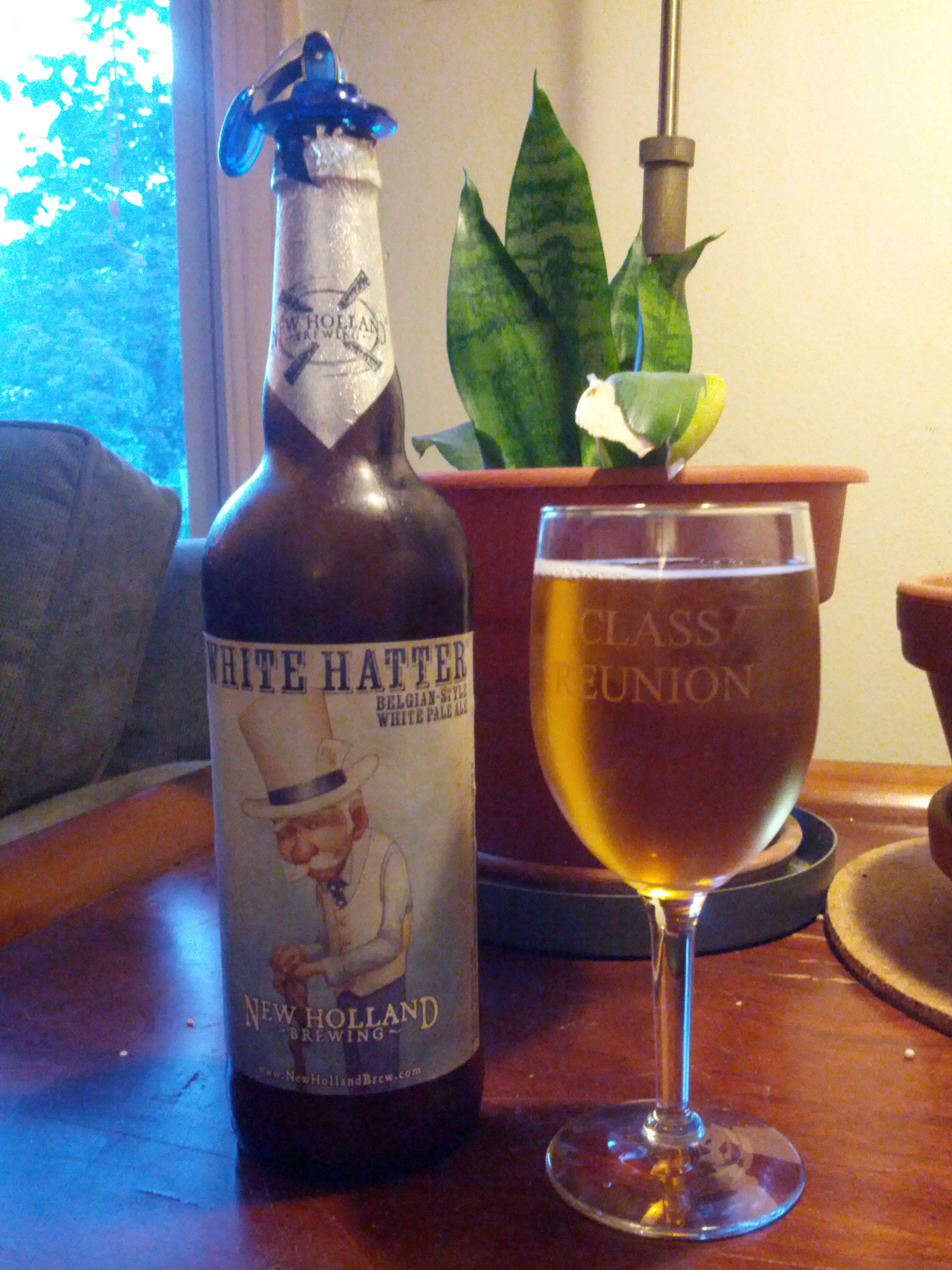
White Hatter

Maker: New Holland, Holland, Michigan, USAWhite Hatter

Style: Spiced wheat pale ale

Vintage: 2012

ABV: 5.5%

Appearance: Golden with a bit of froth at the top, not much in the way of head.

Nose: Subdued. Some malt and hops with a touch of tropical fruit.

On the palate: Full bodied and hoppy. On first sip tastes like an IPA but then shifts into a mildly fruity wheat flavor.

Finish: The bitterness and the fruit fade into a lingering soapy taste.

Parting words: I’ve been a fan of New Holland for quite some time and a search of the archives will reveal numerous positive reviews of their beers and spirits. I just can’t do it with this one. It’s a part of their vintage series of riffs on their very successful Mad Hatter IPA. I have enjoyed all I have had until this one. It could be spoiled, but one would expect a beer that is vintage dated (and kept in a fridge) to be capable of aging for at least a year with positive results. At any rate, it pains me to say this, but White Hatter is not recommended.

Four Roses Limited Edition Single Barrel, 2013

Maker: Four Roses, Lawrenceburg, Kentucky, USA. (Kirin)4R SB 2013

Style: High rye bourbon

Recipe: OBSK

Age: 13 y/o

Warehouse/Barrel No.: BS/3-3Q

Proof: 121 (60.5% ABV)

Appearance: Dark copper with some necklacing.

Nose: Alcohol, bubble gum, leather, rose petals, lavender. Not too different with water, a bit clearer. On the palate: Medium bodied. Burn, candy, caramel, roses. With water it becomes big and sweet. Cotton candy, rose hips, oak, grape soda.

Finish: Evaporates quickly off the tongue leaving a soft leathery flavor, some fruit punch and a lot of burn. Fruitier and more delicate with water.

Parting Words: About twelve hours after writing up these notes (right after I opened the bottle) I did a comparison tasting against the 2012, of which I have several bottles. The 2012 was a different mashbill but the same yeast strain and a year or so younger. There are clear similarities, but big differences as well. The 2012 I tasted (52.6% ABV, SN/81-3i) was much more balanced and desserty (if that’s a word) with loads of caramel and similar flavors. The comparison also brought out a capsaicin note in the 2013, similar to ghost peppers or habaneros. I didn’t think the 2013 fares well in comparison to the 2012, but I do like it better than the 2011 I had and the 2010 100th anniversary bottling (cue Whiskey Wonka). The 120th Anniversary Single Barrel (2008) is also OBSK but it’s been so long since I’ve had it that I don’t feel comfortable comparing the two.

In summary, the 2013 Four Roses Limited Edition Single Barrel is a very good bourbon but not as good as some of its predecessors. Not counting the 40th (2007) and 120th anniversary for reasons of memory (see above), I would rank 2013 squarely in the middle of the pack of Four Roses limited edition single barrel releases. Being in the middle of that pack is better than being at the top of any other pack, though. The Michigan state minimum of $80 is high for a bourbon of its age but given the high proof, unchillfiltering and the unmatched quality of Four Roses across the board, it’s worth it. Four Roses Limited Edition Single Barrel, 2013 is recommended.