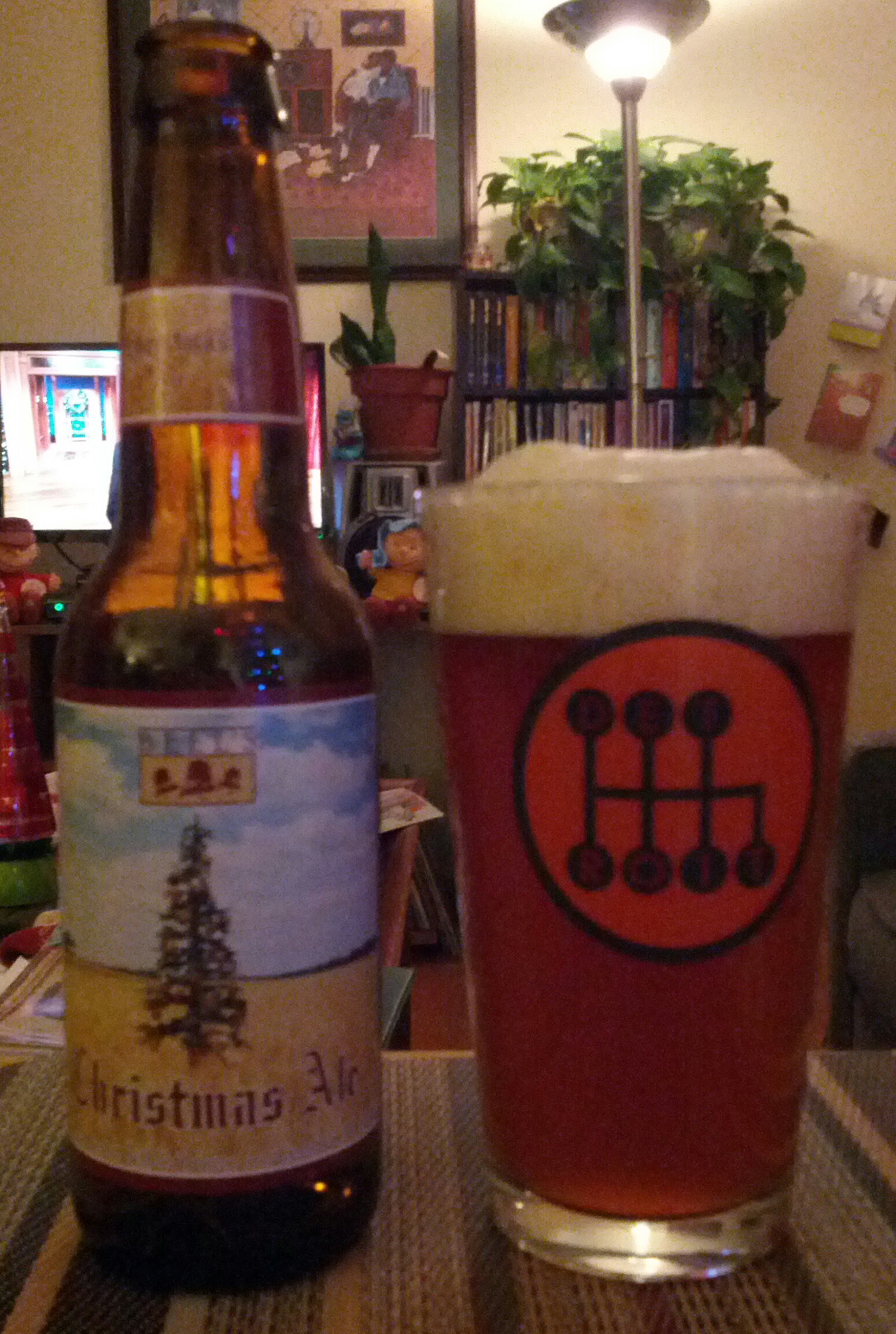
Noel de Calabaza

Noel de CalabazaMaker: Jolly Pumpkin, Dexter/Ann Arbor, Michigan, USA

Style: Oak-aged, spiced sour ale

Notes: Blend 16, bottled November 19, 2012

Vintage: 2012

ABV: 9% or so.

Purchased for $11/750 ml

Appearance: Coffee brown with a robust foamy head on first pour.

Nose: Malt, balsamic vinegar, clove.

On the palate: Medium bodied and effervescent with underripe plum, hops, clove, aged balsamic vinegar

Finish: Fairly clean and short but with old, ashy oak that lingers for a long time.

Parting words: Noel de Calabaza is another holiday beer that defies expectations. It’s sour but in a more subtle way than many from Jolly Pumpkin. The oak rounds the whole thing out nicely. As you can tell from my notes above, it reminded me a lot of balsamic vinegar, the good aged kind. It doesn’t strike me as a particularly festive beer, but it’s really good. The price is acceptable. Noel de Calabaza is reccomended.

Statement regarding the use of images on this blog.

I have recently had a “come to Jesus” moment regarding the use of images on this blog. As you may have noticed, I have recently been using images I took myself for reviews. I will be doing this going forward. When I don’t have an actual bottle available to photograph, I will attempt to have a friend provide me with a photo or get one from the manufacturer or PR firm representing the brand.

As for images I have used in the past, I will be leaving them in place. I have reviewed well over 300 products and it would be largely pointless drudgery to go through and try to figure out where each one came from. The vast majority were from brand websites and I have never had a single complaint about my use of an image. Links to many reviews with such images have been retweeted by brand twitter accounts without complaint.

All that said, I will take down the last two images I used without express permission (the bottle shots of Wild Turkey Forgiven and Crown Royal) pending my own photos, a friend’s or something from Campari or Diageo or their PR people. I will also remove any photos I run across that are clearly not bottle shots intended for general media use. If you, dear reader, notice an image that you own that you wish to be removed, please let me know and it will be removed as soon as possible.

Thank you for reading and happy holidays!

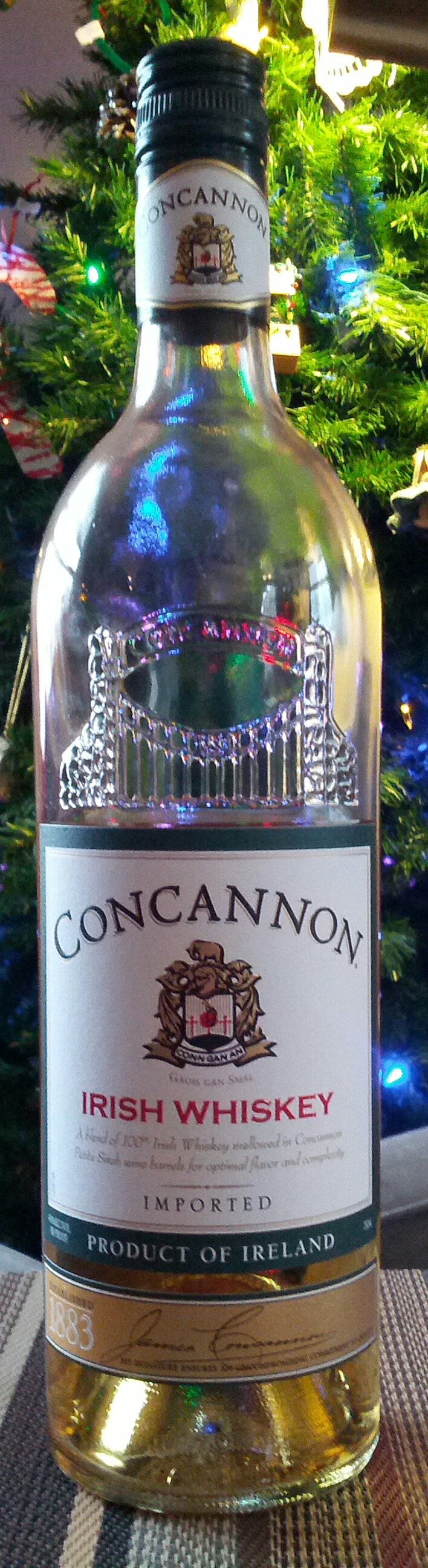
Concannon Irish Whiskey

Maker: Concannon Vineyard, Livermore, California, USA
Concannon Irish Whiskey

Distiller: Cooley, County Louth, Ireland (Beam)

Style: Irish blend finished in Petite Sirah barrels (from Concannon Vineyard of course)

Age: NAS (around 4 y/o)

ABV: 40%

Michigan State Minimum: $23

Appearance: Pale gold.

Nose: Malt, rubber, alcohol, butterscotch, blackberry jam.

On the palate: Full bodied and mildy fruity on entry, mincemeat pie, toffee, burn.

Finish: Malty but still subtly fruity and rich. Drying into a bit more rubber and some burn, but the candied fruit background continues as it fades.

Parting words: Concannon Vineyard is located in Livermore Valley, northeast of Fremont, California. The Livermore Valley AVA is best known as the home of Wente Vineyards, but it also home to a number of other winemakers, obviously. Livermore Valley is a subset of the San Francisco Bay AVA which is itself a subset of the Central Valley AVA. Concannon is notable for bottling the first varietal Petite Sirah in the US (according to their website anyway). Before that, and indeed even after, Petite Sirah was used primarily to beef up red blends.

This whiskey is a tribute to the family’s Irish heritage and its present winemaking ability. It’s a success. It’s clearly young but the wine barrel finishing does a great job of smoothing out the rough edges and giving it added depth. The direct influence of the wine barrel is subtle. There are some vague “dark fruit” tastes on the palate that come through, but little else. If I have complaint about the finishing, it’s that, unlike most finished whiskeys, it’s too subtle. That is refreshing in itself! The rubbery smell isn’t too appealing but it dissipates quickly.

The price is right and the whiskey is too. Concannon Irish Whiskey is recommended.

Forty-Five North Riesling

Maker: Forty-Five North, Lake Leelanau, Leelenau Co, Michigan, USA

Region: Michigan, USA

Vintage: 2010

Style: Dry

ABV: 11.5%

Purchased for: $19

Appearance: Light gold with very little in the way of legs or necklacing.

Nose: Grapey and dry. Pear, peach, Golden Delicious apple, whiff of orange blossom.

On the palate: Medium bodied and semi-dry. White peach, white cherry, underripe plum.

Finish: Dry. Peach, thyme and maybe a little smoke.

Parting words: Forty-Five North Winery is located in the central Leelenau Peninsula, east of Lake Leelanau. It is named for the 45th parallel, the midpoint between the Arctic Circle and the Equator, which runs right through the vineyard belonging to the winery. The family has owned the land around the tasting room for many years but purchased the vineyard and began producing wine commercially only in the past few years. The facilities are in the Leelenau Peninsula but note that the wine is only labeled “Michigan”. This means that grapes from more than just the Leelanau AVA probably went into this wine.

For relative newbies, they have done a good job. This Riesling is crisp and food-friendly but has the complexity to raise it well above the category of a table or casual wine. It is an excellent example of a dry Michigan Riesling and is well worth the price. 2010 Forty-Five North Riesling is recommended.

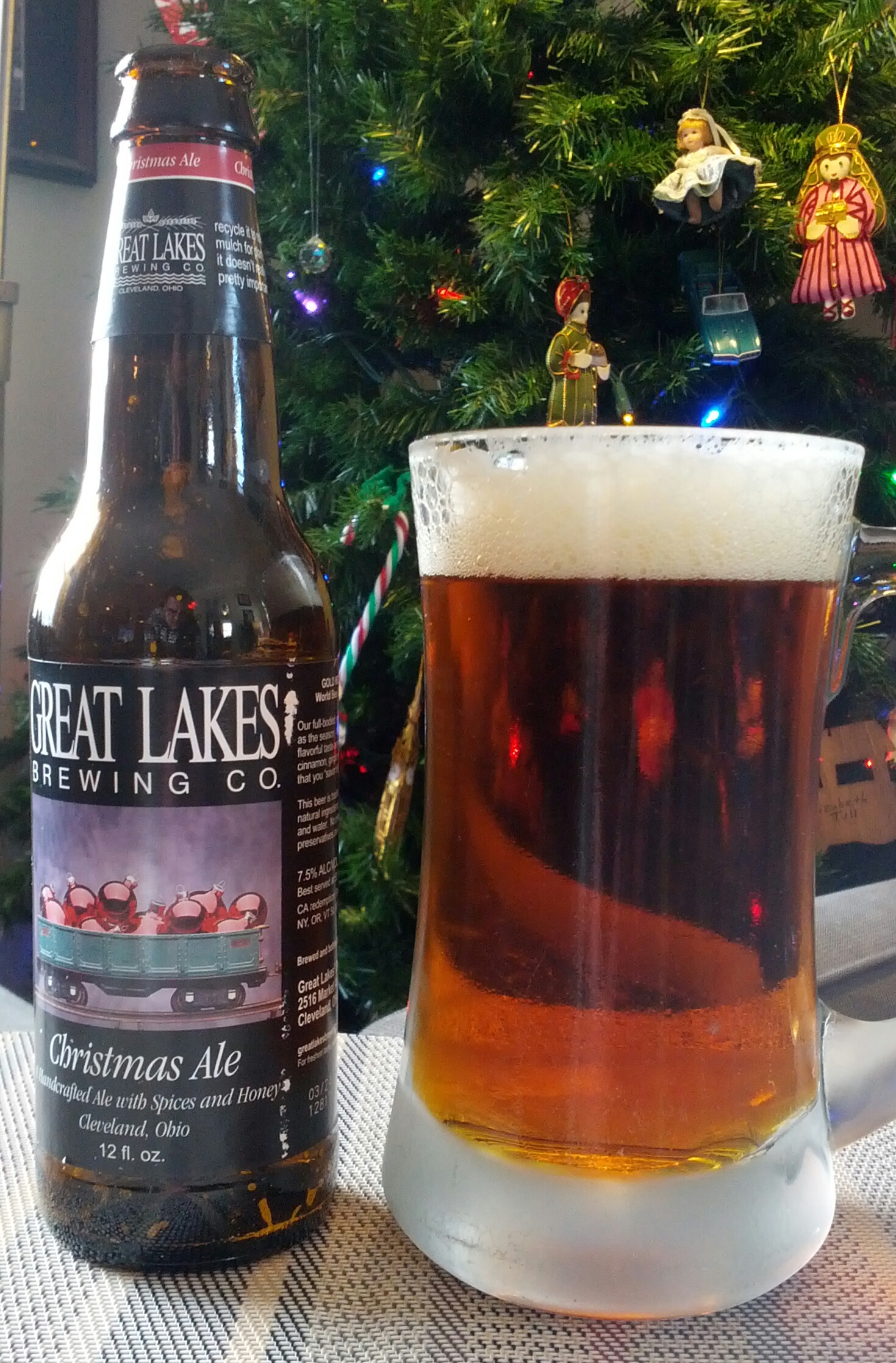
Great Lakes Christmas Ale

Maker: Great Lakes, Cleveland, Ohio, USA

Style: Spiced ale

ABV: 7.5%

Thanks to Brian & Jessica for this birthday beer!

Appearance: Coppery auburn with a nice foamy head.

Nose: Malt, baking fruitcake.

On the palate: Effervescent and spicy. More fruitcake, then malt, toffee and a hit of hops.

Finish: Surprisingly dry. Spicy, malty and lasts for a good while.

Parting words: Great Lakes Christmas Ale is much more typical of holiday brews than Bell’s. It’s sweet with some Christmas spice and a tiny bit of hoppy bitterness. It’s not complex but it is comfortable like a fuzzy Christmas sweater. It goes just as well with a hearty Christmas feast as with conspiring by the fire. Great Lakes Christmas Ale is recommended. GL Xmas

Head to Head: Woodford Reserve vs. Woodford Reserve Double Oak

WR: Woodford ReserveWR vs WRDO

WRDO: Woodford Reserve Double Oak

Maker: Brown-Forman, Louisville, Kentucky, USA

Style

WR: Standard Recipe bourbon

WRDO: Bourbon finished in a toasted then lightly charred oak barrel

Age: NAS

Proof: 90.4 (45.2% ABV)

Michigan Minimum Price (750 ml)

WR: $36

WRDO: $60 (purchased for $50)

Appearance

WR: Copper with thin legs.

WRDO: Slightly darker with pronounced necklacing.

Nose

WR: Alcohol, oak, dried oregano, homemade caramels.

WRDO: Leather, oak, black walnut, alcohol.

On the palate

WR: Full bodied and sweet. Burn, brown sugar, a touch of cayenne and not much else.

WRDO: Medium bodied and tannic. Alcohol, brown sugar, oak.

Finish

WR: Sweet and slightly oaky with some candy. Then lots of burn.

WRDO: Very oaky. Black walnut, fresh oak, fades into alcohol and then away fairly quickly.

Parting words: Woodford Reserve is a popular whipping boy for bourbon enthusiasts. The knocks on it are that it’s young, overpriced, underpowered and its success is all marketing and packaging and no substance. Knocks on the Woodford Reserve Master’s Collection, a series of experimental annual releases have been similar but even more harsh.

It’s hard to argue with those points. Woodford is expensive for an NAS of 90 proof with little in the way of distinctive tastes or aromas. Woodford Double Oak, a rebarreled version of Woodford with a strong resemblance to the Seasoned Oak Master’s Collection release, adds some needed oak, but not much in the way of depth, unfortunately.

Both fare well in manhattans, but I don’t recall trying them in any other cocktails.

When the Double Oak was released, it was a marginal buy at $50 but $60 is an absurd price for what this is. If it sold for $40-$50 it would be worth a full recommendation, but as it is it is mildly recommended. Standard Woodford was overpriced when it first came out, but as bourbon prices have risen around it, it doesn’t seem so bad. Still, it is dull and its sister brand Old Forester is a much better buy and available at 100 proof. Woodford Reserve is also mildly recommended.

Bell’s Christmas Ale

Maker: Bell’s, Comstock/Kalamazoo, Michigan, USABells Xmas Ale

Style: American Pale Ale.

ABV: 5.5%

Notes: 100% malted Michigan two-row barley, Michigan and Northwest US hops.

Purchased for: $10/6 pack
Appearance: Old gold with a big frothy head and a bit of sediment in the bottom.

Nose: Hops, creamy malt, dried flowers, tea.

On the palate: Full bodied and well balanced. Fruity malt and then the hops take over in a big way.

Finish: Dry and spicy, a quick shot of fruity malt and then hops until the whole thing fades away.

Parting words: Bell’s Christmas Ale is an unusual holiday beer because there’s nothing particularly holiday-ish about it. It’s just a good hearty pale ale. It goes very well with food, even rich food that one has around this time of year, so maybe that’s the idea. Or maybe it’s that it reflects the experience of a typical holiday family gathering. It begins sweet but ends in lingering bitterness. I may be over thinking this a bit.

At any rate, it’s quite tasty and the local angle in the malt and hops adds interest and softens the blow of the price which is a bit on the high side. Bell’s Christmas Ale is recommended.

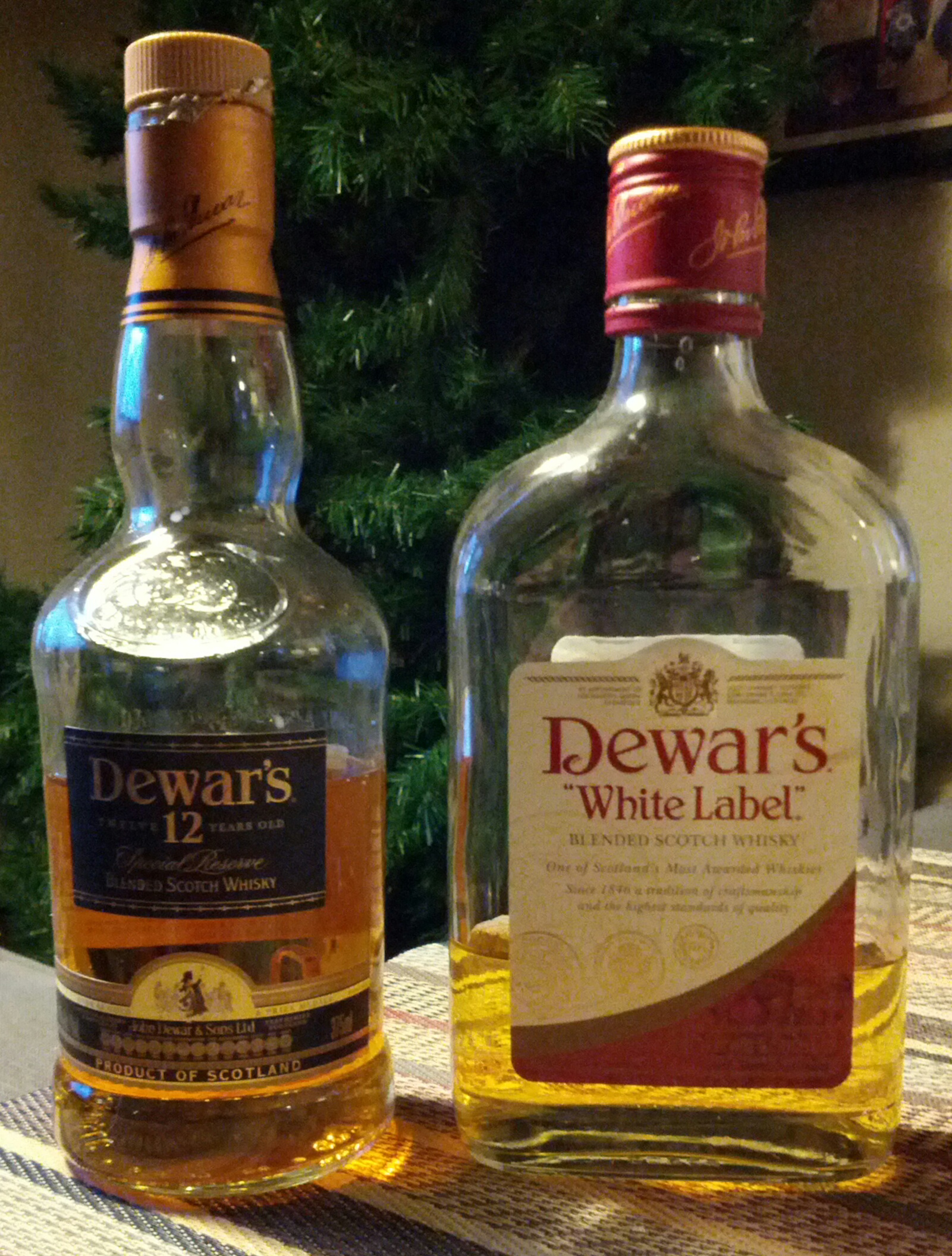
Head to head: Dewar’s White Label vs. Dewar’s 12 y/o Special Reserve

A: White Label

Dewars head to head

B: 12 y/o

Maker: Dewar & Sons, Perthshire, Scotland, UK (Bacardi)

Age

A: NAS

B: 12 y/o

ABV: 40%

Appearance (coloring likely added)

A: Pale gold.

B: Pale copper.

Nose

A: Young. Malt, varnish, and a bit of brown butter.

B: Richer. Woodruff, malt, hints of sherry and oak.

On the palate

A: Full bodied and immature. New make, alcohol, malt, not much else.

B: Full bodied and more rounded. Malt, butterscotch, honey, oak.

Finish

A: Hot and brash with a bit of candy sweetness on the back end.

B: Creamy and sweet with a little bite. Fades slowly.

Mixed

A: Adequate in a hot toddy, but doesn’t contribute  much. Same with a butterscotch, Rob Roy and

Rusty Nail. Pleasantly malty with soda.

B: Does well in all the above drinks, adding a nice buttery note and more depth. In other words, one can actually taste the whisky in the drink.

Parting words: Both of these were perfectly adequate whiskies with the 12 y/o being the richer and more rounded of the two. Surprisingly, given the price difference, I would rank Dewar’s White label above Johnny Walker Red, but it’s still no more than a mixer. To confuse things further, I would rank the 12 y/o version below Johnny Walker Black, even though the two are the same age. The 12 does really well in cocktails but falls flat as a sipper. JW Black isn’t the most complex blend on the market but it has enough smoke and oak to keep me from dozing off mid sip.

In conclusion, Dewar’s White Label is mildly recommended for mixing but not for sipping and Dewar’s 12 y/o is recommended for mixing but only mildly recommended for sipping.

Sassy Rosé

Maker: Sandhill Crane, Jackson, Michigan, USA (Moffatt family)Sassy Rose

Grape: Cabernet Franc

Region: Michigan, USA

Vintage: 2011

ABV: 12%

Online price: $17

Appearance: Pale pink with thick legs.

Nose: Subtle. A whiff of smoke, plum, black cherry, hint of cedar.

On the palate: Light bodied and delicately sweet. White mulberry, white pepper, slightly underripe blueberry.

Finish: Plum, ripe fig, then a delicate oaky flavor as it fades.

Parting words: Sassy Rosé is dedicated to the memory of the Moffats’ beloved Airedale Rosie (2003-2011), who I actually met on a couple occasions while stopping by the tasting room in Jackson. She was a friendly dog, but being an Airedale she could be, well, sassy.

I’m a big fan of dry rosés, especially those from the South of France, so I came into this wine with high hopes. I have had it before at the winery and it tasted good, but wines tend to taste better when sampled at the winery with friends. I was eager to get it home and write up a review.

When I first opened it, I was disappointed. It was much sweeter than I remembered and lacking in sass. After spending eighteen or so hours in the refrigerator, it has improved quite a bit. The profile is much closer to dry French rosés and much more enjoyable now. It gets a bit overwhelmed by spicy food, but does well with a light lunch of cheese and crackers or with holiday turkey. The price is on the high side but it’s fair for what it is and may be a little cheaper at the tasting room if I recall correctly. Sassy Rosé is recommended.

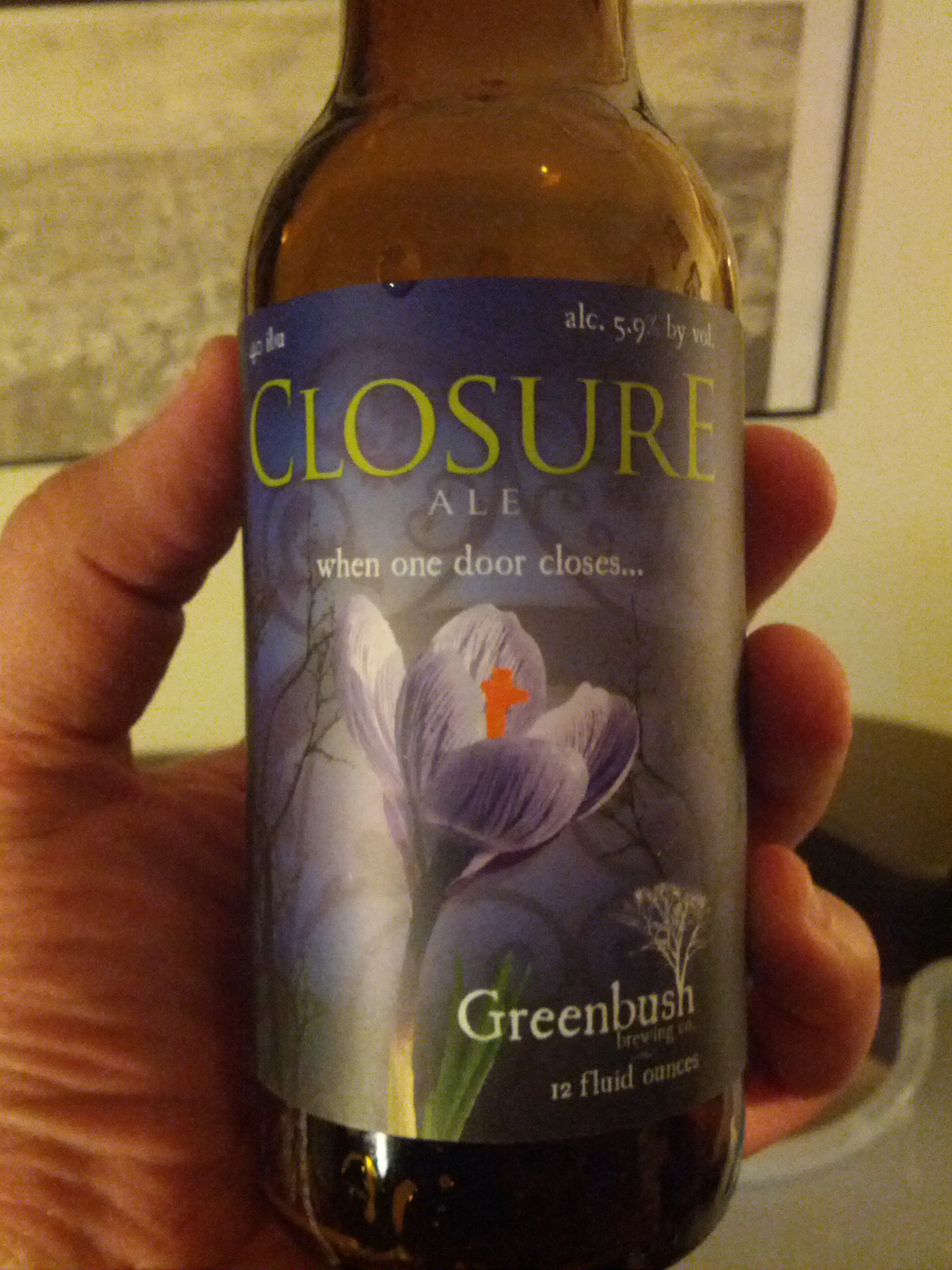
Closure

Maker: Greenbush, Sawyer, Michigan, USAClosure

Style: American Pale Ale

ABV: 5.9%

Purchased for: $10/6 pack

Appearance: Dark tan with a foamy head that dissipates fairly quickly.

Nose: Creamy malt, flowery hops, hint of sweetness.

On the palate: Cream on first entry, then springs into bloom. Dried flowers, coriander seed, epazote.

Finish: Fairly dry with big, brash hops. Lingers for a long, long time getting more and more bitter.

Parting words: Greenbush is a newish brewery in Southwest Michigan in the heart of wine country, the Lake Michigan Shore AVA, specifically. It’s a big, bold American Pale Ale that reminds me a lot of Bell’s Two Hearted Ale but it lacks the finesse of Two Hearted and the hoppy finish can get unpleasant when not drinking with food. I had it with a variety of foods and it seems to drink best with rich, spicy ones like sausage or pizza. Price is normal for a quality microbrew. I look forward to trying and reviewing more from this brewery soon! Closure is recommended.