Forty-Five North Riesling

Maker: Forty-Five North, Lake Leelanau, Leelenau Co, Michigan, USA

Region: Michigan, USA

Vintage: 2010

Style: Dry

ABV: 11.5%

Purchased for: $19

Appearance: Light gold with very little in the way of legs or necklacing.

Nose: Grapey and dry. Pear, peach, Golden Delicious apple, whiff of orange blossom.

On the palate: Medium bodied and semi-dry. White peach, white cherry, underripe plum.

Finish: Dry. Peach, thyme and maybe a little smoke.

Parting words: Forty-Five North Winery is located in the central Leelenau Peninsula, east of Lake Leelanau. It is named for the 45th parallel, the midpoint between the Arctic Circle and the Equator, which runs right through the vineyard belonging to the winery. The family has owned the land around the tasting room for many years but purchased the vineyard and began producing wine commercially only in the past few years. The facilities are in the Leelenau Peninsula but note that the wine is only labeled “Michigan”. This means that grapes from more than just the Leelanau AVA probably went into this wine.

For relative newbies, they have done a good job. This Riesling is crisp and food-friendly but has the complexity to raise it well above the category of a table or casual wine. It is an excellent example of a dry Michigan Riesling and is well worth the price. 2010 Forty-Five North Riesling is recommended.

Sassy Rosé

Maker: Sandhill Crane, Jackson, Michigan, USA (Moffatt family)Sassy Rose

Grape: Cabernet Franc

Region: Michigan, USA

Vintage: 2011

ABV: 12%

Online price: $17

Appearance: Pale pink with thick legs.

Nose: Subtle. A whiff of smoke, plum, black cherry, hint of cedar.

On the palate: Light bodied and delicately sweet. White mulberry, white pepper, slightly underripe blueberry.

Finish: Plum, ripe fig, then a delicate oaky flavor as it fades.

Parting words: Sassy Rosé is dedicated to the memory of the Moffats’ beloved Airedale Rosie (2003-2011), who I actually met on a couple occasions while stopping by the tasting room in Jackson. She was a friendly dog, but being an Airedale she could be, well, sassy.

I’m a big fan of dry rosés, especially those from the South of France, so I came into this wine with high hopes. I have had it before at the winery and it tasted good, but wines tend to taste better when sampled at the winery with friends. I was eager to get it home and write up a review.

When I first opened it, I was disappointed. It was much sweeter than I remembered and lacking in sass. After spending eighteen or so hours in the refrigerator, it has improved quite a bit. The profile is much closer to dry French rosés and much more enjoyable now. It gets a bit overwhelmed by spicy food, but does well with a light lunch of cheese and crackers or with holiday turkey. The price is on the high side but it’s fair for what it is and may be a little cheaper at the tasting room if I recall correctly. Sassy Rosé is recommended.

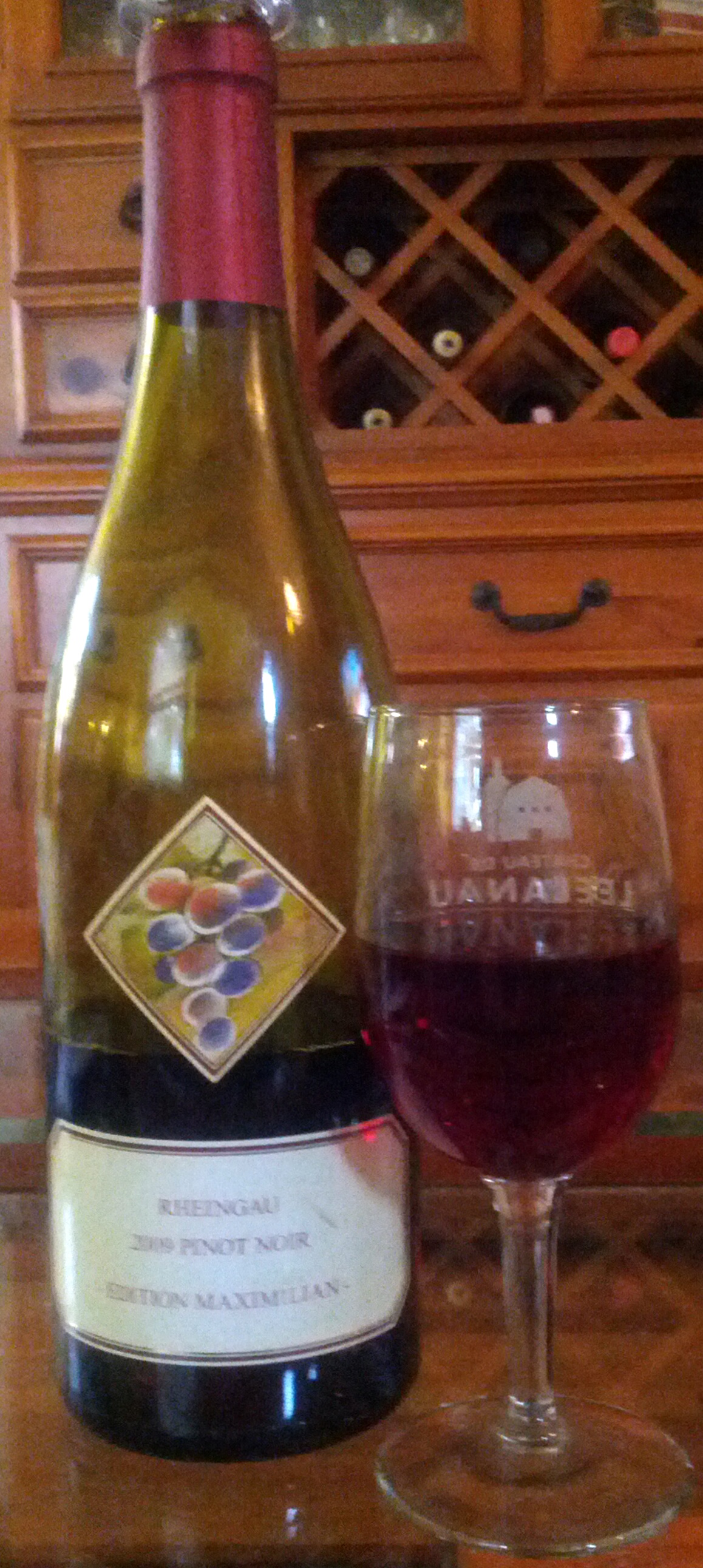
Edition Maximilian Rheingau Pinot Noir

Maker: Hans Lang, Eltville, Hesse, Germany.Ed Max Pinot 2009

Vintage: 2009

ABV: 11.5%

Purchased for: Around $7

Appearance: Light burgindy, like red raspberry juice.

Nose: Light and fruity. Strawberry, raspberry jam.

On the palate: Also light and fruity but with some complexity and not a lot of sweetness. Strawberry juice, underripe plum, cherry preserves, a dash of white pepper.

Finish: Pleasant but quick-fading. Some fruity sweetness followed by gentle oak.

Parting words: This is another favorite of mine from Trader Joe’s. The U.S. gets a very limited selection of fine German white wines. Good German reds are even harder to find. The German name for the grape is Spätburgunder but many German producers have been astutely using the more familiar French name on labels intended for sale in the U.S.

Rheingau is one of Germany’s historically great wine-producing regions. It lies on the north bank of the Rhine in the vicinity of Wiesbaden where the river takes a westward turn between where it is joined by the Main and where it turns back north. As one might expect Riesling is the mostly widely planted vine, but a significant proportion of Pinot Noir is also grown.

At any rate, I like this wine a lot for what it is. It lacks noticeable flaws, though it also lacks depth and complexity. It does very well with all types of cuisine and is very easy drinking. At $7 there’s nothing not to like. Edition Maximilian Rheingau 2009 Pinot Noir is recommended.

Left Foot Charley Pinot Gris

Maker: Left Foot Charley, Traverse City, Michigan, USALFC Pinot Gris

Place of origin: Tale Feathers Vineyard, Old Mission Peninsula AVA, Traverse City, Michigan, USA

Vintage: 2011

ABV: 13.5%

Purchased for $18

Miscellaneous label info: Tale Feathers is “1.8 acres of sandy loam soils facing due west in the heart of Old Mission Peninsula.” Harvested 10/17/11, 7.8 tons, 23.3 Brix sugar at harvest, TA: 7g/1, Residual Sugar: 3g/1. So there.

Appearance: Pale gold with long broad legs.

Nose: Grapey and semi-sweet. Hardwood smoke, hard apple cider, pear.

On the palate: Full bodied and, again, semi-sweet. Golden Delicious apples, Bartlett pear, plum.

Finish: Medium dry. A touch of cedar and a little peach linger in the mouth.

Parting words: I’ve reviewed wines from Left Foot Charley before, so I’ll spare you a rehash of where this winery is and what they do. Like the other LFC wines I’ve had, this is a very good wine with great varietal and terroir-driven character. It has all the characteristics of fine Pinot Gris from Alsace or elsewhere, but it also has a light, bright (but not tart) character its French cousins often lack. It also lacks the voluptuous mouthfeel of Alsatian whites, but it’s plenty sexy as it is.

This wine does well with the usual white wine fare like poultry and seafood, but has enough depth and complexity to hold one’s attention on its own. It could probably have been fine with another six months to a year in the bottle too, but it’s best not to push things too much with a Gris. The price is reasonable for a vintage varietal that more than delivers on its promises. Left Foot Charley’s 2011 Pinot Gris is recommended.

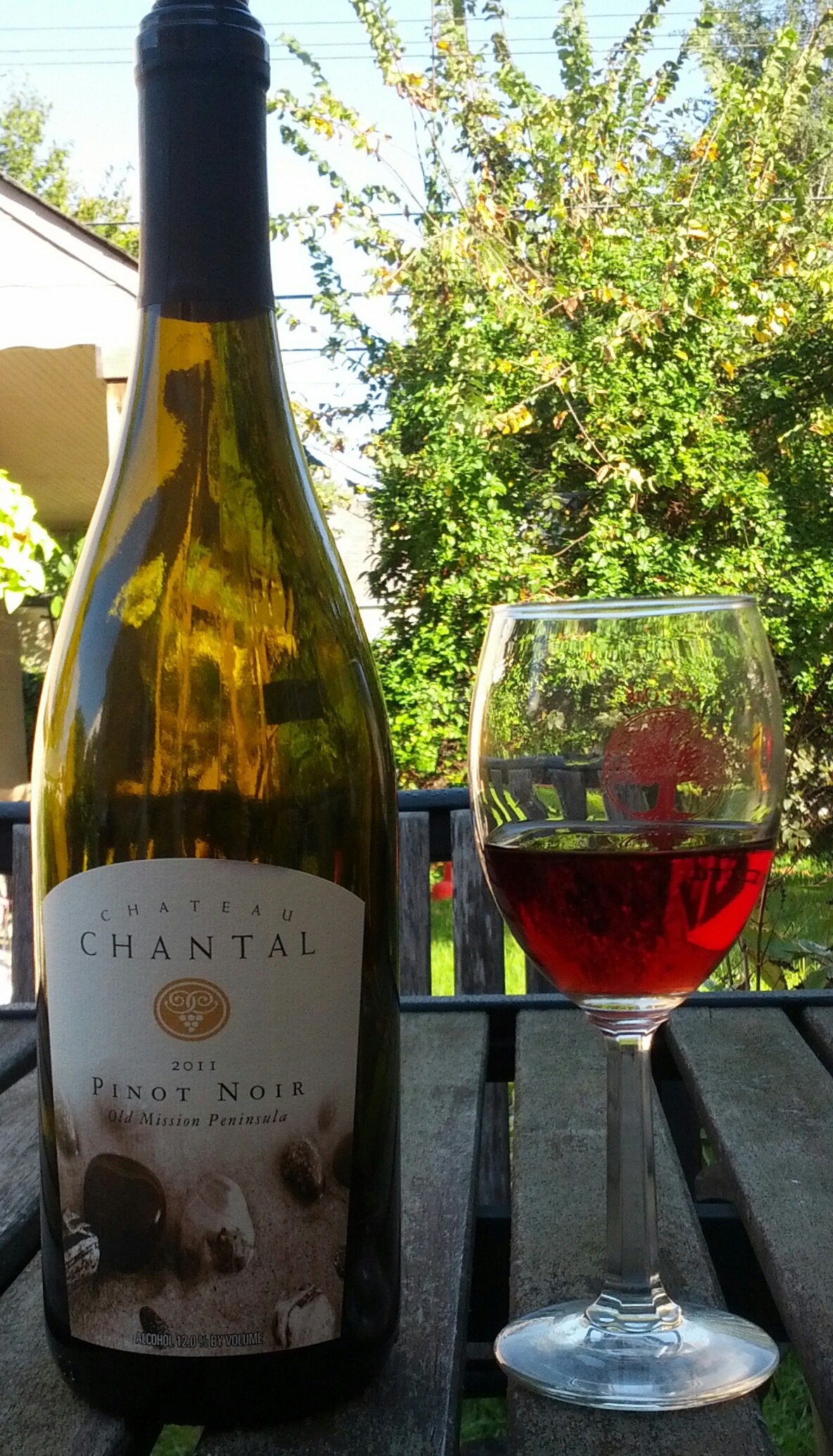
Chateau Chantal Pinot Noir

Maker: Chateau Chantal, Traverse City, Michigan, USAChCh Pinot 2011

Place of origin: Old Mission AVA, Traverse City, Michigan, USA

Vintage: 2011

ABV: 12%

Purchased for $15

Note: Notes taken after having been open 24 hrs.

Appearance: Light burgundy.

Nose: Light and vaguely fruity. Blackberry jam, cedar, grape juice.

On the palate: Light and easy drinking. Fresh strawberries, a taste of wood, not much else.

Finish: More cedar and a bit of black pepper, but still lightly fruity.

Parting words: Pinot Noir is an up and coming grape for Northern Michigan. It has been grown there for some time, but there have been raised expectations as of late. There’s no reason why good Pinot couldn’t be produced in Michigan. Pinot Noir is widely grown in the same regions in Europe where Riesling, Pinot Gris and Gewurztraminer are grown and all those do well in the Great Lakes State.

This is a wine without any obvious flaws (aside being a little lively upon first pour) but I was disappointed with how timid it was. It reminds me of inexpensive négociant-produced red Burgundy I’ve had. In the wine’s defense, the back label makes it pretty clear what to expect: an easy-going, food friendly wine. I would stay away from beef, lamb or ham, but pork, turkey or salmon would pair very nicely with this wine as would a cheese course or dark chocolate.

There is no shortage of decent red Michigan blends available for purchase just about anywhere in this state. Some of the best of those are from Chateau Chantal. When I buy a vintage varietal for a vintage varietal price, I expect more character than I got in this bottle. For that reason, Chateau Chantal Pinot Noir 2011 is only mildly recommended.

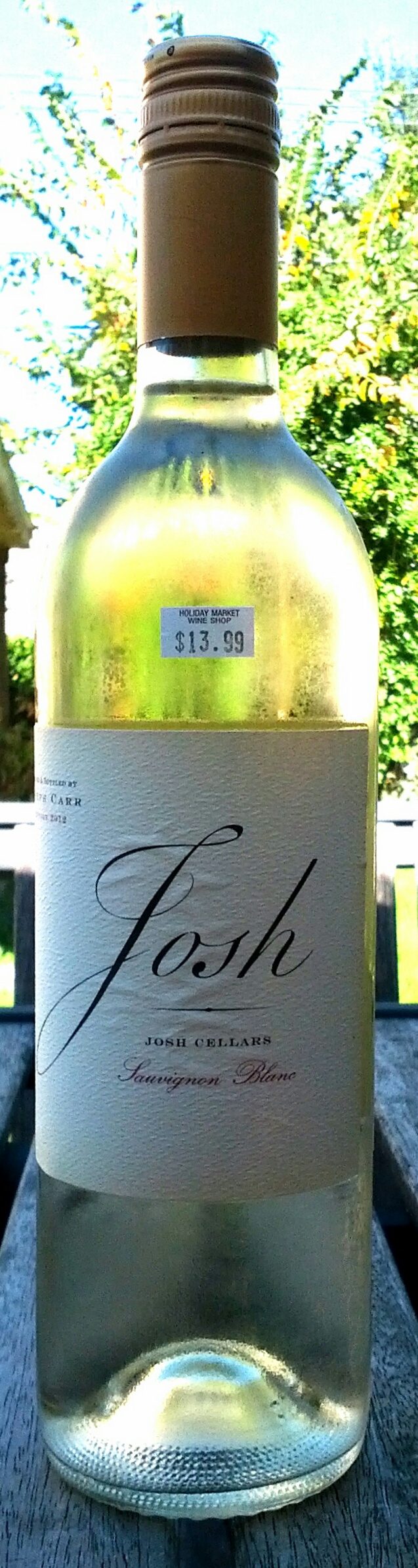
Josh Cellars Sauvignon Blanc

Maker: Joseph Carr, Healdsburg, California, USA

Place of Origin: Sonoma County, California, USA

Vintage: 2012

ABV: 13.5%

Purchased for: $14Josh SB

Appearance: Light straw with

Nose: Apricot, pear, mandarin orange, pineapple.

On the palate: Medium dry and mild. Unripe pear, not much else other than a little sweetness and an herbal touch as the wine warms up.

Finish: Sweet, fruity and mild. a little sweetness lingers in the cheeks for a while and then slowly fades.

Parting words: When I saw the Josh Cellars display at a local grocery store, I thought “Well, it looks like it will be pretty dull, but I have to buy some and post notes, right?” Right.

 Sauvignon Blanc is a grape I have grown to appreciate after having some really tasty New Zealand ones. I’ve had some good California SBs too, but most of them have been very dull. This one falls into the dull category. There’s nothing wrong with it per se, and it has a very nice nose, but it falls flat on the palate and it has no finish to speak of. It works best well-chilled with poultry or mild seafood.

The price is not good, but if you can find it for closer to $10 it might be worth a try. Otherwise, grab a Joel Gott or one of the cheaper brands from NZ.  Josh Sauvignon Blanc is mildly recommend.

Chateau Grand Traverse Late Harvest Riesling, 2011

Maker: Chateau Grand Traverse, Traverse City, Michigan, USACGT Late Harvest Riesling 2011

Origin: Michigan, USA

ABV: 10%

Appearance: Medium gold.

Nose: Lychee, pineapple, tangerine, pear.

On the palate: Full-bodied and mouth-puckeringly tart when fresh from the bottle. Lemon, sour candy. As it has time to open up at room temperature it calms down quite a bit. The citrus is still there and still strong, but a pleasant herbal note asserts itself. Underneath all this is a beautiful firmness that presages good things to come.

Finish: Fairly sweet but still very tart. Fades fairly quickly and leaves a slightly sticky residue on the lips.

Parting words: I think this is another lesson wine for me. It was close to undrinkable on first pour, but I don’t think that’s due to any inherent flaw in the wine. I may be all wet here, but I think it needs much more time in the bottle to settle down. As it is, it’s unbalanced.

There is plenty of good stuff going on. The fruit in the nose is wonderful and the mouth feel is great, but this wine is not ready for primetime. This is the first time I have encountered a Michigan wine like this from a major quality producer (one of my favorites actually). Far from being disappointed I was encouraged that Michigan producers are making wines for which multi-year bottle aging isn’t just possible but recommended. That’s an encouraging sign.

Anyhow, rather than give a mild recommendation to this, I will give it an I for incomplete. Good thing I have another bottle cellared.

Domaine de Pouy

Maker: Tariquet, Eauze, Midi-Pyrénées, France (Grassa family)

Grapes: Ugni Blanc & Colombard

Place of origin: Côtes de Gascone

Vintage: 2012

ABV: 11.5%

Appearance: Golden straw.

Nose: Crisp and lightly fruity. Peach, pear, tangerine.

On the palate: A bit more citrus, but still crispy. Peach, Clementine, lemon thyme drying to flintiness. As it opens up, more grapefruit comes to the fore.

Finish: Drying. The fruit is still there but loses out to minerals in the end. Leaves a slight bitterness on the tongue.

Parting words: I love wines (and beers and whiskeys and other stuff) that defy my expectations. You see, I had decided that I didn’t like French whites from the western part of the country. I had some dull white Bordeaux and so I wrote off the entire area.  But being an adventurous soul, I saw this wine recommended as a “crisp summer white” by a local wine-monger who has never failed to find me good values in French wine in the past. So I bought a bottle.

I’m glad I did. It certainly delivers on the crispness and it would be hard to ask for a better wine of this type at $10 or less. Might buy a couple more of these before the summer is out! Domaine de Pouy is highly recommended.

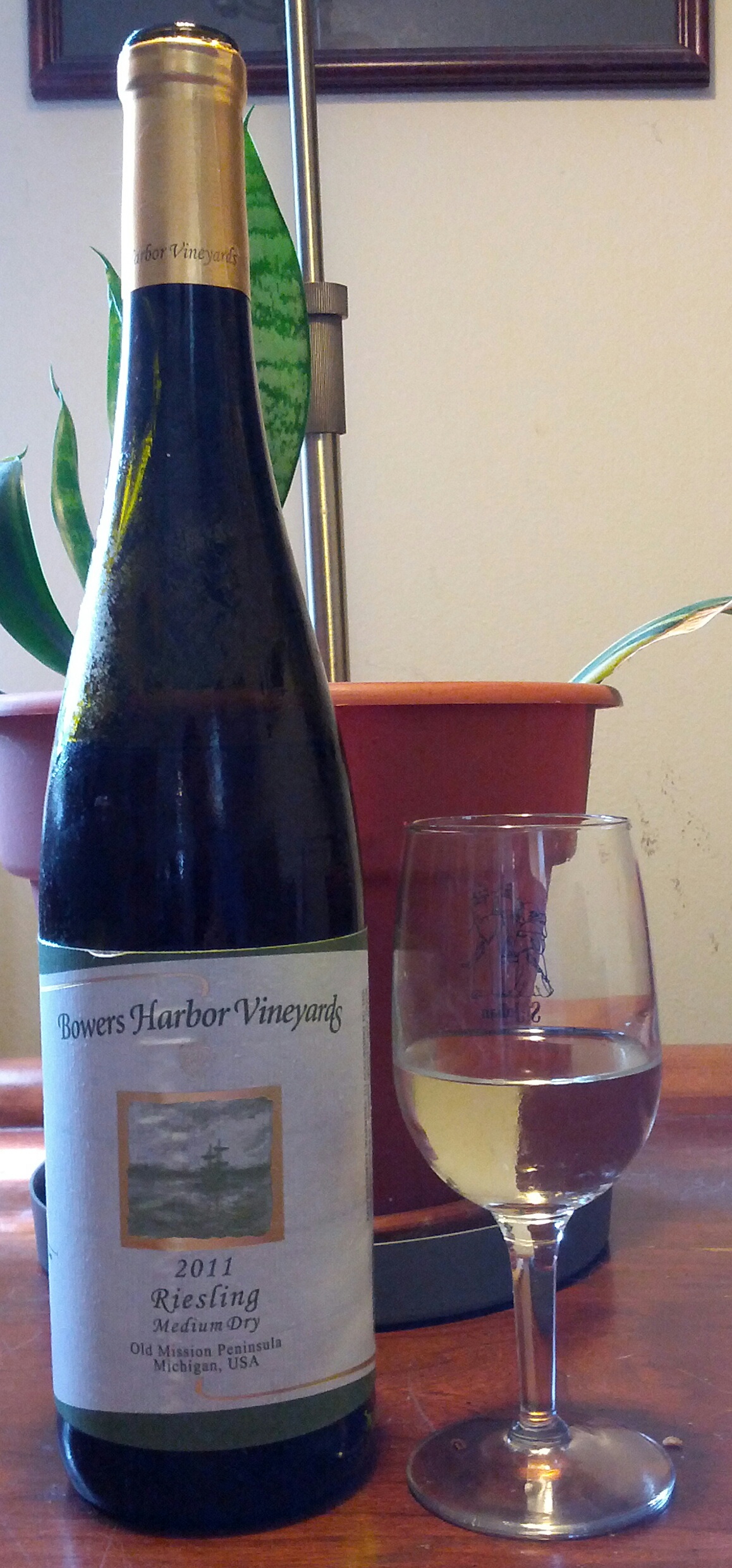
Bowers Harbor Riesling- Medium Dry

Maker: Bowers Harbor Vineyards, Lake Leelenau, Michigan, USABHV Med Dry Riesling

Place of origin: Old Mission Peninsula AVA, Traverse City, Michigan, USA

Vintage: 2011

ABV: 11%

Appearance: Pale straw.

Nose: Lychee, white peach, pear, whiff of dried flowers.

On the palate: Medium bodied and slightly tart. Queen Ann cherries, white mulberries, rose water.

Finish: Fairly dry with a hint of tartness. Pear, plum and Golden Delicious apple.

Parting words: Is orchardy a word? Because if it is, it applies to this wine. I don’t usually buy into claims that terroir makes much of a difference beyond soil composition and climate, but this BHV’s Medium Dry Riesling is very much in the spirit of Northern Michigan. Cherries and other stone fruit are abundant with a bit of apple and pear thrown in there as well. Starts to get overly tart after being opened for a day or more, but this one is so tasty it should not be a problem to finish a bottle within 24 hours. The dryness makes it quite food friendly and it would go very well with mild flavored fish (the label recommends Walleye) and chicken. Bowers Harbor Medium Dry Riesling is highly recommended.