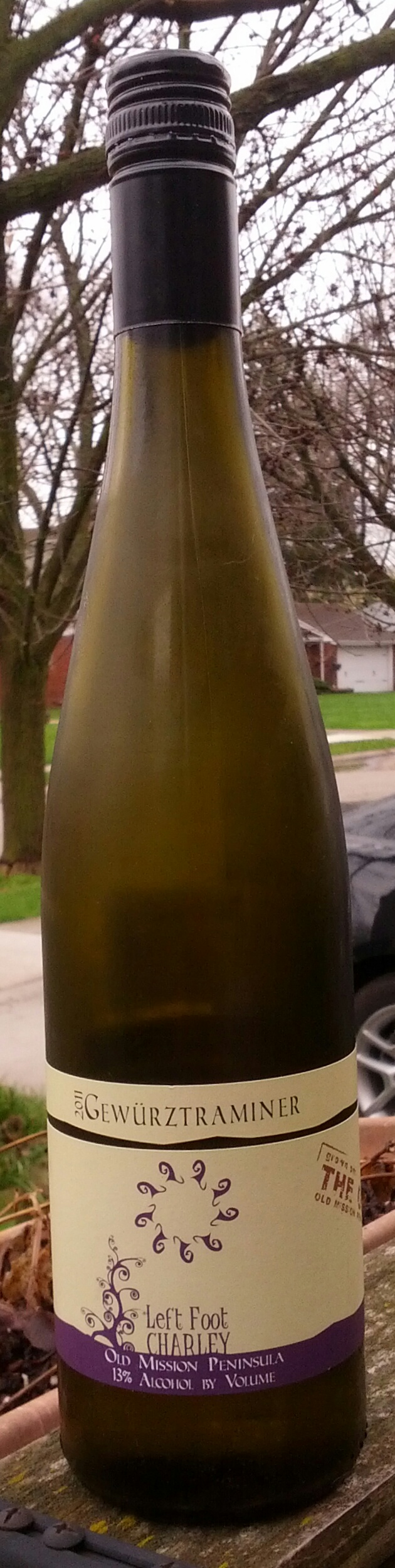
Maker: Left Foot Charley, Traverse City, Michigan, USA
Place of origin: Manigold Vineyard, Old Mission Peninsula AVA, Traverse City, Michigan, USA
Vintage: 2011
ABV: 13%
Price: $20
Appearance: Light gold with not much in the way of legs, but that may be down to the glass.
Nose: White peach, Bosc pear, a pinch of curry powder and white pepper, woodruff and fresh thyme.
Palate: Medium bodied and medium dry. Spice moving to white grapefruit and unripe mulberry.
Finish: Fairly dry with some bitterness on the tail end. Lingers for a good long while.
Parting words: The Manigold vineyard is known for producing excellent Gewürz (Peninsula Cellars has also made Gewürz from this vineyard) and this is a very good example from a very good vintage.
The back label has a puzzling apology for “obnoxiously loud” LFC Gewürz of the past and hails their return to Manigold vineyards, albeit a different slope. The whole thing is curious but it is nice to have such detail right on the back of the bottle. Also included is the name of the growers, a description of the plot the grapes came from, harvest date and sugar levels at harvest and residual sugar.
This wine certainly isn’t obnoxious. The nose is rich with fruit, spice and herbs and enough sweetness and acidity to keep it all in balance. Like most Gewürz it goes very well with food, especially roast chicken and even Asian cuisine. The price is good for a single vineyard wine from OMP. 2011 Left Foot Charley Gewürztraminer earns a recommendation.
One of the things I enjoy about wine is its strong connection to place. There’s an old saying that when you taste cider, you taste apples and when you taste cherry wine, you taste cherries but when you taste wine made from grapes, you taste the soil and the sun and the rain. This concept is called terroir, and while it is often over emphasized there is a strong element of truth to it. Different varies of grape grow in differently in different places and the same variety or even an identical clone of the same plant will produce a wine that tastes very differently from vineyard to vineyard. That’s to say nothing of the different traditions and techniques of the world’s vineyards.
For me, one of the most enjoyable aspects of being a wine lover is visiting these places where grapes are grown and wine is produced. Last year when I received an invitation to my cousin’s wedding in Fremont, California the little hamster wheel inside my brain started turning. My wife and I went to Sonoma years ago when my sister and her husband lived in Northern California so it seemed natural that the next area to visit would be Napa.
When we left Royal Oak in the morning, our backyard looked like this.When we left our hotel in the morning of the next day, we saw this.
We arrived in San Jose late at night so we just stayed at an airport hotel and drove to Calistoga to Rivers-Marie HQ in the morning. The most harrowing part of the drive was the final leg driving up and down mountains on two lane roads with no shoulders. Luckily my wife was behind the wheel so I could just close my eyes for the most alarming parts.
The office for Rivers-Marie is in a beautiful, fairly large craftsman style house in Calistoga itself. After meeting with friend-of-the-blog Will (R-M’s employee, as he described himself), we hopped in the truck and went to the associated winery, Tamber Bey. They make wine for a variety of labels and from a variety of vineyards, but Rivers-Marie is the house brand. Sonoma Coast Pinot Noir is their specialty but they also do a Cab and a Chard under that label.
When we arrived they were racking the wine and Will showed us around the equipment.
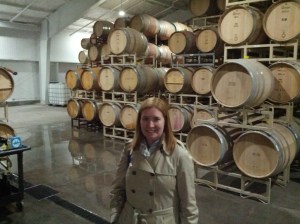
We then got a chance to visit the wines resting in the barrels and taste a few. With most of them, I took a sip and thought, “This isn’t so bad” and then got smacked in the mouth with a big burst of sulphur. Not good drinking but educational.
We then went back to the office for a great tasting and great conversation with Will. I learned a lot about Napa and Sonoma and wine in general from the conversation. My thinking was even changed on a few things, like being overly tough on certain Michigan wineries whose wine I haven’t liked.
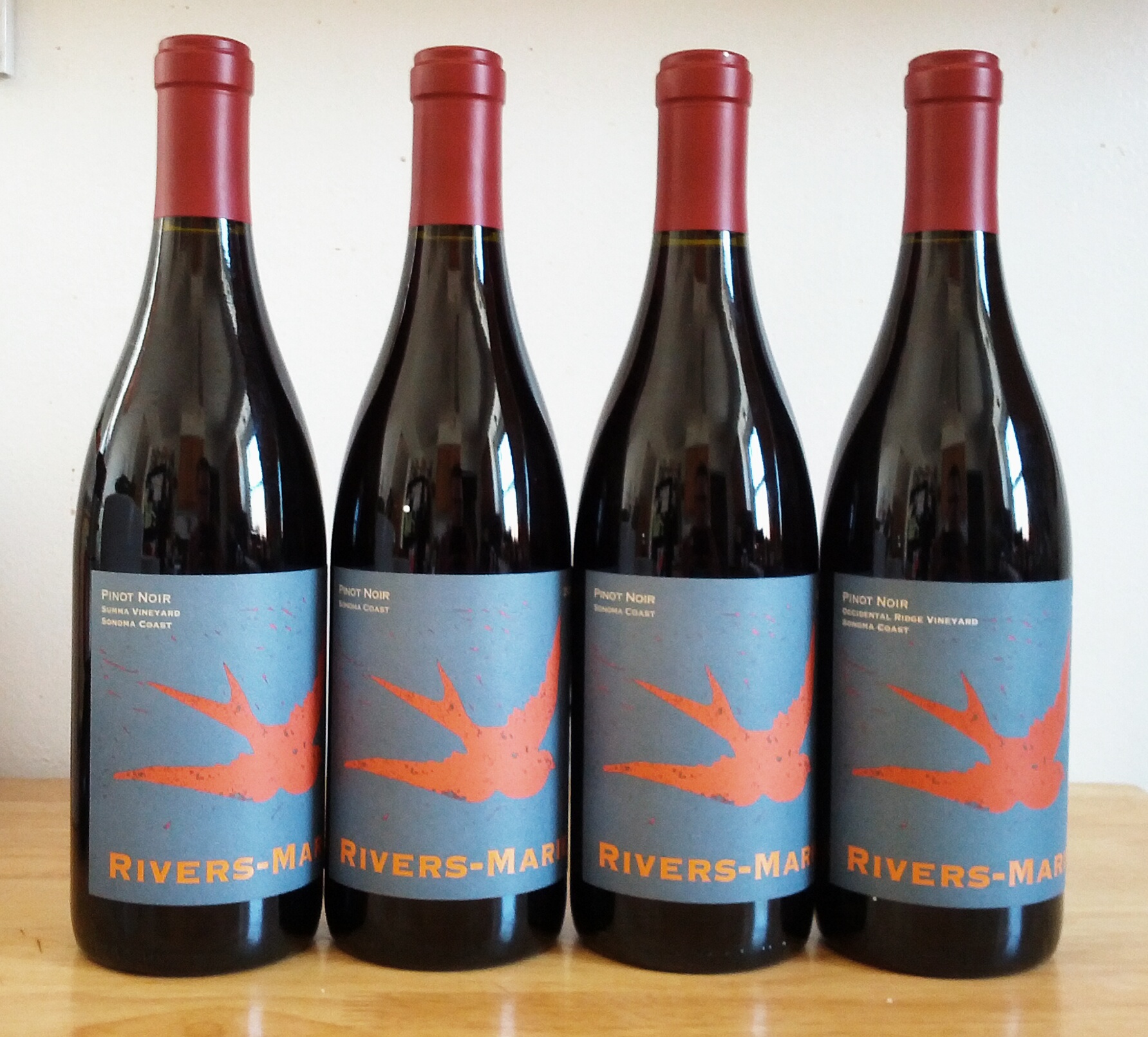
We ended up ordering four bottles from them. Since they don’t have a Michigan distributor, we were able to have them shipped.
Nothing could really compare to that experience, but we visited a few more wineries over the next two days.
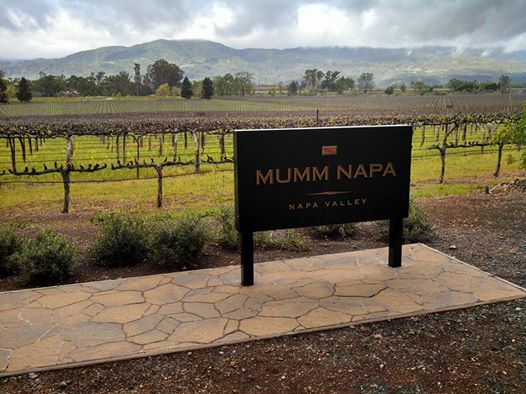
There was scenic and pricey Alpha Omega.And Mumm, specializing in sparklers.
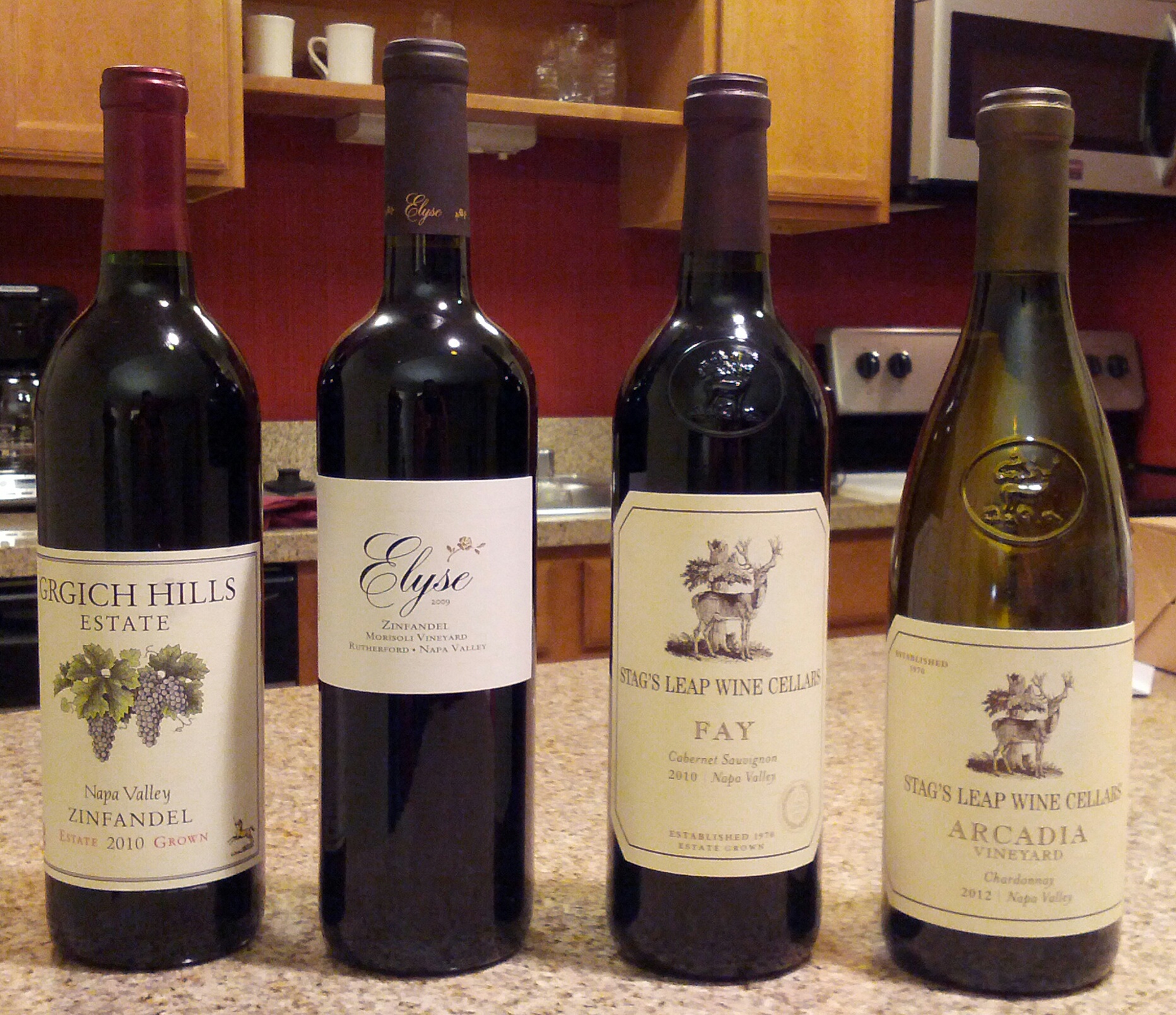
We also visited a couple “Judgement of Paris” wineries, Grgich Hills and Stag’s Leap. Both were nice, but Stag’s Leap was an especially nice experience and the wines were amazing. Thanks to the advice of friends of the blog Jessica & Brian we also stopped at Elyse winery, a small family-owned winery. It’s not particularly scenic but the wines were very good and it’s always nice to be able to talk to the people who helped make the wine while you’re tasting it. This was our haul, at least all that we could carry on the plane:
We had heard horror stories about how Napa was a wine-themed Disney World, but it didn’t strike me as Disneyesque at all. Yes, there are plenty of touristy wineries, especially the big or famous ones, but the ones we saw didn’t seem any more touristy than ones we’ve seen in Michigan, Indiana or New York. Our experience with Will and at Elyse was anything but touristy. So, like most places, it’s all about expectations. If you go to Mondavi expecting Robert to look up from picking grapes to wave to you from the vineyard as you roll up on the gravel driveway, you’ll be disappointed. Especially since Robert Mondavi has been dead for several years now. If you plan your visit carefully and know what you’re in for you’ll be able to have a good time.
Napa isn’t just wine of course, but lots of good food too. Oenotri in downtown Napa was a standout, but we hit a couple nice little bistros along the way.
The wedding was a blast. The ceremony was a shortened version of the traditional Hindu ceremony, but instead of a horse, the groom rode in on a Ford Mustang. That summed up the festivities pretty well. The reception (on the next day) was even better. Best Indian food I have ever had and best beer list I have ever seen at a wedding reception. My cousin is a big craft beer fan, and she especially loves sour beers. I think we clean up well, too.
It was a wonderful time, and it’s all thanks to my brilliant cousin Rhiannon (aka Rachel) and her brilliant husband Ashish, who is already living up to his name. May you have many more blessings in the years to come!
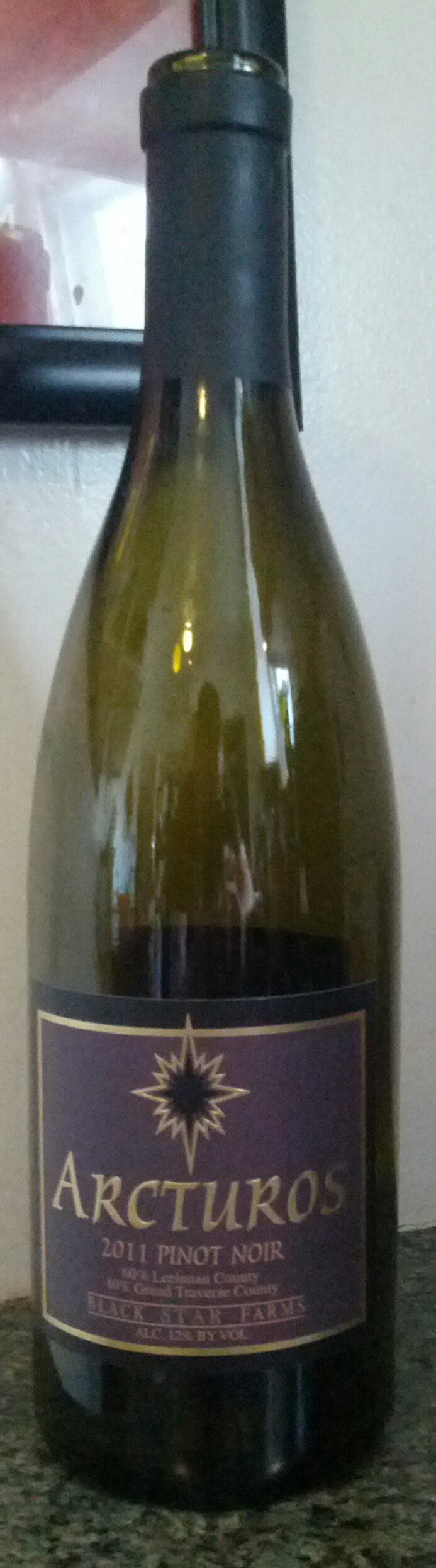
Maker: Black Star Farms, Traverse City/Sutton’s Bay, Michigan, USA
Place of origin: Michigan (60% Leelanau Co., 40% Grand Traverse Co.), USA
ABV: 12% ABV
Price: $22.50 (website)
Appearance: Ruby red,
Nose: Lightly toasted oak, white pepper, strawberry jam.
Palate: Medium bodied and medium dry. Black raspberries, very ripe blueberries, pinch of pink peppercorns.
Finish: Light oak with a bit of fruit. Fades slowly.
Parting words: I was originally planning to let this one sit for longer but after tasting a 2010 Pinot Noir from a neighboring winery that had fallen apart last week I panicked and decided that now was the time to open my 2011 Michigan Pinots. I’m glad I did. This one was very tasty. It was fruity but the oak rounds it off nicely. There could have been more depth and integration of flavor but there’s nothing to complain about. Does fine with food or on its own. 2011 Arcturos Pinot Noir is recommended.
Palate: Medium bodied and fruity but with a little chewiness to hold everything together. Light cherry juice, blueberries, white mulberry, plum, touch of leather.
Finish: Medium dry. Toasted oak, vanilla, clove.
Parting words: Epicuro is another Trader Joe’s line of <$10 wines but one of the few I have not explored as of yet. Epicuro’s wines are all marketed by the varietal and all from relatively lesser known (i.e. not Piedmont or Tuscan) regions.
Beneventano IGT (IGT is roughly equivalent to the French vin de pays; for a synopsis of the Italian regional wine system look here) is in Campania in southern Italy. Campania and neighboring Basilicata constitute the home turf of Aglianico. The latter is home to the best known DOC featuring the grape, Aglianico del Vulture and the former is home to the Taurasi DOCG.
When doing research for this review I discovered that f.o.t.b. Oliver has reviews on three vintages of Epicuro’s Salice Solentino here. It’s a personal favorite of his. He and other reviewers don’t typically hold the Aglianico in as a high regard, but as you can tell from my review above, I enjoyed it. I wouldn’t say it was a game-changer for me, but it was easy drinking and cheap without any real flaws. It paired moderately well with beef stew with peas (from an Italian cookbook) but it might work better with pork or chicken as a summer BBQ wine.
On the palate: Medium bodied and slightly tart. Tangerine, wildflower honey, lemon thyme, minerals.
Finish: Surprisingly dry. A touch of grapefruit and thyme. Fades slowly.
Parting words: I am a lover of all Michigan wine, but I don’t love every Michigan wine. The wines Michigan’s AVAs tend to be of consistently higher quality than those that just read “Michigan” on the label. The wineries of the Pioneer Wine Trail in Michigan are spread over many miles in Southeast and South Michigan and their vineyards occupy a wide variety of sites. What they have in common is they are more “continental” in climate with hotter summers and colder, drier winters than points west and north. All that said, any wine that simply calls itself “Michigan” can contain grapes grown anywhere in the state.
J. Trees is a fairly new winery, but they are producing like old pros. Their 2011 Dry Riesling wine is well executed and delicious from start to finish. It’s dry enough to pair well with food traditionally matched with white wines (we had ours with cheese tortellini in chicken stock) but complex enough for Saturday afternoon sipping with a good book.
The price is very fair for a wine of this quality and versatility. J. Trees Dry Riesling is recommended.
Nose: Strawberry preserves, blackberries, black cherries, oak. A little boozy.
On the palate: Raspberry jam, black pepper.
Finish: Light and fades quickly. Cherry juice and a touch of leather.
Parting words: For a $9 wine, this a very good stuff. Mourvèdre/Monstrell is a staple of Mediterranean vineyards, especially those in the southern parts of Spain and France. It often is blended with Grenache and similar wines to counteract its rustic character. This is Mourvèdre of a gentler sort. It’s jammy but has enough structure and oak to make it appropriate for drinking with a hearty meal. Wines from Rioja and the Duero valley have gotten very hot in recent years, but lesser known regions in Spain like Yecla are still producing value wines and this is a great example. Castaña Monstrell is recommended.
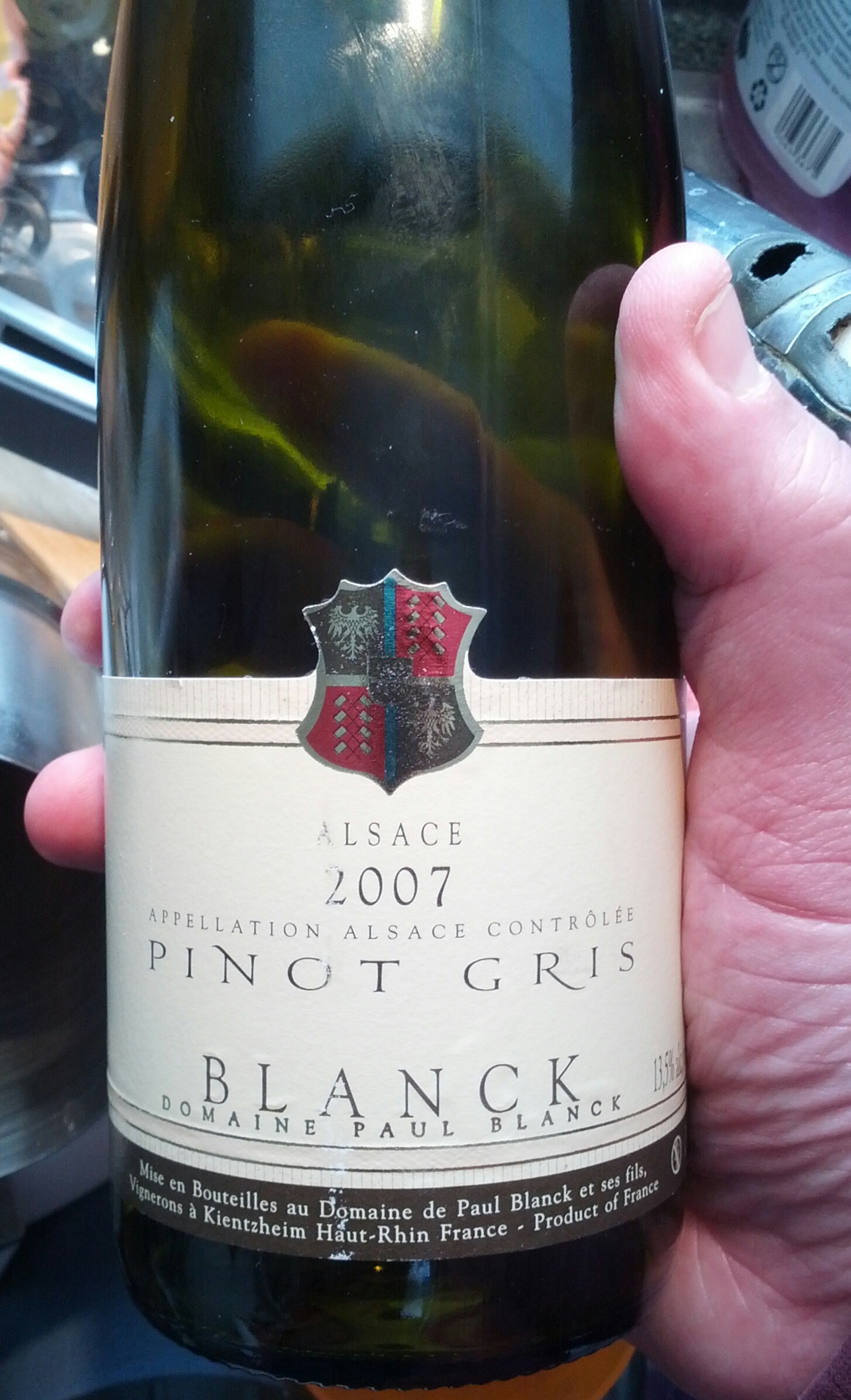
Maker: Domaine Paul Blanck, Kientzheim, Alsace, Francef
Grape: Pinot Gris/Grigio
Place of origin: Alsace, France
Vintage: 2007
ABV: 13.5%
Purchased for: $22 (list price $32)
Appearance: Gold with thick legs.
Nose: Oak, ripe pear, thyme.
On the palate: Full bodied and medium dry. Oak, white cherries, plum, underripe peach, mineral water.
Finish: Mild apple, a whiff of smoke and it slowly fades.
Parting words: What a delicious wine! A nearby wineshop is closing its doors and friend of the blog Amy and I went on an expedidition recently and pooled our purchase so as to get a bigger discount. This is one of my bottles. As long time readers know, I love the white wines of Alsace and their North American cousins, so I couldn’t pass up the opportunity to buy something like this at a deep discount.
Blanck is an Alsatian négotiant producing a full line of wines. This one is from their vins de fruits series of varietal wines. They also produce lines of single vineyard, late harvest and borytized wines.
This is classic Alsatian Pinot Gris. It’s rich and aromatic and judicious use of oak provides that little bit of smoke Alsatian Gris is known for. It may have been more fruit forward a few years ago (six years in the bottle is pushing it), but even at this advanced age it’s delicious.
I would be reluctant to spend the full $32 but $25 or less would be an easy buy for me. I will be looking for more Blancks in the future. Blanck Pinot Gris is recommended.
Nose: Ripe pear, Golden Delicious apples, gravel, a pinch of thyme.
On the palate: Full bodied and medium dry. Bosc pear, more Golden Delicious, white grape juice, flint.
Finish: Slightly tart and dry. Get more tart as it fades, but the faint mineral background remains.
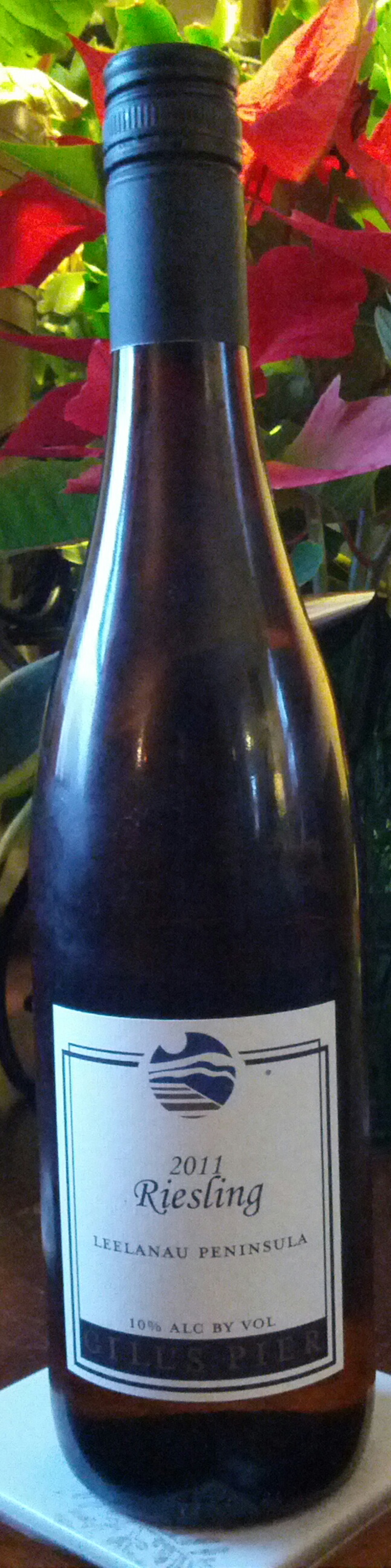
Parting words: The first product I reviewed from Gill’s Pier was their tasty cherry wine. This is the first grape wine of theirs I’ve tried. When introducing myself to a Michigan winemaker, I always go for a Riesling first. I love Riesling and, like it or not, it’s Michigan’s unofficial signature grape and it has been for a while. Gill’s Pier passed the Riesling test with flying colors.
When I read “semi-dry” on a wine bottle, I usually expect something sweet. For once a semi-dry actually tastes semi-dry to me. It has a robust mouth feel and orchard fruit notes typical of sweeter Rieslings but without their sappiness and weight and with the minerality of better drys. It’s good with food, but is best on its own. If any aspect of this wine could stand improvement, it’s the nose. I would have preferred more intensity. That said, this is a good wine and worth the price I paid. 2011 Gill’s Pier Riesling is recommended.
Maker: Black Star Farms, Traverse City/Sutton’s Bay, Michigan, USA
Grape: Pinot Noir
Region: Leelenau AVA, Michigan, USA
Style: Dry sparkling rosè.
ABV: 12%
Price: $13.50 from the winery online
Appearance: Ruby red with lots of bubbles.
Nose: Pomegranate, cranberry, red raspberry.
On the palate: Effervescent and dry. Not nearly as tart as the nose suggests. More pomegranate, but fades into a grapey flavor with a hint of foxiness.
Finish: Still dry but fairly tart. The cranberries pop up again only to fade into sparkling mineral water.
Parting words: I was skeptical when I saw the word “dry” on the label of Blushed, but it dry it is. It’s color is more like a bleed than a blush, but the dark color is attractive.
Blushed would make a nice change of pace for a sober first round on New Year’s Eve or casual summertime sipping. It is very good in a champagne cocktail (sugar, bitters and sparkling wine). Adequate in a mimosa. The price is right and so is the wine. Blushed is recommended.
On the palate: Medium bodied and sweet. Strawberry jam, grape juice.
Finish: Black currant, oak. Fades fairly quickly.
Parting words: Bin No. 27 is a fine Port at a decent price, but without much to distinguish itself from the competition. For a “super ruby” I would expect a bit more punch, but if you’re looking for a tasty, easy drinking Port for after a festive holiday feast Bin No. 27 does the job. It is recommended.













 Sipology