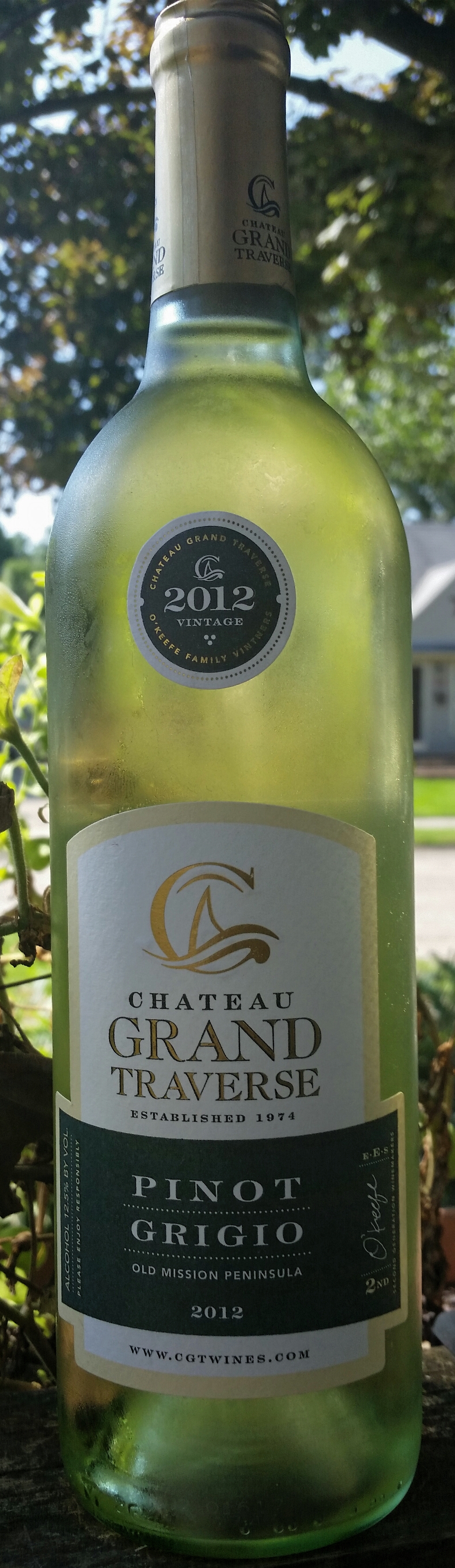
Chateau Grand Traverse Pinot Grigio

Maker: Chateau Grand Traverse, Traverse City, Michigan, USAwpid-2014-09-03-17.34.23.jpg.jpeg

Place of origin: Old Mission Peninsula AVA, Traverse City, Michigan, USA

Vintage: 2012

ABV:12.5%

Price: $11 (website)

Appearance: Light gold with some necklacing.

Nose: Semi-dry. Underripe pears, Golden Delicious apples, lemon thyme.

Palate: Medium bodied and semi-dry. White peach, pink grapefruit.

Finish: Dry and herbal. Mineral water, sage, a bit of smoke.

Parting words: When I think Pinot Grigio, I think of boring, sorry, “crisp” wines from the Veneto that are pounded back on movie nights and in cheesy restaurants. When I think Pinot Gris (The French name for the same grape, “gray pinot”) I think of the wonderfully smoky and herbaceous made from this grape in Alsace. This wine is somewhere between those camps. When chilled according to bottle directions, it is in the crisp camp but as it warms up, some Alsatian character comes to the fore.

It’s cheap for a wine of this quality and does very well with food. This is a Grigio you can drink and not feel embarrassed or bored by. Chateau Grand Traverse 2012 Pinot Grigio.

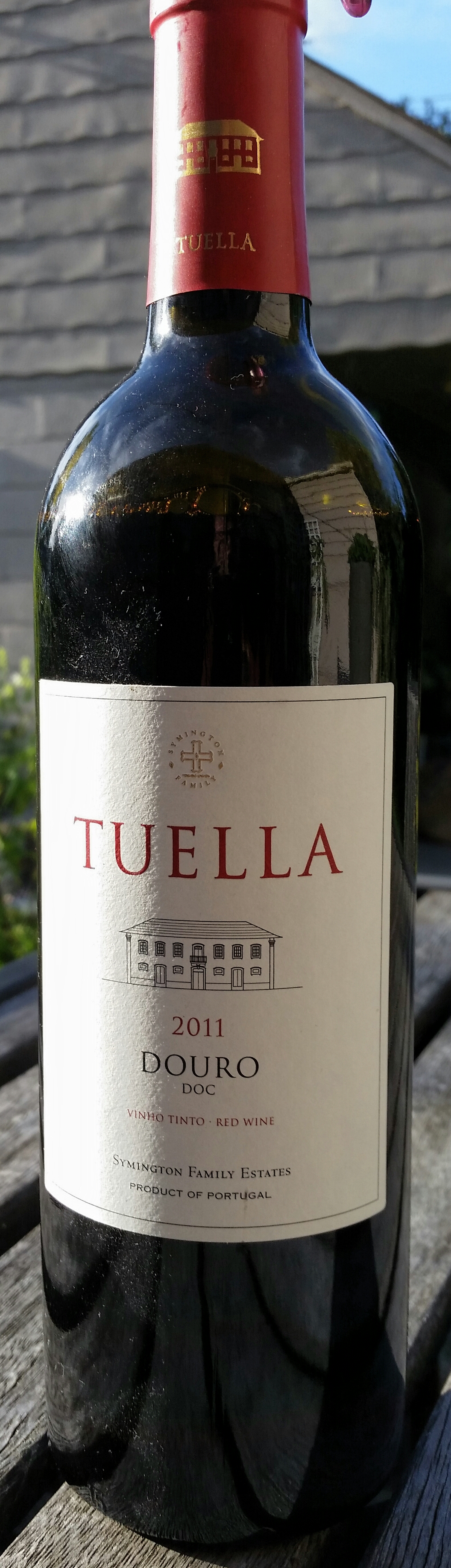
Tuella

Maker: Symington, Gaia, Porto Grande, Portugal.wpid-2014-08-27-18.23.47.jpg.jpeg

Grapes: Unknown

Place of origin: Douro, Portugal.

Vintage: 2011

ABV: 13.5%

Purchased for $7 (Trader Joe’s)

Appearance: Dark burgundy,

Nose: Raspberry, toasted oak, whiff of hardwood smoke.

Palate: Sweet and tart on entry then dries out. Raspberry jam, blueberry, oak, white pepper.

Finish: Chewy with heavy tannins, black cherry, oak.

Parting words: For a $7 wine, Tuella is pretty good. What I tell people is that most of the wines at Trader Joe’s taste like a wine about twice the price. The $15 ones taste like $30 ones, the $20 ones taste like $40 ones and the $4 ones taste like $8 ones. This tastes like a $14 wine.

Tuella is OK on its own, but it’s a little unbalanced. It does very well with food, though. We had it with a cheese and red pepper pizza and it drank beautifully. It may well age nicely but I have a hard time devoting my limited cellar space to a wine that cost me less than $10. Tuella 2011 is recommended.

Trader Joe’s Block Red

Maker: Unknownwpid-2014-08-20-21.13.54.jpg.jpeg

Grape: Shiraz

Place of origin: Austalia.

ABV: 13%

Price: $10-$12/3 liter box

Appearance: Dark plum with hardly any legs or necklace.

Nose: Alcohol, mixed berry pie, heavy on the blackberries. A touch of oak.

On the plate: Raspberry jam, toasted oak, black pepper.

Finish: Cherry juice, smoldering hardwood.

Parting words: If I were to taste this wine in a blind tasting, it might not fare well. It’s drinkable enough and fares better with food, but it’s not exactly exciting. It has too much bitterness and is simultaneously a hair too tart. The effect is like eating a slightly burnt fruit pie. But it’s cheap. Really cheap. TJ’s Block Red is recommended.

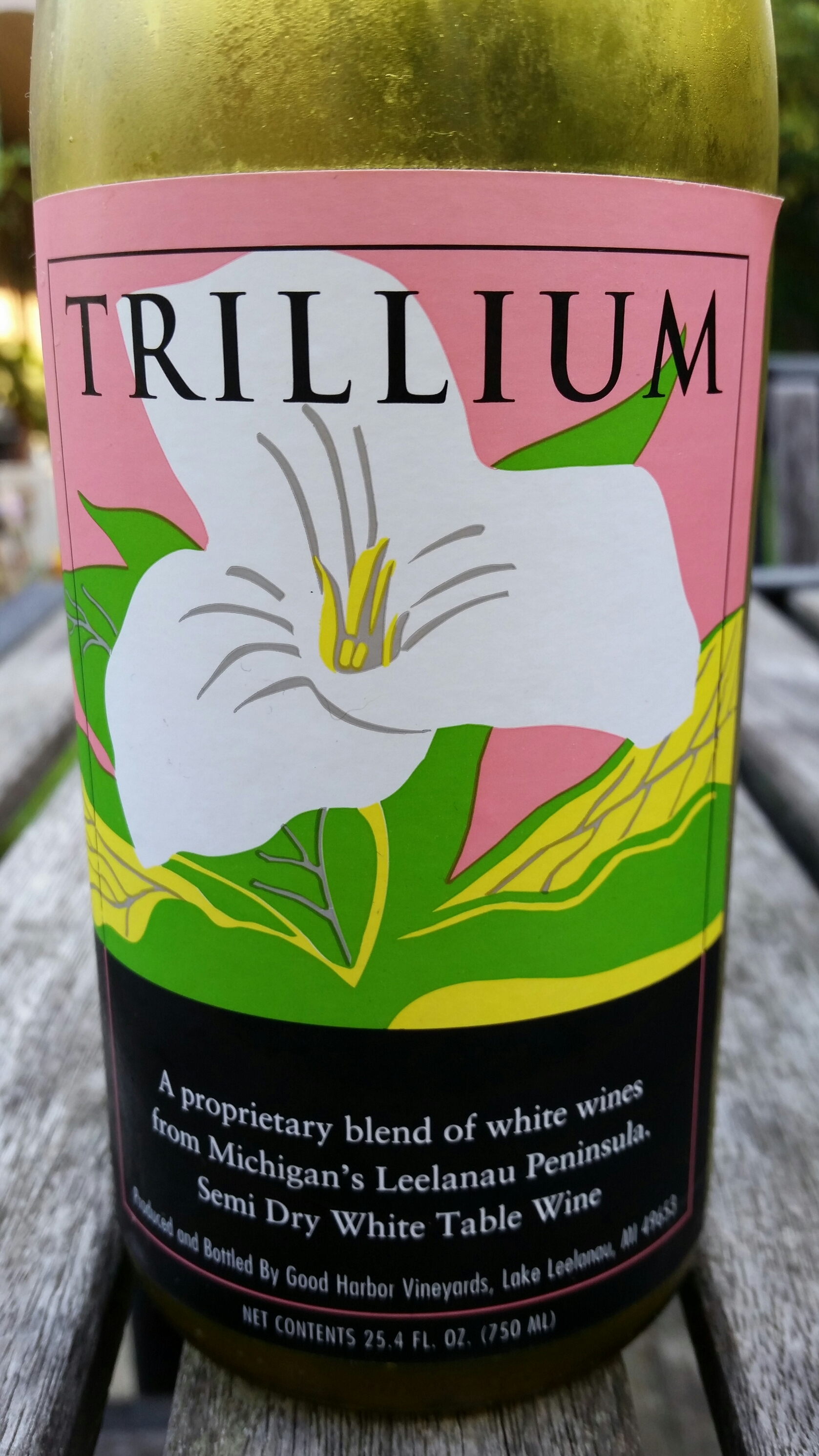
Trillium

Maker: Good Harbor, Lake Leelanau, Michigan, USAwpid-20140807_084633-1.jpg

Grapes: Riesling, Vidal Blanc, Vignoles, Seyval Blanc.

Place of origin: Leelanau peninsula AVA, Michigan, USA

ABV: 12%

Price: $10 (website)

Appearance: Light gold.

Nose: Light. Dried flowers, white peaches.

Palate: Full bodied and semi-dry. Underripe peaches, light apple juice, a touch of white grape juice.

Finish: Dry and slightly fruity. Fades quickly.

Parting words: Besides being the flower that SHOULD be the Michigan state flower (apple trees aren’t native, bro), Trillium is the name of Good Harbor’s perennially popular white table wine.

Unlike other popular Michigan whites in this price range, Trillium is actually fairly dry. It pairs very well with food like a true table wine should and while it has just a whisker of fox, it isn’t too noticeable and shouldn’t shock any Europeans you may serve this wine to.

Trillium is inoffensive in both senses of the word. Not bad but not interesting either. I’ve seen it as high as $15, but as long as it’s around $10, it’s recommended.

A Capella

Maker: Black Star Farms, Sutton’s Bay, Michigan, USA

Grape: Pinot Noir

Place of origin: Capella and Montaña Rusa vineyards, Old Mission Peninsula AVA, Michigan, USA

Vintage: 2011

ABV: 13%

Purchased for $25

Appearance: Deep burgundy with slow, medium width legs.

Nose: Walnut, cherry, touch of cedar.

Palate: Earthy. More so than any other Michigan Pinot I’ve had. Black cherries, wet loam, plum, white pepper, toasted oak.

Finish: A little tart, then more mild cherry followed by wood. Lingers for a long time, but faintly.

Parting words: Yes, it’s another Michigan Pinot. This one, unlike the previous two, is very much in the earthy camp. The oak is well integrated into the earth, but the fruity notes not as much. Nothing bad here though. It goes great with pasta and pork and excellent just on its own. Very much worth the price and would make a nice entry in a horizontal tasting of Michigan Pinots. 2011 A Capella Pinot Noir is recommended.

Isidor’s Choice Pinot Noir

Maker: Black Star Farms, Sutton’s Bay, Michigan, USAIsidors Pinot 2011

Place of origin: Isidor’s Choice vineyard, Leelanau Peninsula AVA, Michigan, USA

Vintage: 2011

Price: $22.50 (website)

Appearance: Ruby with medium width, evenly spaced legs. Throws a few crystals into the glass.

Nose: Blackberry pie, cedar, red raspberry, hint of wet earth.

Palate: Fruity but balanced. Mixed berry jam, toasted oak, coriander seed, hint of white pepper and sautéed mushrooms.

Finish: Slightly fruity but moves to a mildly bitter taste. Raspberry, oak, pepper, cedar.

Parting words: As you’ve already guessed, this is another single vineyard Pinot Noir from Black Star farms, done for the owners of Isadora’s Choice vineyard in Leelenau. This is the second bottle of this wine I’ve drank in the last six months, so it’s safe to say I like it.

The profile is classic, well balanced Pinot. It’s got plenty of fruit and oak and earthy notes and everything else you want in a Pinot pleasantly in its place. The best Michigan Pinots can easily stand toe to toe with most red Burgundies in the same price range, and even surpass some. This vintage of Isidor’s Choice can certainly do that. The bottle suggests that it could improve in the bottle for through 2021, although it’s drinking great now, so I would crack it open now or in the next two years.

All that and it’s food friendly too. We had it with BBQ ribs and it performed very well. Isidor’s Choice 2011 Pinot Noir is recommended.

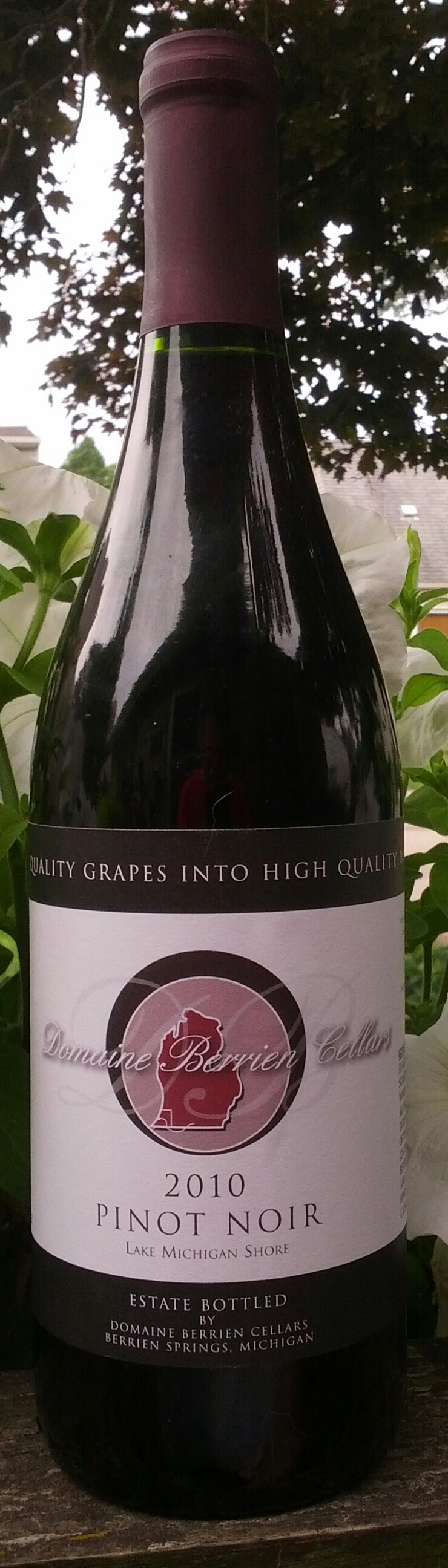
Domaine Berrien Pinot Noir

Maker: Domaine Berrien, Berrien Springs, Michigan, USADB 2010 Pinot

Place of origin: Lake Michigan Shore AVA, Michigan, USA (Estate bottled)

Vintage: 2010

ABV: 12.8%

Price: $15.50 (Michigan by the Bottle tasting room)

Appearance: Quite dark for a pinot. Brick red with long thick legs.

Nose: Earth, red raspberry, cedar.

Palate: Mixed berry jam, toasted oak, wild blackberry, stewed rhubarb, pinch of clove, alcohol.

Finish: Chewy. Oak, alcohol, fruit of the forest, sautéed button mushrooms.

Parting words: Domaine Berrien was one of the first Michigan wineries to take the possibilities of Michigan reds seriously. Their care shows in impressive wines like this.

DB’s 2010 Pinot Noir is complex without being busy and gutsy without being belligerent. Its balance, intergration and complexity are head and shoulders above other Michigan Pinots, even the good ones. I’ve had Michigan Pinots from this vintage from Northern Michigan that had already fallen apart in early 2014, but this one is still going strong.

It did well a meal of pulled pork but it did clash a little with the tangy, mustardy BBQ sauce I used. Otherwise, it seems like it would go very well with turkey, pork, duck or flavorful chicken dishes.

At only $15.50, it punches well above its class. I’ll be seeking out the 2011 and 2012 vintages for sure. Domaine Berrien’s 2010 Pinot Noir is highly recommended.

A Visit to the Michigan by the Bottle Tasting Room

MBTBTR1Address: 45645 Hayes, Shelby Township, Michigan, USA

Web: http://www.mbtbtasting.com, @MBTBTasting, https://www.facebook.com/mbtbtasting, http://instagram.com/mbtbtasting

Hours: Sun- noon- 6 p.m., Mon & Tues- Closed for special events, Wed & Thurs noon- 9 p.m., Fri- noon – 10 p.m., Sat- noon – 10 p.m.

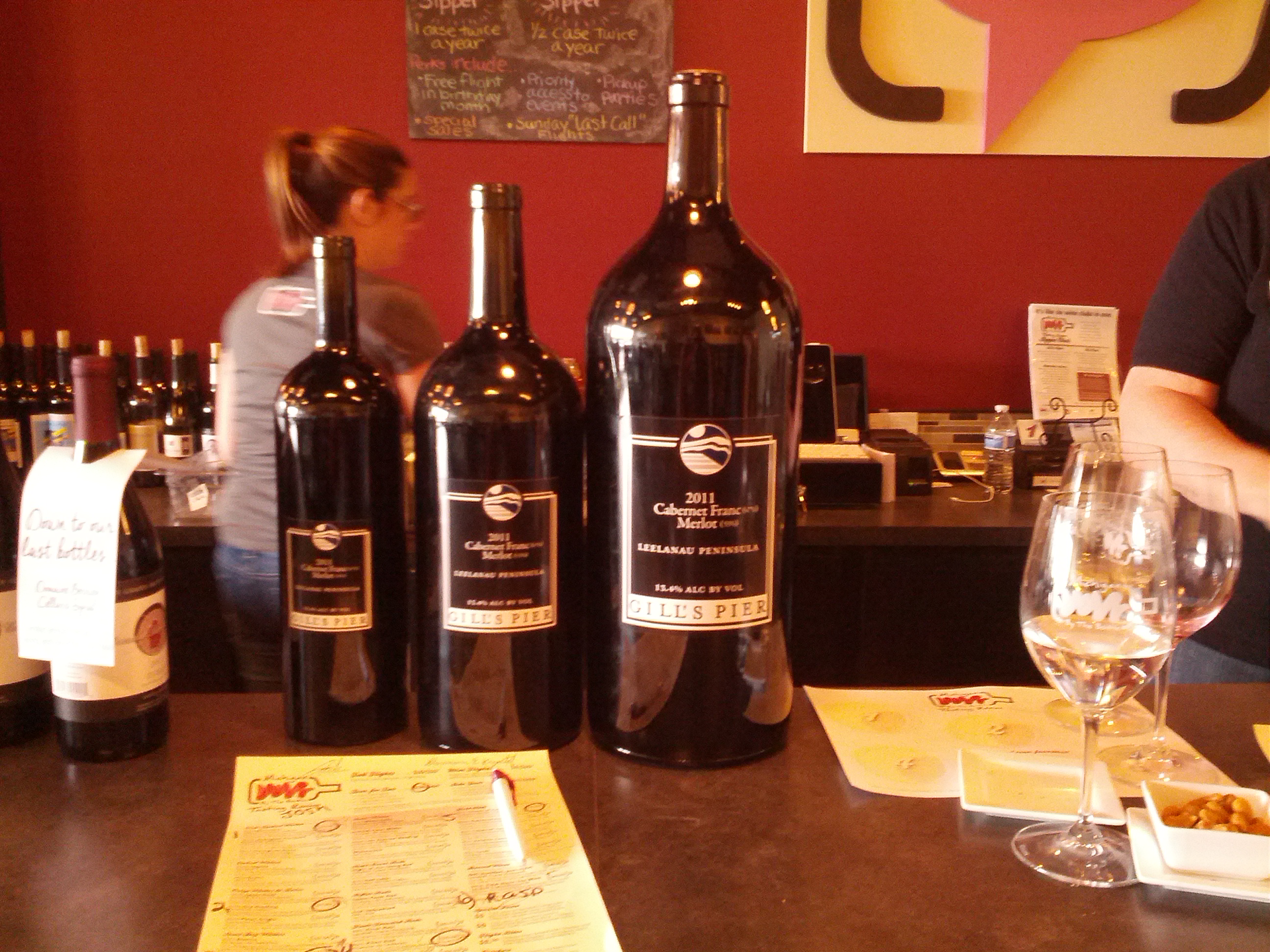
Appearance/atmosphere: Although MBTB Tasting Room was voted best wine bar for 2014 in Hour Detroit Magazine, it doesn’t feel like a wine bar at all. It really does feel like a tasting room at a winery. The difference is that it is a tasting room for six different Michigan wineries at once!

The outside isn’t much to look at, just a store front in a suburban strip mall. The inside is a bit warmer, but still not fancy by any stretch. It’s bright and airy feeling with nice, ample seating and decorated in the MBTB color scheme. The bar isn’t anything fancy either but feels very much like the bar at a winery tasting room. It’s perfectly up to its task, though.

MBTBTR2Service: The service was excellent. We sat at the bar and our server Krystal was quick and attentive. I recognized Shannon from the Michigan by the Bottle blog and I introduced myself. He seemed to remember me from our online interactions (or at least faked it very well) and made us feel very welcome in spite of being busy. Cortney briefly appeared but disappeared into the back before I could introduce myself to her. Maybe next time. Both Krystal and Shannon answered all our questions clearly and politely.

The tastings work as follows: The server places a paper placemat in front of each taster with circles numbered 1-6 for a full flight (mini-flights of three wines are also available). For the standard flight, each taster circles five regular selections on the menu. Glasses are poured in traditional tasting order (starting with dry whites, ending with dry reds). When a “tour” is purchased, two special pours (and bonus cashews) are included. These are usually dessert wines or at least they were when we were there.

Menu/Prices/Selection: The full menu is here. A full flight is $10 or $15 after six (with the extra $5 being applied toward a bottle purchase) with tasty Michigan-made snacks (cheese and chocolate) included. A mini flight is $5/$10. A tour is $17/$22 and a tour for two is double that. If you’re a fan of dessert wines like I am, I would recommend the tour, but if you don’t enjoy them, I would stick to the flight.

They partner with six Michigan wineries from around the state. Those wineries are Chateau Aeronautique, Sandhill Crane (both Pioneer Wine Trail), Chateau de Leelanau, Gill’s Pier (both Leelanau Peninsula AVA), Domaine Berrien (Lake Michigan Shore AVA) and Peninsula Cellars (Old Mission Peninsula AVA).  I expected a broader selection of wines, but I think how they’ve done it works better than carrying something from everybody. They astutely included two wineries known for reds, Domaine Berrien and Chateau Aeronautique, to complement the fine whites Northern Michigan is known for. Cider and fruit wines are also included.

I didn’t love every wine I tried but that’s not really the point. I got to taste some things I would have had to drive several hours to taste and that’s great in itself. The best wines I had that afternoon were the 2012 Dry Riesling from Peninsula Cellars (not surprising given what an Old Mission fanboy I am) and the 2010 Domaine Berrien Pinot Noir. The most surprising selection was DB’s 2011 Marsanne. Michigan is not where one might expect to run into a grape from the northern Rhone valley but it was quite good. All the selections are also available by the bottle, and those prices are helpfully included on the tasting menu.

The prices for bottles are about standard and the tasting prices are reasonable considering the number of pours included and the quality and abundance of the snacks.

It should also be noted that, also like an actual winery, they have their own wine club. Information on that is here.

Transportation/Parking: Unless you’re up for a mile walk or bike ride from the nearest SMART stop on unfriendly roads, public transit isn’t really an option. There is a large parking lot at the shopping center where the tasting room is located, so parking is not a problem, and it’s close to Hall Road/M-59 so getting there is fairly easy. That said, it’s quite a hike out there unless you live in Macomb county. Google maps estimates a 30 minute drive from Sipology HQ and that’s just with good traffic which is a rare thing on Hall Road. Luckily for me and others living in Oakland Co. or Detroit, a Royal Oak location will be opening up on Woodward soon.

Parting Words: Overall a great experience was had. We went home with abundant leftover snacks and a few bottles of wine. Can’t wait for the Royal Oak location! It promises to be good for my tummy but probably bad for my bank account and limited cellar space. Michigan By the Bottle Tasting Room is recommended.

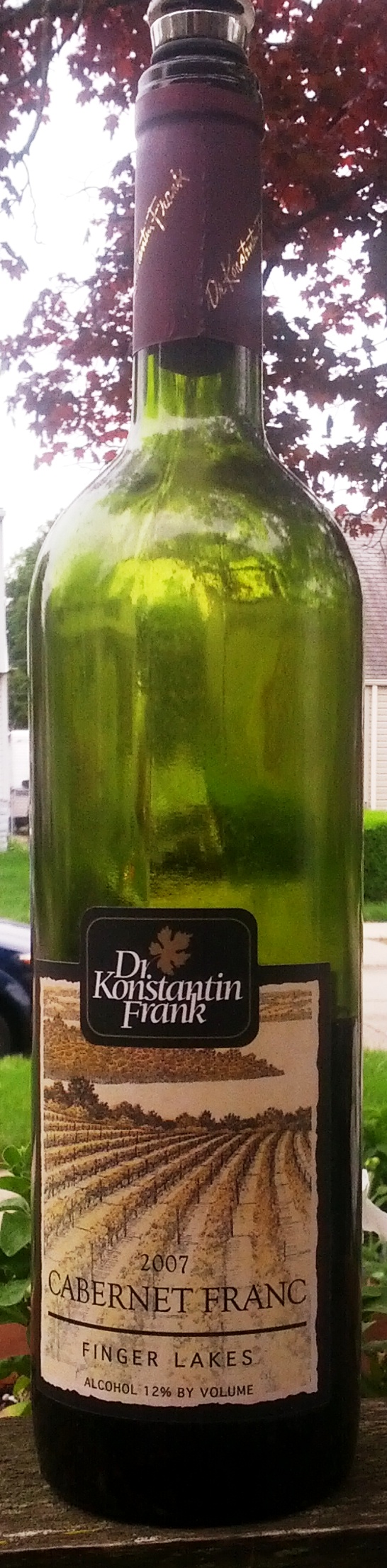
Dr. Konstantin Frank Cabernet Franc

Maker: Dr. Konstantin Frank, Hammondsport, New York, USADr Frank Cab Franc

Place of origin: Finger Lakes AVA, New York, USA

Vintage: 2007

ABV: 12%

Price: $20 on website (2011 vintage)

Thanks to Amy for use of her cellar for this bottle.

Appearance: Brick red with long broad legs.

Nose: Rich and structured. Blackberry jam, vanilla, oak, a slight herbaceous note.

Palate: Medium bodied, dry and slightly chewy. Fruity at first, a little tartness, then a little sweet red pepper followed by hit of oak and tannin on the back end.

Finish: Slightly bitter, but balanced out by fruit and ends in a big hit of oak.

Parting words: I got this wine many years ago. It may have been during our trip to the Finger Lakes (Keuka and Seneca lakes, specifically) but I think that was 2006, so it would not have been possible for us to purchase this bottle then. Anyway, my patience has been greatly rewarded.

Cabernet Franc is one of the few Bordeaux red wine grapes that does consistently well in the Eastern  U.S. The knock on Cab Franc, as we heard repeatedly in California, was that it can produce a bitter, vegetal “green pepper” taste. One winery we visited even apologized for a blend they poured for us that contained Cab Franc. “It’s mostly Cab Franc, but it’s pretty good.”

This is all Cab Franc and it’s pretty good. It is firm and dry with a slight bell pepper note but more sweet than green, as I noted above. It is kept well in check by tannin, fruit and acid. It drinks like Merlot or a mid-level red Bordeaux with some good age on it. Even approaching seven years old, this wine is still going strong.

We had it with flat iron steak tacos and it paired very well. Hamburgers, steaks or lamb chops would work nicely too. This wine is proof that the northeastern quadrant of the US can make very good red wines. Dr. Konstantin Frank 2007 Cabernet Franc is highly recommended.

L. Mawby Blanc de Blancs

Maker: L. Mawby, Sutton’s Bay, Michigan, USAMawby B de B

Grape: Chardonnay

Place of origin: Leelenau Peninsula AVA, Michigan, USA

Style: Brut sparkling wine.

ABV: 11%

Purchased for $21.

Notes: Whole cluster pressed. Méthode traditionnelle. Cuvee 206. More information on label.

Appearance: Pale gold and very effervescent.

Nose: Dry apple cider, limestone, dried flowers.

Palate: Bubbly and light. Ripe golden apple and Bosc pear, with a hint of meyer lemon and mineral water.

Finish: Quite dry with more mineral notes and a tiny tang on the back end.

Parting words: All L. Mawby does is sparkling wine, and they do it well. The flagship L. Mawby wines are made using the méthode traditionnelle used for Champagne.

I have virtually no knowledge of Champagne but from the few tastes I’ve had of the real stuff, this wine fits the profile of brut Champagne. Most Michigan sparklers are backyard quaffing material, which is just fine, but if you’re looking for a step up, the Mawby Blanc de Blanc is a good option. It’s just fine with traditional white wine fare, but it works best as an aperitif with hors d’oeuvres or as the first round of a celebration (before the cheap stuff comes out). L. Mawby Blanc de Blancs is recommended.