Batasiolo Barbera D’Alba

Maker: Batasiolo, La Morra, Cueno, Piedmont, Italywpid-2015-03-01-19.37.06.jpg.jpeg

Place of origin: Alba, Cueno, Piedmont, Italy

Vintage: 2007

ABV: 14.5%

Purchased for $17

Appearance: Very dark purple, nearly black.

Nose: Cherry jam, hardwood smoke, blueberry juice, blackberry.

Palate: Slightly chewy but not overly tannic. Toasted oak and cherry again.

Finish: Big cherry in the finish.
wpid-20150304_111028.jpgParting words: Barbera is a long suffering grape. Given a bland or worse treatment in its Piedmontese homeland for many years, it was involved in a deadly contamination scandal in the 1980s when thirty people died from drinking Barbera containing a deadly amount of methyl alcohol. As one can imagine, when a wine kills a bunch of people consumers tend to shy away from it for a while.

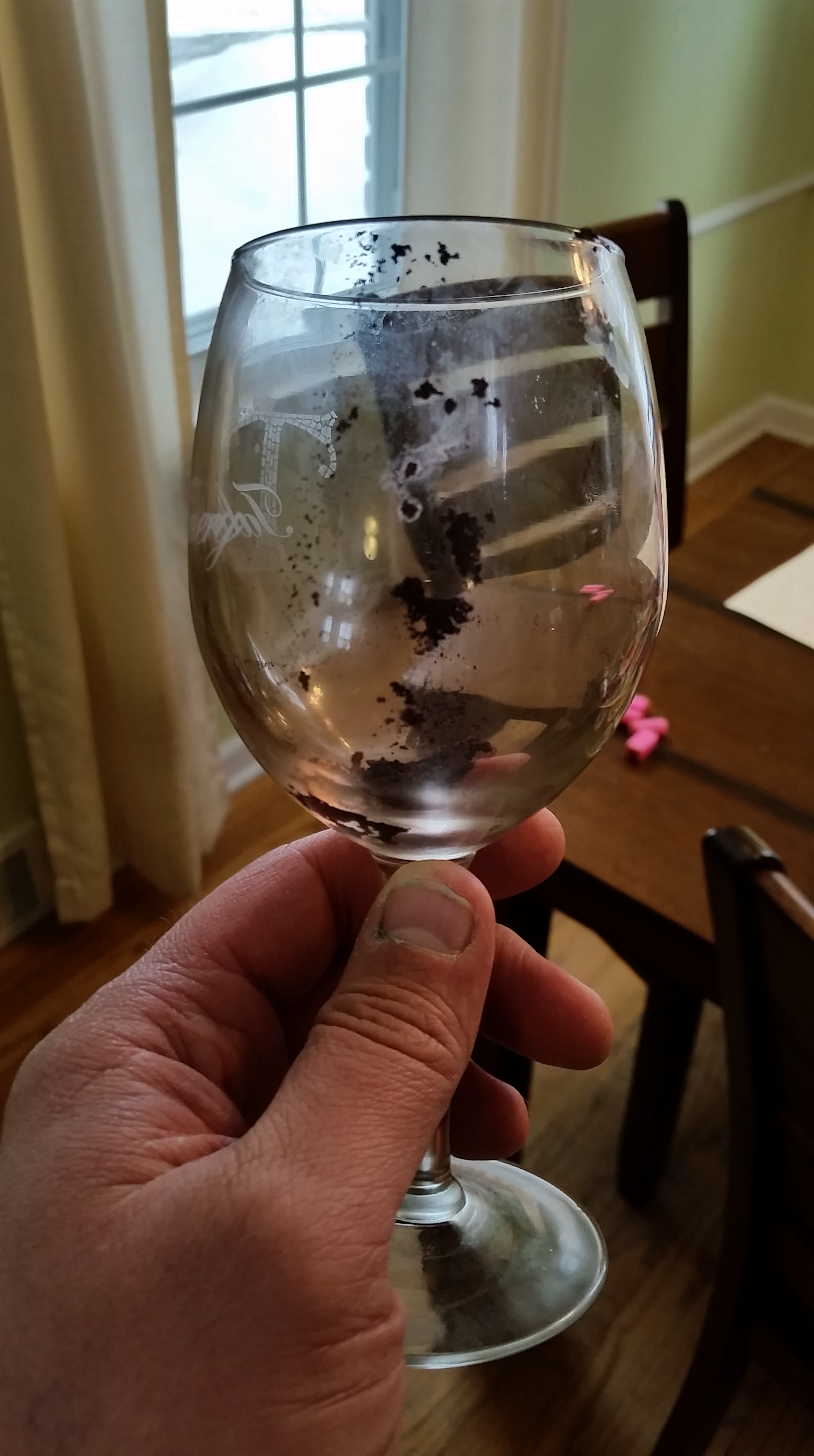
Barbera can be delicious when done right and this is a great example. It’s bold and a little spicy but still very fruity and easy to enjoy with or without food. We had it with medium rare rump roast and roasted rutabagas (a.k.a. swedes) and it did well. It also threw a crazy amount of sediment into the glass, as you can see.  Batasiolo Barbera D’Alba 2007 is recommended.
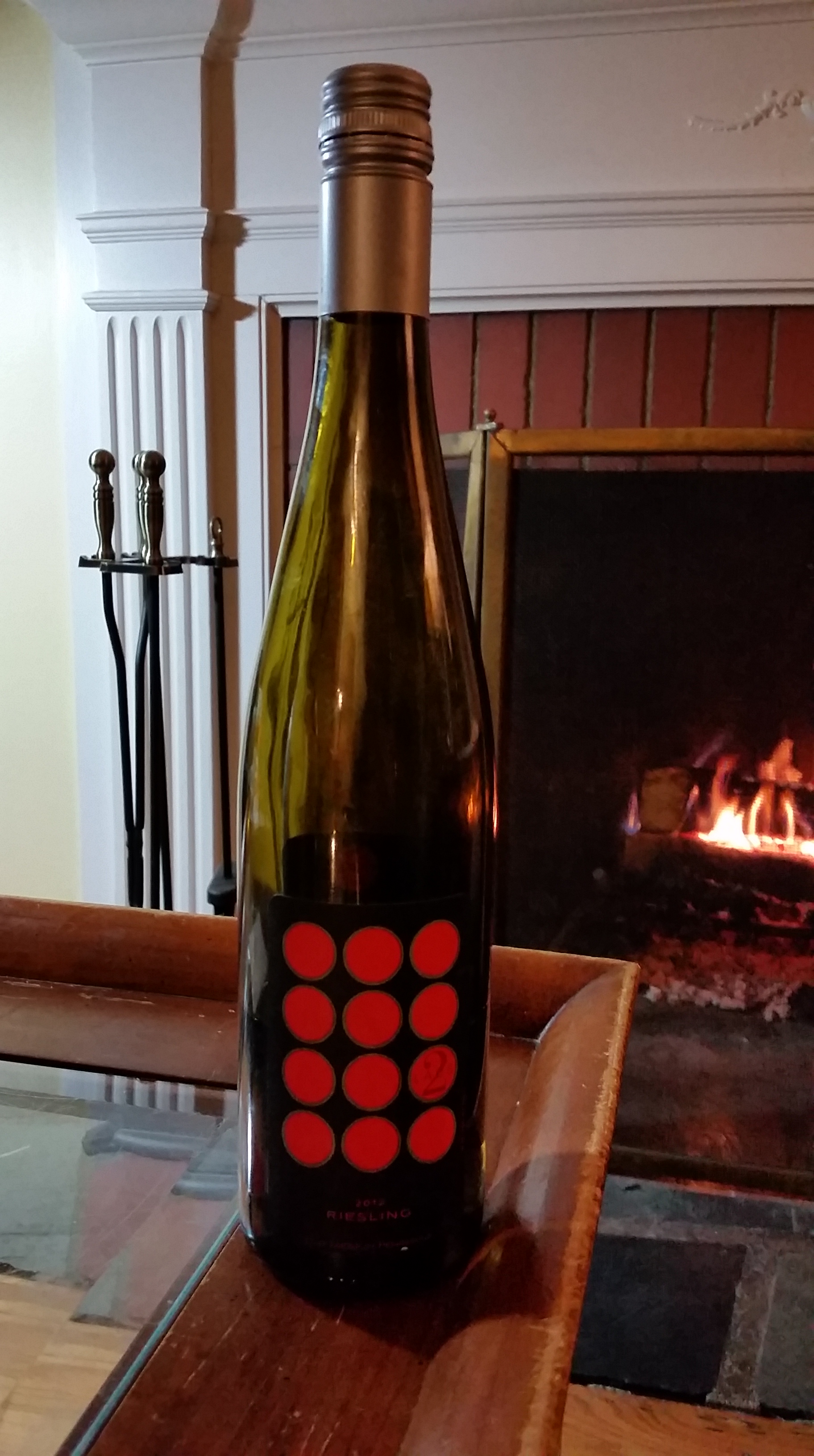
2 Lads Riesling

Maker: 2 Lads, Traverse City, Michigan, USAwpid-20150218_213116.jpg

Place of origin: Pratt Farm & Twin Bay vineyards, Old Mission Peninsula AVA, Michigan, USA

Style: Semi-dry

Vintage: 2012

Notes: Harvested 10/18 & 10/22/2012, Sugar: 22° Brix, pH: 3.29, 1220 cases produced.

ABV: 11.5%

Price: $16 (website)

Appearance: Bright gold with thin, streaky legs.

Nose: Under ripe pear, mineral water, mild pineapple, star fruit, woodruff.

Palate: Gently tart on entry, white peach, dried thyme and then minerals.

Finish: Dry and clean. Flint, hint of wildflower honey.

Parting words: It’s hard to know what one is getting into when one sees “medium dry” on a Riesling label. One person’s medium dry is another one’s sweet. This one is dryer than I thought it would be but that’s not a bad thing. It has all the stony, bracing qualities one expects in a dry Riesling, but still has enough sweetness to round itself out and keep it from becoming one dimensional. Does very well with food of all kinds and the price is reasonable for a Michigan Riesling of this quality. Drink now or in the near future. 2012 2 Lads (medium dry) Riesling is recommended.

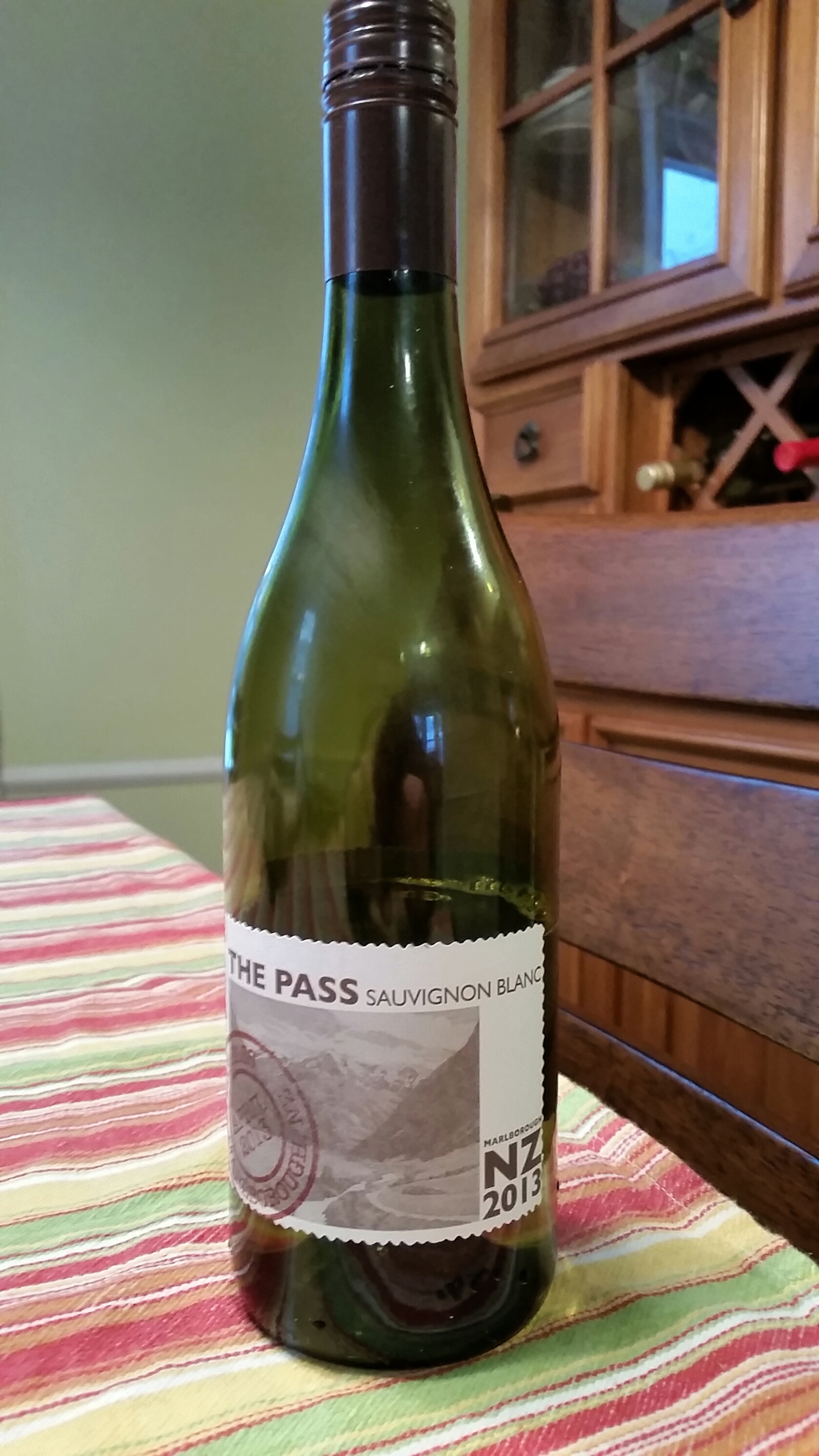
The Pass Sauvignon Blanc

Maker: Unknownwpid-2015-02-11-16.39.46.jpg.jpeg

Place of origin: Marlborough, New Zealand.

Vintage: 2013

ABV: 13%

Note: Reviewed 22 hours after opening

Purchased for $9

Appearance: Pale gold.

Nose: White grapefruit, pineapple, lemon juice. Whiff of acetone.

Palate: Bland on entry, but soon turns grassy and acerbic. Like having a pineapple spear shoved into one’s sinuses.

Finish: Harsh. Citrus pith. Leaves the mouth feeling like one has eaten too much fresh pineapple.

Parting words: Believe it or not, The Pass was even worse when I first opened it. After some time breathing in the fridge it is almost approaching drinkability. 2013 was supposed to be a good vintage for New Zealand Sauvignon Blanc, but you’d never know it from this.

The Pass is is a special label for Trader Joe’s from a New Zealand producer with American ownership (maybe something from the Foley group). I can taste why they wouldn’t want this wine under the label of one of their known brands. I enjoy grapefruit notes in NZ Sauvignon Blanc, but this wine is totally out of balance and is more like an assault on the senses than a crisp summertime sipper. My recommendation is that you take a…wait for it…PASS on The Pass.

Arcturos Gewurztraminer

Maker: Black Star Farms, Traverse City, Michigan, USA

Place of origin: Old Mission Peninsula AVA, Michigan, USA

Vintage: 2012

ABV: 13%

Price: $22.50 (website)

Appearance: Pale gold.

Nose: Lychee, melon, mango.

Palate: Medium bodied. Cantaloupe, white pepper, white peach, touch of pineapple mint.

Finish: Slightly bitter tempered with tropical fruit.

Parting words: For me, the sweet spot for American Gewurz is 2-3 years, right where this one is. To me, this bottle drinks like a crisper, lighter version of an Alsatian Gewurz. That’s not better or worse, it’s just a matter of style. What they share is a commitment to bringing the spicy aspects of the grape to the fore. This wine is not afraid to embrace its Gewurz-ness. I like that approach and I love this wine. This is another big winner from Black Star Farms and another testament to the character and overall excellence of the 2012 vintage. Pairs well with the usual suspects. Arcturos 2012 Gewurztraminer is highly recommended.

Peninsula Dry Riesling

Maker: Peninsula Cellars, Traverse City, Michigan, USAwpid-2015-01-07-21.45.18.jpg.jpeg

Place of origin: Hawkeye, Kroupa vineyards, Old Mission Peninsula AVA, Michigan, USA

Vintage: 2012

ABV: 12%

Price: $18 (website)

Appearance: Bright gold.

Nose: Fresh cut green apple, Anjou pear, sweet melon, fizzy mineral water.

Palate: Drying. Underripe apple, white mulberry, gravel.

Finish: Racy, slightly tart. Lingers faintly for a moderate length of time.

Parting words: Peninsula Cellars is located in the central part of the Old Mission Peninsula north of Traverse City, Michigan. They’re best known for their table blends, Old School White, Old School Red and Detention. The school theme comes from the old school house that serves as their tasting room (at a different location than their winery).

Peninsula’s blends may be their most popular and best known wines, but they also produce some seriously good varietals, including a single-vineyard Gewürztraminer and this dry Reisling from grapes grown at two nearby vineyards, Hawkeye and Kroupa. It’s a first rate example of how this style of Reisling is done in Michigan. The winemakers have done a wonderful job of balancing fruit with dry minerality. Like most dry Reisling, it does well with poultry, fish and Asian dishes, but this is one that you’ll want to spend a summer or even winter afternoon contemplating. Peninsula Cellars’ 2012 Dry Reisling is highly recommended.

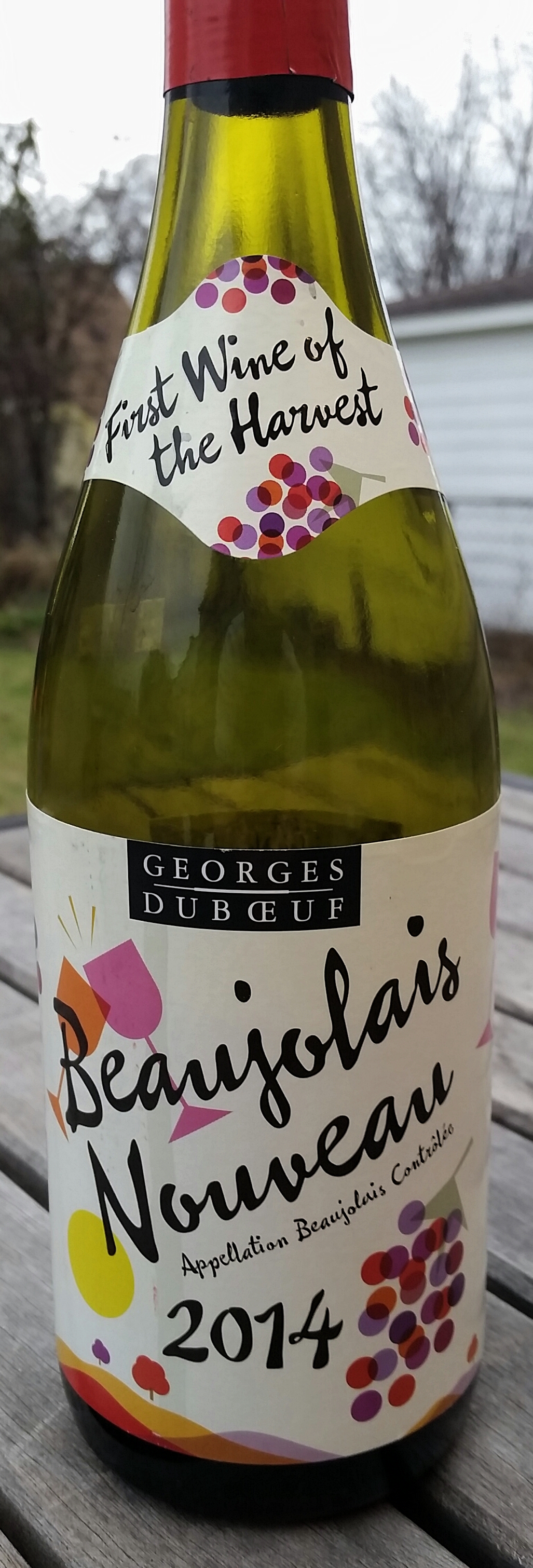
Georges Duboeuf Beaujolais Nouveau

Maker: Duboeuf, Romanèche-Thorins, Saône-et-Loire, Burgundy, Francewpid-2014-11-26-10.03.20.jpg.jpeg

Grape: Gamay

Place of origin: Beaujolais, Burgundy, France

Vintage: 2014

ABV: 12%

Purchased for $9

Appearance: Dark burgundy.

Nose: Blueberry, red current, red raspberry, black cherry.

Palate: Same berry flavors on the palate, but with a hint of pepper.

Finish: Short with a slight tang and more berries.

Parting words: Duboeuf is one of the most famous of the Bungundian négociants and it’s probably most famous for this wine, Beaujolais Nouveau. This wine has come a long way from the heady days of the late 20th century, but it still graces many American Thanksgiving Day tables and serves as a gateway to Burgundy for many people, as it was for me.

To paraphrase Linus, “it’s not a bad little wine.” It pairs well with turkey and smoked meats and is inoffensive enough to serve to the whole family. This vintage is all berries and little else. If that appeals to you, get it. Also, remember it’s only $9, so pound away (slightly chilled.

). Georges Duboeuf Beaujolais Nouveau 2014 is recommended.

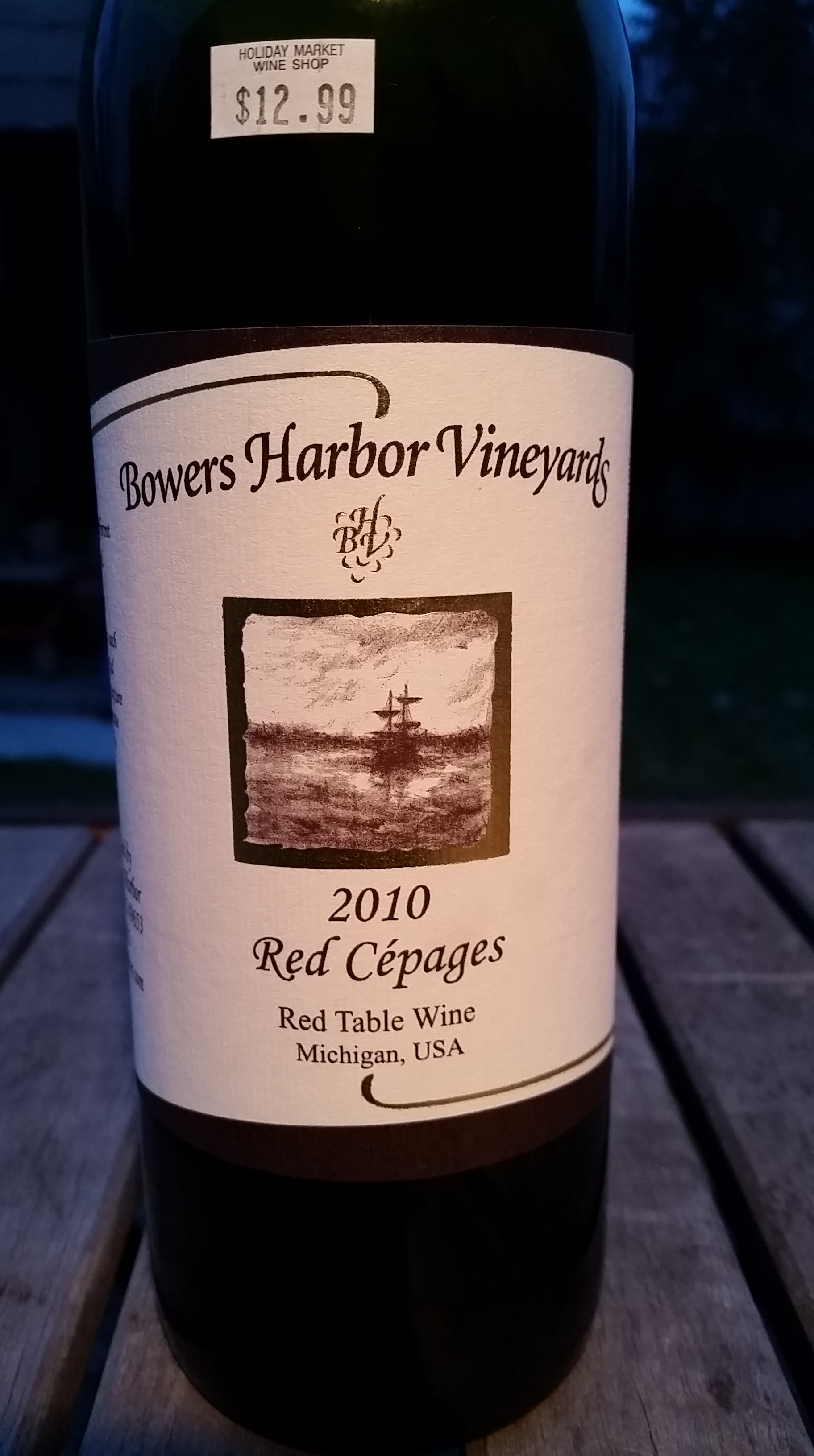
Bowers Harbor Red Cépages

Maker: Bowers Harbor, Lake Leelanau, Michigan, USAwpid-20141112_171618.jpg

Grapes: Unknown (likely some hybrids in the mix)

Place of origin: Michigan, USA

Vintage: 2010

ABV: 12.5%

Purchased for $13

Appearance: Brick red with long thick legs, pretty close together.

Nose: Semi-sweet and jammy. Black cherry jam, cedar, a touch of foxiness.

Palate: More tart than the nose would suggest. Blueberry jam, blackberries, oak.

Finish: Chewy and sweet. Wild blackberries, leather, a bit of tartness.

Parting words: This wine was a bit of a surprise to me, but it shouldn’t have been. It was sweeter than I expected but still has enough underlying structure to keep it from falling into pop wine territory. It seemed more like a table wine to me than the French-style red blend I was expecting. I should have looked more closely at the label, because it says right under the boat “Red Table Wine”.

The price is a little more than I like to pay for table wines, but I liked it over all. It did OK with our supper of homemade macaroni and cheese. My wife said that she prefers that style of wine in the summertime, and I can’t disagree with her there. Red Cépages works best as a casual warm weather sipper. As such, it is recommended.

Kavalidere Öküzgözü d’Elazig

Maker: Kavaklidere, Akyurt, Ankara, Turkeywpid-20141029_173503.jpg

Grape: Öküzgözü

Place of origin: Elazig, Eastern Anatolia, Turkey

Vintage: 2010

ABV: 13%

Purchased for $7 (reduced from $12)

Appearance: Brick red with medium thick, evenly spaced legs.

Nose: Black currant, old book, grape juice.

Palate: Medium bodied and chewy. Wild blackberries, old oak, white pepper.

Finish: Very soft. A subtle tang and tannic bite.

Parting words: Although what’s now Eastern Turkey was probably the birthplace of wine (according to archaeology and even the book of Genesis), Turkey’s first commercial vineyard was founded in 1925 at the behest of president Ataturk. There are still a number of state-run vineyards and Turkey is one of the world’s largest producers of grapes but little of that output makes it to the U.S.

Kavalidere’s Öküzgözü of Elazig is one of the few labels that makes it to this side of the pond. When I first opened this bottle it was vile. Moldy cardboard nose and thin. I thought it may have been tainted but I’m always reluctant to take bottles that I bought on sale back to the store. After being open for an hour, it seemed to improve slightly, so I just capped it and waited until the last day. It is dowright drinkable now, but still with a slightly musty aroma. It does fine as a dryish weeknight table wine, but I wouldn’t pay over $11 for it. Of course vintages vary, as always. Kavalidere 2010 Öküzgözü d’Elazig is mildly recommended.

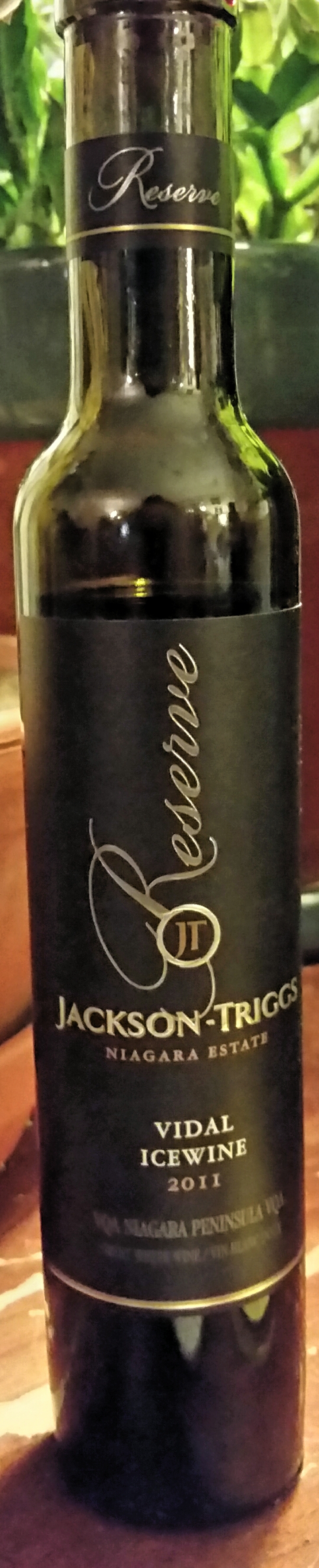
Jackson-Triggs Vidal Ice Wine Reserve

Maker: Jackson-Triggs, Niagara-on-the-Lake, Ontario, Canadawpid-2014-10-08-19.50.35.jpg.jpeg

Place of origin: J-T Niagara Estate, Niagara Peninsula VQA, Ontario, Canada

Vintage: 2011

ABV: 9.5%

Price: $24/187 ml (Binny’s)

Appearance: Dark gold with long, broad legs.

Nose: Canned Bartlett pears, mandarin oranges, Meyer lemon.

Palate: Full bodied, the syrup in that can of Bartlett pears, orange juice from concentrate, pinch of thyme.

Finish: A long lingering sweetness all over the mouth accompanied by a hint of golden apple.

Parting words: The Niagara Peninsula VQA is a blanket appellation for any wine produced in the Niagara municipal region in Southern Ontario. This area is bordered by Lake Erie to the south, Lake Ontario to the north, the Niagara River to the east and the city of Hamilton to the west. The region includes several sub-regions, including Niagara Escarpment, Niagara-on-the-Lake and their subdivisions.

Having water on three sides creates a micro-climate favorable for the growing of grapes, as one might expect. The climate remains Canadian, so early and late frosts and freezes are a constant concern. This is a problem for most types of wine production, but not for the production of ice wine, a style that Canada does very well across the board.

Picking the grapes while they are frozen concentrates the sugars like “noble rot” or the straw wine process does, resulting in a thick, sweet, aromatic (and expensive) dessert wine. In Canada and the northern U.S., the hybrid grape Vidal is often used alongside the more traditional Riesling. Vidal is used for its hardiness and ability to produce wines with high acidity and sugar levels in cold climates.

This one is a good example of a Canadian Vidal ice wine. It’s thick and rich but not flabby. The approachable pear and citrus flavors make it a good introduction to the style, as does the relatively low price. Jackson-Triggs 2011 Vidal Ice Wine Reserve is recommended.

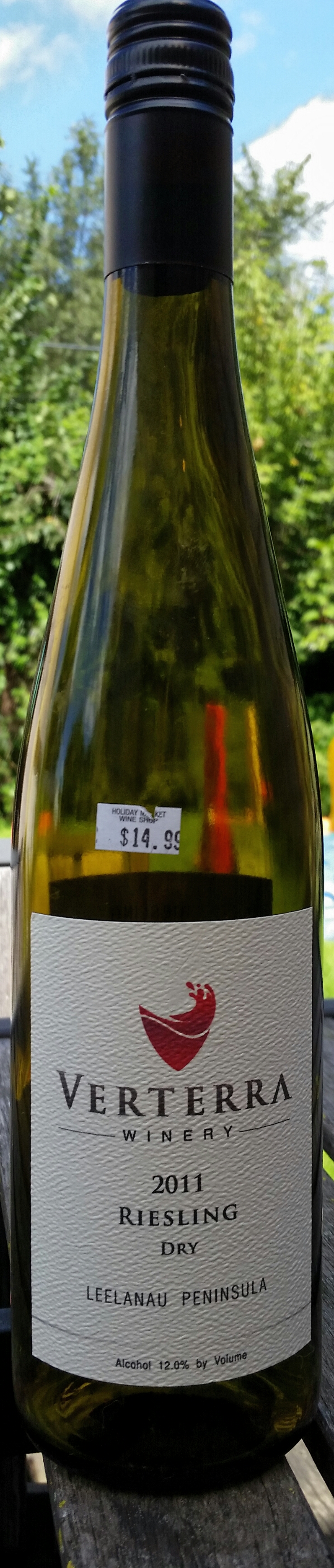
Verterra Dry Riesling

Maker: Verterra/Chaos, Lake Leelenau, Michigan, USAwpid-2014-09-16-13.28.54.jpg.jpeg

Place of origin: Leelanau Peninsula AVA, Michigan, USA

Vintage: 2011

ABV: 12%

Purchased for $15

Appearance: Light gold with

Nose: ripe peach, granny smith apple, bitter orange.

Palate: Medium bodied. Red pear, navel orange, mineral water, white grapefruit.

Finish: Clean and dry. More peaches and pears with a hint of vanilla.

Parting words: The 2011 vintage in Northern Michigan continues to impress me. Leelanau is a much larger area than Old Mission with many more wineries, so the region as a whole is less consistent than the OMP. Verterra itself is of consistently high quality, though. I recommend trying anything of theirs you see.

This wine is everything a dry Michigan Riesling should be. It’s dry and food-friendly without sacrificing any character. Orchard fruit in abundance with a touch of acid for balance. Even eighteen hours after opening, it was still delicious, maybe even better. It’s worth every penny and then some. Verterra’s 2011 Dry Riesling is highly recommended.