Chateau Grand Traverse Semi-Dry Riesling

Maker: Chateau Grand Traverse, Traverse City, Michigan, USAwpid-2015-07-22-19.53.17.jpg.jpeg

Place of origin: Old Mission AVA, Traverse City, Michigan, USA

Vintage: 2012

ABV: 12%

Price: $12 (website price for 2013 vintage)

Appearance: Pale gold.

Nose: Mineral water, pear, tangerine, lemon thyme.

Palate: Full bodied and subtly sweet. Fresh squeezed orange juice, gravel dust, winter savory.

Finish: Orange juice then minerals and a lingering sweetness.

Parting words: As much as I love Chateau Grand Traverse and Riesling, I shocked myself when I saw this on a shelf a few months ago and realized I had never tried it. Not sure why I never picked up a bottle but I’m very glad I did.

I’m not sure my tasting notes do it justice. It’s more complex than they might lead one to believe. It’s well integrated but not over-integrated, if that makes sense. The herbal, mineral, and fruit aromas all dance back and forth, each taking their turns leading the wine, but never blurring into one. I like that quality very much. That’s true complexity. The best Four Roses bourbons have that and this wine has it too. The price for this wine is so stupid cheap that I would call this a must buy for anyone who loves Michigan Riesling, or Riesling in general. Chateau Grand Traverse’s 2012 Semi-dry Riesling is highly recommended.

Pelee Island Pinot Noir

Maker: Pelee Island Winery, Kingsville, Ontario, Canadawpid-2015-06-30-15.51.05.jpg.jpeg

Place of origin: Pelee Island VQA

Vintage: 2012

ABV: 12.5%

Purchased for $13 (Northwood Market)

Appearance: Dark plum.

Nose: Blackberry, blueberry, dried tobacco, strawberry.

Palate: Blueberry, black raspberry, strawberry, leather.

Finish: Very mild then fades into a strong bitter flavor.

Parting words: I reviewed the 2007 vintage way back in 2011 and I liked it. It was a fine, table-grade Pinot. This is certainly table-grade but not fine. The soapy, bitter finish ruins a decent (though clunky) wine. It fares a little better chilled but not much. Pelee Island has been in the game for a long time. Surely they can pull of something better than this mess. I wish I had a better review for Canada Day, but this vintage of Pelee Island Pinot Noir is not recommended.

Forty-Five North Pinot Gris

Maker: Forty-Five North, Lake Leelanau, Michigan, USAwpid-2015-06-23-17.07.05.jpg.jpeg

Place of origin: Leelanau & Old Mission Peninsulas (50/50)

Vintage: 2012

ABV: 12.5%

Purchased for $19

Appearance: Bright light gold.

Nose: Bright and mildly fruity. Tart apple, canned pears, crushed mulberry.

Palate: Full bodied and tart. Fresh cut apple, mango, cantaloupe, pinch of lavender.

Finish: Mildly bitter. Limestone and lychee. Fades slowly.

Parting words: Forty-Five North is named after the 45th parallel which runs through Leland and Traverse City, Michigan (and Bordeaux, Piedmont, the Willamette Valley and Upstate New York as Michigan wine folks are fond of pointing out) and the vineyards of winery owners Steve & Lori Grossnickle on Leelanau Peninsula.

While Riesling has reached sublime heights in Northern Michigan, Gewürztraminer and Pinot Gris/Grigio continue to be underutilized. When they are produced in a good vintage like 2012, they can be very good. This is one of those.

It’s similar in style to other domestic Pinot Gris, falling between the extremes of Veneto crispness and Alsatian buttery fruit. It is food friendly and refreshing without being boring and it even showed up well against the barbecued pork chops I served alongside it last night. $19 is just about right for a Michigan wine of this quality. 2012 Forty-Five North Pinot Gris is recommended.

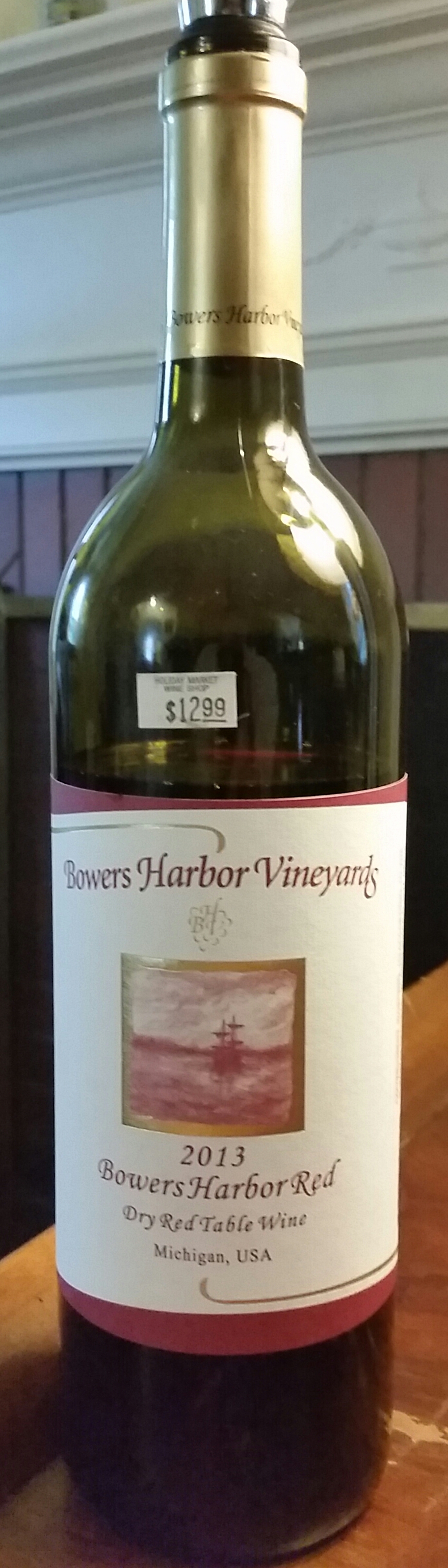
Bowers Harbor Red

Maker: Bowers Harbor, Traverse City, Michiganwpid-2015-06-14-16.01.55.jpg.jpeg

Grapes: Cabernet Franc, Merlot, various red French hybrids.

Place of origin: Michigan, USA

ABV: 12%

Purchased for $13

Appearance: Pale ruby.

Nose: Mixed berry jam, white pepper, touch of oak.

Palate: Medium bodied and medium dry. Strawberries, sweet cherries, blackberries, oak.

Finish: Drying with black cherry and blueberry jam. Fading into chewy tannins.

Parting words: I picked up this wine a few days ago while looking for an easy-drinking, casual table wine for a cookout I have annually. I bought the wrong thing, but in a good way.

The words “table wine” on the label threw me off. This is a table wine in the sense of a wine that goes well with fine food, not in the sense of a cheap wine to drink on a weeknight or serve at a party with people who don’t care about wine.

Bower’s Harbor Red is actually their (successful) stab at a Bordeaux/Meritage style blend. It has everything one expects in a blend like this, even though it is a little fruit heavy at this stage. That get me to the only negative thing in the review. Not enough time in the bottle. If I had done a little research in the store, I might have let this one sit in the cellar for a few years before cracking it.

Even at this age, Bower’s Harbor Red 2013 is recommended.

The Missing Spire

Maker: Left Foot Charley, Traverse City, Michigan, USA.wpid-2015-05-27-17.25.41.jpg.jpeg

Grape: Riesling

Style: Semi-sweet

Place of origin: Michigan, USA (Antrim Co., Grand Traverse Co., Old Mission Peninsula)

Vintage: 2012

ABV: 10.4%

Purchased for $16

Appearance: Light gold.

Nose: Fresh sliced apple, apricot, gravel, orange peel.

Palate: Medium bodied and very well balanced. Medium tart apple, mandarin orange, woodruff, flint.

Finish: A bit of sweet citrus, then smoke and stone.

Parting words: Missing Spire is named after a spire missing off Building 50 in the former insane asyum in Traverse City where Left Foot Charley is located. There’s nothing missing here, though. This has everything one could want in a Riesling: bit of minerality, a bit of fruit, a bit of acid, a bit of sweetness, a good body and brilliant color. It’s the kind of wine that made me fall in love with this grape years ago. Left Foot Charley might be the best winery in Northern Michigan right now and this is one of their best wines. It’s also a favorite of friend-of-the-blog Oliver Windgätter, who knows more about German Riesling than anybody I’ve ever met. As Nicholas Cage might say, that’s high praise. The Missing Spire is highly recommened.

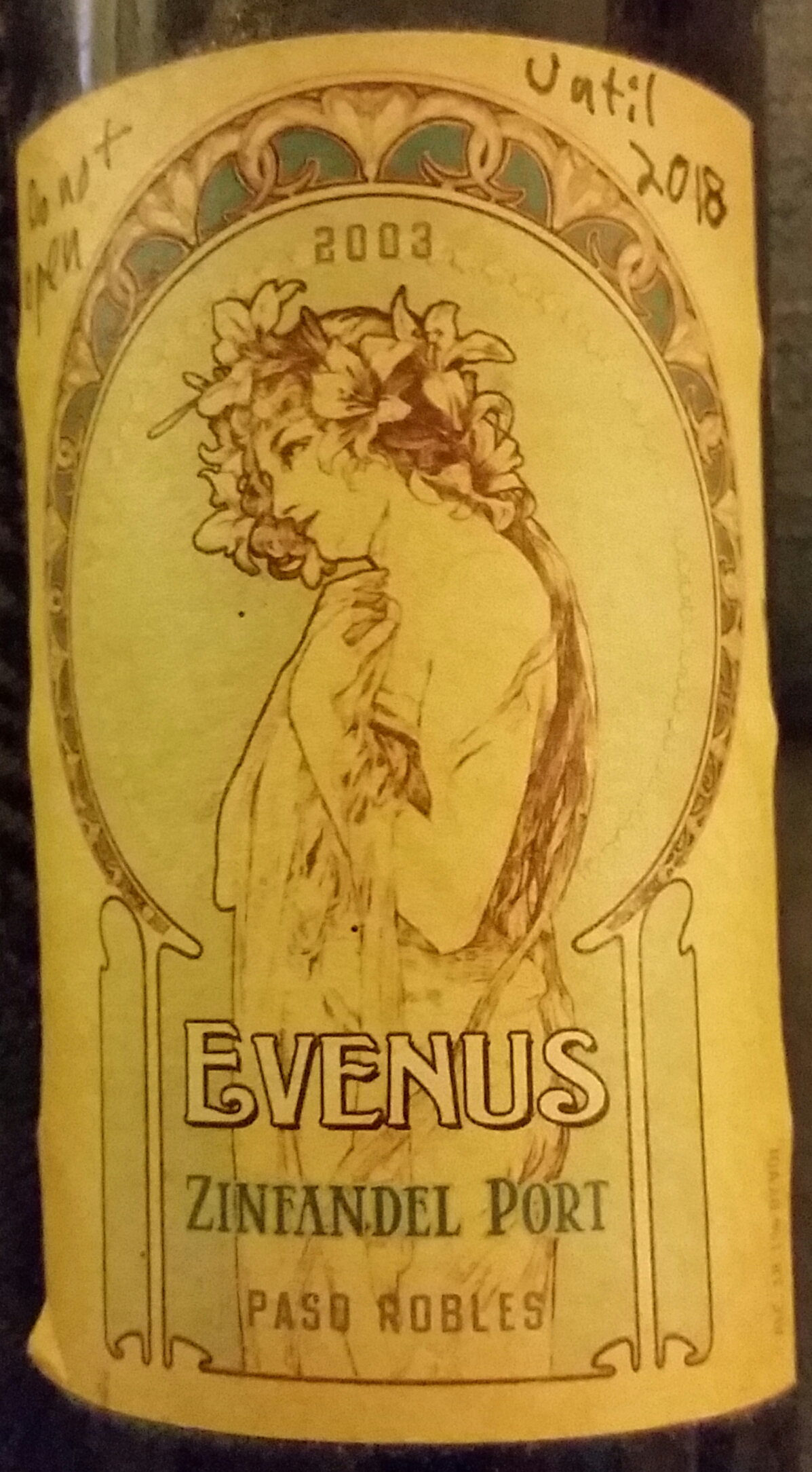
Evenus Zinfandel Port

Maker: Candlewood Cellars, Graton, California, USAwpid-2015-05-20-20.31.44.jpg.jpeg

Place of origin: Paso Robles AVA, California, USA

Vintage: 2003

Style: Fortified dessert wine.

ABV: 18.1%

Purchased for $10/375 ml (Trader Joe’s)

Appearance: Dark purple with a slight brownish tinge.

Nose: Raisins, black currant jelly, plum, blueberry.

Palate: Sweet and fruity. Blueberry jam, black cherry, bit of white pepper. Fades into a slight burn.

Finish: Raisiny and warming.

Mixed: Yes, sometimes I mix my port, even when it’s not really Port. Made for a pretty bad Princeton cocktail, but that might have been down to the cheap gin I used. Did well with a squirt of lemon juice.

Parting words: I purchased this bottle many years ago and planned to open it in 2018, but I jumped the gun a bit, as you can see. I’m glad I did.

True Port, of course, has to come from Portugul, but this California version does a good job of being in the style but retaining its varietal characteristics. It has the toasty heat of a California Zin but has enough elegance and sweetness to pair well with dark chocolate or as a dessert in itself. The price is hard to beat too. Evenus 2003 Zin Port is recommended.

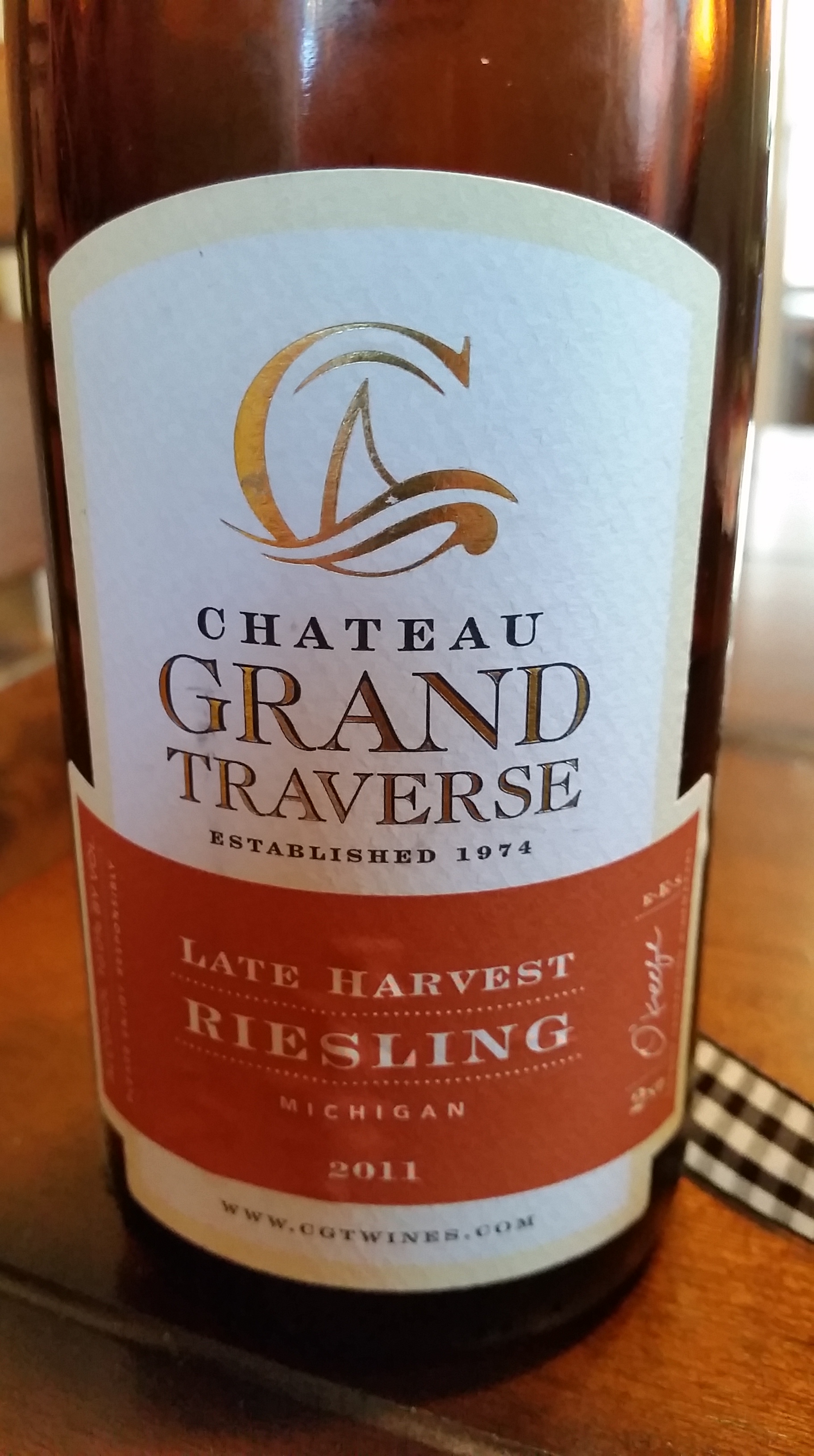
Chateau Grand Traverse Late Harvest Riesling

Maker: Chateau Grand Traverse, Traverse City, Michigan, USAwpid-20150506_190433.jpg

Place of origin: Michigan, USA

Vintage: 2011

ABV: 10%

Purchased for $14

Appearance: Iridescent gold.

Nose: White peach, apricot, lime zest, sherry.

Palate: Medium bodied. Sweet and citric. Hazelnuts, lychee, rancio.

Finish: Like an orange push pop but not as sweet.

Parting words: 2011 in northern Michigan was one of the rare vintages that was both prolific and high quality. Reds did particularly well but the whites were no slouch either, as this wine clearly shows. CGT’s 2011 LHR exhibits all the characteristics of an excellent, aged wine of this type. Loads of rich, oxidized flavor but elegantly balanced with citrus and a touch of bitterness. This wine is best on its own or with cheesy or hors d’oeuvres. My wife was craving a white wine with dinner so we ended up drinking it with grilled hot dogs and potato chips and it did just fine with those, bringing out big orange flavors.

This is another big winner from Chateau Grand Traverse and the 2011 vintage. Highly recommended.

Arcturos Merlot

Maker: Black Star Farms, Sutton’s Bay, Michigan, USAwpid-20150413_074024.jpg

Place of origin: Michigan, USA

Vintage: 2010

ABV: Unknown (2011 was 12%)

Price: Unknown (2012 is $28.50 on the website)

Appearance: Dark plum.

Nose: Toasted oak, grapes, black currant, blackberry, whiff of hardwood smoke.

Palate: Medium bodied, mild and slightly chewy. Wild blackberry, toasted oak, strawberry, green peppercorn.

Finish: Oak, mixed berry pie.

Parting words: Merlot is not a popular grape for varietal bottlings in Michigan. Its parent, Cabernet Franc, is more dependable in Michigan’s climate and is more widely planted as a result. Merlot makes up less than 4% of Michigan’s total wine grape acreage and most of that in the more continental climate of the south and southwest of the state.

It’s important to note that this is a Michigan Merlot, not an Old Mission (or any other specific AVA) Merlot. That means that the grapes that were used to make this wine probably came from a variety of vineyards from across the state. This is a good strategy even for a winery located in northern Michigan like Black Star Farms. Merlot doesn’t take to northern Michigan as well as Pinot Noir and white wine varieties do, so why chain one’s self to a single appellation? Some of the distinctiveness of the wine may be lost, but that’s better than being distinct in a bad way.

At any rate, this is a tasty example of what this grape can do in this state. It goes beautifully with pork, lamb and beef dishes (I drank it with all three) and works nicely after dinner too. The price (at lest for the latest vintage) is too high, but it’s not too far out of line with other quality Michigan red Bordeaux varietals. Try to find it in the $20-$25 range. The 2010 vintage is ready to drink now, but it could probably go another year or two and be just as good or even a little better. 2010 Arcturos Merlot is recommended.

Chateau Aeronautique Cabernet Franc

Maker: Chateau Aeronautique, Jackson, Michigan, USA.wpid-2015-03-31-18.45.17.jpg.jpeg

Place of origin: Michigan (Pioneer wine trail)

Vintage: 2010

ABV: Unknown

Price: Unknown

Appearance: Light maroon with good sized, evenly spaced legs.

Nose: Oak, leather, black currant, blueberry, ground pink peppercorn, raspberry.

Palate: Medium bodied. Blackberries, leather, hint of roasted poblano pepper.

Finish: Light but long lasting. White pepper, oak, bell pepper.

Parting words: Chateau Aeronautique Winery is located in an air park near Jackson, close to Sandhill Crane Wineyards. Their stated aim is to produce Bordeaux-style wines but they also produce wines from a lot of the usual Michigan suspects like Reisling, Pino Gris, Chardonnay and Pinot Noir. Their Bordeaux style blends, Aviatrix Rouge and Crimson (a “right bank” style blend), are probably their best. They also do a good Syrah, quite a rare bird in Michigan. Cab Franc is much more common here and it features prominently in the Rouge. They use Michigan grapes exclusively.

This is one that has been sitting in my cellar for a little while and I think that time paid off. We had it with a meal of cheese ravioli and tomato sauce and it paired perfectly. Meat-filled ravioli might pair even better. As it sat, it tended to lean more to the peppery notes, but it never went off the deep end. This is a lighter style Cab Franc, though, so don’t go in expecting a bruiser. Michigan producers who can make a quality red like this get me excited at this state’s potential for Bordeaux varietals. Chateau Aeronautique’s 2010 Cabernet Franc is recommended.

Verterra Reserve Chardonnay

Maker: Verterra, Leland, Michigan, USAwpid-2015-03-25-14.54.50.jpg.jpeg

Place of origin: Leelanau Peninsula AVA, Michigan, USA

Vintage: 2012

Price: $20 (website)

ABV: Unknown (not listed on label or received from producer by press time)

Appearance: Medium gold with some necklacing.

Nose: Butter, toasted oak, plum, white peach, mineral water.

Palate: Golden delicious apple, lychee, oak, white pepper.

Finish: Chewy oak, canned pear, brown butter.

Parting words: Verterra is one of the best producers on Leelanau and it shows in this wine. They make two Chards, an unoaked (a popular style in these parts) and this one that spent several months in french oak before being bottled, also undergoing malolactic fermentation. It tastes pretty Californian to me, which isn’t a bad thing if you like that style like I do (usually).

As the wine sat and warmed in the glass, some of the fruit seemed to disappear, which was disappointing. It was still tasty, just not quite so well balanced as it was when the cork first came off. Unfortunately, due to poor meal planning, I was unable to taste it with food, but based on experience with similar wines I think it would pair well with chicken, swordfish, shark and the like. The price is very nice for a quality Michigan wine. The 2012 Verterra Reserve Chardonnay is recommended.