Old Cockney Gin

Maker: Two James, Detroit, Michigan, USAOld Cockney

Style: London dry gin.

ABV: 41%

Michigan State Minimum: $34

Appearance: Clear with abundant necklacing.

Nose: Lemon zest, green cardamom, coriander seed, aniseed, wormwood.

On the palate: Full bodied and dry. Cinnamon, anise, horehound, tumeric.

Finish: Dry. Like sucking on a licorice throat lozenge. Fades slowly.

Mixed: Adequate with tonic, but a little too sharp. Excellent in a dry martini with a relatively sweet vermouth. Very good in an old cocktail I found called a Princeton (1 part Port [Fronseca Bin 27 in this case], 2 parts gin, orange bitters and a twist of lemon peel). Old Cockney’s sharp dryness perfectly cuts through the sweetness of the Port. It does the same in a perfect martini.

Parting words: Old Cockney is a pretty aggressive gin compared to most that are in the London Dry style, or at least aiming in that direction. The mainstream gin it most reminds me of is Tanqueray with its trademark sharp edge, but Old Cockney goes beyond that. It teeters on the edge of being too sharp for me. That puts it in the realm of cocktail gins (as opposed to neat sipping or G & T gins) but it’s price pretty much puts it there anyway. Not that it’s unreasonably priced, it’s quite fair. At any rate, sweet cocktails are the way to go with this one. Try the Princeton or something similar, you won’t be disappointed. Old Cockney is recommended.

Liberator Barrel Aged Old Tom Gin

Maker: Valentine, Ferndale, Michigan, USALiberator aged

ABV: 45.2%

Note: Only available at the tasting room/bar

Nose: lemon peel, Clementine, angelica, cinnamon, ginger, tobacco.

On the palate: Full bodied and spicy. Black pepper, cardamom, cassia, alcohol. A splash of water brings out more sweetness and a lot more cinnamon.

Finish: Cinnamon disk and alcohol burn. Fades very slowly.

Mixed: Does surprisingly well in cocktails that are traditionally better suited to unaged gin. Makes a spicy dry martini and a respectable gin and tonic. It is really fantastic in a perfect martini (half dry and half sweet vermouth) and adds a great spicy aspect to a negroni.

Parting words: Like its unaged sibling, this gin is a wild ride. When I tasted it neat (how Rifino Valentine says he drinks it) it changed in the glass substantially from first sip to last. At first it was all citrus. Then it shifted to more traditional Old Tom Gin flavors, then it became a cinnamon bomb.

As noted above it is available only at the distillery in Ferndale, for a bit more than the standard version. It’s over the top, but it’s delicious. Barrel-aged Liberator is highly recommended.

Plymouth Gin

Maker: Black Friars, Plymouth, Devon, England, UK (Pernod-Ricard)Plymouth Gin

Style: Plymouth Gin

ABV: 41.2%

Michigan State Minimum: $35

Appearance: Clear.

Nose: Juniper, angelica, iris, coriander, citrus zest.

On the palate: Sweet and delicately spicy. Juniper, root spices, Clementine.

Finish: Spicy and fairly hot. A little bit of sweetness lingers on the lips for quite a while.

Mixed: Gets a little lost in a Tom Collins, but good in a G & T with quality tonic. Makes a wonderful dry martini well-chilled going easy on the vermouth.

Parting words: Plymouth is both a style of gin and brand of gin in addition to being a city (or two). The name is protected under EU regulations. In days gone by there were more than just one gin distiller in Plymouth, but there has only been Plymouth in Plymouth for quite a while now.

Stylistically, it’s between a London Dry and an Old Tom. It has the spice and juniper of a Dry but the delicate body of an Old Tom. It is fantastic in martinis and similar cocktails, adding elegantly balanced flavors and the right amount of body.

It’s a little too expensive to be an everyday, go-to type gin (except for those with bigger budgets) but it’s perfect for sophisticated classic cocktails. It also comes in a navy strength version at 57% ABV for just $5 more. Plymouth Gin is recommended.

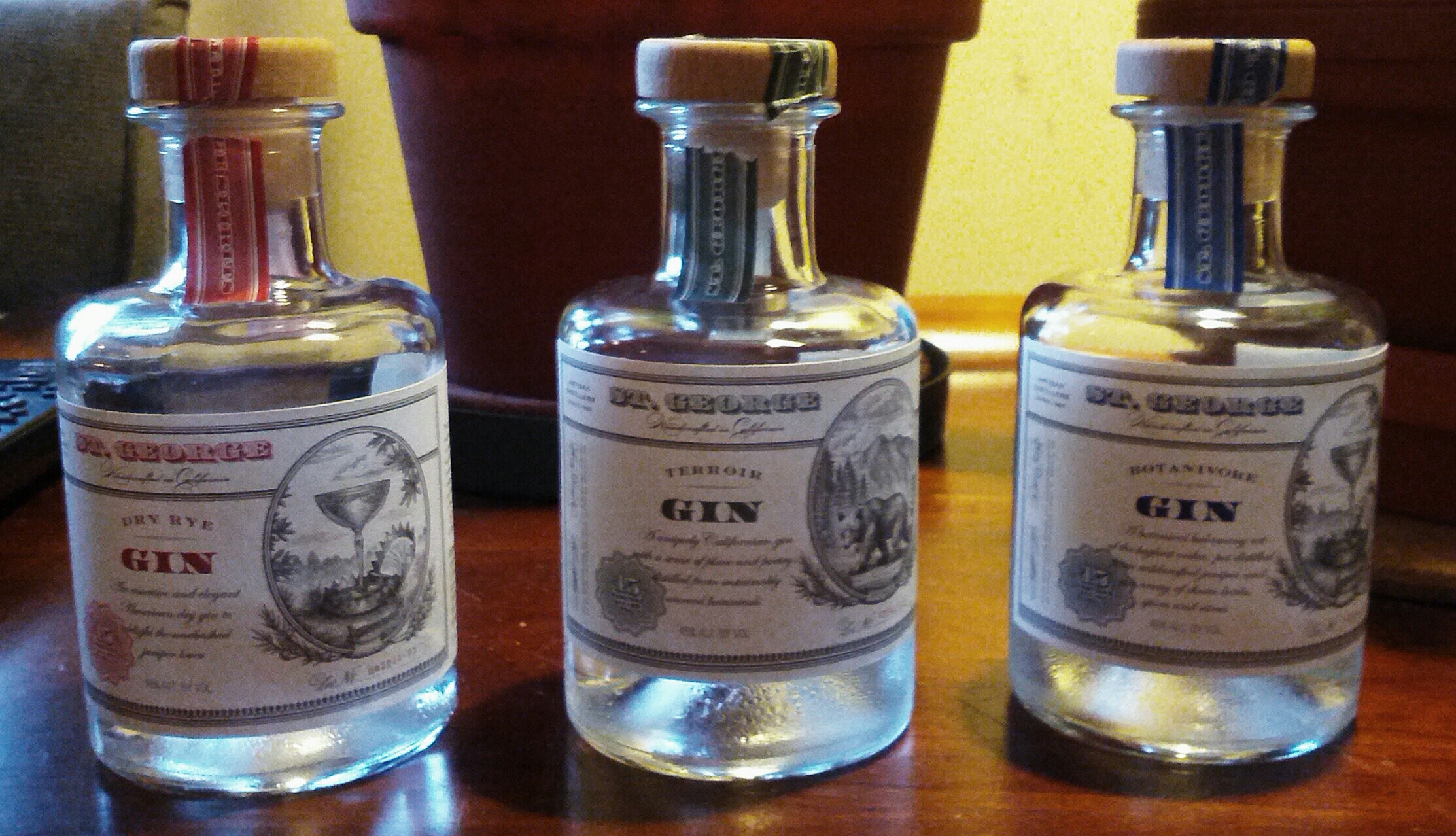
Head to Head: A trio of St. George Gins

Maker: St. George, Alameda, California, USAStGeorgeGins

ABV: 45%

 1) Dry Rye Gin

2) Terroir Gin

3) Botanivore Gin

 Appearance: All clear.

 Nose

1) Unpleasant. The aroma of pot-distilled rye spirit melds with the aroma of juniper to create something that smells like wood varnish, only worse.

2) Spicy and exotic. Fennel seed, mango, lemon grass, bay leaf, sage.

3) More conventional and balanced but still very good. Citrus peel, anise, grains of paradise, coriander, juniper.

 On the palate

1) Tastes worse than it smells. Thick and varnishy. Brings back memories of varnishing a birdhouse on a hot, humid day. The rye white dog and juniper tastes are like mustard and ice cream. Mustard is good and ice cream is good, but together they are disgusting.

2) Medium-bodied and spicy. A brightness comes through on the palate that is not as prominent in the nose, but a very welcome addition. Aniseed candy, sugarcane, papaya, fig, lemon thyme

3) Medium-bodied and sophisticated. Sweet cassia dominates in a very pleasant way with the other botanicals harmonizing nicely.

 Finish

1) Finish is no better, but at least it doesn’t get any worse. More varnish. Mercifully short.

2) Bright, juniper/herbal finish that lingers for a long, long time.

3) Fairly dry and spicy. More coriander and a hint of cumin as it very slowly fades.

 Mixed

The dry rye did very poorly with tonic and in a martini, essentially ruining both drinks. The bottom of the package containing the three bottles recommended using the dry rye in a Negroni which I did. It fared much better in that drink, but I’m not interested in buying a gin that only tastes good in one particular drink. I don’t think many other people are either. Others gin drinking friends who tried it, even in the Negroni, also disliked it. One said it tasted like white dog. The other two did great in everything they I tried them in. They were excellent team players but also brought their own distinctives to the table.

Parting Words

Out of the three, the Terroir Gin was my favorite. It was unlike any other gin I have tasted but still recognizable as gin. It’s a delight from beginning to end, and it’s the sort of experience I look for from a micro-gin. The Botanivore was very good too. It lost a little in comparison to the Terroir, but on its own it’s a wonderful product. Where Terroir is a bit garish, Botanivore is elegant. My friends were split between these two. Both were enjoyed but one favored the Botanivore while the other agreed with me.

 It probably goes without saying but Dry Rye is not recommended. Botanivore is recommended and Terroir is highly recommended. All have a minimum price of $37 per 750 ml bottle in Michigan. For this tasting, I purchased a set of three 200 ml bottles for $30 or thereabouts.

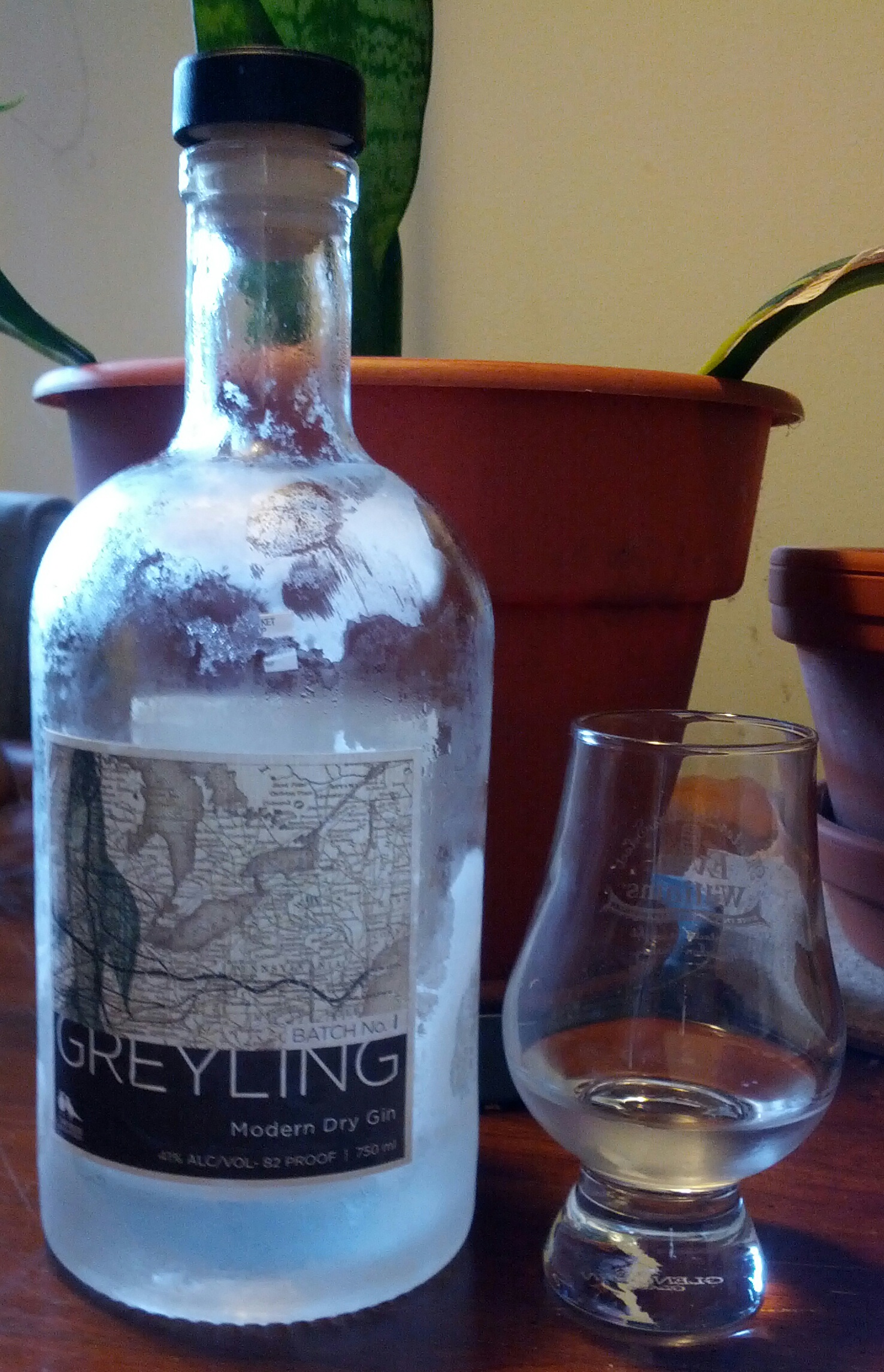
Greyling Gin

Greyling ginMaker: Two Birds, Kalamazoo, Michigan, USA

Distiller: Yahara Bay Distillers, Madison, Wisconsin, USA

ABV: 41%

Appearance: Clear but leaves big thick legs running down the side of the glass.

Nose: Dry. Big juniper, but complex underneath and never smells like wood cleaner. Meyer lemon, orange peel, grains of paradise, coriander, cumin, angelica.

On the palate: Full-bodied and floral. Juniper, boxwood, some citrus and white pepper.

Finish: Herbal and spicy with a bit of burn. Clean and dry.

Mixed: Makes an excellent dry martini but go very easy on the vermouth. Does well in a Tom Collins and with tonic, but a little wasted in those applications.

Parting words: Greyling is an excellent dry gin. It’s complex but never timid or confused. Juniper takes the lead here and everything else is harmonizing with it. Media coverage of the release of the gin emphasized the use of Michigan-grown lavender in the mix of botanicals, but I didn’t notice any when I was tasting for whatever reason. I would class this as a great martini gin or even for drinking neat. At just over $30 it’s priced reasonably for that sort of product.

Two Birds is not as a distillery yet, if it ever will be, but the distiller is printed clearly on the back label without any sort of weasel words or other obfuscation. That’s a breath of fresh air in a world flooded by micro-bottlers trying to pass themselves off as distillers. And why should they hide anything about this product? It speaks for itself. Greyling Gin is highly recommended.

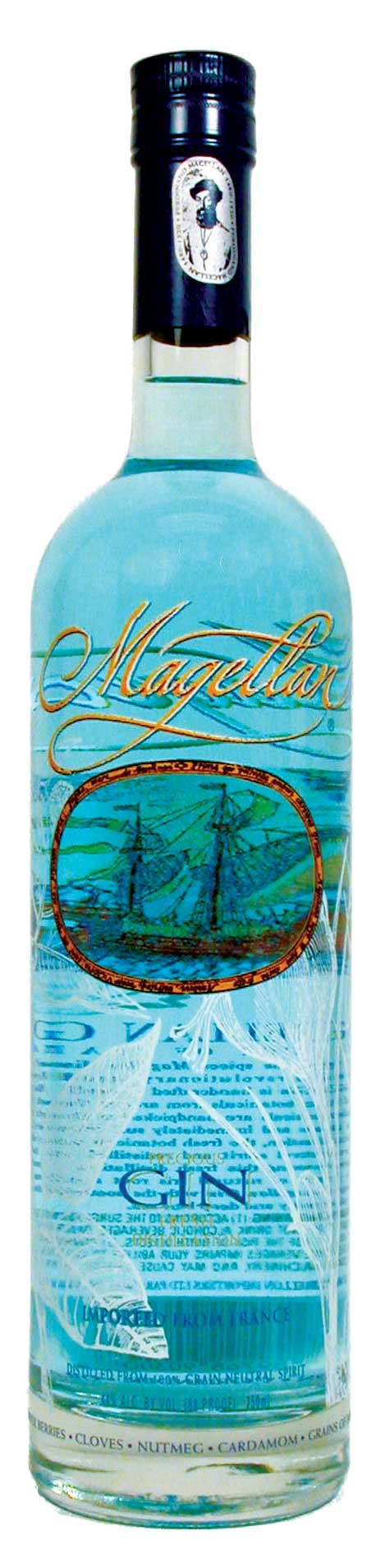
Magellan Gin

Maker: ???, France. Imported by Crillon Importers Ltd, Paramus, New Jersey, USAMAg

ABV: 44%

Appearance: Blue, like diluted window cleaning solution.

Nose: Lots of juniper and iris (I’m assuming the other botanical I’m smelling a lot of is iris, given the fact that iris is emphasized on the label). Citrus peel, grains-of-paradise.

On the palate: Full bodied and semi-sweet with a bit of spice on the back end.

Finish: Sweet and spicy, then a little hot.

Mixed: A little brash with tonic, but goes down ok. Very good in a Tom Collins and good in a dry martini.

Parting words:  Magellan is a good gin. It’s a little too aggressive for my tastes, but it does OK mixed, which is what most gin is going to be used for. The cheesy branding and the blue coloring are distractions I could do without. The $30 price tag is also something I could do without. I’m kind of on the fence about this one, but I’ll err on the side of niceness this time and give Magellan Gin a recommendation.

Death’s Door Gin

Maker: Death’s Door, Middleton, Wisconsin, USADeath's Door Gin

ABV: 47%

Appearance: Crystal clear.

Nose: Alcohol, juniper, lime peel, thyme. Opens up considerably with water. Aniseed, horehound, angelica, lavender.

On the palate: Full bodied. Sweet, hot. Cinnamon, juniper, fruity hard candy. With water, still full bodied and still sweet. Rock candy, alcohol, not much else.

Finish: Hot, menthol cough drops. More gentle with water, pleasantly sweet. Fades slowly with a hint of candied lemon peel.

Mixed: Makes a sophisticated and well-balanced martini. Also does well with tonic.

Parting words: Death’s Door is an excellent gin, one of the best micro-distilled American gins I’ve had. It’s versatile but interesting and sophisticated.  Neat, the taste isn’t all that great but the nose is fantastic which is what gin is all about if you ask me. At $30 it’s at the upper end of the scale, but it’s worth every penny. Death’s Door Gin is recommended.

Liberator Gin

Maker: Valentine Distilling Co., Ferndale, Michigan, USA

ABV: 42%

Appearance: Clear with a clingy pearl necklace.

Nose: Big horehound smell, lime leaves, lemon zest, juniper. As it settles in the glass, a burst of cassia seems to come out of nowhere.

On the palate: Full bodied and fairly dry. Lots of horehound and fennel, a shot of cassia (like in the nose) then dies down to almost nothing.

Finish: The horehound comes roaring back with a pound of black licorice in its mouth. A hurried bit of cinnamon and citrus, then the horehound comes slowly back and then sits out the rest of the finish hanging around on the porch.

Mixed: Does well in all the cocktails I tried it in. The bitterness of the horehound complements most traditional mixers well and creates a nice balance.

Parting words: This gin is a hot mess neat. It’s named after a plane (the B-24), but if the gin is any indication of what the plane was like, I would need a lot of Dramamine to take a flight in it. It wildly careens from botanical to botanical without ever finding balance. It’s definitely not boring though, and mixers calm it down considerably. The price isn’t terrible for a micro-gin but it’s not great either. All in all a good gin, even if it’s a little wacky. Liberator Gin is recommended.

Hendrick’s Gin

Maker: Wm. Grant & Sons, Bellshill, Scotland, UKHendricks-bottle-290107

Distilled: Girvan, Scotland, UK

ABV: 44%

Appearance: Like water, but with long, slow, sticky legs.

Nose: Juniper, alcohol, lemon peel, green cardamom, cumin, cucumber, cedar.

On the palate: Full-bodied and dry. Hot curry and a cucumber salad.

Finish: Dry and rich. Coniferous, with tangerine, lime leaves, and a background vegetal note.

Mixed: Does OK with tonic and in a Tom Collins, but some of the finer points are lost and the tonic clashes with it a bit. Shines in a very dry martini, complementing the herbal flavors in the vermouth beautifully.

Parting words: Hendrick’s is a very well regarded gin, and I can see why. It’s very ggod, but it is not something I would reach for if I wanted a quick, relaxing G & T; it’s a martini (or neat) gin and does best in that application. The bottle is also good looking, with the design of an antique medicine bottle. Hendrick’s is fairly priced for what it is at $36 (state minimum) here in Michigan. It is recommended.

RIP Truman Cox

Recently I, as a (part-time) whiskey blogger, have been urged to take up the banner and “give Maker’s Mark shit” for lowering the proof of their bourbon. I’m not going to do that. The decision to lower the proof of Maker’s is unfortunate and disappointing, but the level of internet outrage regarding the proof change is completely out of proportion, surpassing even the Ebay/Pappy hysteria of 2012. I have no desire to contribute to this silliness any more than I already have.

Instead, I’m going to call attention to something much  more worthy of getting upset about: The death of A. Smith Bowman Master Distiller Truman Cox.

I didn’t know Truman very well. We were Facebook friends and I only recall meeting him once in person. He was the kind of guy who would greet you with a hearty handshake and a smile. As a friend of mine said, he was above all a genuine guy. He loved his family and he seemed to enjoy life immensely.

He was also a whiskey man through and through.  His prior position was at Buffalo Trace as chief chemist. He became Master Distiller at Bowman at a crucial time, as Bowman had recently moved to a new location, had a relatively new owner, Sazerac (also owner of Buffalo Trace), and was in the midst of a profound transformation. 10 years ago, Bowman was little more than a curiosity. It was the only large-ish bourbon distillery still operating in the state of Virginia and had only one (fairly) widely distributed brand, Virginia Gentleman. It came in 80 and 90 proof expressions.

When Truman moved to Virginia, the transformation of Bowman was well underway. The 90 proof VG had been replaced by Bowman Brothers Small Batch Bourbon at 90 proof  and a 100 proof single barrel bourbon, John J. Bowman, was also introduced (review coming soon). Also made are Abraham Bowman Rye (I review the TPS barrel-stength version here) and Sunset Hills Gin. Under the brief period of Truman’s leadership the transformation of Bowman was completed, and Bowman began putting out some of the most highly regarded and sought after private bottlings of bourbons and ryes among enthusiasts. They were able to have the best of both worlds. They operated like a micro-distillery in many ways, but they were also able to draw upon the resources of a large spirits company like Sazerac and a large distillery like Buffalo Trace.

Truman was one of the brightest rising stars in the world of American whiskey and his sudden death is a great loss for the industry and bourbon drinkers alike. Here are some links:

The Spirits Business Article on Truman’s death.

Lew Bryson on Truman’s passing.

Chuck Cowdery on Truman’s death

Truman’s famous barrel dance.

Truman tasting Pappy Van Winkle 20 y/o

Truman’s autobiographical bit on the Bowman website

Members of StraightBourbon.com congratulate Truman on becoming Master Distiller

Here’s hoping he gets that bottle named after him at last.