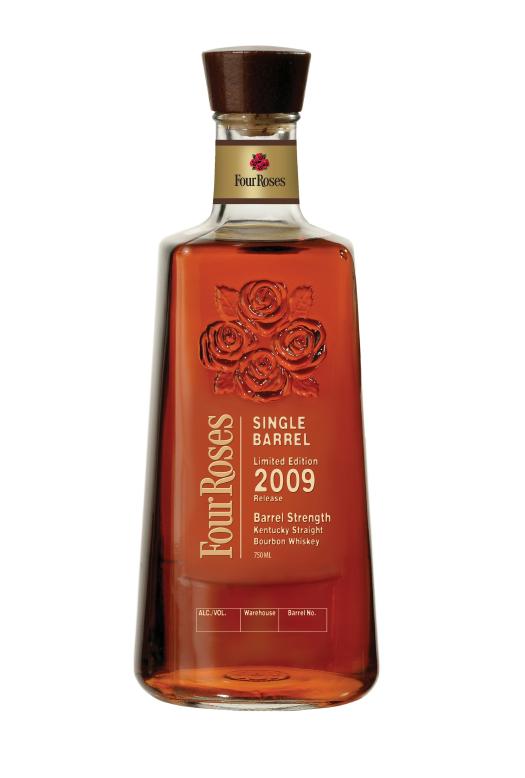
Four Roses Limited Edition Single Barrel 2009

Maker: Four Roses, Lawrenceburg, Kentucky, USA (Kirin)

Age: 11 y/o

Recipe: OESQ

Warehouse/Barrel: 55/43-3Q

Proof: 116.2 (58.1% ABV)

Appearance: Light auburn with thin, elegant legs

Nose: Rich. Crème brûlée, chocolate mousse, mint, alcohol, clove, orange blossom, mace, oak.

On the palate: Full bodied and sweet. Chocolate orange, vanilla. With water it turns silky. Key lime pie, roasted candy almonds, cocoa almonds.

Finish: Long, sweet and sensuous. Oak, char, circus peanuts, mango.

Parting words: This is sex in a glass, but without the stickiness (ideally). Unlike its (arguably better) predecessors, the 40th and 120th anniversary single barrels, it has a sensual quality unusual in a bourbon. Or to put it another way, this bourbon is the dessert you box up and take back to your hotel room after Valentine’s day dinner at the steak house, and eat right before you fall asleep and right after you, well, you know.

The Four Roses annual releases stay on the shelves for a shockingly long time after they are released compared other high-end annual releases, so there are quite possibly some still out there, but your best bet for trying one is to find a generous friend with a bottle or two squirreled away. Four Roses Limited Edition Single Barrel 2009 is highly recommended.

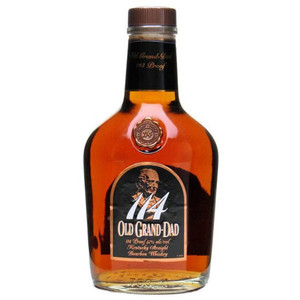
Old Grand-Dad 114

Maker: Jim Beam, Clermont, Kentucky, USA (Beam Inc)

Age: NAS

Style: High rye bourbon

Proof: 114 (57% ABV)

Appearance: Caramel, with thick legs and necklace around the rim of the glass

Nose: Alcohol, butterscotch, vanilla, toffee, coconut.

On the palate: Full bodied, fruity, and bold. Vanilla, caramel, cocoa, and then burn. Sweeter with water, but still aggressive. Tropical fruit, vanilla, toffee.

Finish: Hot and long with a bit of vanilla, then a hot tingle all over the mouth. Fades to toffee with a hint of char. With a bit of water, dark chocolate, caramel blondies.

Parting words: This is one of the best bargains in bourbon, arguably the best. Although I am a maverick in this respect, I prefer the current Beam-manufactured edition to when Old Grand-dad was made by the now-defunct National Distillers Corporation. The ND version had even more butterscotch flavor, but always struck me as a bit unbalanced.

My friend Joe describes OGD 114’s aroma and flavor as that of the burnt edges of a pan of brownies. I think he nails it. Not only is this stuff delicious, but around $30 a bottle for virtually barrel-proof bourbon is nearly impossible to beat for value. Old Grand-dad 114 is highly recommended.

W.H. Harrison Governor’s Reserve

Maker: Harrison Bourbon Co., Brazil, Indiana, USA

Distiller: LDI, Lawrenceburg, Indiana, USA

Style: High Rye Bourbon

Batch: 2

Age: <4 y/o

Proof: 113 (56.5% ABV)

Appearance: Fairly Dark Copper with thick sticky legs and a long slender necklace around the glass.

Nose: Grassy rye, spearmint, oak, toffee.

On the palate: Full-bodied and sweet. A bit of toffee and then a big burn. On the rocks, as recommended on the label, more sweetness, cotton candy but also oak and vanilla.

Finish: Bubble gum and mint, then a burst of heat, then slow, clingy taffy. On the rocks is not much different, just more subtle and more oak.

Parting words: I sampled some of batch 1 at a friend’s house when it first came out and I thought it was exetremely dull. I later bought some of the 80 proof version and it was similarly boring, but innofensive for summer sipping.

Batch 2 is much more interesting. It leans in the direction of Four Roses with a lot of old-fashioned candy flavors, but has the minty notes of some of the other products coming out of LDI, like Bulleit Rye.

It gets very cloudy on the rocks and has a good number of floaties in the bottle, making me wonder if it was not chill-filtered. If that is the case, no mention of it is on the label. It is the best LDI-distilled bourbon I have tasted, far superior to the high-rye Redemption Bourbon. All that said, it is much too expensive. If it were $10-$15 cheaper, closer to its competitors like Rare Breed and Old Grand-dad 114, Harrison Governor’s Reserve would be highly recommended. As it is, it still earns a recommendation.

Parker’s Heritage Collection: Wheated Mashbill (2010 release)

Maker: Heaven Hill, Bardstown, Kentucky, USA

Style: Wheated Bourbon

Age: 10 y/o

Proof: 124.2 (62.1% ABV)

Appearance: Deep auburn.

Nose: Alcohol, vanilla butter cream frosting, oak, blondies, white pepper.

On the palate: Full-bodied, sweet, vanilla frosting, then it evaporates off the tongue. With a little water, the oak comes close to taking over. There is still a good amount of sweetness, and vanilla though and a bit of allspice and ginger to boot.

Finish: Big oak, then hot, hot hot and a long, lingering burn. With water, still some burn, but a little white chocolate, oak, turbinado sugar.

Parting words: When United Distillers Corporation was merged out of existence, Old Fitzgerald, the wheated bourbon flagship of the closed Stitzel-Weller distillery, went to Heaven Hill. The quality of Old Fitz had already been declining and the sale didn’t make it any better. Its reputation tanked, and not without justification. The conventional wisdom was that the folks at Heaven Hill just didn’t care about wheaters.

The previous entries in the Parker’s Heritage Collection (named for Master Distiller Parker Beam) were both from the rye bourbon mashbill. When this wheated bourbon edition was released back in 2010, it was something of a revelation. It has the sweet vanilla flavors one expects but it has power that few wheated bourbons have. Let’s hope it’s a sign of good things to come.

Parker’s Heritage Collection: Wheated Mashbill was an instant classic, and is pretty hard to find on shelves, but there are still some out there. It’s not cheap, either, but it’s worth every penny. Highly recommended.

Rock Hill Farms Single Barrel (Kahn’s selection)

Maker: Buffalo Trace, Frankfort, Kentucky, USA (Sazerac)

Age: NAS

Barrel: Kahn’s 6-11/09

Proof: 100 (50% ABV)

Appearance: Shiny copper penny

Nose: Big vanilla like a Van Winkle wheater, and black tea, but just a touch. Orange peel and coriander.

On the palate: Medium bodied, light, but pleasantly so. Sweet, more orange peel, leather, sweet cinnamon, some heat, but never rough. Complex, balanced and elegant.

Finish: Warm, with more sweet cinnamon and potpourri flavors. Leaves the mouth all tingly.

Parting words: Rock Hill Farms is one case in which it pays to judge the book by its cover. It comes in one of the most elegant decanter of any bourbon on the market, and it tastes like the sort of drawing room bourbon it looks like.

The biggest drawback the standard issue Rock Hill Farms has is its price, $55 for a 100 proof NAS in the state of Michigan, and that’s before taxes. The Kahn’s edition is better than the standard version, and the last few times I’ve purchased it, it went for $45 before taxes. For a bourbon this suave at 100 proof, that is a pretty good deal. But you don’t have to take my word for it. Last spring I bet a bourbon buddy of mine a bottle that Purdue would make it further in the NCAA Men’s Basketball tournament than his Ohio State Buckeyes. I lost and sent him my bottle. He fell in love with it and now wants me to pick up a case of the stuff up for him next time I’m in Indianapolis. Kahn’s Rock Hill Farms is highly recommended.


Four Roses Single Barrel

Maker: Four Roses, Lawrenceburg, Kentucky, USA (Kirin)

Style: High-rye bourbon

Age: NAS (about 8-9 y/o)

Warehouse/Barrel: DS/43-IV

Proof: 100 (50% ABV)

Appearance: Bright Copper

Nose: Boiled peanuts, rye, oak, jalapeno. With a splash of water, I get heirloom roses, leather, and hard candy. A fun night for somebody!

On the palate: Full-bodied. Cassia, cotton candy. A little water loosens it up a bit. A perfumed sweetness, rosewater, sweet cinnamon, a bit of caramel & jalapeno jelly.

Finish: Hot, but complex. Spicy cassia, rye, cotton candy then a light sweetness lingers like a stolen kiss from an old lover. Not that I’ve been kissing any old lovers recently (have I used that line before?).

Parting words: I reviewed this early on in the blog when I was still doing “Now drinking” posts. This is a very different barrel from that one. To use a baffling booze reviewer term, this is a very tight whiskey. At 100 proof it is very assertive and has loads of rye character. It even reminded me of Templeton Rye, which is produced at LDI, Four Roses’ former sister distillery in Lawrenceburg, Indiana. Cut down from 100 proof to somewhere in the 90s, it becomes a relaxed, genteel bourbon suitable for sipping on finer front porches. Aside from special releases, Four Roses Single Barrel is the best bourbon on the market, or at least my favorite. Highly recommended.

My Two Ounces: What’s that mean? Whiskey Edition

All disciplines and hobbies have their own set of lingo. The world of whiskey is no exception. What makes this even more confusing is that all whiskey-producing countries have their own terms and laws. Here are some of the most common terms found on whiskey bottles of all types and the most basic definitions I could give them. I have only included terms used for Scotch, American, Irish, Canadian and Japanese whiskies. These are all I can think of for now. I hope it is enlightening. And please give me crap about it if I screw up. That’s what the internet’s all about.
ABV: Alcohol By Volume, in other words, how much of the volume of the liquid in the bottle is taken up by ethanol (the alcohol in alcoholic beverages). This is expressed as a percentage. If I knew more about chemistry, I’m sure I could explain it better. See proof below.

Age Statements: The age statement refers to the time between when the unaged spirit was put into the barrel and when it was removed from the barrel, usually rounded down to the nearest year. When there is an age statement on a bottle of whiskey of any country, the number refers to the age of the youngest whiskey in the bottle. Whiskeys without age statements are described as NAS (No Age Statement). They are usually, but not always, close to the minimum age allowed by law. That is four years old for American straight whiskeys and bonded whiskeys (see below), and three years old for all Scotch, Irish and Canadian whiskies.

Barrel Strength/Cask Strength/Barrel Proof/undiluted: The whiskey has been bottled at the same proof  it was when it left the barrel. No water has been added.

Blended Whiskey/Whiskey, a blend: All whiskey-producing countries have their own rules and practices regarding blending.

Blended Scotch: A blended Scotch is composed of two components, single malt (usually several of them, see below) and grain whisky (also see below). Generally, the more expensive the blend, the higher the proportion of single malt. If the blend has an age statement, it applies to the grain whisky component as well.

Irish Blends: Irish blended whiskey is usually a blend of whiskey made from malted barley in a pot still and unmalted barley. Generally, the more expensive the blend, the higher the proportion of malt. If the blend has an age statement, it applies to the grain whiskey component as well. Most Irish whiskeys are blends.

Canadian Blends: Canadian Blends are somewhere between Scotch/Irish blends and American blends taste-wise. The grain whisky element is distilled until it is almost, but not entirely, flavorless. The malt component in Scotch/Irish blends is replaced by flavorful whiskies similar to American rye, bourbon and corn whiskeys. Generally, the more expensive the blend, the higher the proportion of flavoring whisky. If the blend has an age statement, it applies to the grain whisky component as well. All but one or two Canadian whiskies are blends. See Canadian Whisky.

American Blends: Most American blends are basically vodka favored with whiskey. Bottles labeled blended bourbon or rye contain a blend of vodka (flavorless neutral spirit) with bourbon or rye. Some newer whiskeys that blend two or more types of whiskey (bourbon with rye, for example) also qualify as blends, but their makers tend to downplay that term since American blends have a bad reputation among enthusiasts. If the blend has an age statement, it applies to the neutral spirit component as well.

Japanese blends: Similar to Scotch blends above.

Blended Malt: Formerly known as vatted malts, blended malt Scotches are blends of multiple single malts. Unlike true blends they contain no grain whiskey element.

Bottled-in-Bond or Bonded: The Bottled-in-Bond law stipulates that any American spirit labeled as such must be at least four years old, bottled at 100 proof (50% ABV), and the product of one distillery in one distilling season. It is mostly used for bourbons, but also for rye and apple brandy and can even be used for vodka or gin. It was intended as a sort of quality control but now some bourbons that qualify as Bottled-in-Bond choose not to use the term because it sounds old fashioned.

Bourbon: An American Whiskey made from at least 51% corn and aged in a new oak barrel that has been charred on the inside. It must be made in the U.S. It does not have to be made in Kentucky, although the vast majority of it is.

Bourbon cask, sherry cask, port cask, etc: Scotch, Irish and similar whiskies are almost always aged in used barrels (casks). The former contents of the cask impart different flavors to the whisky. Most whisky producers use a variety of casks to age their product. Bourbon and sherry are the two most commonly used in Scotland and Ireland.

Canadian Whiskey: Whiskey made in Canada. Almost all of it qualifies as blended by American standards. Like Scotch and Irish, it must be at least three years old. Unlike in the British Isles and the U.S., under Canadian law non-whisky flavoring elements may be added to whisky. These include sherry, port, madeira and other wines, brandy, and even fruit juice. See Canadian Blends above.

Cask Strength: See barrel strength above.

Charcoal Filtered: The whiskey has been filtered through activated charcoal, similar to a home water filter, after aging. Some labels display the words more prominently than others, but most whiskeys are filtered in this way. This is different from charcoal mellowing and in addition to chill-filtering; compare chill-filtering and Tennesee Whiskey below.

Corn Whiskey: An American whiskey made from at least 80% corn (compare bourbon above) and either unaged or aged in a used oak barrel. There is a subtle difference between unaged Corn whiskey, which is meant to be consumed as is, and White Dog (see below) which has been distilled with the intent to be aged at a later date, at least in theory.

Diluted: Any whiskey (or other spirit) that is sold at under 80 proof/40% ABV in the U.S.

Finished: The whiskey has been transferred to a different barrel (or had oak chunks added to the barrel or the like) for a brief time at the end of the aging process. Bourbon and other American whiskeys are allowed to be finished in a used barrel as long as the bottle is labeled as “finished in X barrels” or something to that effect.

Grain Whisky: In the Scotch and Irish whiskey worlds, grain whisky is whisky usually made in a continuous still (as opposed to a pot still) and made from something other than malted barley. Usually it is just whatever grain is cheapest at the time with corn (maize) and wheat being the most common grains used. Grain whisky is typically blended with single malt whisky to produce blended whisky. It is occasionally bottled on its own as a curiosity. The term is not used in American whiskey circles.

Irish: Any whiskey made in Ireland. Traditionally, Irish whiskey is made from malted and/or unmalted barley and distilled three times before aging. By law it must be at least three years old.

Japanese Whisky: Whisky made in Japan. It is made in a similar style to Scotch single malt and blended whisky.

Natural Colo(u)r: No caramel coloring has been added. Adding caramel color is legal for Scotch, Irish, Japanese and Canadian whiskies.

Proof: Now only used for American whiskey. American proof is the ABV doubled. So 50% ABV= 100 proof and so on. American whiskey must be at least 80 proof to be sold in the U.S. Otherwise it must be labeled as diluted.

Pot Still: Implies that the whiskey was at least partially distilled in a pot still as opposed to a continuous still.

Regions: Single malt Scotches are classified according to where they were distilled. There are four traditional regions. These are often mentioned on bottles of Single Malt Scotch. They are Highland, Lowland, Islay and Campbeltown. The Highland region is the largest by far and is subdivided into other regions, like the Islands and Speyside. Speyside is the largest of those in terms of number of distilleries and is itself subdivided into smaller regions like Dufftown and the Livet valley. Region plays a much smaller role in the classification of Irish, Canadian, Japanese and American whiskies.

Reserve: Meaningless marketing term meant to convey the image of extra age or rarity.

Rye: A traditional American whiskey made from at least 51% rye and aged in a new oak barrel that has been charred on the inside. Same goes for other named whiskey types but with their respective grains. Wheat whiskey is at least 51% wheat, American malt whiskey is at least 51% malted barley, and so on.

Scotch: Any whisky made in Scotland. By law, all Scotch whisky must be aged for at least three years in a barrel or cask as it is more commonly called in Scotland. See Single Malt, Blend, Grain Whisky.

Single Barrel/Cask: All the whiskey in the bottle is from one barrel. Most whiskeys are a combination of the contents of different barrels.

Single Malt: Used for Scotch and Irish whiskies, a single malt is a whisky made from only malted barley in a pot still and is the product of a single distillery. It is usually blended with grain whisky to produce a blended whisky. Single Malts are also bottled on their own, either by the company that owns them or by a private bottler. Single Malt used on a bottle of American whiskey is only an indication that it qualifies as a malt whiskey by American law. Other whiskeys that call themselves Single Malts generally follow the Scotch usage.

Small Batch: From a smaller batch of barrels than bigger selling brands. It’s essentially a meaningless term meant to make the whiskey inside the bottle seem rare and desirable.

Sour Mash: The mash (distiller’s beer) is brought to a low Ph before distilling. Although some whiskey labels display the words more prominently than others, all major American whiskey brands are made using a sour mash.

Straight: American whiskey legal term. Any whiskey that is at least two years old and the product of a single U.S. state may be called straight whiskey. If it is under four years old, the label must bear an age statement.

Tennesee Whiskey/Whisky: Whiskey made in Tennesee. In practice, Tennesee whiskey is very similar to bourbon. It uses a recipe that is identical to a bourbon, but unlike bourbons it undergoes a process of charcoal mellowing, also known as the Lincoln County process. Before barreling, the white dog (see below) is run through a large vat of maple chunk charcoal. This removes some flavor compounds and adds a few others. It is then barreled and aged like bourbon and other straight whiskeys. Tennesee whiskeys could probably be sold as bourbons, but Tennesee whiskey makers prefer to sell it as Tennesee whiskey.

Unfiltered/Unchillfiltered/Non-chill filtered: The whiskey has not undergone a process called chill-filtering in which the whiskey is chilled to around zero degrees Celsius and then filtered. The process is performed after aging and is intended to reduce any haziness that the whiskey may exhibit. Chill-filtering produces a clean-looking spirit that looks good on the store shelf, but the process can also remove some flavor compounds. Whisky producers marketing themselves toward enthusiasts will often not chill filter their products and brag about that fact on the label. Unfiltered also implies that the whiskey has not been filtered through activated charcoal, a common practice (see above).

Vatted Malt: See Blended Malt above.

Wheated Bourbon: This style of bourbon is made with corn, malt and wheat instead of the more usual corn, malt and rye.

Whiskey: A spirit distilled from grain and then (usually) aged in an oak barrel. In layperson’s terms, a whiskey is a beer that has been run through a still. Most whiskeys are then aged in a barrel for a period of time. Whiskey with an e is the preferred spelling in the U.S. and Ireland, although some American brands like Maker’s Mark, Old Forester and George Dickel omit the e. Curiously, U.S. Federal regulations governing whiskey also use the e-less spelling.

Whisky: See whiskey above. Whisky without an e is the preferred spelling in Scotland, Japan and Canada. In spite of what some believe, there is no more difference between whiskey and whisky than there is between labor and labour or color and colour.

White Dog: A term from the American whiskey world meaning a clear spirit that is destined to be aged in barrels and become whiskey. The Scotch equivalent is new make. Many start-up and even established distilleries have been releasing their own white dog recently as a curiosity or to raise some quick cash in the case of the start-ups.

Confused about wine labels? So is everybody else. Check out the simple interactive guide to reading world wine labels from Delish.com here.

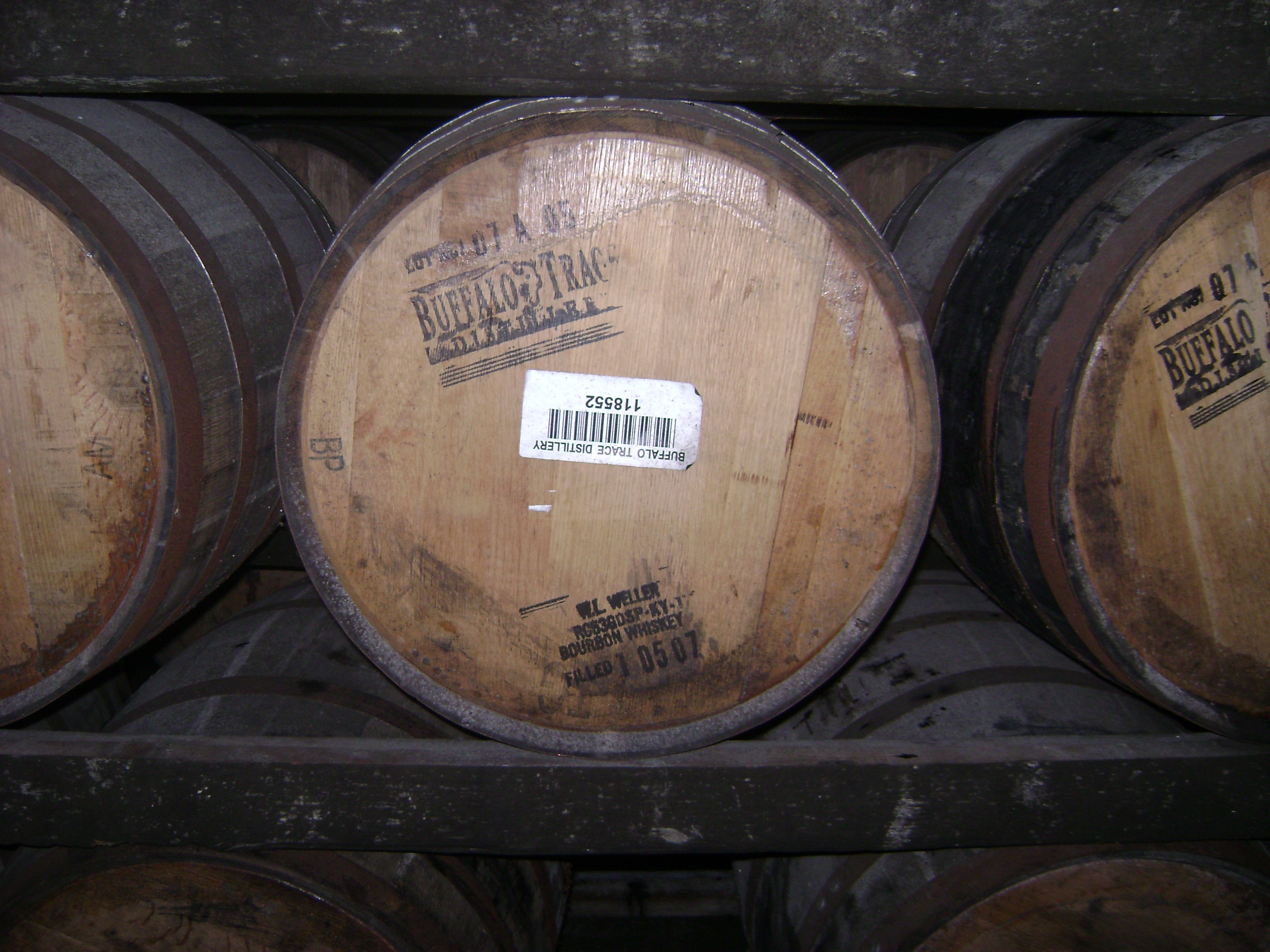
George T. Stagg

Maker: Buffalo Trace, Frankfort, Kentucky, USA (Sazerac)

Age: 16 y/o

Proof: 141.2 (70.6% ABV, the 2005 edition)

Appearance: Dark copper with thick, luscious legs.

Tasted neat and with a splash of water.

Nose: Neat: alcohol, oak, almond extract, mace. W/water: Weaker, but the sweetness really comes to the fore, even a little spearmint. Water does bring out some varnish notes that are a bit unpleasant at first but they seem to disappear after a few seconds.

On the Palate: Neat: Vanishes on the tongue without a trace in a matter of seconds. When swallowed Stagg burns all the way down in what seems like an all-out assault on the upper digestive system. W/water: much more palatable. Still plenty of burn, but it doesn’t overwhelm the complexity of this amazing bourbon. Dry but with undercurrents of caramel, clove, mace, allspice, black pepper, almond extract, pecan.

Finish: Neat: None, evaporates almost instantly. W/water: Still pretty quick, but the caramel and wood linger in the mouth. My lips were tingling for a long time afterwards.

Parting words: George T. Stagg the man was the co-founder (with E.H. Taylor) of what is now the Buffalo Trace Distillery. George T. Stagg the whiskey is the king of bourbons, and hence the king of American whiskeys. It is the most sought after and consistently the best of the Buffalo Trace Antique Collection released annually in the fall. The other members of this series are William Larue Weller (a barrel-proof wheat bourbon), Eagle Rare 17 year old, Thomas Handy Rye (a barrel-proof rye) and Sazerac 18 year old rye.

Each year is slightly different, but always excellent. Many of the top-shelf offerings from Buffalo Trace are not worth the price, but George T. Stagg is truly worth every penny. Highly recommended, but don’t be a hero, add some water after nosing it. Your esophagus and stomach will thank you.

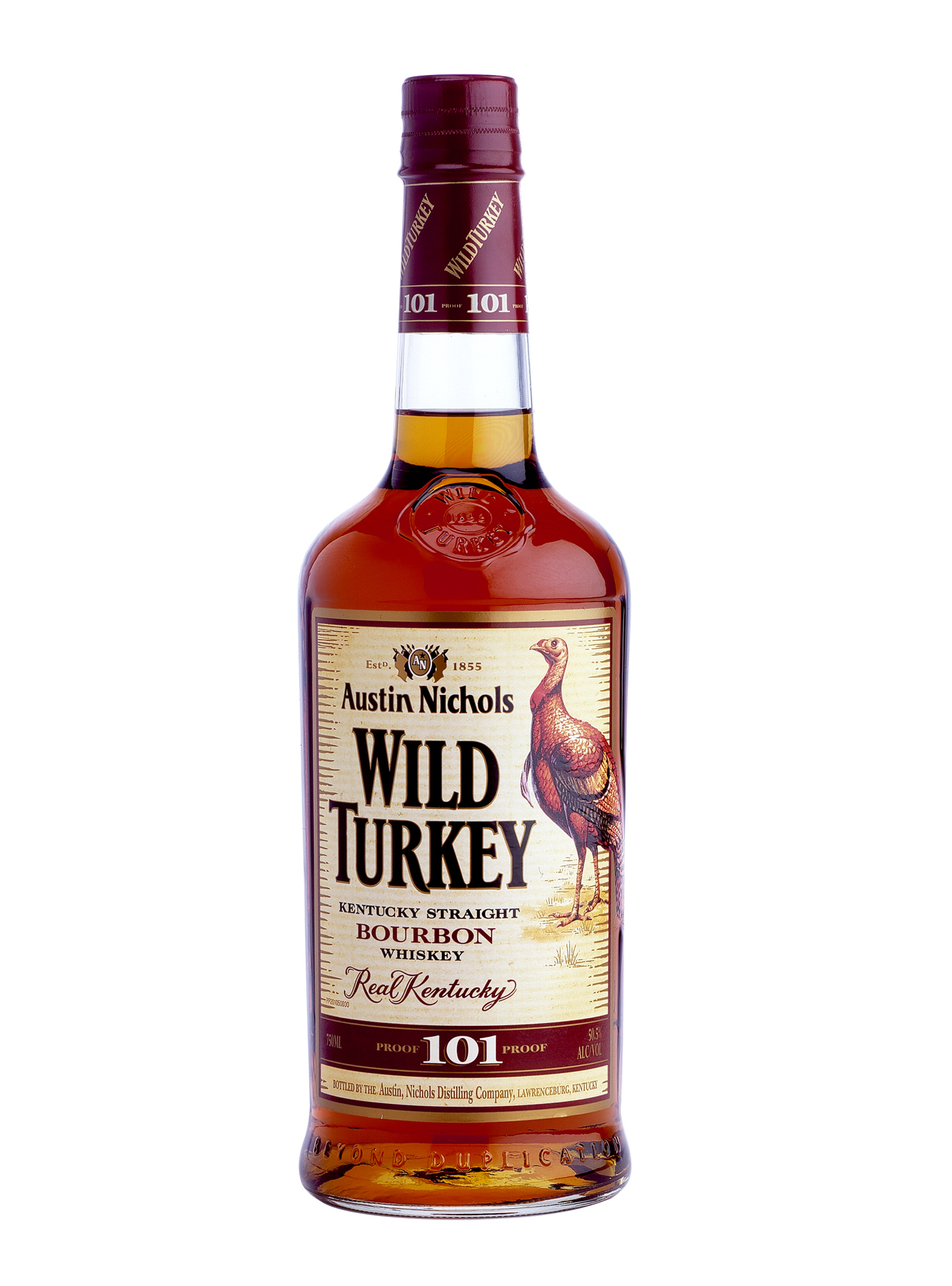
Wild Turkey 101

Maker: Wild Turkey, Lawrenceburg, Kentucky, USA (Gruppo Campari)

Age: NAS (­about 6-8 y/o)

Proof: 101 (50.5% ABV)

Note: The labeling was recently changed, but a lot of the old is still on the shelf. Both old and new are pictured.

Appearance: Copper penny with thick clingy legs.

Nose: leather, caramel, peanut brittle, oak.

On the palate: Thick and rich, very full-bodied. Caramel, spice, barrel char, then heat, a lot of it.

Finish: Sweet corn, wood, char then big burn. Fades out with a hot, sweet tingle.

Parting words: Wild Turkey is a walking, strutting contradiction. On the one hand, it has a very, um, rustic reputation. A rite of passage in some college fraternities involves enduring a succession of shots of Wild Turkey 101 as a test of masculinity. On the other, older one-offs or Travel Retail offerings from Wild Turkey, like the recent Tradition release, are among the most sought after in connoisseur circles.

What makes Wild Turkey distinct is not its mashbill. I used to think Turkey was high-rye bourbon but it’s about average in that regard. What gives this Turkey its bite and body is the very heavy level of char used on the inside of their barrels and the very low (by industry standards) barrel entry proof.

In my own experience, I’ve encountered a good deal of variation in the standard Wild Turkey 101. A bottle I bought a few years ago was so young and hot it was almost undrinkable. This one is much better. Hopefully any consistency problems have now been worked out. Wild Turkey built a completely new distillery building in Lawrenceburg this year and the new still has at least twice the capacity as the old one that was built in the 1930s. New warehouses are also currently under construction, so Wild Turkey 101 should be getting better and better as the supply of aged whiskey increases.

As it stands now, Wild Turkey 101 is a classic bourbon profile any true bourbon lover should be familiar with. It’s not one of my go-to bourbons, but sometimes it hits the spot. It also works well in cocktails especially ones in which its aggression is an asset. Recommended.

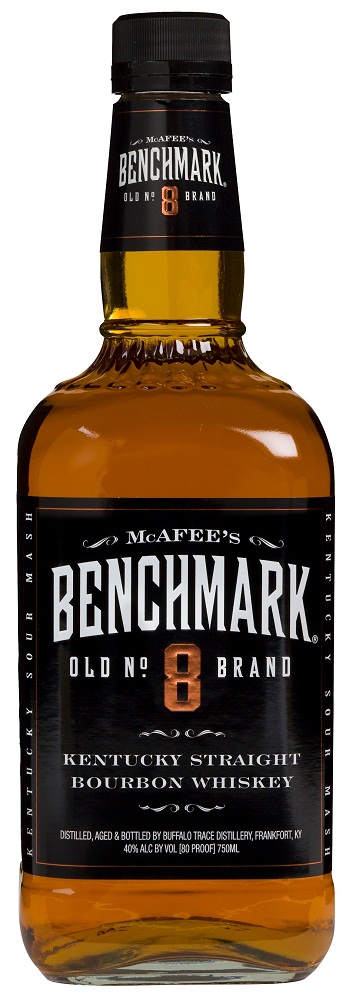
McAfee’s Benchmark, Old No. 8

Maker: Buffalo Trace, Frankfort, Kentucky, USA

Age: NAS (4 y/o?)

Style: High-corn bourbon

Proof: 80 (40% ABV)

Appearance: Light copper with thin-medium, fast legs.

Nose: Cool Ranch Doritos, caramel, alcohol

On the palate: Thin, a bit of sweetness and that weird cool ranch note again. Not much else going on.

Finish: Very light, slightly sweet with a fruitiness coming through in the end.

Mixed: When Benchmark is mixed, the results are themselves mixed. It’s invisible in manhattans, sours and cola. For whatever reason, it does pretty well in hot drinks like coffee and hot toddies. I have also found it adequate for Bourbon cream pies and soaking woodchips.

Parting words: It’s hard to believe this is the same recipe as George T. Stagg. No one is quite sure who McAfee is, but Benchmark is a relatively new brand. It was introduced in the 1960s and was produced by Seagram’s, along with its stablemate Eagle Rare, at what is now the Four Roses Distillery. When Seagram’s was dismantled in the late 1980s and early 1990s, Benchmark and Eagle Rare both came into the possession of Sazerac Co., present owner of Buffalo Trace Distillery. They are both currently made in there. Benchmark has always been lower-shelf bourbon, but Saz did experiment with a Single Barrel version which was actually quite good. It’s no longer available but still lingers on shelves (including one of mine) around the country.

Benchmark does what it sets out to do. It is cheap, well bourbon. At under $10 for a 750 ml bottle, it’s hard to expect too much, but $2-$3 more opens up many better possibilities. Even the mediocre Ancient Age shows up better. In light of all that, I cannot recommend Benchmark.