Very Old Barton, Bottled-in-Bond

Maker: Barton-1792, Bardstown, Kentucky, USA (Sazerac)VOB BiB

Age: 6 y/o

Proof: 100 (50% ABV)

Appearance: bright copper with long, thick legs.

Nose: Alcohol, jalapeno, charred corn on the cob, caramel, a hint of tropical fruit. Water brings out more tannic oak.

On the palate: Medium bodied. Spicy but sweet, like pepper jelly. Jerk sauce, grilled polenta, old oak, alcohol.

Finish: Hot, but sweet. Caramel corn and oak. Lingers for a very long time, tingling all over the mouth.

Parting words: I love this bourbon so much, baby, that it tears me up inside. It’s perfectly balanced between fruit, spice and oak. In Kentucky its popularity is on par with Jim Beam white label and Evan Williams. That should tell you something.

It is perhaps the best bargain in American whiskey. For around $12, VOB BiB (for short) is better than most bourbons that sell for twice the price. It mixes very well, but I love drinking it neat or with a splash of water so much that I don’t mix it much. Try the 90 (crimson) or 86 proof (green) versions if you’re looking for a mixer. Older bottlings before Sazerac took over have a prominent banana flavor and aroma that I enjoyed but some others didn’t so if you come across an older bottle, be aware. But either bottling is fantastic and highly recommended.

Colorado Straight Bourbon

Maker: Peach Street Distillers, Palisade, Colorado, USAPeach Street CSB

Batch: 20

Age: 2 y/o

Proof: 92 (46% ABV)

Thanks: to the Rhoades for splitting this bottle with me.

Note: Apologies for the short review. This review was originally intended to be half of a head to head review, but I thought it would work better as a stand alone.

Appearance: Shiny new penny.

Nose: Corn syrup, bubble gum, nail polish.

On the palate: Full bodied and soft. Sweet and a little fruity. Grape bubble gum with a sharp hit of Serrano chili at the end.

Finish: Sweet and corny like a beloved uncle. The sweetness coats the mouth and lingers for a long time mingled with a little burn.

Parting words: The Colorado Straight Bourbon from Peach Street Distillers is VERY young, at just over two years old. It tastes like it too. The heavy body, corniness and fruit are all typical characteristics of young bourbons but it does show a lot of potential for long aging. Sweet, fruity stuff like this usually ages very well.

In its current state, it is high quality young bourbon. It goes down easy, as long as you don’t choke on the price. Expect to pay well over $50 per 750 ml bottle. Still, it’s good and I can’t say it isn’t. Colorado Straight Bourbon is mildly recommended.

RIP Truman Cox

Recently I, as a (part-time) whiskey blogger, have been urged to take up the banner and “give Maker’s Mark shit” for lowering the proof of their bourbon. I’m not going to do that. The decision to lower the proof of Maker’s is unfortunate and disappointing, but the level of internet outrage regarding the proof change is completely out of proportion, surpassing even the Ebay/Pappy hysteria of 2012. I have no desire to contribute to this silliness any more than I already have.

Instead, I’m going to call attention to something much  more worthy of getting upset about: The death of A. Smith Bowman Master Distiller Truman Cox.

I didn’t know Truman very well. We were Facebook friends and I only recall meeting him once in person. He was the kind of guy who would greet you with a hearty handshake and a smile. As a friend of mine said, he was above all a genuine guy. He loved his family and he seemed to enjoy life immensely.

He was also a whiskey man through and through.  His prior position was at Buffalo Trace as chief chemist. He became Master Distiller at Bowman at a crucial time, as Bowman had recently moved to a new location, had a relatively new owner, Sazerac (also owner of Buffalo Trace), and was in the midst of a profound transformation. 10 years ago, Bowman was little more than a curiosity. It was the only large-ish bourbon distillery still operating in the state of Virginia and had only one (fairly) widely distributed brand, Virginia Gentleman. It came in 80 and 90 proof expressions.

When Truman moved to Virginia, the transformation of Bowman was well underway. The 90 proof VG had been replaced by Bowman Brothers Small Batch Bourbon at 90 proof  and a 100 proof single barrel bourbon, John J. Bowman, was also introduced (review coming soon). Also made are Abraham Bowman Rye (I review the TPS barrel-stength version here) and Sunset Hills Gin. Under the brief period of Truman’s leadership the transformation of Bowman was completed, and Bowman began putting out some of the most highly regarded and sought after private bottlings of bourbons and ryes among enthusiasts. They were able to have the best of both worlds. They operated like a micro-distillery in many ways, but they were also able to draw upon the resources of a large spirits company like Sazerac and a large distillery like Buffalo Trace.

Truman was one of the brightest rising stars in the world of American whiskey and his sudden death is a great loss for the industry and bourbon drinkers alike. Here are some links:

The Spirits Business Article on Truman’s death.

Lew Bryson on Truman’s passing.

Chuck Cowdery on Truman’s death

Truman’s famous barrel dance.

Truman tasting Pappy Van Winkle 20 y/o

Truman’s autobiographical bit on the Bowman website

Members of StraightBourbon.com congratulate Truman on becoming Master Distiller

Here’s hoping he gets that bottle named after him at last.

Head to Head: A Tale of Three Old Fitz’s

As a part of our winter series on bonded spirits, in this episode we will be comparing three bottles of the same bourbon, Old Fitzgerald, Bottled-in-Bond. Two are from the same distillery (presumably). Special thanks to White Dog & Tommyboy for giving me these bottles (yes they were gifts, those guys are both outstanding individuals).

All three are 100 proof wheated straight bourbons with no age statement (NAS).

The bottles

1) 200 ml bottle with faux tax stamp, distilled & bottled at DSP KY 16 (Stitzel-Weller), Louisville, Kentucky, USAIMG_20130201_155428

2) 1 liter bottle, no tax stamp, distilled at DSP KY 16, bottled at DSP KY 24 (Glenmore) Owensboro, Kentucky, USA

3) 750 ml bottle, distilled at DSP KY 1 (Bernheim), Louisville, Kentucky, bottled at DSP KY 31, Bardstown, Kentucky (current edition)

Appearance

1) Medium copper with fairly thin legs and necklace.

2) Darker, with similar legs and necklace.

3) Same as #1 but with thicker legs

Nose

1) Alcohol, tea, tarragon, caramel corn.

2) Oak, toffee, corn chips, old wood, ancho chilies.

3) Grape bubble gum, alcohol, spearmint

On the palate

1) Full bodied and sweet. Alcohol, creamy caramel. The vegetal notes are gone.

2) Full bodied and slightly drier. Oak, toffee, Mexican chocolate.

3) Medium bodied and even drier. Dry oak, a bit of caramel corn and mint.

Finish

1) Sweet and hot. Seems to get drier as the finish goes on. A bit of oak, then fading back into caramel corn.

2) Woody. The wood lingers for a long, long time with pralines in the background.

3) Pretty hot and minty with touches of oak, eventually settling down into a caramel sweetness.

Parting words

I’ve been wanting to try this line up for a long time. A few things interesting things arose in this tasting. First was how much oakier the later Stitzel-Weller bottle was than the earlier one. The logical explanation for that would be that the bourbon going into the later one was older than that going into the earlier one. Why the maker would do that is a puzzle. Perhaps the infamous whiskey glut was reaching a climax when bottle 2 was filled? Bottles labeled with “Bottled-in-Bond” have to be filled with spirit from the same distillery and the same distilling season. So another explanation for the greater wood influence could be a series of hot summers during the aging period for that batch of whiskey.

Another interesting phenomenon was how minty bottle #3 got as the tasting went on. #1 had an herbal note at first, but that went away within a few minutes. That mint is considered one of the signature notes for the Heaven Hill stable of bourbons. Bottle#3 has convinced me that Heaven Hill, the current distiller of Old Fitzgerald, is now using its own house yeast strain in its manufacture. They are clearly not using Stitzel-Weller yeast or the “Schenley yeast” master distiller Parker Beam reported finding at DSP KY 1 when Heaven Hill took it over.

Finally, while differences certainly showed up between the three, I was surprised at how similar they all were too each other. There was none of the sweet vanilla in #1 & #2 that many of us who are accustomed  to drinking our Stitzel-Weller from bottles labeled “Van Winkle” might expect. Aside from the minty finish on bottle #3, I doubt I could distinguish any of these from each other in a blind tasting. Not to say #3 is the equal of #1 or #2; it’s not. But they are all middle to lower shelf wheated bourbons and they all perform that role well.

Old Fitzgerald, Bottled-in-Bond, whatever the distiller, is recommended.

Head to Head, White on White: Evan Williams Bottled-in-Bond vs Heaven Hill Bottled-in-Bond (White label)

1) Evan Williams, Bottled-in-Bond (white label)

2) Heaven Hill,  Bottled-in-Bond, 6 years old (white label)

Maker: Heaven Hill, Bardstown/Louisville, Kentucky, USA

Age

1) NAS (4 y/o minimum)

2) 6 y/o

Proof: 100 (50% ABV)

Nose:

1) Alcohol, roasted corn, caramels

2) Alcohol, basil, toffee, leather, corn tortilla.

On the palate:

1) Medium-bodied. Hot and sweet. Caramel and not much else, but that’s not a terrible thing.

2) Medium-bodied. Butterscotch candy, a bit of oak, peppermint.

Finish

1) Alcohol, corn syrup, lingers for a little while and then fades.

2) Heat, a little corn, wood, tarragon.

Mixed:

1) OK. Not good in a whiskey sour. Clashes with the lemon in a very unpleasant way. Does very well in a Manhattan if good bitters and a good vermouth are used.  Serviceable in an old fashioned and in Coke.

2) Does well in all applications. The sour has a nice whiskey muddiness but doesn’t clash with the lemon juice. The Manhattan is good, but the herbal notes in the HH throw it slightly off balance. Does very well in an old fashioned and in Coke.

Parting words: These are both excellent value bourbons from, yes you guessed it, Heaven Hill. It’s something of a specialty of theirs. Evan Williams BiB is new  to Michigan. I had never tried it before and while it didn’t blow me away it certainly met expectations. As much as I appreciate the higher proof and enjoy the BiB style, I almost think I enjoy the standard Evan Williams a bit more. Seems like it has older whiskey in the mix that the BiB doesn’t because of the requirements for BiBs. At any rate, this is still a good value. Evan Williams BiB is recommended.

The Heaven Hill line is sold primary in the American South, but we do get one wretched expression here in Michigan, the 80 proof Old Heaven Hill (gold label). I wouldn’t use that to clean my drain. Heaven Hill BiB is infinately better. It is in the classic Heaven Hill style. The yeast and corn are the stars here. The yeast provides the trademark mint/eucalyptus (and tarragon and basil to my palate) flavors with the rye riding shortgun. The corn brings the sweet caramel out from the wood. This is not one of the top 5 whiskeys I have ever had, but it stands alongside Very Old Barton BiB one of the best bourbon values, period. To sum up, I will quote my friend and bourbon connoisseur Cliff. Upon tasting Heaven Hill white label at the Kentucky Bourbon Festival last fall he remarked, “This is good bourbon. This is good bourbon. This is solid bourbon!” Heaven Hill BiB, 6 y/o (white label) is highly recommended.

Col. E.H. Taylor, Warehouse C, Tornado Surviving

Maker: Buffalo Trace, Frankfort, Kentucky, USA (Sazerac)taylor tornado

Age: NAS

Proof: 100 (Bottled in Bond, 50% ABV)

Appearance: Dark copper

Nose: Caramel, tarragon, almond extract, oak, alcohol

On the palate: Thick and full-bodied. Sweet and luscious, Marshmallows, caramel brownies. With water amaretto, and a hint of spearmint come out.

Finish: Fairly hot, but sweet and pleasant. Intense for a fairly long time.

Parting words: This is another in the already crowded field of Buffalo Trace Col. Taylor releases and it is probably the most popular of the bourbon releases. The “tornado surviving” aspect of it adds some interest (warehouse C was damaged by a tornado a few years back)and I will say that it is much more rounded and complex than the first edition, the old-fashioned sour mash. It is a very much in the BT house style and it is a very good bourbon, embodying the best aspects of the #1 bourbon mashbill.

The problem with the entire Col. Taylor line is the price. Sure it’s easier to find than the Antique collection, but it’s hard to justify paying close to those prices for bourbons without age statements at 100 proof. I can’t give it a non-recomendation because it’s simply very tasty. I can’t summon much enthusiasm for it, though, since it costs more than something like this should on paper. At $20 cheaper, this would be highly recommended. As it is, Col. Taylor Tornado Surviving edition is still recommended.

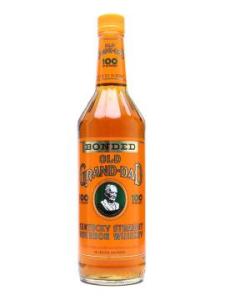
Old Grand-Dad, Bottled-in-Bond

Maker: Jim Beam, Clermont, Kentucky, USAold-grand-dad-bonded

Style: High rye bourbon

Age: NAS (at least 4 years old)

Proof: 100 (50% ABV)

Appearance: Copper with long sticky legs.

Nose: Caramel, butterscotch blondies fresh from the oven, alcohol, cumin.

On the palate: Medium bodied and sweet. Burnt caramel, butterscotch, clove, lavender.

Finish: Corn syrup, dark toffee, fairly hot, long and warming.

Parting words: Old Grand-dad is an old brand, one of the classic “Olds”, the others being Crow, Taylor, Forester, Charter, Fitzgerald and a few others. It was one of the brands Beam acquired when they bought out National Distillers in 1987, the purchase which made them into a major player in the spirits world. While Olds Crow and Taylor were changed to the standard Jim Beam yeast and recipe (some might say they even “trashed” those brands), Beam continued to use the same recipe and even the same yeast strain for Old Grand-Dad. Other variables like proof off the still and into the barrel and warehousing did change though.

At any rate, Old Grand-dad’s vital statistics may have changed somewhat, but it is still one of the best bargains and best kept secrets in the bourbon world. For every poseur on a waiting list for Pappy Van Winkle there are 10 cases of Old Grand-dad being purchased and enjoyed by people who know the value of a solid, unpretentious whiskey. Old Grand-Dad BiB is recommended.

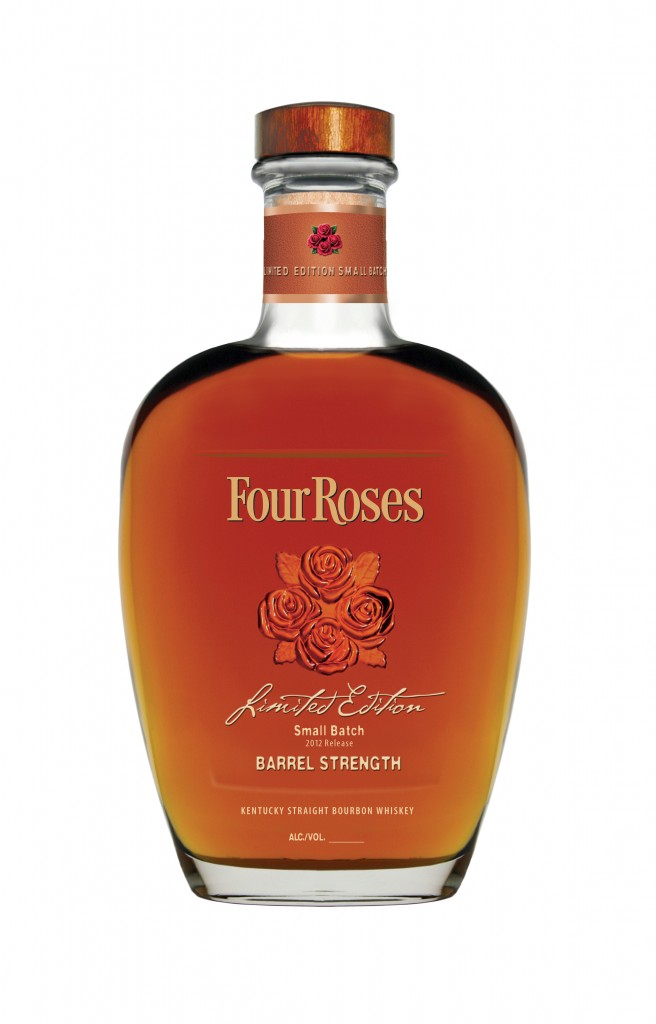
Four Roses Limited Edition Small Batch 2012

Maker: Four Roses, Lawrenceburg, Kentucky, USA (Kirin)

Age: 11 y/o

Composition: OBSV- 17 y/o & 11 y/o, OBSK 12 y/o, OESK 12 y/o

Proof: 111.4 (55.7% ABV)

Appearance: Dark copper.

Nose: Oak, caramel, toffee, tarragon clove, jalapeno. With a splash of water, bubblegum, leather, fennel, nutmeg.

On the palate: Dark caramel, taffy, aniseed candy. With water, soft and fluffy mouth feel. Caramel, oak, toffee again, allspice, table grapes.

Finish: Heat, then fruit, then oak, then a long tingle.

Parting words: If you’re expecting me to rave about how great this is, like I do with all the Four Roses annual releases, then you obviously read this blog and know me very well. Continuing the symphonic metaphor from the review of the 2011 release, this is Beethoven’s seventh symphony. If you’re not familiar with Beethoven’s 7th, it may be his best after the 9th. It has the power of the fifth symphony and the richness and texture of the sixth. The 2012 Ltd Ed Small Batch has the power of the 2010 release and the complexity and elegance of the 2011 release. The result is a flawless whiskey, like the seventh is a flawless symphony. Mariage 2009 is still the ninth, though. It transcended the genre and broke new ground that still hasn’t been completely mined.

At any rate, this is one of the best bourbons I have ever had. It’s as good as the 2012 single barrel, and is an improvement on the 2010 and 2011 Ltd Ed Small Batches. Four Roses Limited Edition Small Batch, 2012 is highly recommended.

Bowman Brothers Small Batch

Maker: A. Smith Bowman, Fredericksburg, Virginia, USA (Sazerac)

Age: NAS

Proof: 90 (45% ABV)

Note: First distilled at Buffalo Trace in Frankfort, Kentucky, then redistilled in a pot still and aged in Fredericksburg.

Appearance: Bright shiny copper with a thick, voluptuous robe.

Nose: Oak, heirloom apple, alcohol, charred sweet corn.

On the palate: Full-bodied. Caramel apple upon entry, sweet cinnamon, leather.

Finish: Light, but still apple-y. Caramel, then fading into a ticklish tingle all over the mouth and lips. Lingers for a very long tim.

Parting words: For many years, Bowman was a one-brand distillery. Virginia Gentleman was that brand and it came in 80 proof and 90 proof versions. There were other brands here and there, Bowman, Fairfax County  and others but in the years before Sazerac bought the distillery, VG was about it.

I was a pretty big fan of “The Fox” as the 90 proofer was called. The label was a scene of a fox hunt and the logo for that version had a little fox head on it. I didn’t love it because it was great bourbon. I loved it because it seemed to be the perfect summertime sipping whiskey. It was light and refreshing with some nice cinnamon notes but otherwise unassuming. When it was announced that the Fox was being discontinued (the 80 proof version is still made) and replaced with a 100 proof single barrel John J. Bowman Bourbon and a 90 proof Bowman Brothers Small Batch Bourbon, I had mixed feelings. It was great that Bowman was doing new things, but my beloved Fox would be gone!

After finishing a bottle of Bowman Brothers Small Batch, I don’t miss The Fox anymore. This has the same refreshing qualities of its ancestor, but with much more depth and weight. The sweetness, spice and fruitiness of Bowman Brothers makes it the perfect autumn sipper. Refreshing but complex enough to keep things interesting. I actually prefer it to the single barrel, at least the bottle I had of it. And in fantastic news, Bowman Brothers is now on the Michigan state liquor list which means we should be seeing it on shelves in a few months. Saints be praised! At any rate, enough fanboy gushing. Bowman Brothers Small Batch Virginia Straight Bourbon Whiskey is highly recommended.

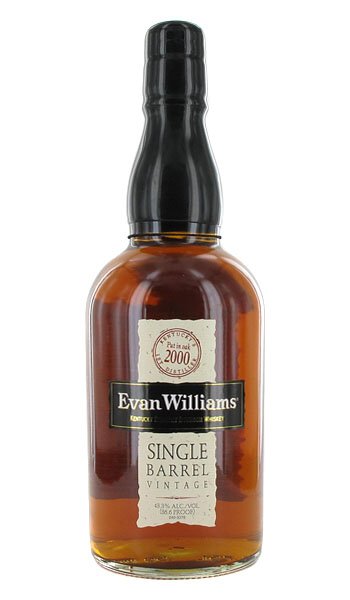
Evan Williams Single Barrel, 2000 vintage

Maker: Heaven Hill, Bardstown/Louisville, Kentucky, USA

Barrel: 440

Barreled/Bottled: 8-14-00/3-9-10

Age: 9 y/o

Proof: 86 (43% ABV)

Appearance: Dark copper with thin sticky legs.

Nose: Oak, toffee, allspice, crystallized ginger, lavender, tarragon.

On the palate: A little thin, but silky like those boxers your girlfriend got you for Christmas. Caramel, oak, sugarplum, mace, peppermint.

Finish: Dry. Oak, mint and alcohol fading into a sweet tingle.

Parting Words: The 2000 vintage of Evan Williams Single Barrel was the first to be distilled at the newly revamped Bernheim distillery in Louisville. Heaven Hill’s original distillery (and several warehouses) burnt down in 1996. The label was redesigned for the 2000 vintage so it’s very easy to distinguish between pre-Bernheim and Bernheim vintages.

Since this is a single barrel product, there will be some variation between different barrels. Heaven Hill does a very good job of picking barrels with similar profiles in a given “vintage”. Judging by barrel 440, 2000 is one of the best, on par with the pre-fire vintages 1994 & 1995 and the “in exile” vintages 1997-1999. It is perfectly balanced between oak, caramel, spice and herbal tastes and aromas. This a very enjoyable whiskey. The only knock on it is the usual knock on this series: the proof is too low. In spite of that handicap, this is still top notch.  Evan Williams Single Barrel, 2000 vintage is highly recommended.

Note: Since this is a single barrel product, there will be some variation between different barrels. That said, Heaven Hill does a very good job of picking barrels with similar profiles in a given “vintage”.