Nathaniel Rose Left Bank, 2012

Maker: Nathaniel Rose, Suttons Bay, Michigan, USA.

Grapes: Cabernet Sauvignon (85%), Merlot (12%), Cabernet Franc (3%).

Place of Origin: Abigail’s Vineyard, Domaine Berrien Estate, Lake Michigan Shore AVA, Berrien Springs, Michigan, USA.

Vintage: 2012

ABV: 13.6%

Purchased for $120 with trade discount from winery. Original price $150.

Notes: 20 months in French oak. 82 cases produced.

Reviewed as a part of The 2012 project.

Appearance: Brick red.

Nose: Fruit of the forest pie, clove, oak.

Palate: Dry, chewy, and a little tart. Blueberry, wild blackberry, leather.

Finish: Tart, but with a tannic backbone.

Parting words: This was the wine that this whole 2012 Project was all about. OK, that’s a slight exaggeration, but it’s not too far from the truth. It’s the bottle I’ve looked forward to opening the most, and it did not disappoint.

Abigail’s vineyard is named for Abigail Fricke, mother to Katie Mauer, co-founder (with husband Wally) of Domain Berrien. As long-time readers will know, Domaine Berrien is known one of the premier producers of red wine in the state of Michigan. A big part of their success is their vineyards. Those vineyards attracted the attention of young, ambitious winemaker Nathaniel Rose, who was able to get access to them to make his Right Bank and Left Bank blends. My review of the Right Bank (also a part of the 2012 project) is here.

Allow me to briefly quote myself , from this post from 2018:

“Rose is rightfully very proud of [Left and Right Bank], especially the Left Bank. He loves to tell the story of the tasting he attended with several sommeliers (including  Master somm Brett Davis), winemakers, writers and other experts in which his 2012 Left Bank Blend went up against a group of Second Growth Bordeaux and cult California Cabs, including Cardinale (~$270), Ridge Monte Bello (~$250), and Jos. Phelps Insignia (~$190), all of the 2012 vintage. Left Bank won. None of the experts could pick Left Bank out of the lineup blind and tasters could not tell the difference between it and the 2012 Cardinale Cab at all. In fact, they believed they had mistakenly been poured the same wine twice.”

The last time I talked to him, Nathaniel said that he considers this vintage of Left Bank to be the best wine he ever made. I’ll say that it’s the best Michigan Bordeaux-style red blend I’ve ever had (and I’ve had a lot of very good ones) and in the short list of best red wines I’ve ever tasted. It’s elegant, sophisticated, excellent with food, and never overly boozy or over oaked. It’s proof that with the right vintage, vineyard, and winemaker, Michigan wines can stand alongside any comparable wines on the planet.

It’s also proof that a well-made Michigan wine can grow with age. I’ve had wines (yes, even some from The Great Lakes State) that fell apart after five or more years in the bottle. The 2012 Left Bank still has everything in the right place, and I think it could taste as good for at least five more years in the right cellar.

$120 is close to twice my upper limit for wine under normal circumstances, but I didn’t regret what I spent for one second that this wine touched my lips. Everyone else I served it to loved it just as much as I did too. Nathaniel Rose Left Bank 2012 is highly recommended.

Nathaniel Rose Right Bank, 2012

Maker: Nathaniel Rose, Suttons Bay, Michigan, USA

Grapes: Merlot (50%), Cabernet Franc (50%).

Place of origin: Abagail’s Vineyard, Domaine Berrien Estate, Lake Michigan Shore AVA, Michigan, USA.

Vintage: 2012

ABV: `13.5%

Note: 20 months in oak. 140 cases produced.

Purchased for $90 (Red Wagon of Rochester Hills)

Appearance: Brick red

Nose: Black currant jelly, allspice, toasted oak, cherry juice, ancho chili.

Palate: Juicy. Mulberry, then wild blackberry, then a growing leathery grip.

Finish: Delicate. Juice, then tannin, then fades.

Parting words: The time has finally arrived! The 2012 project has begun! Our first entry is the Right Bank blend from friend-of-the-blog Nathaniel Rose. For the post on my visit to his winery back in 2018, click here. For a review of his one-off Find Wild Fruit Traminette, click here.

Right Bank is modeled on right bank red Bordeaux blends, which tend to have a larger proportion of Merlot compared to Left Bank blends, which have more Cabernet Sauvignon in the mix. Right Bank wines tend to have more Cabernet Franc as well. Nathaniel’s wines come from the best vineyards around the state, which includes those at Domaine Berrien, of course. Both the Right and Left Bank 2012 blends were made from grapes grown at Domaine Berrien.

At any rate, the hallmarks of typical Michigan Merlot/Cab Franc blends are all here: berries, oak, and spice. Time has done interesting things to it, though. It’s “darkened” the fruit, for one, moving from cherry and blueberry to black currant and blackberry. For another, it’s smoothed out the edges and created a wine that shifts more on the palate from one taste to another, rather than everything popping out at once. Right Bank takes my palate on a nice little journey from aroma to aroma and flavor to flavor. There’s nothing for my brain to disentangle. Everything reveals itself in time. A big reason for that seems to be that the acid has mellowed considerably, even compared to similar wines at seven years old.

What it lacks in tangy punch, it more than makes up in sophistication. 2012 Right Bank may not be as hard to find as one might assume, if one lives close to a Red Wagon store. Last time I went to both of them, there were 2012 Right and Left Bank blends on the shelf.

The purpose of the 2012 Project is to taste through these wines and see how they age, so price is less of a factor in my review. Nevertheless, this is a very good wine that I don’t regret paying $90 for. It’s not a weeknight pizza wine, but I didn’t buy it to be that. I think the key with many of these wines is to buy them when they’re young and less expensive, then let them hibernate for several years in a well-regulated cellar.

At any rate, Nathaniel Rose’s 2012 Right Bank is recommended.

Crown of Cab, 2017

Maker: Domaine Berrien, Berrien Springs, Michigan, USA.

Grapes: 42% Cabernet Sauvignon, 29% Cabernet Franc, 25% Merlot, 3% Petit Verdot, 1% Malbec.

Place of origin: Domaine Berrien estate, Lake Michigan Shore AVA, Michigan, USA.

Vintage: 2017

ABV: Undisclosed (table wine exception).

Purchased for $21 (Michigan by the Bottle Tasting Room, Royal Oak).

Appearance: Brick red.

Nose: Cherry juice, toasted French oak, wild blackberry.

Palate: Medium bodied. Tart and a little chewy. Tart cherry, blackberry, leather.

Finish: Chewy like a good Bordeaux.

Parting words: Crown of Cab is the crown jewel of Domaine Berrien’s cellar. It’s produced every year from a blend of red Bordeaux varieties. In odd numbered years, winemaker and co-owner Wally Maurer aims for a Left Bank Bordeaux, producing a Cab Sauv-forward blend like this one. In even numbered years, he goes for a Right Bank, Merlot & Cab Franc heavy blend.

Although Wally encourages his customers to drink his wines promptly, they are some of the most age-worthy wines produced in the Mitten State. That fact is even more astounding when one factors in how affordable they all are.

At five years old, this blend is just starting to get going. 2017 was an especially fine vintage in Michigan as well, so this wine will probably end up having a long, fulfilling life for anyone who can wait a while.

Speaking of aging, I have a fun series of reviews planned for this winter and spring that involve aging Michigan wine. Watch this space for more information soon!

At any rate, 2017 Crown of Cab is recommended for cellaring and for drinking right now!

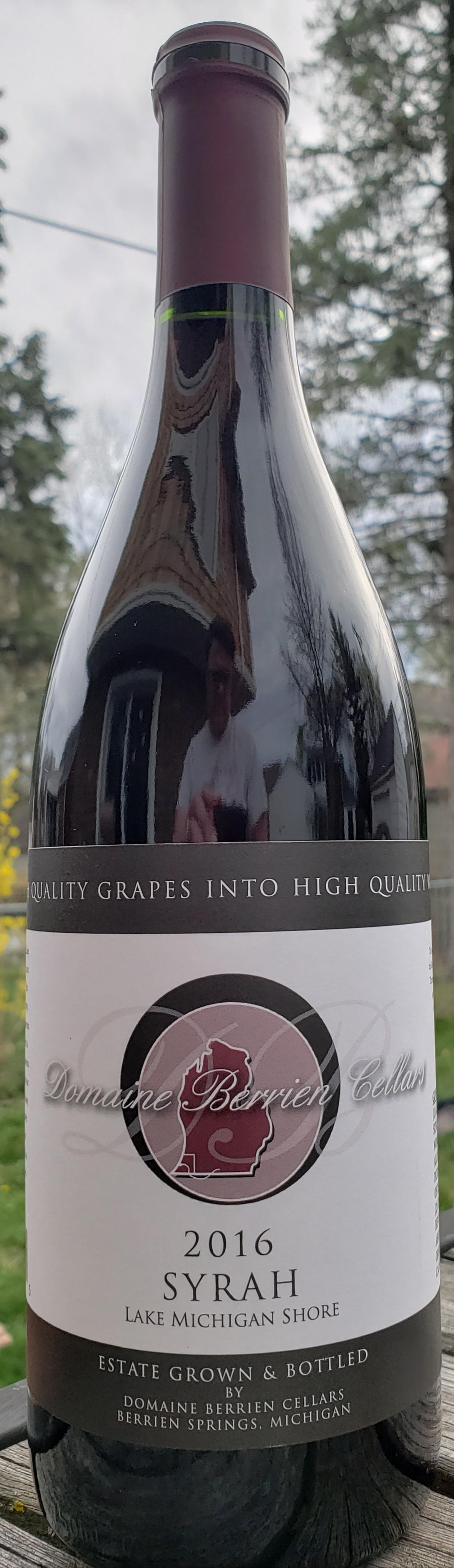
Domaine Berrien Syrah, 2016

Maker: Domaine Berrien, Berrien Springs, Michigan, USA

Grape: Syrah (at least 85%)

Place of origin: Domain Berrien estate, Lake Michigan Shore AVA, Michigan, USA (at least 85%)

Vintage: 2016

ABV: Undisclosed (“table wine”)

Purchased for $22 (Michigan by the Bottle Tasting Room)

Appearance: Dark ruby.

Nose: Oak, sautéed mushrooms, mulberry, white pepper, nutmeg.

Palate: Tart blueberry, oak, clove, mace.

Finish: Mild, but a little spice and oak on the back end.

Parting words: I reviewed the 2011 vintage of DB’s Syrah back in 2016. It had spent a little longer in the bottle than this wine, but only by a few months. 2016 was a very warm vintage so I expected the 2016 to be fruitier than the 2011 was. While it can be hard to remember what I was thinking four and a half years ago, that does not seem to be the case. The notes are similar enough to be nearly identical. The only difference seems to be the earthy mushroom aroma I got in the nose. Earthiness is a Domaine Berrien trait, so it’s perhaps a little surprising that the 2011 didn’t seem to have much in the way of earth at all.

Anyway, Syrah does well in Southwest Michigan when it can get ripe enough, and 2016 was one of those years. $22 is a steal for a relatively rare, high quality wine like this. Domaine Berrien Syrah, 2016 is recommended.

Domaine Berrien Merlot, 2014

Maker: Domaine Berrien Cellars, Berrien Springs, Michigan, USA

Grape: Merlot (at least 85%)

Place of origin: Domaine Berrien Estate, Lake Michigan Shore AVA, Michigan, USA

Vintage: 2014

ABV: Unknown

Purchased for $20 (Michigan by the Bottle, Royal Oak)

Appearance: Brick red.

Nose: Black currant, cedar, pick peppercorns, sauteed mushrooms.

Palate: Medium-bodied and juicy. Blackberries, raspberries, leather.

Finish: Oaky and tannic.

Parting words: In a vintage like 2014, it’s close to a miracle that any estate wines were produced in Michigan at all, let alone one this good! It’s pretty chewy for a Merlot, but the combination of acid and tannin makes for a pairing with beef or lamb. A little more sweetness might have made for a more balanced product but, hey, this is 2014. $20 is a bargain. 2014 Domaine Berrien Merlot is recommended.

West Coast vs North Coast: A Pinot Noir Head to Head blind tasting

Four wines: A, B, C & D. Four tasters: Josh, Liz, Amy & Pete. Notes are a combination of mine and those of the other tasters.

Makers: Revealed at the end.

Grape: Pinot Noir

Places of origin (in no particular order): Lake Michigan Shore AVA, Old Mission Peninsula AVA, Willamette Valley AVA, Oregon, Russian River Valley AVA, California.

Vintage: 2016

ABV

A: 14.5%, B: 11.6%, C: 13.1%, D:  14.3%

Price

A: $23, B: $18, C: $15, D: $14

Appearance

A: Dark ruby.

B: Light. Translucent.

C: Medium dark red.

D: Darkest. Brick red.

Nose

A: Cherry jam, plum, cedar.

B: Wild blackberry, hint of brett (fades quickly), wet earth, black pepper, cedar.

C: Mild compared to the others. Crushed strawberry, a little oak.

D: Crushed mulberry, oak, coffee, pepper.

Palate

A: Cherry juice, black pepper, smoke, almost no acid.

B: Light mouthfeel. Broken grape stem, tangy. Raspberry, toasted oak.

C: Light bodied. Strawberry, red currant, lightly acidic.

D: Black current jam, blackberry, lemon, earth.

Finish

A: A little oak, black cherry.

B: Chewy. One taster noted an unpleasant aftertaste.

C: Toasted French oak, a little fruit.

D: Light. Fruity  with a little oak and leather.

20190322_172719.jpgTHE REVEAL

A: De Loach PN, Russian River Valley AVA, Sonoma County, California.

B: Domaine Berrien PN, Martha’s & Katherine’s Vineyards, DB estate, Lake Michigan Shore AVA, Michigan.

C: Chateau Chantal PN, Old Mission Peninsula AVA, Traverse City, Michigan.

D: Kirkland Signature PN, Willamette Valley AVA, Oregon.

Parting words: I got idea for this head to head after I noticed that I had purchased a lot of 2016 Pinot Noir in the past couple months. I thought comparing an LMS Pinot to an OMP Pinot and comparing both of them to ones from Oregon and Sonoma might be a fun and educational excercise. They had to be around the same price, too, to keep us from tasting the price differences rather than the terroir and technique of the wine makers.

I know this is a Michigan wine blog, but I will say that my personal favorite was the Kirkland. It was the most balanced and was a delight to drink from beginning to end. My least was the De Loach. It tasted overripe and was nothing but sweet fruit. Of the two Michigan wines, the Chateau Chantal Pinot was the most balanced and drinkable, but it was very mild compared to the others. I’ve complained about this before. Domaine Berrien was good, but tasted a little green and unrefined compared to the others. I know from experience, though, the Wally’s wines can take a while to blossom, even in a warm vintage like 2016. Another year or two in the bottle is recommended for DB PN.

The other tasters varied in their choices, but the differences were all a matter of taste not of disagreement of quality or flaws. One taster liked the fruity sweetness of De Loach, but disliked Domaine Barrien strongly. Another found Chateau Chantal delightful, but Kirkland overbearing.

These are all good value wines. Kirkland and Chateau Chantal are recommended. Domaine Berrien is recommended with further cellaring and De Loach is mildly recommended.


Domaine Barrien Vignoles, 2015

Maker: Domaine Berrien, Berrien Springs, Michigan, USA

Grape: Vignoles (at least 85%)

Vintage: 2015

Place of origin: Lake Michigan Shore (Berrien Springs)

Style: Semi-dry

Purchased for $16 from Michigan by the Bottle, Royal Oak (Sipper Club)

Appearance: Bright gold.

Nose: Honey, camomile, lychee.

Palate: Semi-dry and medium bodied. Peach nectar (without the sweetness), mineral water, woodruff.

Finish: Strong lychee, drying.

Parting words: Vignoles is one of what I have dubbed on Twitter the “noble hybrids”, hybrid wine grape varieties that are capable of being good even when bottled as a varietal. The others on my list are Traminette, Chardonel, Vidal Blanc, Chambourcin and Baco Noir.

Vignoles is often made in a sweet style but also does well in dry and off-dry styles, as in this wine. It’s not complex, but is very pleasant with food or for Saturday afternoon sipping any time of year. 2015 Domaine Berrien Vignoles is recommended.

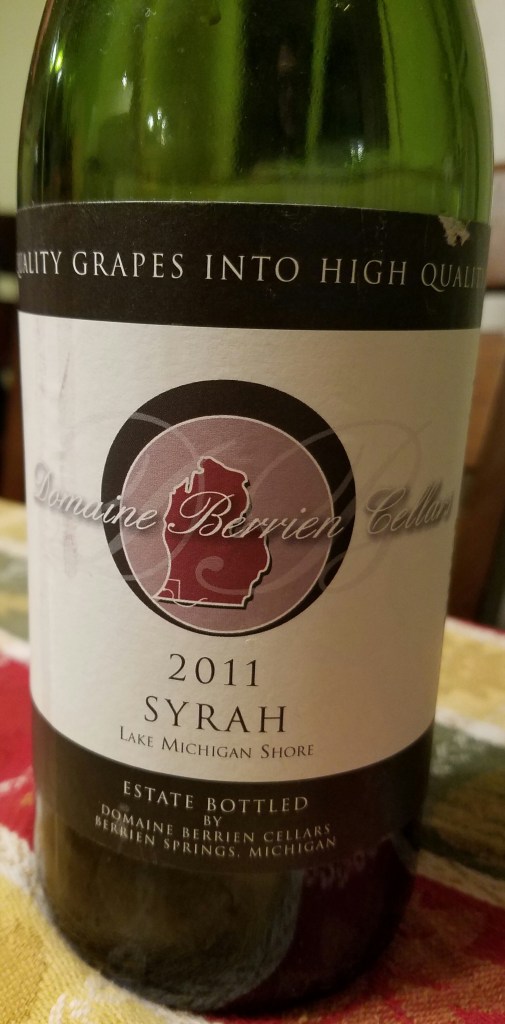
Domaine Berrien Syrah, 2011

Maker: Domaine Berrien, Berrien Springs, Michigan, USA20161112_192737.jpg

Place of origin: Domaine Berrien estate, Lake Michigan Shore AVA, Michigan, USA

ABV:

Price: Forgotten (around $20)

Appearance: Dark ruby.

Nose: Black currant jelly, oak, clove.

Palate: Medium bodied, juicy, tart cherry, then moving to bitter oak.

Finish: Chewy and drying but with a squirt of blackberry juice.

Parting words: Syrah/Shiraz is a grape most closely associated with the Northern Rhone Valley and Australia. Southwest Michigan’s climate is closer to the Northern Rhone’s but the temperature is more extreme on the top and bottom ends, like that of the rest of the northeastern of the US. Domaine Berrien’s Syrah is in the cool climate category, but the high end temps push it toward the fruitier warm climate style.

This is one of the wines that I brought over from old Sipology HQ’s “cellar” in the corner of the laundry room to my current cellar. I’m glad I let it sit as long as I did, because it’s blossomed into a wonderful wine (although it had a good head start). It’s fruity but spicy and structured and goes well with food (like turkey) but just as good without. Syrah isn’t one of Michigan’s marquee grapes, but DB does a wonderful job with it. This is a wine worth seeking out. 2011 Domaine Berrien Syrah is recommended.


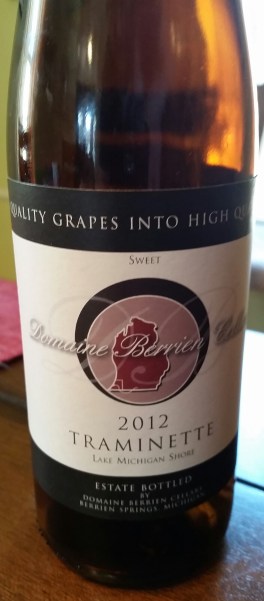
Domaine Berrien Sweet Traminette, 2012

Maker: Domaine Berrien, Berrien Springs, Michigan, USA20160415_171526-1.jpg

Place of Origin: Domaine Berrien Estate, Lake Michigan Shore AVA, Michigan, USA

ABV: Unknown (2013 vintage was 13.2%)

Price: $12 (Website price for 2013 vintage)

Appearance: Medium gold with thick, widely spaced legs.

Nose: Canned pear, roasted almonds, lemon verbena, nutmeg.

Palate- Full bodied and luscious. A little oxidation evident. Golden Delicious apple, winter savory, ginger,  angelica.

Finish: White pepper, clove. Fades but leaves a subtle sweetness lingering behind.

Parting words: Domaine Berrien is best known for their reds but they produce some very good whites, like this one too. Traminette is one of the few hybrids grown on their estates, but it’s a good choice given the warmer climate and lower latitude of Lake Michigan Shore AVA. It’s a fairly new hybrid created in 1965 as a cross of Gewurztraminer with a Seyve hybrid at the University of Illinois. It’s been named the signature grape of Indiana as well.

This is described as a “German style” Traminette, which is odd since the grape is not widely grown in Germany, to my knowledge anyway. I think what they mean is that they were aiming for a wine in the style of late harvest Riesling or Gewurz from Germany. It certainly has the mouthfeel and many of the aromas of an aged Spatlese or Auslese. I almost found myself wishing that I had let it sit for another year or two, but I’m also afraid that the slight mustiness on the nose might erupt into full-blown mildew. Maybe I was right to open it when I did, then.

Anyway, Domaine Berrien Sweet Traminette, 2012 is recommended. It may be hard to find at this point, but the 2013 is kicking around.

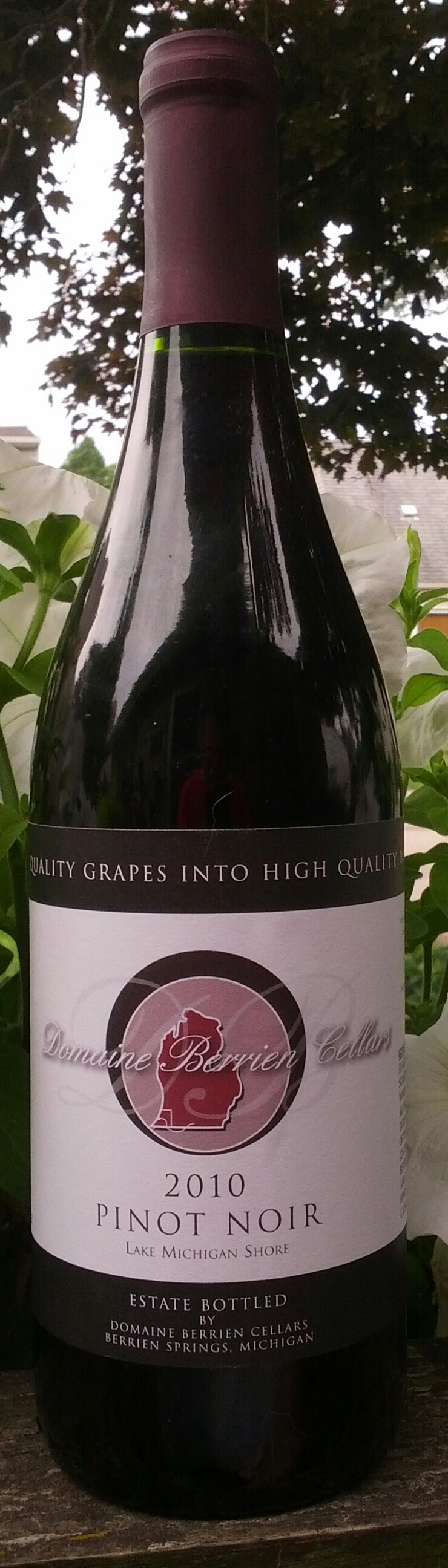
Domaine Berrien Pinot Noir

Maker: Domaine Berrien, Berrien Springs, Michigan, USADB 2010 Pinot

Place of origin: Lake Michigan Shore AVA, Michigan, USA (Estate bottled)

Vintage: 2010

ABV: 12.8%

Price: $15.50 (Michigan by the Bottle tasting room)

Appearance: Quite dark for a pinot. Brick red with long thick legs.

Nose: Earth, red raspberry, cedar.

Palate: Mixed berry jam, toasted oak, wild blackberry, stewed rhubarb, pinch of clove, alcohol.

Finish: Chewy. Oak, alcohol, fruit of the forest, sautéed button mushrooms.

Parting words: Domaine Berrien was one of the first Michigan wineries to take the possibilities of Michigan reds seriously. Their care shows in impressive wines like this.

DB’s 2010 Pinot Noir is complex without being busy and gutsy without being belligerent. Its balance, intergration and complexity are head and shoulders above other Michigan Pinots, even the good ones. I’ve had Michigan Pinots from this vintage from Northern Michigan that had already fallen apart in early 2014, but this one is still going strong.

It did well a meal of pulled pork but it did clash a little with the tangy, mustardy BBQ sauce I used. Otherwise, it seems like it would go very well with turkey, pork, duck or flavorful chicken dishes.

At only $15.50, it punches well above its class. I’ll be seeking out the 2011 and 2012 vintages for sure. Domaine Berrien’s 2010 Pinot Noir is highly recommended.