
I took a needed week off last week but I have a lot of fun reviews and other stuff on deck for this week. 3 whiskey head-to-heads, a new feature called “my two ounces” and maybe some wine reviews. Pax.
Now Drinking
Rock Stream Dry Cayuga White
Maker: Rock Stream Vineyards, Rock Stream, New York
Grape: Cayuga (hybrid)
ABV: 11%
Region: Seneca Lake AVA (Finger Lakes)
Vintage: 2008
Picked this wine up on our trip to the Finger Lakes in the summer of 2009. I don’t really remember much about this particular winery. It was one of the last ones we visited. If I recall correctly they had a number of pretty good dessert wines. We purchased a late harvest Traminette, that was pretty good.
Color: Very light. Very pale gold. A bit lively, too.
Nose: Dry but fruity. Melon, pear.
On the Palate: Dry but tart and crisp. Grapefruit, Pineapple.
Finish: Tart. Lingers in the cheeks for a long time.
Parting Words: I don’t remember how much this wine cost, but it comes off as kind of a poor man’s NZ Sauvignon Blanc. It’s pretty good, really, but not anything that is going to change my life. It would go well with seafood or herbal chicken dishes, I think. Nice table wine.
Now Drinking
Having done a head to head with this one, I thought it was time to give it its own review.
The Macallan 12 y/o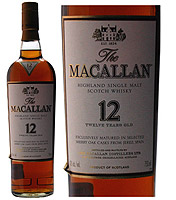
ABV: 43%
Maker: Macallan, Craigellachie, Banffshire (The Edrington Group)
Color: Dark amber, suspiciously so. If I had to guess, I would say that caramel coloring was probably added
Nose: Malty, sweet, alcohol, creamy toffee
Palate: A note-for-note remake of the nose.. Malty, sweet, toffee, a little bit of wood. A little bit of licorice on the tail end.
Finish: Sweet, with a bit of wood, and heirloom apple. Yes, there is a difference. It fades into a gentle sweetness with a touch of wood.
Parting Words: The Macallan is a fine, stately whisky. It’s easy to drink, but it has enough going on to keep things interesting, at least for a while. It’s lightweight for my taste, but makes a nice pre-dinner sip.
Review in Brief
Dr. Konstantin Frank Semi-Dry Riesling 2007
Region: Finger Lakes, New York (Keuka Lake).
ABV: 11.5% ABV
Color: butter
Nose: pear, peach, perfumed
Palate: Mandarin Orange, peaches, sweet, medium body
Finish: very peach then fading to Bartlett pear, then light and sweet
Parting Words: What a great wine! this is what Riesling should be.
Head to Head #3: Oh Deer: Glenfiddich
Glenfiddich (actual font) is the best selling single malt Scotch in the world. Along with Balvenie, Mortlach, and several others, Glenfiddich is located in Dufftown in Moray, Scotland. Its name means “valley of the deer” literally, but a river called Fiddich (a tributary of the Spey) runs through Dufftown as well. At any rate, this whole range is easy to find and popular. So, making use of a set of three minis, here are my notes on Glenfiddich at 12, 15, and 18 years of age.
1) 12
2) 15
3) 18
Color
1) Light, middle-aged Chardonnay
2) Slightly darker, new copper penny
3) Slightly darker than that, but barely
Nose
1) Malt, lemonade, alcohol
2) Caramel, lemon curd
3) Lemon meringue, caramel, wood
On the Palate
1) Lemonheads, burn
2) Rich, caramel sweetness
3) Lemon Poppy seed muffins, thick, rich caramel
Finish
1) Lightly sweet, then surprisingly spicy
2) Thick and sweet, caramel, then long, slow burn
3) Creamy, sweet, soft
Parting Words
1) Pleasant summer pour. Will work at the bar in a pinch.
2) More depth, but the distillery character still comes through.
3) Almost indistinguishable from the 15, but with slightly more depth and sweetness. Not sure if it would be worth the extra money to jump up to the 18.
I gotta say, I prefered the Balvenie line overall and I would rank any of those over any of these. Still, my issue with Glenfiddich is a matter of taste, not quality. It’s just not my cup of tea.
Head to Head Tasting #2: Bals Out
Having done a horizontal tasting of 12 y/o Speyside (and one Japanese) malts a couple days ago, today I’m doing a vertical one. The distillery today is Balvenie, and I will be sampling three of their expressions. These head to head tasting are, by their nature, quick and impressionistic, but I find that rattling off impressions keeps me from overthinking.
1) Doublewood (12 y/o)
2) Single Barrel (15 y/o)
3) Portwood (21 y/o)
Color
1) Light amber
2) Shiny Copper
3) Slightly darker, copper penny
Nose
1) Fresh, malty, buttermilk, crème brulee, vanilla
2) Rich caramel, toffee
3) Strawberry, Valencia orange, fruit punch
Palate
1) Sweet, bourbon, hint of spice, heavy cream
2) Saltwater taffy, spice, toffee, bigger bourbon influence, butter cream icing
3) Strawberry shortcake
Finish
1) Light, wood, sweet, vanilla bean, then burn
2) Rich, wood, vanilla, long and slow, clings to the tongue
3) Very long, woody and slightly fruity finish.
Parting Words
1) Comparatively dry, but still rich, and creamy. The vanilla and bourbon influences are balanced with a stately sweetness
2) Rich, sweet and carmely. Big, bold after dinner malt
3) Bigger, bolder after dinner malt. Practically a dessert drink, like the former occupant of its cask. The port and wood overwhelm the malt. The dry fruit, coming through strongly as strawberry right now, is interesting, but could get old pretty quick. Still, in moderation, a very enjoyable dram.
Head to Head Tasting #1: Kyoto-on-Spey
Having recently acquired two three-bottle sets of mini-bottles from Balvenie and Glenfiddich respectively, and a half-bottle of The Macallan 12, I’m going to sqeeze as many tastings out of these Speyside puppies as I can. I also recently acquired a bottle of Suntory’s Yamazaki 12 y/o from a friend who was having a clear-out. So without further ado…
1) The Macalllan 12
2) Glenfiddich 12
3) The Balvenie Double Wood (12 y/o)
4) Yamazaki 12
Nose:
1) Malt, sherry, a bit of wood
2) Big malt, sharp, pear, bit of wood
3) Robust, honey, cream, bit of sherry
4) Dark caramel, bourbon, alcohol
On the Palate:
1) Honey, butterscotch, wood, bit of burn
2) Light, sweet, tiny bit of wood, granny smith apple
3) Thick, sweet, rich, light caramel, ripe peach
4) Rich caramel, wood
Finish:
1) Creamy sherry, burn, long and slow
2) Sharp, burn, tiny tiny bit of wood, surprisingly long
3) Woody, burn, fairly long, a bit of creamy sherry
4) Sweet, dry, wood, fades fairly fast
Parting words:
1) Solid, well crafted, enjoyable
2) Bright, tart, but not shallow
3) Beefy, but subtle with hidden depths
4) Nice everyday sipper, but nothing too life-changing
Now Drinking
Thirsty Owl Vidal Blanc
Grape: Vidal Blanc
Vintage: 2008
Region: Finger Lakes AVA
ABV: 11%
Maker: Thirsty Owl Wine Co., Ovid, New York (Cayuga Lake, west bank)
Vidal Blanc is a Euro-American hybrid grape variety developed by a man named Jean Louis Vidal. One of its parents was Ugni Blanc, the grape used to make Cognac and Armagnac. Vidal apparently thought his cross would be useful in brandy production, but it has proven to be most useful in the production of ice wine.
This is not an ice wine, however. But it’s almost like a watered down one, in a very good way. The nose is light, slightly dry, with a hint of pineapple. The pineapple sneaks up on the palate after it enters the mouth. It blossoms into a big slice of fresh, ripe pineapple and fades into a rich, sweet finish. It’s a surprisingly good wine, one worth seeking out. I don’t know if this owl flys outside of New York, but if you see it, catch it.
Now Drinking
Old Forester Birthday Bourbon 2010
Age: 12 y/o
Proof: 95 (42.5%)
Maker: Brown-Forman, Louisville/Shively, Kentucky
Not to toot my own horn (though I would if I could), but to my knowledge, this is the first review of the latest edition of Old Forester Birthday Bourbon online.
The 2010 is vastly different from the 2009 (see above). It’s a cinnamon bomb. The nose is bright and spicy, like opening up a new jar of high-quality, sweet cinnamon and getting a big schnozz-ful of the stuff. A bit of dark chocolate lurks in the shadows, just enough to balance the bright spice with an earthy bitterness.
For 95 proof, it slides over the lips mighty easy. After a second or two of light sweetness, the cinnamon bomb detonates. It reminds me of how I used to stuff my mouth full of red-hot candies as a child and feel the burn engulf my tongue. The fire settles in but lets a little wood sneak into the party.
The finish is long and as big as the whiskey itself. The burn hangs on as long as possible and the wood influence grows slightly but never takes over. After what seems like an hour, the finish fades into a slightly spicey sweetness that doesn’t want to leave.
This is a remarkable bourbon. It’s unlike any other Birthday Bourbon I’ve tasted, or anything else I’ve had. I bought two bottles today. I may have to buy a case.
Now Drinking
Black Star Farms Carbonated Apple Hard Cider
Maker: Black Star Farms Winery (Traverse City, Michigan)
ABV: 7%
Is there anything Black Star Farms doesn’t do well? One may well ask. At the most recent Michigan Wine & Spirits competition they did fairly well: Best of Class Dry White: Black Star Farms – 2009 Arcturos Pinot Gris, Best of Class Semi-Dry White: Black Star Farms – 2009 Arcturos Riesling, Best of Class Sparkling Wine: Black Star Farms – 2008 Sparkling Wine, Double Gold: 2007 A Capella Pinot Noir. Not too shabby. They also have an aged apple brandy and numerous eaux de vie. Rumor has it that a 10 year old apple brandy will be hitting the shelves of their Traverse City tasting room soon. I’ve put my best dusty-hunting friends on the case.
Anyway, this apple cider, presumably the younger cousin to their brandies, is not exception. It is in the dry-ish British style (of the mass-produced ones we get here, anyway) but doesn’t go off the edge like the one I reviewed from Motor City.
The nose is light, almost like a Riesling, sweet apple blossoms and a bit of citrus. In the mouth, it’s all crisp, early season golden skinned “eating” apples, like Golden Delicious or Ginger Gold. The sweetness then comes in, but fades away quickly. The finish is light and sweet. This is one of the best ciders I’ve had since I’ve started this blog.
 Sipology