An Evening with Dave Pickerell

In lieu of a whiskey review this Friday, I’d like to share some of the results of a fun outing with a friend to hear a veteran of the American whiskey industry.

Wednesday afternoon I received a text message from Amy of Bonne Amie Knits reminding me that Dave Pickerell (Maker’s Mark Master Distiller for 14 years) was making an appearance at The Sugar House, a cocktail bar in Detroit, that evening. If I ever knew about it I had completely forgotten, so I stuffed my mouth full of my dinner and we made our way down as soon as we could. The drink special that night was $3 shots of Maker’s and $4 shots of Maker’s 46 which was a damn good deal so I had a few.

Dave spoke and took questions for about two hours. He told stories and talked about his time at Maker’s and his time since 2008 acting as a consultant and Master Distiller at Whistle Pig, George Washington’s Distillery at Mt. Vernon and Hillrock Estate. Amy scored points when she asked what it was like working with George Washington. I tried to get Dave to reveal the source of WhistlePig but he didn’t fall for it (I’m still going with Alberta). I also asked him if he had thoughts on the Maker’s Mark proof reduction fiasco, and he did. He was in town doing some work with the Two James distillery in the Corktown area of Detroit (near where Tiger Stadium used to be, and a few blocks from the bar).

Instead of trying to recount everything he said as he said it, here are some highlights by topic:

Miscellaneous Information

-Dave won the Kentucky Bourbon Festival cocktail contest three years in a row, but the first cocktail he invented turned out to be an old cocktail that already had its own name, The Ward Eight. The third one he invented was supposed to be a cross between an Old Fashioned and a Manhattan. When Gary Regan tasted it, he said it wasn’t an old fashioned or a Manhattan but it was good anyway. He named it the Pickerell, but Dave had nothing to do with that since he doesn’t like to put his name on things.

-The bulk whiskey market (excess aged whiskey distillers will sell when they need to have it) is the tightest he’s even seen. The oldest whiskey available on the bulk/spot market is 15 months old. Basically, there is none to be had.

-Dave used to be a big stickler on drinking his bourbon neat but while working at Maker’s he came to the conclusion nobody has the right to tell anybody how they should drink their bourbon.

-He slowly sipped on a Maker’s sour while he was talking.

Microdistilling

-Dave on microdistillers making whiskey: “Eventually, it’s going to have to taste good.”

-Dave thinks the microdistillers are driving innovation right now. This is because they aren’t as constrained by the need to sell thousands of cases of a product to make it successful like the big producers are. For many micros, 100 cases sold of any product counts as a success. This means the costs of experimentation are much lower.

-He had never worked with rye before working at Mt. Vernon. The first time he made a batch there he noticed a little foam was forming on top while the rye was fermenting. So he put a sheet of plastic over the top of the fermenter and put a couple pieces of wood and a brick on top before he left the distillery for the day. The next morning when he walked into the room where the fermenter was the brick and wood were on the floor as was a two foot layer of foam. They lost that batch.

-The mix of whiskey from all the Kentucky distilleries Mt. Vernon released tasted terrible.

-The Mt. Vernon Rye currently being released is distilled at Hillrock in New York because it’s easier to do it in a more modern facility. The working conditions are pretty primitive at Mt. Vernon.

-Hillrock is currently making the world’s first ever Solera aged bourbon.

Other Master Distillers

-He didn’t know Elmer T. Lee well but said he was a gentleman and active at BT practically until the day he died. He had a greater impact on the bourbon industry than anybody else in his lifetime.

-He thinks BT should change the proof of ETL to 93 in honor of Elmer’s age when he passed away.

-Jimmy Russell is a good friend of Dave’s and has been a mentor to him throughout his career.

-Jimmy taught him the importance of pausing for a photo op (see below).

-Once Dave and Jimmy were at tasting. A guy got up and made a big show of swirling his bourbon in his glass, sipping it slowly and announcing that he tasted blackberries, winter fruit, leather and many other obscure flavors. Jimmy leaned over to Dave and said, “I don’t know about you, but I don’t put any of that shit in my bourbon!” Both then starting laughing hysterically, disrupting the tasting. [This story has made the rounds for a long time]

Maker’s Mark

-Bill Samuels Jr. is one of the most brilliant men he’s ever met.

-Bill knows next to nothing about making bourbon but is a masterful marketer.

-Before Dave worked at Maker’s he worked at an engineering firm that did some work for Maker’s. Dave didn’t like the way the way the company handled the business with Maker’s and told Maker’s about what happened. Later when Dave was in Loretto, Bill came up to him and said, “Did you know we are currently looking for a new Master Distiller?” Dave said, “No.” Bill said, “We are plum out of candidates and we didn’t like any of them. We like you, though. The job is yours if you want it.” He accepted and the next day told his former boss he was quitting and also that Maker’s was no longer going to be using that company’s services.

-He said the MM shortage is very real. He thinks the proof change was the right move to make and he is disappointed that they caved to public pressure. In his opinion the problem is not capacity but the surprising growth of the brand in the midst of a deep recession. Nobody expected that and so nobody planned on increasing production to meet that growth.

-He predicts that since the proof change was rolled back there will be “rolling shortages” of MM around the world.


After the formal talk was over he milled around for a while, chatting with the bar patrons and a couple old friends who showed up from Allied Domecq, former owner of Maker’s Mark (the company was acquired by Pernod-Ricard in 2005 with Maker’s being sold off to Beam).

Amy and I stayed at the bar and had a nice chat with Pete from Two James. They have a lot of exciting things planned including a vodka, gin and a Madeira finished bourbon. After we were done at the bar we took a stroll down Michigan Avenue and took a look at Two James.

Some photos from the evening:

Dave and his tattoo of George Washington's still
Dave and his tattoo of George Washington’s still
Dave and me. (Photo by Amy)
Two James at dusk.
Two James at dusk.

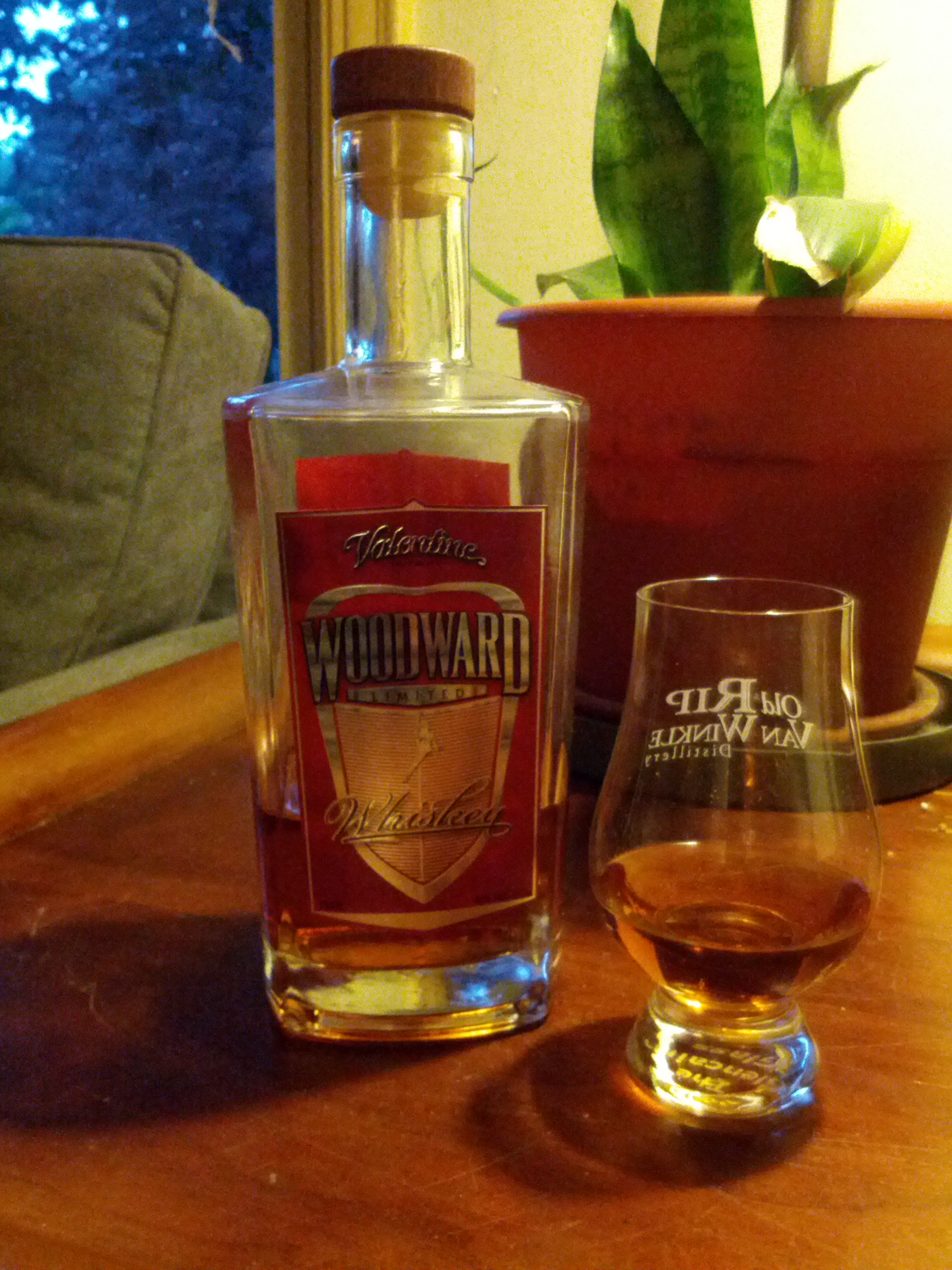
Woodward Limited Whiskey

Maker: Valentine Distilling, Ferndale, Michigan.Woodward Ltd

Style: Maple flavored bourbon

Age: NAS (about 4 y/o)

Proof: 88

Appearance: Dark copper with long thin legs.

Nose: Alcohol, maple wood, leather.

On the palate: Sweet but not cloying. Maple syrup (the real stuff), caramel, wood, alcohol.

Finish: Pleasant and drying. Touches of maple linger on as the wood (mostly maple) takes hold and then gently fades away.

Parting words: I’ve been sitting on this review for a while now because of the video reviews but also because I had a lot of questions about Valentine’s operation. Since it’s only a few miles from Sipology Blog HQ, I decided to check the place out for myself before finishing my review. I’m glad I did.

It is distilled and aged in Ferndale in a small building that also serves as tasting room and a cocktail bar. They also make a vodka, an elderflower flavored vodka, Liberator Gin, and a barrel-aged version of Liberator Gin (review coming soon). We also had a sample of their bourbon (presumably with the same mashbill as Woodward Limited) which they sell right out of the barrel at barrel proof from behind the bar. It comes it at 114° and is quite good for its age. The bartender said they also sell it by the barrel which prompted several questions from my friend and me about distribution and the three tier system, none of which the bartender was capable of answering. So if you would like the try the bourbon, I would suggest stopping by the distillery yourself.

At any rate, Woodward Limited Whiskey (named after Woodward Avenue, the historic Michigan highway that runs from downtown Detroit through Ferndale and Royal Oak and on to Pontiac) is a winner. The maple flavoring (syrup according to our bartender) doesn’t overwhelm, but it balances out the youthful edges of the whiskey nicely creating a pleasant after supper sipping whiskey. Where it excels is in cocktails. It makes a very good Manhattan and fantastic Old Fashioneds and Boulevardiers. I’m sure it would work very well in other cocktails as well. As for the price, it’s reasonable for a microdistilled whiskey at just under $40. Woodward Limited Whiskey is recommended.

Video Review: Eagle Rare Head to Head

Our Walloon Lake tasting panel returns with a head to head, or tête-à-tête as it were, tasting of Eagle Rare 101 and Eagle Rare Single Barrel (Kahn’s Fine Wine selection). I was going to edit this video down a little but I decided to go with the extended director’s cut. We had a lot of fun making these review, and I hope you enjoy it! Cheers!


RIP Elmer T. Lee, 1919-2013

I would be remiss if I didn’t take a moment to mention the passing of Buffalo Trace Master Distiller Emeritus Elmer T. Lee on July 16, 2013. He was the MD there through some of the darkest days of the American whiskey industry when consumption was plummeting and the structure of industry was changing rapidly. What’s now called Buffalo Trace was right in the middle of all of that but the distillery emerged from that era as a leader and an innovator. Elmer T. Lee was one of the people responsible for that. Up until his death he was still picking barrels that would go into the single barrel bourbon that bares his name (and is one of the best values in the single barrel bourbon category).

While the early  death of Truman Cox was shocking and tragic, the death of Elmer T. Lee at 93 years of age is an occasion for celebrating a full life well-lived. Here are a few links pertaining to Elmer, his life and work:

A copy of the letter sent from Sazerac president Mark Brown announcing Elmer’s death (Posted on Lew Bryson’s Seen Through a Glass blog): http://lewbryson.blogspot.com/2013/07/rip-elmer-t-lee.html

An old interview with Elmer in which he talks a bit about himself and the runs through the entire bourbon making process (38 minutes).

2008 interview of Elmer for the Buffalo Trace Oral History project (52 minutes)

http://www.nunncenter.org/buffalotrace/2010/08/31/elmer-t-lee/

He will be greatly missed but as long as the bourbon continues to flow his legacy will too.

Jim Beam Distillers Series

Maker: Jim Beam, Clermont, Kentucky, USA (Beam Inc.)JBDS

Age: 7 y/o

Proof: 90 (45% ABV)

Appearance: Medium copper with nice thick legs.

Nose: Alcohol, caramel, oak, tan roux, sourdough starter, lavender.

On the palate: Full bodied and slighly sour. Heat, cola, caramel, vanilla, yeast.

Finish: Heat building into more heat. In the background some corn syrup, licorice, and a touch of wood.

Parting words: This is officially a dusty now, meaning it is no longer being produced and is only available as old stock sitting on shelves. When it was released a few years ago it wasn’t met with much hoopla by the bourbon enthusiast community. Jim Beam is not a popular line with many enthusiasts and there has been a seven year old version of the white label Jim Beam available in Kentucky for many years. So many were underwhelmed or simply ignored this bottle. One bourbon writer said the only reason to buy it would be for the fine  picture of Fred Noe on the label, and he already has a few of those. I disagree.

I think for what it is, Distillers Series is a fine bourbon. While the seven year old white label is bottled at 80 proof (and the eight year old black label at 86), DS was bottled at 90 proof and was available all over. To me, it tastes how the standard white label should taste. It’s not subtle or particularly complex, but it’s a good sipping bourbon for the beginning of the evening or while tending the grill or smoker. I think it’s worth seeking out if you enjoy that sort of thing. Jim Beam Distiller’s Series is recommended.

Four Roses Limited Edition Single Barrel, 2013

Maker: Four Roses, Lawrenceburg, Kentucky, USA. (Kirin)4R SB 2013

Style: High rye bourbon

Recipe: OBSK

Age: 13 y/o

Warehouse/Barrel No.: BS/3-3Q

Proof: 121 (60.5% ABV)

Appearance: Dark copper with some necklacing.

Nose: Alcohol, bubble gum, leather, rose petals, lavender. Not too different with water, a bit clearer. On the palate: Medium bodied. Burn, candy, caramel, roses. With water it becomes big and sweet. Cotton candy, rose hips, oak, grape soda.

Finish: Evaporates quickly off the tongue leaving a soft leathery flavor, some fruit punch and a lot of burn. Fruitier and more delicate with water.

Parting Words: About twelve hours after writing up these notes (right after I opened the bottle) I did a comparison tasting against the 2012, of which I have several bottles. The 2012 was a different mashbill but the same yeast strain and a year or so younger. There are clear similarities, but big differences as well. The 2012 I tasted (52.6% ABV, SN/81-3i) was much more balanced and desserty (if that’s a word) with loads of caramel and similar flavors. The comparison also brought out a capsaicin note in the 2013, similar to ghost peppers or habaneros. I didn’t think the 2013 fares well in comparison to the 2012, but I do like it better than the 2011 I had and the 2010 100th anniversary bottling (cue Whiskey Wonka). The 120th Anniversary Single Barrel (2008) is also OBSK but it’s been so long since I’ve had it that I don’t feel comfortable comparing the two.

In summary, the 2013 Four Roses Limited Edition Single Barrel is a very good bourbon but not as good as some of its predecessors. Not counting the 40th (2007) and 120th anniversary for reasons of memory (see above), I would rank 2013 squarely in the middle of the pack of Four Roses limited edition single barrel releases. Being in the middle of that pack is better than being at the top of any other pack, though. The Michigan state minimum of $80 is high for a bourbon of its age but given the high proof, unchillfiltering and the unmatched quality of Four Roses across the board, it’s worth it. Four Roses Limited Edition Single Barrel, 2013 is recommended.

Russell’s Reserve Small Batch Single Barrel

Maker: Wild Turkey, Lawerenceburg, Kentucky, USA (Campari)RR-Single-Barrel-2

Age: NAS

Proof: 110 (55%)

Appearance: Burnt orange with a nice robe and thick, slow legs.

Nose: Oak, caramel, alcohol, cayenne, plum. Classic turkey profile, but a hint of fruit.

On the palate: Sweetness, then big burn. With water the burn dies down and an unexpected fruity note comes forward. Wine grape jelly, a bit of oak and caramel.

Finish: Sweet but fiery like cinnamon disks. Fades to a pleasant, slightly fruity sweetness. With water the fruit is firmly in charge in the finish. A light jammy flavor lingers and slowly fades.

Parting words: For a Wild Turkey, this is a odd duck. I have never had a bourbon that was this fruity, ever. I have heard people mention a note of grapes in some Wild Turkey products before, but all I had ever gotten was typical caramel sweetness and WT’s characteristic char and oak notes. It’s pleasant, but not very well integrated into the rest of what’s going on here.

Those who thought the Russell’s Reserve Single Barrel would be the second coming of Russell’s Reserve 101 proof will be disappointed. It’s not that, but it is good. I’m not sure if it’s good enough to justify the price (close to $50), especially with another perfectly good barrel proof bourbon (Rare Breed) around $10 less already in the Turkey coop. With all that in mind Russell’s Reserve Single Barrel is mildly recommended.

A brief postscript about the label: In an era in which superfluous words have overrun whiskey labels like ants on an unattended slice of cherry pie, the label on this new expression stands out as one of the most absurd recent examples of the phenomenon. The label calls it a “Small Batch Single Barrel Kentucky Straight Bourbon Whiskey”. A single barrel is the smallest possible batch of barrels so the label isn’t wrong per se, but it is comically redundant and raises serious questions about the minds behind Sky/Campari’s marketing and management of Wild Turkey. My advice to Campari (not that anyone there asked for it) is to remove the “small batch” and save a few pennies on ink while making the label appear less stupid.

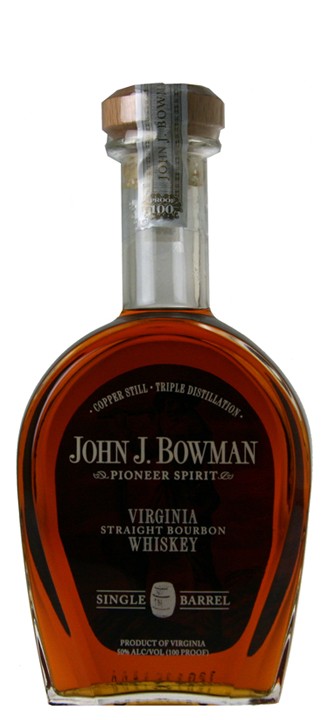
John J. Bowman Single Barrel

Maker: A. Smith Bowman, Fredericksburg, Virginia, USA (Sazerac)john-j-bowman-101106699

Distiller: Buffalo Trace, Frankfort, Kentucky/ A. Smith Bowman, Fredericksburg, Virginia, USA

Style: High Corn Bourbon

Age: NAS

Proof: 100 (50% ABV)

Note: Triple distilled. Twice (column & doubler) at Buffalo Trace and once (pot still?) at Bowman.

Appearance: Light copper with fairly thick legs.

Nose: Caramel, oak, woodruff, alcohol, grape hyacinth.

On the palate: Light bodied and dry. Oak, alcohol, toffee, tarragon.

Finish: Dry, but with a fruity note that slowly emerges as the taste fades.

Parting words: Bowman single barrel is a stylish whiskey worth seeking out. The Buffalo Trace grassiness is apparent but the oak and caramel sweetness do an excellent job of keeping it from overrunning the whiskey.

The first one of these I purchased shortly after its initial release. It was very light with a vaguely coppery taste and aroma. I enjoyed it but it wasn’t great. This one is very, very good. I have had a few other bottles recently including a couple private selections and they have all been good, so I either got a bottle from a mediocre barrel the first time, or the product as a whole has been improved. Whatever the case, John J. Bowman is now one of those whiskeys that I always pick up when I am visiting a part of the country in which it is sold. Bowman Single Barrel is recommended.

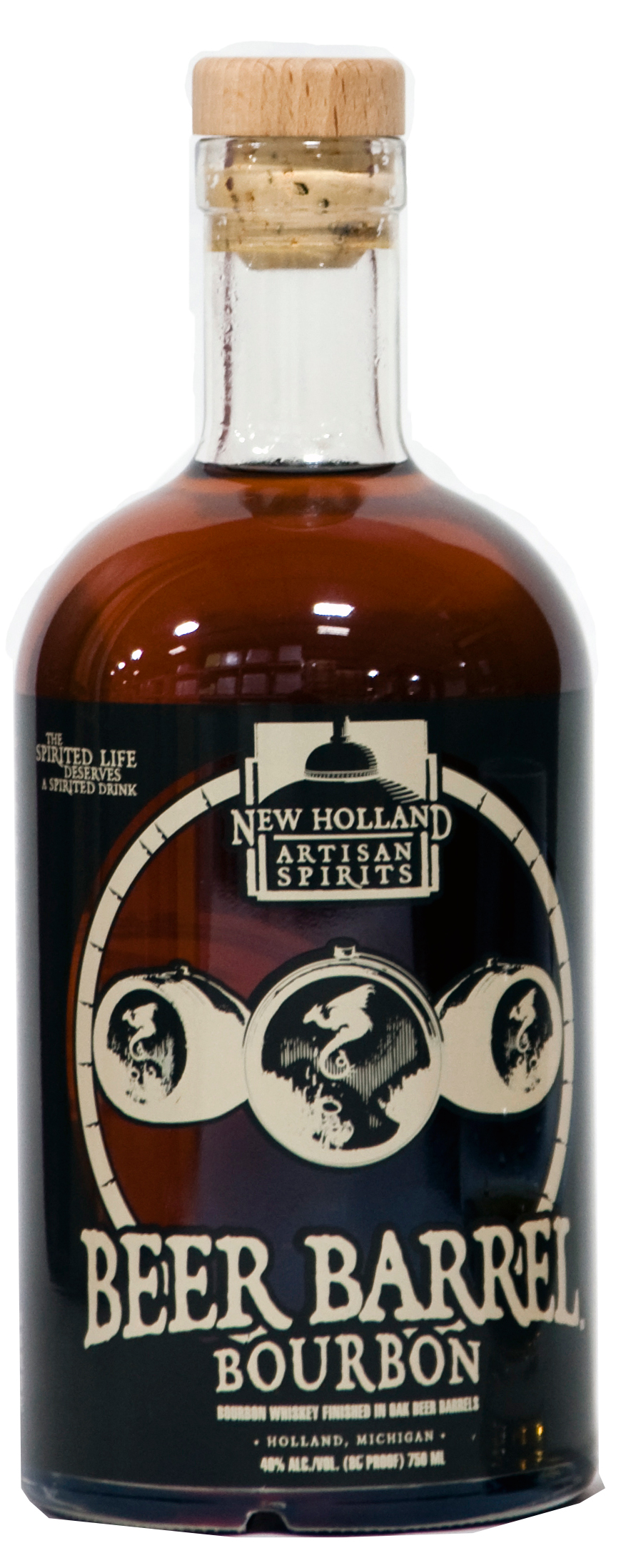
Head to Head: Spring Mill Bourbon vs. Beer Barrel Bourbon

A. Spring MillSpringMillbeer-barrel-bourbon

B. Beer Barrel

Maker

A. Heartland, Indianapolis, Indiana, USA

B. New Holland, Holland, Michigan, USA

Distiller: MGPI, Lawrenceburg, Indiana, USA

Age: NAS

Proof

A. 90 (45% ABV)

B. 80 (40% ABV)

Notes

A. Rebarreled in new charred oak barrels

B. Finished in barrels used to finish beer in

Appearance

A. Light copper

B. Burnt orange

Nose

A. Wood shavings, alcohol, chocolate-covered caramels, fennel, leather

B. Dried cherries, roasted malt, corn chips, alcohol

On the palate

A. Sweet and hot. Medium bodied. Brown sugar, sweet tea, vanilla

B. Full bodied. Licorice, stone fruit.

Finish

A. Hot and long lasting with a bit of candy behind the burn.

B. Mellow and fruity. Grape soda, alcohol. Fades quickly.

Mixed

A. Excels in a Manhattan and does well in an old fashioned. Gets a little lost in cola.

B. Adds an interesting fruitiness to the Manhattan, does the same in an old fashioned. Downright tasty in ginger ale.

Parting words

Both of these bourbons are examples of small producers selling bourbon sourced from MGPI, Indiana but putting their own stamp on it. Both are successful in creating something different and probably superior to what they started with. As for Beer Barrel Bourbon (B), the fruity aspects of the stout that previously occupied the barrel come through the most, although a little of the roasted malt character also comes through.  It is a successful experiment but I don’t know if I’d buy another bottle. Mildly recommended.

Spring Mill (A) has more of a classic bourbon flavor. Rebarreling the often lackluster MGPI bourbon has added needed depth and sophistication. One of the proprietors of Heartland was not forthcoming about the nature of the second barrel (char level, size) when I communicated with him on social media, but I suspect it is a slightly smaller barrel with a lighter char, maybe 2 or 3. Whatever the case, it worked very well. The ceramic bottle adds interest (although I’m not quite sure how to recycle it) and the fact that the bottle shares the name of a street on the North Side of Indianapolis near where I grew up is a sentimental bonus for me. Spring Mill is recommended. Looking forward to some of the new barrel strength version of this stuff soon!